


It almost feels anachronistic that 3D-printed titanium lugs bonded to carbon tubes would be a highlight of the world’s biggest handmade bicycle show. But clearly, the path of frame building is evolving. From tiny one-person workshops up to larger-scale production manufacturers, bike makers are taking advantage of the flexibility of additive manufacturing. And especially for small, handmade builders, 3D printing allows them to customize bikes to individual buyers while delivering performance and styling that rivals the most advanced bikes on the market.
At Bespoked just over a week ago, we spotted several handmade bikes combining carbon tubes and 3D-printed titanium – including the winner of the Best Gravel Bike award. Take a detailed look at two prototype gravel bikes, moving towards regular offerings from Curve & Kocmo. Then, a quick glance at similar techniques on the road from Bordure and Hilite.
Curve 00Kev prototype carbon & titanium gravel bike

2025 Bespoked Best Gravel Bike.
Curve’s 007 Kev (read that name as double-O seven Kevin) is their latest hybrid construction prototype gravel race bike frame to mix titanium and carbon. But unlike their previous AirKev, then CarboKev, which only swapped in carbon tubes for the downtube, seattube & chainstays… this one goes all in.
Every tube is carbon, with 3D-printed titanium junctions in between.

Of course, the reason to combine 3D-printed titanium with carbon is the limitless opportunities. Curve can design the styling they want. And they can still offer custom geometry to individual riders by tweaking the junctions. Plus, they tailor the ride to each buyer with individual carbon tube layups.
This is a bike that starts with a stiff lower half for efficient pedaling and handling, then a comfort-oriented top end to filter out gravel buzz. It builds on geometry from their flagship GXR4 gravel bike, but tuned further for faster, more aggressive gravel racing. And yet it still fits 700x53mm / 29×2.1″ tires, even bigger in the front.
It could even help the frame builder from a logistics perspective down the line. Now they manufacture everything in Melbourne, Australia. But Curve considers that at one point, they could open up a second frame assembly shop in Europe, where they could just ship in the tubes & lugs and create an EU-made bike with lower import costs and a decreased carbon footprint for European customers.


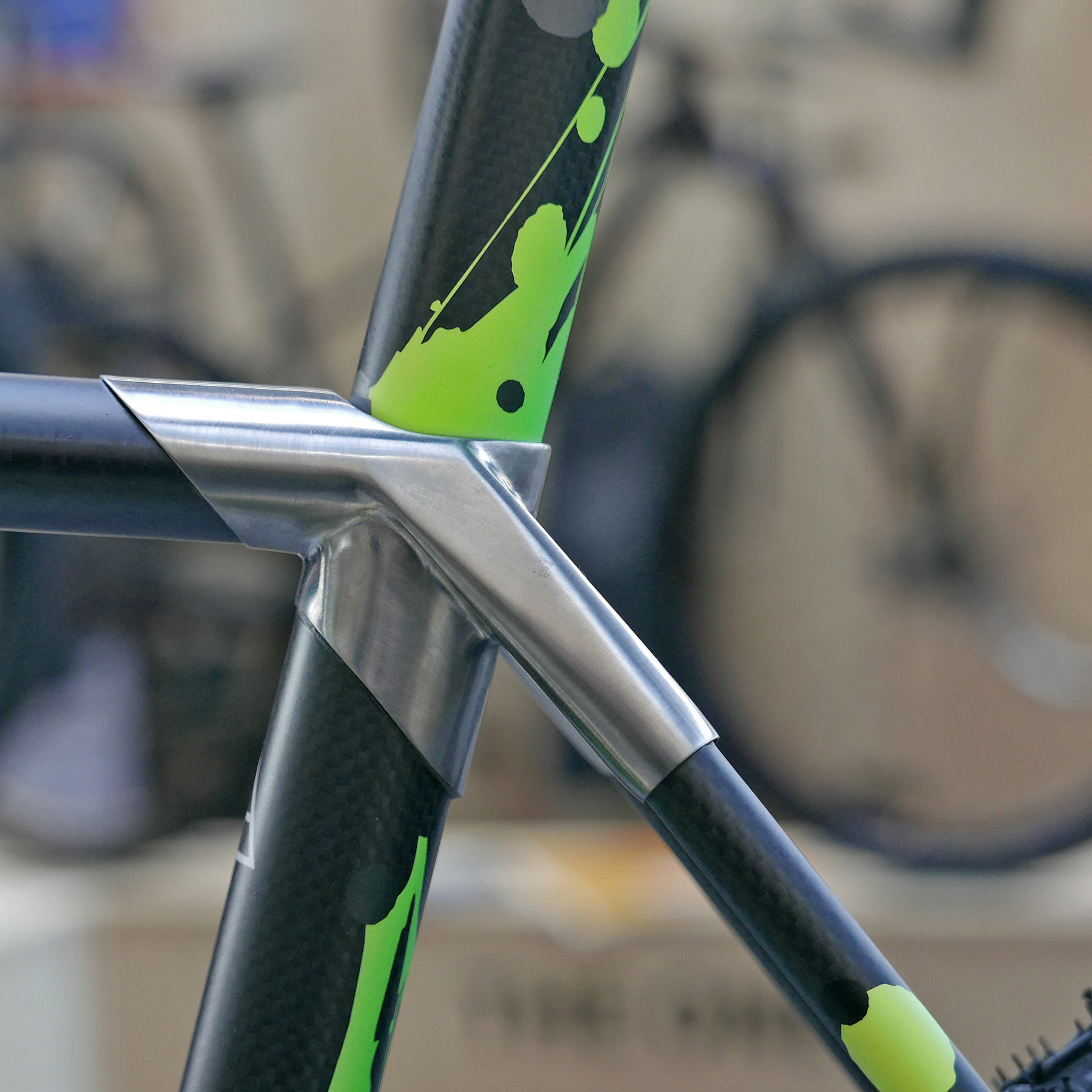
But unlike many carbon+ti bikes, all of the 007 Kevin’s junctions feature complex double-lap bond joints for extra stiffness and long-life durability. Curve verify their prototypes with high-level EFBE lab testing, performing the full suite of fatigue and impact tests with a single frame to be sure that their tube prep and bonding work are as tough as possible.
Double-O (7) Kev Tech Details
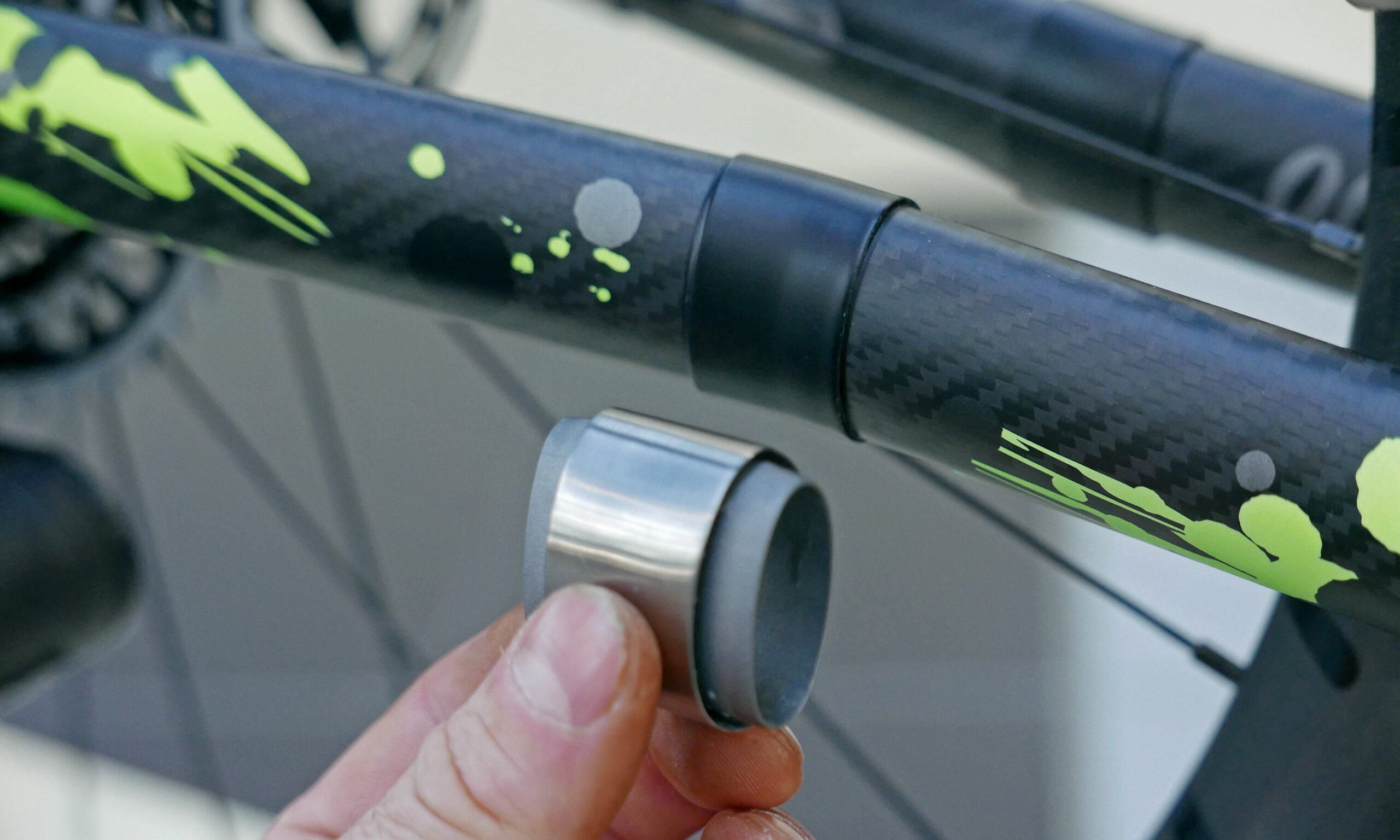
For example, the chainstays of both the (already EFBE-tested) CarboKev and this latest 007Kev use a spilt 2-piece construction with a double-lap ti coupler in the middle. It’s strong enough to pass the tests, but it’s only there for the R&D stage. Curve will open up a curved chainstay mold once they move into production on these bikes in 2026. But it verifies the quality of the carbon+ti frame work.

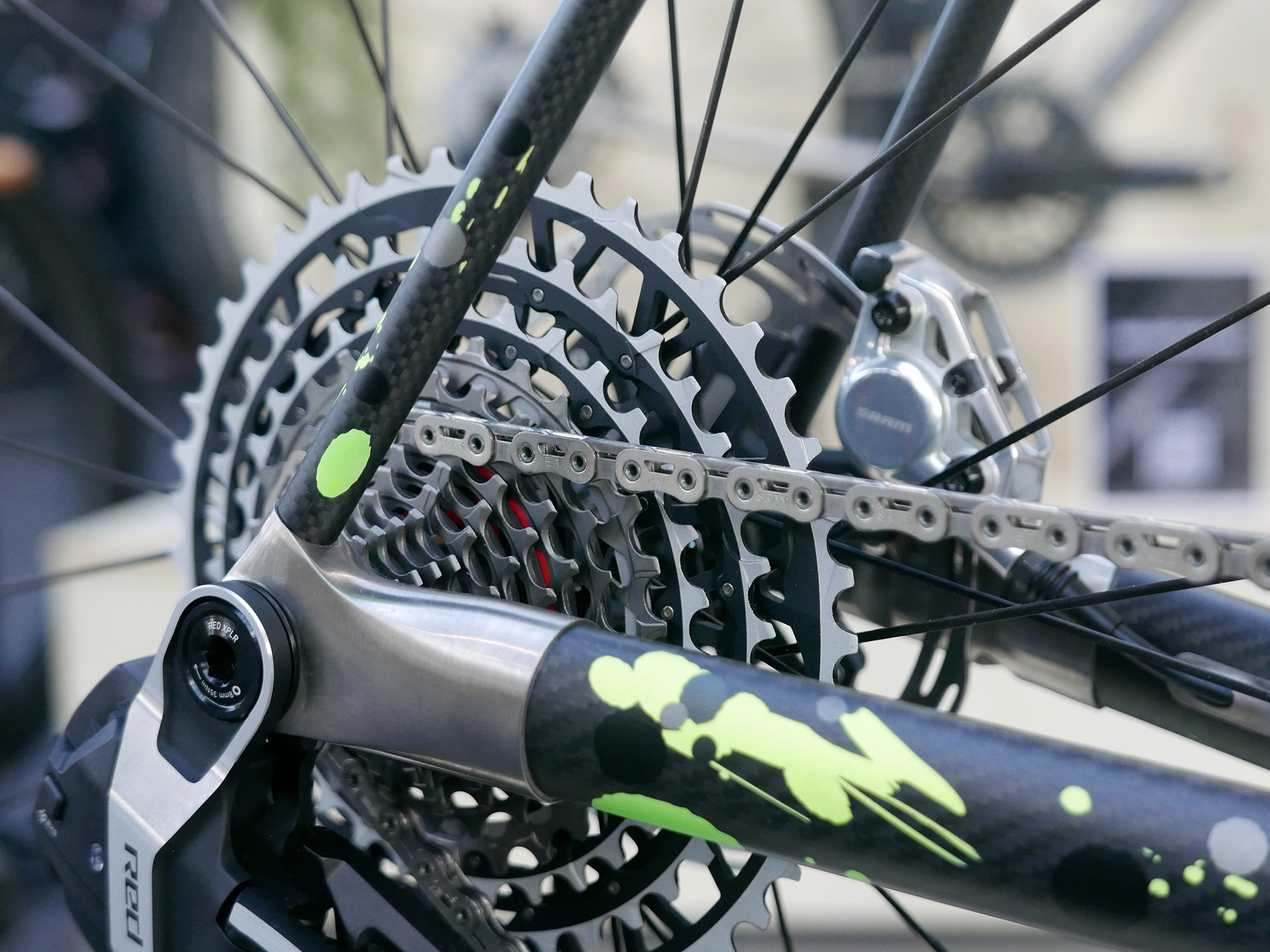

The Curve 007 Kev prototype features a straight headtube, fully integrated internal cable routing, T47 threaded BB, SRAM UDH, 12mm thru-axles, flat mount 160mm brakes, and a custom ti seatpost topper with Enve 2-bolt clamp.
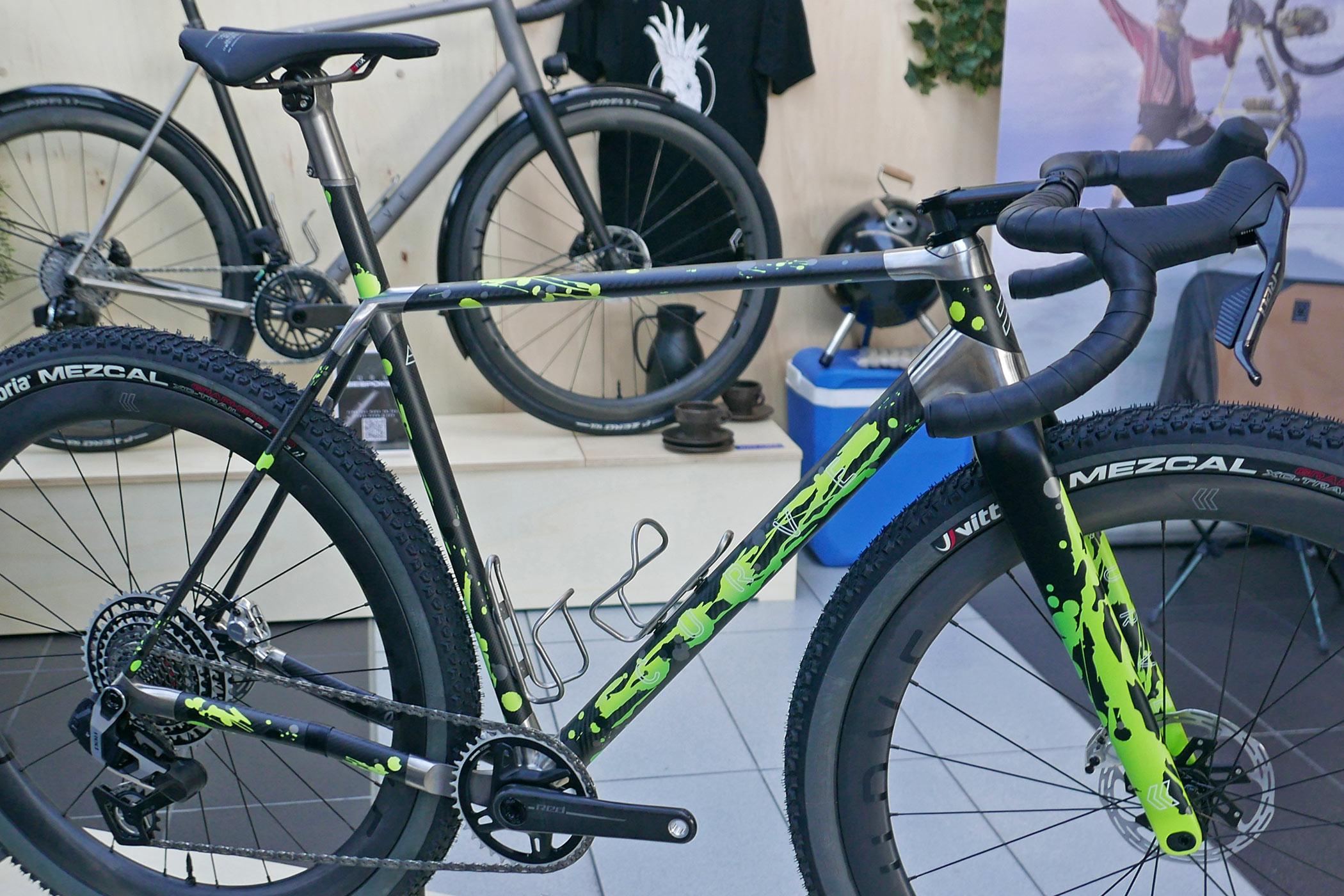
Curve will put their first real carbon plus titanium CarboKev into the production line-up in mid-2026. And then, they expect to add this next-gen 3D-printed ti plus carbon 00Kev gravel race to the line within the next 12-18 months.
Kocmo Grvl Beast prototype hybrid construction titanium & carbon gravel bike

Another 3D-printed titanium plus carbon gravel race bike prototype is Kocmo’s Grvl Beast.
Kocmo is also long known for their customizable ti bike range, and will add a carbon hybrid bike to lighten things up for gravel racing. They’ve already been working with 3D-printed titanium for years to create smoother full ti bikes and ti components. So it’s also not a huge leap to swap in some carbon tubes to shake things up.
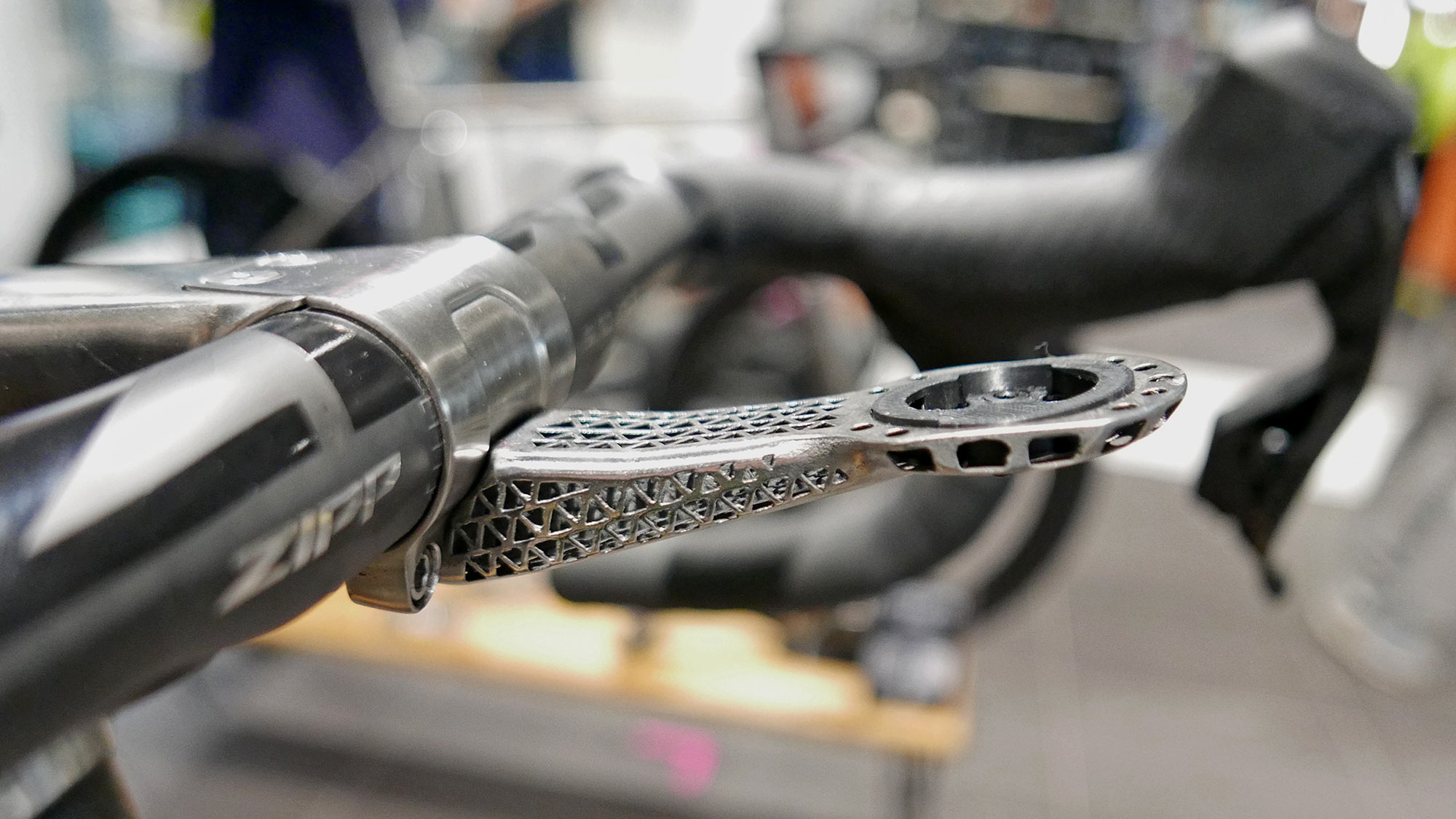
In fact, while the Grvl Beast is a mixed materials prototype bike, a couple of its components are already available.
Like this ultralight 3D-printed titanium lattice out-front GPS computer mount. It mounts to the faceplate of Kocmo’s new sleek 3D-printed titanium stem – independently of the handlebar clamp. Kocmo already had a wide range of offerings in welded round-tube ti stems. But now this boxy 3D-printed version gives them the ability to easily offer even more sizes, more angles, and a more aero shape that can be cleanly integrated with fully internal cable routing solutions.
Carbon Ti Beast Prototype Details


The prototype Kocmo Grvl Beast frame itself is unique in how it mixes the angular tube shaping and even dropped seatstay design we’ve come to know from aero carbon race bikes. But here it’s in a relatively plug-and-play design that allows Kocmo to more easily tweak sizing and geometry thanks to the fact that the additive-manufactured titanium lugs can be personalized to each buyer.
Kocmo also does a nice job of taking advantage of the infinitely customizable lugs by incorporating their name and logos in details throughout the 3D-printed ti.

The prototype ti & carbon Grvl Beast hits all the modern gravel bike highlights, like internal routing, flat mounts, 12mm axles, UDH, T47 BB, an aero seatpost with hidden clamp, and big 50mm tire clearance.
Plus, it adds a securely designed internal frame storage glovebox door into the downtube. That’s not something you see very often from small bike makers. But it looks like Kocmo has a nice solution inside the boxy carbon downtube of the hybrid-construction gravel race bike.

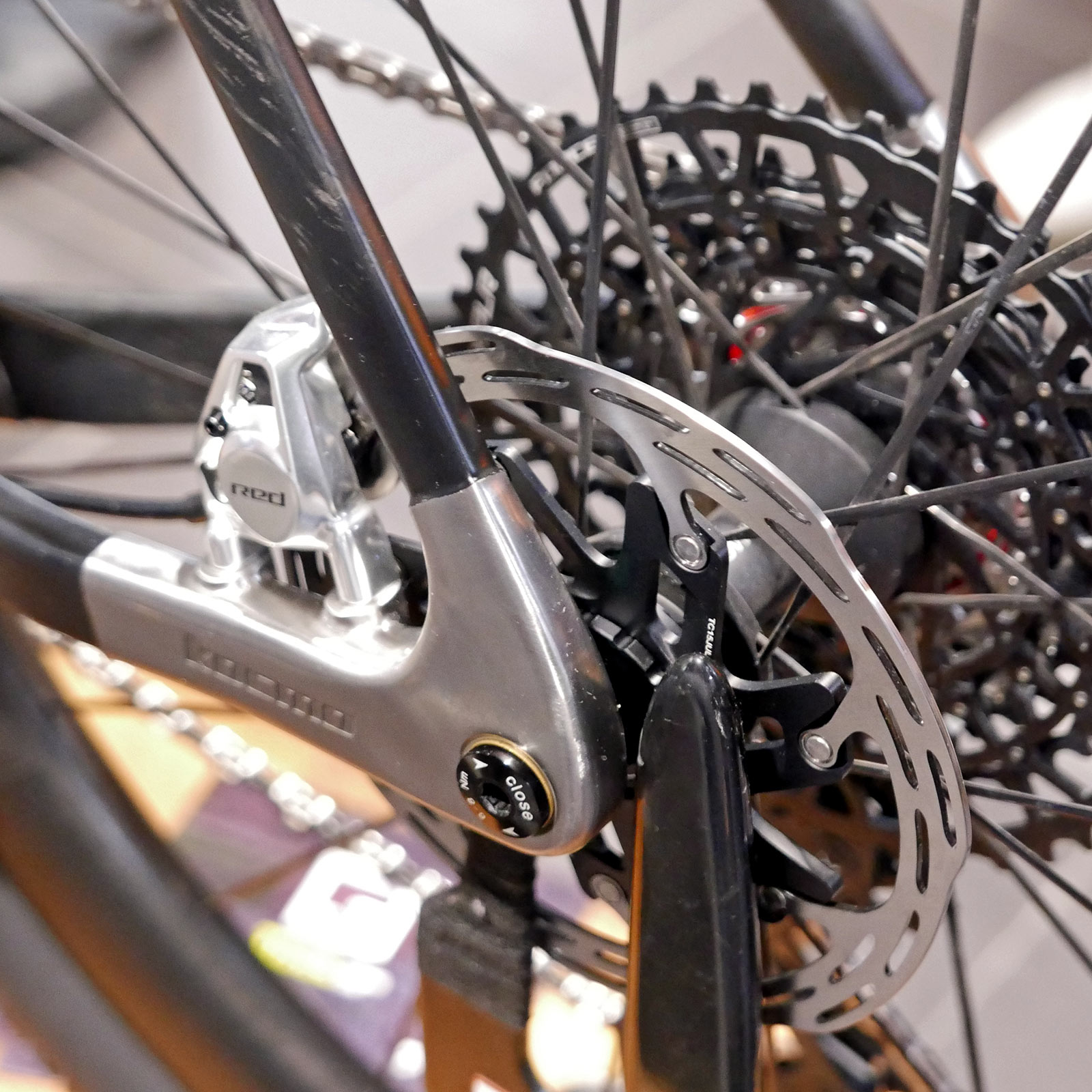
For now, Kocmo’s Grvl Beast remains just a prototype. But the brand showcased the bike at Bespoked to get a feel for consumer interest. They seem pretty excited about the project, and are taking their titanium expertise to the next level to create a more modern gravel race bike.
Fingers crossed that they get good feedback about this Beast, so we’ll get to see it added to their regular line-up soon.

“With our 3D-printed components, we open up entirely new possibilities: in the future, we can tailor every detail of the geometry to the rider – creating a bicycle that feels truly custom-made. And the best part: this uniqueness requires hardly any extra effort.”
– André Pfeil, Kocmo CEO
Hilite prototype 3D-printed ti & carbon road bike
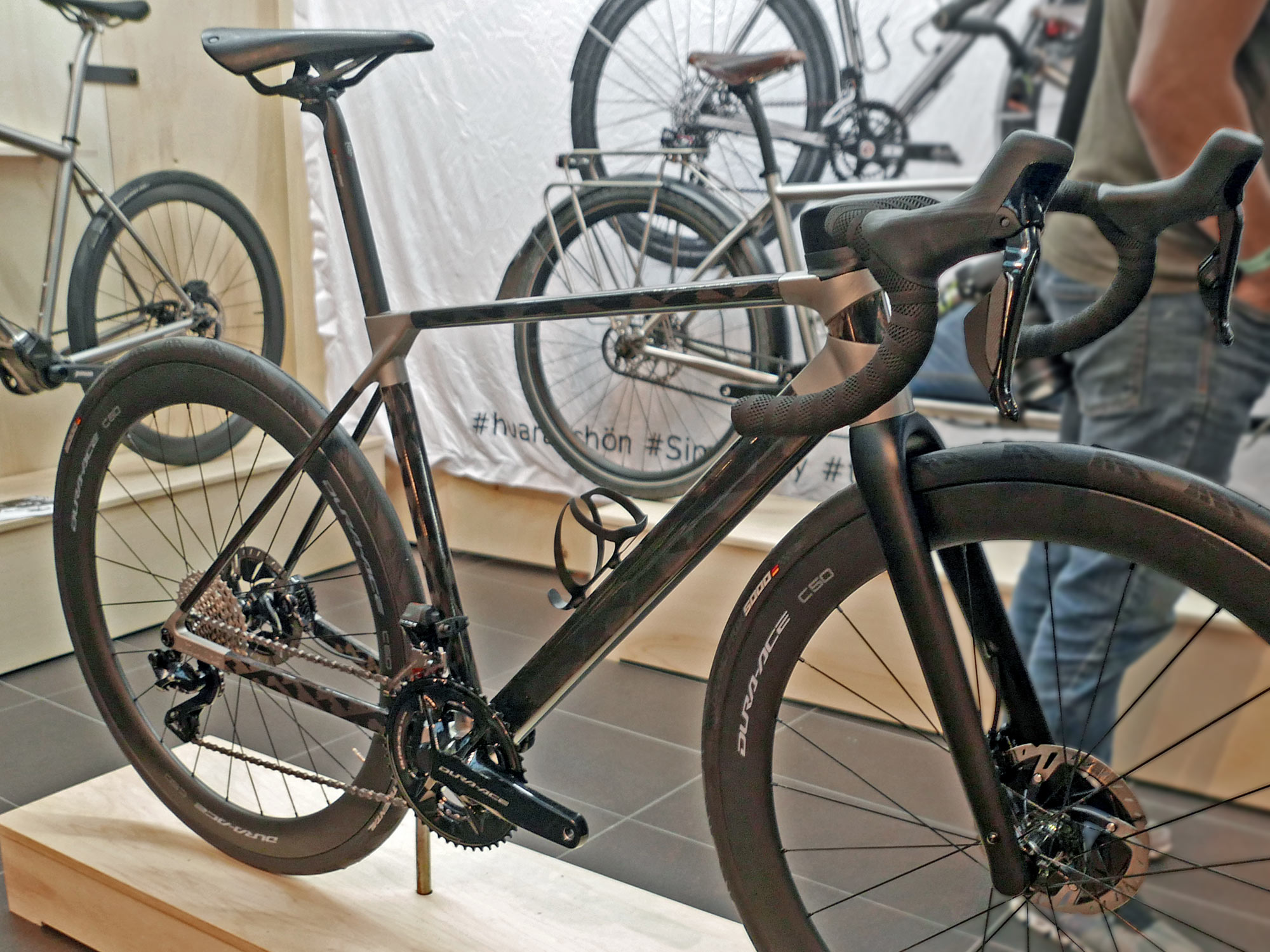
After more than a decade building adventure-ready titanium bikes in Basel, Switzerland, Hilite added 3D-printed frame junctions to their ti repertoire to free themselves up for more modern designs. Now, another five years later, they’ve taken their 3D-printing experience and swapped in European-made filament-wound, resin-transfer-molded carbon tubes to take their custom bike building to another level.
This prototype 3D-printed ti & carbon road bike is the first example of the new construction methodology, which they see as opening the doors to crafting more high-performance race bikes. And yet still, it will retain the full user-customization potential like all of their other bikes from road touring ti tandems to loaded off-road gravel expedition bikes.
Bordure Instinct R 3D-printed ti & carbon road bike

Bordure’s Instinct family of custom bikes also features 3D-printed ti junctions bonded to made-to-the-customer filament-wound carbon tubes. But this French handmade bike is one you can actually buy. Three versions are available – R road, AR all-road, and G gravel, with 35mm, 38mm & 50mm tire clearance, respectively. All three feature custom geometry, fully integrated internal cable routing with their included Enve In Route forks. They get an IS52 1.5″ headset, T47 threaded bottom bracket, 27.2mm seatpost, 12mm thru-axles, flat mount disc brakes, and are UDH ready for any drivetrain… but only if it is wireless electronic shifting. The carbon+ti Bordure Instinct starts at 5990€ for a frameset with raw carbon & titanium finishes and custom color logos.


