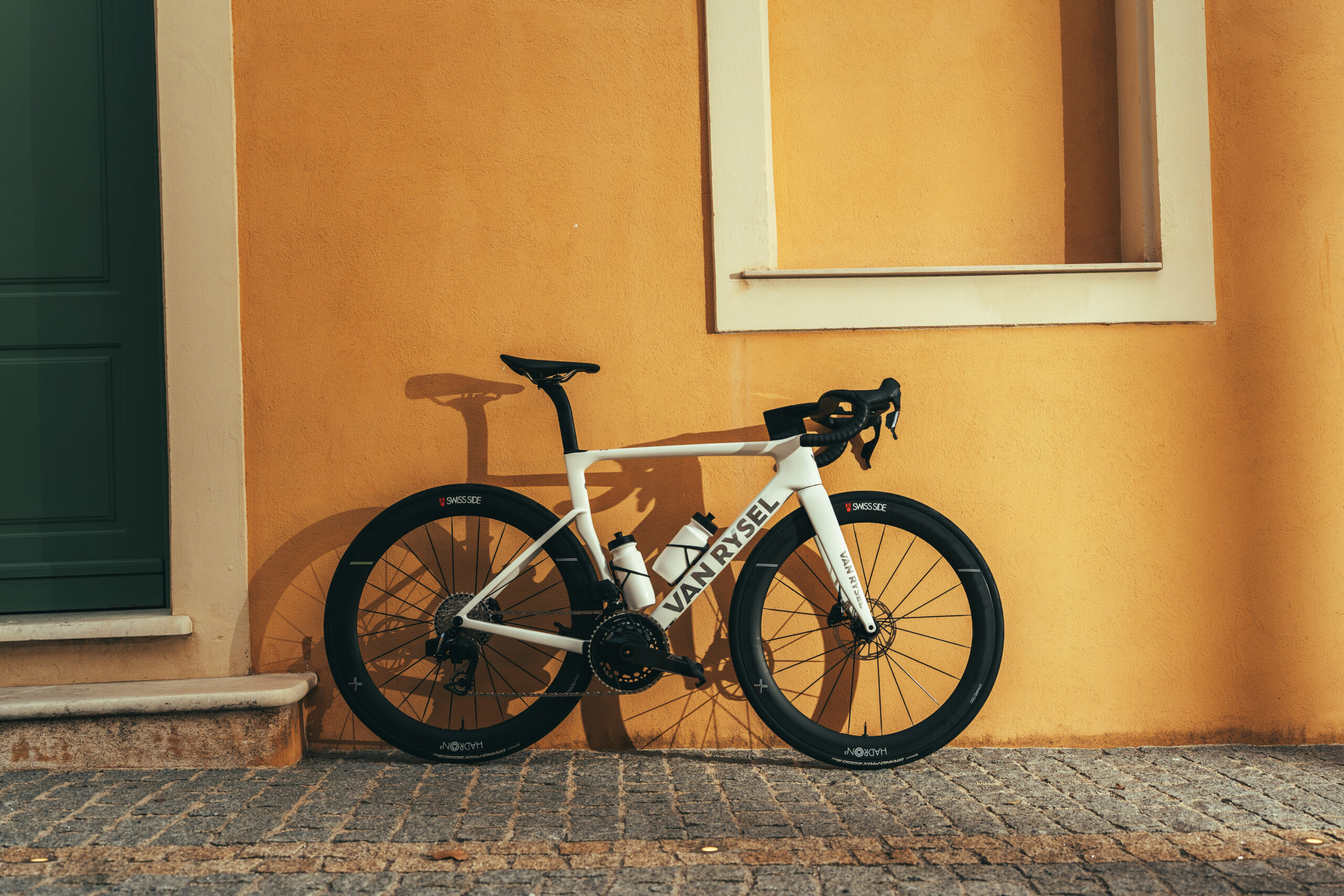


Van Rysel has a new lightweight race bike for 2027, and this one has already won a Monument.
The new RCR-R Pro gets a claimed 705g frame, more aero shaping, and complete builds starting at just 6.6kg. Alongside it, Van Rysel is launching the RCR-R, which uses the same frame design with a less expensive high-modulus carbon layup and a claimed 883g frame weight.
Both bikes go on sale January 5, 2027, with European pricing spanning €3,299 to €8,499 depending on build.
If the bike looks familiar, there’s a reason. Paul Seixas and the Decathlon CMA CGM team have been racing prototypes since June, including at the Tour de France. Seixas eventually rode the bike to victory at Il Lombardia before Van Rysel officially took the covers off. Not a bad final round of prototype testing.
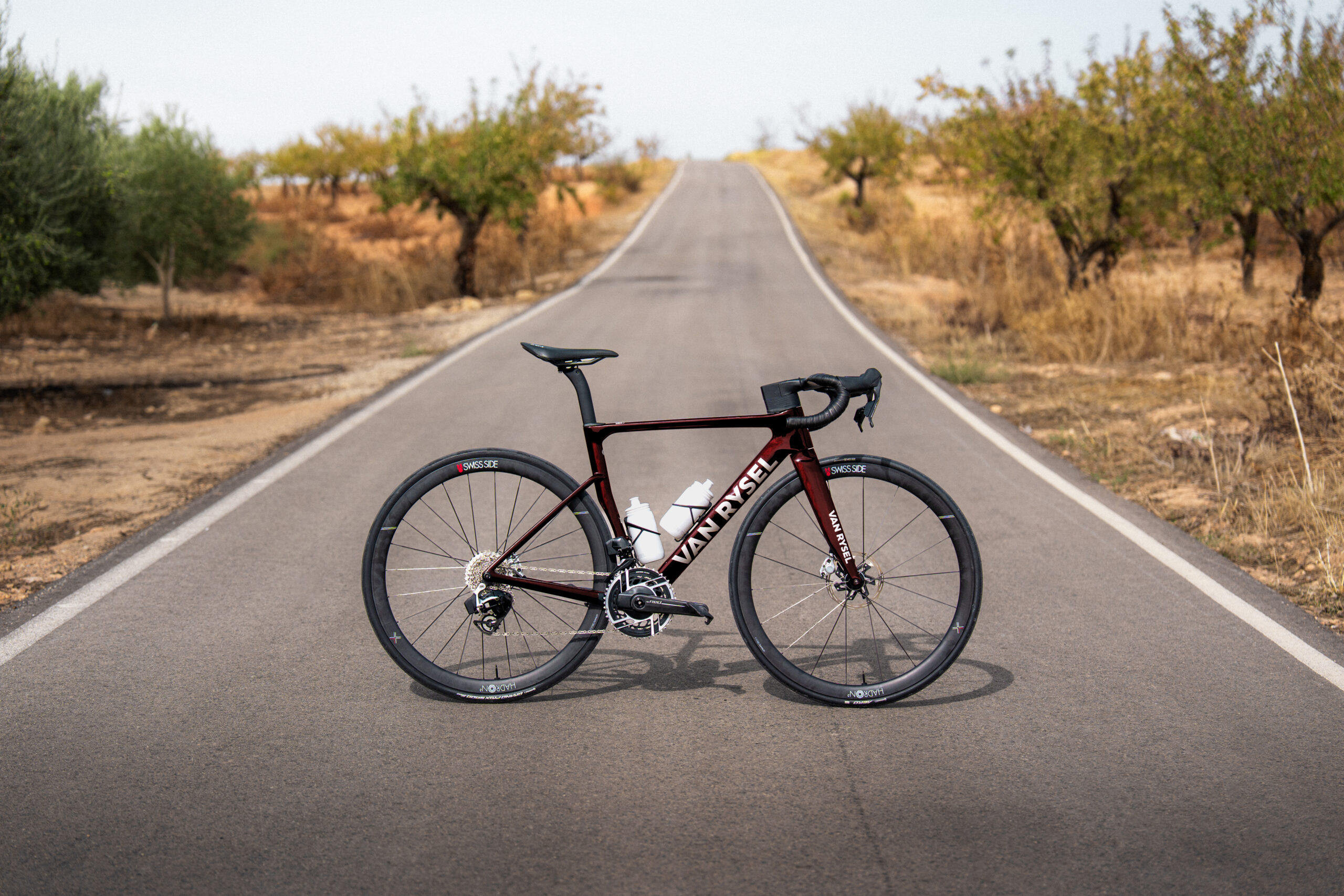
RCR-R Pro: Aero Enough, Light Enough
Van Rysel already has a dedicated aero bike in the RCR-F Pro. The RCR-R attacks the problem from the other direction.
Rather than building the most aerodynamic bike possible and accepting a weight penalty, Van Rysel started with a lightweight race platform and added more aero performance. The goal is a bike that makes sense when the race starts flat, heads into the mountains, and finishes with a sketchy 90km/h descent.
The top-level RCR-R Pro frame weighs a claimed 705g in a size medium, with a ±5% tolerance. The fork adds another 360g. That makes it the lightest frame Van Rysel has produced.
The RCR-R Pro uses a mixture of super-high-modulus and high-modulus carbon, while the standard RCR-R sticks with high-modulus carbon and weighs 883g in the same size. Same shapes. Same geometry. Different carbon recipe. The178g frame difference will also drive much of the price separation between the two families.

13 CFD Bikes, Five Wind Tunnel Bikes, Seven Layups
Van Rysel spent two and a half years developing the new platform with Decathlon CMA CGM. The process included 13 CFD prototypes, five wind-tunnel prototypes, and seven different carbon layups before the final bike was signed off. That development focused heavily on balancing aero gains against weight and stiffness, rather than chasing one number.

The front end is designed to stay stiff under hard efforts and cornering loads, while Van Rysel intentionally allows more controlled flex through the rear. The idea is to keep the bike responsive without making it overly rigid when descending or riding rough pavement.
Paul Seixas, Nicolas Prodhomme, and Matthew Riccitello were among the riders putting prototype kilometers into the bike during team camps in Sierra Nevada (pictured above).
Seixas was particularly involved in the final development and started racing the bike during the second half of the 2026 season. Considering how that ended in Lombardia, Van Rysel probably isn’t regretting the decision.

A Little RCR-F Sneaks Into the RCR-R
Van Rysel says some of the aerodynamic thinking came directly from the RCR-F Pro.
The front end gets much more aggressive shaping than you’d expect from a traditional climbing bike, while the rear half stays relatively slim. It also has a curved seat tube that wraps closely around the rear wheel, plus a heavily shaped head tube and fork.
Van Rysel also developed a dedicated aero bottle and cage for the RCR-R. The brand claims the new setup can save up to 6.3 watts at 45km/h compared with the previous generation, using testing that included moving legs and turbulent airflow.
The bottles will be sold separately, with full details coming later.

How Light Are the Complete Bikes?
The headline build is the RCR-R Pro with SRAM Red AXS, which Van Rysel claims comes in at 6.6kg in a size medium. It’s already below the UCI’s 6.8kg minimum before adding pedals, cages, computer mounts, and the other little things that inevitably creep onto a race bike. Other RCR-R Pro builds are still impressively light.
Van Rysel RCR-R Pro Claimed Weights
- SRAM Red AXS: 6.6kg
- Shimano Dura-Ace Di2: 6.9kg
- Shimano Ultegra Di2: 7.1kg
- SRAM Force AXS: 7.1kg
The standard RCR-R gives up some weight but keeps the same frame shape.
Van Rysel RCR-R Claimed Weights
- Shimano Ultegra Di2: 7.4kg
- SRAM Force AXS: 7.5kg
- Shimano 105 Di2: 7.8kg
- SRAM Rival AXS: 7.9kg
For most riders, an extra 178g in the frameset is probably a pretty reasonable trade if the lower-tier RCR-R lands at a significantly better price. Especially when the silhouette and aero work are the same.

Two RCR-Rs, Eight Complete Builds
Van Rysel will offer four complete builds in each carbon level.
The RCR-R Pro gets:
- Shimano Dura-Ace Di2
- Shimano Ultegra Di2
- SRAM Red AXS
- SRAM Force AXS
The standard RCR-R gets:
- Shimano Ultegra Di2
- Shimano 105 Di2
- SRAM Force AXS
- SRAM Rival AXS
Van Rysel hasn’t released individual model pricing yet. For now, the company says the complete range will run from €3,299 to €8,499 in Europe. North American pricing and exact regional build availability should come closer to the January launch.
