

When Chris King sent out a press release a couple of weeks back saying they had just received a patent for their AeroSet integrated, fully internally routed headsets, my immediate reaction was, “Wait, why?“. After all, these are the same King headsets that we’ve been seeing on bikes already for more than 4 years, now. There are even 3 different versions for internal bearings or external cups, now.
And while bicycle mechanics have begrudgingly accepted that internal routing through the headset is here to stay, they are all pretty much the same, right?
So, I decided to dig a little deeper for understand why. And even how it seemed actually to be patentable.
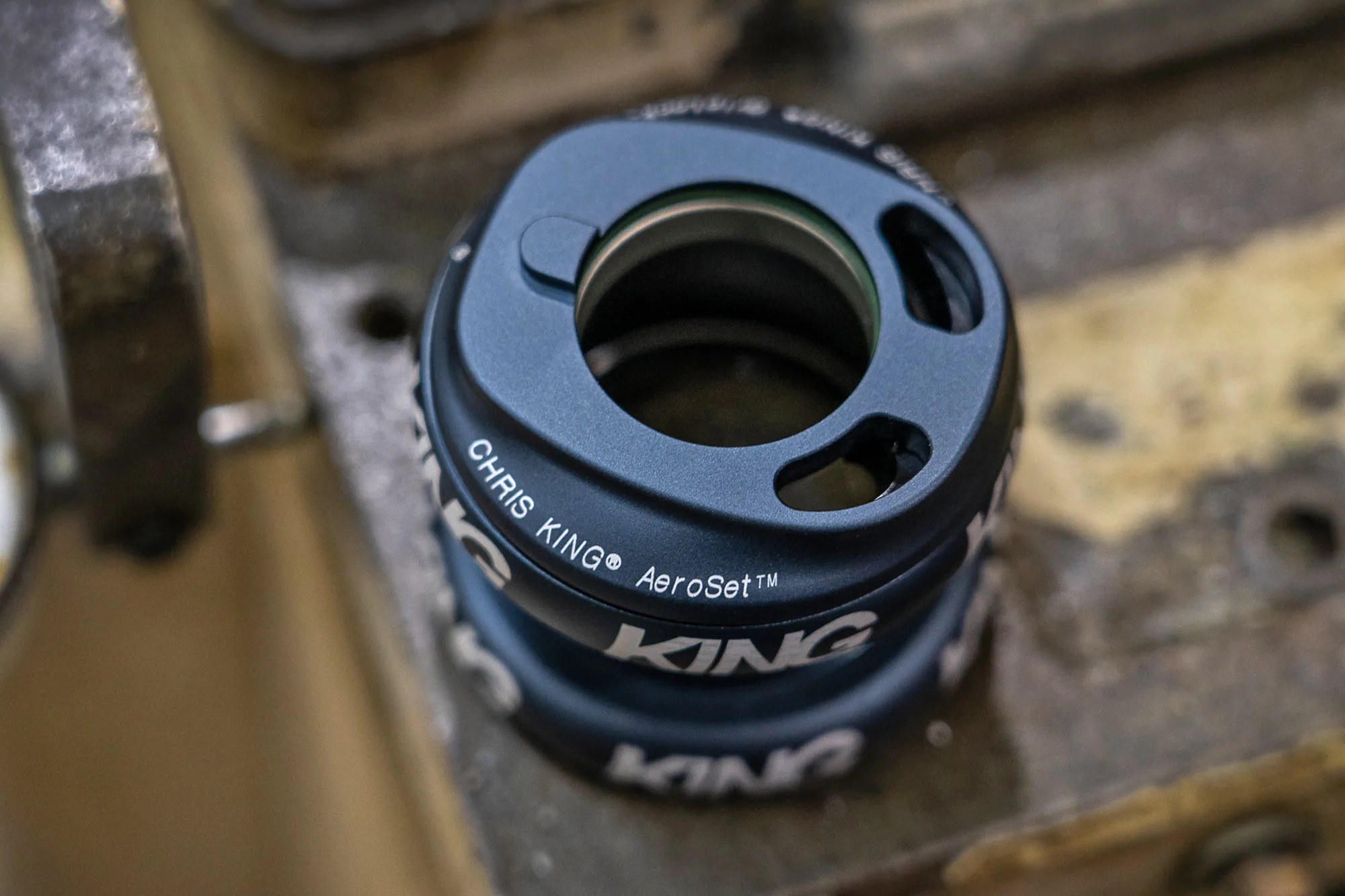
I know from personal experience that Chris King headsets are some of the best-made, longest-lasting, and even feature-rich headsets on the market.
So what makes the AeroSet headsets special? And what did Chris King actually patent?
Here we go again about Internal Cable Routing headsets
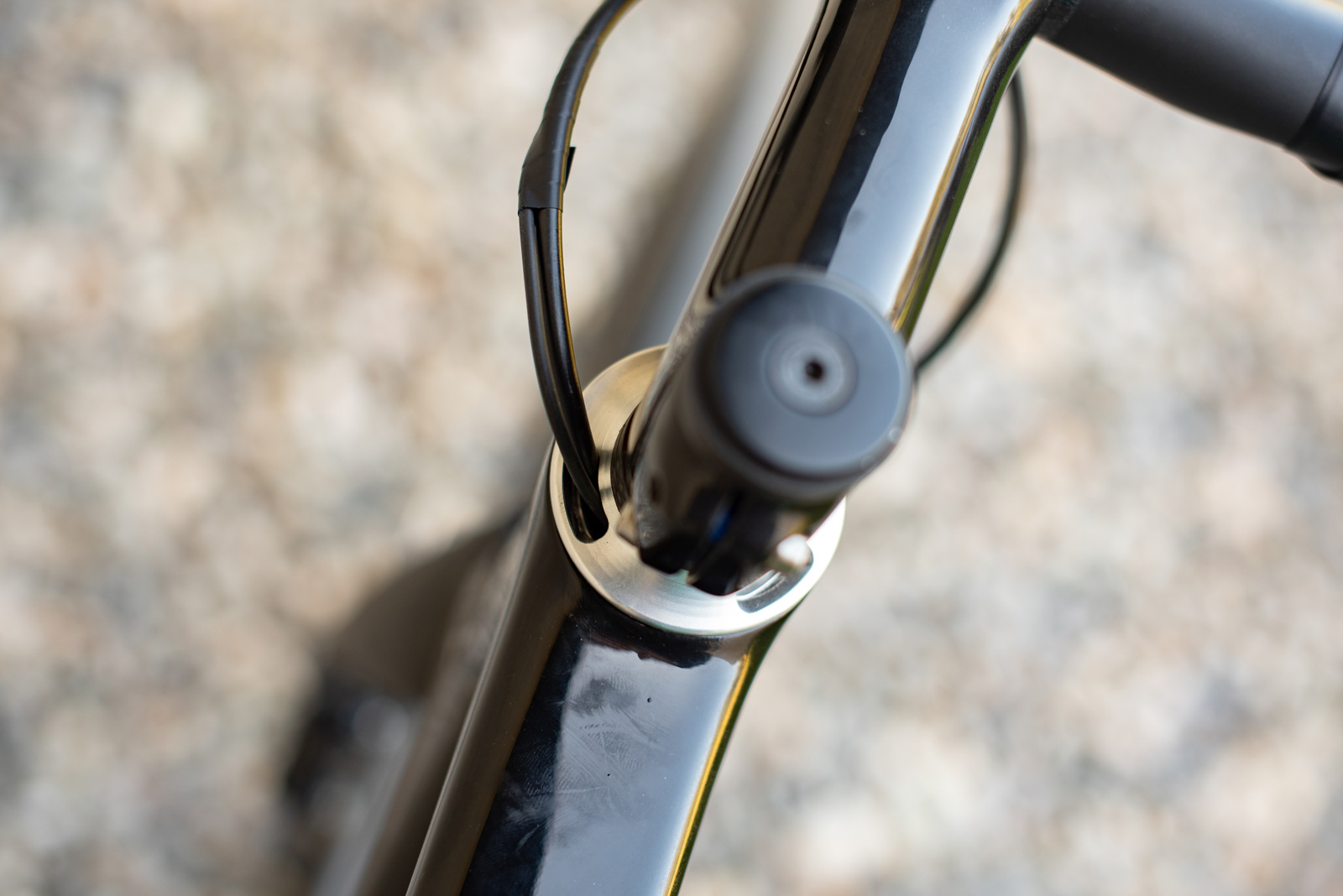
Let me preface this by saying that I – like those many mechanics we polled – am not a huge fan of the added complication of routing shift cables and brake hoses through headset bearings. But I have a bunch of bikes with this modern fully internal routing. And I do appreciate both the clean look, and in some instances, even the protected cables as a result of hiding them inside the cockpit.
But I do not have any bikes with a Chris King AeroSet, so I’m basing all of my thoughts on patent drawings, descriptions, and the most detailed photos I have at my fingertips.
What makes Chris King AeroSet headset unique & patentable?
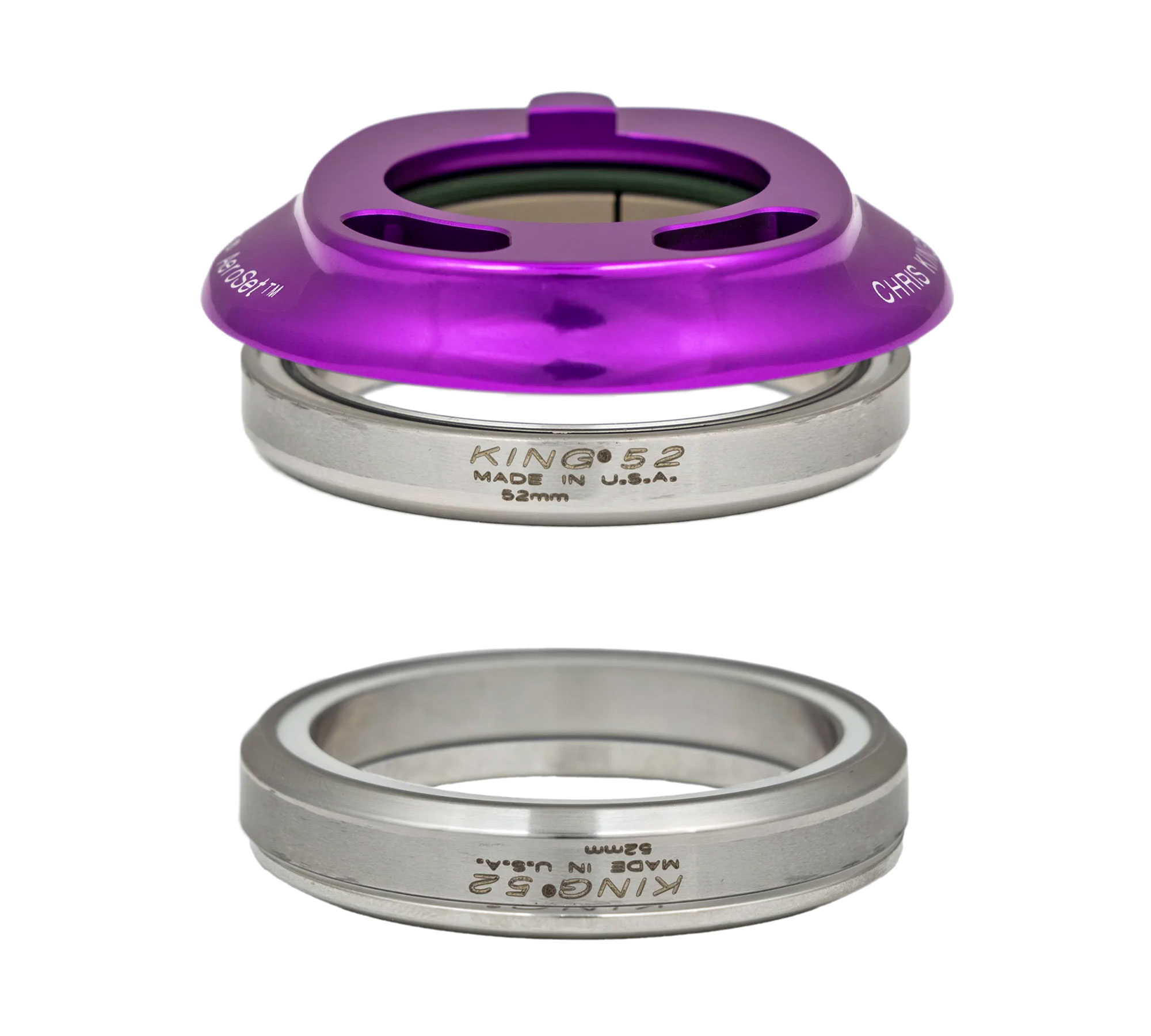
It turns out that the Chris King AeroSet headset is, in fact, rather unique amongst most other Internal Cable Routing (ICR) headsets. And that essentially boils down to their long-running and already patented GripLock headset tech.
What is GripLock again, and why does it matter?
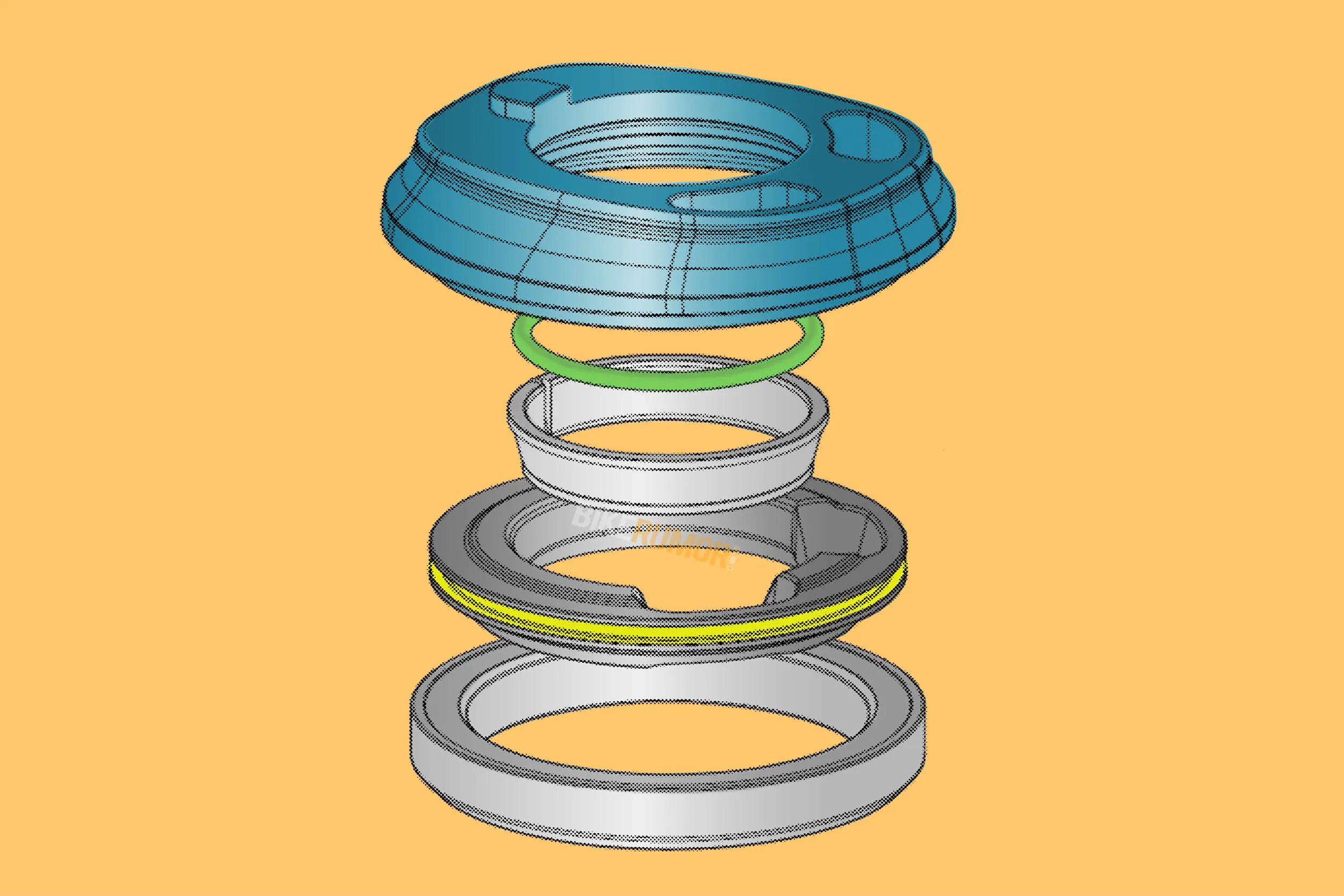
GripLock is a slightly complex 5-part upper headset cover assembly that replaces the conventional 2 upper pieces of a regular headset – the bearing cover and a split tapered compression ring.
In that conventional, threadless headset, the split ring both preloads the bearing and presses against the steerer tube to keep it perfectly centered. Chris King’s issue with that is that repeated impact forces transmit higher (and lower) forces onto both the bearing and then into the surface of the steerer. Especially with bigger and repeated impacts riding off-road, that is more likely to loosen a headset. And with lightweight (read: carbon) steerer tubes, those impacts are much more likely to damage a steerer.

The patented Chris King GripLock solution combines an upper headset cap (A), a split ring (C), and a separate lower bearing contact ring (E) with two O-rings in between, in a design that isolates the separate forces centering/clamping the steerer tube and those preloading the bearing. That way, all of those repeated impacts from riding rough terrain are directed only into the bearing, not also redirected into the surface of your steerer tube.
Obviously, a lot of us ride headsets without this patented tech (and are probably a bit more likely to have to retighten our headsets occasionally). But clearly, there is some sound engineering that makes GripLock a good solution.
Now how does that impact AeroSet headsets?

Well, essentially, a Chris King AeroSet headset is just a GripLock headset where that upper cap and lower bearing contact ring have each been fattened up enough to sneak a set of internally routed cables through them. The trick is, the integrated cable routing solution of the AeroSet benefits even more from the multi-part GripLock tech, because the extra aluminum part vs. a standard ICR headset actually helps better distribute the uneven forces you get by cutting out big holes to fit the cables inside such a tight space.

How Is It Better?
My understanding of this patent is that the AeroSet really benefits from the existing multi-part GripLock assembly concept so that:
- The outer surface of the compression ring (130) is continuous to uniformly distribute forces to the bearing (114).
- The inner surface of the split tapered ring (140) is continuous to uniformly distribute forces to the steerer (120).
- The angled and tapered cable routing channels (136) through the AeroSet/GripLock compression assembly allow for plenty of space for cables/hoses/wires while not reducing the strength of any individual component of the system.
- And because of the GripLock configuration, you get the same isolation of separate axial loads and clamping forces.
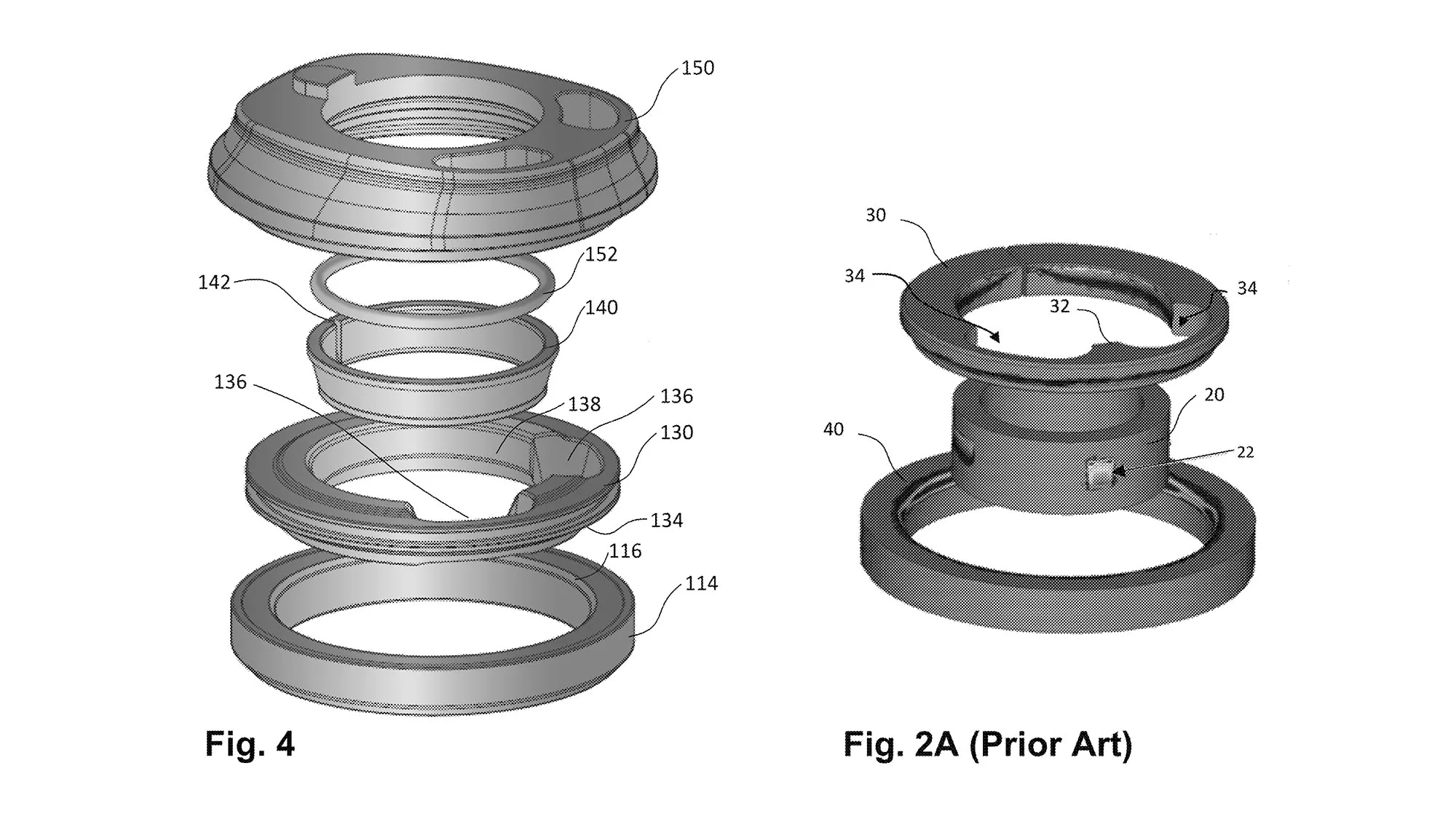
The only thing I didn’t see clearly explained in the patent is that those apertures (136) will ultimately create uneven forces on the split tapered ring, much like the prior art of Fig 2A. Of course, the worst case scenario there is some potential internal wear to the headset. And I imagine that AeroSet/GripLock compression assembly part could easily and cost-effectively be replaced. Much better than damaging your fork’s steerer tube, and less likely to degrade performance by unevenly wearing the actual bearing.
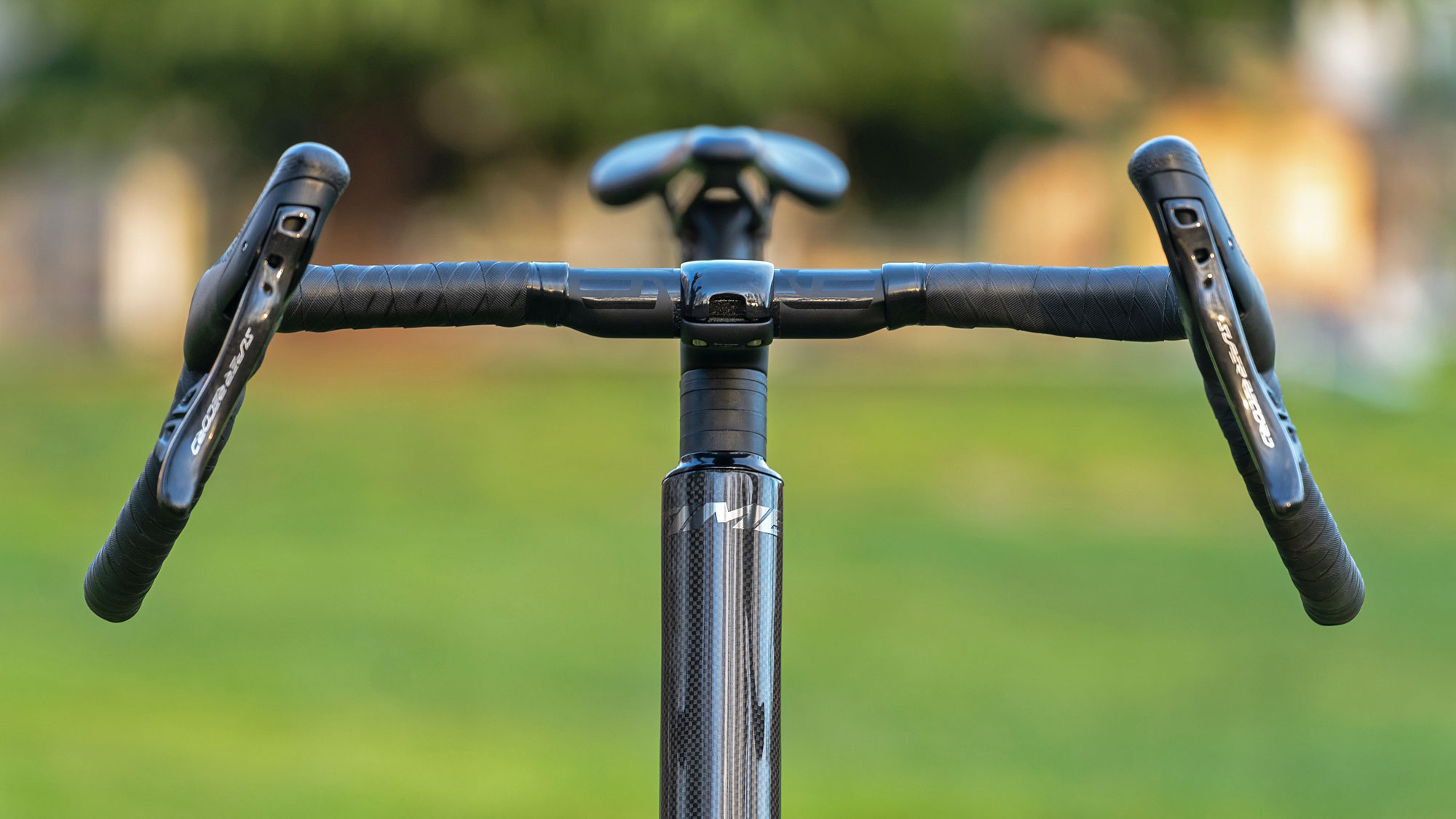
So, the final result is that AeroSet delivers the same classic Chris King combination of higher strength, increased reliability, simple serviceability, and most likely long life, too. Plus, of course, a cleaner cable-free cockpit setup, too.


