Early this year, Patagonia offered me a Nano Air Ultralight hoody for testing, so I rode it throughout the spring and fall seasons. This hoody is a multisport garment, but its slim cut, unrestricted mobility, and large hood make it a potential option for cyclists of any discipline.
However, on my MTB rides, I found the Nano Air Ultralight hoody struggles to regulate body temperature when you’re working hard during climbs. Despite being very thin and light, the hoody warms up quickly and can’t dump body heat effectively, so it’s tough to remain comfortable throughout a ride without removing it.
Patagonia Nano Air Ultralight Full Zip Hoody – Construction:
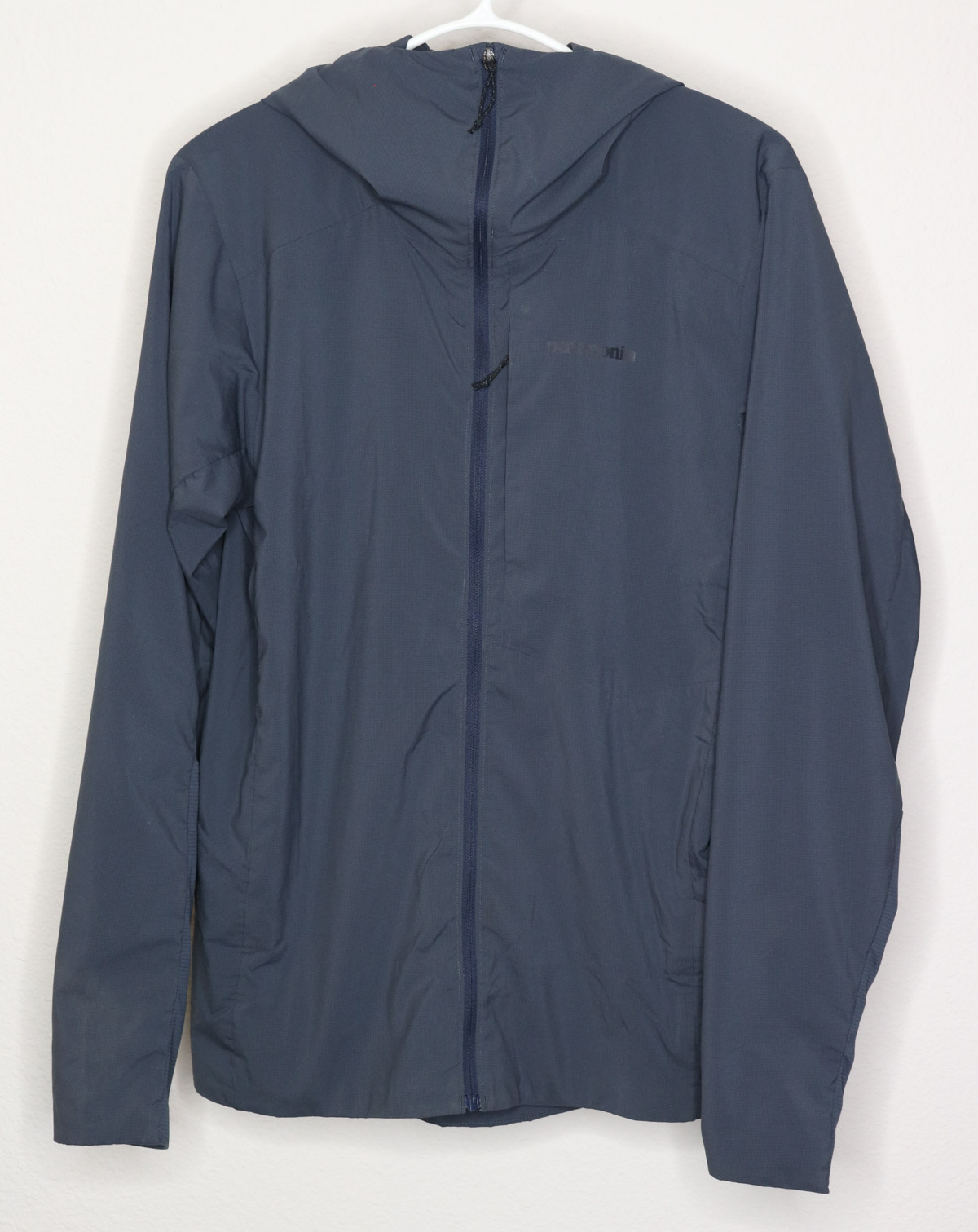
The Nano Air Ultralight Hoody was built to provide a little warmth while remaining highly breathable. It is compressible, stretchy, and lightweight.
The hoody’s shell and lining are constructed from 100% recycled ripstop polyester that offers mechanical stretch. Providing some warmth is lightweight 20g FullRange insulation throughout the hood, shoulders, upper arms, chest, and back. The underarm panels are not insulated, and the lower inside arms are made of Capilene fabric, which is light, soft, stretchy, wicks moisture, and dries fast.
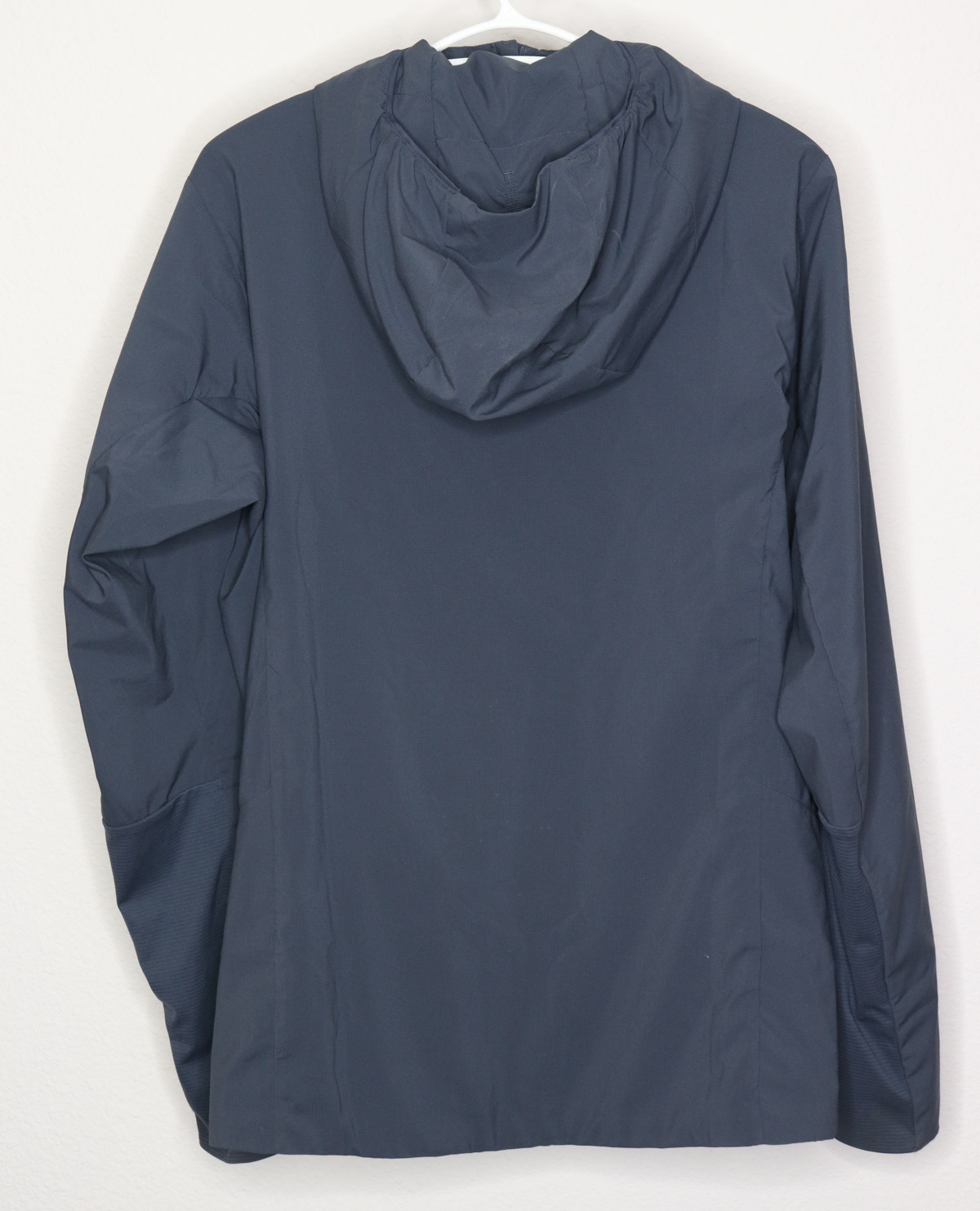
Patagonia’s Light Touch Expansion Hood is designed to fit over a helmet, and the hood is bound with an elastic hem. A zipper garage at the chin keeps the metal zipper off your skin.
The hoody is treated with a DWR finish to resist puddle splashes and light rain. It features glove-friendly string pulls on both zippers, but there are no reflective logos or details to enhance your visibility while cycling.
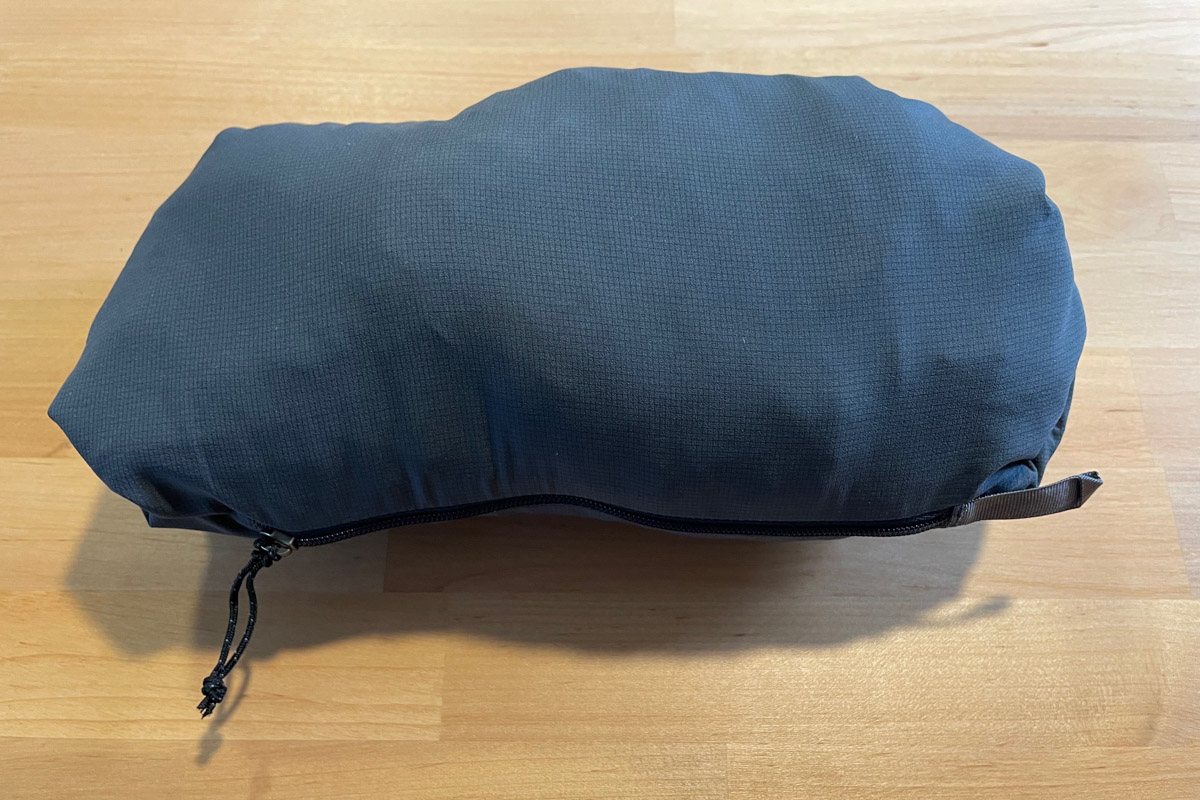
The Nano Air Ultralight hoody has one large chest pocket to keep small items at hand, and the pocket doubles as a stuff sack for the hoody. The hoody packs into the pocket easily, and winds up about 10×5”.
Ride Impressions – Fit and Features:
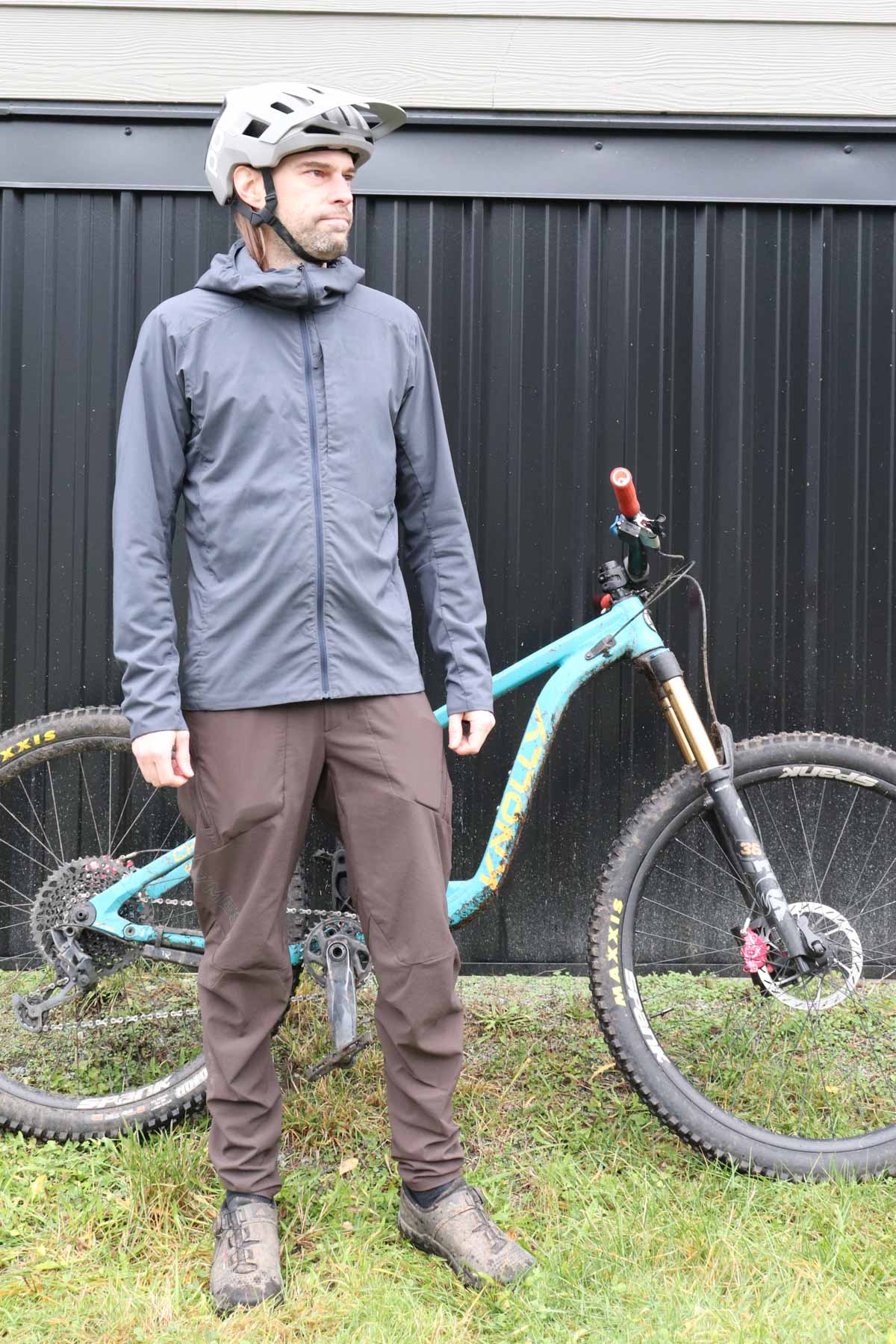
I’m 5’10” tall, and I’m wearing a size small Nano Air Ultralight hoody. Overall, the fit is great for me, but the body has a pretty slim cut! I’m a small guy, and there is not a lot of extra space in the torso. I wouldn’t wear anything bulky underneath this hoody, but there is ample room for a jersey.
The shoulders are roomy enough not to restrict my motion at all, and the sleeves are long enough to keep my arms covered while riding. The hoody’s articulated patterning and stretchy fabrics also ensure free movement. I really like the collar: I can pull it way up to my nose easily, so it’s great for keeping wind at bay. When zipped down it falls off to the sides and stays out of the way.
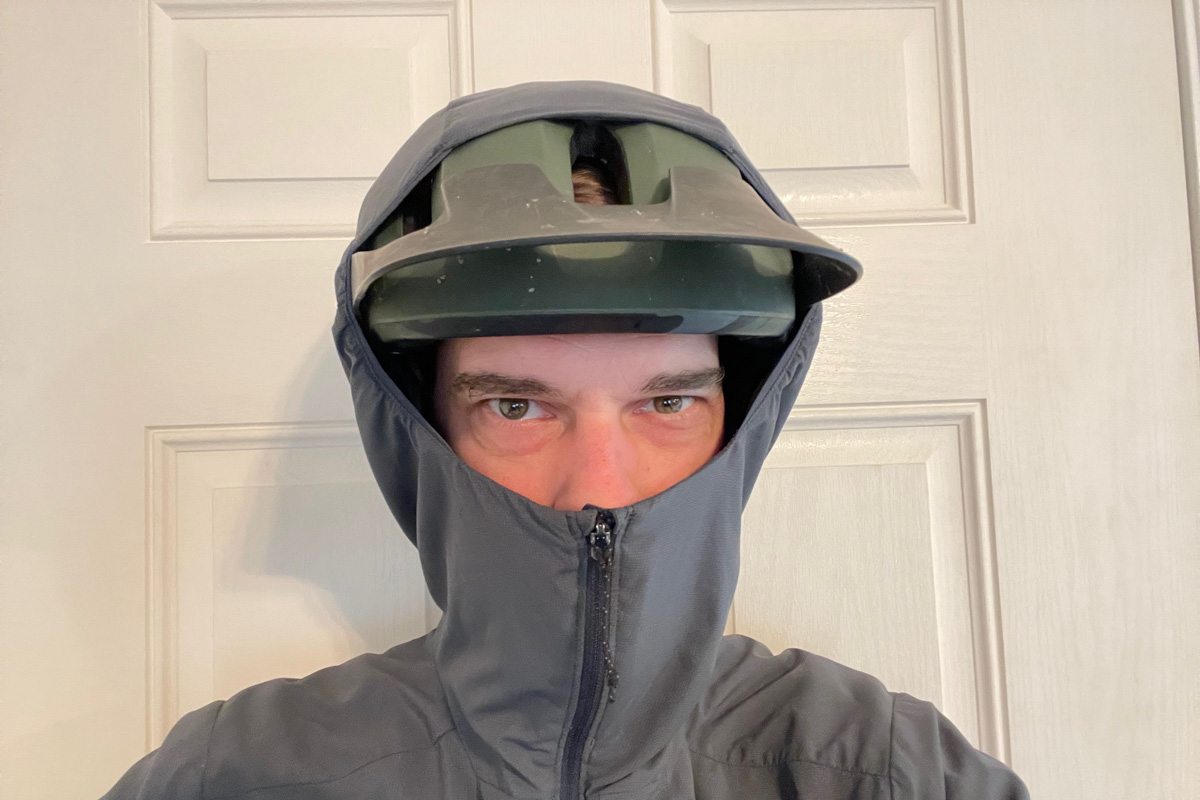
It’s a bit of a stretch to get the Nano Air Ultralight’s hood over an MTB helmet. You can do it, but it might be a bit restrictive to ride with, depending on how large your helmet is – the photo above shows me wearing my fairly slim Oakley DRT5 helmet. I still prefer to have the hood for pre- or post-ride hangouts (or off-bike use). I’d be happy to have two hand pockets, but keeping things lean, Patagonia went without them for this piece.
Temperature/Moisture Regulation:

I began testing the Nano Air Ultralight hoody in the Spring, then rode it again throughout the fall. One early test ride was at roughly 10-12°C (50-53.6ºF). I quickly discovered that despite being so thin, this hoody retains a lot of heat once you warm up inside it. After 20 minutes of climbing with a short-sleeve jersey underneath, I felt comfortable but was much more sweaty than I realized. At that point, I stashed the hoody in my pack.
After a few similar rides, I realized I was underestimating how warm the Nano Air Ultralight hoody would get, so I kept that in mind for my fall rides. Perhaps 8-10° was the sweet spot for this piece?

Finding the Nano Air Ultralight hoody’s ideal temperature range proved a bit tricky. This fall I started wearing the hoody in temperatures around 10°, but as I adapted to cooler weather, I realized that was still too warm.
Between several rides with long or short-sleeved jerseys under the hoody, I consistently found it difficult to keep myself from sweating excessively after 15-20 minutes of climbing. Patagonia describes the Nano Air Ultralight hoody as a highly breathable piece, but it struggled to vent heat quickly enough to keep me dry.
If you don’t remove this hoody as soon as you get warm, within minutes you’ll be sweaty inside it. On most of my test rides, in temperatures down to 7°C (44.6ºF), I had to remove the hoody and stash it away during my climb.
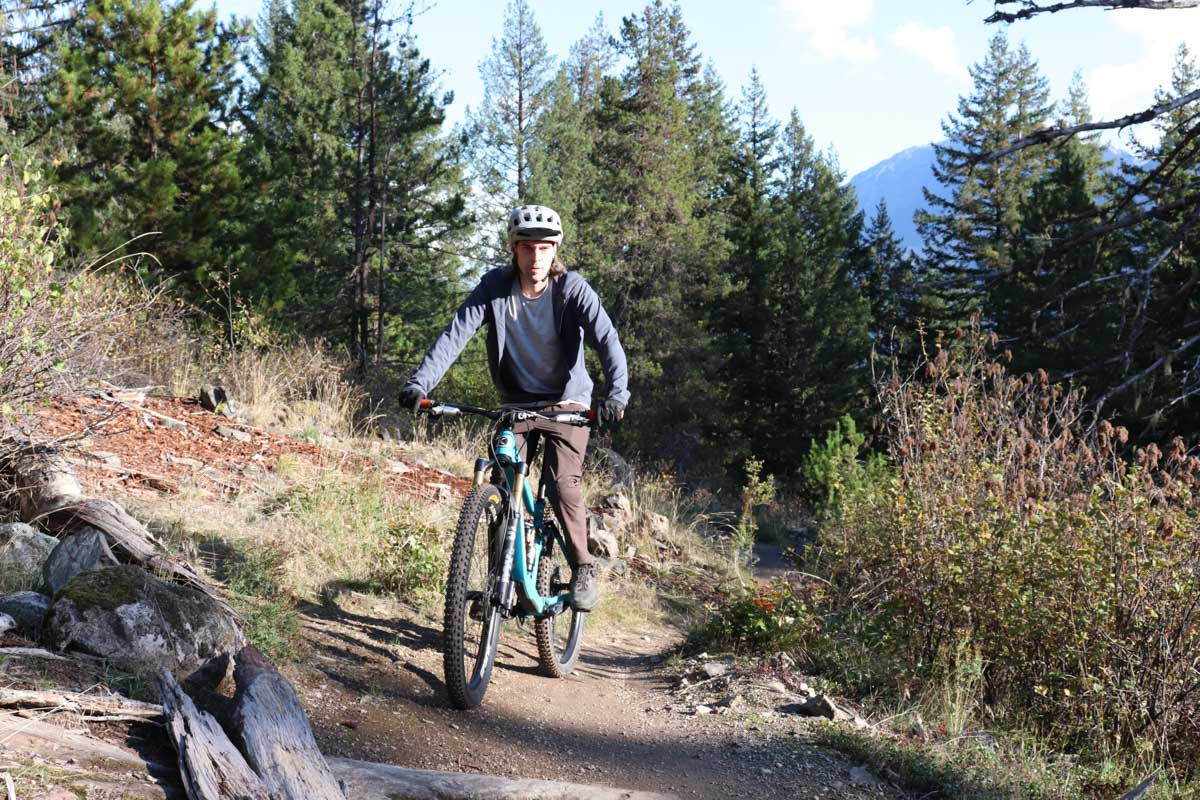
I did try fully opening the zipper instead of removing the hoody, and this was fairly tolerable, but my armpits, arms, and back stayed warmer than I would have liked. Opening the Nano Air Ultralight’s front zipper will help cool your chest and belly down, but the hoody’s slim fit doesn’t allow much airflow elsewhere. The non-insulated panels under the arms don’t vent heat as well as I would have hoped.
The Nano Air Ultralight hoody does absorb moisture quite well. I noticed after one climb my jersey felt damp, but the hoody looked and felt surprisingly dry. Since this layer heats up so quickly, that’s actually a bit problematic, as it tempts you to wear it until you’re already too hot. After getting sweaty, I wound up feeling a chill during some trailside breaks with the hoody off.
As temperatures dropped, I eventually wore the Nano Air Ultralight for a ride at just 4-5°C (39-41°F). This is the closest I got to finding a ‘sweet spot’ temperature-wise, but it still wasn’t perfectly ideal. I was less chilly than expected riding to the trailhead (with a long-sleeve jersey underneath), as the hoody does block wind fairly well.
After 15 minutes of climbing with the hoody’s zipper partway down, I was a little sweaty, but to an acceptable degree this time. I then climbed another section of trail and remained fairly dry and not overheated. Before descending, I zipped the hoody back up, and I stayed comfortable through the descent and pedal home. It seemed I finally found a temperature where the Nano Air Ultralight hoody wasn’t overheating me, but it rode a fine line: It was just warm enough to prevent a cold start on this ride, and when I stopped for breaks I was cooling down quickly.
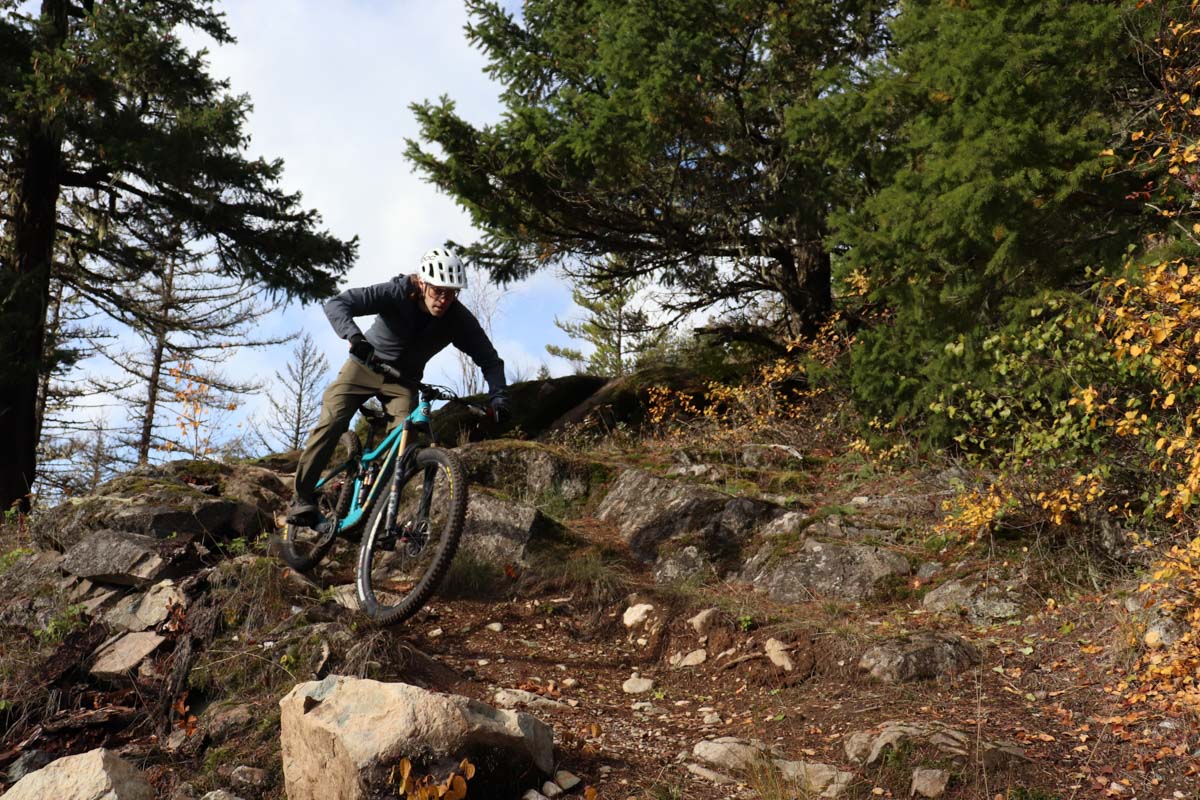
The bottom line is I can’t nail down a temperature range that would allow you to wear this hoody throughout an entire ride. It heats up surprisingly quickly, but doesn’t breathe well enough to keep you from sweating. I did two comparison rides in my 7mesh Spruce hoody, and it felt warmer out of the gate, vented my body heat much better, and kept me drier than the Nano Air Ultralight.
If you don’t ride with a pack, the Nano Air Ultralight hoody could be tricky to work with. If you have the option, your best bet is to pull this layer off after some climbing and maybe put it back on for descents.
Weather Resistance, Packability, and Durability:
One thing I was impressed with was the Nano Air Ultralight hoody’s wind resistance. I never noticed air cutting through it while I was descending, or standing around setting up photos. Only a strong, cold wind could threaten to chill you in this light hoody. The tall collar is very protective too; It effectively blocked wind from getting down my neck and never felt bunchy or annoying.
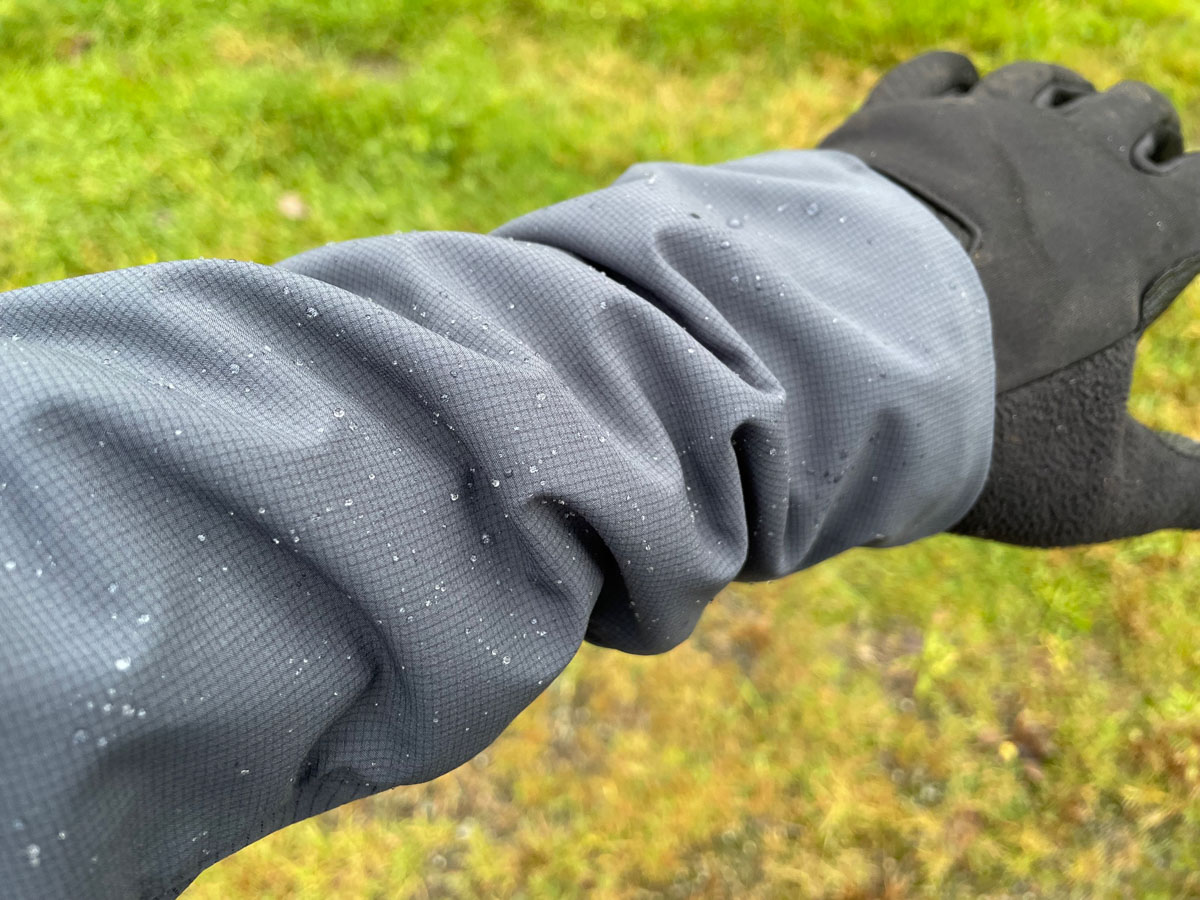
The Nano Air Ultralight hoody’s DWR coating got splashed pretty good on one muddy ride. The hoody does resist splashes well, none of the wet spots soaked through, and the mud splatters washed out. I did notice water droplets beading up on the shell in misty conditions.
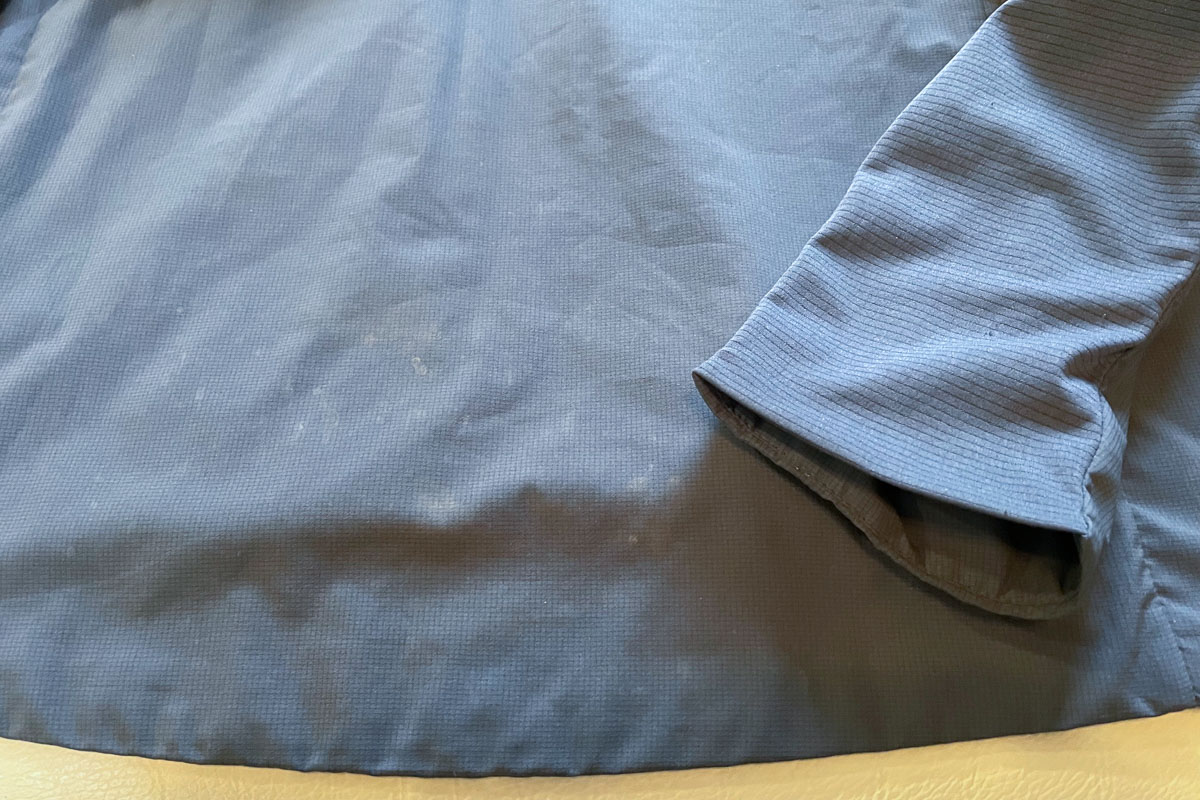
After many rides with hydration packs (and my camera pack), the hoody’s back panel isn’t showing any wear or fabric pilling at all. In fact, there is no damage to be found anywhere on the hoody, so it has proven to be very durable.
As far as packability, the Nano Air Ultralight hoody does pack up fairly small. Any medium-sized backpack will swallow it easily, and I managed to stuff it into my smaller Camelbak Chase vest.

The Nano Air Ultralight Full Zip Hoody retails for $249. There are five different colors available for men’s models (I tested Smolder Blue), and sizes range from XS-XXL. Women’s models are also available: Patagonia offers four color options in sizes XXS-XXL.