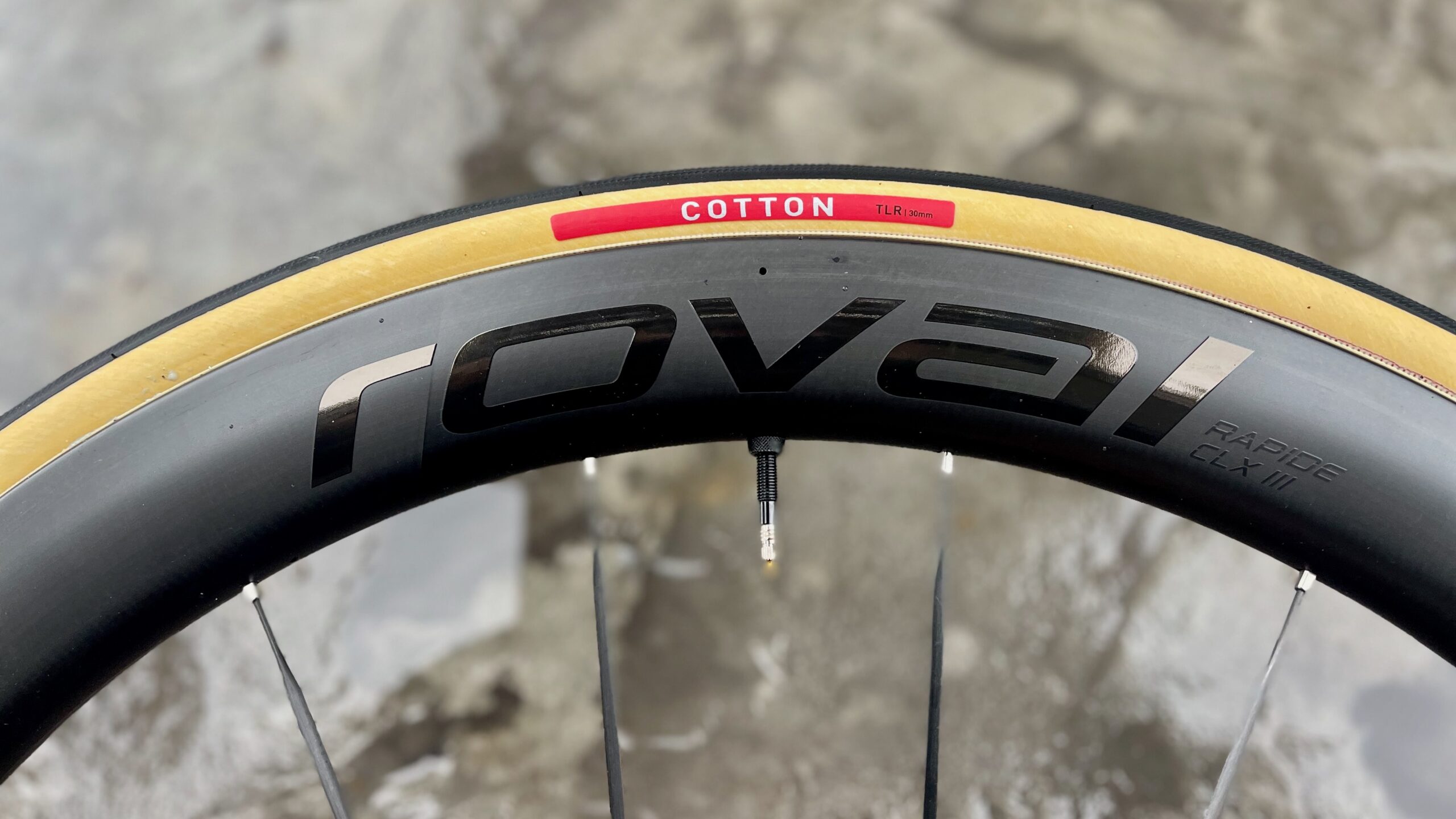


We’ve seen spy pictures, and a team car loaded with a new Specialized Cotton TLR tire, but only speculation and rumors surfaced – until today. The new tire in question is the Specialized Cotton TLR, and it’s all about going fast, but is that enough for the classics and the savage conditions that accompany them?

What is it? Specialized Cotton TLR
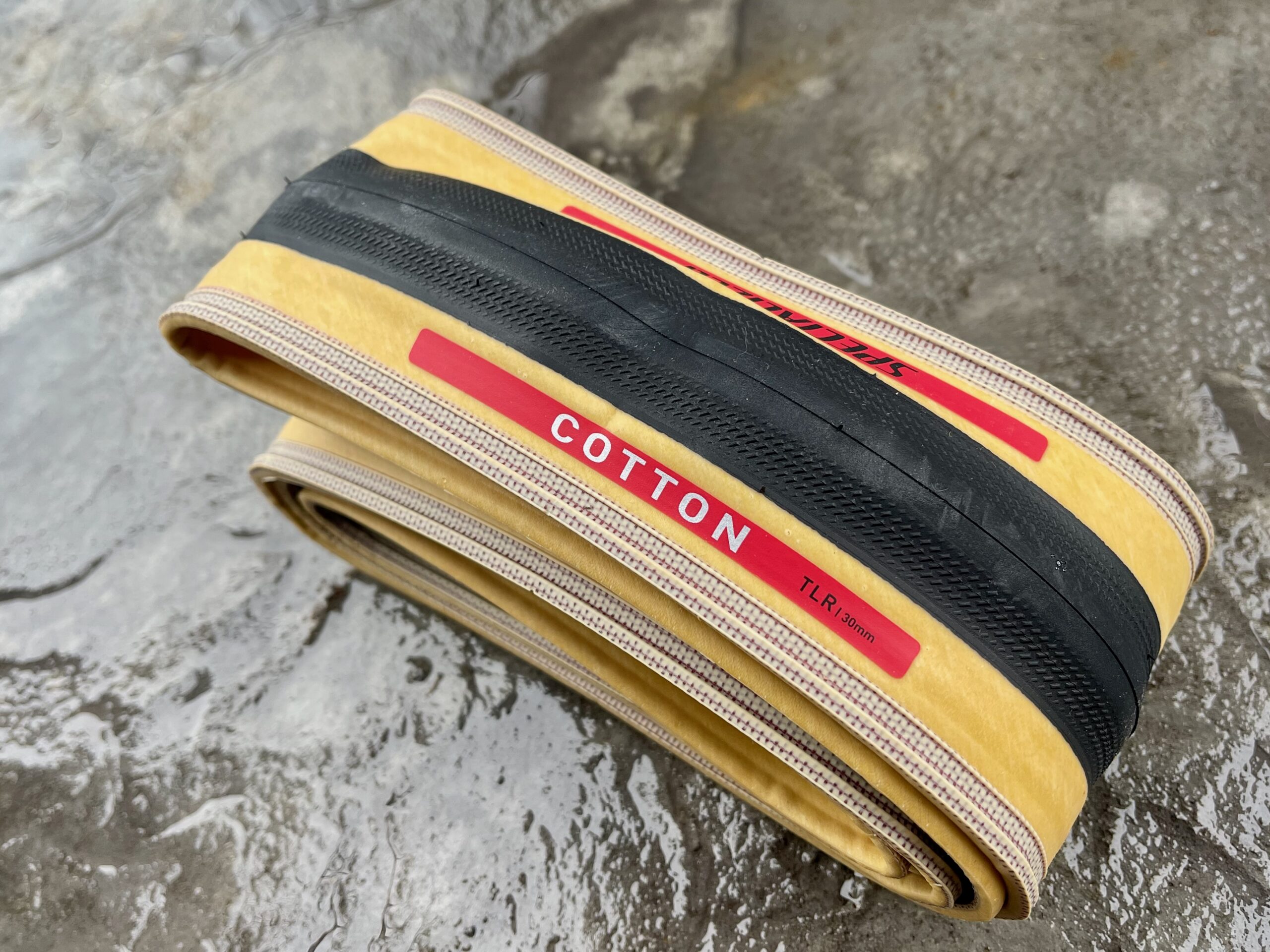
The new Specialized Cotton TLR takes the brand’s long-running cotton race tire concept and re-engineers it for today’s hookless rims (save your comments till the end), higher speeds, and wider tire norms. At its core is a 320 TPI poly-cotton corespun casing paired with Specialized’s dual-compound Gripton T2/T5 race-only rubber. This rubber is the same as that found on the Specialized Rapid Air tires (reviewed here).
But the real question isn’t whether it’s fast – it’s whether it’s tough enough for the Classics.
Reimagined Classic Cotton
Specialized’s cotton story isn’t new. Back in 2012, the brand’s original cotton clincher helped deliver a World Championship win, proving clinchers could outperform (or equal) tubulars at the highest level. I was a fan, the ride felt similar to a tubular, didn’t require glue, and rolled faster than most – a pretty big win.

The Cotton TLR builds on that foundation but modernizes the construction. Instead of a purely traditional cotton casing, it uses a hybrid poly-cotton structure: a polyester core for strength and elasticity wrapped in cotton fibers for suppleness and road conformity. The result is a casing designed to deform easily over rough surfaces (a bonus for the cobbled classics) and maintain contact patch consistency while smoothing vibration.
The tread uses a dual compound layout:
- Gripton T2 center for lower rolling resistance
- Gripton T5 shoulders for confident cornering
It’s cotton, but not nostalgic cotton, like the kind you need to Aqua-Seal. This is cotton built with modern rubber chemistry and tighter production tolerances. But I’m still wondering how abrasion-resistant these tires are. Our samples are very thin and lightweight.
Tubeless > Tubular?
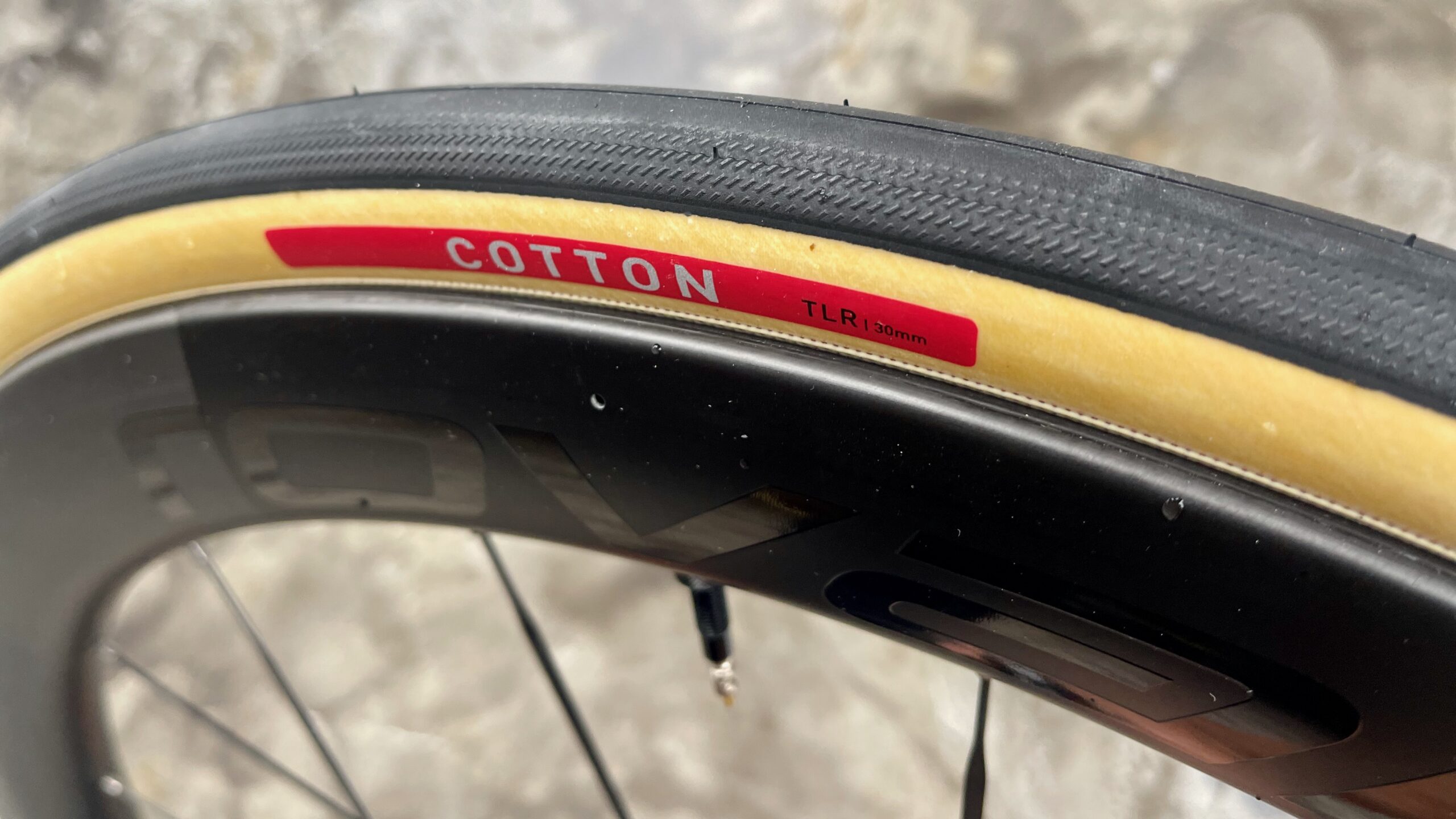
Where earlier cotton race tires leaned heavily on traditional construction methods (basically an open tubular), the Cotton TLR is engineered specifically for tubeless systems. Specialized emphasizes tighter bead tolerances, improved bonding strength, and enhanced burst resistance. These play a critical role when riders are pushing lower pressures at race intensity and speed.
Weights and Widths
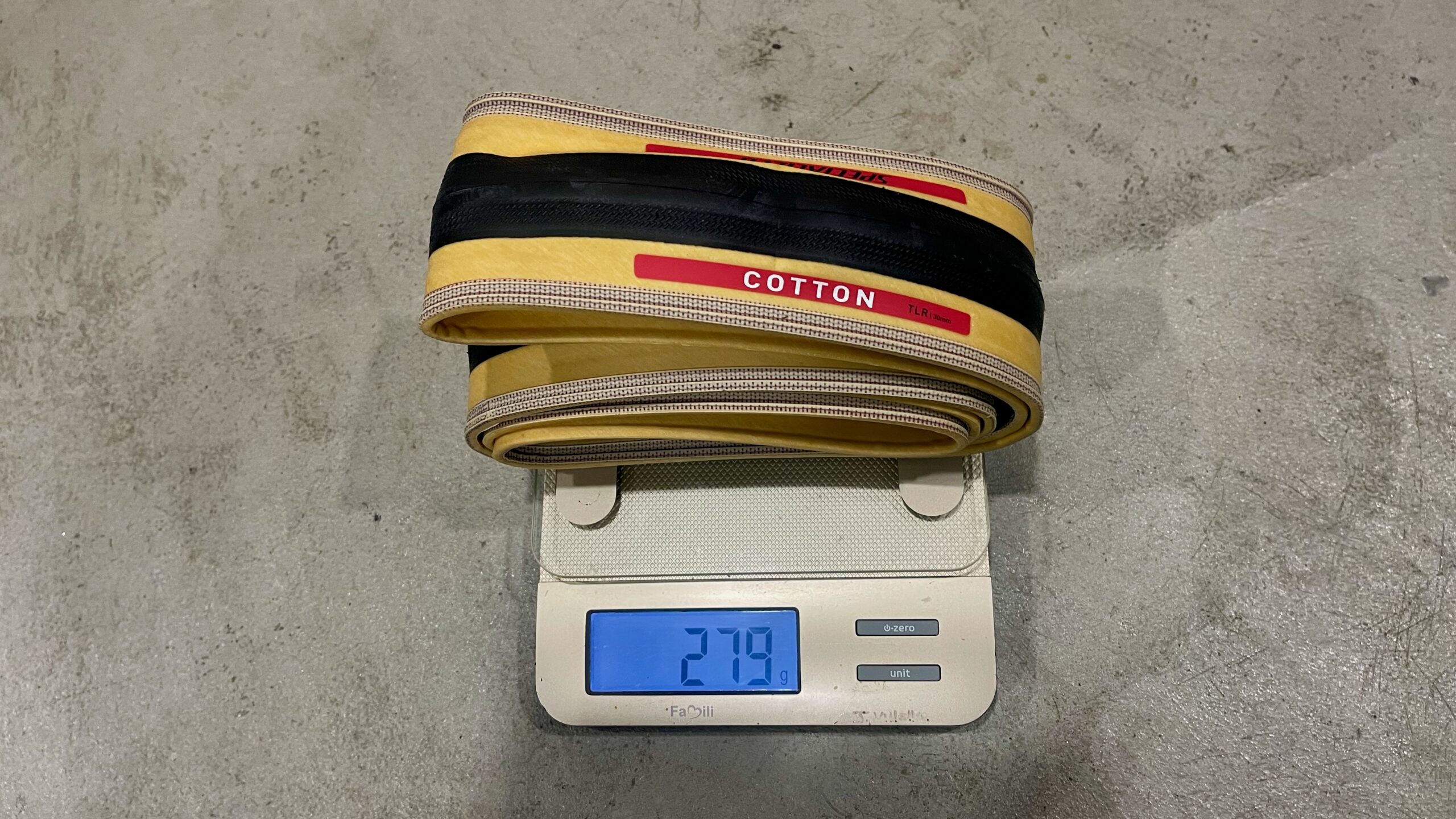
Weights are competitive:
- 700×28 — 280g
- 700×30 — 290g (279g* Actual)
- 700×32 — 320g

Widths are… narrow. Our sample 30mm tire measures 27.80mm on a Specialized Roval Rapide CLX III with a interal rim width of 21mm and an external of 35mm. We’ll see how much this stretches out over time. We’re guessing this will be the choice for the Specialized teams rolling the Cotton TLR Race tires for Paris-Nice this weekend.
Can It Handle the Classics?
Specialized isn’t a company that just rolls the dice and sees if things will work out. We’re guessing that these tires spent more than a few days in the forest and over the cobbles. That said, race day is a totally different beast. You’re off the racing line sometimes, you’re pushing through the exertion, and a flat could be the end of your day. Which is why I would have imagined seeing more of a Mondo-style casing option, but…I guess those who favor that style tire will just ride the S-Works Turbo or Mondo.
A 320 TPI poly-cotton casing that conforms easily to uneven surfaces could be an advantage. Wider sizes paired with lower pressures may allow riders to float over pavé sectors rather than fight them. This comfort and suppleness is exactly why tubular tires like Dugast and FMB dominated the classics for years, some even re-badged at Specialized. No matter how you package it, reduced vibration means less rider fatigue — and in races that stretch past 250 kilometers, that matters.
The Unknown Variable Is Durability
The Cotton TLR is positioned as a race-focused tire for riders prioritizing speed and feel. It’s not marketed as a puncture-proof endurance tire designed for massive mileage totals. The Classics demand resistance to flint cuts, sidewall abrasions, and repeated high-impact hits (and cracked rims).
Specialized claims bead security and stronger bonding, suggesting the tire is more robust than traditional boutique cotton offerings. But cobbled monuments are unforgiving. They expose weaknesses quickly, and we’ll be watching to see how the story unfolds.
Our tires just arrived in time to get photos and weights, but they look great. We’re excited to push them through the local pave’. We’re also excited about the classics and expect to see them in full display this weekend at Paris-Nice.
Price: $110


