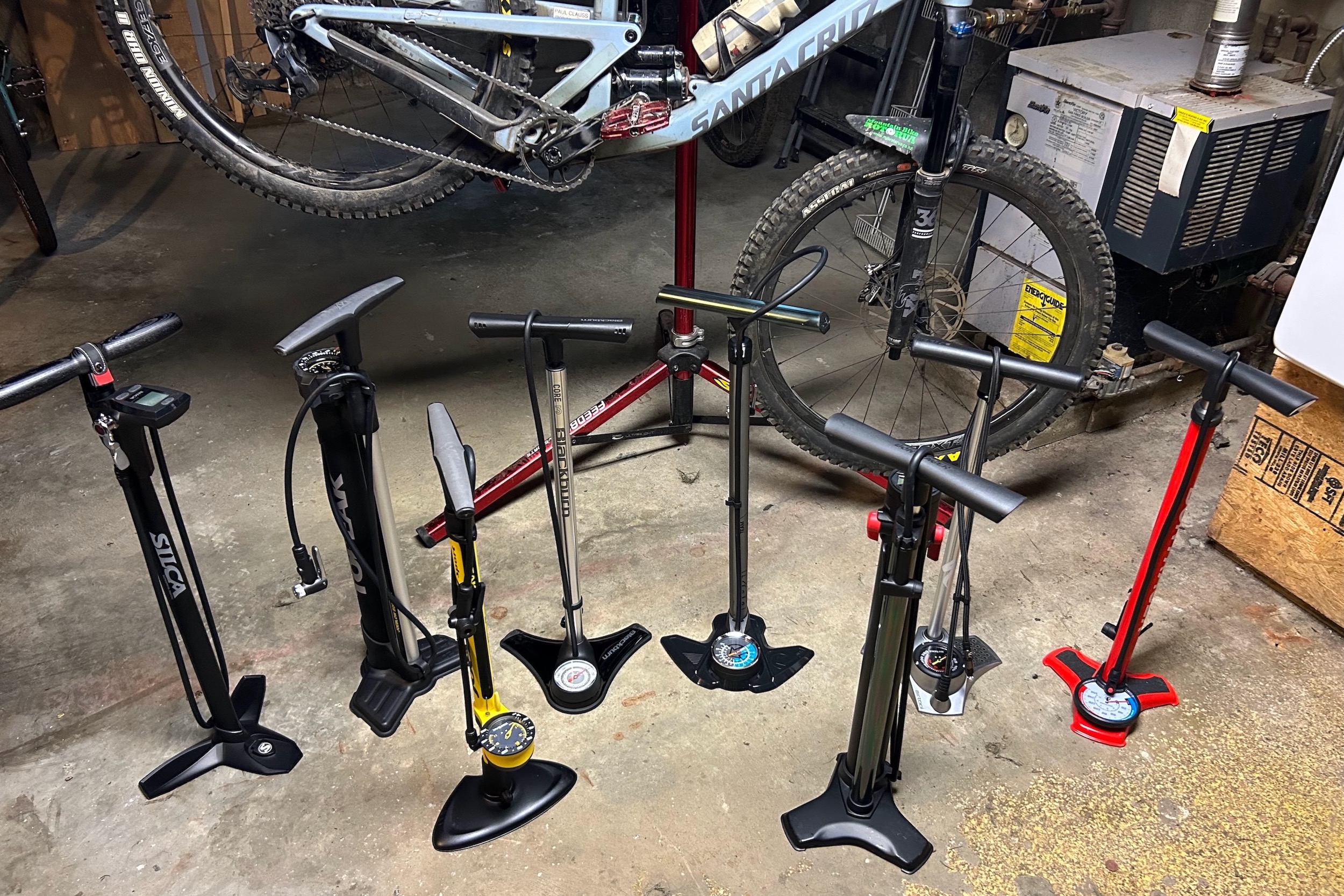


Whether you ride road, gravel, mountain, or electric bikes, a good bike pump is a must-have for every cyclist. Maintaining the proper tire pressure is critical for your comfort and safety, and the performance of your tires on the roads and trails.
While they all perform the same basic task, there is a wide variety of pumps with literally hundreds of models to choose from. Whether for high volume, high pressure, seating tubeless tires, or carrying with you on rides, there are lots of great options to keep your bike rolling smoothly.
We tested a diverse selection of the best pumps available today and have recommendations for all types of pumps and riders. Our list includes high-end and budget-friendly models, high-volume and high-pressure, digital and analog gauges, electric inflators, and booster pumps for seating tubeless tires.
From the classy and durable Silca Pista Plus to the budget-friendly Topeak Joe Blow Sport III, our top recommendations are listed below. And if you’re unsure what you need, our buying advice can help point you in the right direction.
Editor’s Note: This guide was updated on September 1, 2026, with the addition of the ultra-light Cycplus AS2 Ultra electric inflator and impressions from extended testing of the Feedback Sports Pneuma CC.
The Best Bike Pumps of 2026
Bontrager Dual Charger
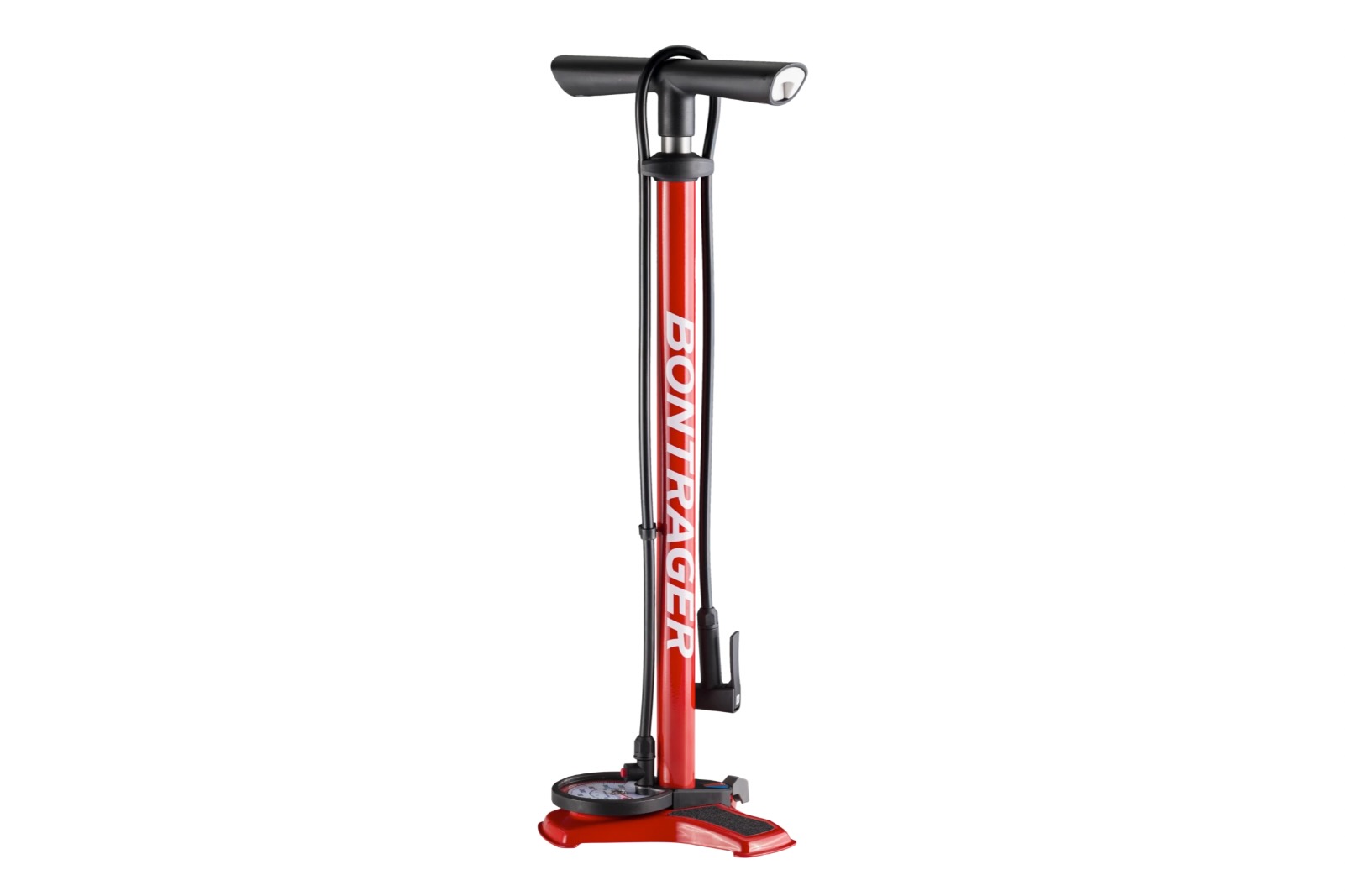
- MSRP: $80
- Valves: Presta and Schrader all-in-one
- Max PSI: 160 (11 bar)
- Hose Length: 46” (117cm)
- Gauge: Analog
- Weight: 1,692g
Pros
- Switch between high-volume and high-pressure easily
- Great efficiency in high volume mode
- Stable base
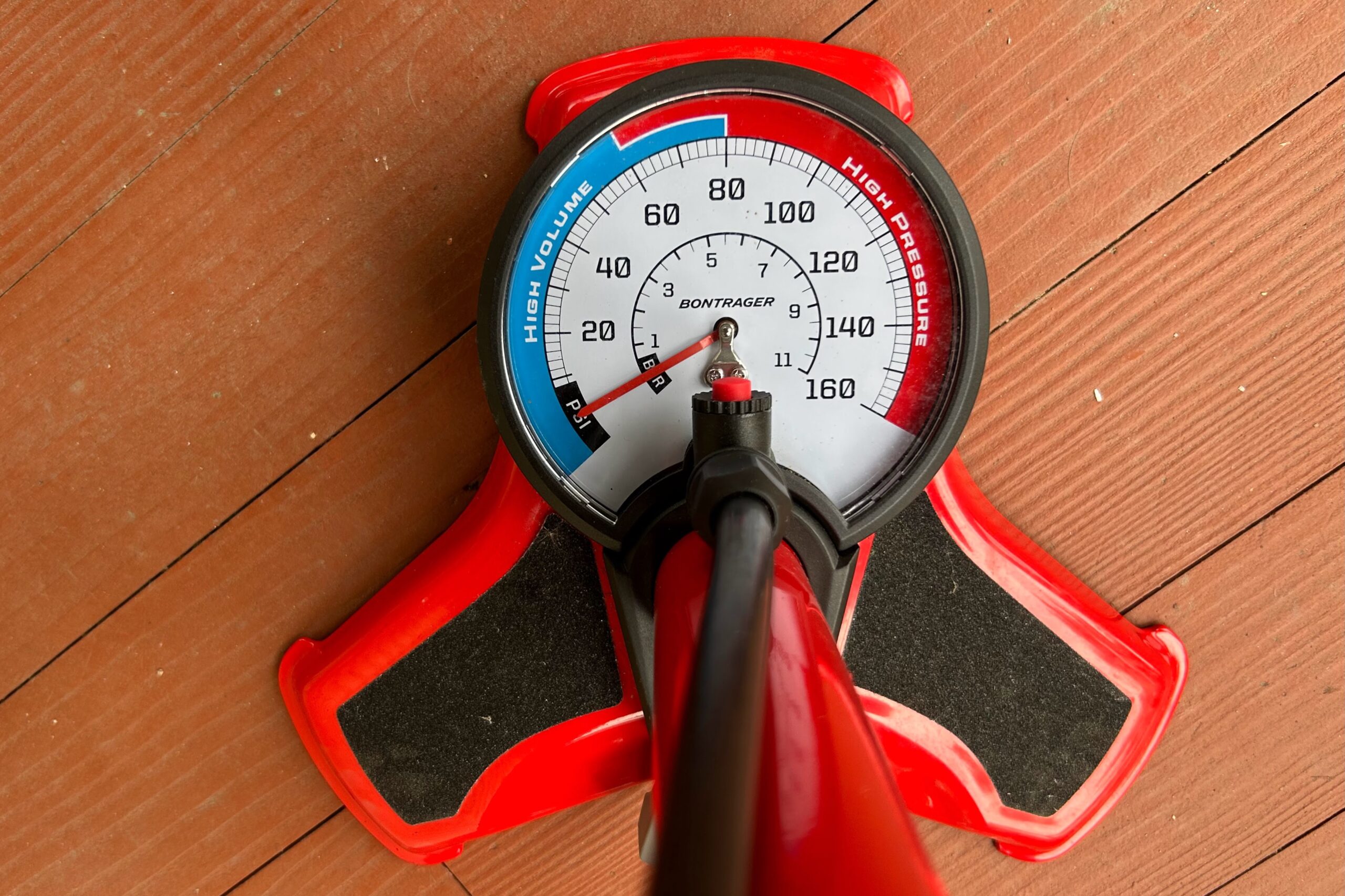
- Large, easy to read analog gauge
- Long hose
- Red color is easy to spot
Cons
- Average all-in-one head connection
- Head can be finicky
- Gauge is not the most accurate
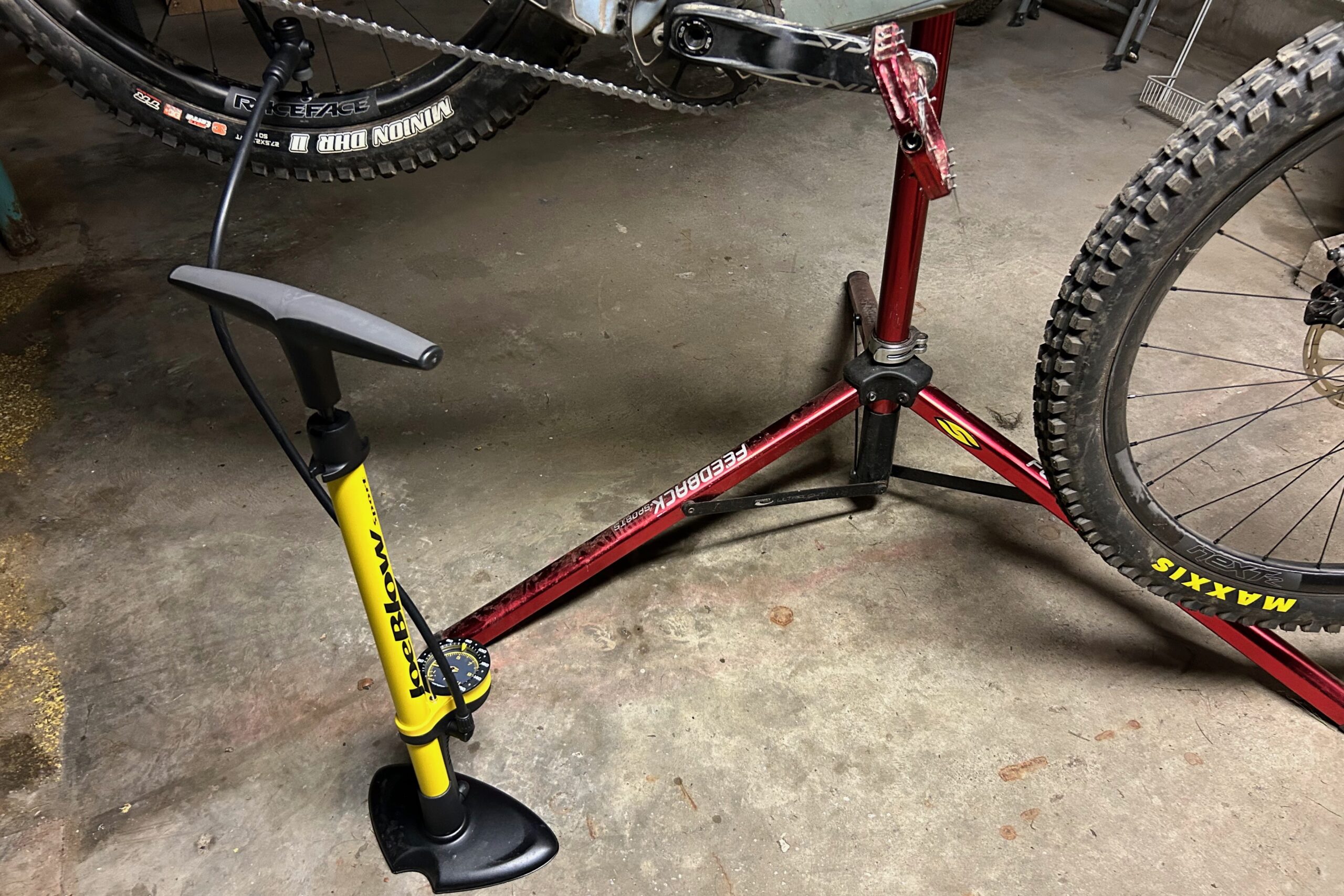
Topeak Joe Blow Sport III
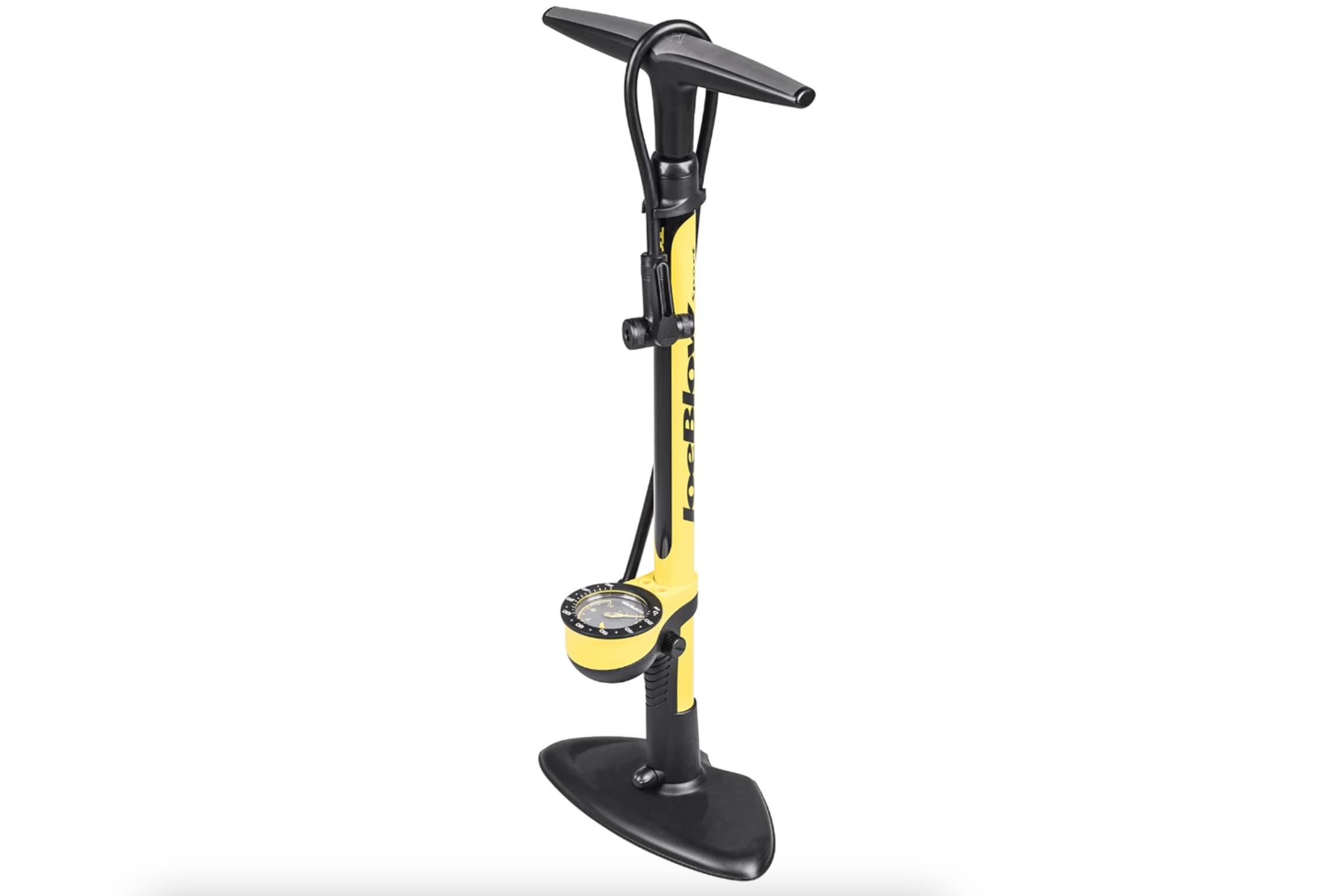
- MSRP: $70
- Valves: Presta and Schrader with two sided head
- Max PSI: 160psi (11 bar)
- Hose Length: 30” (76cm)
- Gauge: Analog
- Weight: 1,622g
Pros
- Solid value
- Solid gauge accuracy
- Smooth operation
- Durable
Cons
- Short hose length made less usable being mounted at bottom of pump
- Base isn't the most stable
- Switch on head is difficult to use with one hand
Blackburn Chamber Tubeless Floor Pump
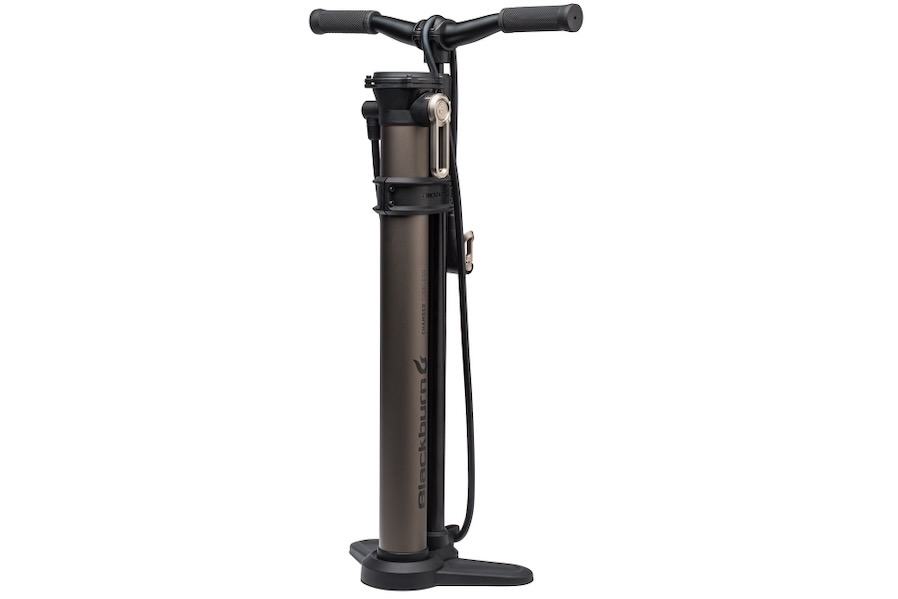
- MSRP: $220
- Valves: Presta and Schrader – flip-able head
- Max psi: 160
- Hose length: 62"
- Gauge: Analog
- Weight: 3,150 g
Pros
- Wide handle with mtb grips = better pumping ergonomics
- Seats tubeless tires with ease
- Dual function – regular pump and tubeless booster
- Durable construction
Cons
- Expensive
- Larger size and heavier weight
Silca Pista Plus
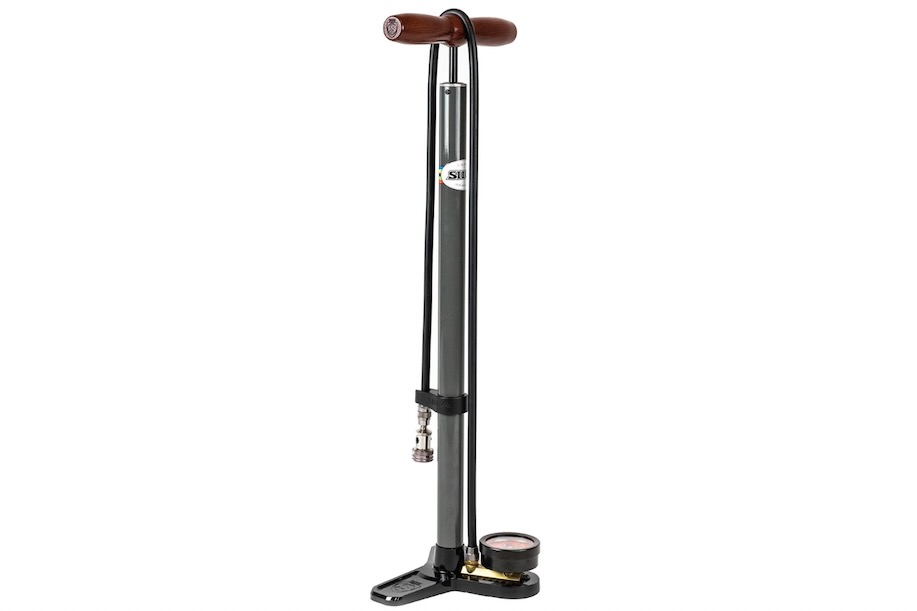
- MSRP: $200
- Valves: Presta and Schrader
- Max psi: 120
- Hose length: 40" (102.5 cm)
- Gauge: Analog
- Weight: 1,575 g
Pros
- Durable and repairable
- Powerful
- Accurate
- Timeless
Cons
- Expensive
Feedback Sports Pneuma CC
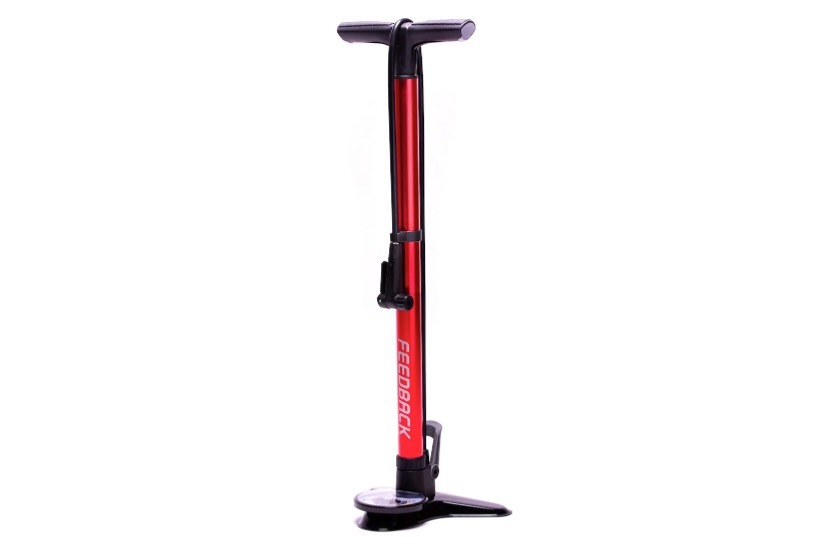
- MSRP: $150
- Valves: Presta, Schrader, and Clik
- Max psi: 160
- Hose length: 39.4" (100 cm)
- Gauge: Analog
- Weight: 1,936 g
Pros
- Works as a standard pump and mini tubeless booster
- Works well for high pressure and high volume tires
- Charger tank foot pedal is easy to operate
- Replacement parts available
- Huge gauge is easy to read and accurate
- Much lighter than most booster/charger type pumps
Cons
- Awkward to pick up unless hose is secured over handle
- Mid-sized chamber doesn't always seat tricky tubeless setups
Trek Air Rush Electric Pump
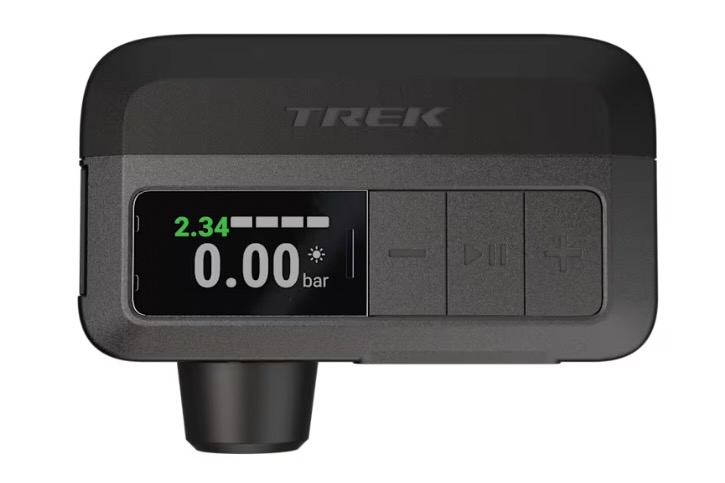
- MSRP: $100
- Weight (measured): Pump: 138 g, Bag: 13 g, total: 151 g
- Dimensions: 45 x 32 x 80mm
- Max pressure: 120 psi
- Claimed accuracy: not specified
- Gauge: Digital w/preset
- Battery Size: 33.7Wh Lithium-polymer
- Charge time: ~50 min.
Pros
- Reasonably priced
- Super easy to use
- Compact and relatively lightweight
- Digital display with preset psi
- Auto shutoff
Cons
- Loud – like all electric inflators
- Gets hot – like all electric inflators
Lezyne Tech Drive HV
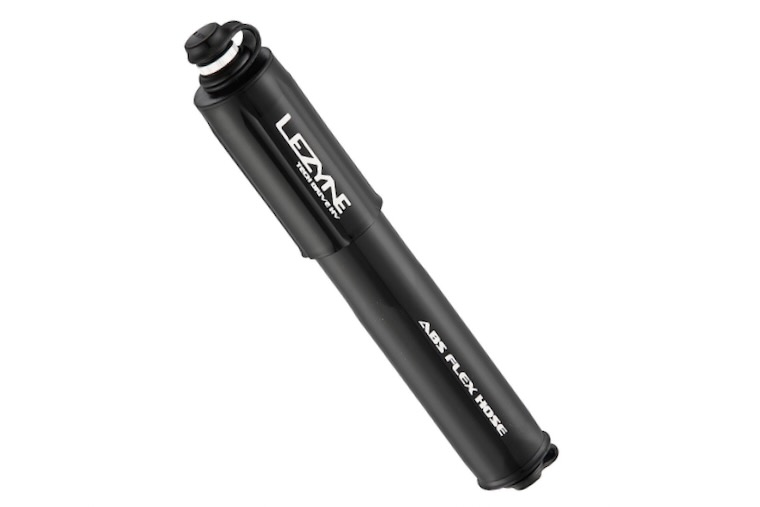
- MSRP: $45
- Valves: Presta and Schrader
- Max psi: 90
- Hose length: 6"
- Gauge: None
- Weight: 131 g (medium)
Pros
- Longer flex hose for easy valve access
- Light weight
- Moves a good volume of air
- Fair price
Cons
- Not great for high pressure applications
- Medium size we tested is fairly long and bulky
Pro Bike Tool High Pressure Mini Bike Pump with Gauge
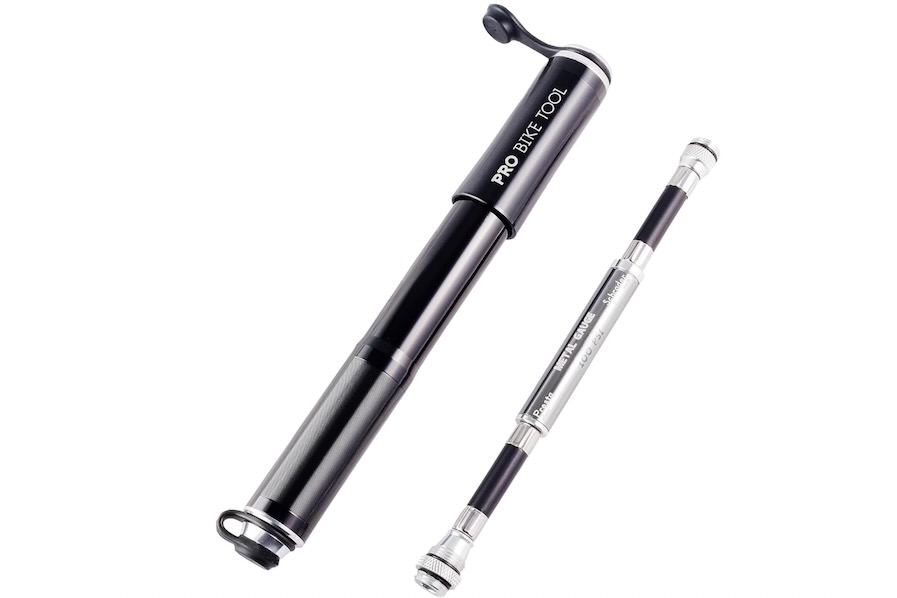
- MSRP: $25 – $28, depending on color
- Valves: Reversible Presta and Schrader
- Max psi: 100
- Hose length: 7"
- Gauge: Analog in-line
- Weight: 128 g
Pros
- CNC aluminum construction
- Integrated hose with gauge
- Included bike frame mount
- Affordable
Cons
- Gauge limits hose flexibility
Other Bike Pumps to Keep Your Tires Inflated
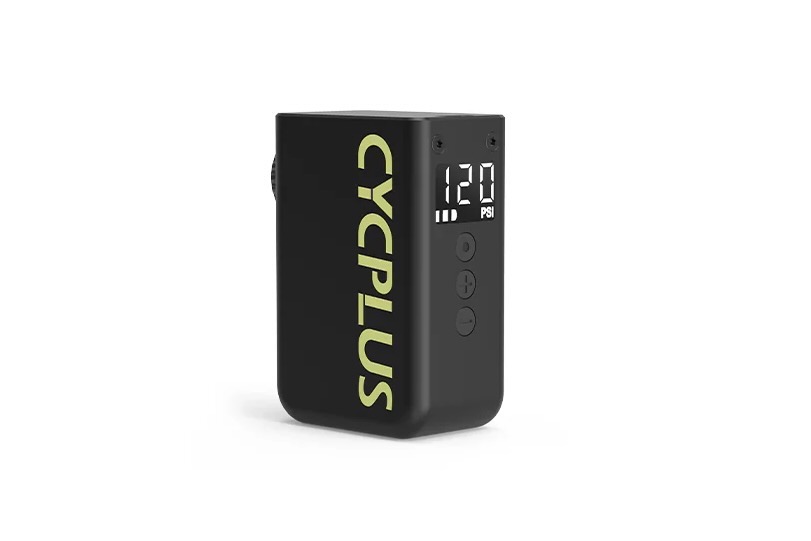
- MSRP: $120
- Weight (measured): 88 g (105 g w/cover, 128 g w/cover and hose)
- Dimensions: 65 mm L x 47.5 mm W x 28 mm D
- Max pressure: 120 psi
- Claimed accuracy: 1 psi
- Battery size: 400 mAh
- Charge time: 25 min
Pros
- Lightweight
- Smaller size is easier to carry
- Solid gauge accuracy
- Surprisingly good pumping performance
- Reasonably priced for the category
Cons
- Not as much pumping capacity as heavier options
- A soft storage bag would be nice to keep everything together
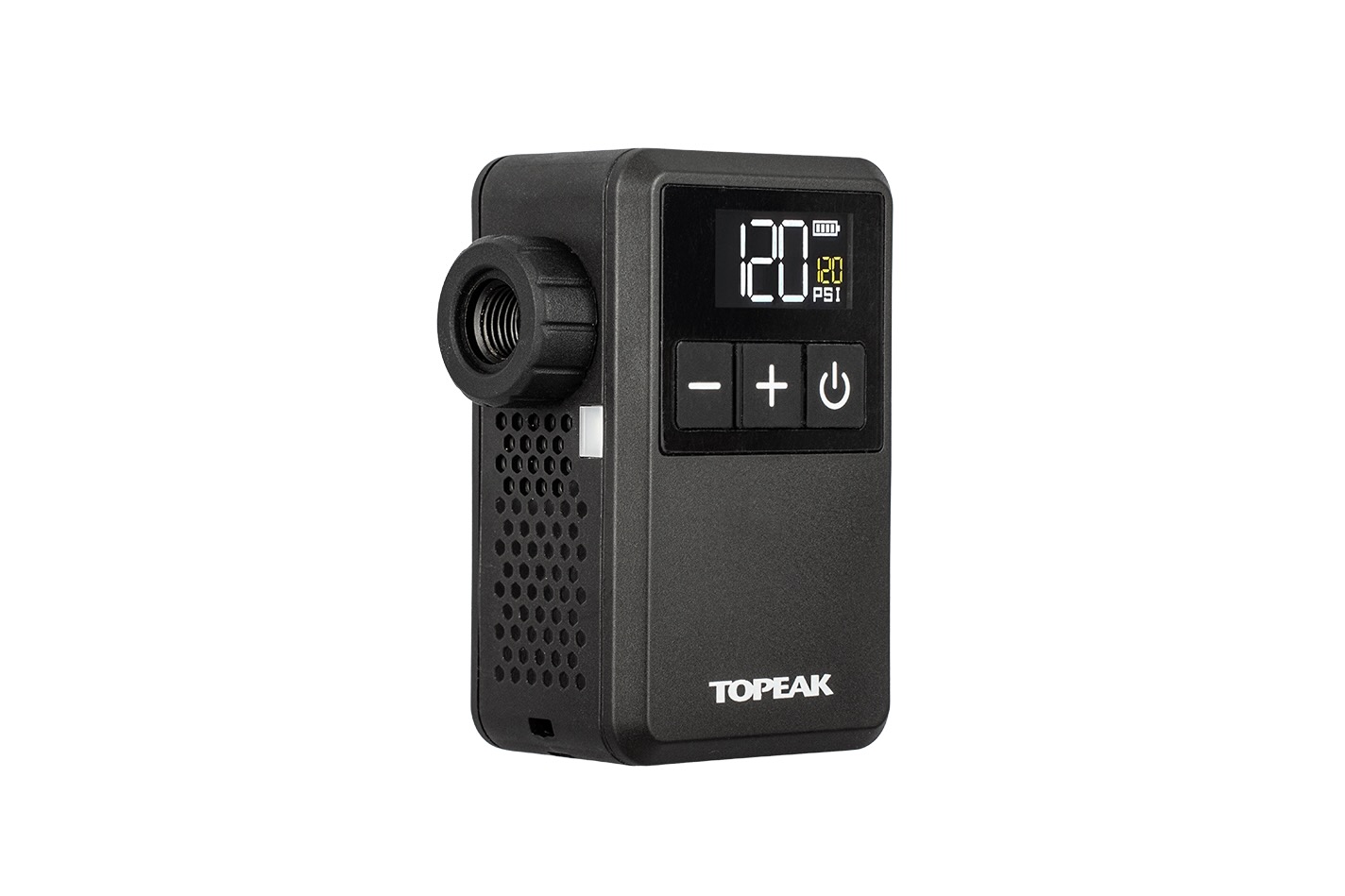
- MSRP: $155
- Weight (measured): Pump: 121 g, Hose: 22 g, Bag: 8 g, total: 151 g
- Dimensions: 54 x 33 x 72mm
- Max pressure: 120 psi
- Claimed accuracy: +/- 2 psi
- Gauge: Digital w/preset
- Battery Size: 500 mAh
- Charge time: 45 min.
Pros
- Very compact
- Lightweight – much lighter than the larger size
- Improved display screen and location
- Works with all valve types
- Surprisingly good pumping performance
- Comes with a soft storage bag
Cons
- Fairly expensive
- Kinda loud – like other electric pumps
- Need to remember to check battery and recharge occasionally
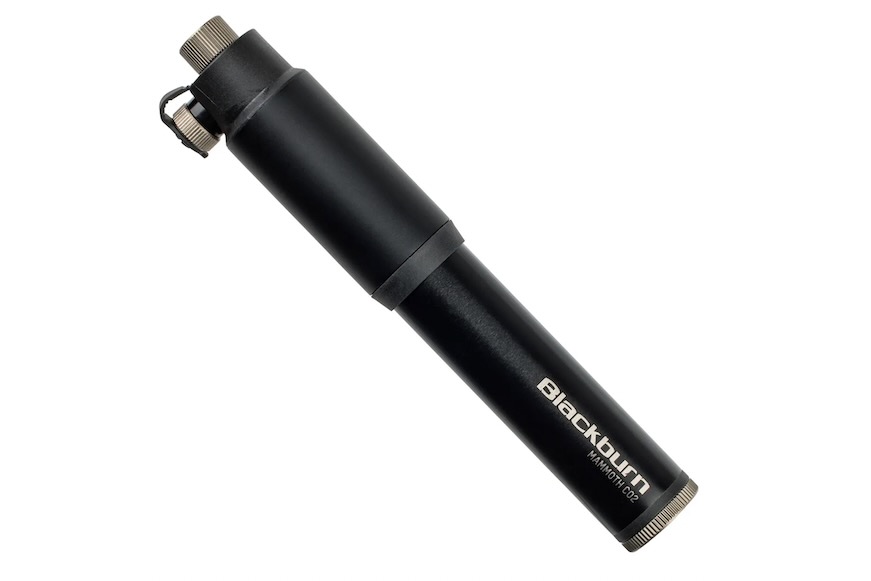
- MSRP: $55
- Valves: Presta
- Max psi: Not specified
- Hose length: 3"
- Gauge: None
- Weight: 134 g
Pros
- Mini-pump and CO2 inflator in one
- Compact size – fits in a jersey pocket
- Light weight
- Good for higher volume applications – MTB and gravel
Cons
- Doesn't work with Schrader valves
- Not great for high-pressure pumping
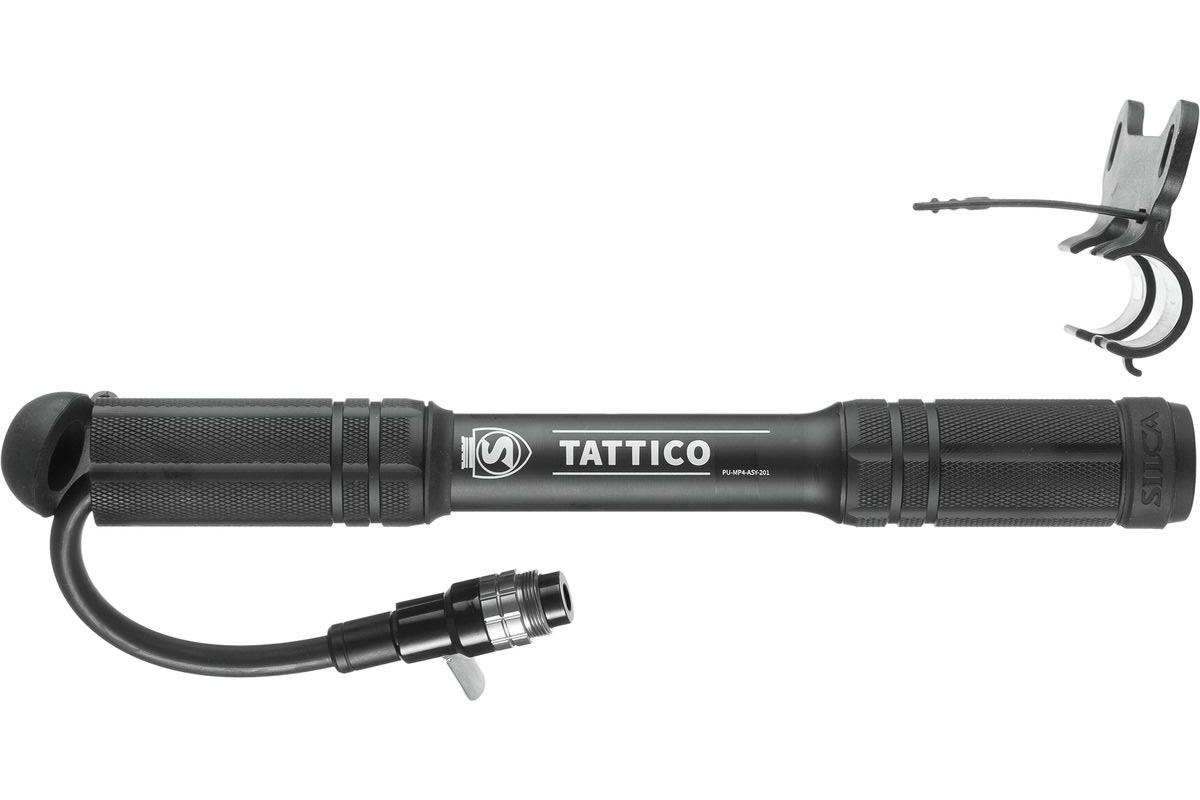
- MSRP: $70
- Valves: Reversible locking, fits Presta and Schrader
- Max psi: 100
- Hose length: 3.5"
- Gauge: None
- Weight: 165 g
Pros
- Ultra-compact design
- Hidden air hose
- Integrated heat sinks
Cons
- Not the easiest to mount to bike frame
- Expensive
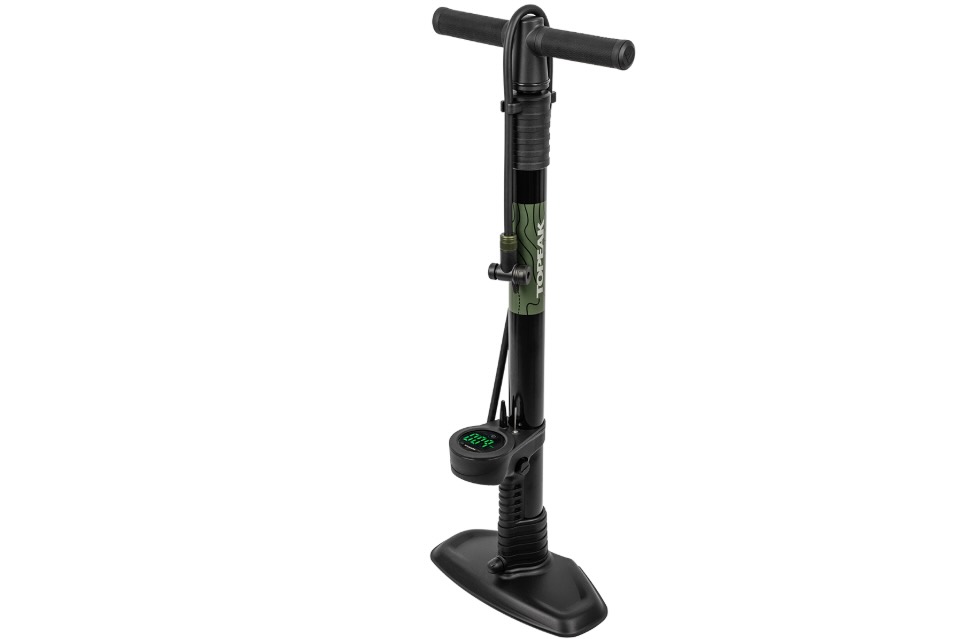
- MSRP: $150
- Valves: Presta
- Max psi: 60
- Hose length: 25.5" (65 cm)
- Gauge: Digital
- Weight: 2,326 g
Pros
- Moves lots of air per stroke
- Great for MTB and gravel tires
- Turbohead is quick and easy to use (once you get used to it)
- Digital gauge is bright and easy to read
- Solid gauge accuracy
Cons
- Digital gauge turns off very quickly
- Not good for high pressure applications
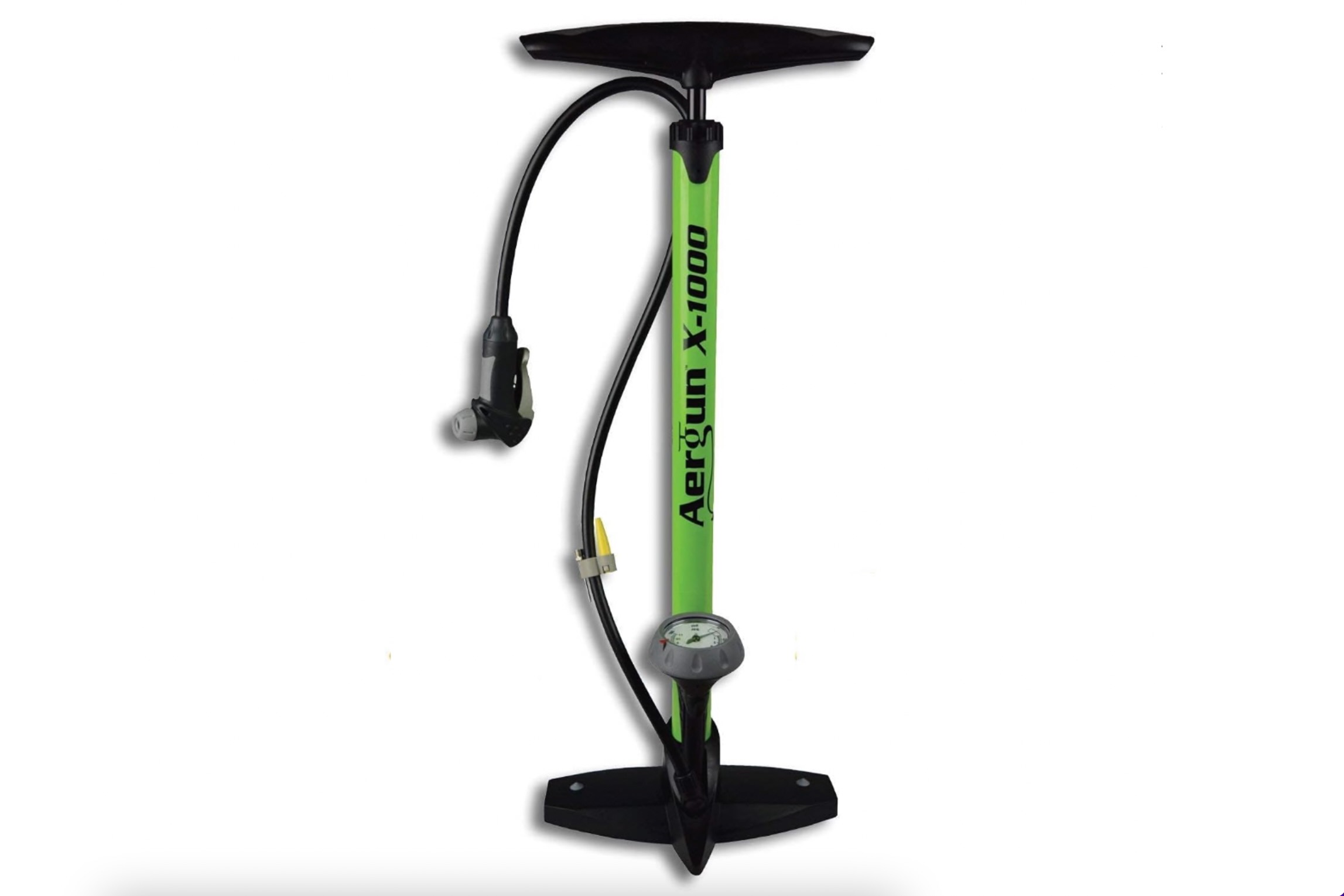
- MSRP: $20
- Valves: Presta and Schrader all-in-one
- Max PSI: 160 (11 bar)
- Hose Length: 34" (86cm)
- Gauge: Analog
- Weight: 1,090g
Pros
- Very affordable
- Gets the job done
- Easy to use
- Versatile all-in-one head
Cons
- Shorter hose length
- Not the most stable footing
- Less robust build
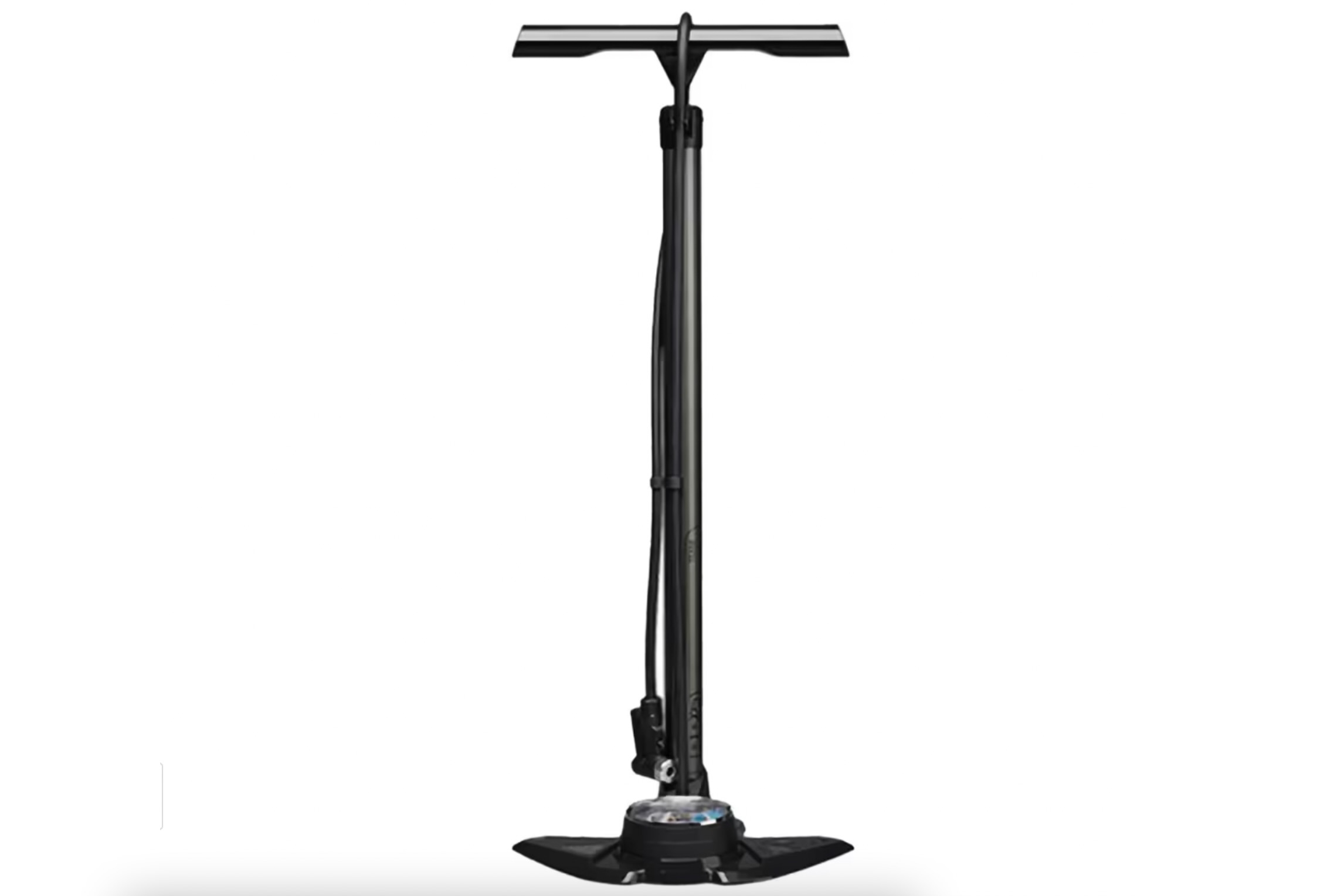
- MSRP: $125
- Valves: Presta and Schrader all-in-one
- Max PSI: 220 (15.2 bar)
- Hose Length: 47” (120cm)
- Gauge: Analog
- Weight: 1,500g
Pros
- All-in-one head is easy to use and has a good, sturdy feel
- Relatively efficient
- Easy to read analog gauge with clear color differentiation between high volume and high pressure readings
- Greater gauge detail between 0-40 psi
- Metal handle feels solid
- Smooth pumping action
Cons
- Stand is not the most stable in the test
- No rubber padding on bottom of metal foot
- Gauge only goes up to 140 psi
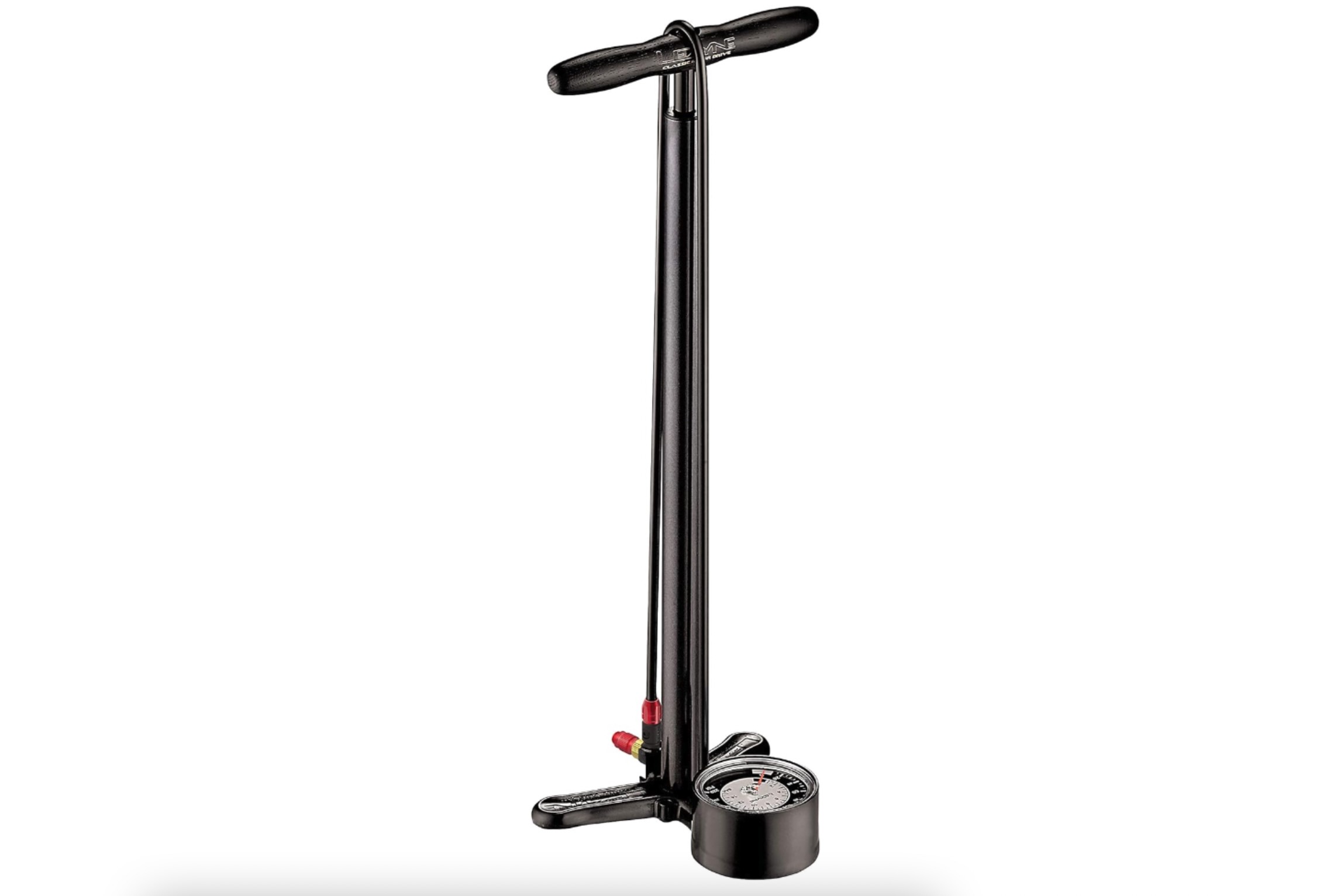
- MSRP: $85
- Valve: Presta and Schrader thread-on
- Max PSI: 220 (15.2 bar)
- Hose Length: 46" (117cm)
- Gauge: Analog
- Weight: 1,885g
Pros
- Slim/sleek
- Does the job
- Fully serviceable
- Moderate price
Cons
- Screw-on valve is less user-friendly
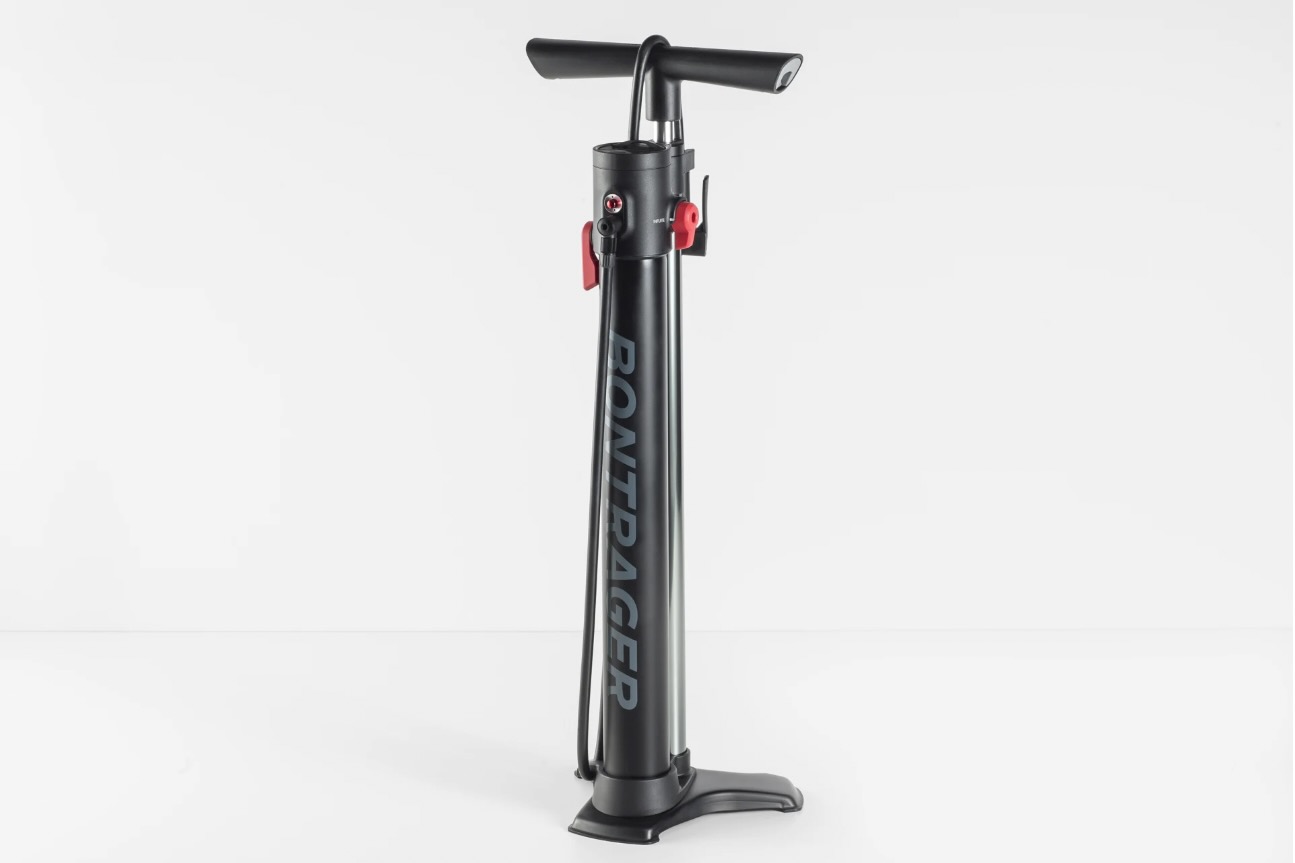
- MSRP: $175
- Valves: Presta and Schrader all-in-one
- Max PSI: 160 (11 bar)
- Hose Length: 54” (137cm)
- Gauge: Digital
- Weight: 3,002g
Pros
- Very accurate gauge
- Fast enough airflow to almost fully seat tubeless tires
- 54” hose length increases usability and plays nicely when the bike is on a stand
- Digital gauge is easy to read and repeatable
- Pin and plug hidden in handle
Cons
- Less efficient than a normal floor pump
- Challenging to increase reservoir pressure above 125 psi
- Average all-in-one head connection
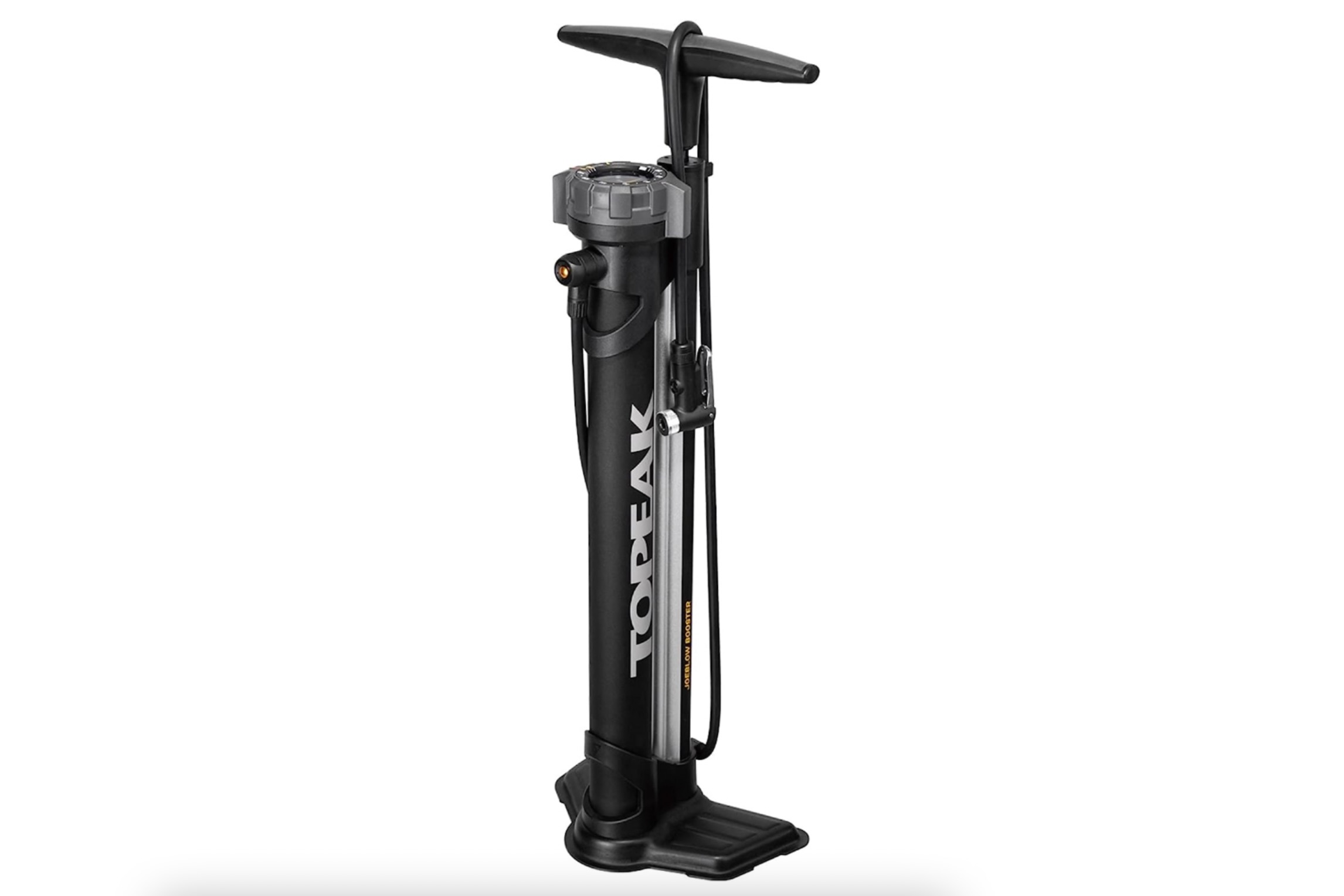
- MSRP: $240
- Valves: Presta and Schrader all-in-one
- Max PSI: 160 (11 bar)
- Hose Length: 60” (152 cm)
- Gauge: Analog
- Weight: 3,387g
Pros
- 60” hose is super long
- Simple operation to release reservoir
- Generally easy to use
- Stable
Cons
- Expensive
- Head is somewhat loose and gets knocked off easily
- Challenging to fill reservoir fully to 160psi
- Airflow from reservoir is not quick enough to always seat tubeless tires
Best Bike Pumps Comparison Chart
| Bike Pump | MSRP | Valves | Max PSI | Hose Length | Gauge | Weight |
|---|---|---|---|---|---|---|
| Bontrager Dual Charger | $80 | Presta/Schrader all-in-one | 160 | 46″ | Analog | 1,692 grams |
| Topeak Joe Blow Sport III | $70 | Presta/Schrader two-sided | 160 | 30″ | Analog | 1,622 grams |
| Blackburn Chamber Tubeless | $220 | Presta and Schrader | 160 | 62″ | Analog | 3,150 grams |
| Silca Pista Plus | $199 | Presta and Schrader | 120 | 40″ | Analog | 1,575 grams |
| Trek Air Rush | $100 | Presta and Schrader | 120 | 2″ | Digital | 151 grams |
| Lezyne Tech Drive HV | $45 | Presta and Schrader | 90 | 6″ | None | 131 grams |
| Pro Bike Tool High-Pressure Mini | $25 – $28 | Presta and Schrader | 100 | 7″ | Analog in-line | 128 grams |
| Cycplus AS2 Ultra | $120 | Presta and Schrader | 120 | 2″ | Digital | 128 grams |
| Topeak E-Booster Digital Mini | $155 | Presta and Schrader | 120 | 2″ | Digital | 151 grams |
| Blackburn Mammoth CO2 Mini-Pump | $55 | Presta | Not specified | 3″ | None | 134 grams |
| Silca Tattico Mini-Pump | $70 | Presta and Schrader | 100 | 3.5″ | None | 165 grams |
| Topeak JoeBlow Mountain X Digital | $150 | Presta | 60 | 25.5″ | Digital | 2,326 grams |
| Feedback Sports Pneuma CC | $150 | Presta, Schrader, Clik | 160 | 39.4″ | Analog | 1,936 grams |
| AerGun X-1000 | $20 | Presta/Schrader all-in-one | 160 | 34″ | Analog | 1,090 grams |
| Pro Floor Pump Team | $125 | Presta/Schrader all-in-one | 220 | 47″ | Analog | 1,500 grams |
| Lezyne Classic Floor Drive 3.5 | $85 | Presta/Schrader ABS-1 Pro Chuck | 220 | 46″ | Analog | 1,885 grams |
| Bontrager TLR Flash Charger | $175 | Presta/Schrader all-in-one | 160 | 54″ | Digital | 3,002 grams |
| Topeak Joe Blow Booster | $220 | Presta/Schrader all-in-one | 160 | 60″ | Analog | 3,387 grams |
How We Tested Bike Pumps
At BikeRumor, we ride bikes — a lot. For work, play, training, racing, you name it — our lives revolve around bikes of all kinds. With all that riding comes a lot of tires, and we are constantly using bike pumps to install or add air to tires on our townies, road, gravel, and mountain bikes. Turns out, the lowly bike pump is one of the most frequently used and important tools any of us has.
We also know that finding the right bike pump can be a challenge, and we are always in search of the best models to make our lives easier while keeping our tires at the perfect pressure for optimal performance.
For our bike pumps buyer’s guide, we enlisted contributor Paul Clauss to test and compare the majority of the models in this review. Paul is an avid cyclist who lives in northern Vermont, where he spends the majority of his time on his mountain bike and his gravel bike/commuter. He enjoys technical trail riding and knows the importance and benefits of a properly inflated tire and its relation to his enjoyment and performance on the trail.
A mechanical engineer by trade, Paul loves to tinker with things, scrutinize designs, and perform quantifiable tests to help him discern differences in the performance of the products he tests. In addition to bike pumps, Paul has tested dropper seatposts, the best flat pedals, bike locks, and bike repair stands.
In addition to Paul’s testing, BikeRumor editor Jeremy Benson contributed to this guide most recently by adding several models of floor pumps, hand pumps, and electric inflators to our selection. Benson has been professionally testing and reviewing cycling gear for over eight years and is constantly trying out the latest and greatest products on the market. He rides bikes nearly every day and uses bike pumps daily in his home workshop, at the trailhead, and out on the roads and trails.
Given that the BikeRumor team is always testing out new gear, including the latest bike pumps, we’ve also included a few models tested by our editors and staff writers.
Our Testing Process
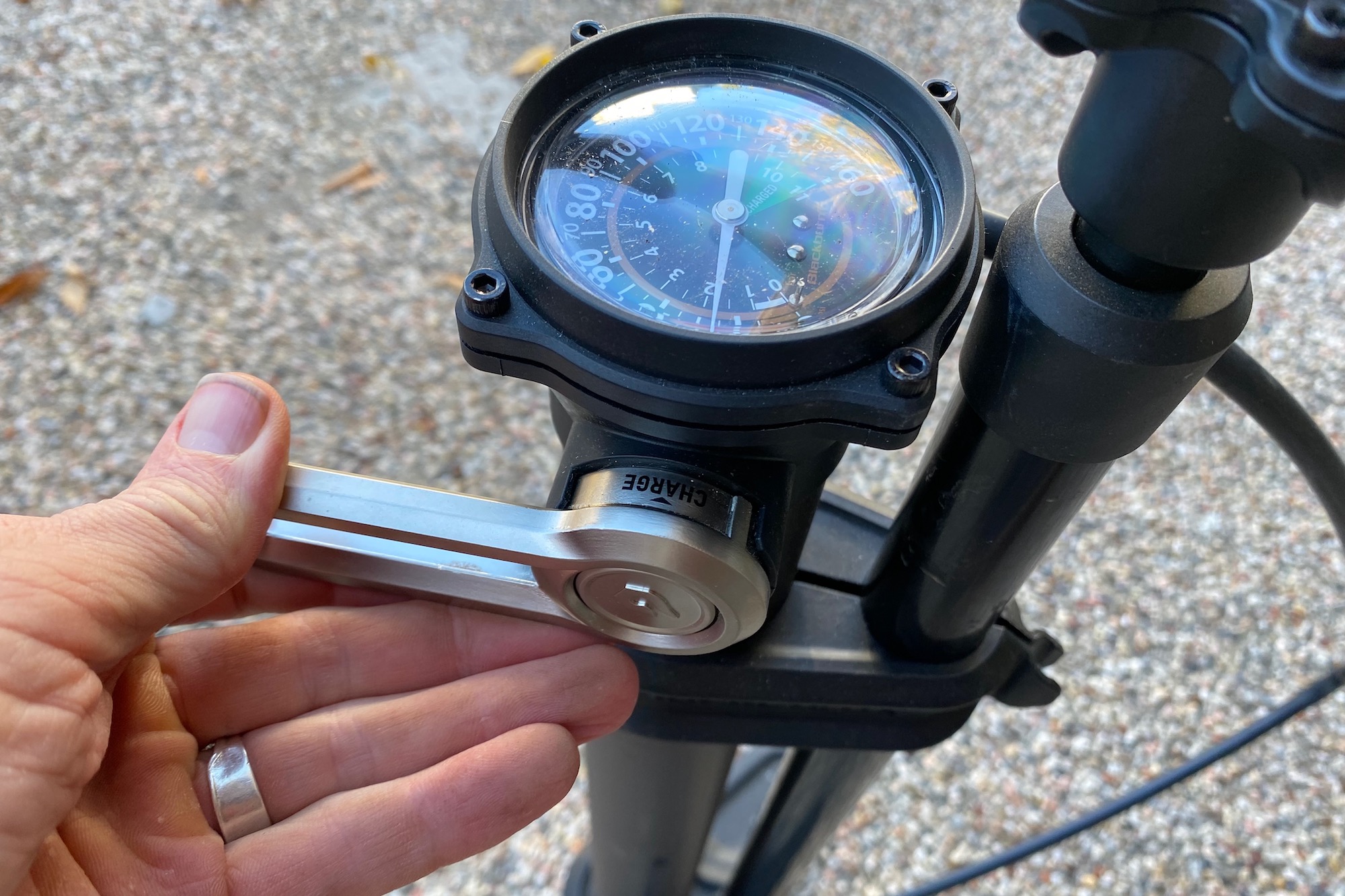
After rounding up a diverse selection of the best bike pumps on the market in 2026, we ran each model through a series of tests to evaluate their strengths, weaknesses, and performance differences. While some of these pumps have been in a staff member’s garage for years, we tested them all over the course of several weeks, rotating through them for every day pumping needs.
Each model was also used for a number of repeatable tests in search of quantifiable results. These included checking gauge accuracy at 10 psi intervals against our ToPeak SmartGauge D2X digital pressure gauge, as well as a pumping efficiency test to determine the number of strokes needed to inflate a tire to a predetermined pressure.
During these tests, we evaluated the ease of use and security of valve chucks/heads, stability in use, comfort of handles, smoothness of the pumping action, and readability of gauges. The more specialized pumps were tested for their intended uses of seating tubeless tires or adding air to suspension components. When testing concluded, we zeroed in on our favorites and those that excel for specific reasons compared to the rest.
Buying Advice: How to Choose the Best Bike Pump
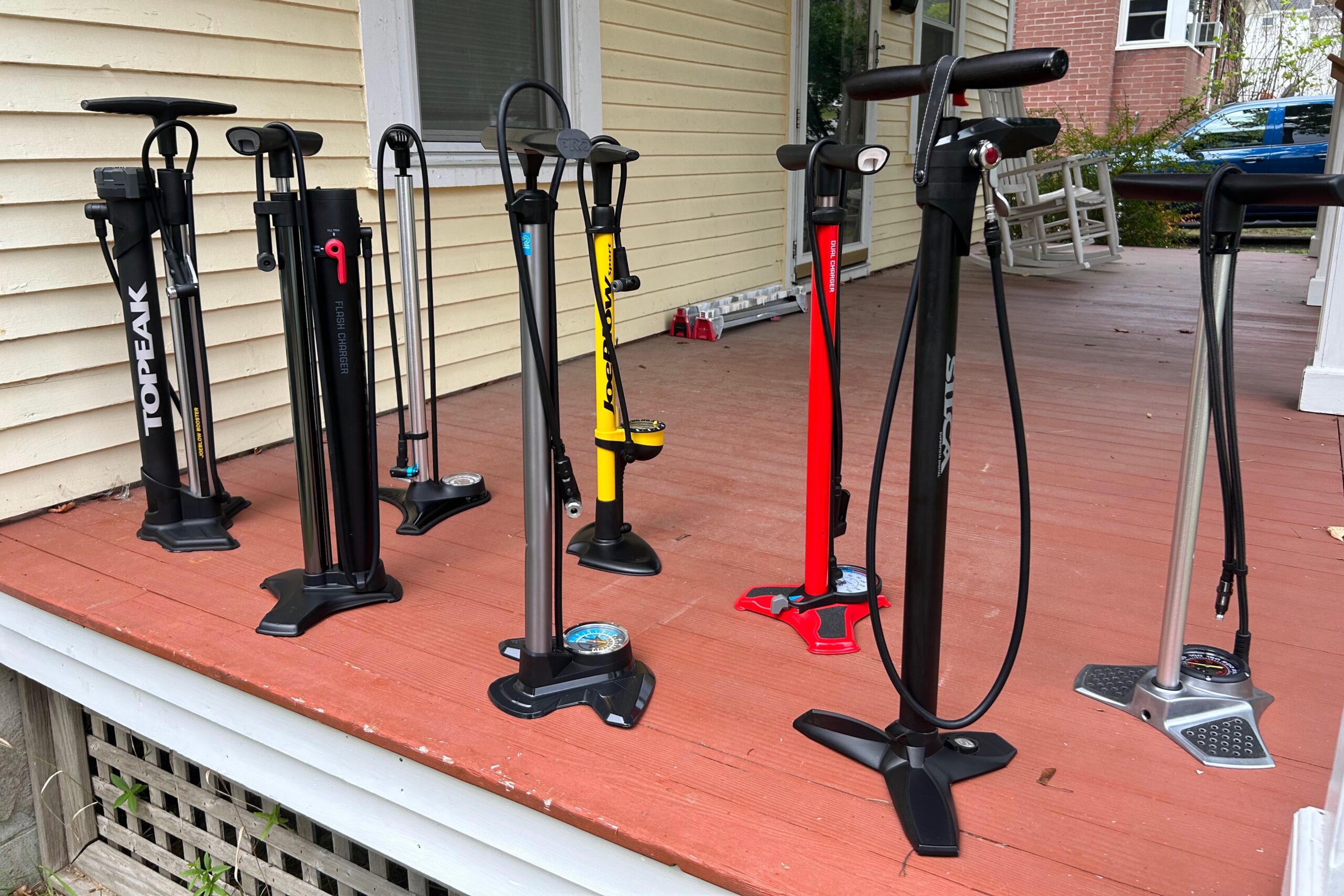
When choosing a bike pump, there are several factors to consider that may impact your purchase decision. A major factor is the type of tires you need to inflate, along with the type of pump, type of valves (and valve attachment method), the volume of air moved per stroke of the pump (the efficiency of the pump), the gauge accuracy, and the overall build quality and stability of the pump. We’ll provide more detail on each of these areas below.
Bike Pumps are great for regularly topping off your tire pressure, but you’ll also want to learn how to change a tire if you don’t already know.
Types of Bike Pumps
The review focuses primarily on floor pumps, which are aptly named for their ability to stand up and be used on the floor in your workshop (or parking lot at a trailhead). We tested three different types: standard floor or track pumps, tubeless booster pumps, and a high-pressure shock pump. Portable options like hand pumps, frame pumps, and CO2 inflators are other common tools for adding air to tires, though they are typically reserved for use in the field.
Standard Floor Pumps or Track Pumps
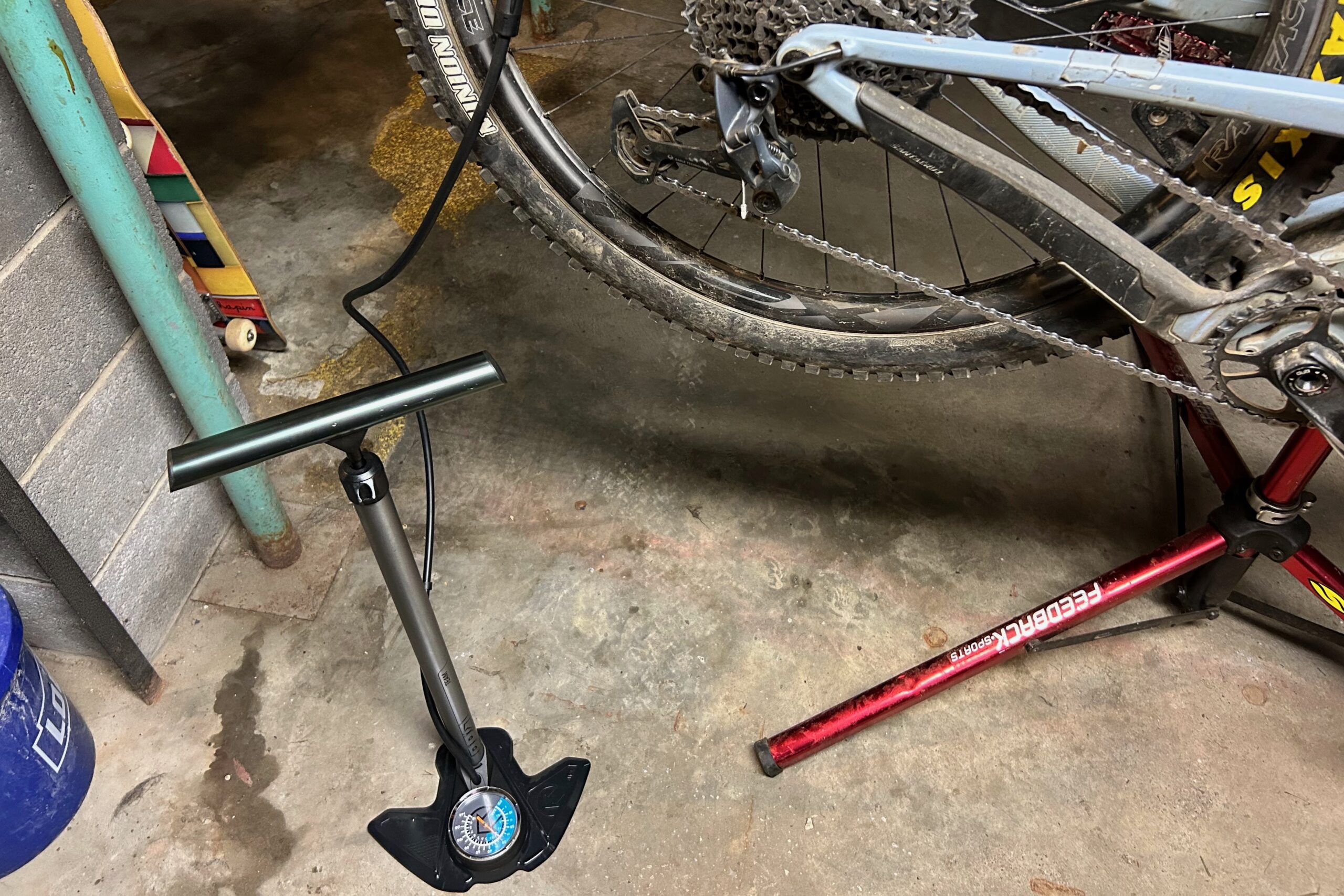
Standard floor pumps, also known as track pumps, transfer air directly from the pump to the tire through the valve. If you’ve ever used a bicycle pump, chances are you’ve used a standard floor pump. They can be used with all types of tires and wheels.
While standard floor pumps are not as effective for mounting tubeless tires as an air compressor or reservoir-style pump (in theory), they can often get the job done, especially if the tire has a relatively snug fit on the rim, or you have prior experience and good technique. We like to keep our in a very easy-to-access location, preferably near our favorite chain lube and a rag for the pre-ride bike check.
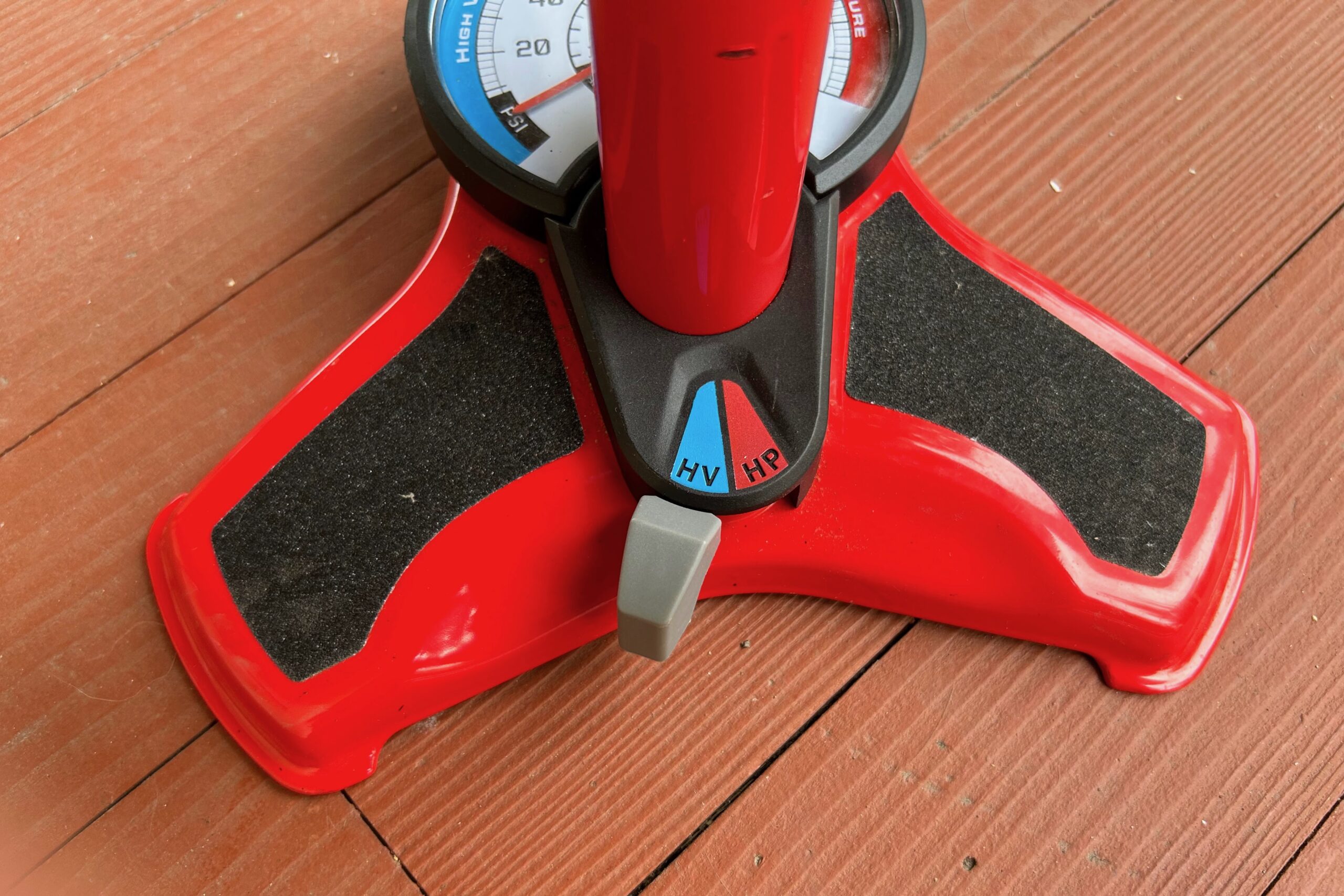
Standard floor pumps are often optimized to work better for high-volume/low-pressure or high-pressure/low-volume applications. High-volume pumps typically move more air per pump, making them well-suited to inflating the larger volume of lower-pressure mountain bike tires.
High-pressure pumps generally move less air per pump but are better suited to inflating lower-volume tires, like those on road bikes, to higher pressures. Either style of pump still works for all types of tires. Some pumps are capable of performing both tasks and are equipped with switches to change between high-volume and high-pressure pump settings, like the Bontrager Dual Charger.
Tubeless Booster Pumps
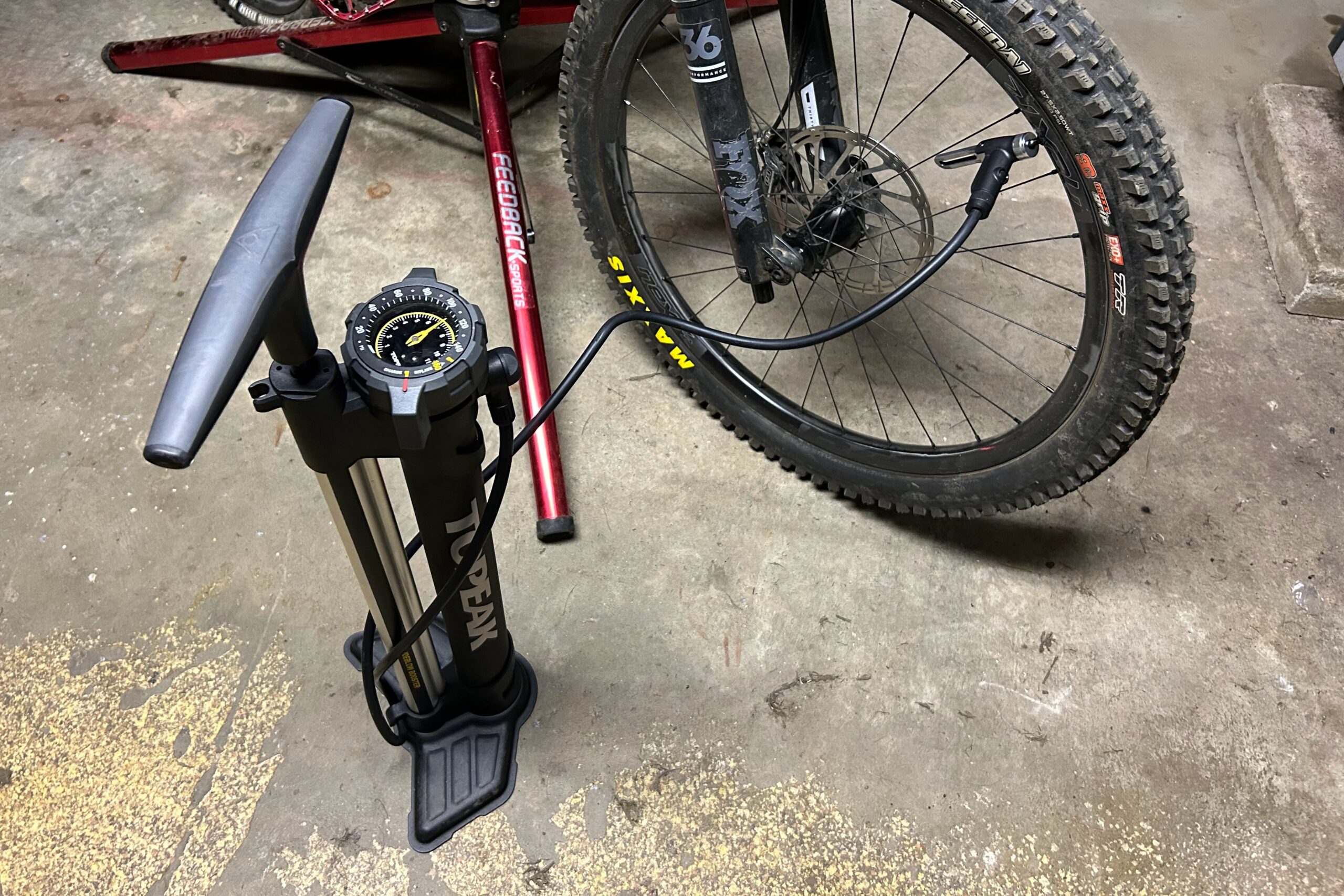
Tubeless booster pumps are very similar to standard floor pumps but include a reservoir that can be pumped up to a high pressure and then quickly released. Tubeless pumps strive to act as small manual air compressors to make tubeless setup easy. Quickly releasing high air volumes helps “snap” the bead of tubeless tires to seat them on the rim.
They also function as regular pumps for everyday use, making them a versatile addition to the home workshop for those who change their tubeless tires frequently. The Bontrager TLR Flash Charger, Blackburn Chamber, ToPeak Joe Blow Booster, and the Feedback Sports Pneuma CC are the four models of this style that we tested. The Feedback Sports Penuma CC works similarly, but the booster chamber isn’t nearly as large.
As tubeless tires have grown in popularity and are now widely used not only on mountain bikes but also on gravel and road, tubeless pumps are becoming increasingly common. While the models we tested certainly helped make tubeless setup easier, it isn’t always necessary to use one for tubeless tire installation. One thing that is necessary, however, is using tubeless tire sealant.
Some tubeless tires can easily be installed with a standard pump, depending on the tire brand/model and the rim combination. Other tubeless tires can be more stubborn, and that’s where the Booster pumps come in handy. It is worth noting that pumping the reservoirs on these pumps up to 160 psi can be somewhat challenging, especially when you get above 120 psi.
Mini-Pumps
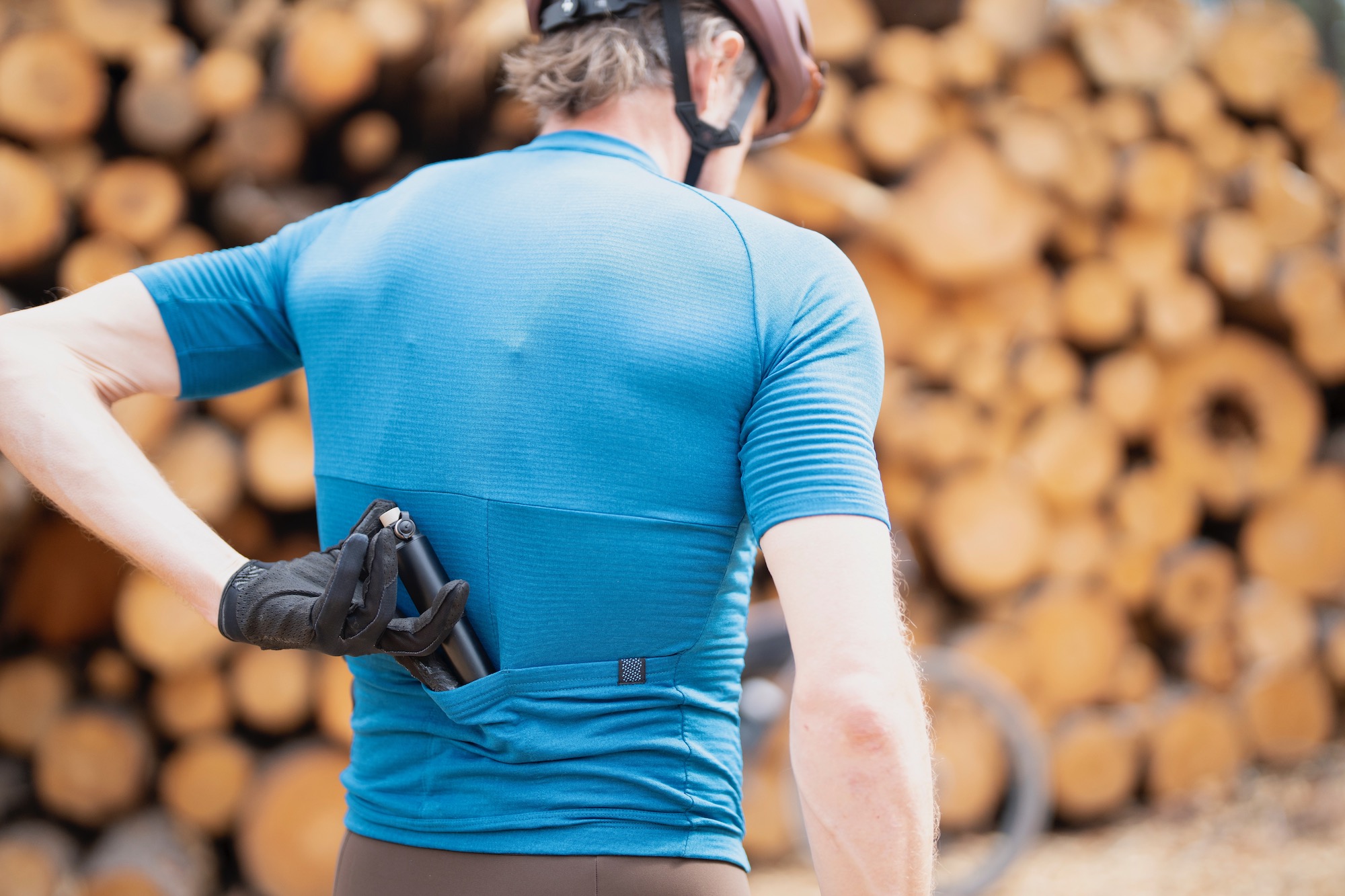
When you’re out on the road or trail, it’s always a great idea to carry a quality bike multi-tool and have some sort of way to help inflate your tires if you get a flat. Mini-pumps, also called hand pumps or frame pumps, are a great option that can usually be attached to your bike or stashed in a hydration pack or jersey pocket to take along with you.
Their portability requires smaller bodies, which means far less volume per pump than floor pumps, making it longer to fill a tire than a floor pump. Even though it takes longer, they are still an indispensable tool to have with you when the need arises.
When referring to mini-pumps, the speed of inflation depends largely on how easy it is to use. Look for a mini-pump with a solid grip, as your hands will be doing most of the work. A mini-pump with textured handles or knurling machined onto the grip will work well to maintain a solid hold.
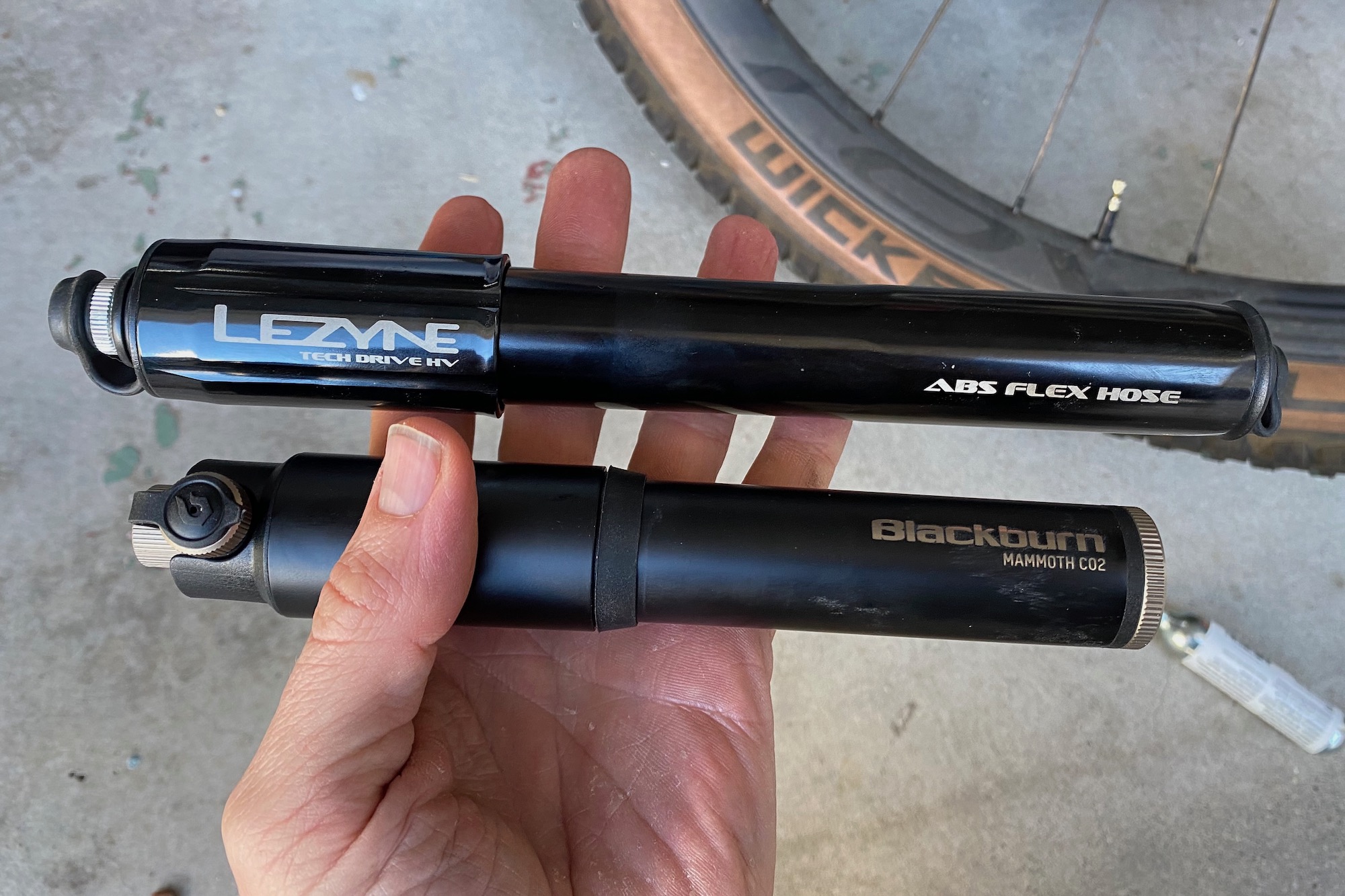
Guaranteeing a tight seal between the hose and valve is also a factor. A good screw-on hose head can minimize the loss of air when you pump. This reduces the number of pumps (and the time) that it takes to fill your tire. We feature four mini-pump models in our list above: the Lezyne Tech Drive HV, Silca Tattico, Blackburn Mammoth CO2, and the Pro Bike Tool High Pressure Mini, all of which are fine options to bring along on your rides. The Blackburn mini-pump also has an adaptable head that doubles as a CO2 inflator, which is quite convenient.
Electric Pumps
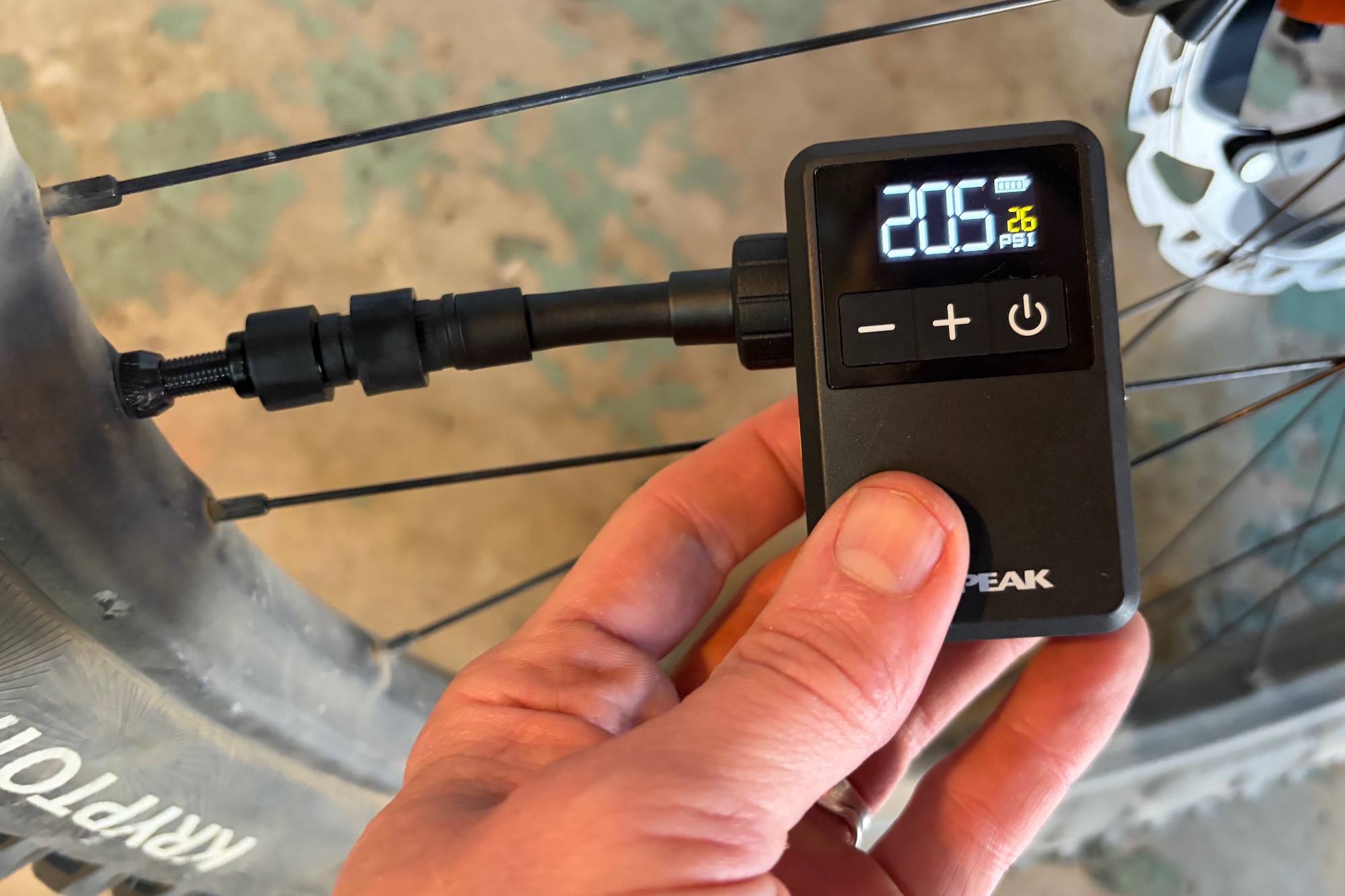
Battery and electric motor technology have been evolving rapidly, and several small electric compressors have recently hit the bike pump market. These compact units are small enough to fit in the palm of your hand, so they are easy to stash in a jersey pocket or hydration pack to bring with you on rides.
Unlike a mini-pump, these mini air compressors do the pumping for you, saving you lots of time and effort. These rechargeable electric pumps can be used multiple times on a charge and can potentially save you money and waste compared to using CO2 cartridges. We tested the Topeak E-Booster Digital Mini, Trek Air Rush, and the Cycplus AS2 Ultra, and were blown away by their portability, ease of use, and pumping performance.
Shock Pumps
Shock pumps are more of a niche product for those who work on or adjust their mountain bike suspension components regularly. The air chambers of suspension forks and rear shocks are quite small, and they generally need to be inflated to significantly higher pressures than tires. For this reason, shock pumps move smaller volumes of air but are typically capable of reaching much higher pressures.
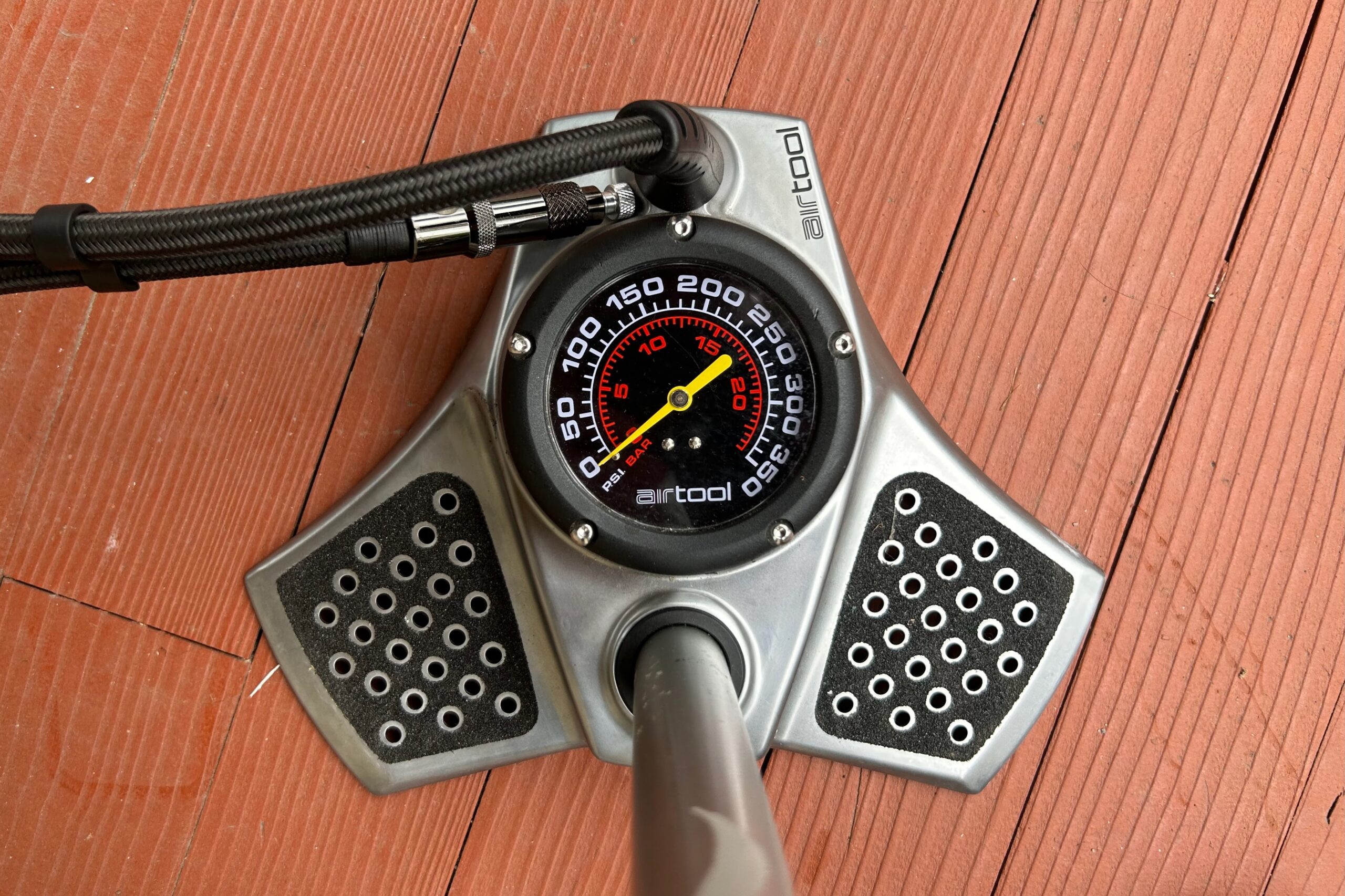
A great example of a shock pump is the Specialized Air Tool UHP, which has a threaded Schrader head that attaches to shocks and forks and has a max psi of 350.
While most people use small hand-held shock pumps at home or on the trail, a standing model like the Specialized Air Tool makes adding air to suspension components much quicker and easier. These are most common in bike shops, but those who tinker with or service their own suspension at home can benefit from them as well.
Types of Valves
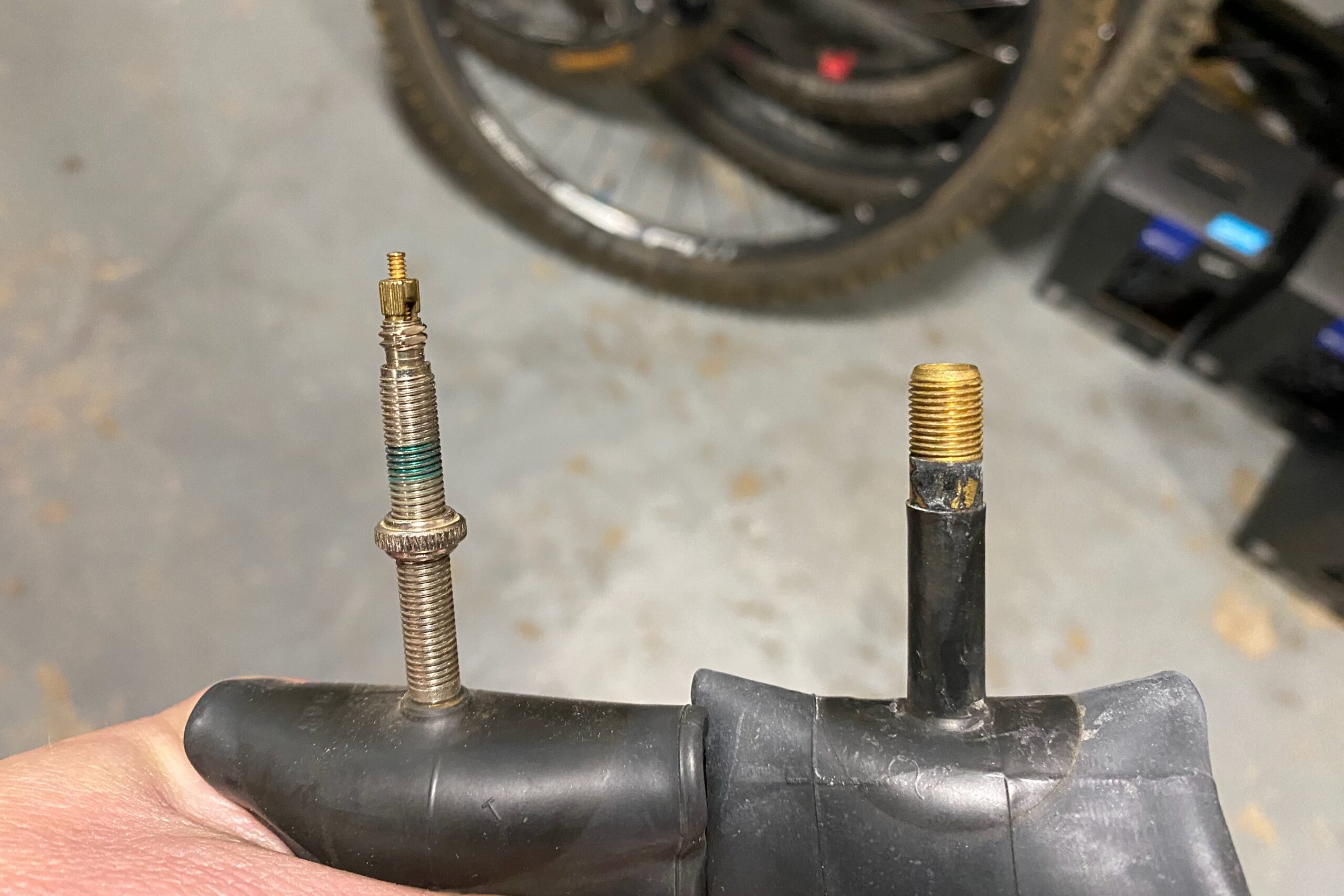
Bike tube/tire valves will usually be either Presta or Schrader. There is a third valve type, known as Dunlop valves, though they are fairly uncommon in this day and age. Schrader valves are like those found on your vehicle, and they are larger in diameter and generally found on more value-oriented or electric commuter bikes.
Presta valves are most common among higher-end road/mountain bikes. Most tubeless valves are Presta valves, though there are some Schrader options available. Both types of valves have been around for quite a while, and almost every pump we tested has configurations that work with both Presta and Schrader valves.
In recent years, there has been a bit of an alt-valve revolution, with numerous brands creating new valves to replace the more common Presta and Schrader. This includes Clik, Reserve Fillmore, BBB Corecap, Topeak TurboFlow, and many others. Know your valves, and get a pump with a compatible head.
Valve Chucks/Connections/Heads
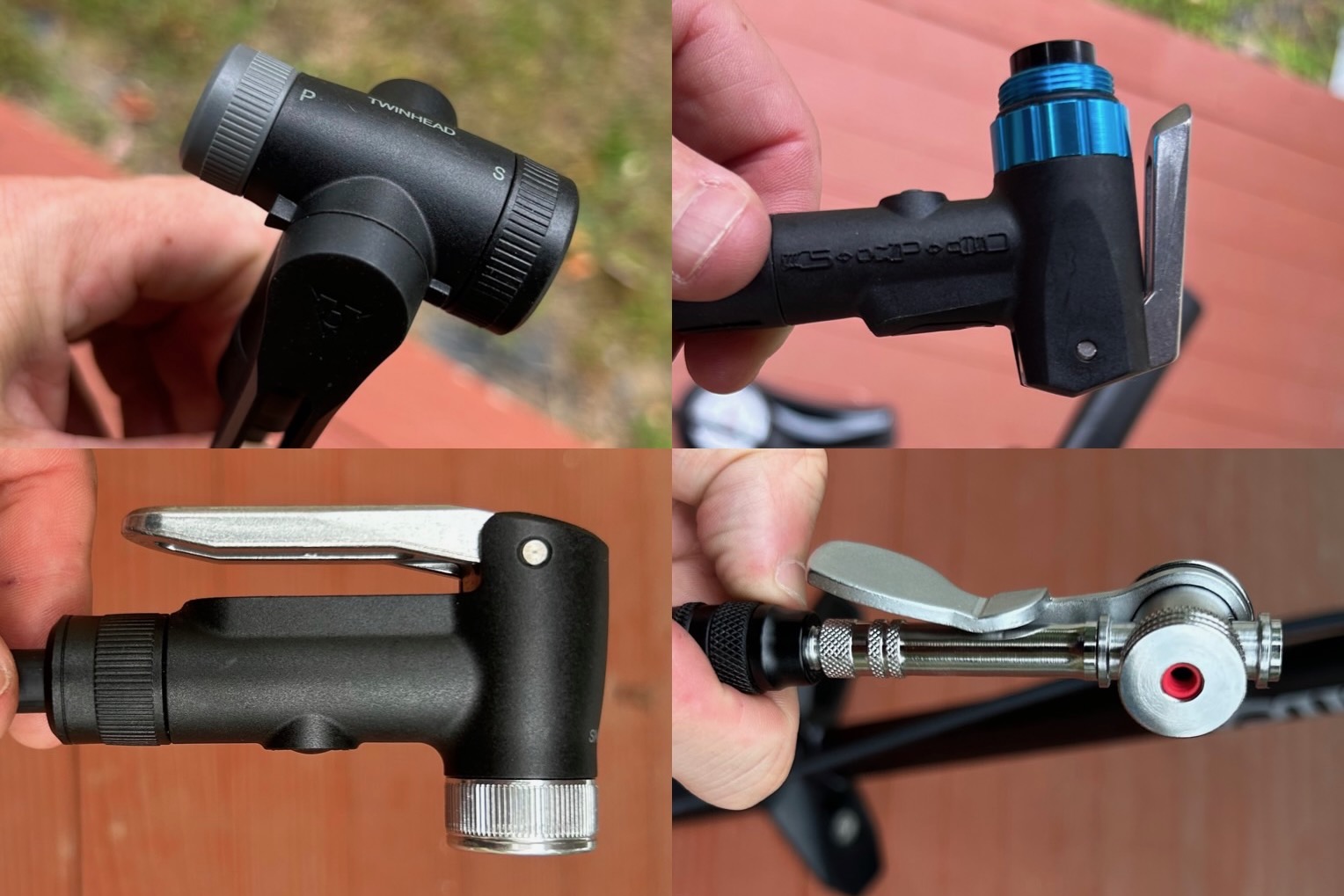
While all the pumps in our test group accommodate both Presta and Schrader valves, they do so in different ways. Some pumps have heads that thread onto the valve, while others have lever-lock style heads that tighten on the valve when the lever is flipped. Many pumps use an all-in-one head style, which easily connects to either Presta or Schrader valves but tends to be more sensitive to angular changes and can leak a bit more when being put on or taken off.
Others, like the Lezyne Classic Floor Drive, use a reversible threaded tip on the pump head, which enables a tighter fit for each valve type but needs to be set up appropriately whenever a new type of valve is used.
All of the heads we tested work just fine, but some are more user-friendly and secure than others.
Pumping Efficiency
Pumping efficiency is a function of how much air is pushed through the pump into the tire during each stroke, and its importance will vary somewhat depending on whether you need high volume or high pressure or both. All of the pumps we tested will fill your tires relatively quickly, and regular top-offs will typically only require a few pumps.
We tested pumping efficiency by counting how many strokes it took to fill a Maxxis Minion DHRII to 30 psi five times and then taking the average. Across all the pumps we tested, the average number of strokes to 30 psi was 36, with the Bontrager Dual Charger leading at 22 pumps (on high volume mode) and the Topeak Joe Blow Booster requiring the most at 47.
Having used many pumps over the years, none of the pumps we tested felt super slow, but a more efficient pump will always save time and effort, and may be worth consideration if you are frequently filling tires.
Types of Gauges
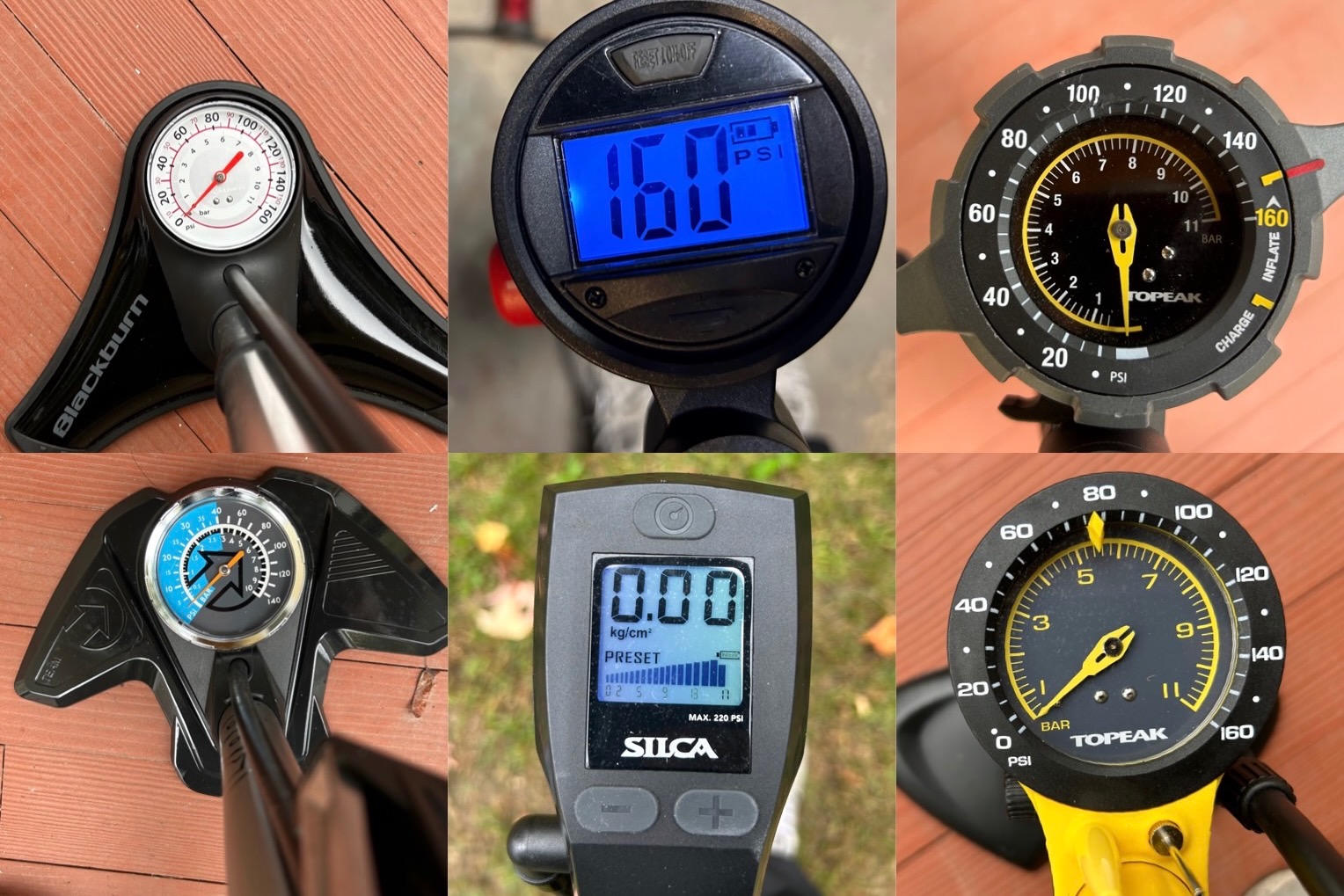
The pumps we tested come with either analog gauges/dials or battery-powered digital displays. Both types work relatively well, although their location and size can make some easier to read than others. In general, digital displays are considered to be more precise, as they can show the pressure readings in smaller increments than can be read on most analog dials.
That said, a digital gauge generally adds to the cost of a bike pump and will require you to change a battery at some point in its lifespan. Many brands make pumps with both types of gauges, so you have options to suit your preference.
Gauge Accuracy
Most gauges are fairly accurate and will get you within a few psi of your desired pressure. We measured the accuracy of both analog and digital gauges by pumping up tires by 10 psi at a time, checking the gauge pressure at each interval against the pressure read by our Topeak SmartGauge D2X digital pressure gauge, and taking the average difference percentage from pump gauge pressures at 10, 20, 30, 40, and 50 psi.
On average, pump gauges showed pressures 2.45% higher than the D2X digital gauge, with the most accurate pump (the Bontrager TLR Flash Charger) averaging readings 1% lower than the digital gauge and the least accurate pump (the Bontrager Dual Charger) averaging 6.6% higher readings than the Topeak gauge.
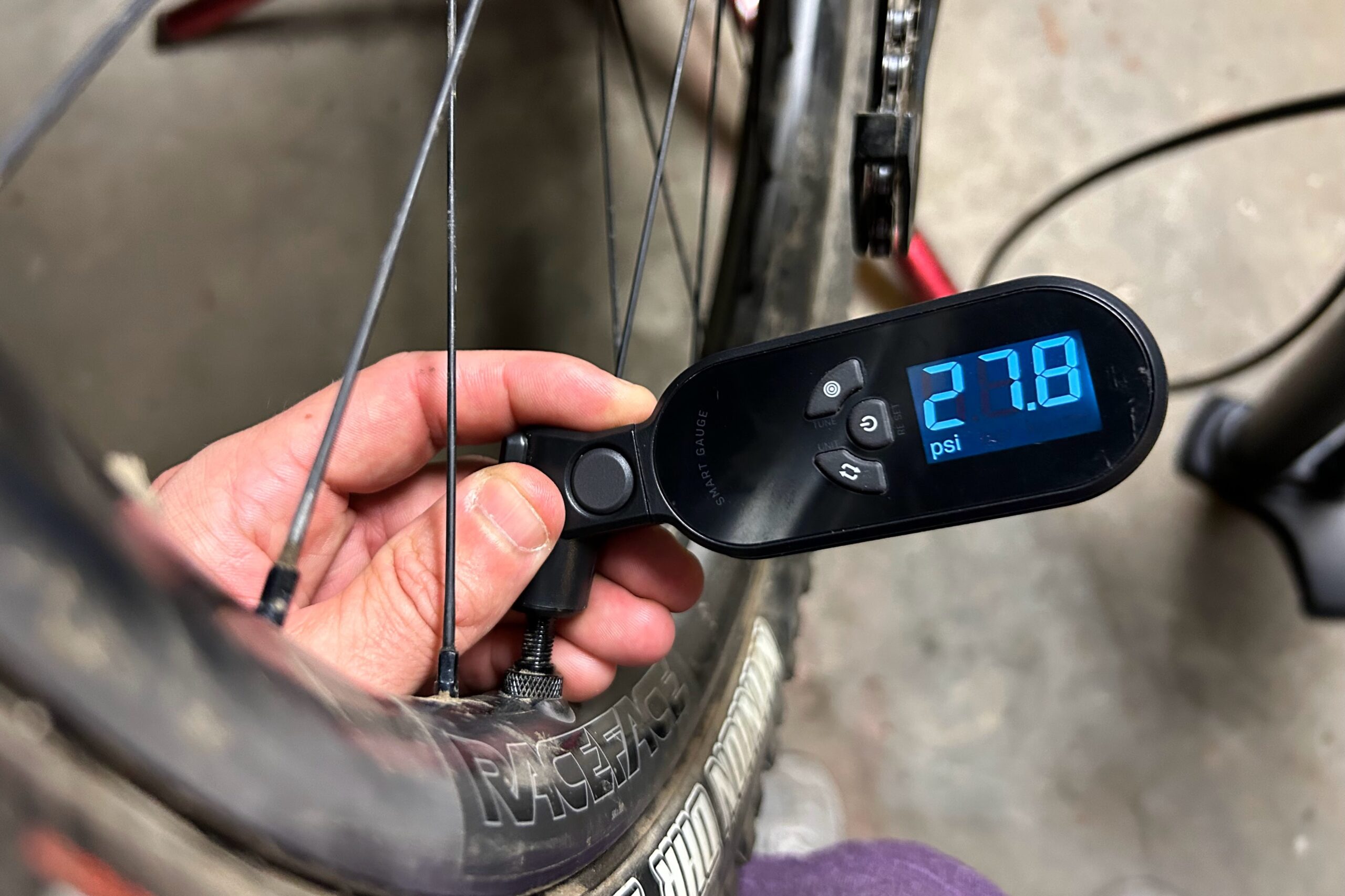
But how important is gauge accuracy? If you usually use the same pump to inflate your tires, it may be slightly annoying that it isn’t perfect, but it should be easy to work with. Finding the optimal pressure for your tires, rims, terrain, and riding style requires experimentation, and if you are using the same pump every time, you can feel pressure changes by using any baseline reading from the pump.
You may find that your tires feel great at 28 psi on your pump dial, which might read 24 psi on a digital pressure gauge. But you know that using your pump, you like the feel of 28 psi on that gauge, so you can compensate for the difference.
Since changes in tire pressure can have a relatively large effect on the feel and performance of your tires on road, mountain, and gravel bikes, having a separate pressure gauge is always a good idea for those looking to get the most from their tires. This will help ensure consistency and accuracy, and most feature an air release button for fine-tuning pressure. We used the ToPeak SmartGauge D2X, which, while somewhat expensive, we found to work very well.
Stability
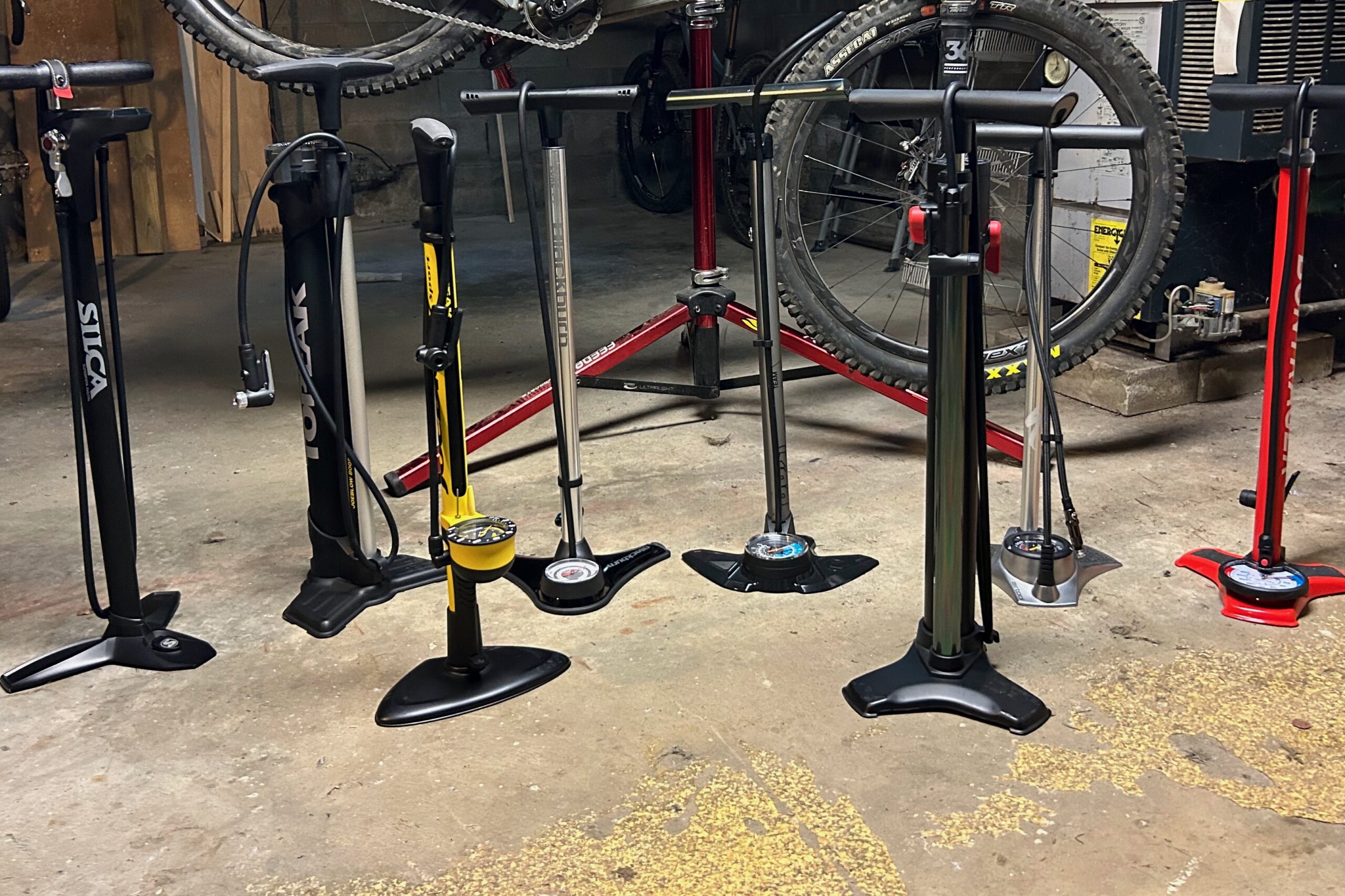
While it isn’t the most important aspect of a bike pump’s performance, stability in use is definitely a consideration, and they are not all created equal in this regard. In general, the more stable, the better, so you’re not constantly knocking it over in your workspace or having to constantly stabilize it with your feet while pumping.
We found that we preferred pumps with wide, three-legged feet for multi-directional stability, and we appreciate it when brands add anti-slip material or texture to the base to keep it from sliding around when pumping.
Durability
Quality bike pumps can be shockingly durable and last for decades if treated with a reasonable amount of care. Most mid to high-end models are made with steel or alloy bodies and feet, and many can be repaired if they are damaged. Plastic tends to be cheaper but much less durable, so typically, spending a little more on a pump will get you a longer-lasting product.
We recommend buying from recognizable name brands like Silca, Bontrager, Specialized, ToPeak, Blackburn, and Lezyne, as they are most likely to stand behind their products with warranties, and many have replacement parts to keep your pump running smoothly should it ever get damaged.
Price & Value
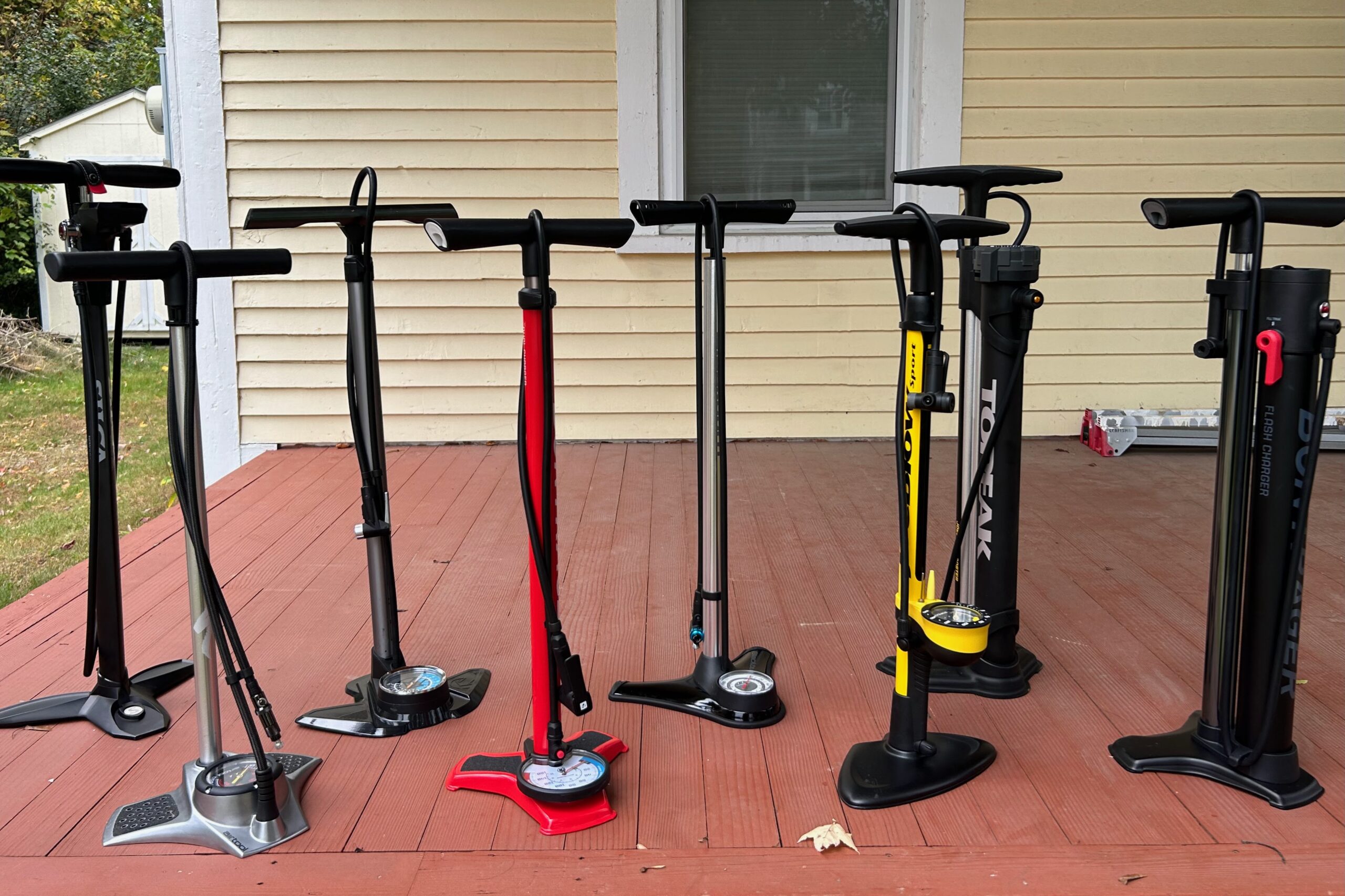
In the grand scheme of things, bike pumps are relatively affordable tools that usually last for many years. You don’t need to break the bank to get a great pump that covers your needs — pumps are fairly simple things, after all. That said, spending more typically gets you smoother pumping action, more accurate gauges, higher-quality materials, and more durability.
Budget
If you’re truly operating on a budget, the super affordable AerGun X-1000 ($20) will get the job done. Despite the bargain price, this pump works well enough, even if it is less attractive, less stable, and has lots of plastic parts. Spend a little more for a pump like the ToPeak Joe Blow Sport III ($70), and the build quality is noticeably higher. Even at an affordable price, this pump is great, and we have been using one of these for many years with no issues.
Most mini-pumps fall into the budget price tier. These pumps are small, relatively simple, and use less material, so they cost a bit less, even if they are incredibly useful tools. One of our most recent favorites is the Lezyne Tech Drive HV ($45), which fills high-volume tires quickly for a mini pump. The Pro Bike Tool Mini ($25 – $28) is quite similar and even more affordable. Bear in mind, however, that mini pumps are best used out on the road or trail and are typically bought in addition to a floor pump in the workshop.
Mid-Tier
One of our favorite pumps of the test was the Bontrager Dual Charger ($80). While it could qualify as a budget option for the price, it is just a bit more expensive. This pump has a large, accurate gauge and works with both high-volume and high-pressure tires with the flip of a switch. We’re happy to pay a little more for that versatility.
Stepping up in price, the Feedback Sports Pneuma CC ($150) brings a unique mini-booster design to the table. It functions extremely well both as a high-pressure and high-volume pump, plus it hides a mid-sized charge tank in the shaft to assist with seating tubless tires. It has an accurate and easy-to-read gauge, plus it has a foot pedal for releasing the booster tank. It’s a super versatile pump that can do it all.
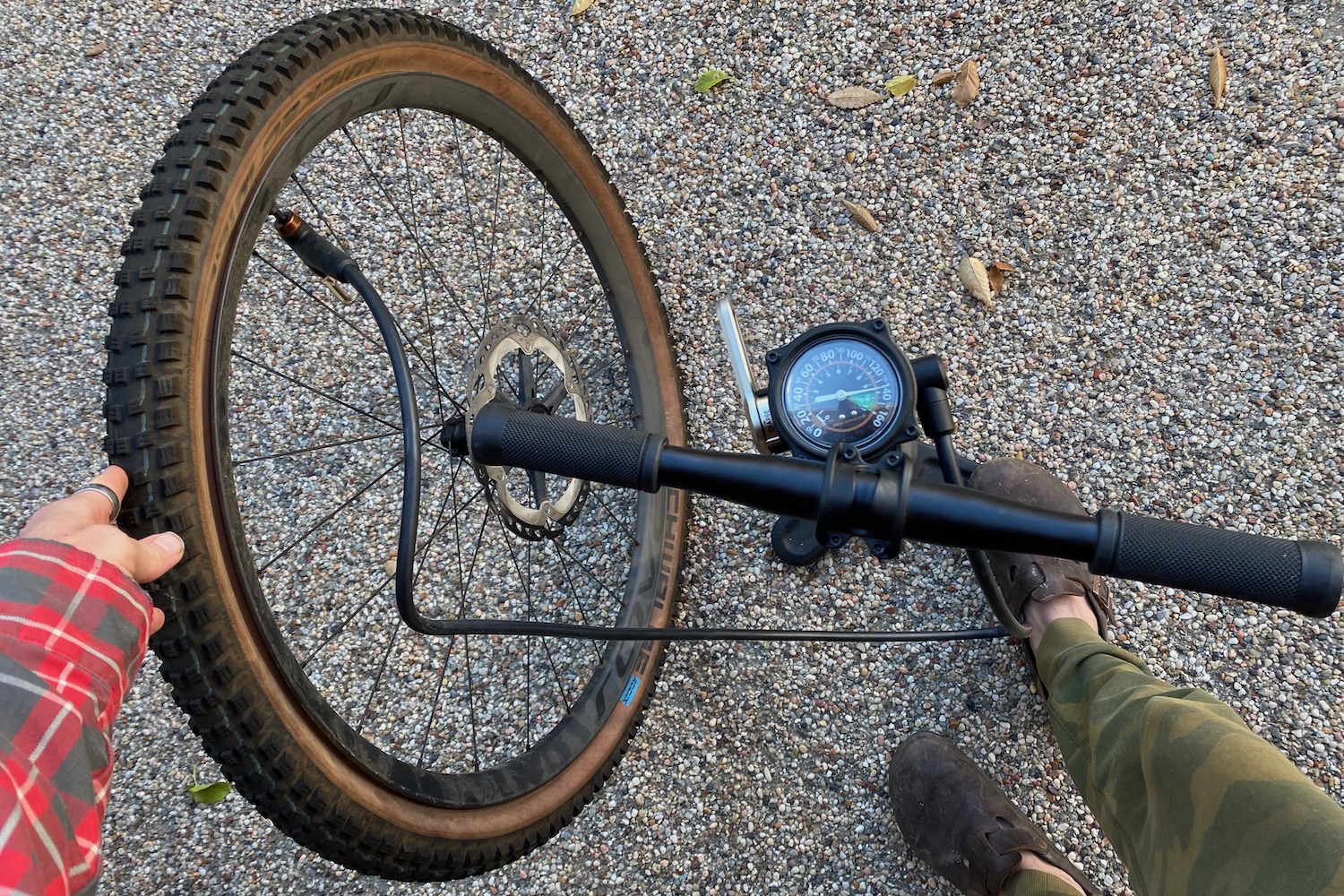
Pumps with special features, like tubeless booster pumps, require more materials and engineering, and they typically command a higher price as a result. Still, the Bontrager TLR Flash Charger ($175) is well-priced compared to other tubeless pumps and could be worth its weight in gold if you frequently install tubeless tires at home.
Premium
At the highest end of the price spectrum, at and above $200, we find more pumps with special features like tubeless boosters as well as the most durable and highest-quality pumps on the market. Both the Blackburn Chamber Tubeless ($220) and the Topeak Joe Blow Booster ($240) are great dual-purpose pumps for seating tubeless tires and as a regular floor pump.
The Silca Pista Plus ($199) commands a high price for its impressive accuracy, super smooth pumping action, and world-renowned durability — these pumps are known to last for decades and could become a family heirloom.
Frequently Asked Questions About Bike Pumps
Well, some track racers do pump their tires to 160 psi or more, but that’s only because they are riding on a perfectly smooth surface in a controlled environment. Regular riding outdoors, on real roads and trails, needs far less tire pressure.
Recently, and especially with tubeless tires becoming the norm, it’s been proven that lower tire pressures yield more comfort, better traction, and improved efficiency. Yep, lower really is better. Brands like Silca have even made guides to help you find your best tire pressure.
So, why do floor pump gauges read so high? Because they need to account for the pressure spikes that occur when pumping. Next time you’re inflating your tire, notice how the needle spikes really high on each stroke. The gauge needs to have room for those spikes or it can be damaged, which means it will no longer be accurate. Specifically, they need 20-30% extra in order to cover the higher pressures generated during your pump stroke safely.
What about portable pumps and CO2 cartridges?
We’ve tested several mini-pumps and have listed our favorites above. Portable hand pumps and CO2 cartridges are intended for use on the trail and should be carried on longer rides, especially on longer rides that you won’t want to walk out of if something goes wrong. But, due to the small size of portable hand pumps, they are time consuming to use with high volume tires and difficult to use with high pressure tires. The Lezyne Tech Drive HV is one of our favorites.
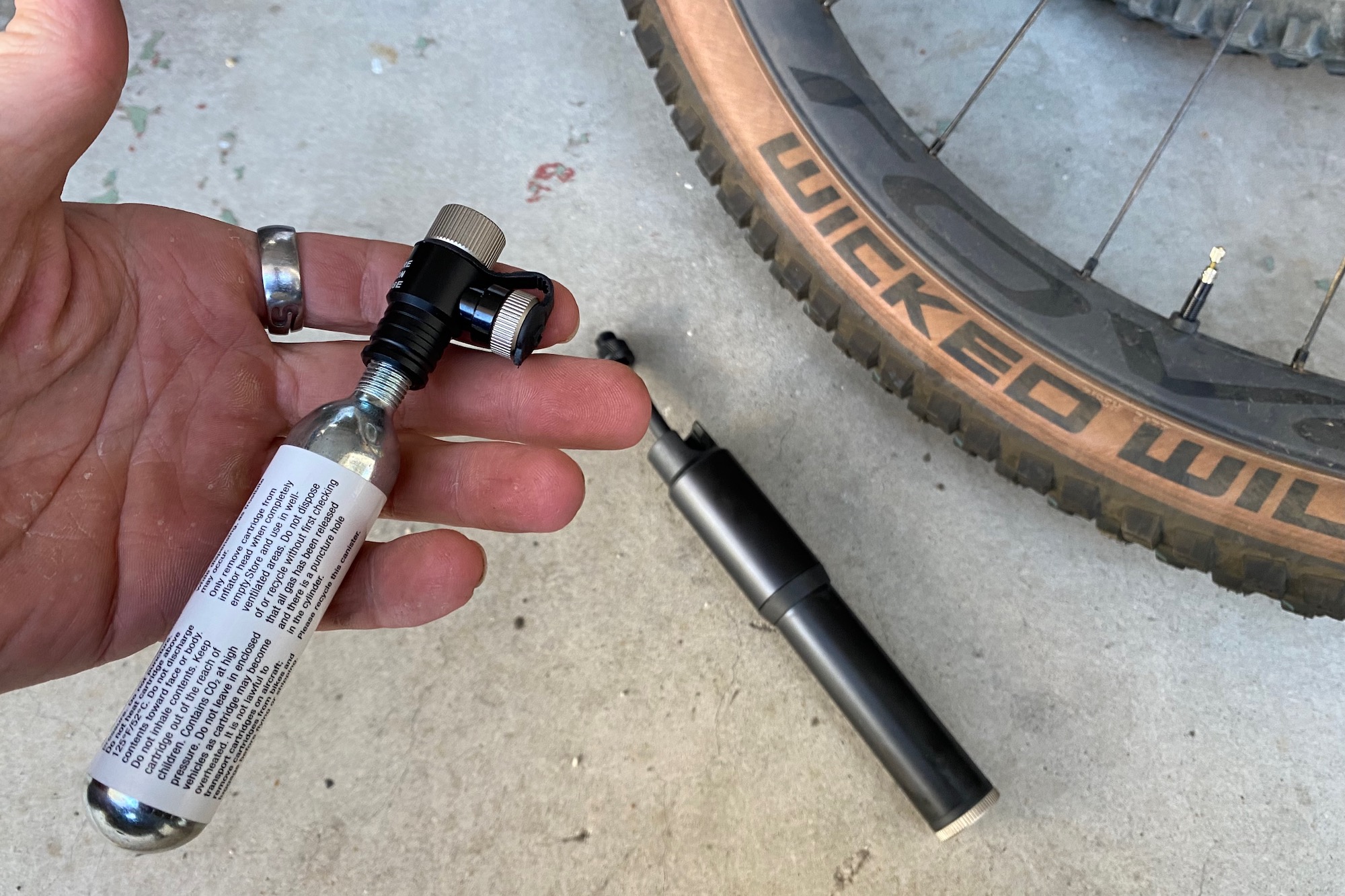
CO2 cartridges are compact and easy to carry in a hip pack (or in frame storage), but they are low volume and can only be used once. Hand pumps and CO2 cartridges are great for use on the road or trail, but we recommend investing in floor pump to make maintenance easier at the house.
An interesting mini-pump option for those who like to use CO2 but also want to have a pump as a backup is the Blackburn Mammoth CO2. The head of this pump comes off and works as a CO2 inflator. That way you can carry one less thing with you while you ride and still be prepared.
What about air compressors?
Air compressors are great for tubeless setup. But, they are also relatively expensive, loud, and difficult to throw in your car for a road trip. While having an air compressor is wonderful, floor pumps are an indispensable piece of gear that makes it easy for any cyclist to keep their tires inflated to their desired pressure. Portable electric inflators are becoming more common, however, and can be a useful tool to have on hand as well.
It depends on the type of bike and tire you’re running. All bike tires will have a recommended psi range listed on their sidewalls, so try to stay within that range. For most road riders, pumping tires to between 70 and 90 psi is a good starting point, while mountain bikers will run anywhere from 18 to 35 psi depending on the rider’s weight and the terrain. It is often a process of trial and error to find the optimal pressure for your tires, riding style, terrain, or road conditions to get the best performance from them.
Tire pressure should be checked before each ride even though it may not need to be adjusted every time you take out your bike. Some tires will hold air pressure perfectly for extended periods, but over time, and sometimes overnight, small amounts of pressure can leak that can impact your tire’s performance or even be a safety issue. Checking your pressure is quick and easy, and adding air takes only a few seconds, so it is worth doing every time you head out for a ride.
What is the difference between a shock pump and a pump for tires?
Shock pumps are optimized for use with high-pressure, low-volume air suspension components. While most air forks and rear shocks use a standard Schrader valve and shock pumps can be used to fill Schrader tubes (and ultra rare Schrader tubeless valves), they generally have a very low volume stroke and are inefficient for use with tires.
Related Content
The Best Handlebar Tape of 2026
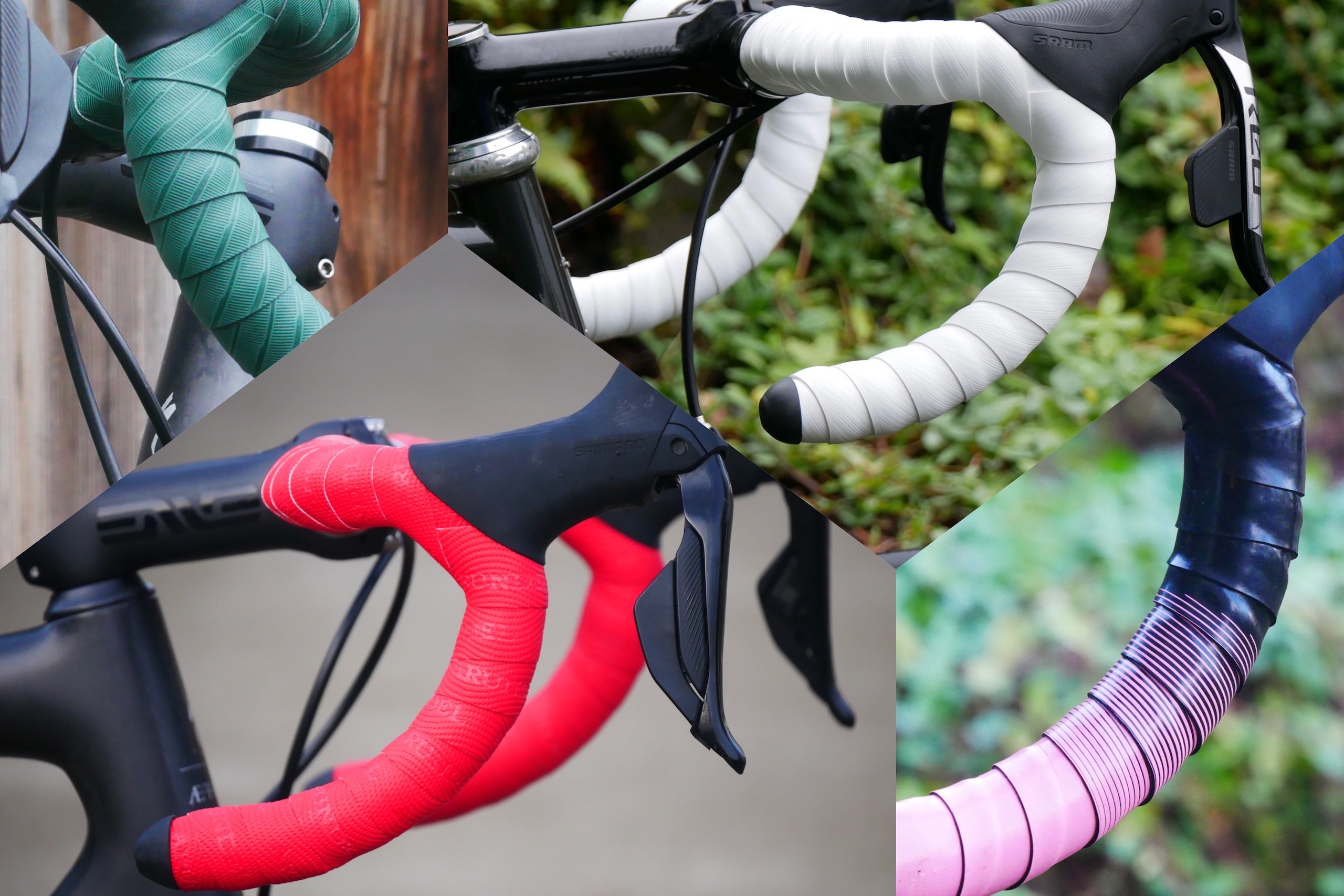
We tested 16 of the best handlebar tapes on the market to help you find the best one for this critical contact point on your bike.