


Extreme birding. Two words I never expected to be used together, much less find myself interested in. But that seems to be the sorcery of the YouTube algorithm. All of a sudden, I’m watching a video about birding and deciding I need this in my life.
For those who haven’t watched Listers yet (what are you waiting for?), this is not the documentary about birding that you’re expecting.
Not even close.
But it is a fantastic introduction for the next generation to a massively popular and surprisingly nuanced hobby.
So what does that have to do with a bike website? After watching Listers, I realized that one of the conclusions drawn in the video by Quentin and Owen Reiser is completely true. Many people (including myself) are already birders; they just don’t see themselves as such. Kind of like how many people who ride bikes don’t see themselves as cyclists.
I’ve always taken an interest in birds along the way, but never in a “I gotta log this in eBird so I can get my lifer” sort of way. But after watching the film, I found myself taking more notice of birds out on my rides – and wanting to take a closer look.
At first, I wasn’t even conscious that I was doing it, but before I knew it, I was birding by bike. Turns out that it’s a fun way to add another dimension to your rides, and it doesn’t take much to get started. Below are some tips on how to get started and what kind of extra gear you might consider bringing on your next ride to do some bike-adjacent bird watching.
The Basics
You don’t need anything other than your eyes and ears to get your birding career started. Just riding along, you’ll start spotting birds all around you. Optics (we’ll get to those in a bit) will help you see birds farther away, but aren’t necessary right off the bat.

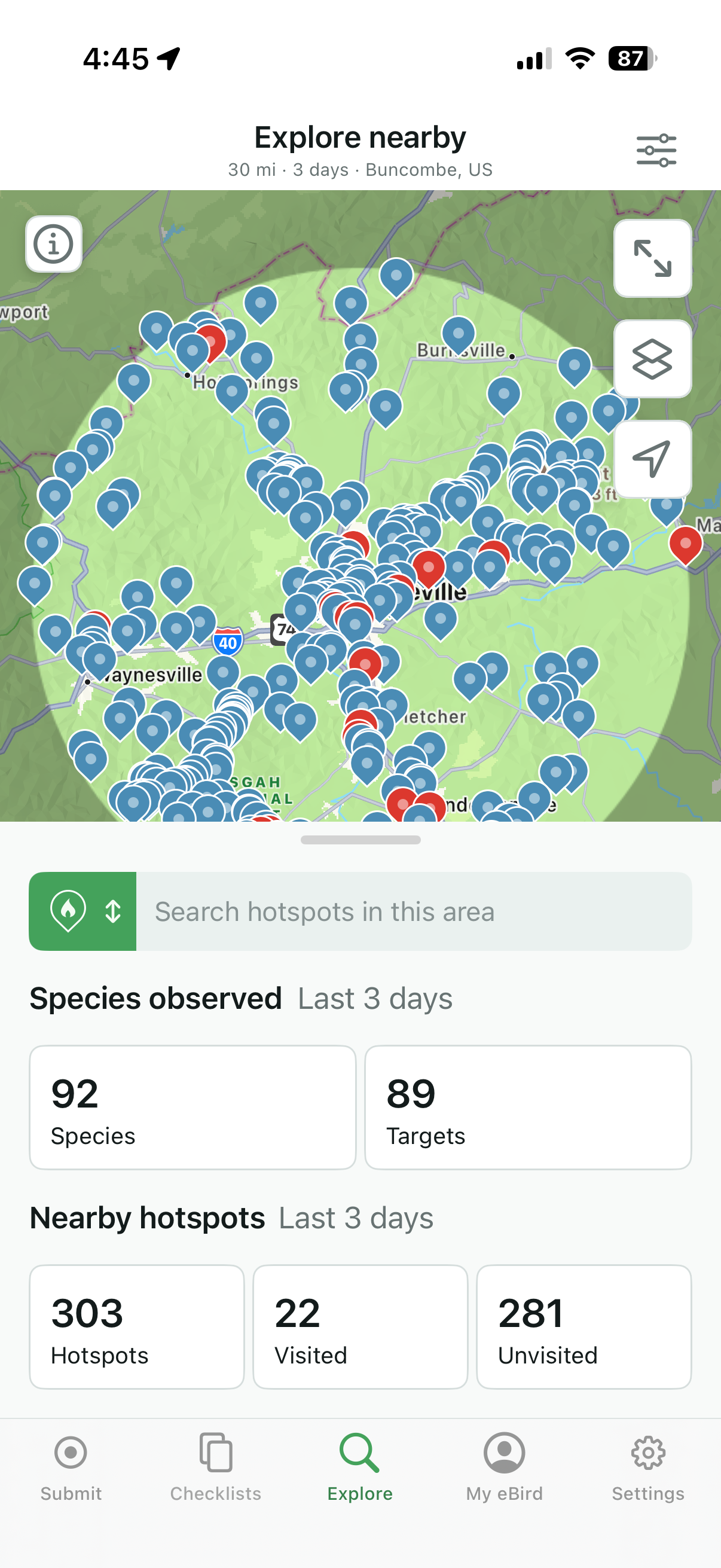
Of course, modern technology has changed birding in the form of connected apps that make the experience more engaging. The two main birding apps are Merlin and eBird, both under the umbrella of Cornell University. Merlin uses your cell phone’s microphone to record the ambient sound, and it can identify birds by their calls. You can also use it to help identify birds that you spot with visual imagery. It also allows you to play bird calls to hear them out loud, but recall (the use of recorded bird playback to attract birds) is a controversial technique.
EBird is sort of like Strava for birding (with just as much controversy). It can record the track you take while birding (only if you want it to), and you can submit checklists of all the birds you spot. As the main tenant of Listers, eBird keeps track of the number of individual species you spot. The more species, the higher you’ll find yourself on the leaderboard. Some birders take this to the extreme, going for ‘Big Years’ where they attempt to identify the most species possible in a specific location for one calendar year. Maybe we should make a new category for a Big Year by bike?
Apps are great, but good old-fashioned guidebooks are still a great way to identify birds in the field. They won’t drain your phone battery, and don’t require service. I picked up a vintage Peterson field guide from a local bookstore, but there are plenty of worthy guidebooks out there (including Quentin Reiser’s guide from Listers). Obviously, space can be limited on a bike ride, but there are plenty of pocket-sized guides that would easily fit in a bike bag.
Bike Bags
Speaking of bags, you’ll probably want some. It’s totally possible to fit something like the Nocs Zero Tube in a jersey pocket or cargo bib pocket, but if you’re content to stop mid-ride to look at some birds, you’ll probably want to bring along snacks, tools, extra clothing, etc. Bike bags make that easier, and take all the weight out of your pockets.
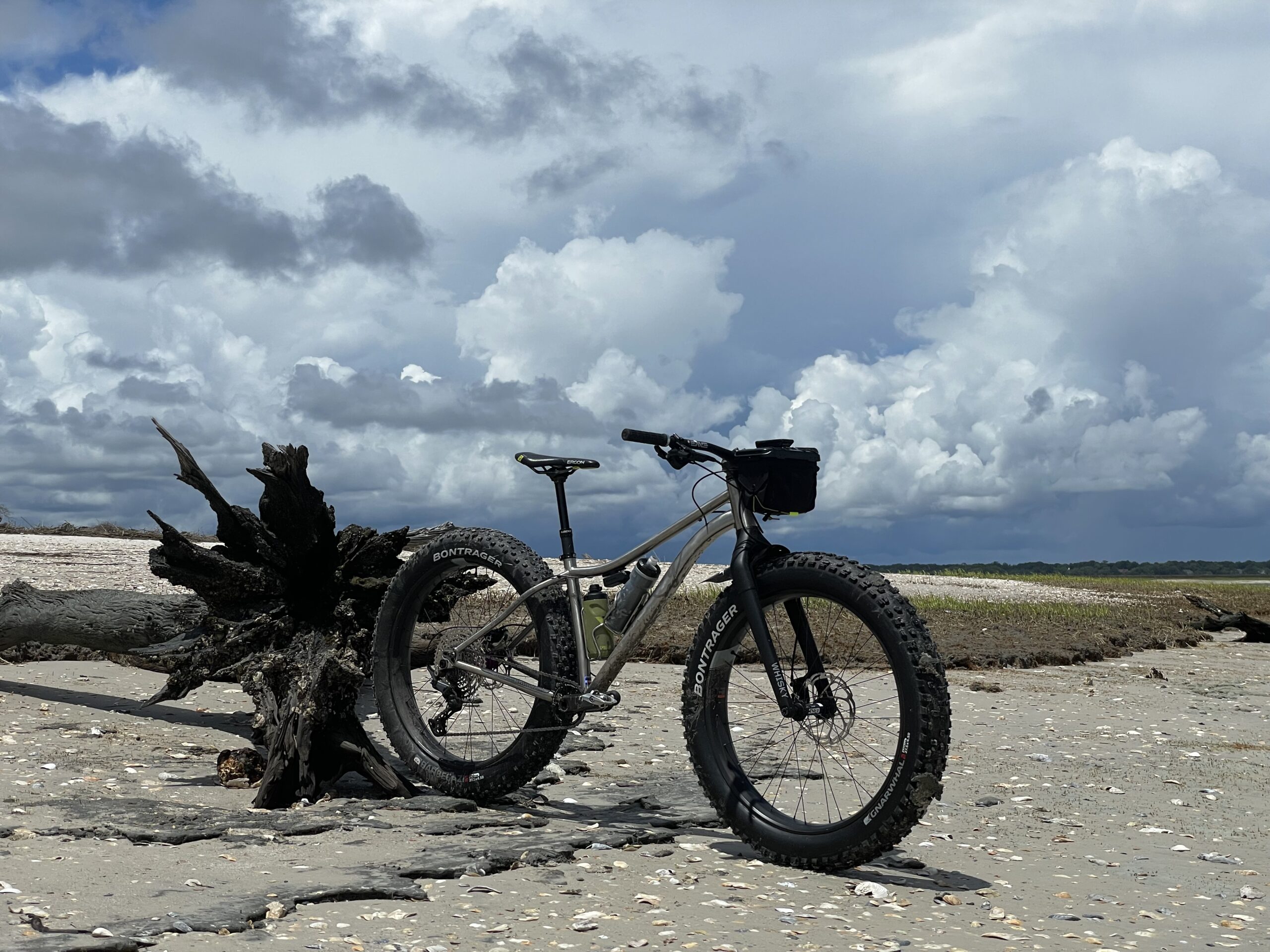

One of my favorite bike bags is still the Route Werks Original Handlebar Bag. It’s the easiest to open and close (even while riding), and the rigid handlebar mount can support a lot of weight. The original can even fit a pair of the Nocs Pro Issue 10×42 binoculars – with little room to spare. If you want to carry the Pro Issues on a daily basis, you should opt for the new Route Werks Big Handlebar Bag.
But smaller binoculars like the Nocs Field Issue 8×32 fit with plenty of extra room. That room taken up by the binoculars is cut in half if you choose to carry something like a Zoom Tube monocular. The key here is quick access – the lid flips open (away from you) with the push of a button, allowing easy & quick access to the contents so you can grab your optic and spot the bird before it flies away.


Nocs also offers pouches for the Standard Issue and Field Issue Binoculars, as well as a Tube Caddy for monoculars. All of these can be attached to a handlebar using Voile straps or similar. I tried that out recently with the Field Issue pouch, and it worked pretty well – my main critique is that the pouch is a pretty tight fit, especially with the neck strap. So it doesn’t work well for frequently removing and stashing the binoculars mid-ride.
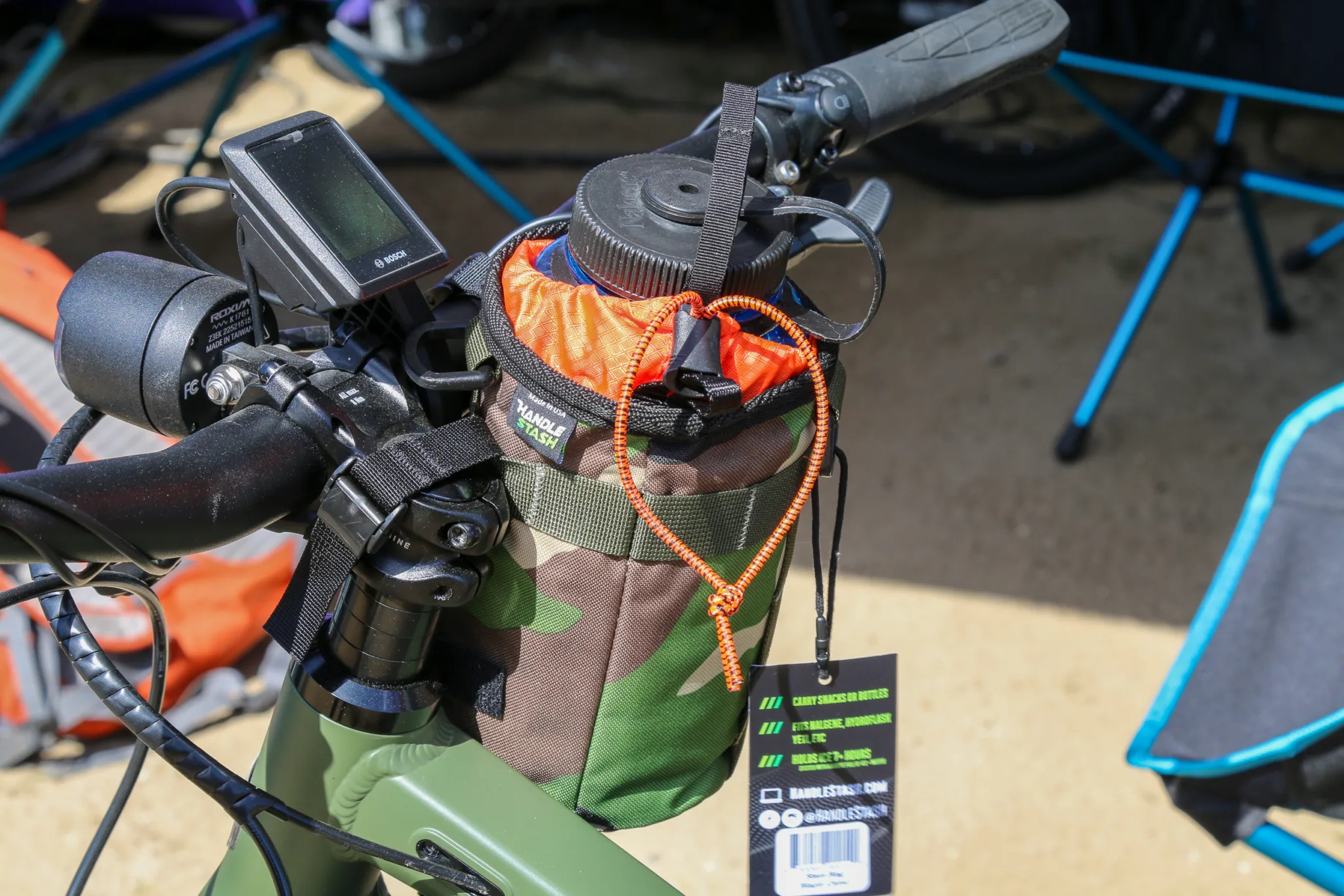
The Tube Caddy, or handlebar feed, or bottle bags like the Handlestash bag above, would work great to keep a monocular ready for quick deployment as well.
Optics

Optics are a funny thing. I’ve had a pair of the Nocs Standard Issue binoculars and a Zoom Tube for some time. But I never brought them with me on a daily basis, they just sat on a shelf at home, waiting until some big adventure. After watching Listers, I started stashing one or the other in my car, or carrying it on a ride, hike, etc. It’s amazing how many times you will use optics when you least expect it, if you actually have them with you. Now, I have some kind of optic on me at all times, wherever I go.
When it comes to optics, it’s a lot like camera lenses. More expensive versions let in more light and have a better field of view, but are larger and heavier. More expensive models will also usually feature better water proofing, fog proofing, and improved hardware. Most will be labeled with two numbers separated by an ‘x’, like 8×42. The first number is the optical zoom magnification power, with 8x and 10x being the most common. 8x is considered best for tracking motion and features a wider field of view (with the objective lens being the same) and a more stable image when holding them in your hands. 10x will offer more zoom & better stationary details, but will be shakier in your hand with a narrower field of view.
The second number is the objective lens size in millimeters. The bigger the second number, the more light they can gather for a brighter, clearer image. But it also means the binoculars will be physically bigger and heavier.
As you’d expect, as the Nocs models go up in price and visual performance, they also increase in weight:
| Model | Actual Weight (without straps, caps, etc.) |
| Standard Issue 8×25 Binoculars | 344g |
| Field Issue 8×32 Binoculars | 477g |
| Pro Issue 10×42 Binoculars | 686g |
| Zero Tube 10×25 Monocular | 188g |
| Zoom Tube 8×32 Monocular | 217g |
There’s also a lot going on with the construction of various optics, and this is one of the areas that makes Nocs perfect for bike birding (bird biking?). All Nocs feature a rubberized Wave Grip coating to improve your grip on them while also protecting the optic. As you move up from the Standard Issue to Field Issue, to Pro Issue, the internals improve as well, but all models are backed by a No-Matter-What Lifetime Warranty. I’ve been beating on the Standard Issue and Zoom Tube as mentioned for years, and they’re as good as new. But it’s nice to know that I’d be covered if I ever had an issue.
What’s the Best Birding Optic for Your Bike Adventure?
I’ve spent a lot of time now with most of the Nocs lineup. I already had the 8×32 Zoom tube monocular and Standard Issue 8×25 binoculars. Then I couldn’t resist a sale at REI, and bought the 10×42 Pro Issue binoculars. Then, for this story, Nocs sent out the Field Issue 8×32 binoculars and the 10×25 Zero Tube Monocular.


You’d think that the compact size of the Zero Tube would make it the perfect biking companion – I certainly did. However, after using it, it’s clear that it is a marvel of engineering to create such a compact optic. But it’s not the one that I would pick. Where the Zero Tube excels in portability, it lacks in usability. You have to use two hands to hold and focus it, whereas the Zoom Tube and Field Tube have an oversized focus wheel that allows you to hold it in one hand while simultaneously focusing it with the fingers on that same hand. When you’re stopping on the side of the trail because you just saw an interesting bird, having one hand free to wrangle the bike while the other hand does the focusing & viewing is worth the slight increase in size and weight.

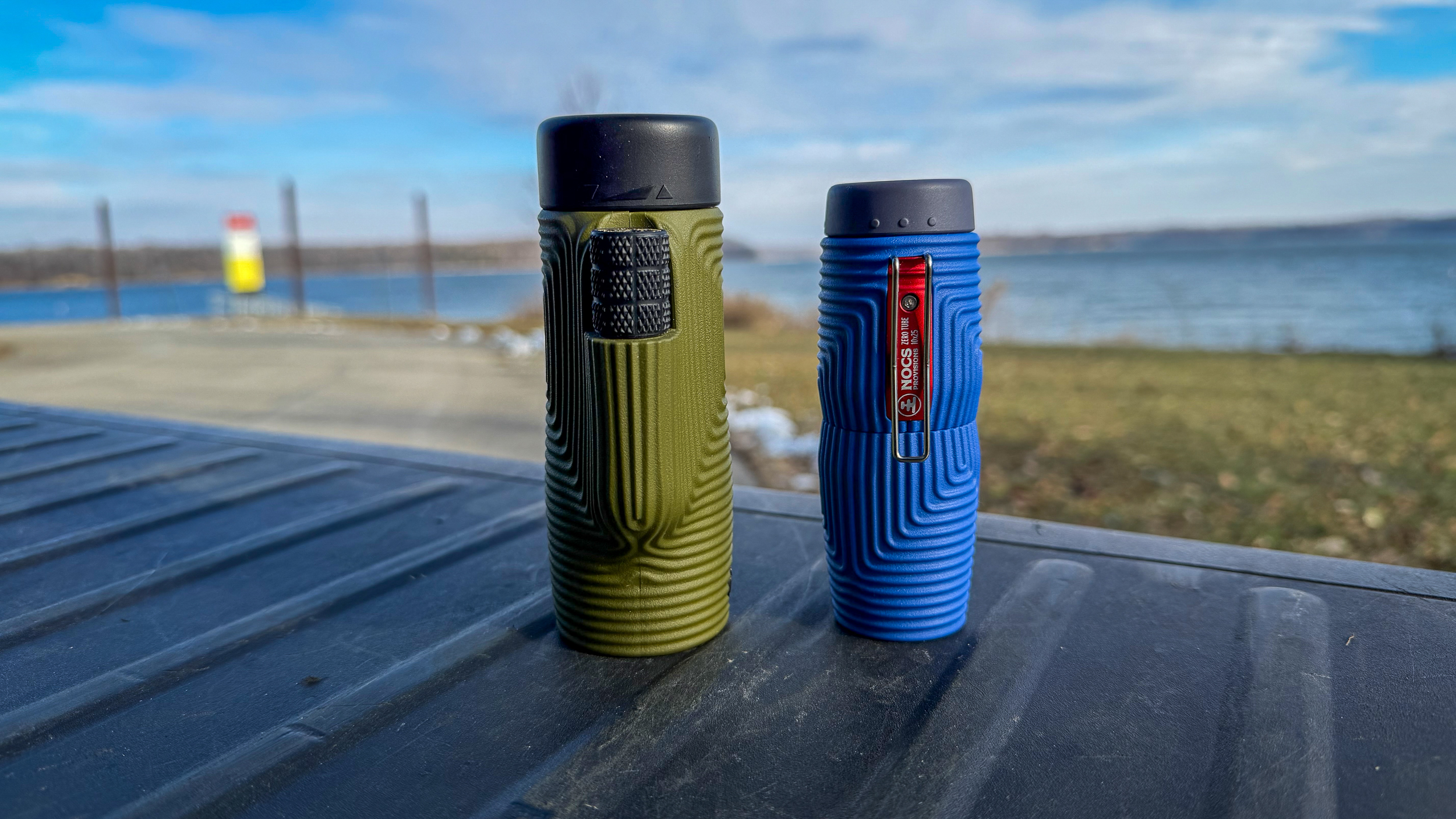

The Zoom Tube is still small enough to fit into a jersey or cargo bib pocket, as well as most bike bags. Also, the larger objective lens makes a big difference in what you can actually see while using it. And you’re only giving up 29g from the Zero Tube to the Zoom Tube, so in a gram-obsessed bike world, it’s not a huge weight penalty.
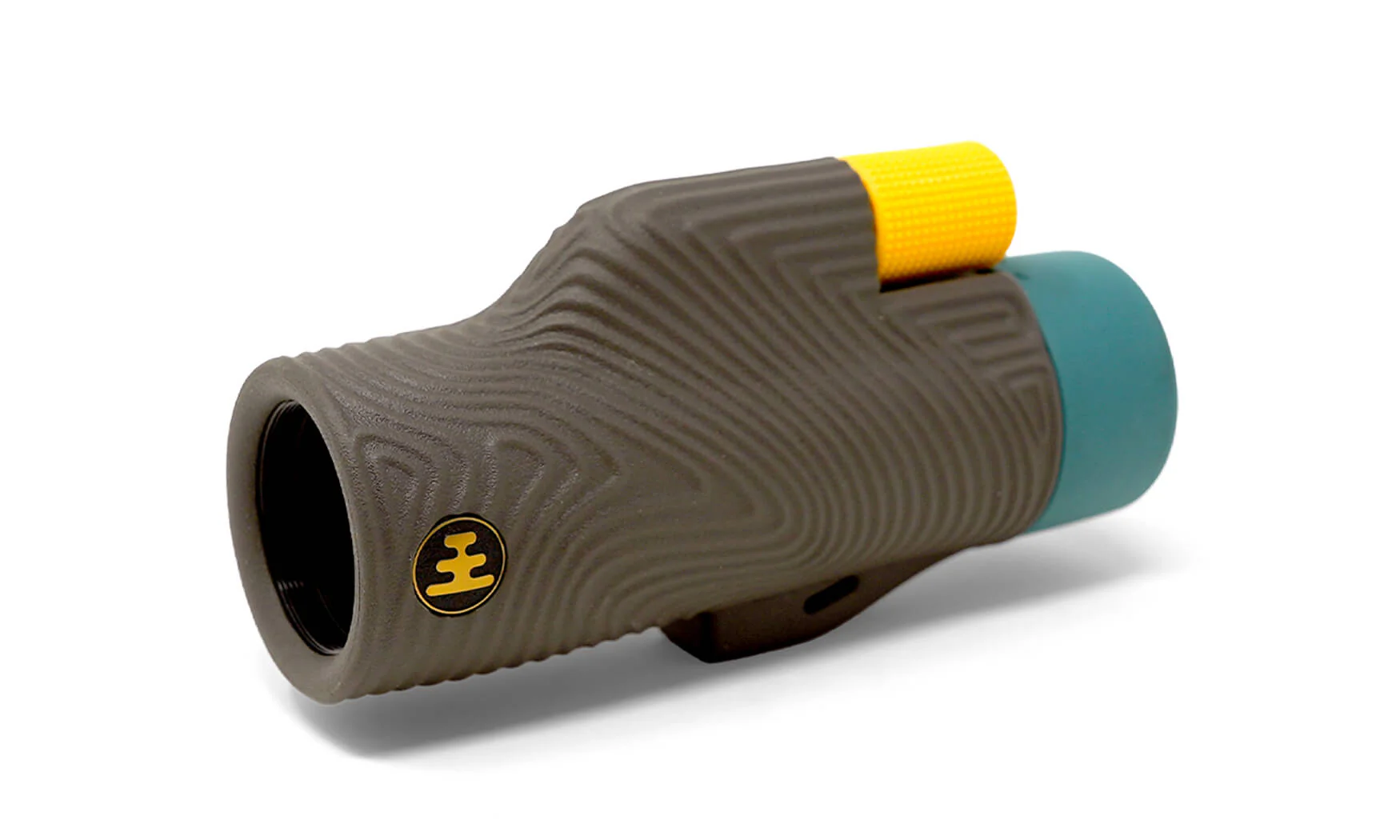
If you want the most compact but easy-to-use and best-to-see-with optic for bike birding, I’d recommend the 8×32 Field Tube ($125-$129). It offers the same 8×32 as the Zoom Tube, but is IPX7 waterproof, nitrogen-filled, and o-ring sealed for fogproofing. It also has a better lens array to offer a wider field of view. Surprisingly, the Field Tube also has a lighter claimed weight on paper at 229.4g, but my Zoom Tube is much lighter than claimed at 217g (which makes me think the claimed weight is a typo).
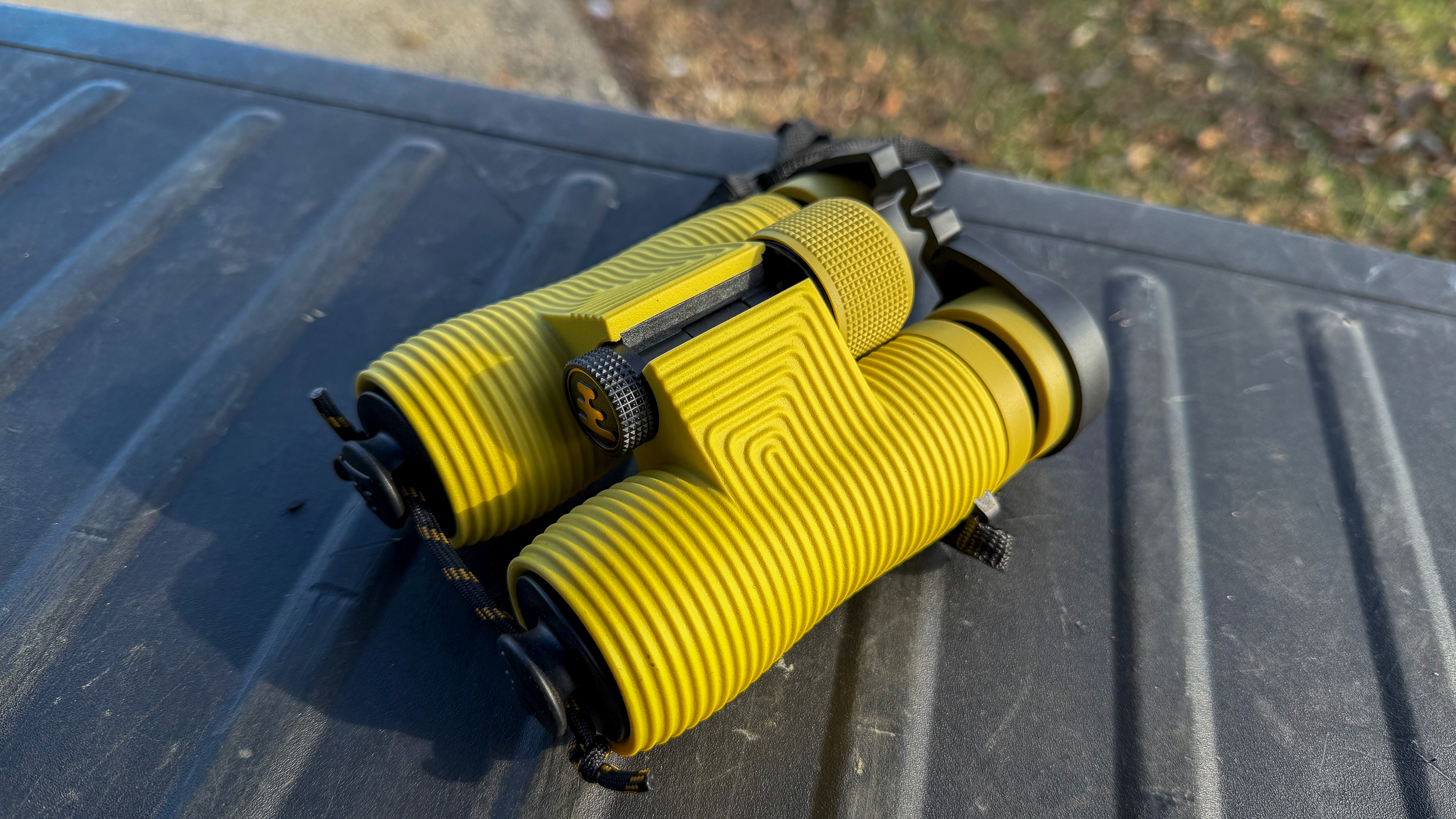

Want something for both eyes? In that case, I’d recommend the Field Issue 8×32 model ($179). It offers the best blend of packability and performance. The Standard Issue Nocs are the smallest and better than nothing, but the image and hardware on the Field Model are so much better, it’s not a fair comparison. The Field Issue also includes lens caps and eye cup caps, which will help protect your optics when bounding around in a bike bag. You also get an included neck strap, cleaning cloth, and soft storage bag.
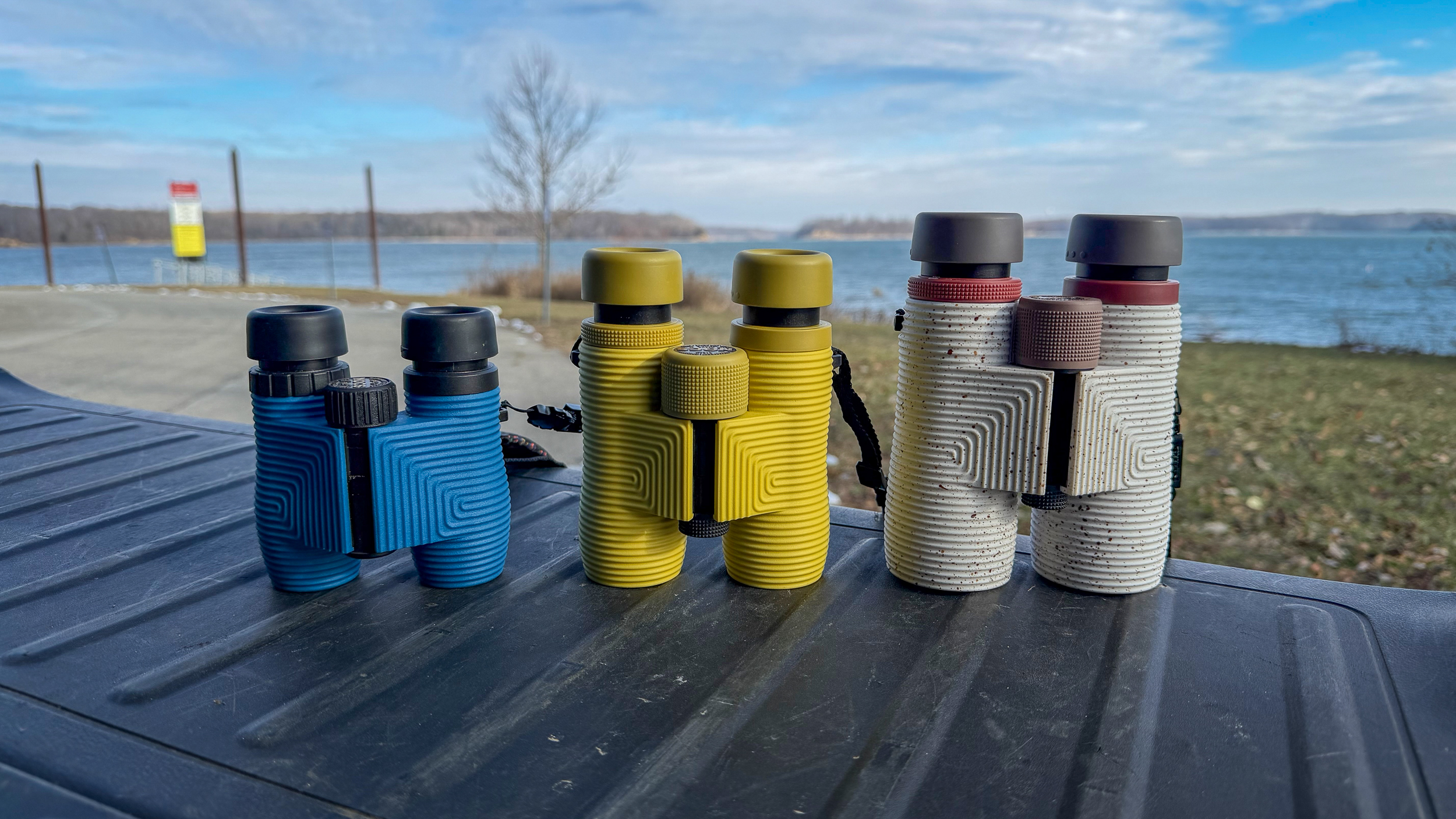

As a side note, I’ve given the Standard Issues to my daughter, who loves them. They are certainly being abused, but are still in perfect shape, which makes it little surprise that GearJunkie called these the best binoculars for kids.
GearJunkie also gave the Nocs Pro Issue the title of ‘Best Budget Binocular,’ which sounds funny considering it is the most expensive option from Nocs. That is, until you compare just how expensive premium binoculars are to the prices of the Nocs lineup. Considering you’ve already spent plenty on your bike, it’s nice that you won’t need to spend thousands on a pair of binoculars.
I Don’t Care About Birding, Why Should I Care About Optics?

Not everyone is going to be into birding, and that’s totally fine. However, I will say that this experience has made me realize that having a small, lightweight optic like a monocular is a great addition to many rides and adventures for other purposes. Recently, my friends and I rode down to catch the last Cincinnati Reds home game of the season and had a blast. The monocular made it so I could still pick out details from our last-minute-nose-bleed-section-seats.
There have been other times when I’ve used a monocular to look ahead on the trail to spot other riders farther ahead, look for signage, etc. On many bike trips, there are often side quests like fishing, hiking, or even golfing, where optics can help you pass the time.
I’m not sure about you, but when I was a kid, I remember having a little collapsible spyglass that I thought was the coolest thing in the world. Carrying a monocular on rides and adventures is the closest I’ve come to recapturing that magic of youth.
My Setup


When it comes to my own setup, I’m most often reaching for the 8×32 ZoomTube ($79.95), although I would choose the Field Tube if I had it, and the 10×42 Pro Issue binoculars ($329.95). When out riding, the size and packability of the Zoom Tube are perfect for just about any adventure, and the one-handed use makes it far easier to deploy/watch/stow mid-ride. Occasionally, I’ll take the Field Issue 8×32 binoculars on a ride where birding is the goal, but I find that the ZoomTube offers a visual experience that is pretty close while taking up much less room.
I tend to also bring the Pro Issue binoculars along whenever I’m driving somewhere to ride. There are often plenty of opportunities for birding at the trailhead or on the way to the trailhead, or on the way home, and the Pro Issues are so nice to use. It’s also my choice for those rare days when the bikes are left at home, and birding is the main objective. While the recommendation for birding seems to be for the 8x binoculars, I am very happy I went with 10x for these. I can hold them steady enough that the shaking doesn’t bother me, and I welcome the additional range these provide to scope out details on birds farther away.
Gravel Birding, Fat Birding, Mountain Birding?
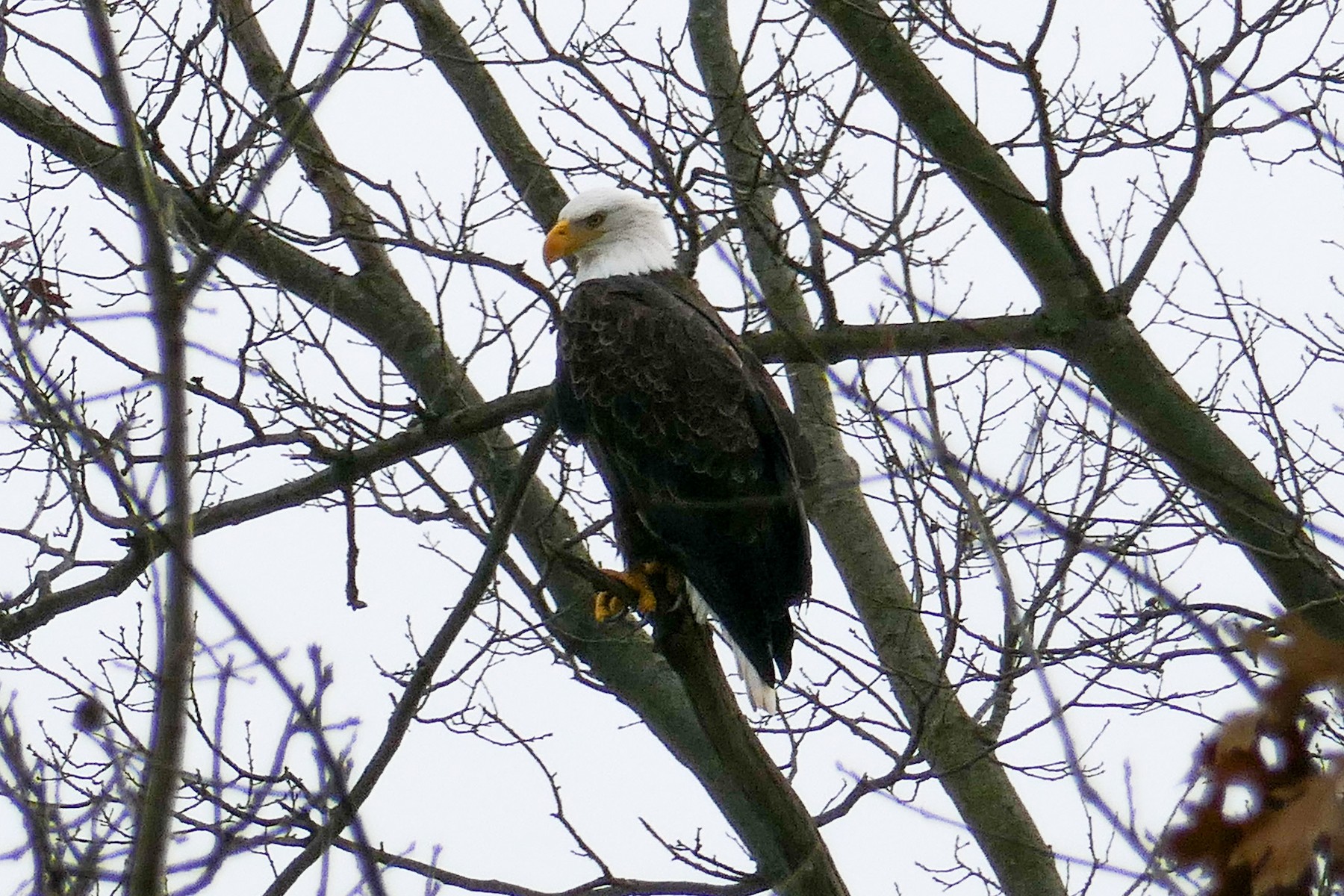

Are we really talking about birding on a bike website? Yes, apparently. It sounds ridiculous, but after incorporating birding into my riding, it’s surprising how naturally they fit together. Bicycling allows you to cover way more ground than you would be able to on foot, and it also gets you easily into the backcountry and areas that aren’t overrun with humans. That’s a great combination if you want to see wildlife, and it’s amazing how much you’ll actually see once you start paying attention.
More than anything, as cyclists, we often feel like we need to crush it on every ride. Taking some time to look for birds on your next recovery ride will make you realize that it’s good to slow down and take in the scenery once in a while. You should try it.


