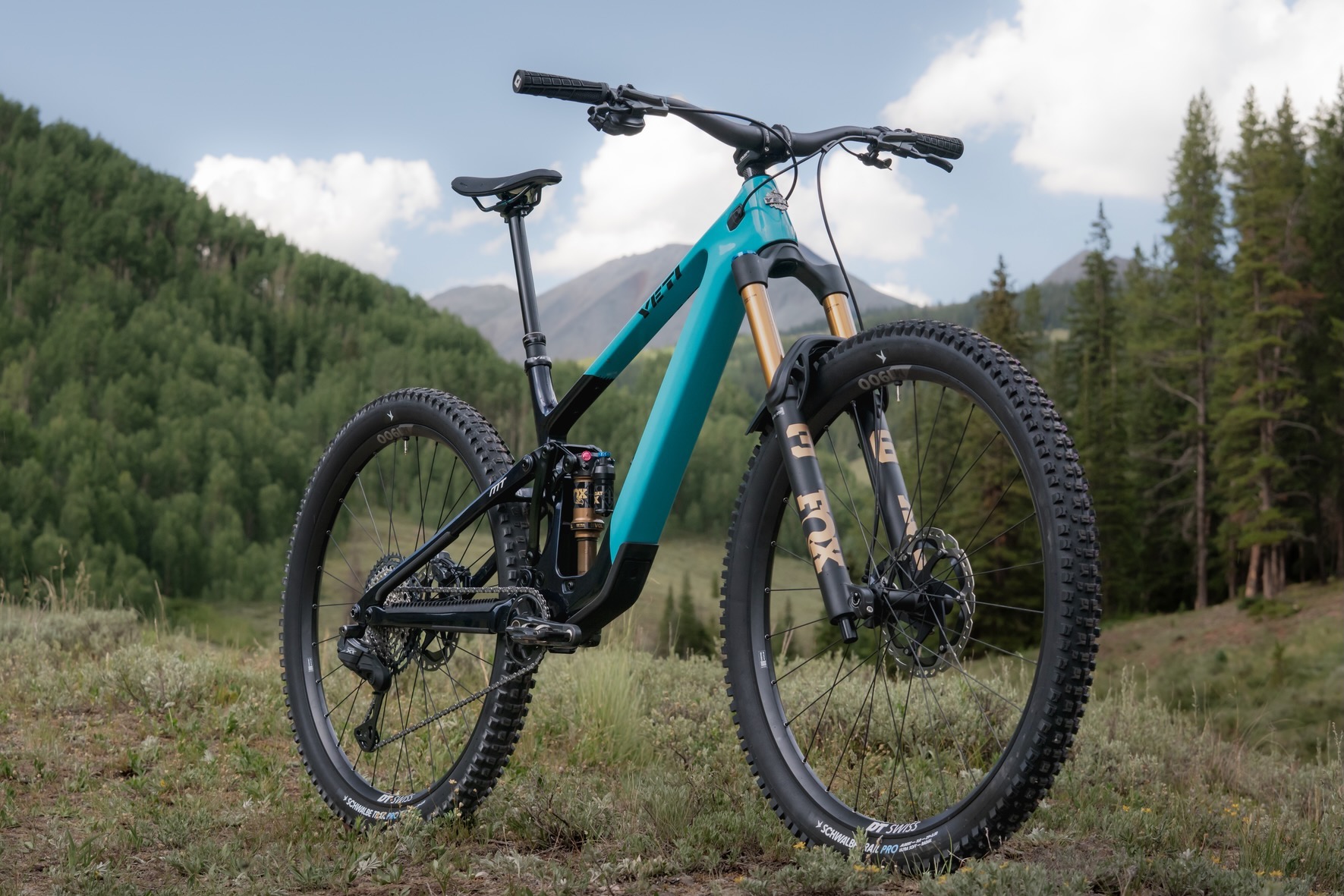


Ever since Yeti launched the MTe mid-travel, mid-power eMTB last June, the brand has slowly but surely been switching away from its unique Switch Infinity suspension design to its six-bar Sixfinity platform. The long-travel, full-power LTe eMTB was next, and more recently, Yeti included it on the new LT enduro bike, which replaced the SB160 last month. Today, Yeti maintains that momentum with the launch of the brand-new MT, a 140mm trail bike featuring the Sixfinity layout.
The MT replaces the SB140 as the mid-travel, do-it-all model in the Yeti lineup, pairing its 140mm of travel with a 160mm fork. In addition to Sixfinity suspension, the MT has an updated geometry including size-specific rear center/chainstay lengths. The new frame also includes Yeti’s Cavity in-frame storage compartment and several other features found in the recently launched LT. Let’s check it out.
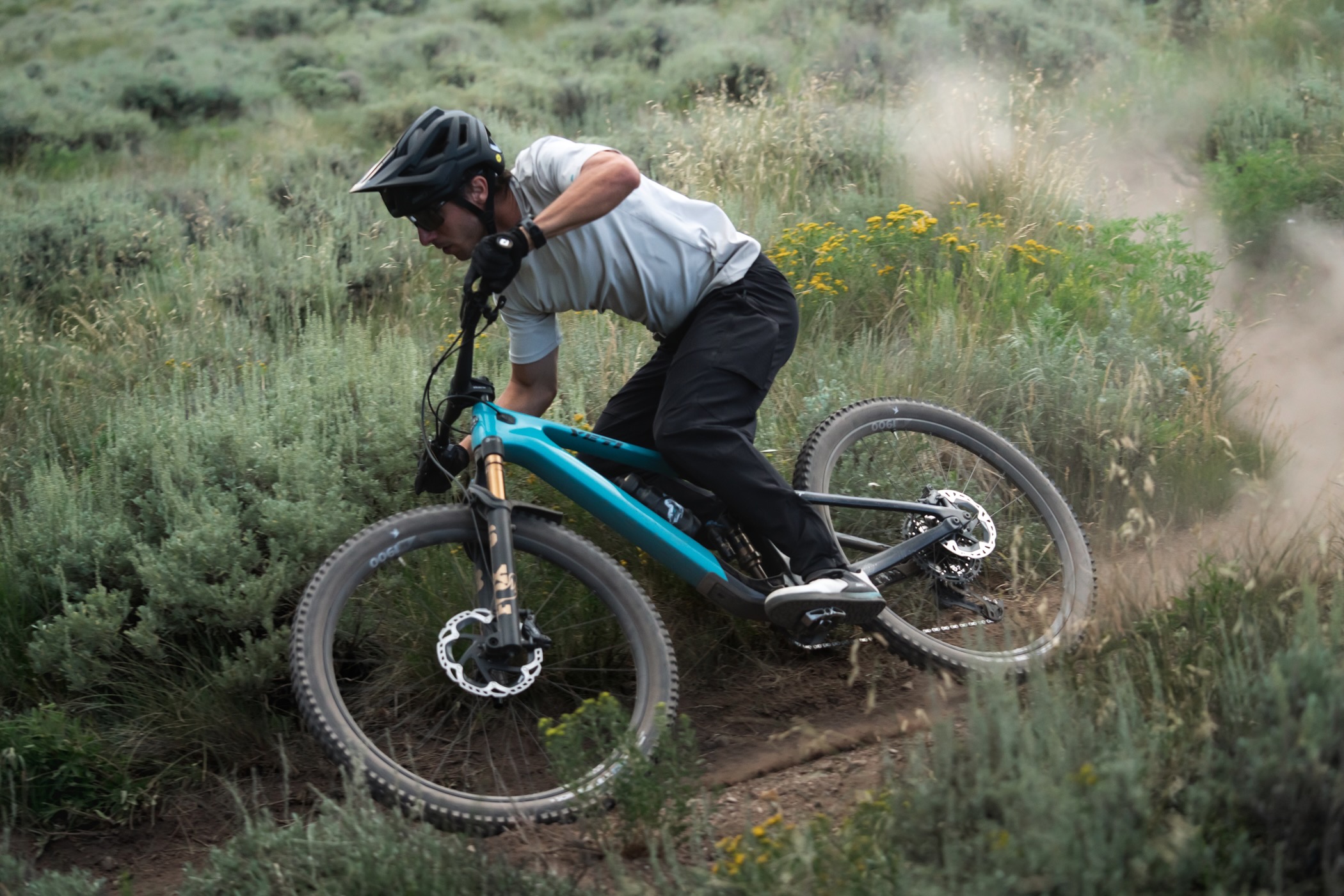
Yeti MT Details
Ever since the MTe came out last year, people have been wondering when Yeti was going to make an analog mid-travel bike built around the Sixfinity platform. Turns out, the folks at Yeti were staying tight-lipped about it, but the MT was in the works the whole time. Arguably the biggest story here is the move away from the long-standing Switch Infinity platform on the SB140 (and the SB130 before it) to the six-bar suspension layout.
Like the LT, Yeti is currently only making the new MT frames with its top-tier TURQ series carbon. The brand claims it is not only lighter, but it’s optimized to maintain strength and stiffness, reinforced with Vectran, and has a fatigue-reducing, vibration-muting flex profile. It has 140mm of rear wheel travel using the Sixfinity layout, paired with a 160mm fork and 29” wheels front and rear.
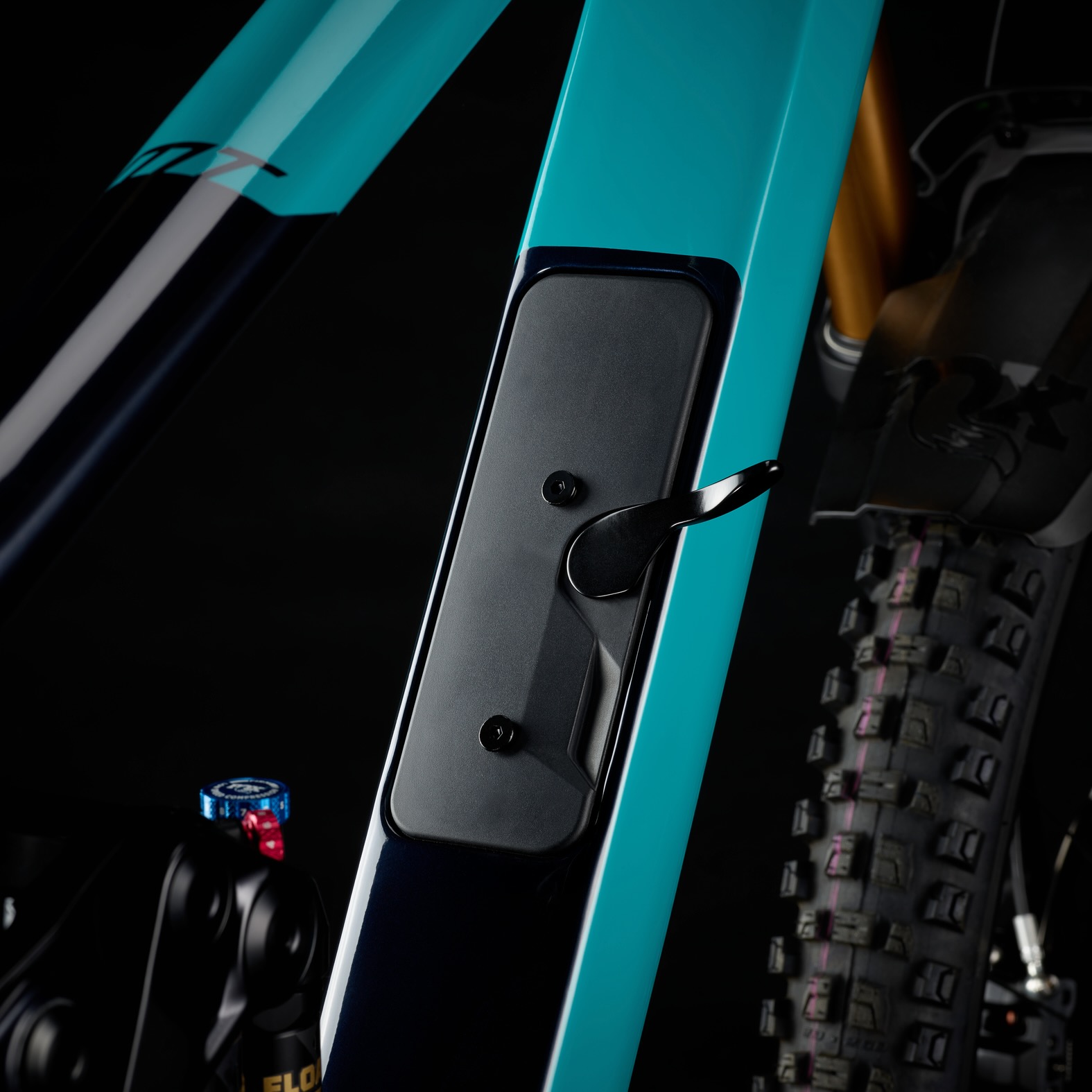
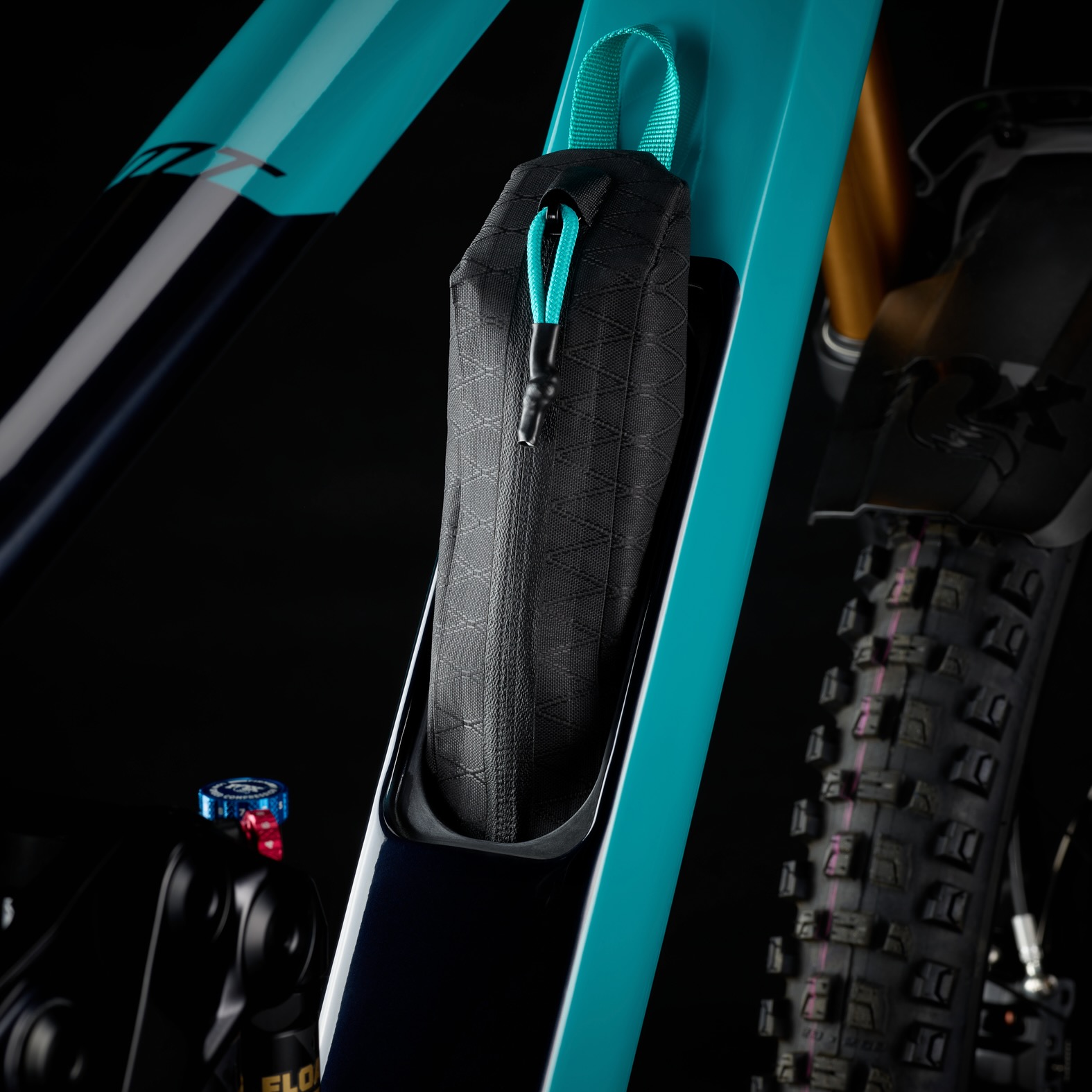
One of the standout features of the MT is Yeti’s Cavity in-frame storage compartment. The Cavity has a fairly large opening with a dual-density door, over-mold rubber gasket, and a CNC-machined roller-cam lever for a secure, rattle-free closure. It comes with a custom Yeti tool bag that’s perfectly sized for the space and easy to remove. The Cavity door includes a water bottle mount, and there’s an additional accessory mount on the underside of the top tube.
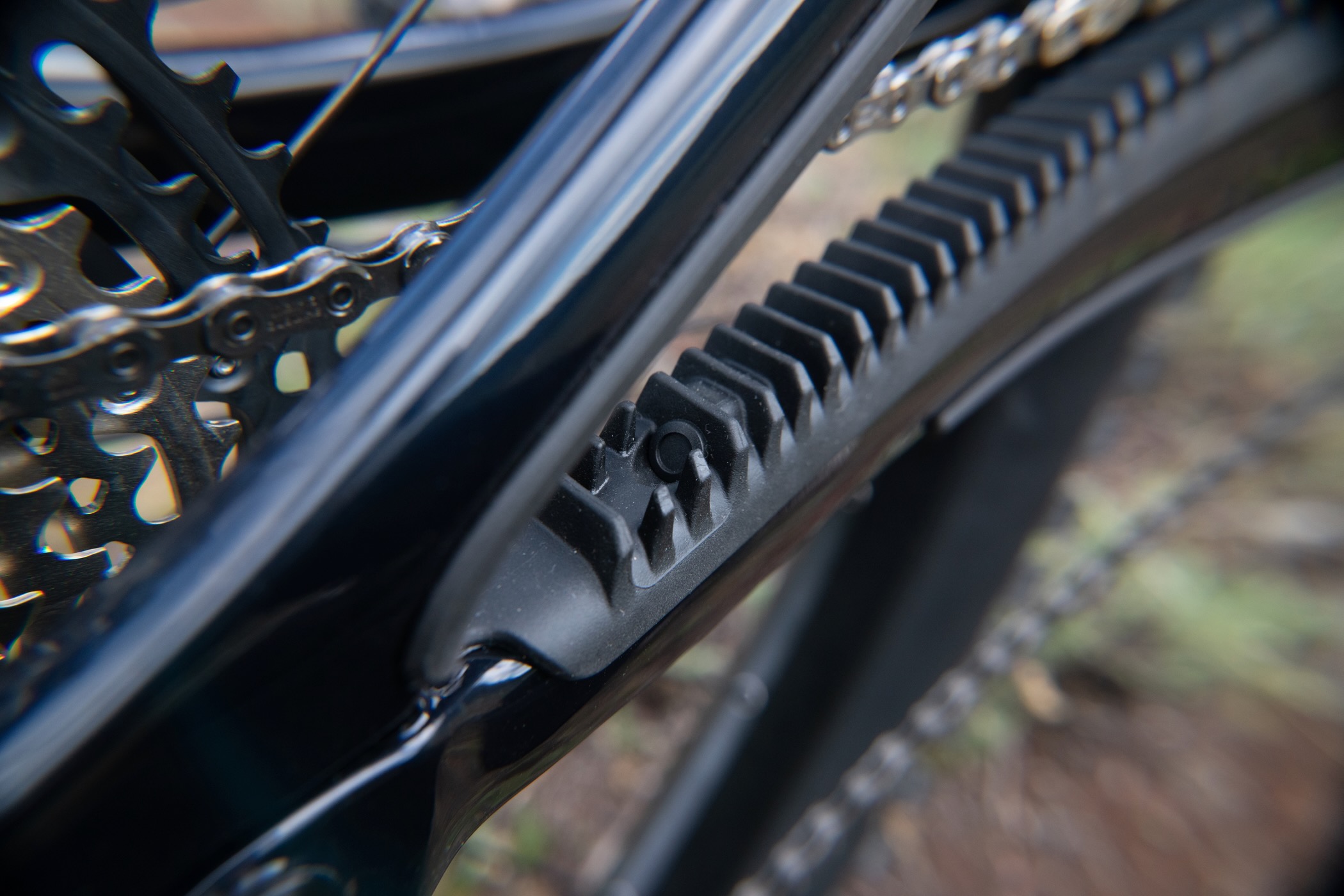
To keep things quiet, internally routed cables pass through molded carbon guide tubes and are secured at entry and exit with Yeti’s cable capture covers. They added an updated chain-slap silencer on the chainstay with additional protection on the seat stay. The downtube protector has a removable cover with a spot to stealthily hide an AirTag or Tile to keep tabs on your precious ride.
Sixfinity
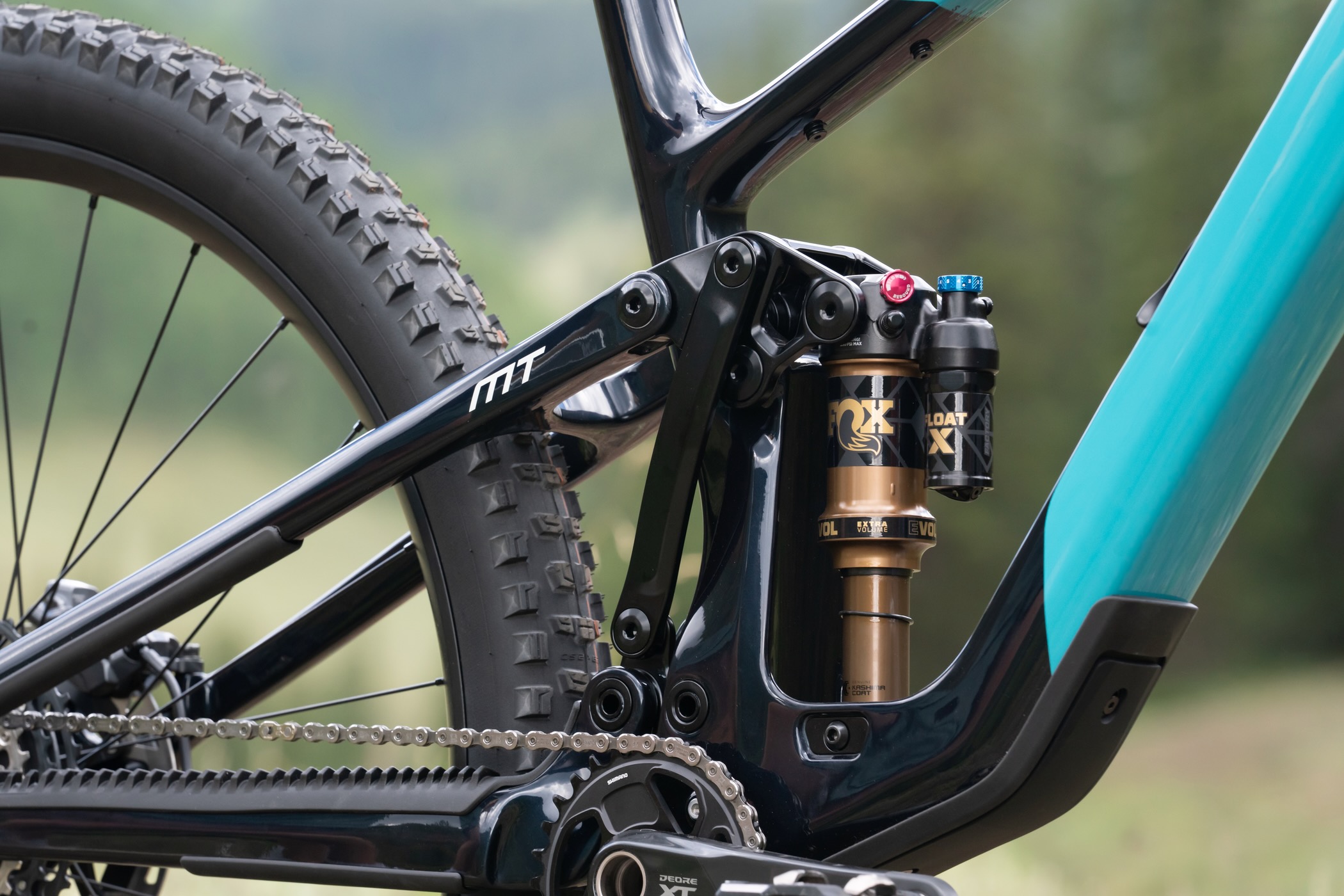
Yeti has been developing its Sixfinity suspension platform for the past decade. It debuted on the 160e a few years ago, then made its way onto the MTe and LTe eMTBs last year. According to Yeti, the Sixfinity design allows for endless tunability for all platforms and the ability to tune anti-squat, anti-rise, and leverage rates independently. Yes, there are a lot of bearings, but Yeti says that the precision-machined linkage is designed for perfect alignment, improved bearing life, and reliability.
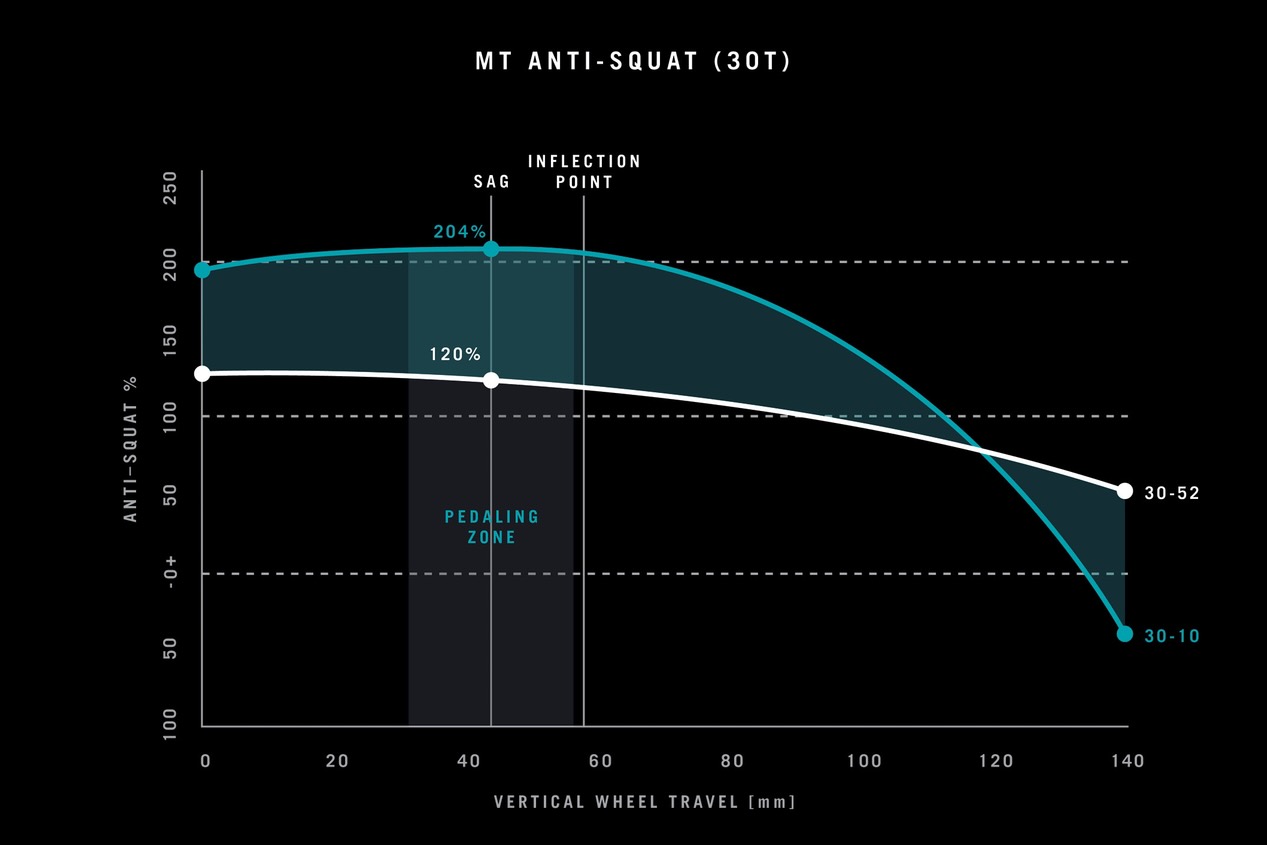
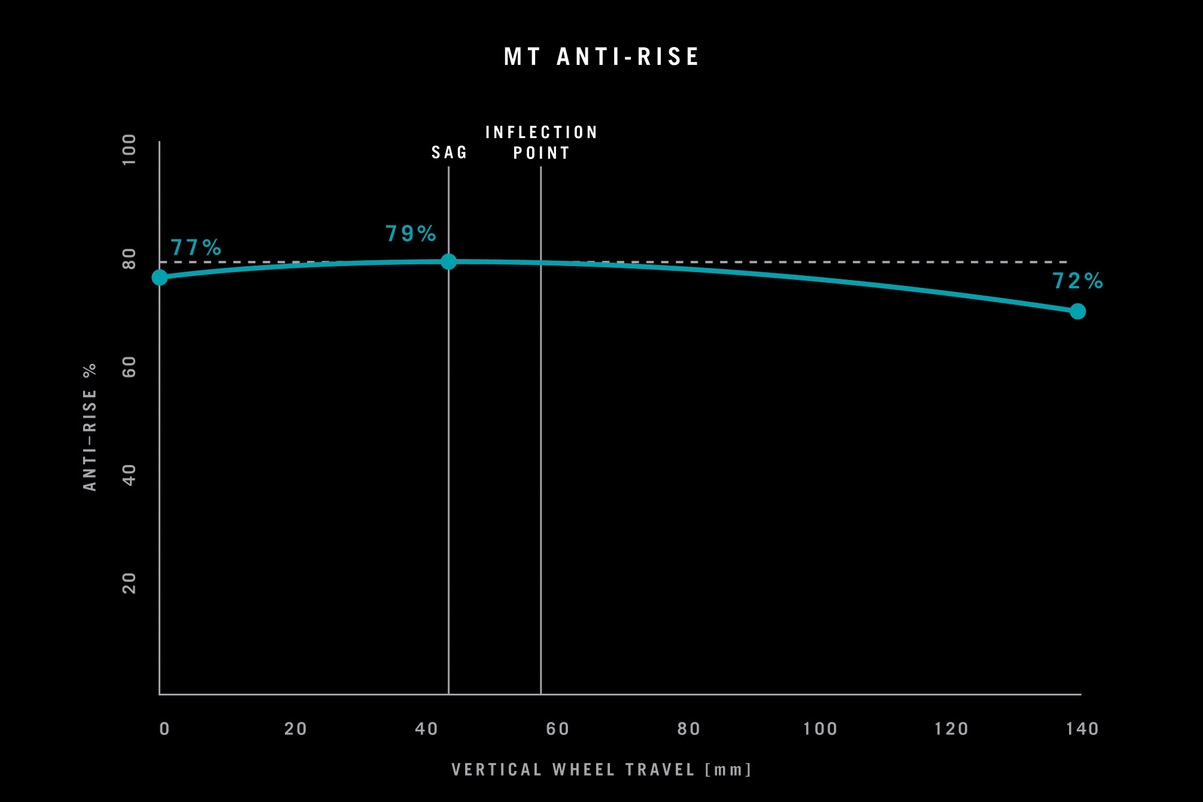
For the MT, Yeti says it has tuned the anti-squat, or acceleration response, centered at sag and around the “pedaling zone” for support and pedaling efficiency. Once past the inflection point, the anti-squat drops off sharply for descending performance. Anti-rise, or deceleration response, has also been carefully tuned to balance traction and geometry preservation while braking. In this case, it’s slightly lower than the SB140 and remains fairly consistent throughout the travel.
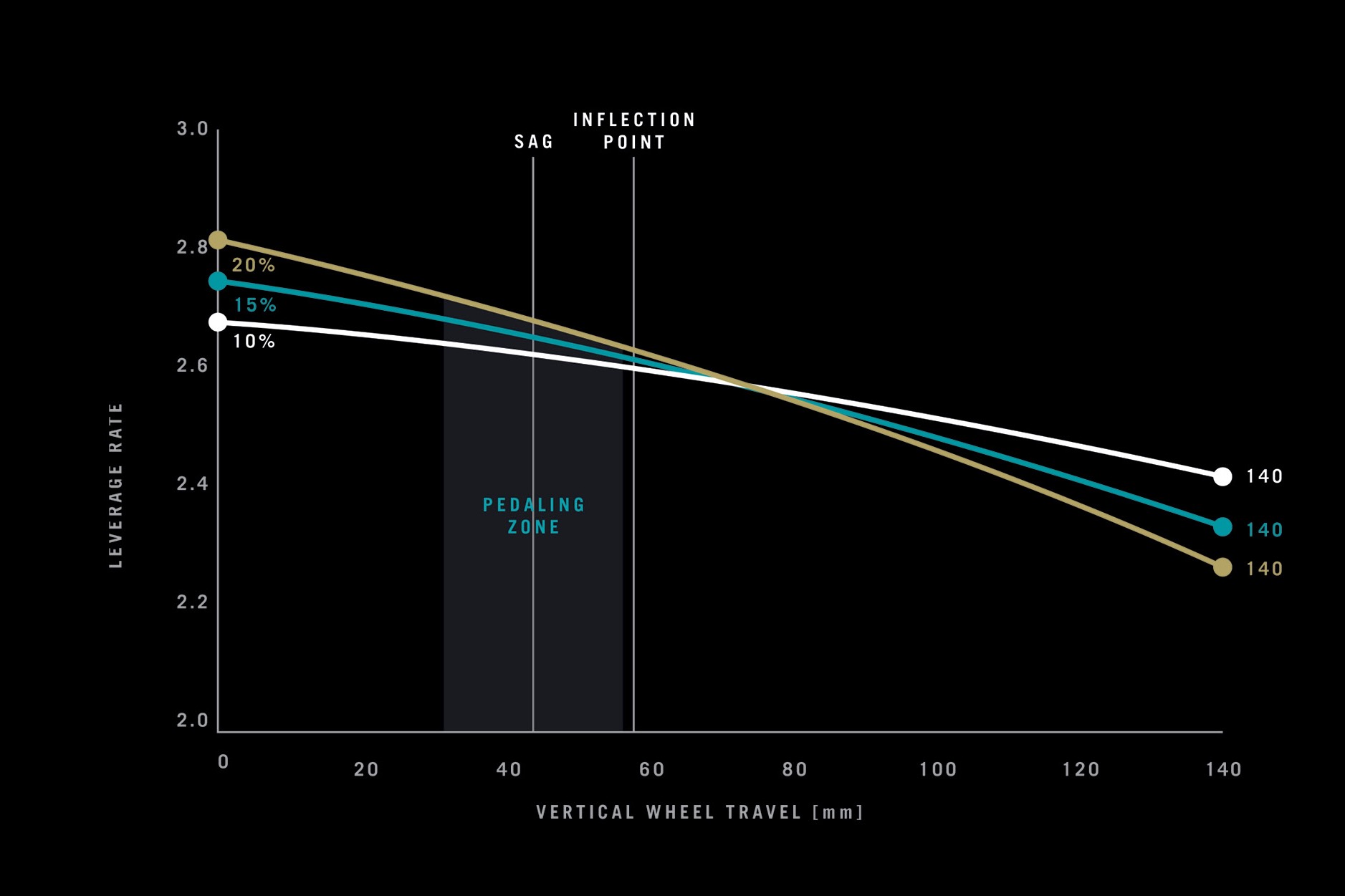
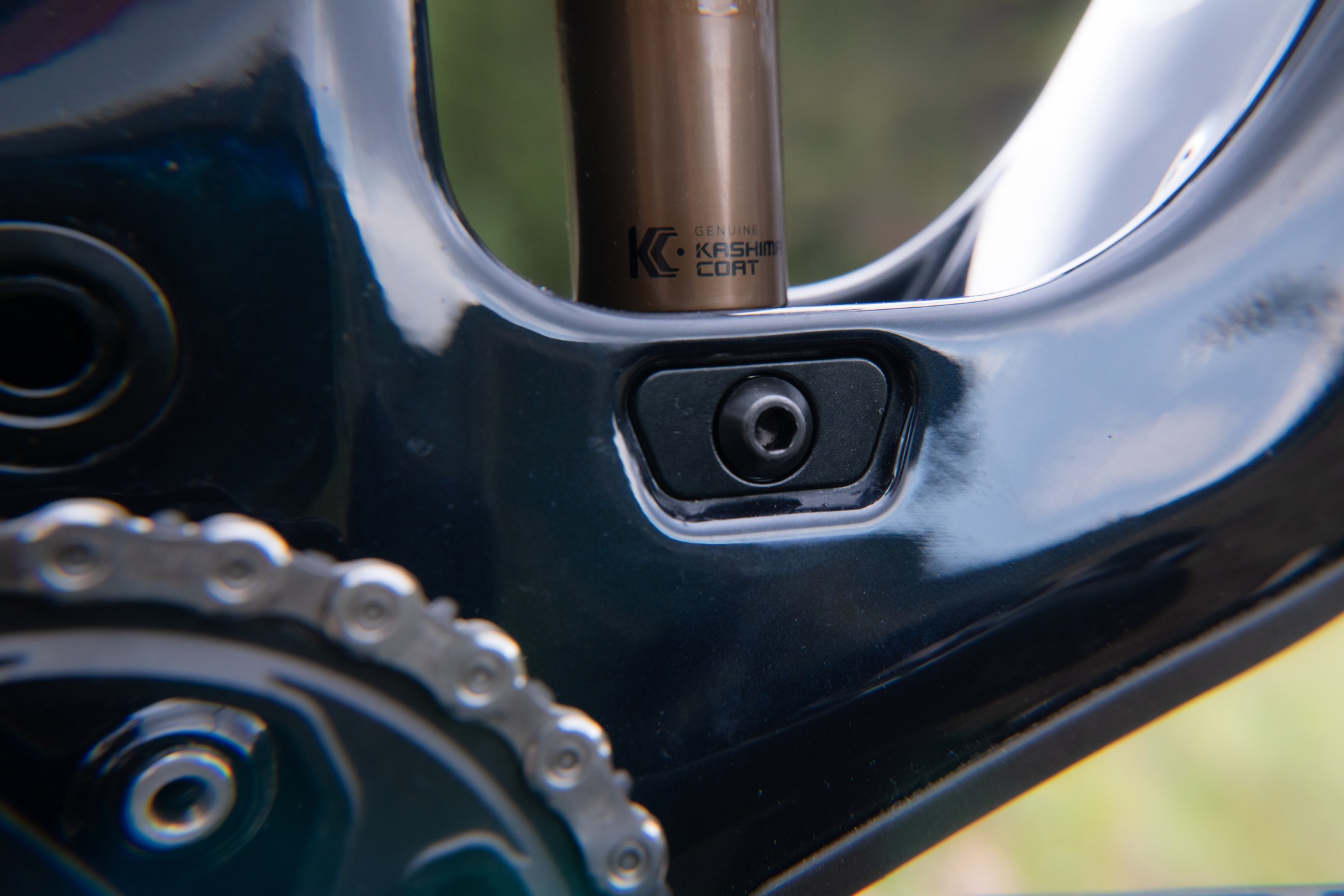
Riders can also tune progressivity with three leverage rates using flip chips in the lower shock mount. With 10%, 15%, and 20% leverage rates to choose from, riders can change the suspension’s character between poppy and playful or calm and muted to suit their riding style or preferences. Yeti says that the leverage rate adjustment does not affect geometry, anti-squat, or anti-rise.
Geometry
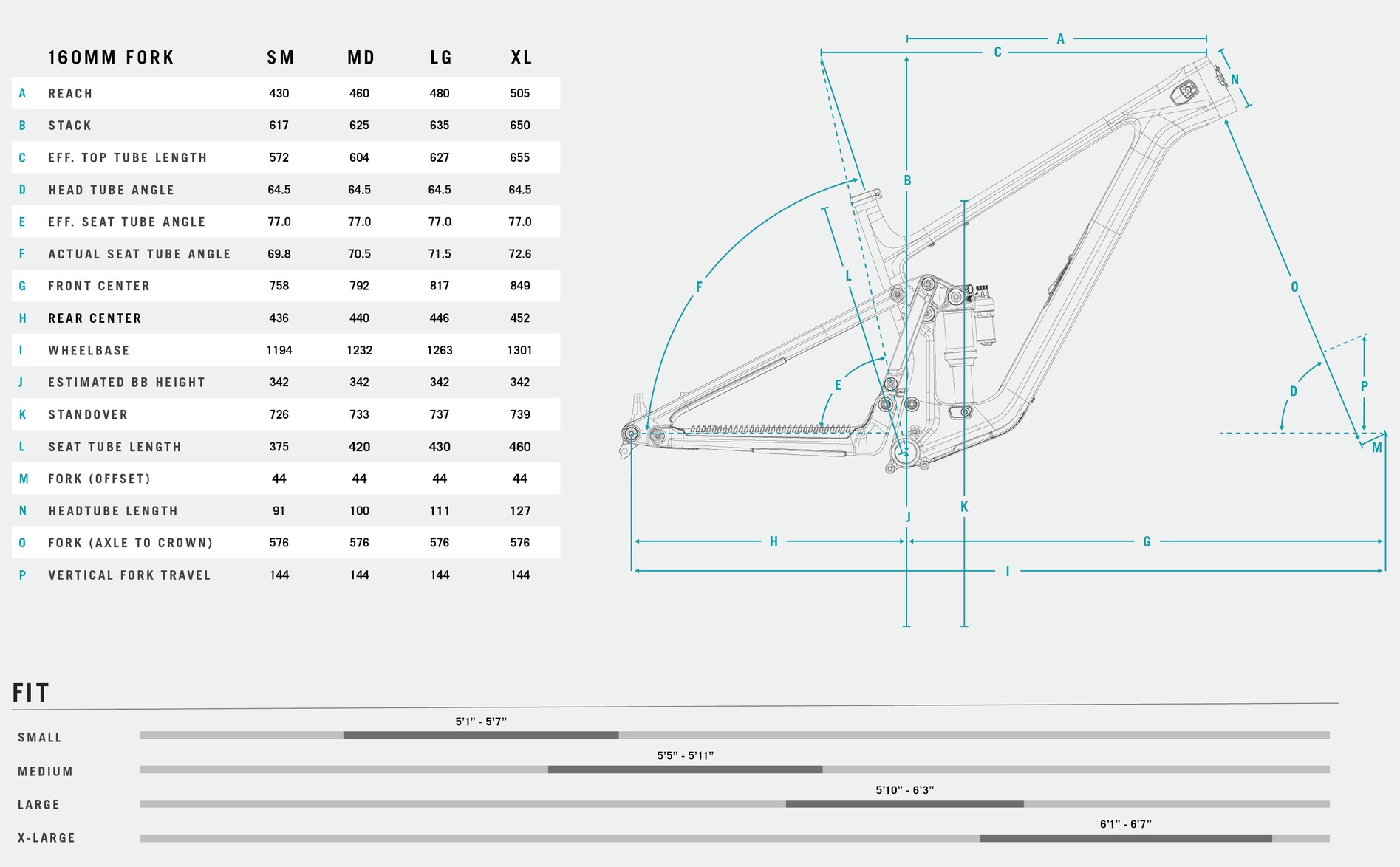
With 140mm of travel, the MT falls squarely in the mid-travel category, and its geometry reflects that. It’s a bit conservative compared to the enduro-focused LT, for example, but right on the money by today’s standards for a more versatile trail-oriented trail bike. It has a 64.5-degree head tube angle, a steep 77-degree head tube angle, and modern reach measurements (480mm on size Large).
On the LT, Yeti really leaned into size-specific rear center/chainstay lengths and added significant adjustability with swappable +10 mm dropouts. While the MT does not include the swappable dropouts, the rear center lengths increase incrementally up the size run to deliver traction and stability while staying nimble and lively. Chainstay lengths start at 436 mm on the Small and top out at 452 mm on the XL frame. That’s a significant difference that should provide a more balanced ride across all sizes.
Yeti MT Builds and Pricing
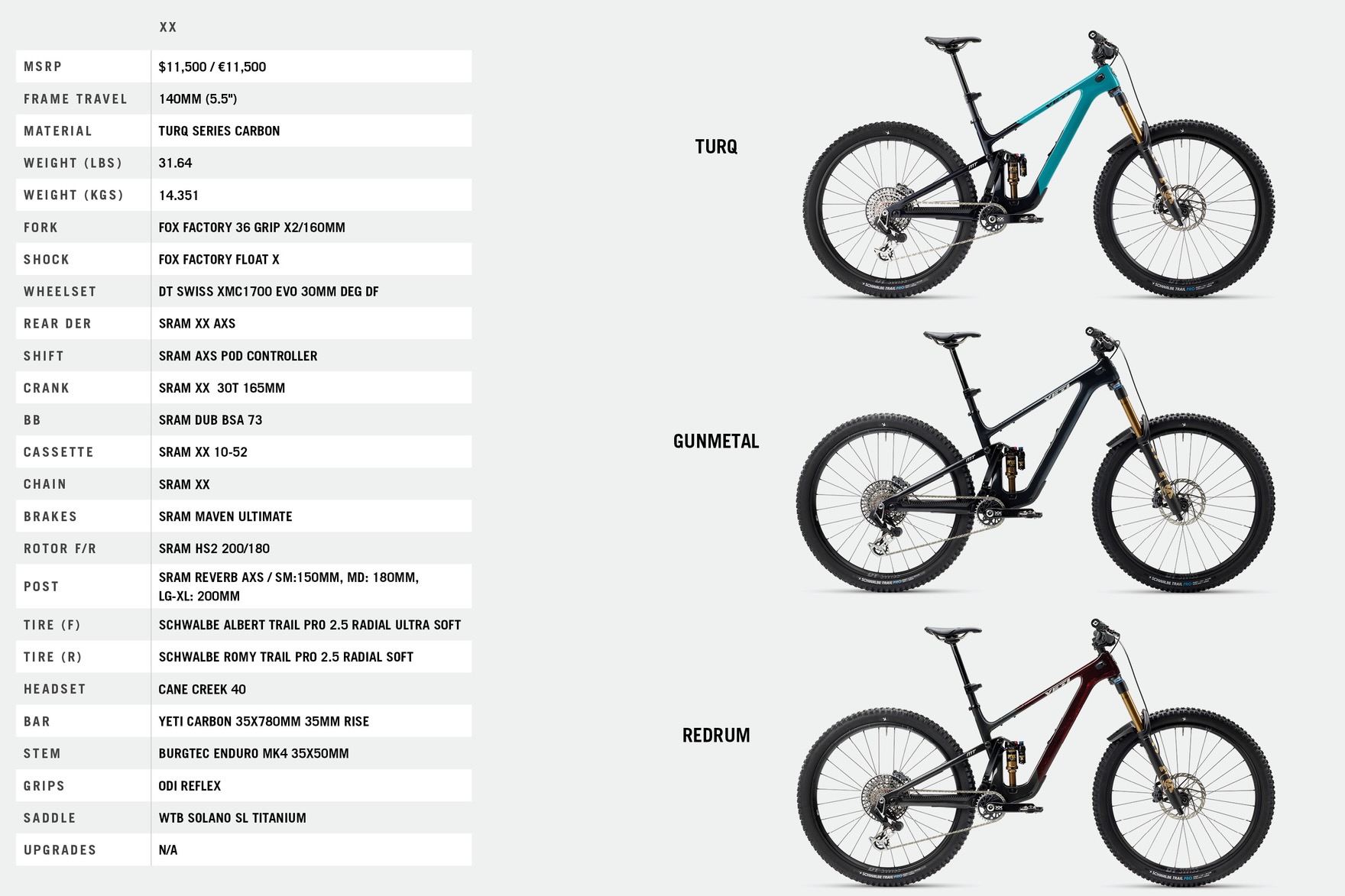
The new MT is available in four complete builds starting at $8,000 / €8,200 and topping out at $11,500 / €11,500. They are all built around the same TURQ series carbon frames and available in TURQ, Gunmetal, and Redrum colorways.
MT XX: $11,500 / €11,500
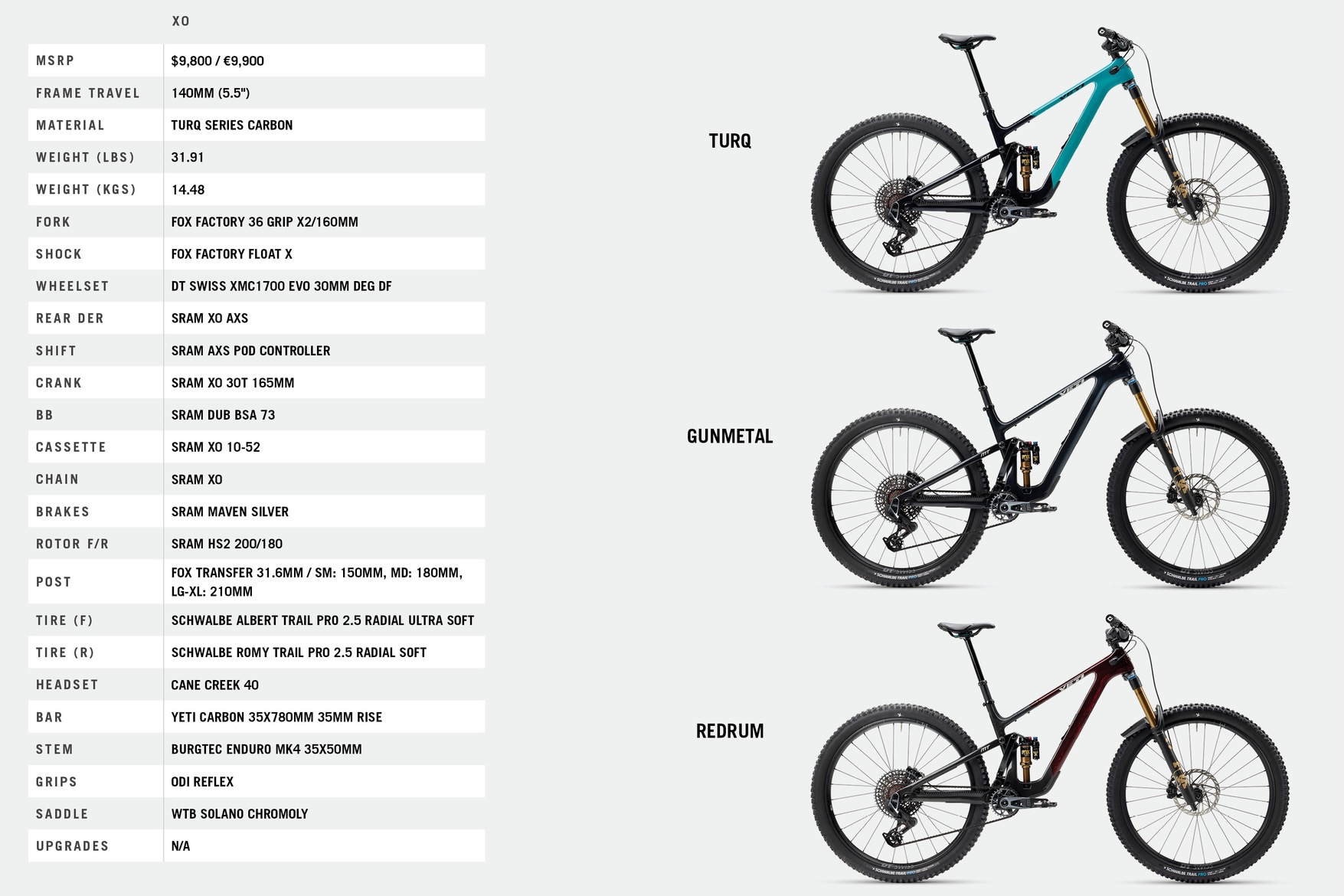
MT XO: $9,800 / €9,900
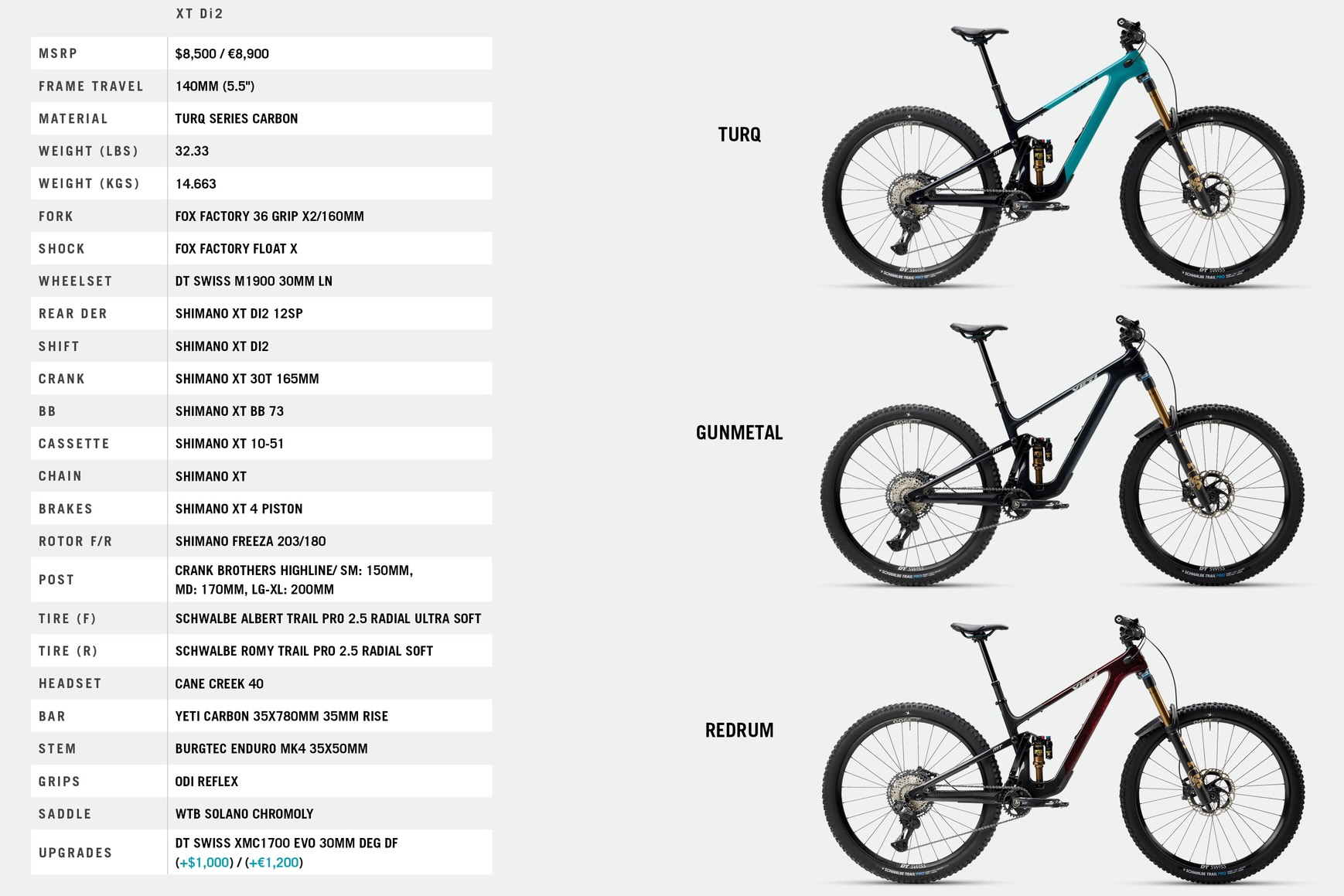
MT XT Di2: $8,500 / €8,900
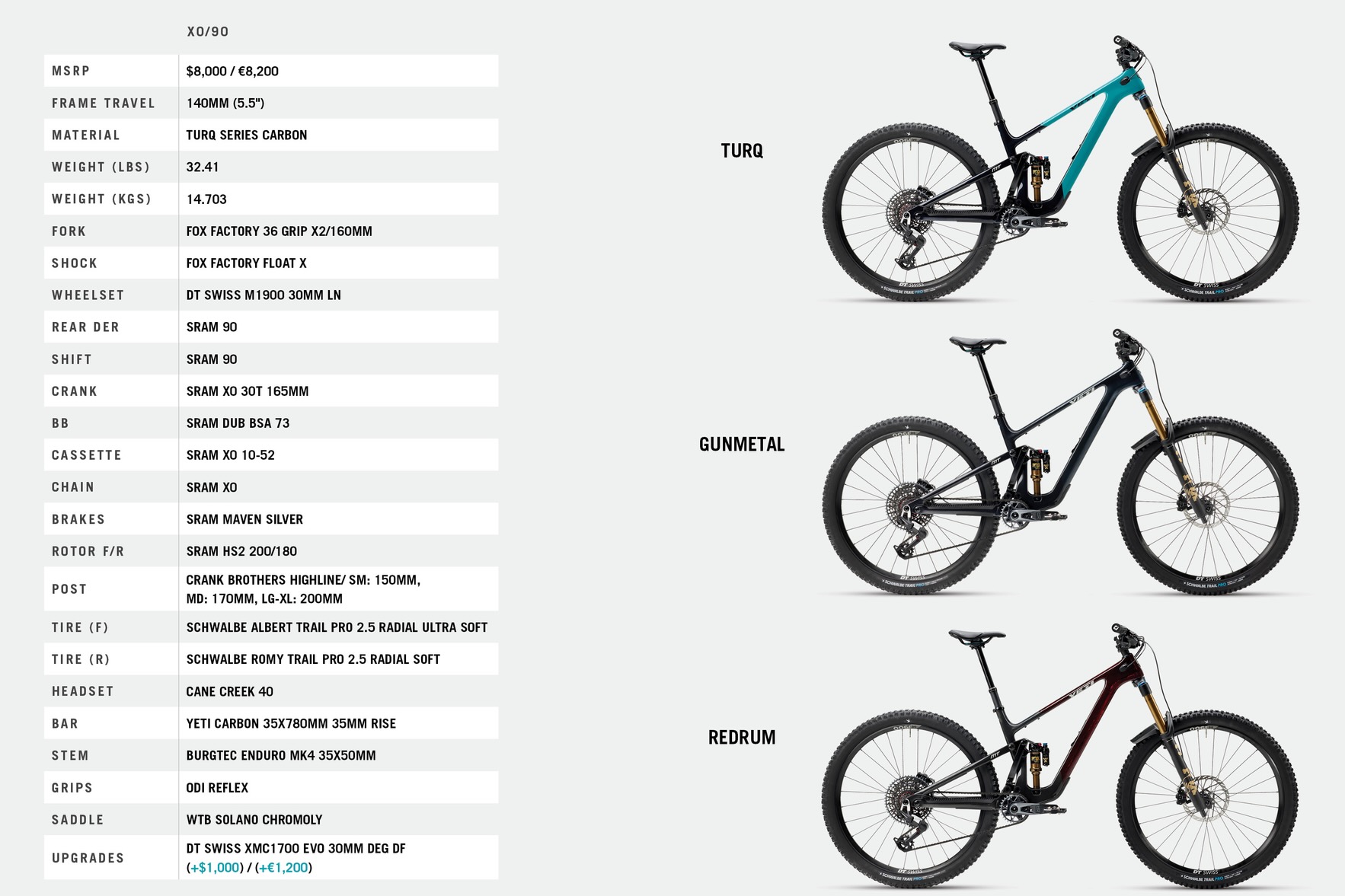
MT X0/90: $8,000 / €8,200
Availability
Yeti’s new Sixfinity MT is available now. Head to the Yeti website for more details or to find a dealer near you.
First Rides on the Yeti MT
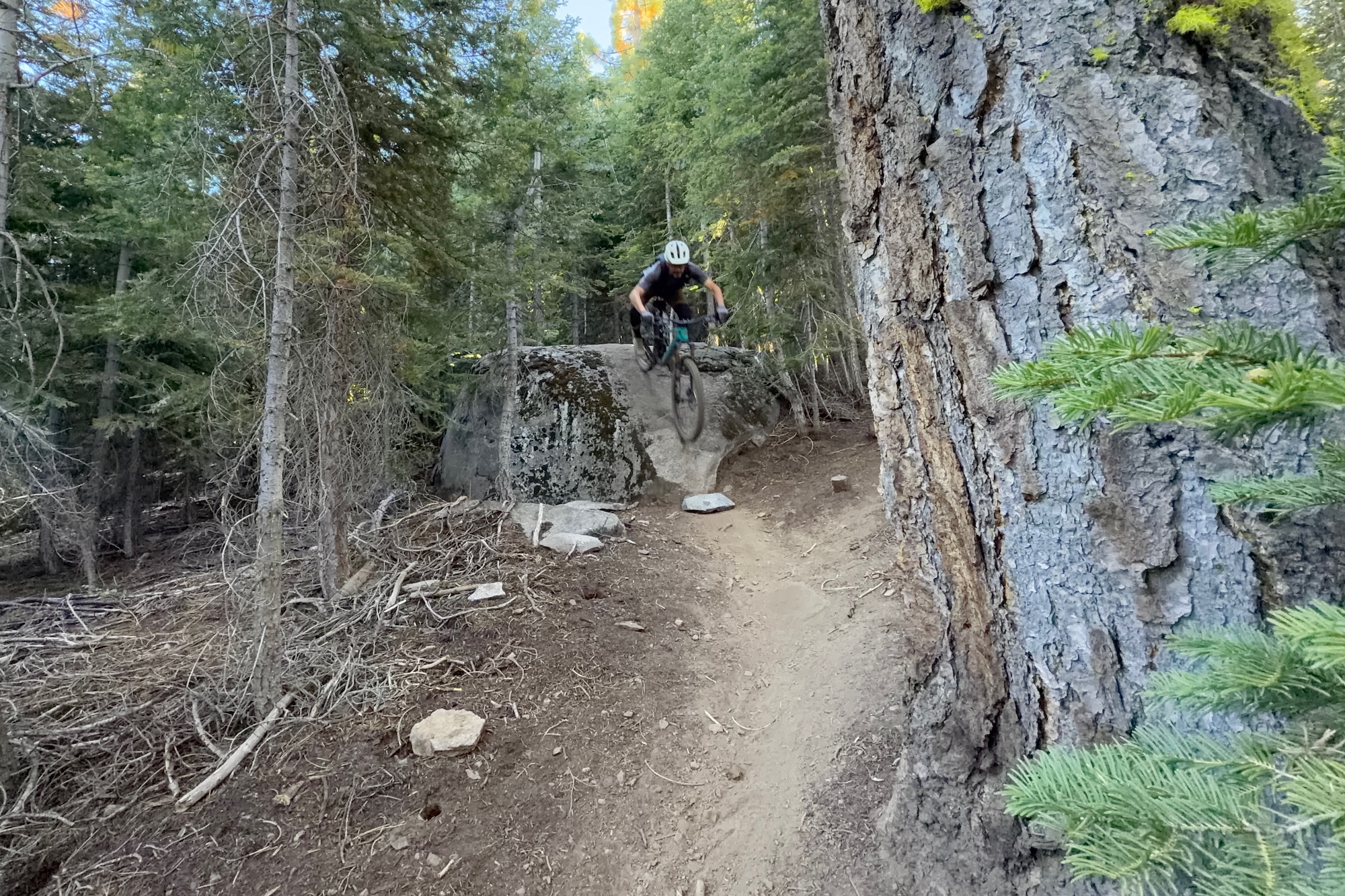
After testing and really enjoying Sixfinity suspension on the LTe last fall, I was hopeful that Yeti would include it on their non-electric models, too. The LT enduro bike came first, and while I thought it was great, it was a little more bike than I typically like to ride. The 140mm MT is more in my wheelhouse, and I was definitely more excited about it when I heard about it a few months ago. Thankfully, Yeti sent me the new MT a few weeks ago, and I’ve been testing it ever since.
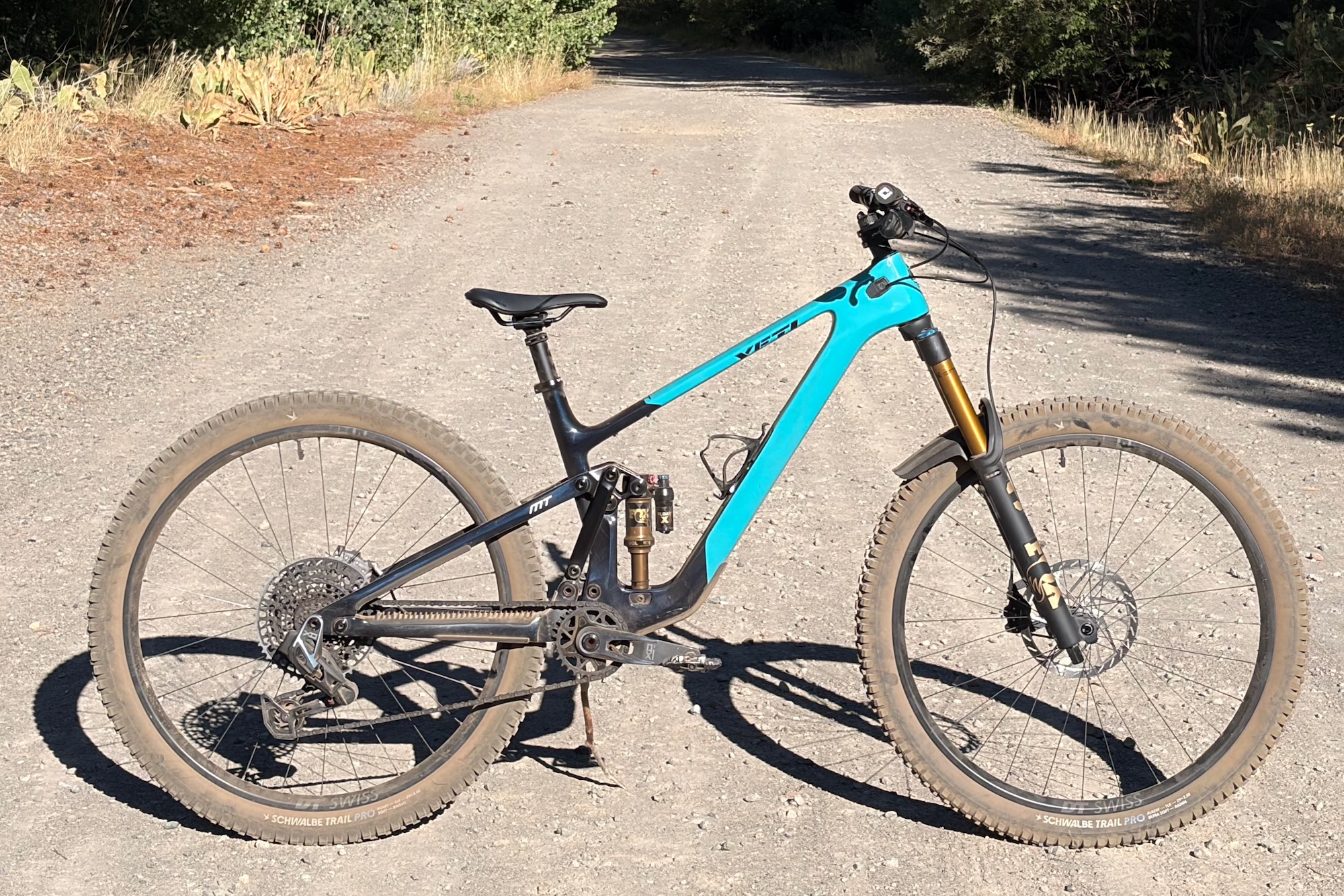
I have the Yeti MT with the $9,800 X0 build on a large frame in the classic Yeti TURQ colorway. Not surprisingly, it looks just like the new LT, which is to say, it looks great. Not that a bike’s appearance really matters, but I think Yeti’s new frames look awesome and I appreciate the move to more subtle branding. After putting it together, it weighed in on my scale at 32.8 pounds without pedals, but with an Arundel bottle cage. That’s a bit heavier than Yeti’s claimed weight of 31.9 pounds, but Yeti doesn’t specify what size that weight applies to.
For suspension setup, I used Yeti’s online suspension calculator, which I’ve found to work well every time I’ve used it. It takes the guessing and checking out of the initial setup, and provides a good baseline/starting point to work from. It got me pretty close to the ideal setup, and all I’ve really done is drop a few psi in the fork and open low-speed compression by a couple of clicks to keep the front tire glued to the ground.
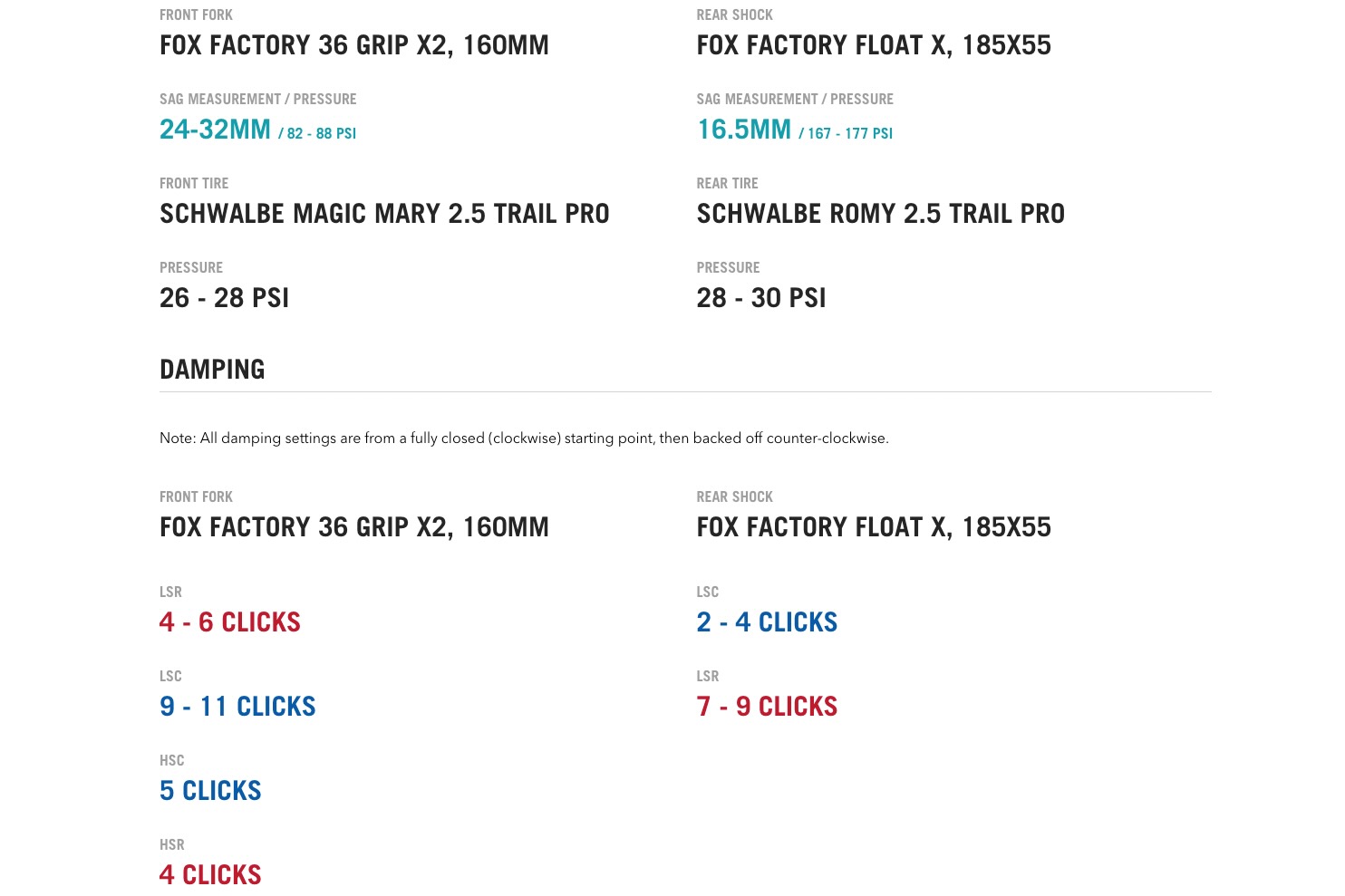
The size large MT frame fits me perfectly, and its geometry feels spot on for a modern mid-travel trail bike. The steep seat tube angle, 480mm reach, and riser handlebar combine for a comfortable and relatively neutral seated pedaling position. Interestingly, the MT’s stack height is the same as the longer travel LT, but it doesn’t feel like it’s pretending to be a mini-enduro bike to me.
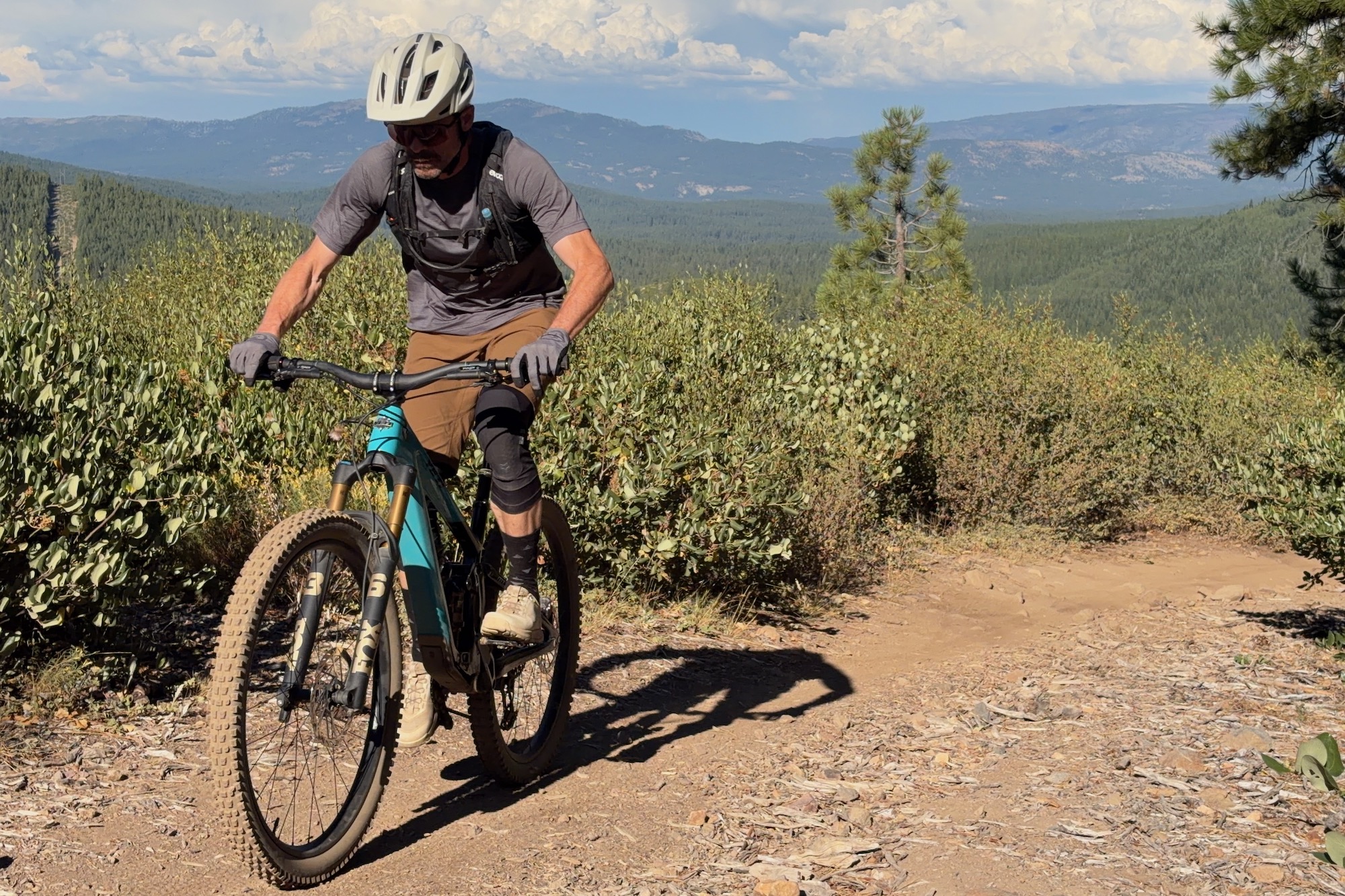
On the climbs, the Sixfinity platform is quite calm under power with very little pedaling-induced suspension movement. At the same time, I’ve found it separates pedaling forces very well, reacts to small bumps effectively, and maintains excellent traction at the rear wheel. At 32+ pounds, it’s not exactly heavy, but it’s far from the lightest. Still, it doesn’t feel particularly sluggish on the uphills, and I’ve been taking it out for some longer rides and clocking solid times on the climbs.
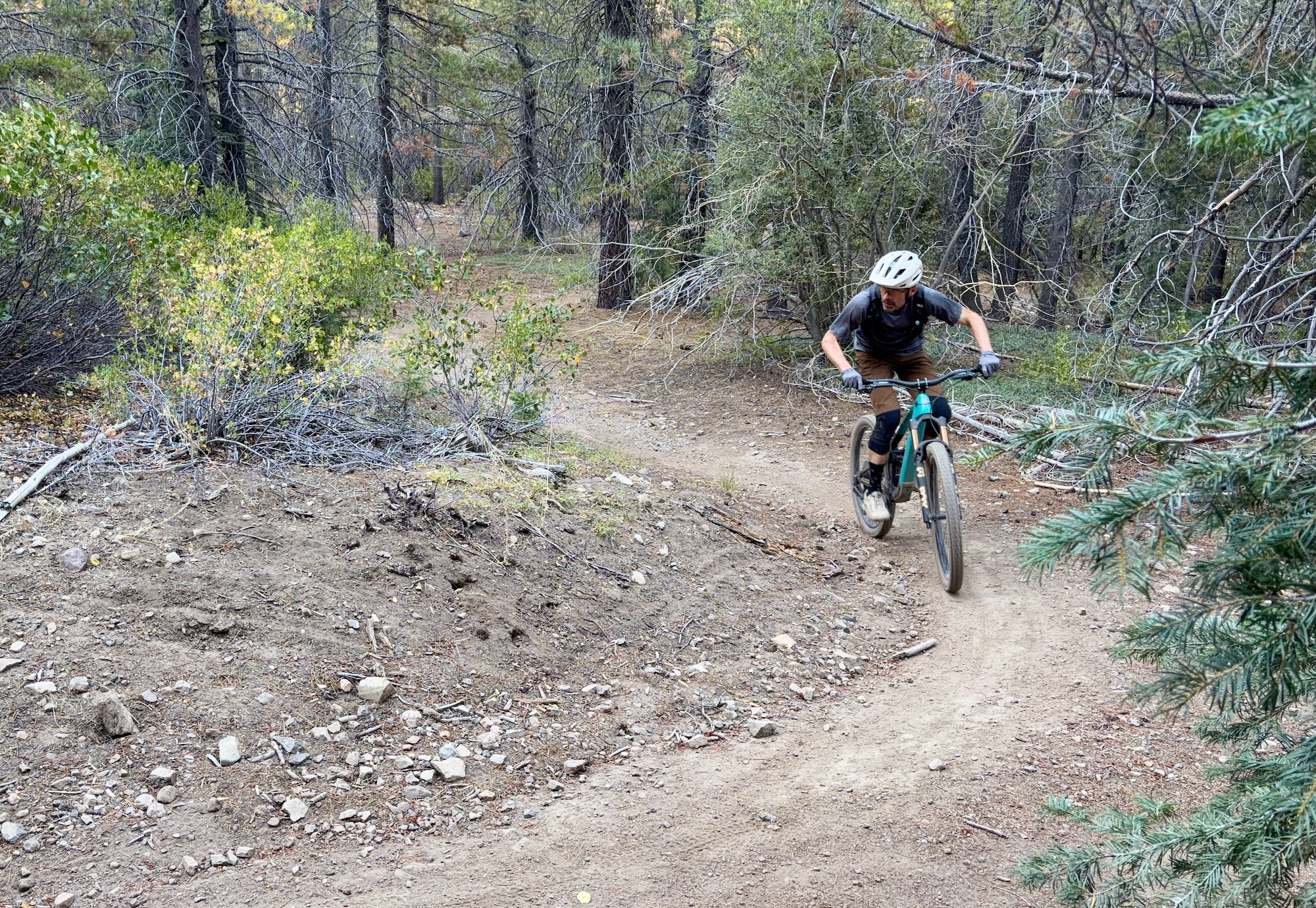
I was really impressed by the downhill performance of Sixfinity on the LTe, and it seems Yeti has done it again with the MT. I thought it performed well on the LT enduro bike as well, but I think they really found the magic on the MT. I know it definitely sounds cliché, but the 140mm of travel is managed so well that this bike feels like it has more travel than it does. Even with its fairly high anti-squat, I’ve found that it’s quite plush in the pedaling zone, and the small-bump performance is excellent. It maintains good support in the mid-stroke and handles big hits with composure and a surprisingly bottomless feel.
I don’t want to say the MT comes alive when speeds increase, but I’ve noticed that it is very composed when the pace picks up. Its performance on big single hits and hard compressions has definitely been notable. I’ve mostly kept the leverage rate in the neutral 15% position, which works well for the majority of my riding. The rear shock’s O-ring has consistently shown that I’m getting full travel, but I’ve never once bottomed it out.
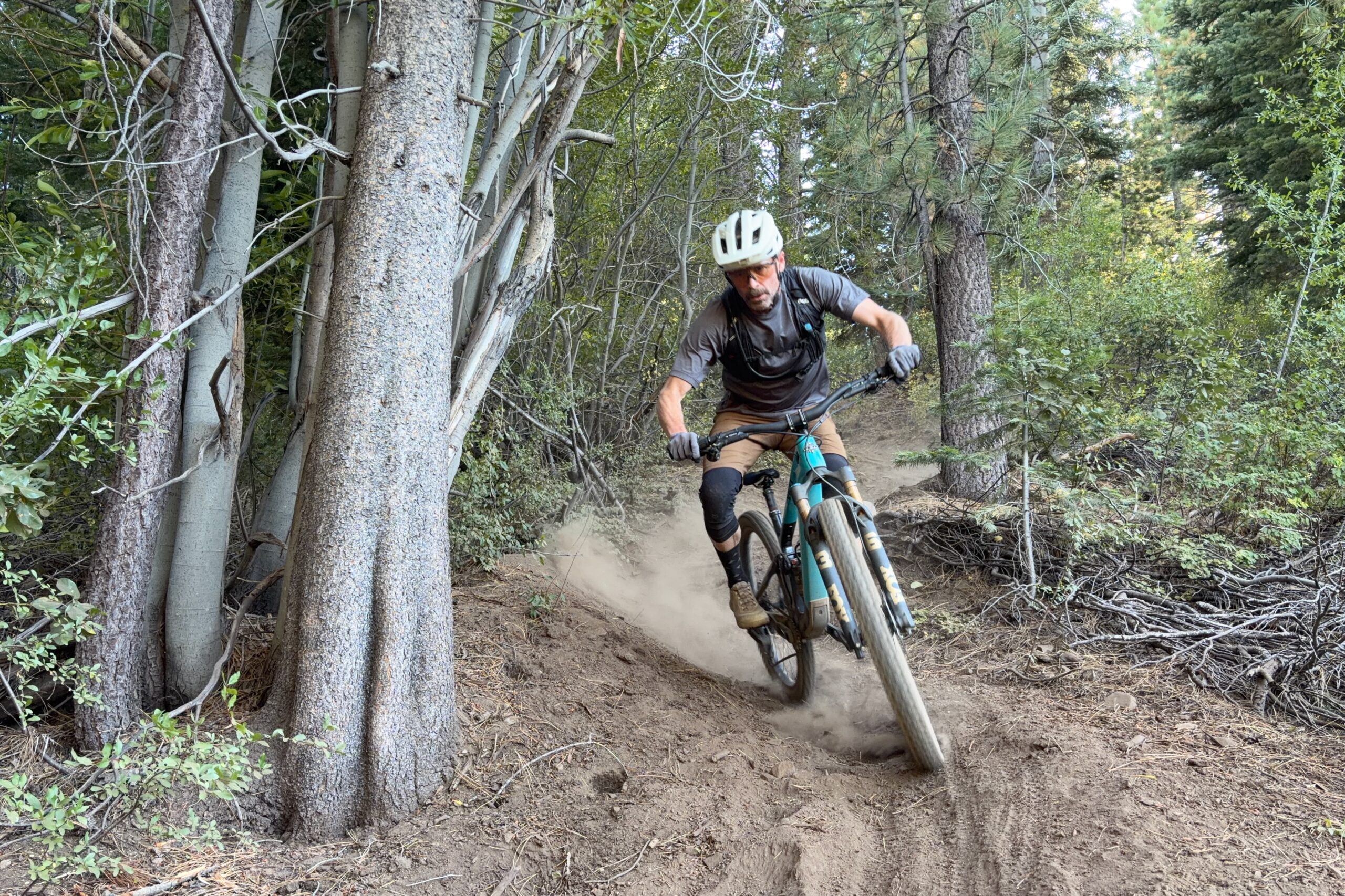
Handling-wise, the MT felt great right out of the box. It’s super responsive, easy to control, and very confidence-inspiring. That’s largely due to its dialed-in geometry, including its 64.5 head tube angle, comfortable reach, and size-specific chainstays. The MT feels very stable and smooth, but nicely balanced and easy to move around. From properly steep, aggressive trails to moderate flow, I’ve found it to be plenty capable and adaptable. I wouldn’t call it the most playful, but it’s fairly agile and easily maneuverable in all situations.
Beyond the geometry, the X0 build component package comes together very well on the trail. The Fox Factory suspension is great at soaking up bigger impacts and helps keep the tires tracking the ground for excellent braking and cornering traction. Schwalbe’s Romy/Albert Radial tire combo adds to that grip significantly, but I’ve found the Trail versions need a bit of extra pressure to avoid feeling squirmy. The DT Swiss XMC1700 carbon wheels feel nearly indestructible and offer adjustable engagement with the DEG hubs.
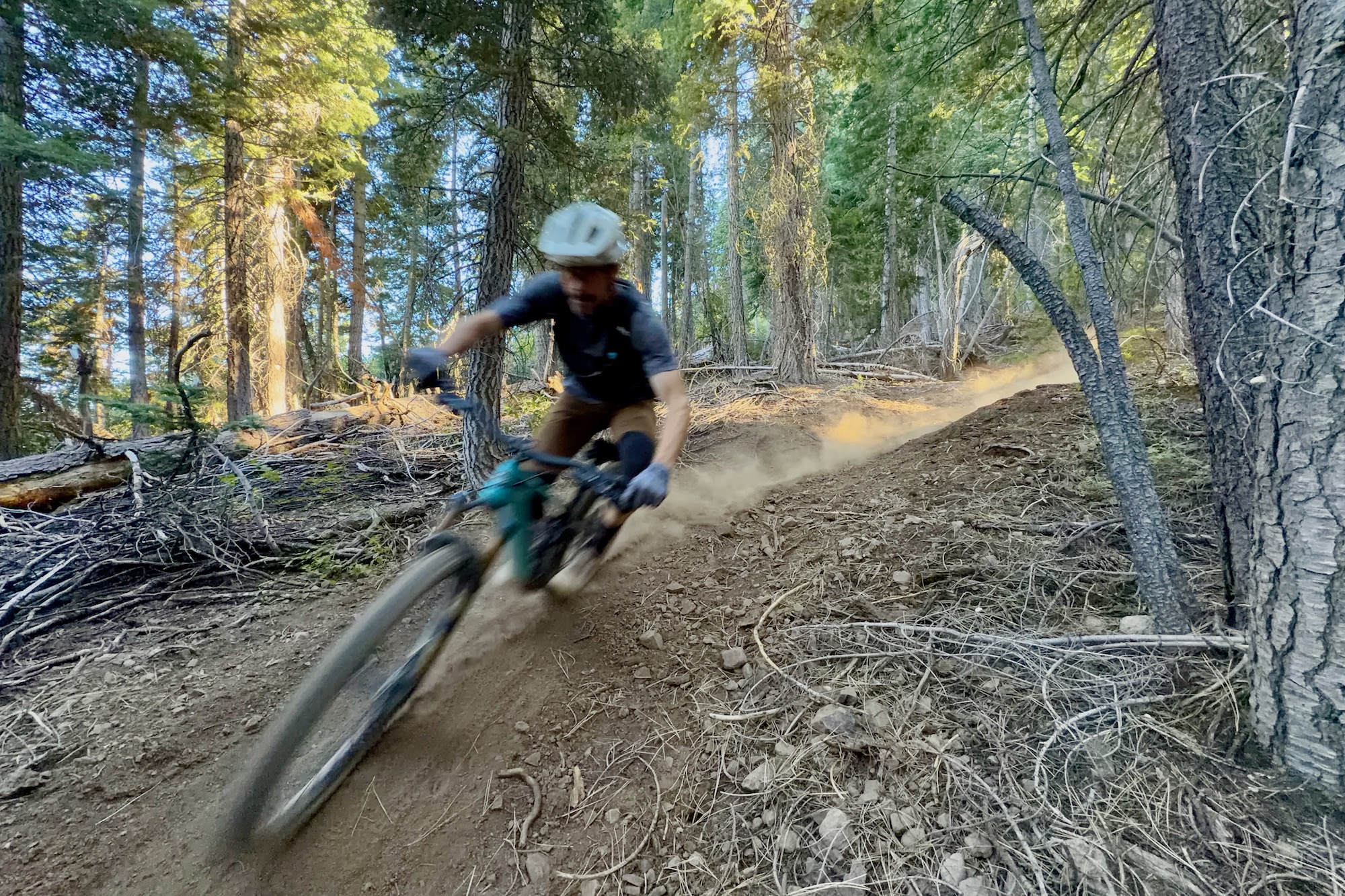
SRAM’s Maven Silver brakes with 200/180mm HS2 rotors make it easy to control the MT’s speed. The SRAM XO AXS Transmission drivetrain has given me nothing to complain about, although I wouldn’t be sad if it came with the Rocker controller instead of the AXS Pod. I appreciate the inclusion of the 210mm Fox Transfer on the large frame, and the WTB Solano remains one of my favorite MTB saddles on the market.
Yeti’s Cavity in-frame storage is well executed, too. The door and latch are sturdy and rattle-free, and perhaps most importantly, the opening is actually large enough to be useful. Yeti’s custom storage bag is a good size to fit some tools and essentials, and I’ve found it’s easy to get in and out of the frame. I can’t say the same for all of the in-frame storage compartments I’ve tried.
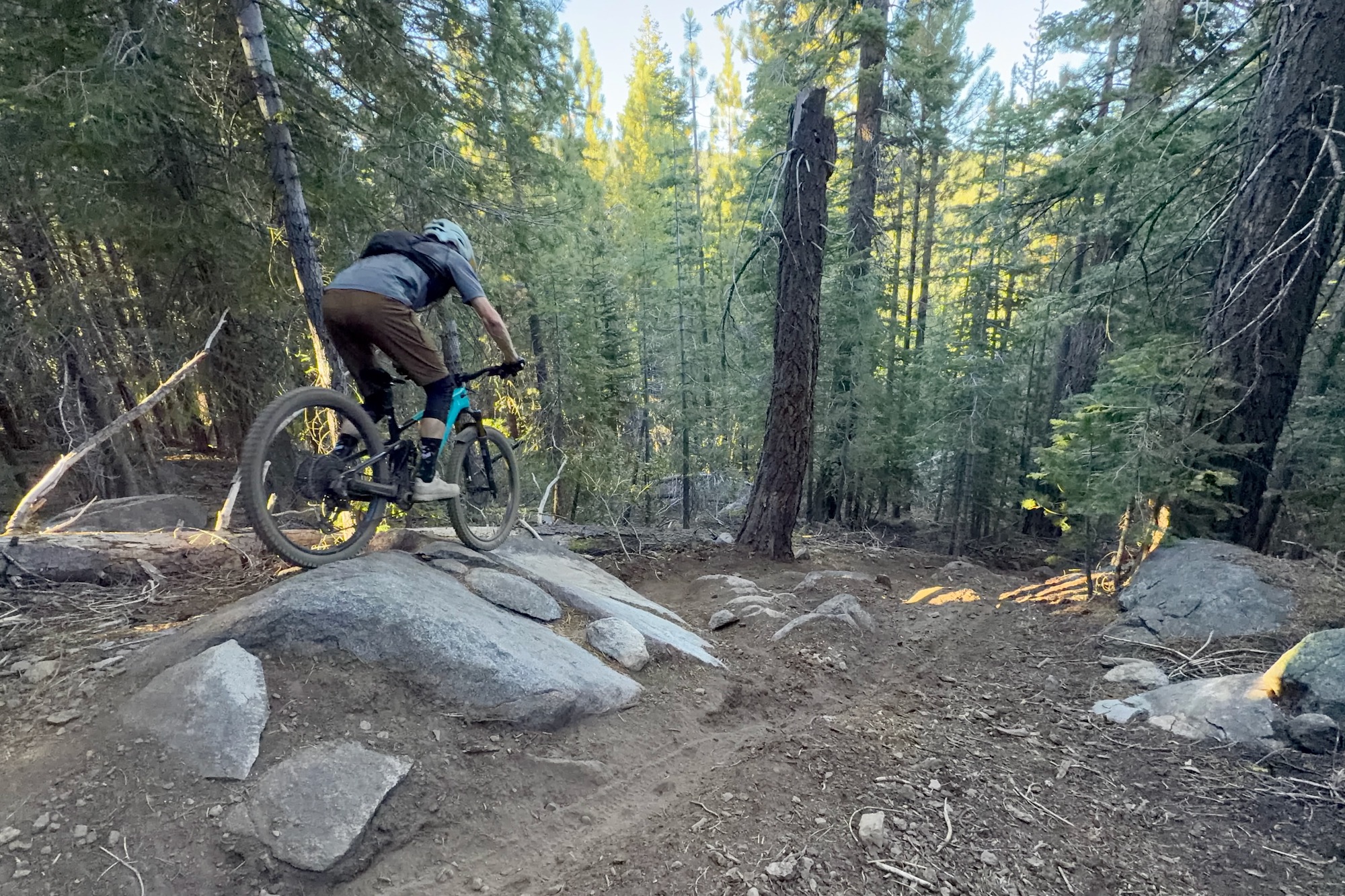
At $9,800, this is the first Yeti I’ve ridden in the past couple of years — the ASR, LTe, and LT — that retails for less than $10K. I’m not going to try to tell anyone it isn’t expensive, but I will say that it’s damn nice and really fun to ride. I think its travel and geometry hit the sweet spot and epitomize what I’m looking for in a modern do-it-all trail bike, and its on-trail performance has been nothing short of stellar thanks to Sixfinity and a killer spec. I think it might be the perfect daily driver, a quiver of one for anyone looking for a single bike that you can legitimately take out for any ride.
I’m looking forward to putting a lot more miles on it and hope to report back with a long-term review in a couple of months.


