


ENVE’s original Melee landed in 2022 as the brand’s first production road bike. That alone made it a big moment for the Utah company. After years of wheels, bars, forks, and custom frame projects, ENVE finally had a stock road frame (after offering custom for a bit) built around its own complete system.
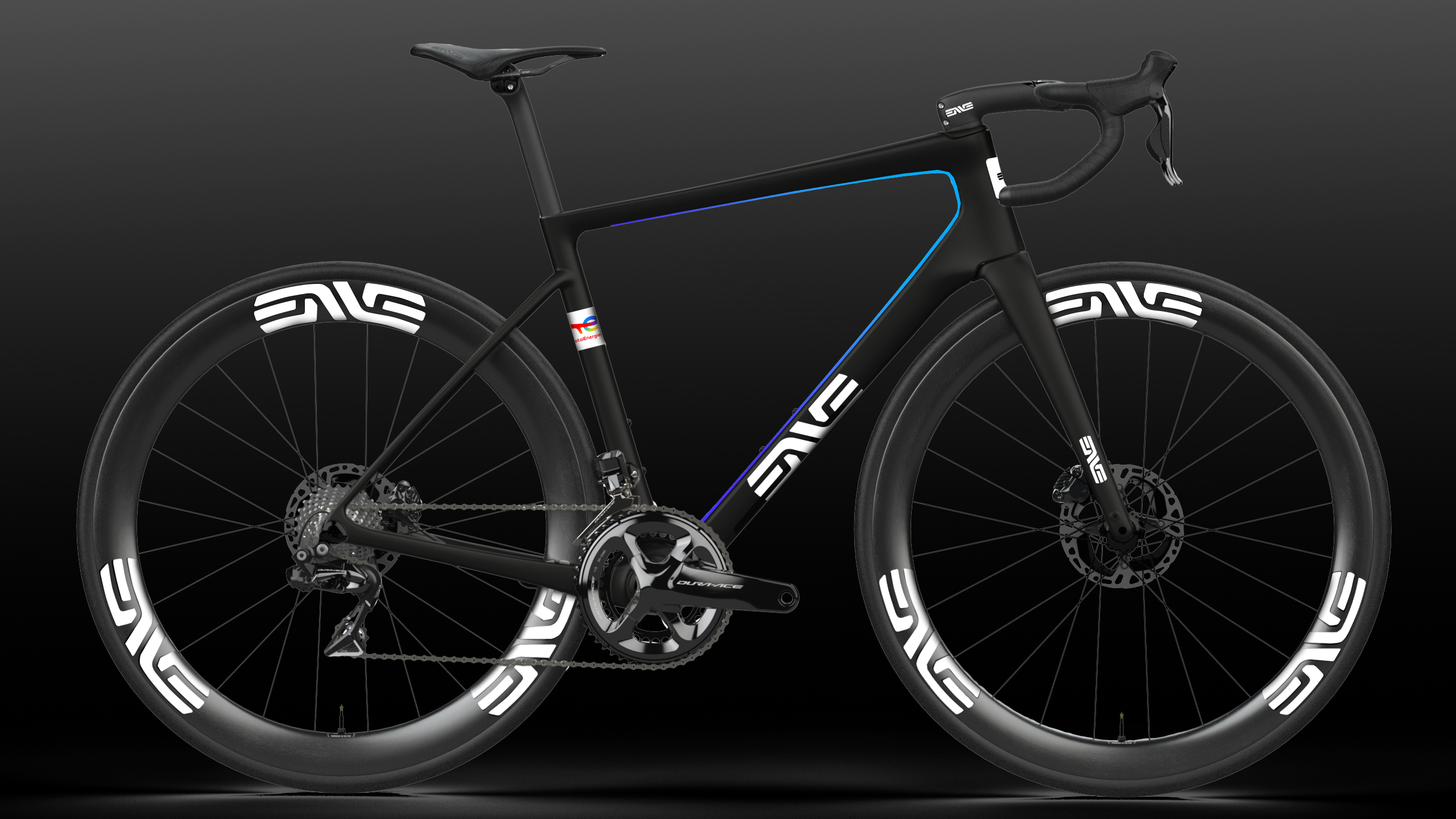
The first Melee was a race bike, but it had plenty of versatility baked in. It cleared 35mm tires and ran ENVE’s IN-Route sculpted front end. Plus, it had a larger stack for a comfy aero fit, but it was a road-race bike that could handle more than hard efforts. Oh, and it did just that under the Total Energies Team in the UCI World Tour; hell, it even won a stage in the Tour de France. But now it’s the Melee v2’s time to shine.
The old Melee was the versatile race bike. The new Melee v2 is no-filler, all-killer.

What’s New? ENVE Melee v2
The Melee v2 keeps the same basic job description: lightweight road race bike, built around ENVE wheels, cockpit, and frame integration as a full working system. But nearly every detail has been pushed toward weight savings and aero efficiency.

ENVE says total frame surface area is down 7.5% compared to the previous Melee. Tire clearance drops from 35mm to 33mm. But the small details matter too, like the headset using smaller bearings (more on that later). The seatpost shape and retainer are also new. The bottom bracket moves from T47 inboard to BSA. The frame also gets UDH and that weird little hole near the front of the hanger area that might (or might not) be for some new Shimano drivetrain.

Those are not massive visual changes at first glance, but they add up. The new Melee is slimmer where it needs to be, lighter at the chassis, and more tightly aimed at modern road racing.

Where the Weight Went
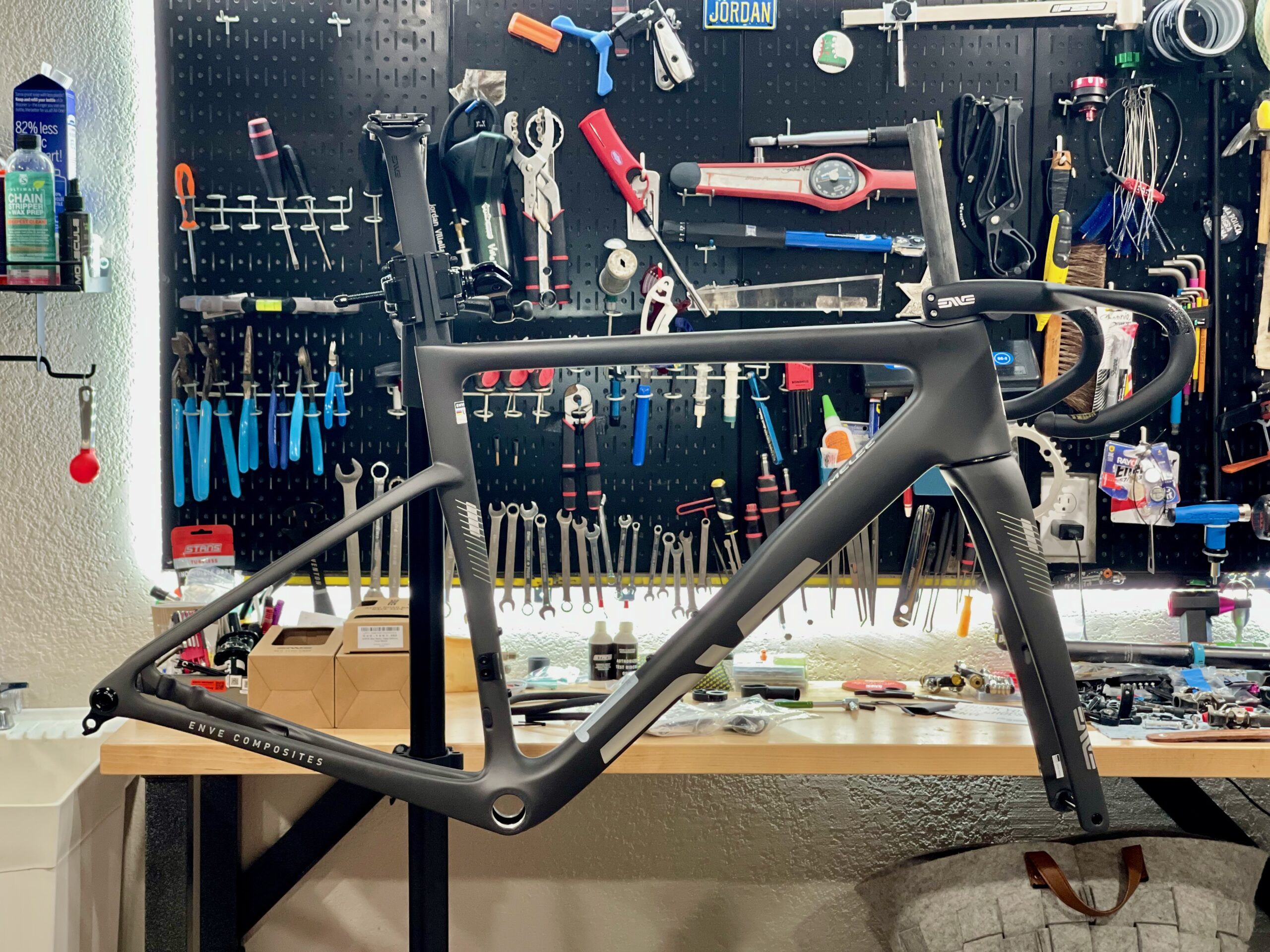
The headline weight is 791g for a size 56 Melee v2 frame in ENVE’s UL Black finish. ENVE lists the full chassis package- frame, fork, headset, seatpost, thru-axles, and derailleur hanger at 1,442g.
That UL Black finish (same as on our review bike) is part of the equation. It uses an ultralight clear coat over raw carbon with minimal graphics, which keeps the 56cm frame under 800g.

The new seatpost helps too. ENVE says the post saves 28g, gets a more efficient aero profile, and improves seat tube retention. It uses a two-bolt saddle clamp that keeps the small hardware captive during saddle setup. Plus, for the modern forward fit, the frame comes standard with a zero-offset post.

The BSA bottom bracket is another weight-saving move. It is also a very welcome one from a service standpoint. In a world of large shells, press systems, and proprietary solutions, I’m excited to see more threaded BSA shells on high-end aero race bikes.

ENVE Says 17 Watts Faster
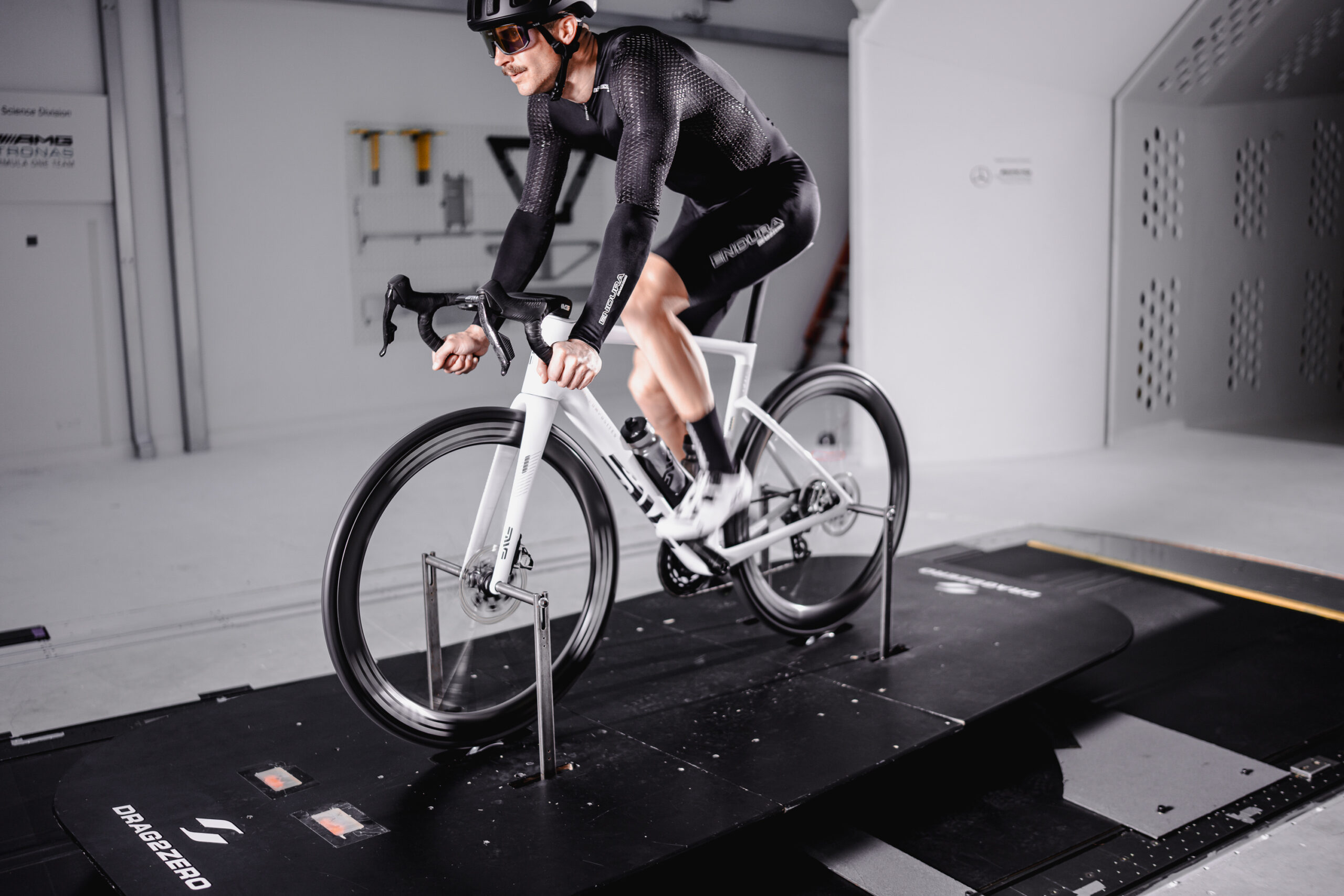
ENVE is putting a 17-watt improvement on the Melee v2 package. It’s all in the chassis, not 5 watts from the wheels, 2 watts from the tires, etc. The new Melee v2 was tested with the exact same wheel setup as the original Melee in the AGM Mercedes-Petronas wind tunnel.
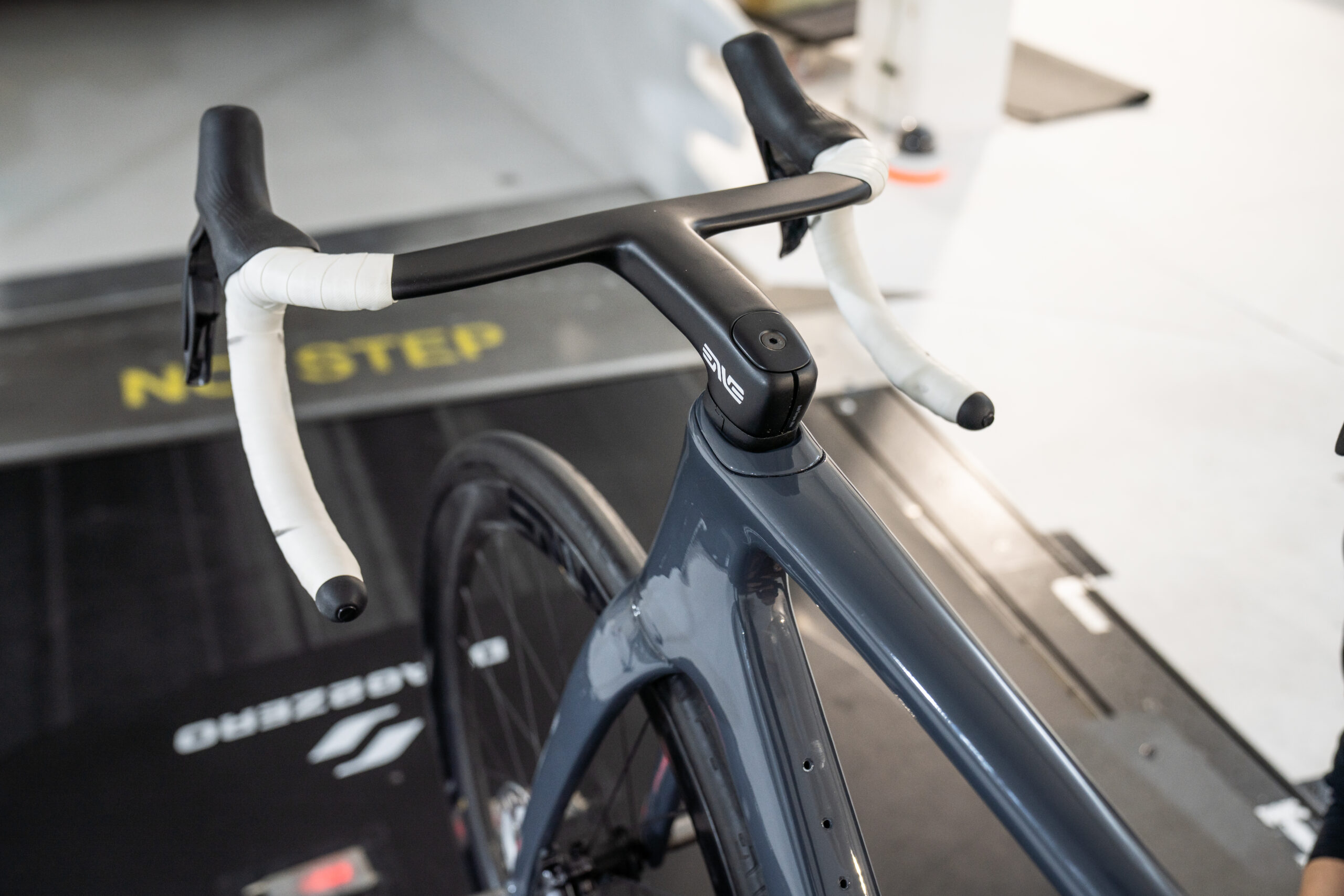
The breakdown is 11.4 watts from the frame, fork, and seatpost, 3 watts from the new handlebar and bar tape (you read that right), and 2.6 watts from the aero bottle cages with bottles.
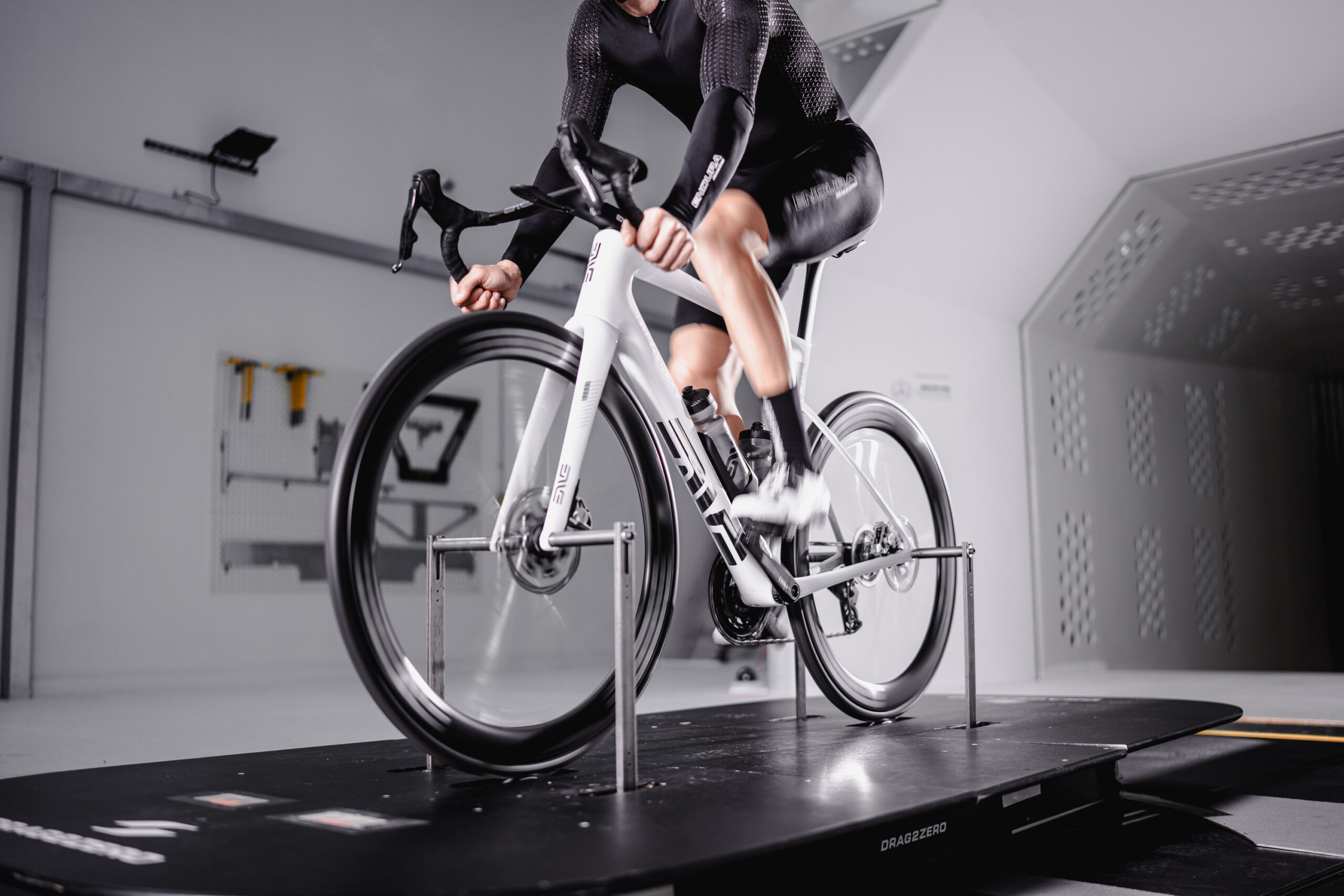
The development process is probably more interesting than the number. ENVE says this is its first ground-up aero bike developed using its updated Real-World Fast protocol. Testing took place at the Mercedes-Petronas wind tunnel in Silverstone with aerodynamicist Simon Smart.

Watt Fight: Melee v2 | Tarmac SL9 | Trek Madone
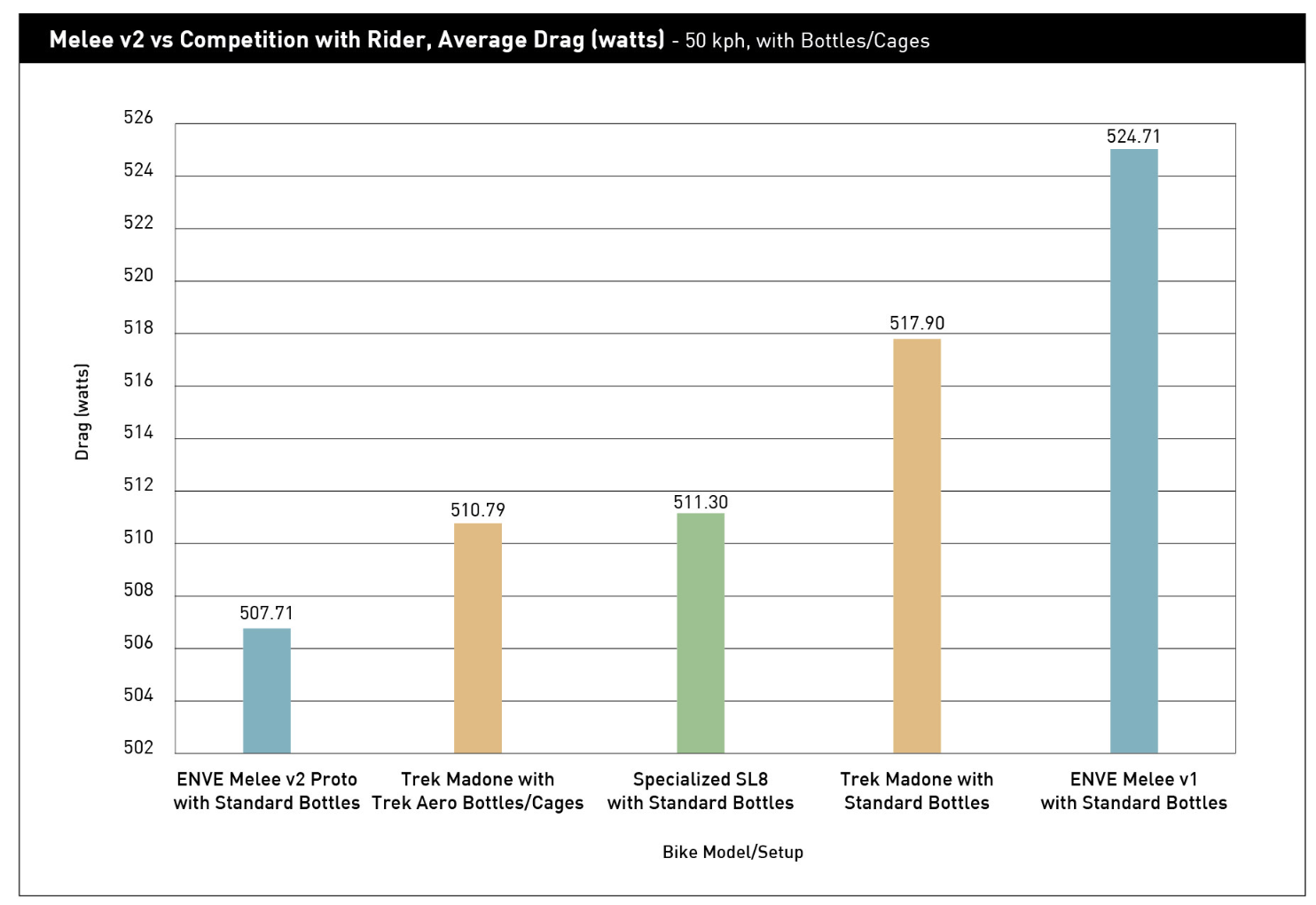
ENVE’s own wind tunnel numbers put the Melee v2 prototype in some quick company. Tested at 50kph with a rider on board and bottles/cages installed, the Melee v2 came in at 507.71 watts of average drag. That edges the Trek Madone with Trek’s aero bottles and cages at 510.79 watts, the Specialized SL8 with standard bottles at 511.30 watts, the Trek Madone with standard bottles at 517.90 watts, and the original Melee at 524.71 watts.
ENVE Melee v2 vs. Trek Madone Gen 8
The Trek comparison is the cleaner one. ENVE tested the Madone both with its aero bottle setup and with standard bottles, and the result backs up what Trek has been saying about the Gen 8 Madone: the bottle and cage system is part of the aero package. With the aero bottles, the Madone gets close. With standard bottles, the gap grows. ENVE’s data still puts the Melee v2 ahead in this rider-on-board test, but it also shows how much the full bottle/cage setup matters.

ENVE Melee v2 vs. Specialized SL8
The Specialized comparison needs more care. ENVE tested against the Tarmac SL8, not the new SL9. Specialized says the SL9 is about 4 watts faster than the SL8 (but that comes from Specialized’s own testing and a different protocol). So this chart does not prove the Melee v2 is faster than the SL9. It does show that ENVE’s new bike is solidly ahead of the SL8 in ENVE’s test, and that the SL9 likely makes the comparison much tighter. Especially if the new Specialized SL9 is using the new ENVE aero bottle cages.
That’s probably the real story here. ENVE, Trek, and Specialized are all chasing the same handful of watts, but the test setup matters almost as much as the result. The Melee v2 looks very fast in ENVE’s data, but the bigger point is that top-end aero road bikes are now being judged as complete systems, not clean frames sitting alone in a tunnel. But let’s not forget that ride quality is a Factor as well.
Less Tire Clearance, More Intent
The tire clearance change will probably draw the most comments.
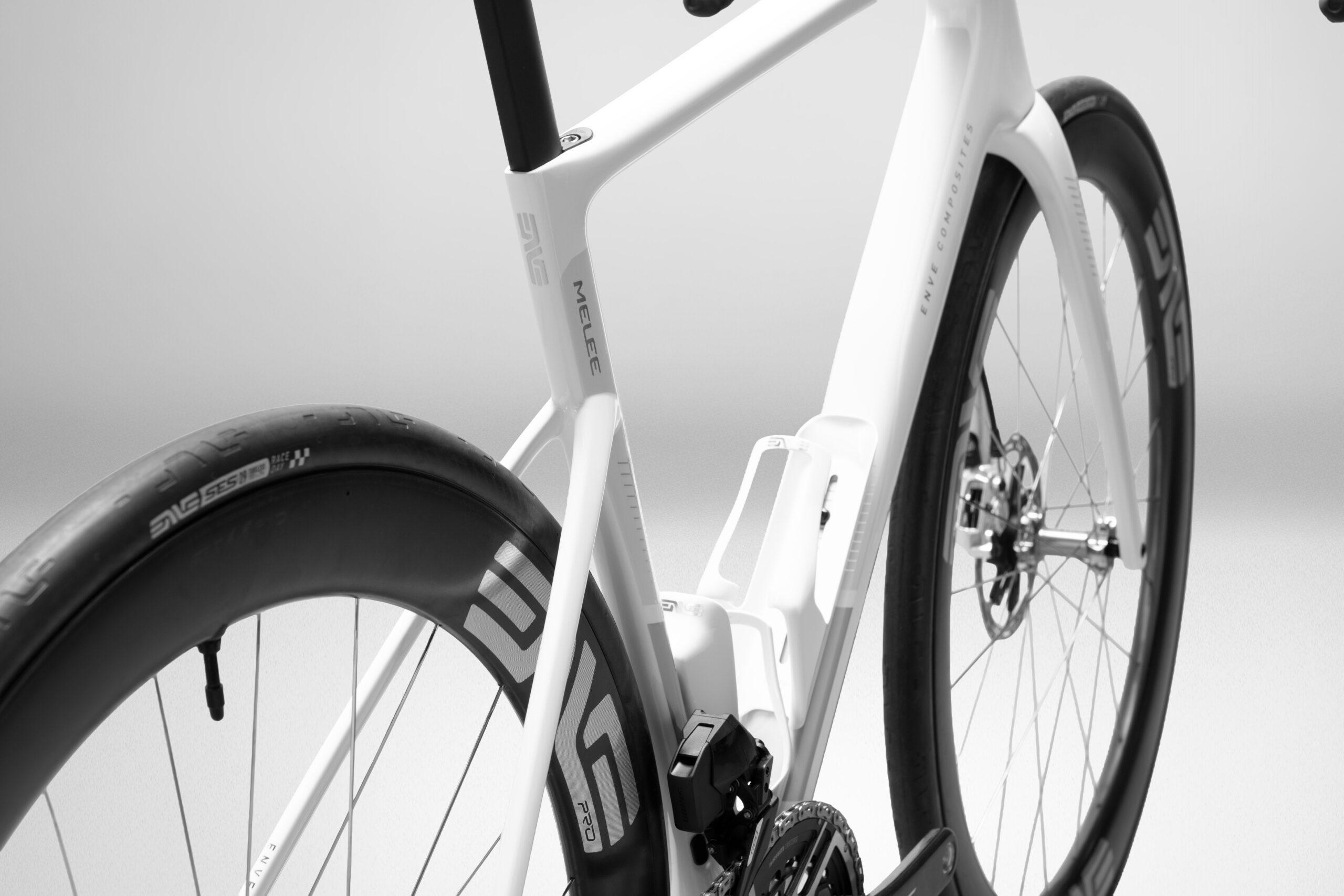
The original Melee cleared up to 35mm tires. The Melee v2 clears 33mm. ENVE says reducing clearance helped cut both weight and aero drag while keeping enough volume for modern road racing.
For racing, that is not a strange call. Plenty of riders are still racing 28s and 30s, and 32s have become more common depending on rim width, surface, and event type. A true 33mm clearance still gives the Melee v2 enough room for current road race setups.
But it does change the bike’s personality slightly.
The first Melee had more room to blur the line between race bike and rough-road machine. The v2 is not chasing that same overlap. ENVE already has the MOG for gravel and the Fray for bigger-tire road and all-road duty. The new Melee is here for speed, not category confusion. Some riders will miss the extra space, but most will appreciate the firm direction.
New Head Tube and Smaller Headset
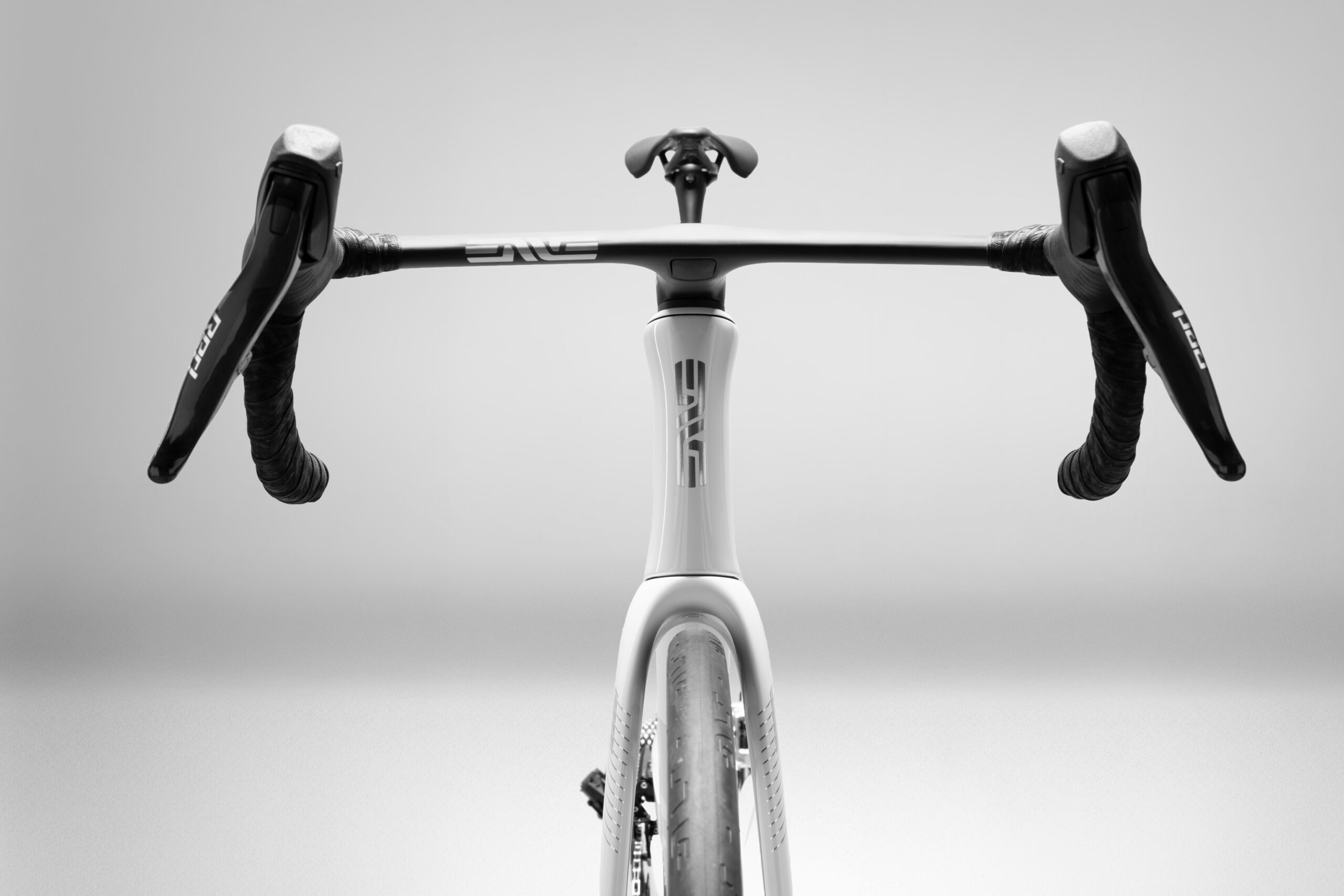
The front end gets a new head tube shape and a smaller headset. ENVE says the change reduces weight and improves aero efficiency.
The new headset uses 40.5 x 49.5 x 6.5mm 45/45 upper and lower bearings, an alloy compression ring, stainless steel bearings, LLU seals, and permanent waterproof grease. All this extra protection should mean less headset maintenance and less pain in the #$@ while routing one-piece bars.
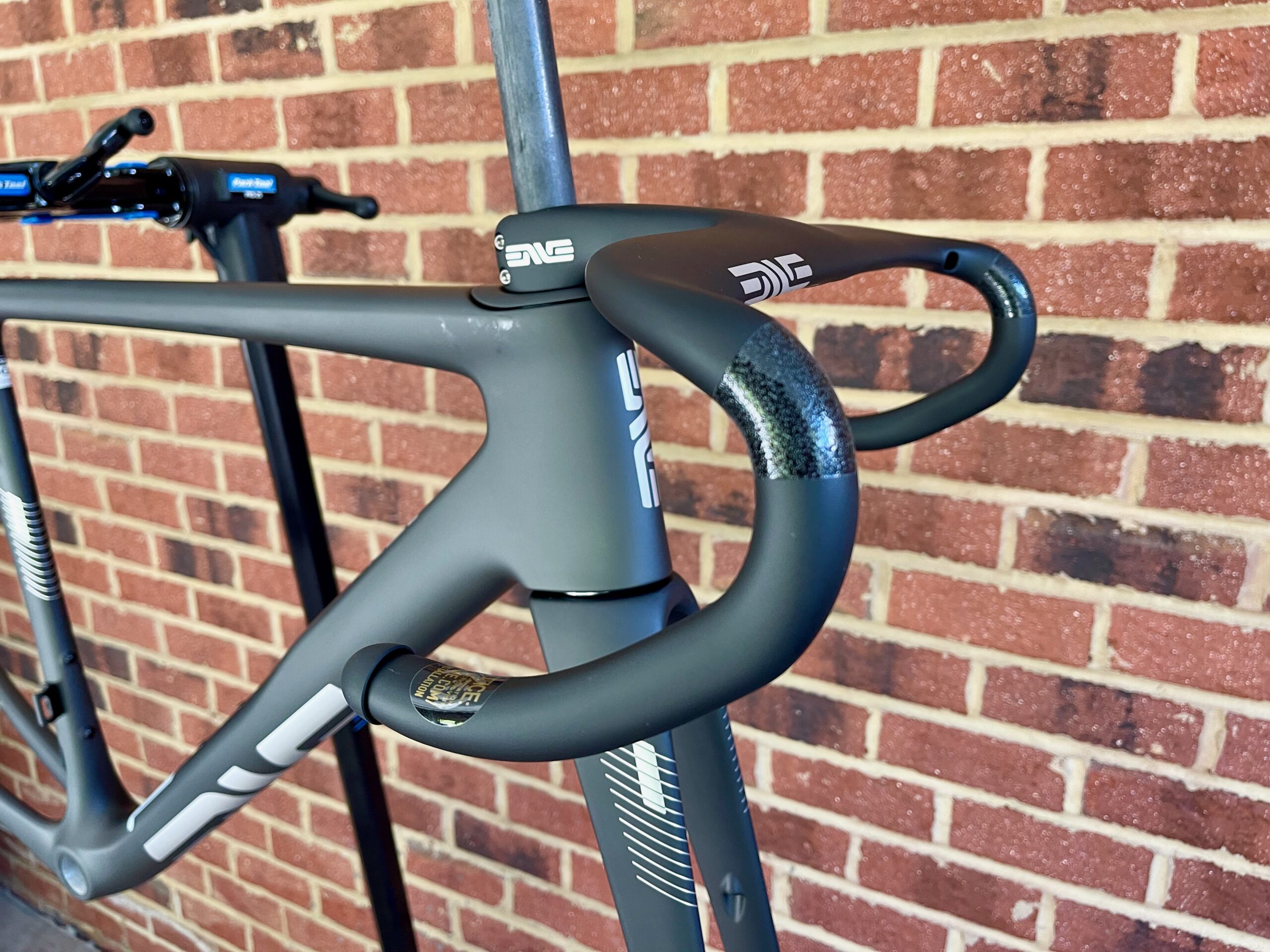
The original Melee used an IS52/IS52 internal headset with 1.5-inch upper and lower bearings. Moving to the smaller setup lets ENVE reduce bulk at the front of the bike, which is one of the first places modern aero frames can start looking thick. The v2 still keeps the clean, integrated race-bike front end. It just looks a little tighter, especially with the updated one-piece bar setup.
New SES Aero Road Bar
The Melee v2 also arrives with a new SES Aero Road Bar.
ENVE’s original SES Aero Road Bar came out in 2016. It predated the narrow hoods trend, rider-shaped aero gains, and integrated cockpits becoming standard road-bike talking points. The new bar keeps that same rider-first aero idea, but updates the shape and fit options for the current Melee platform.
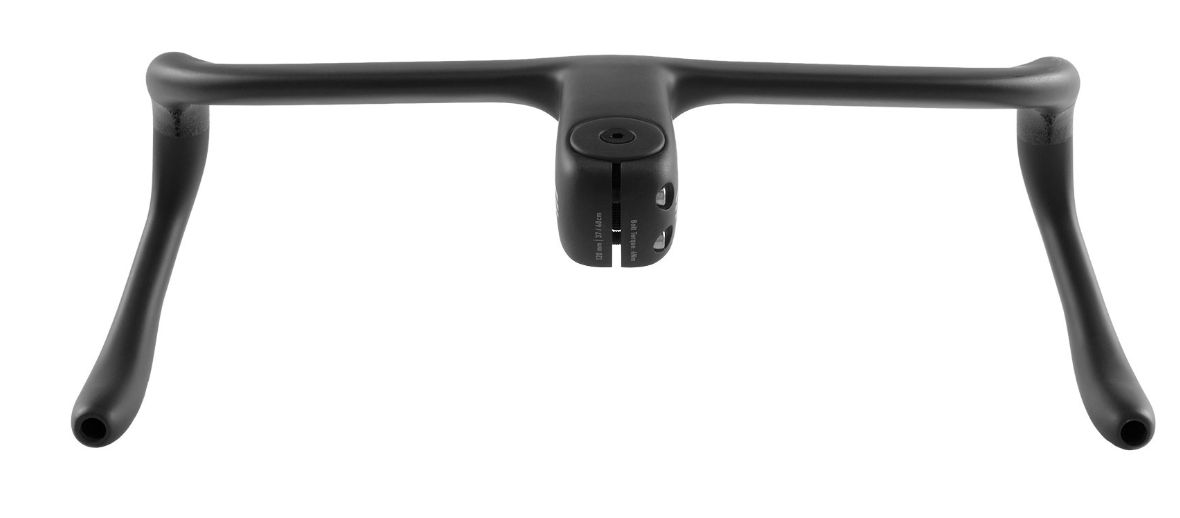
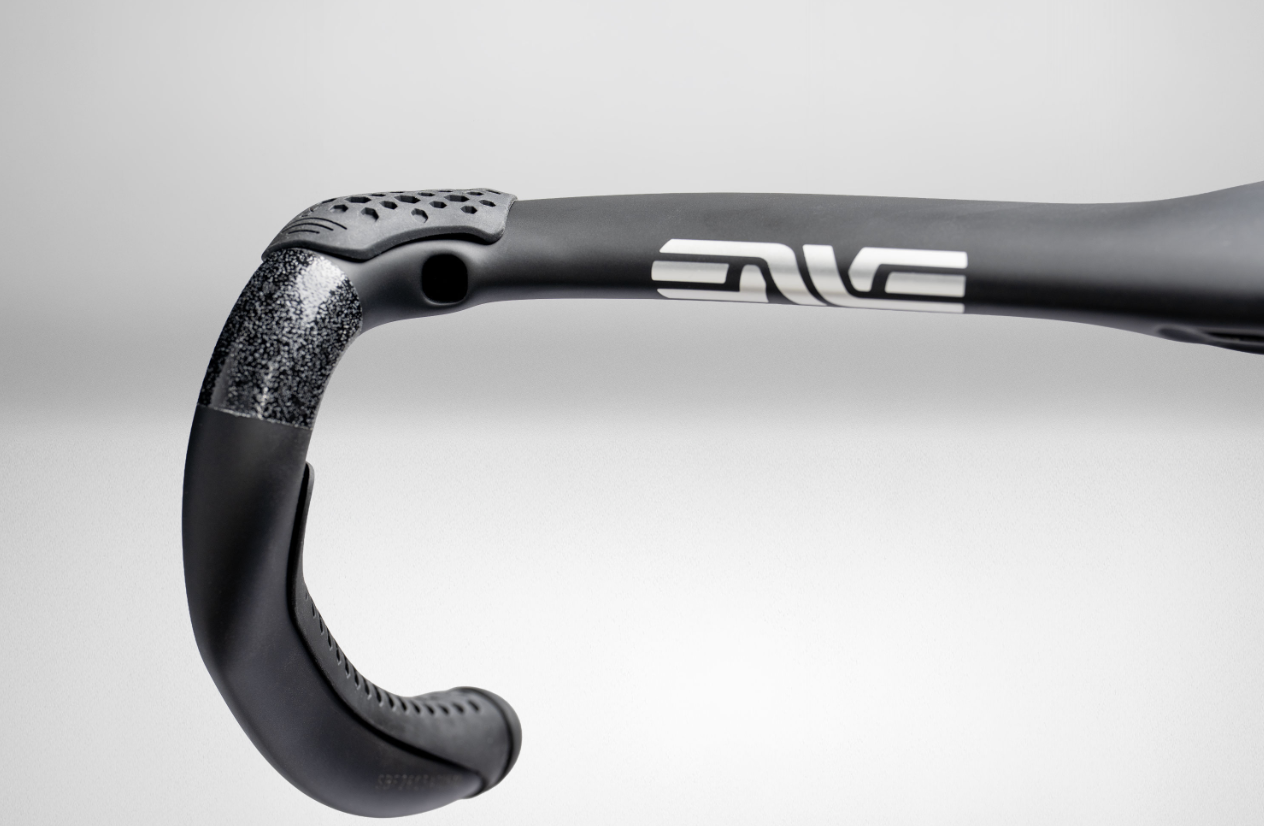
The new one-piece bar has 76mm reach, 128mm drop, and ENVE’s Aergonomic drop shape. It comes in 90, 100, 110, 120, 130, and 140mm stem lengths, with 37/40, 39/42, and 41/44cm width options. Claimed weight is 335g to 355g, depending on size. Our review bar came in at 340 g for the 37 x 120 mm setup
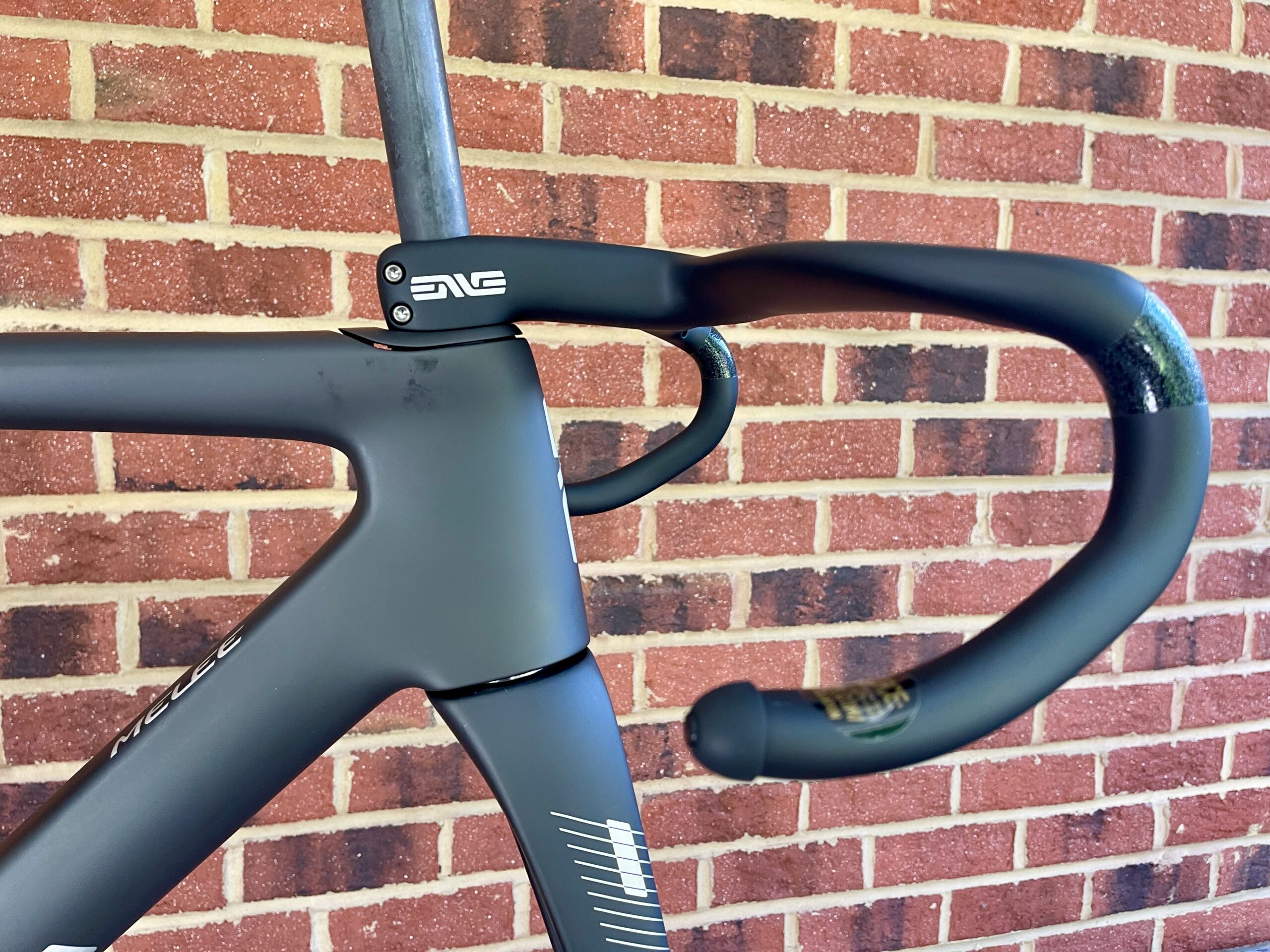
The drops on the new ENVE bar use an airfoil shape to reduce drag, with optional pads. The pads can increase the drop’s cross-section while adding some vibration damping. It is a small detail, but it shows how deep ENVE went with the system approach. The bar is not an accessory in this story. It is part of the aero gain. It also includes ENVE Race Bar Tape, an ultralight computer mount, and shaped ergonomic pads. MSRP is $800.
Aero Tape and Bottle Cages
ENVE also has new Aero Race Tape and SES Aero Bottle Cages as part of the Melee v2 system.
The Aero Race Tape is a thin 1.2mm velvet-touch microfiber tape made for a three-quarter wrap on aero road bars. The idea is to reduce the amount of material sitting in the wind rather than wrapping every inch of the bar. MSRP is $35.
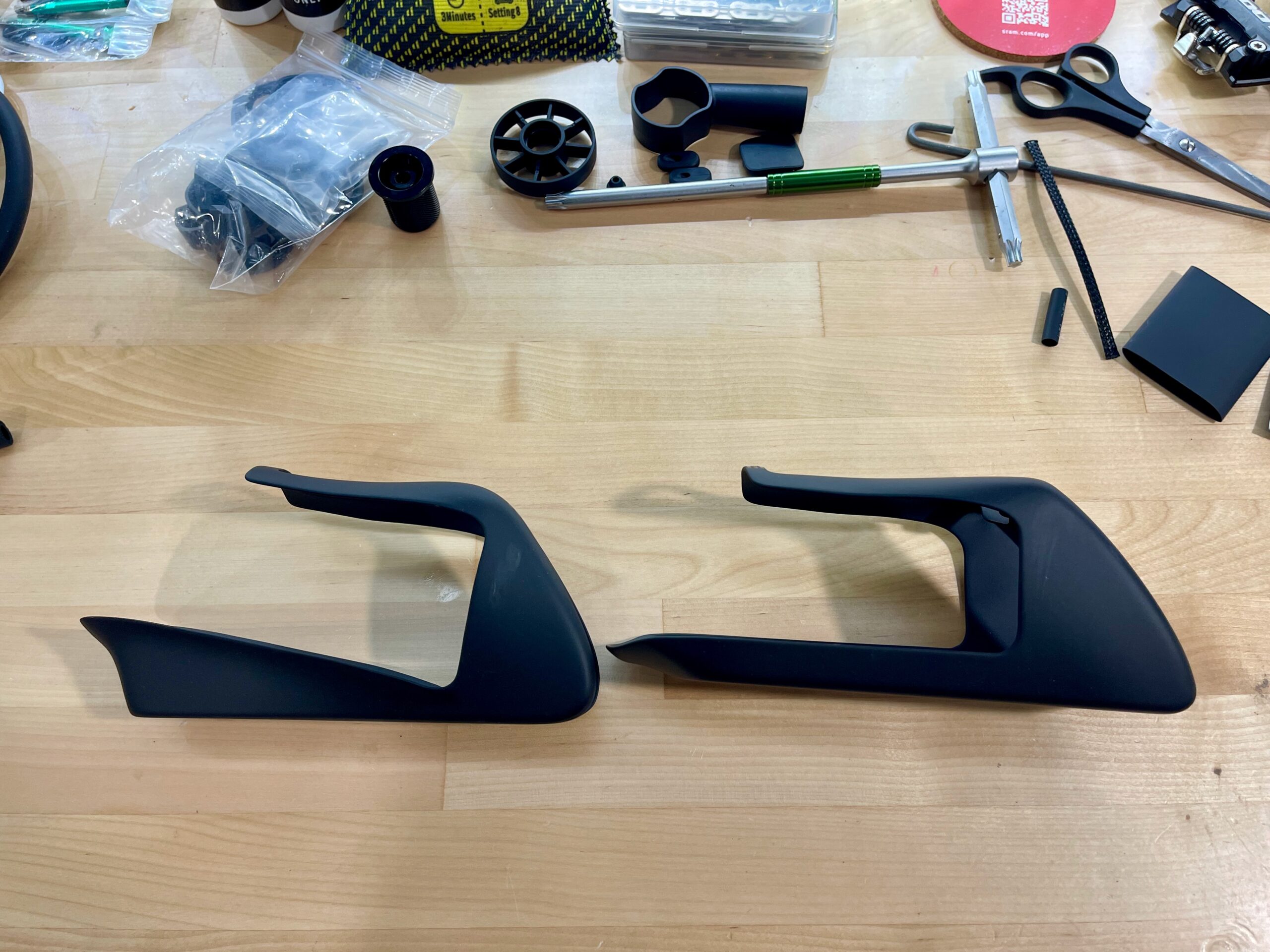


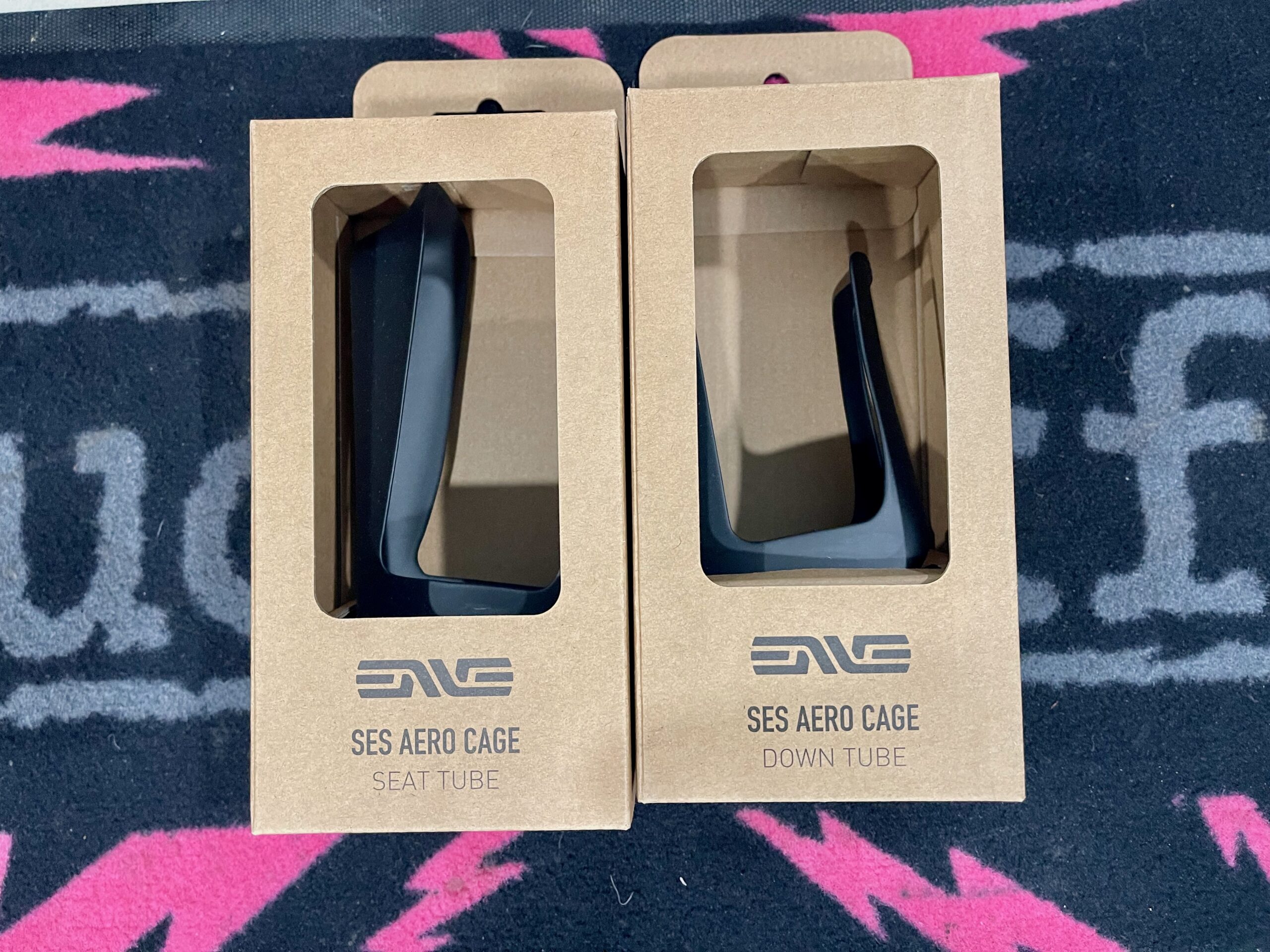
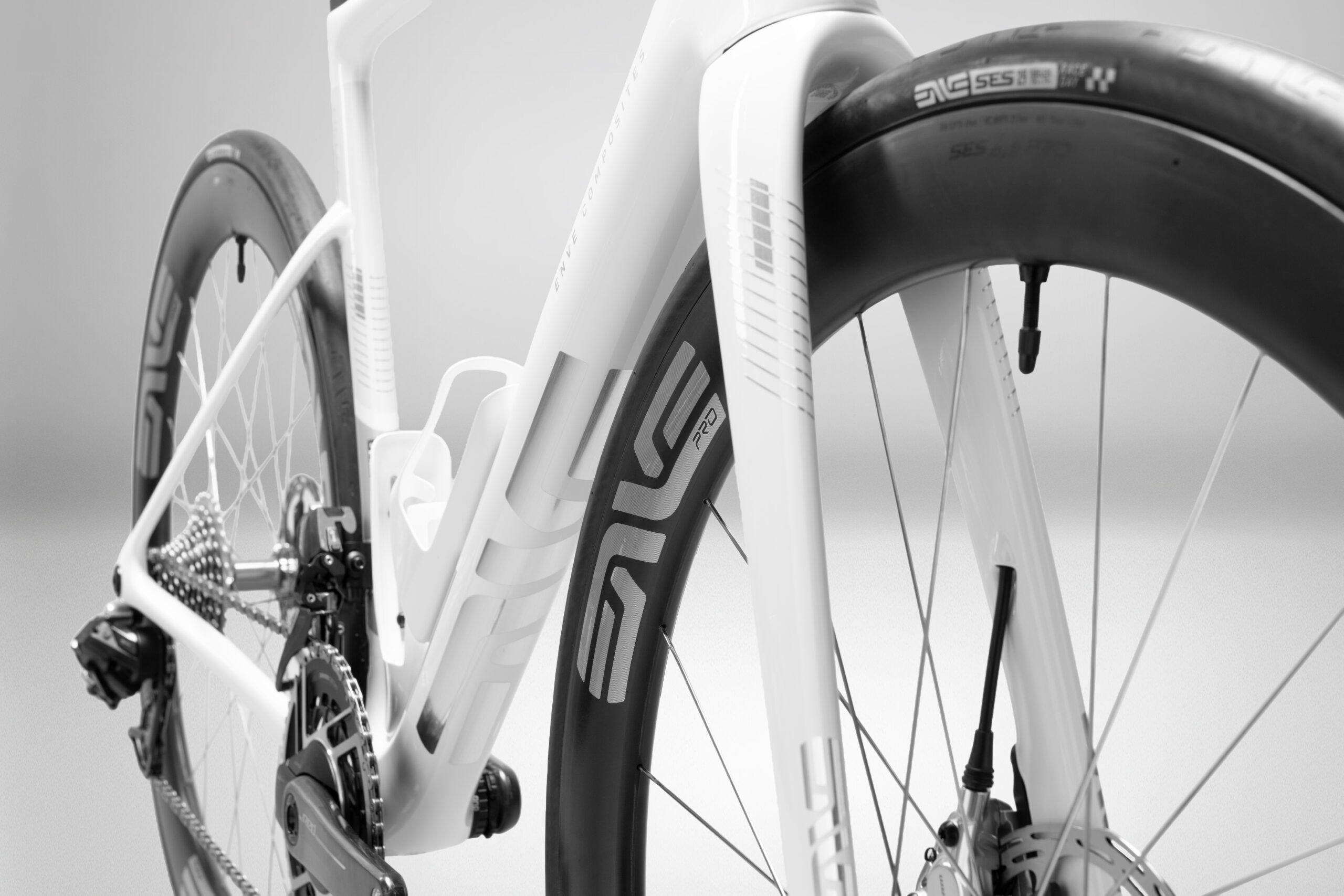
The SES Aero Bottle Cages use differing shapes for the downtube and seat tube, cost $85 for the set, and work with standard round bottles. ENVE says they reduce the aero losses from adding bottles and cages to the bike, and they aren’t limited to the new Melee. They can also be used on the original Melee and competitor road bikes.
Geometry Gets Lower on Bigger Sizes
The Melee v2 keeps seven sizes, from 47cm to 60cm, but the larger sizes get a lower front end.
On sizes 56cm through 60cm, ENVE lowered the frame stack by 5mm. The new bar drops another 6mm, for an 11mm total reduction at the front. ENVE also uses five fork rakes across the seven sizes to keep handling more consistent across the range.
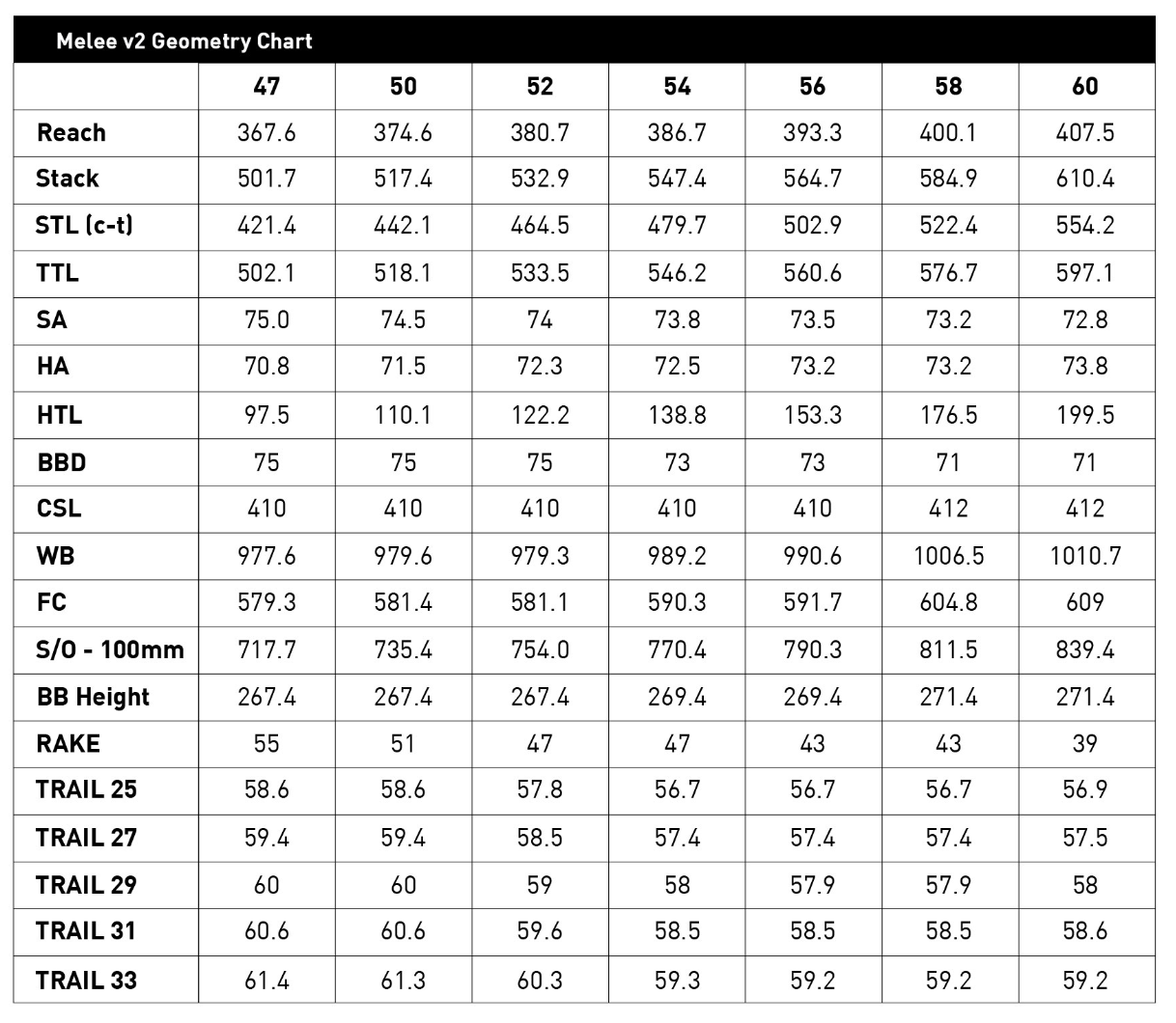
Why the shortened stack? Large road bikes can get tall quickly, and the fit can drift away from the aggressive position many racers actually want. The v2 gives taller riders a lower cockpit without forcing awkward spacer and stem choices. ENVE also increased seat tube length on the larger sizes for more saddle height flexibility.

Still Built Around Fit
ENVE is also keeping its Best Fit Calculator in the picture. Instead of pushing riders toward a size based only on nominal frame numbers, the tool works from body measurements and fit targets, then recommends frame size, stem length, saddle offset, and spacer stack. I used it to help inform my review ride, and it’s a pretty easy process.
Most riders after a bike like the ENVE Melee v2 are looking for a custom build. No stock solution will do, so it’s best to do the process anyway. Getting the fit right before the bike is built saves a lot of expensive guessing later.
Stiffer Under Load
Weight and aero were the main targets, but ENVE says it did not ignore ride feel.
The Melee v2 shows lower frame deflection than the original Melee under ENVE’s stiffness test. Lower deflection means higher stiffness, which should help the bike feel sharper under power.
That is the part ENVE had to protect. A lighter, more aero Melee only works if it still feels like a race bike when you stand on it, sprint, or drive it through a corner. The original Melee had a strong reputation for ride quality. The v2 needed to get faster without losing that snap.
ENVE Melee v2 Build Options
ENVE will offer the Melee v2 through its Spec’d for Speed program, which lets dealers and riders start with a complete race build instead of buying a frame and immediately swapping half the parts.
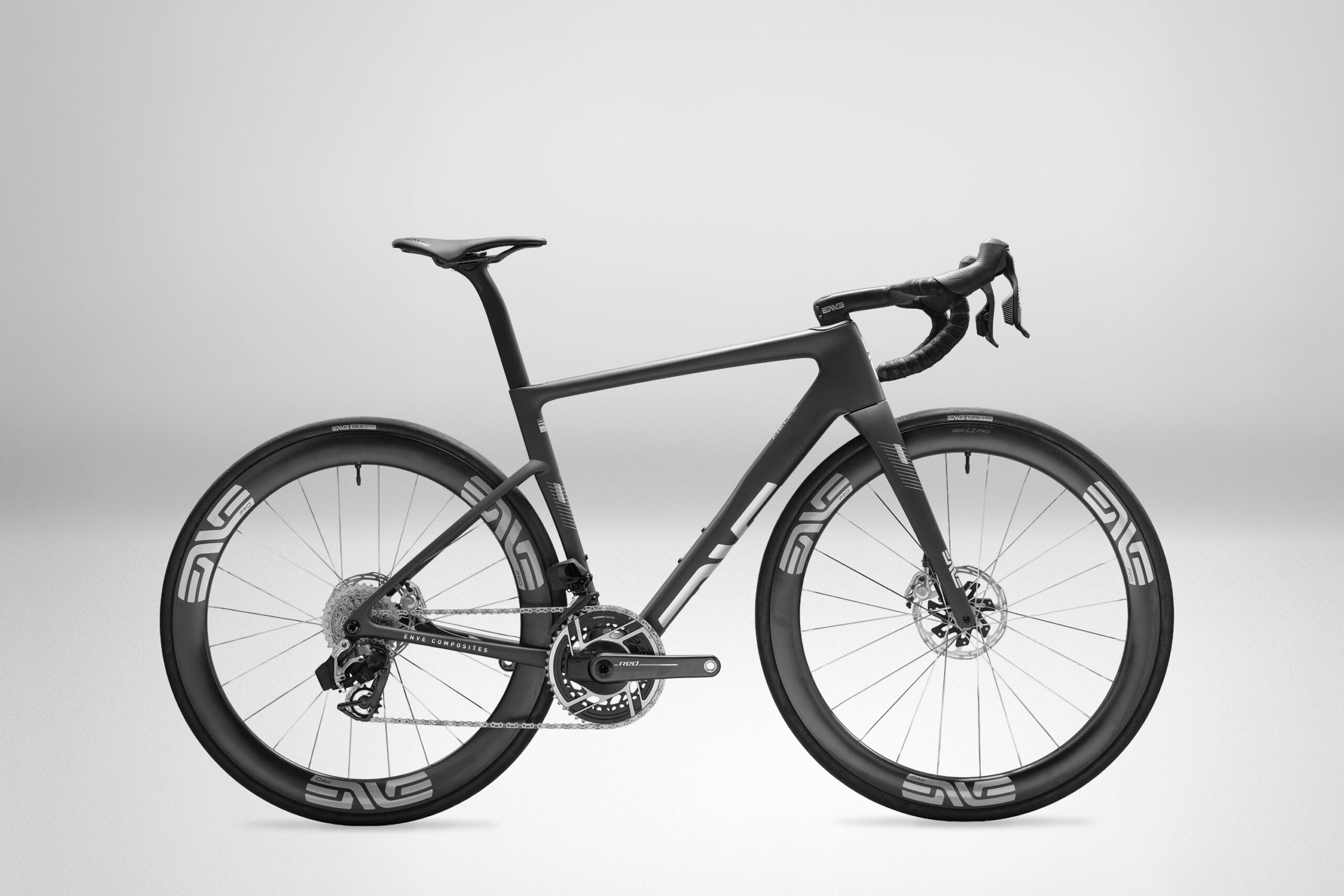
Build options include Pro RED, Premium RED, Premium Force, and Foundation Force.
The top Pro RED build uses the Melee v2 frameset, SRAM RED 2x AXS, SES 4.5 PRO or SES 6.7 PRO wheels, ENVE Aero PRO One-Piece Bars, ENVE handlebar tape, and SES Road tires.
The other builds step through SRAM RED or Force AXS, SES wheels, ENVE SES AR One-Piece Bars, ENVE tape, and SES Road tires.

The theme is obvious: ENVE wants the Melee v2 treated as a complete system. Frame, wheels, cockpit, tires, tape, cages, fit. That may not appeal to riders who want to build from a parts bin, but it makes sense given how ENVE talks about speed.
If you’re looking to choose your own adventure (like we’re doing with the 1X setup), you can always get the frameset.

Better Than the Original?
Riders who loved the old Melee because it could wear big road tires and handle rougher routes may prefer the original, or look at the Fray or MOG. Riders who wanted the Melee to be lighter, lower, and faster now have the bike they were probably asking for. It looks like a very competitive option for riders who want to stand out in the SL9 crowd but stay at the pointy end of the pack.
Look for a First Impressions soon; our review bike came just in time to snap a few photos before the build. We’re very excited to get this rocketship out on the road.


