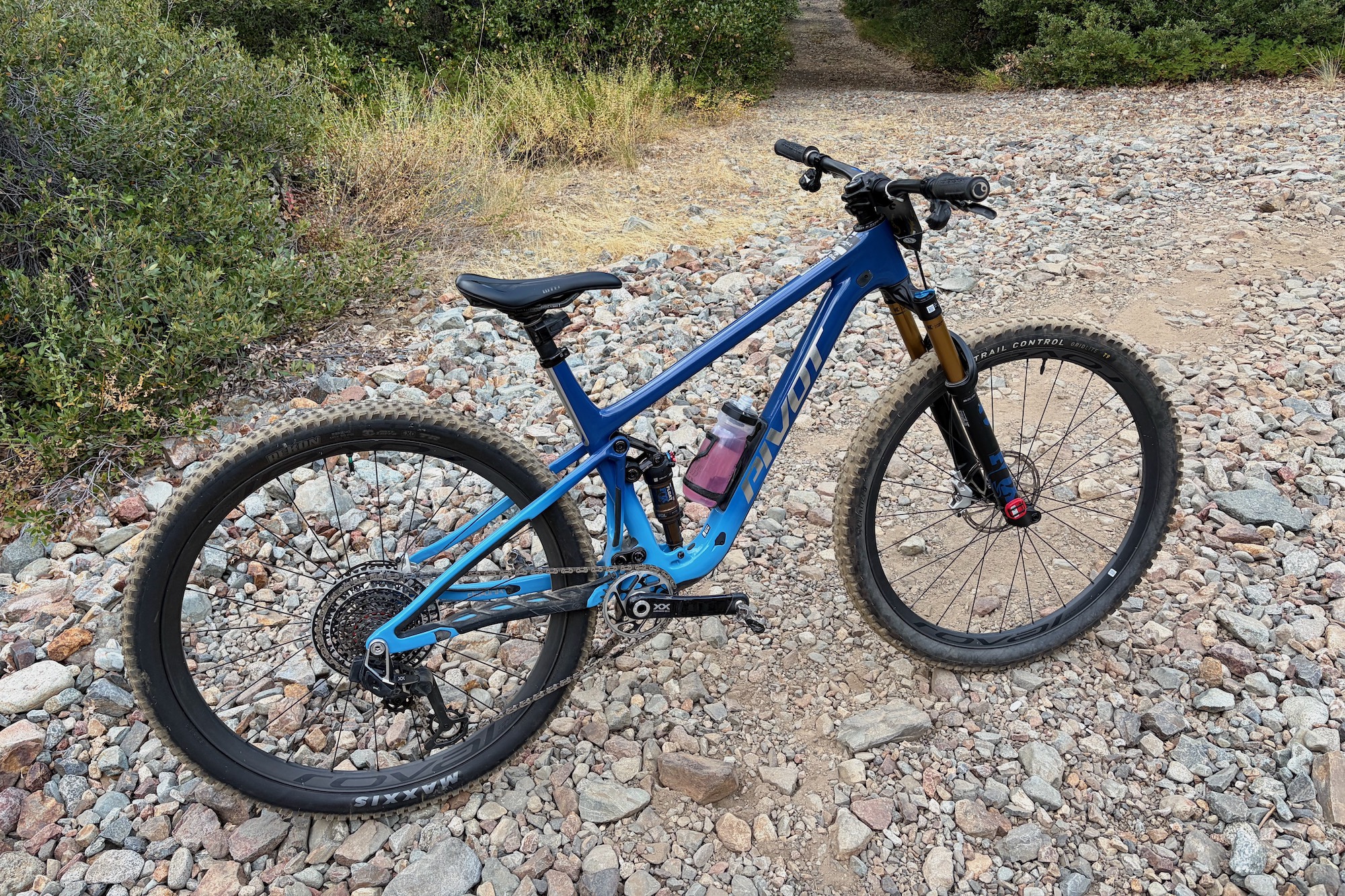


In January, I visited Pivot’s Tempe, Arizona headquarters for a couple of press camps, including one for the soon-to-be-released Mach 4 SL cross-country race bike. At that time, I only got to ride it twice, with one of those being in a proper XC race. That very brief test period definitely left me wanting to spend some more time on Pivot’s latest cross-country rocket.
A few months later, the folks at Pivot offered to send me a Mach 4 SL for long-term testing, and I eagerly accepted. I planned to spend the summer taking back some uphill KOMs, making some modifications, and ultimately turning it into the perfect Downieville Classic race bike. I was hoping that race would be the triumphant finish to my long-term test period.
It was a simple plan, and one that worked well for me previously in 2024. That year I raced Yeti’s then-new ASR cross-country bike to personal best results in both the XC and DH. I hoped I could do the same with the Mach 4 SL by simply making a few key component swaps to handle Downieville’s notoriously fast and rough trails, while maintaining the bike’s light and quick character. Here’s how it went.

Mach 4 SL
When I tested the Mach 4 SL back in January, my very first ride was in a cross-country race. Racing a new bike on trails I’d never seen before was a trial by fire, but it went surprisingly well. Thankfully, I was comfortable on the bike immediately and impressed by its efficiency and composure as I blindly fumbled through new-to-me trails while breathing through my ears.
Based on that experience, I figured the Mach 4 SL could be a great platform to tackle the Downieville Classic this year, hopefully helping me to some new personal bests. I really enjoyed the performance of its dw-link suspension and the frame’s sturdy feel. At the same time, it was light, agile, and downright fast, and these days, I can use all the help I can get.
When introducing the new Mach 4 SL, the folks at Pivot made it very clear that it was purpose-built as an XC race bike. It was not really intended to be a downcountry bike or a light trail bike. It was built for speed, efficiency, and modern cross-country riding and racing. But I figured with a few tweaks, I could mold it to fit my needs and excel on race weekend.
What’s the Downieville Classic?
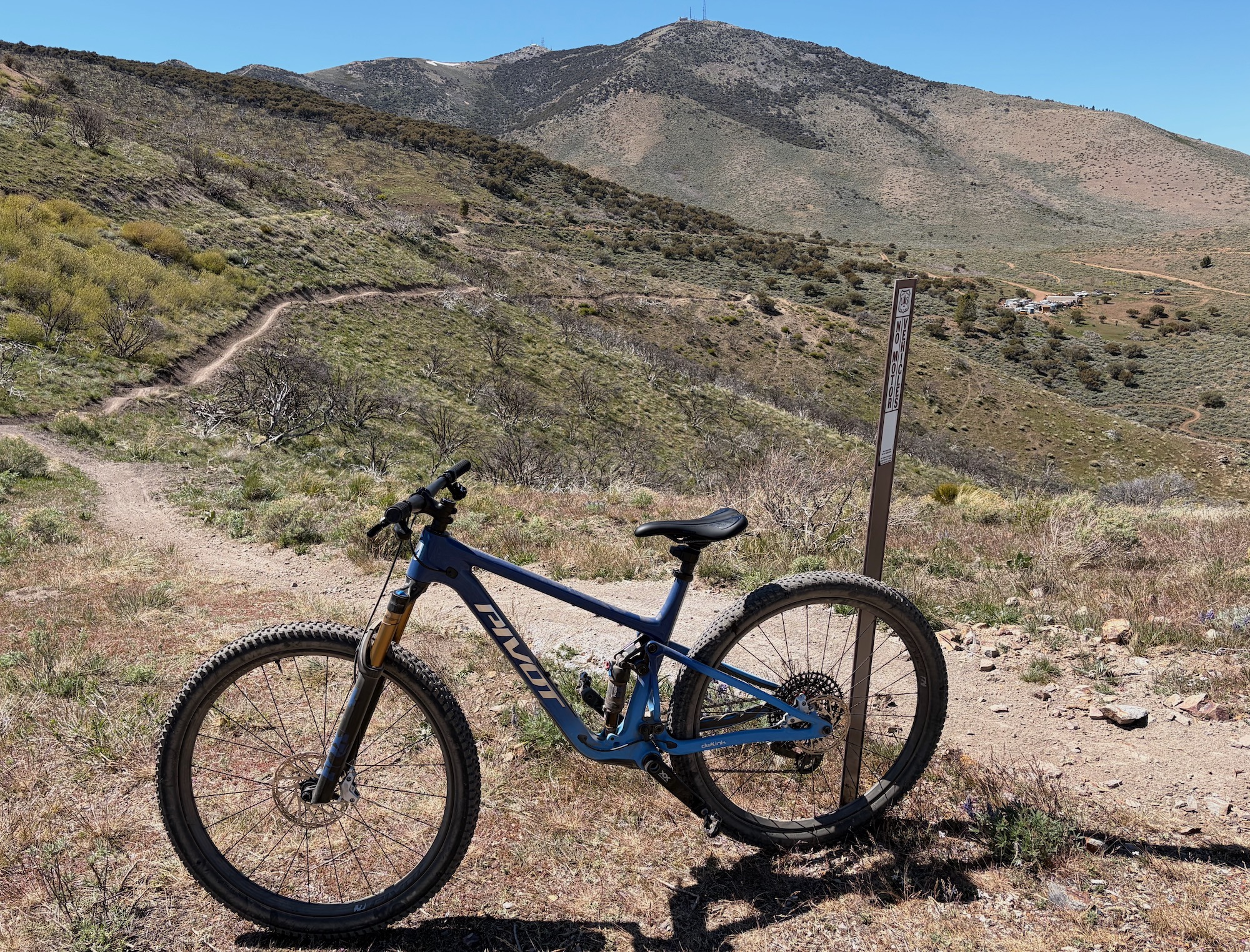
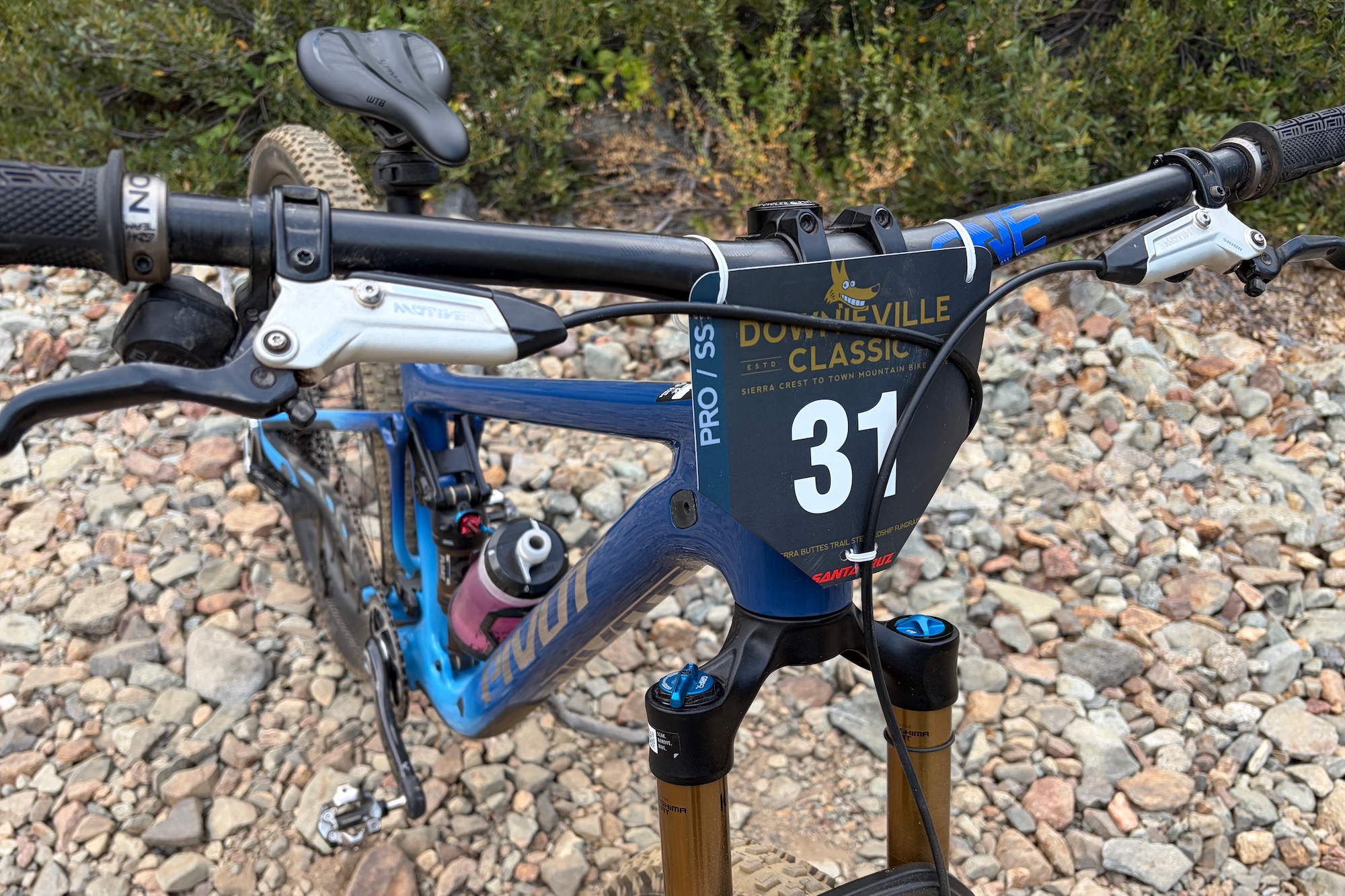
The Downieville Classic is a very unique mountain bike race. The two-day All-Mountain World Championship includes a point-to-point XC race on day one, followed by a downhill race on day two. Both races are timed and awarded separately, and the results of both days are combined using a points system to determine the All-Mountain standings. The catch is that riders must use the same bike both days, and they are weighed to ensure modifications aren’t made to gain any advantage.
The Downieville XC is nothing like your typical cross-country race. The point-to-point course is 26.5 miles long with ~4,500 feet of climbing. It starts with 2,500+ feet of steep doubletrack climbing right from the starting line before linking up with the iconic Downieville trail network high on the Sierra Crest. A light, fast bike is obviously a huge benefit on the climb, but it’s followed by around 5,000 feet of descending to the finish on super-fast and rocky trails.
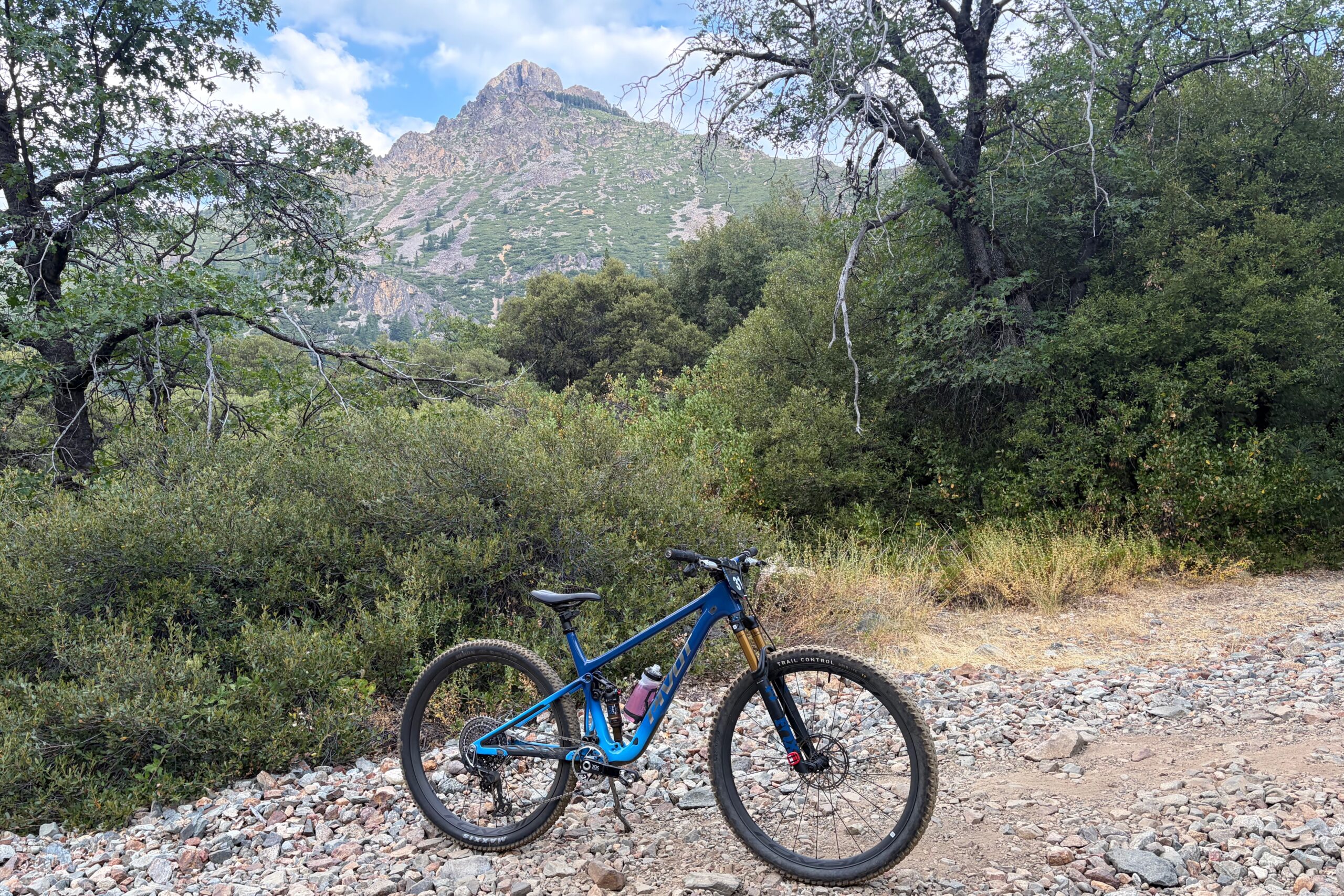
The DH on day two is a “downhill”, but again, it’s far from your typical downhill race. The 15-mile course starts on the crest and ends in the town of Downieville, dropping ~5,000 vertical in the process. It’s a long way down. It isn’t necessarily steep, but it’s rough, rocky, loose, and very fast. Plus, there’s roughly 600 feet of climbing mixed in, making it favor fitness and descending skill in equal measure.
With modern XC bikes as good as they are, choosing the right bike for both days isn’t quite the puzzle it used to be. Still, given the unique nature of the courses and the two-day, same bike format, an off-the-shelf XC race bike needs some modification. Not that the Mach 4 SL with the Team XX Eagle Transmission build isn’t amazing on its own, but I decided to make changes to dial it for this specific challenge.
What Did I Change?
In its stock configuration, the Mach 4 SL is a very race-oriented bike, no surprise there. It’s got 120mm of front and rear travel, and weighs in at right around 25 pounds in the stock Team XX build in size large. It’s not the lightest around, but it’s still pretty light, ruthlessly efficient, and has razor-sharp handling. My goal was to try and make it a little more comfortable and Downieville-ready, without adding much weight.
Cockpit
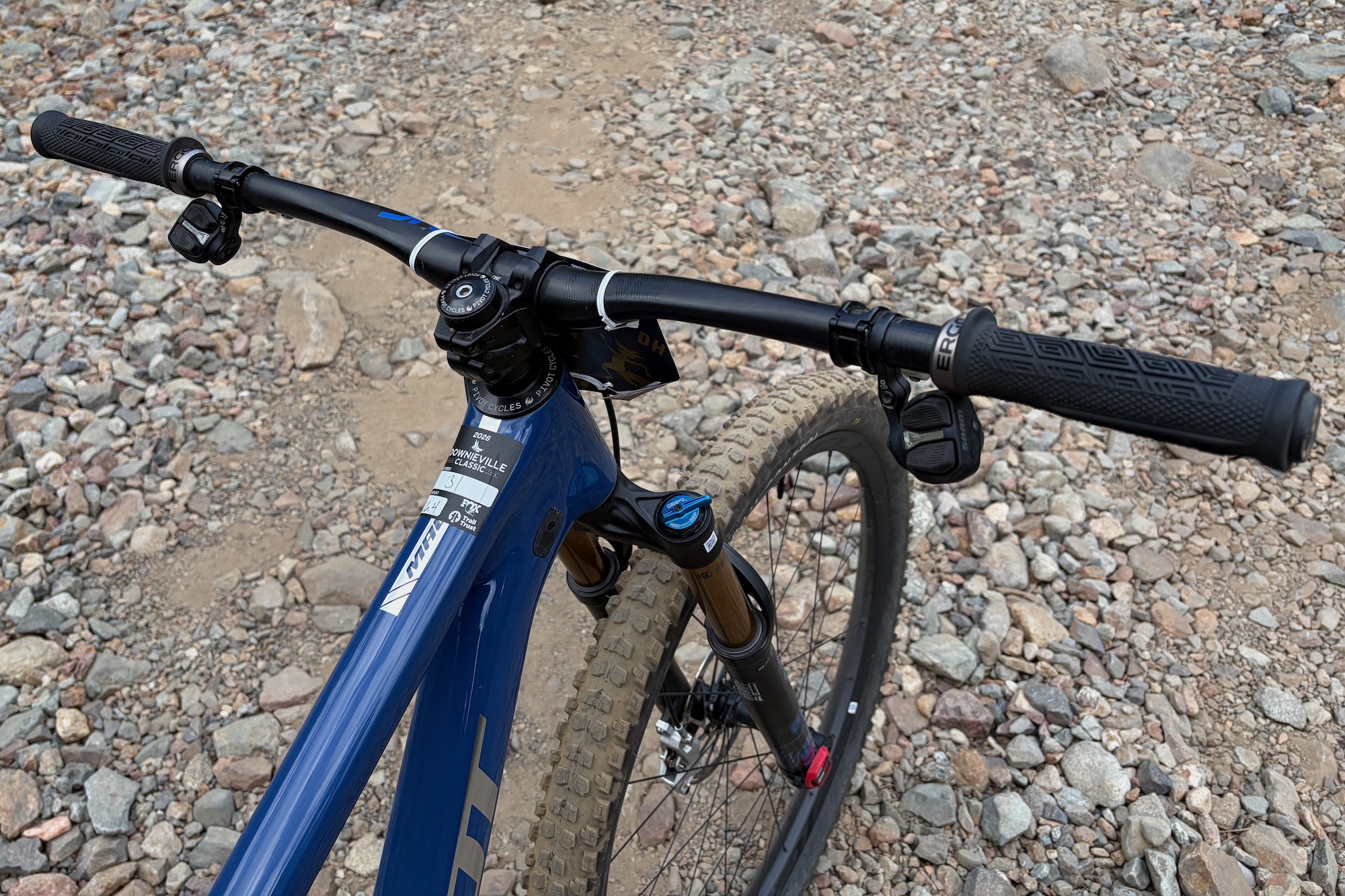
The first changes I made were to swap out the stock 50mm stem and flat carbon handlebar for some others I had on hand to shorten the reach and raise my bar height. I tried a few setups, but ultimately, I settled on a 35mm OneUp stem and a OneUp Carbon V1 handlebar with 20mm of rise, trimmed to 760mm. Along with my favorite Ergon GDH grips, these changes to the cockpit setup improved my comfort, calmed down the front-end, and gave me a bit more steering leverage.
More Fork Travel
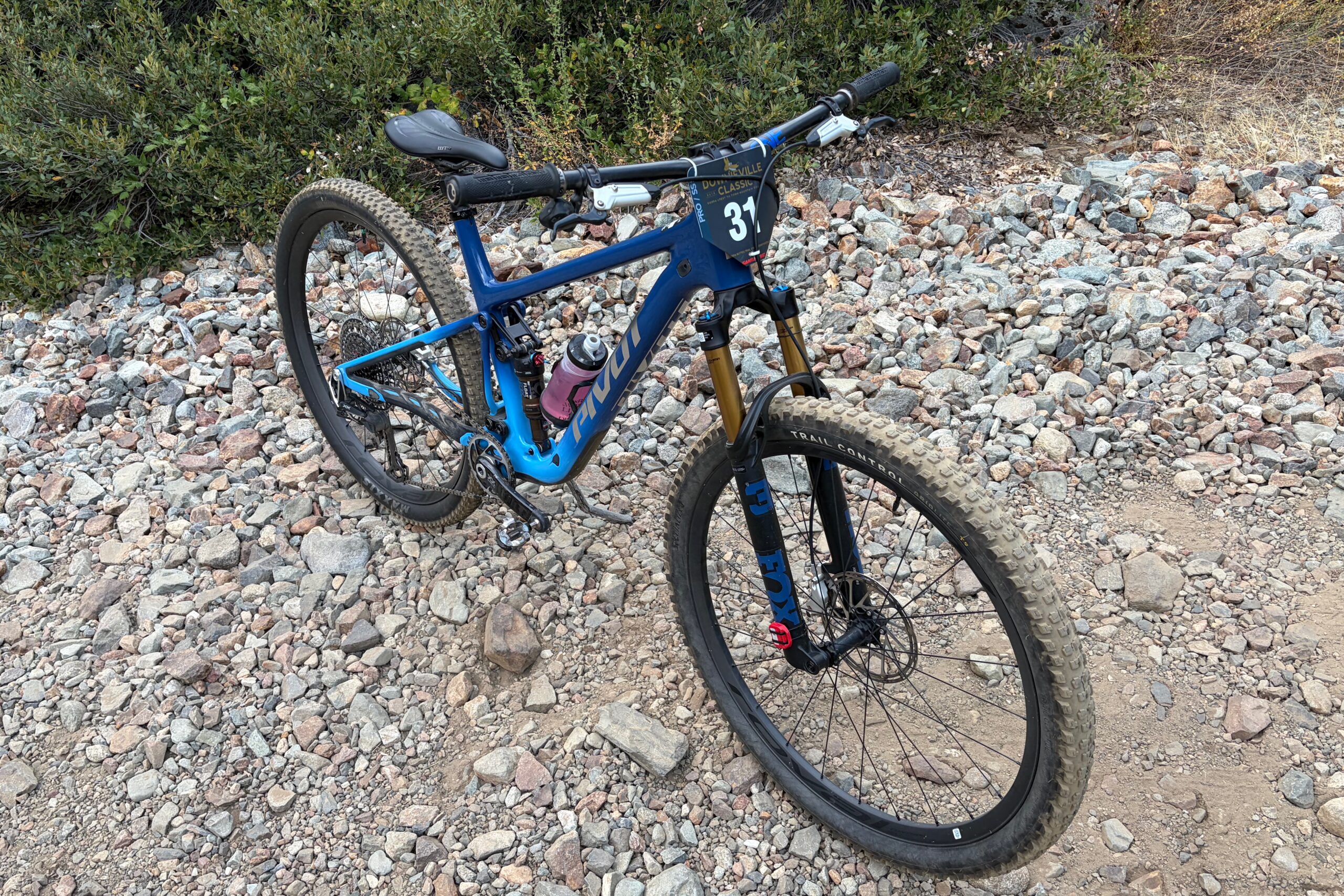
With the cockpit dialed, I decided to increase the fork travel from 120mm to 130mm. I bought a 130mm air shaft for $70, and swapped it out in my garage workshop. The main idea was to give myself a little extra cushion up front to help compensate for my poor line choices. Adding 10mm of travel also raised the stack height and relaxed the head tube angle slightly — from 66° to right around 65.5°.
Combined with the cockpit changes, the modest increase in travel made the bike feel a bit calmer and more composed, without noticeably impacting its agility. It was immediately more comfortable and stable at speed — an extra 10mm of travel goes a long way on a short travel bike. I felt I could push the bike harder and ride a bit more aggressively in rough terrain.
Wheels and Tires
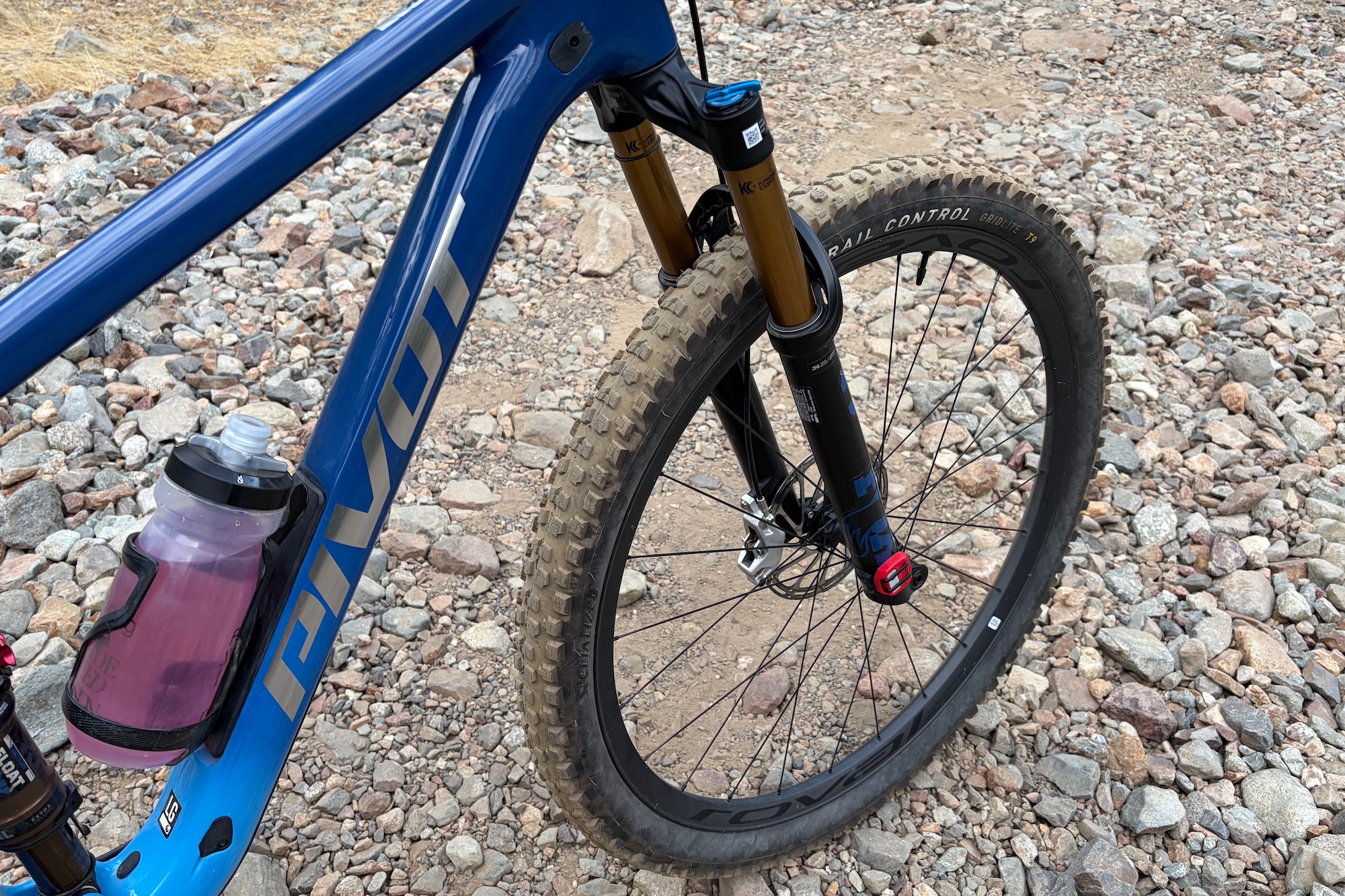
The Mach 4 SL came with Pivot-branded Reynolds Carbon wheels, and they felt plenty light and snappy. In hindsight, I could’ve just left those on, but I swapped over to a set of Roval Control SL’s to try and offset some grams and the heavier tires I’d be installing. The Control SL’s are crazy light at their claimed weight of 1,240g/set, and surprisingly durable in my previous experience, too.
Nothing ends your race quicker than a flat tire, and there are about a thousand places to flat on the Downieville courses. Tire choice is tricky, because you want your tires to be light and fast, but they also need to be durable. The top pro riders seem to get away with low-profile treads, paper-thin sidewalls, and low pressures, but they’re all a hell of a lot better at riding than me, so…
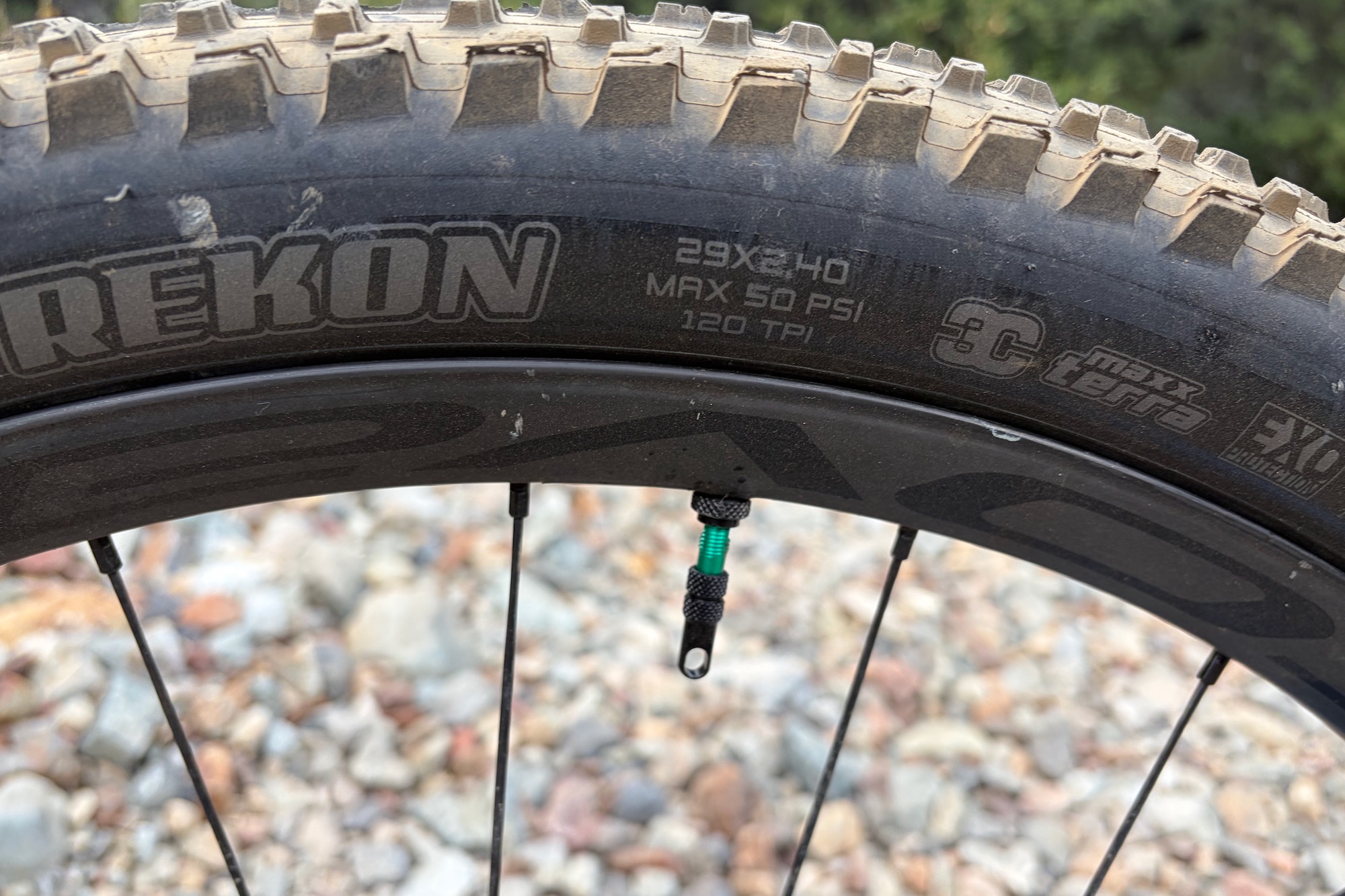
After a little trial and error, I settled on a 29” x 2.4” Specialized Trail Control (Grid Lite, T9 compound) up front. I was impressed by this tire’s balance of reasonable weight (~900g), rolling resistance, and predictable, consistent grip. I was going to run a Trail Control (Grid Trail, T7 compound) in the rear as well, but I pinch-flatted it on my first test ride and immediately thought better of that.
In 2024, I rode a Maxxis Rekon EXO, without an insert, in the rear and had a clean weekend. So, I figured that was worth another shot. But this time, I’d add a little insurance with the lightweight (60-ish grams) Vittoria Air Liner XC insert. No one gets flats when they’re riding with inserts, right? Beyond the faux pas of mismatched brands, this setup felt pretty balanced with a relatively fast-rolling tire in the back and a grippy, predictable tire up front.
Race Weekend
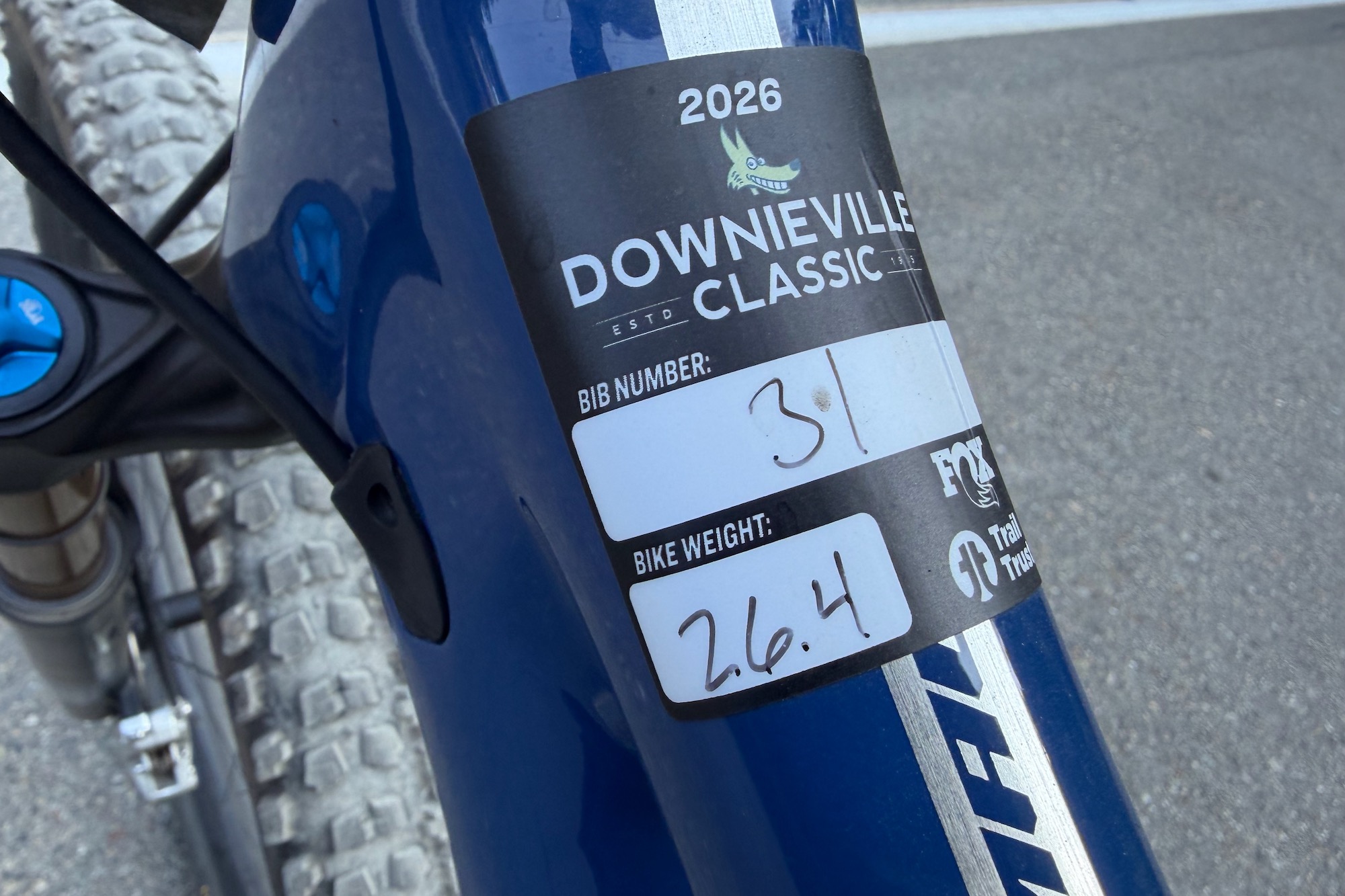
At the bike weigh-in, my modified Mach 4 SL clocked in at 26.4 pounds, including Shimano XT pedals, a bottle cage, and a timing chip. That meant my changes added only about a pound over the stock setup, while making it more comfortable and better suited to the challenge and conditions of the race weekend.
Leading up to the race, I’d done some solid training rides, and felt pretty good about my performance at Truckee Tahoe Gravel a few weeks prior. While warming up on the morning of the XC, I felt prepared, and the bike seemed as dialed as it could possibly be for the weekend. Things were looking good, and then the race started…
Right off the starting line, I just felt flat. I tried to push my pace, but there was just nothing there. All I could do was settle in and suffer harder up that climb than I have in years. I struggled to figure out what was going on. Did I not get enough sleep? Have I not been training hard enough? Did I not eat right this morning? Is my age finally catching up with me? All of the above? The one thing I wasn’t questioning was the bike. It was freaking dialed.
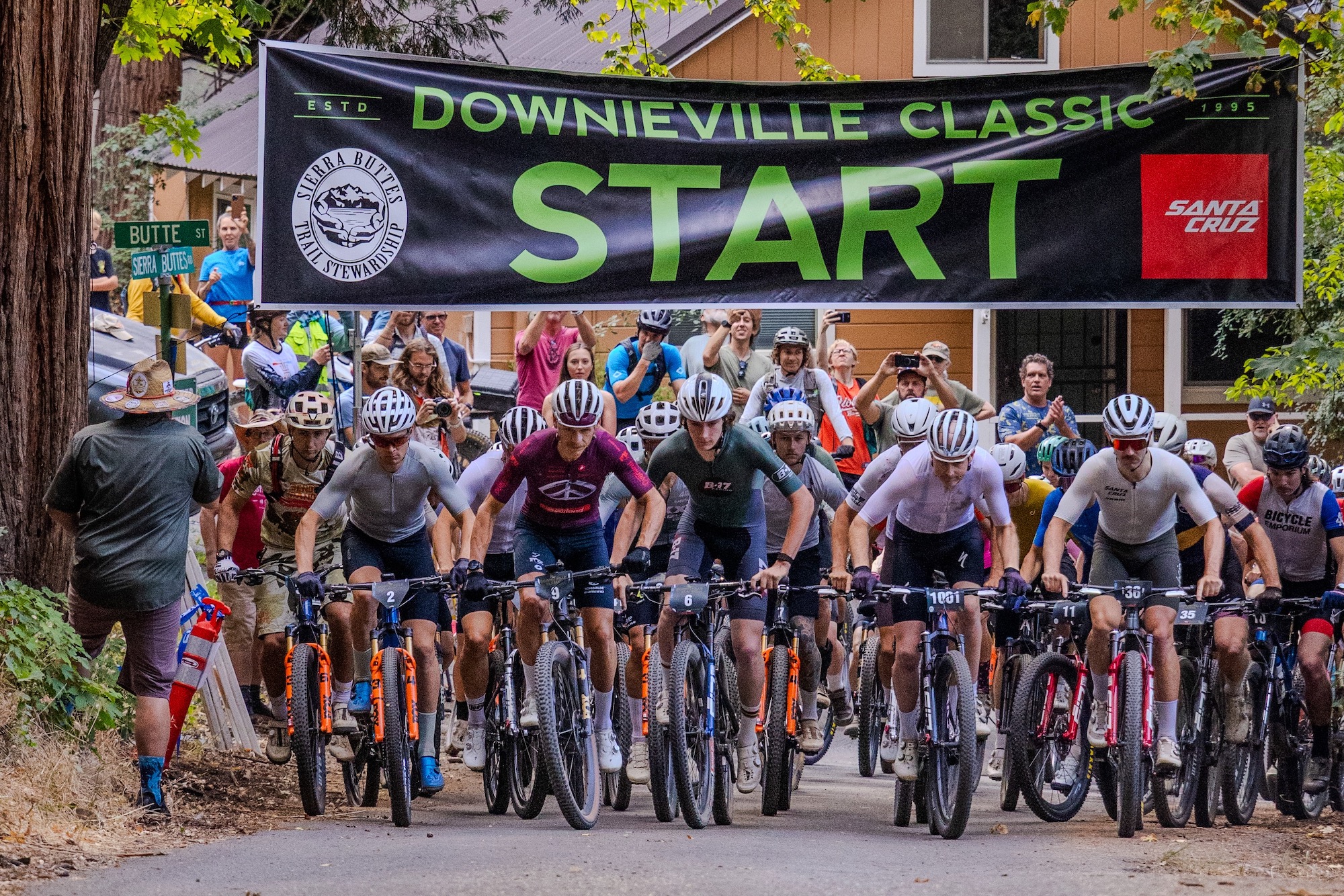
After blowing up on the climb, I recovered a bit once things started pointing downhill. I felt like my legs were back under me, but I still wasn’t riding my best. It already wasn’t my day, and then I got a flat, which sealed my fate. I don’t recall a specific impact that caused it, but all of a sudden, I was riding the insert. Somehow, I punched a single hole straight through the rear tire’s tread. I plugged it, blasted it with CO2, and was back on track, for a little while anyway.
A few miles and 10-12 minutes later, I’m riding the insert again. When I stopped to add air, the plugged hole didn’t appear to be leaking, and my frazzled race brain didn’t see any other glaring issues. So I fill it again and gave everything I had to finish before having to stop a third time. I limped it across the line with my worst XC time in seven appearances at this race. It was also my first major mechanical issue, too, so I guess I was due.
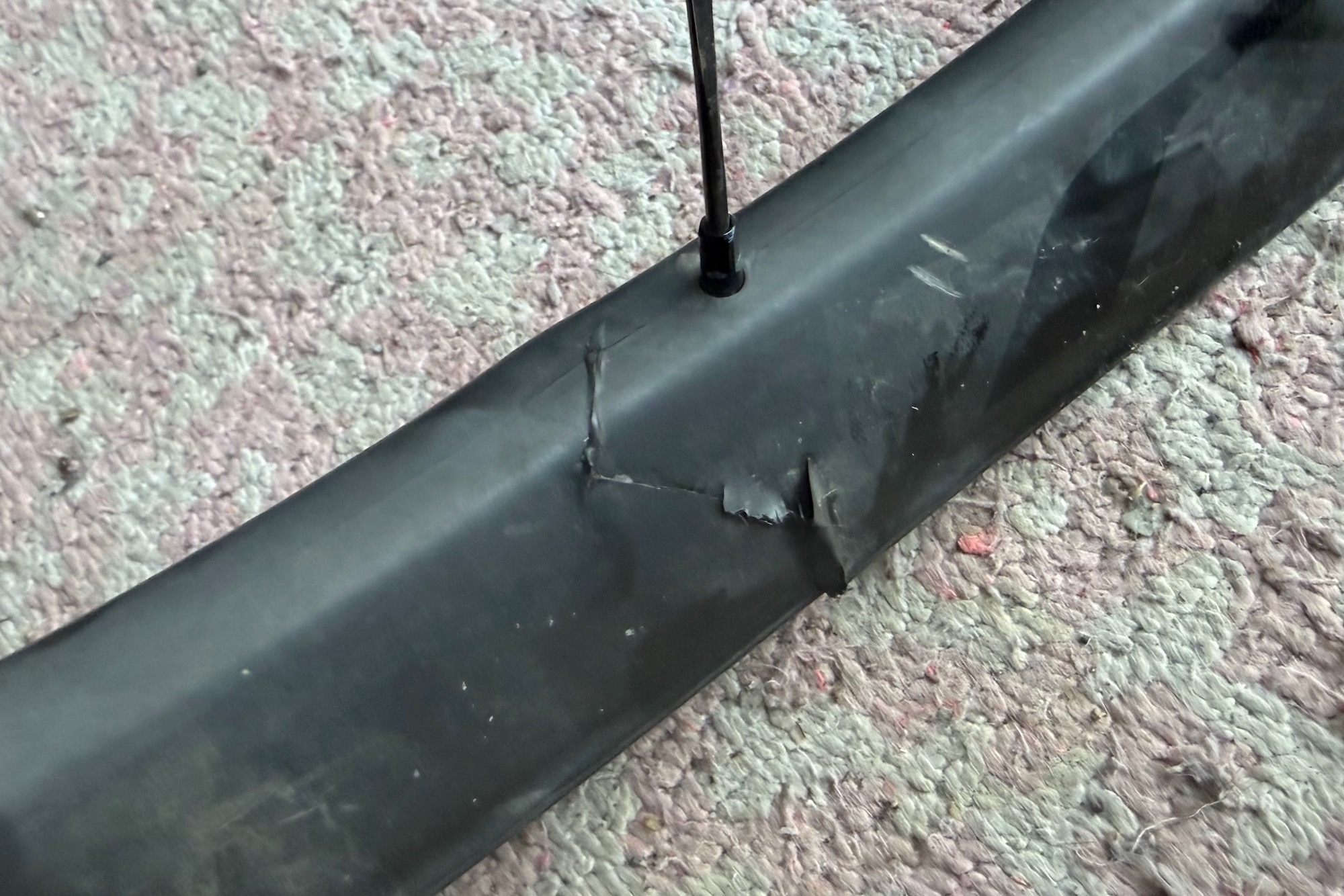
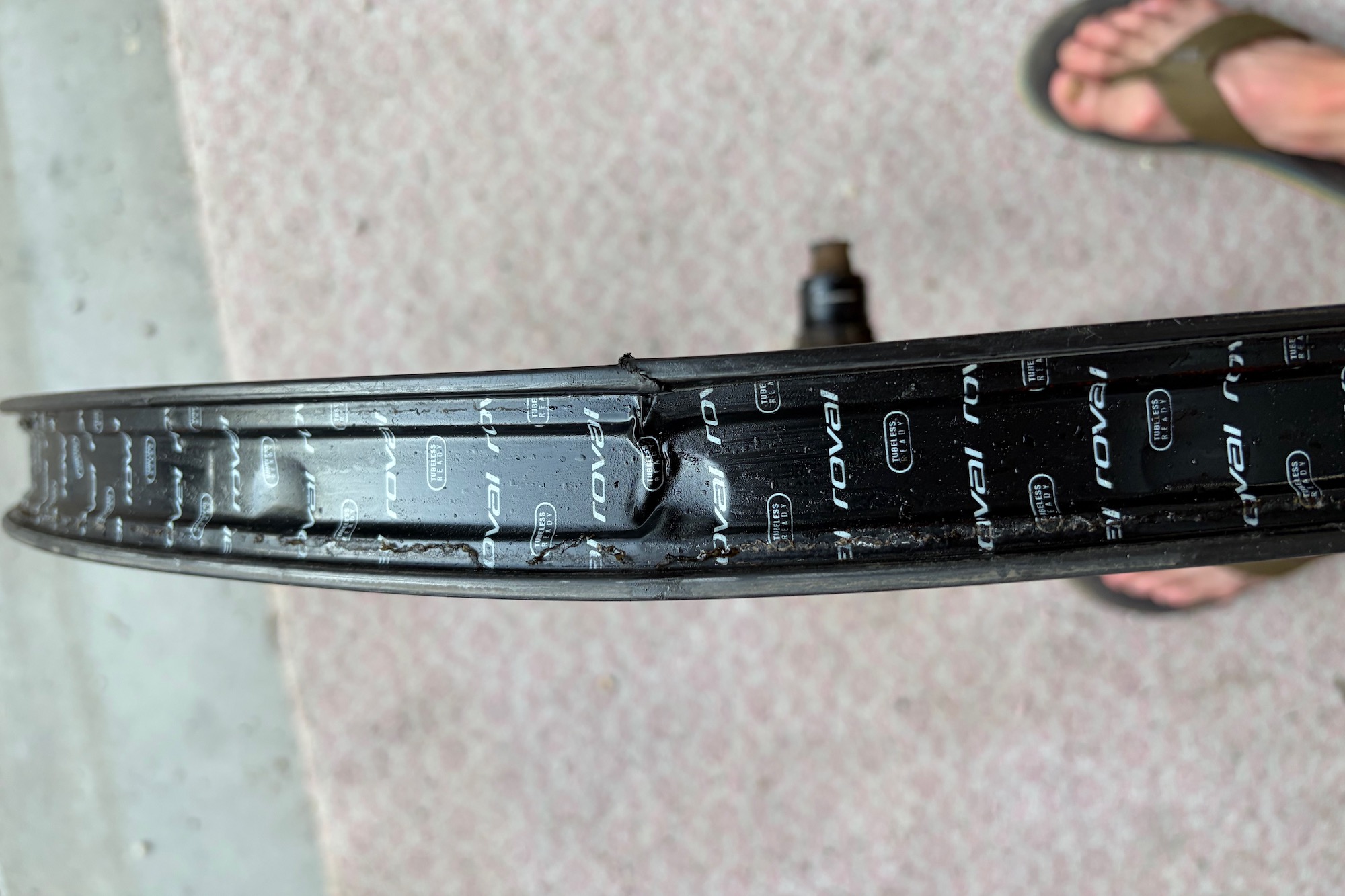
Hours later, while loading my bike to head back to camp and replace my tire for Sunday’s DH, I learned why my tire wasn’t holding air. Apparently, I cracked my rear rim significantly enough that it was no longer sealed. It was quite the surprise, and I was really glad my wheel didn’t catastrophically fail while riding, but equally bummed that my race weekend was potentially over.
Instead of throwing in the towel, I drove all the way back to my house — thankfully I live kinda nearby — swapped my broken wheel and flat tire for functional alternatives, and headed back to race the next day. Unfortunately, my equipment swaps increased my bike weight, which technically disqualified me from the All-Mountain competition. Given that I’m not a podium threat, they let me race with the caveat that I’d be DQ’d if I came anywhere near the top of the leaderboard. “I assure you, that will not be a problem.” -me
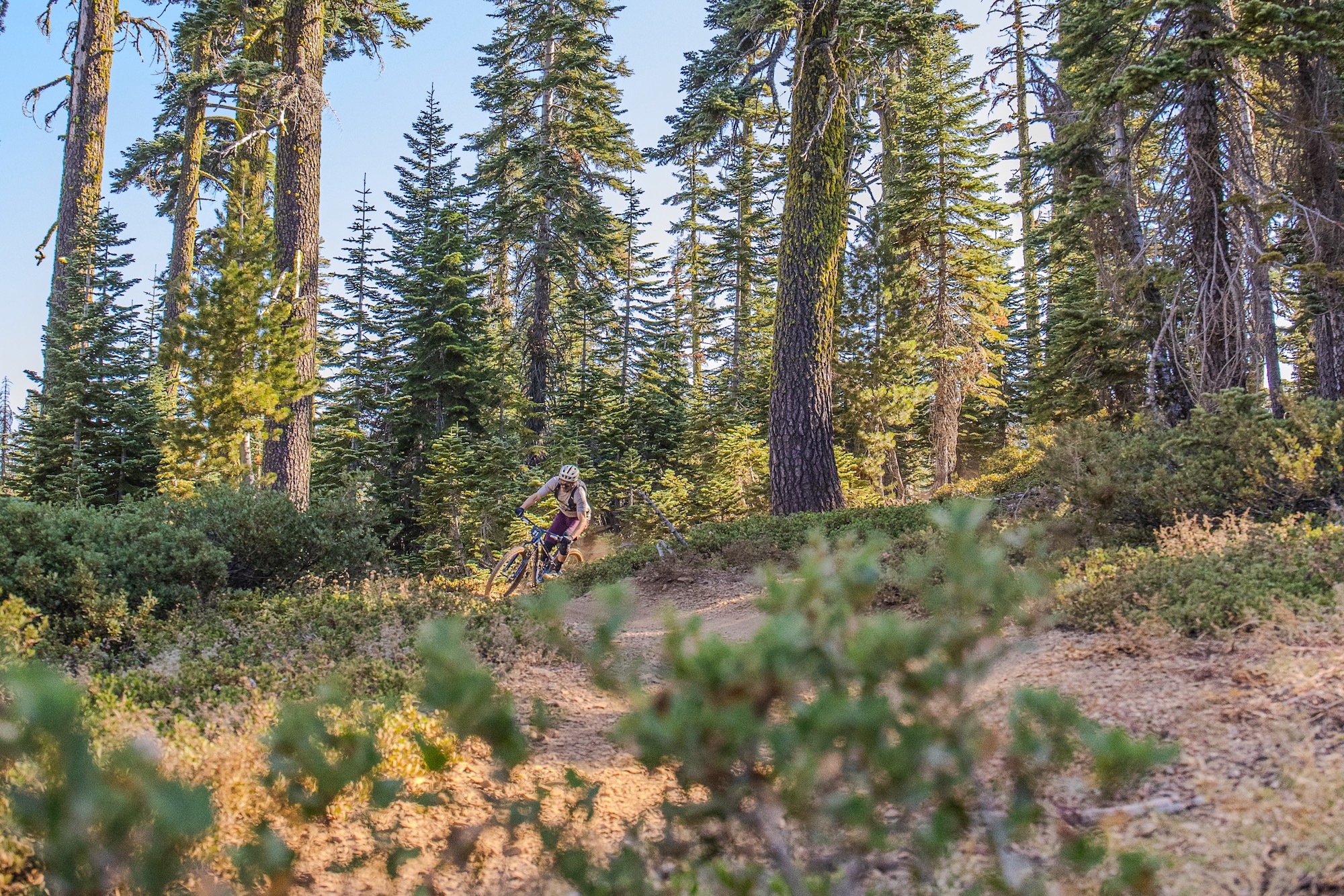
I had a pretty clean DH run, but again, just didn’t have any power in the legs to hammer the flats or the climb to 3rd Divide. Ultimately, I finished with a respectable time I would’ve been proud of a decade ago, but fell short of recent performances and my current expectations. I was a bit disappointed, but sometimes that’s just the way it goes. At least I didn’t flat again or break any more wheels.
In the end, I think I was able to turn the Mach 4 SL into the ultimate Downieville race bike, even if I couldn’t back it up with a solid performance. I’m not exactly sure why, but I just didn’t have “it” this year, and the bike is most definitely not to blame. Add a flat tire (and broken rim) ending my very long streak of good race luck, and it just wasn’t my weekend. Regardless, I still had a great time, and I plan to be back next year to (hopefully) redeem myself.
Long-Term Thoughts on the Mach 4 SL
Overall, I enjoyed riding the Mach 4 SL, and I think it’s a great bike. Pivot set out to make a cross-country race machine, and it doesn’t really stray from that goal. It’s light, fast, efficient, and purpose-built for proper XC-style riding, whether you’re on course or not. It’s not a light trail bike; it’s not a downcountry bike; the Mach 4 SL is pure cross-country. Still, I’ve got a couple of minor critiques.
I’m all for in-frame storage, but it feels a little forced on the Mach 4 SL. It adds complexity and grams to a frame that’s not the lightest to begin with in a market competing on weight. I also found the Toolshed opening’s size to be pretty limiting. Even squeezing a TPU tube in and out of there was a bit awkward. I get that it appeals to riders who demand in-frame storage, but I don’t think the Mach 4 SL would be any worse off without it.
I might be alone here, but I’d happily trade in-frame storage in favor of gram savings and a 2nd bottle mount on a bike like this. Instead, maybe give riders the option for on-bike storage with an included tool dock or accessory mount to attach things to the frame, or not. And on the topic of weight, I think the dw-link suspension is killer, and I wouldn’t trade that to save weight and make the Mach 4 SL another on the long list of flex-stay XC bikes.
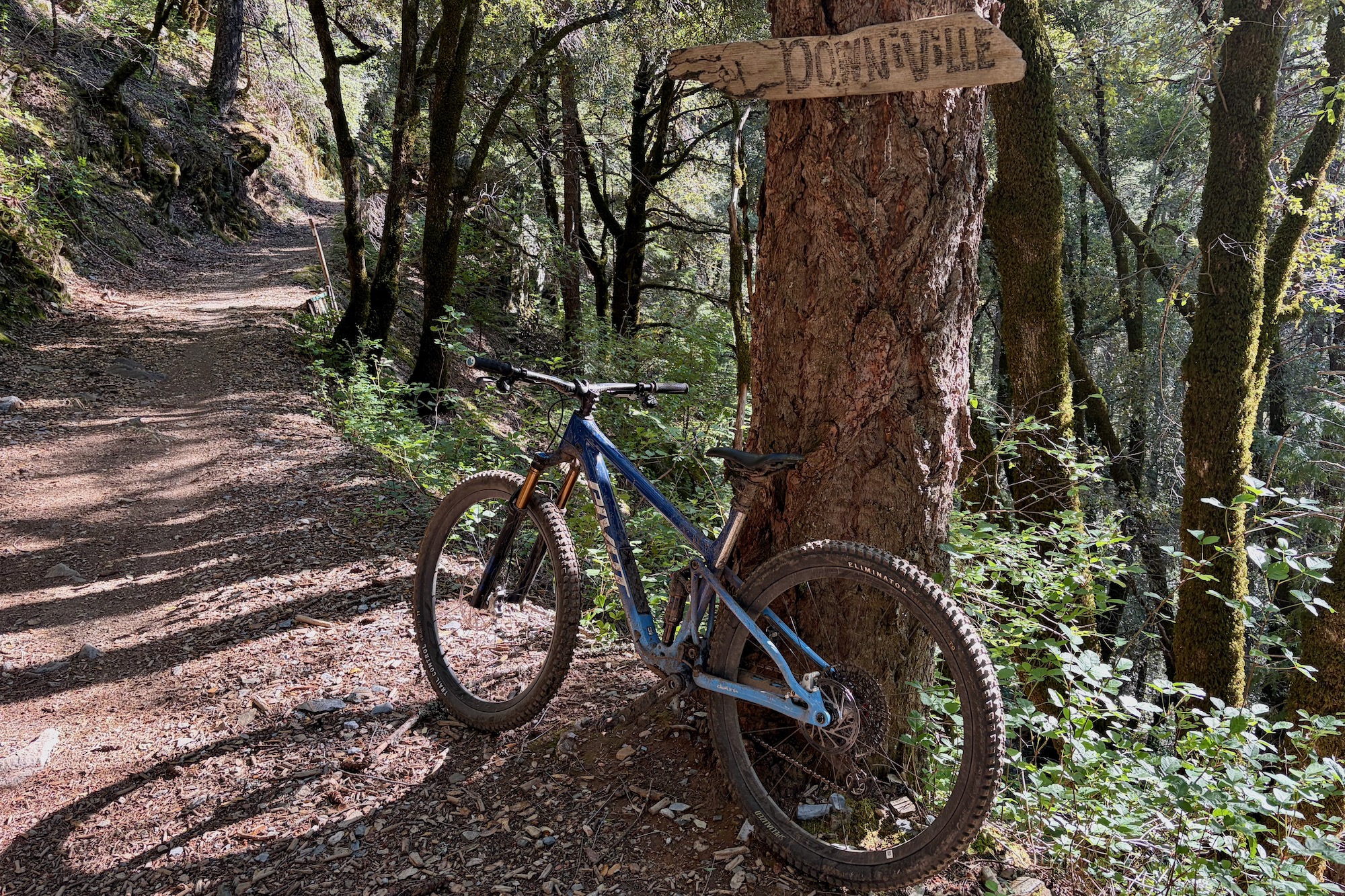
On the geometry front, I’d prefer a slightly steeper seat tube angle for the long, sustained climbs in my area. I recognize that the Mach 4 SL is a thoroughbred cross-country bike, but the effective seat tube angle felt slacker than the claimed 75 degrees on the geometry chart. Some of that can be attributed to my long legs and resulting saddle height, but this bike’s reach felt much longer than 470mm to me even with a shorter stem, and my saddle slammed.
Piggybacking on the seat tube angle, I think longer chainstays on larger frame sizes could also potentially benefit taller riders. Don’t get me wrong, this bike is super quick and agile, but 432mm is fairly short, and adding a little rear-center length could enhance stability and fore-aft balance on L and XL frames.
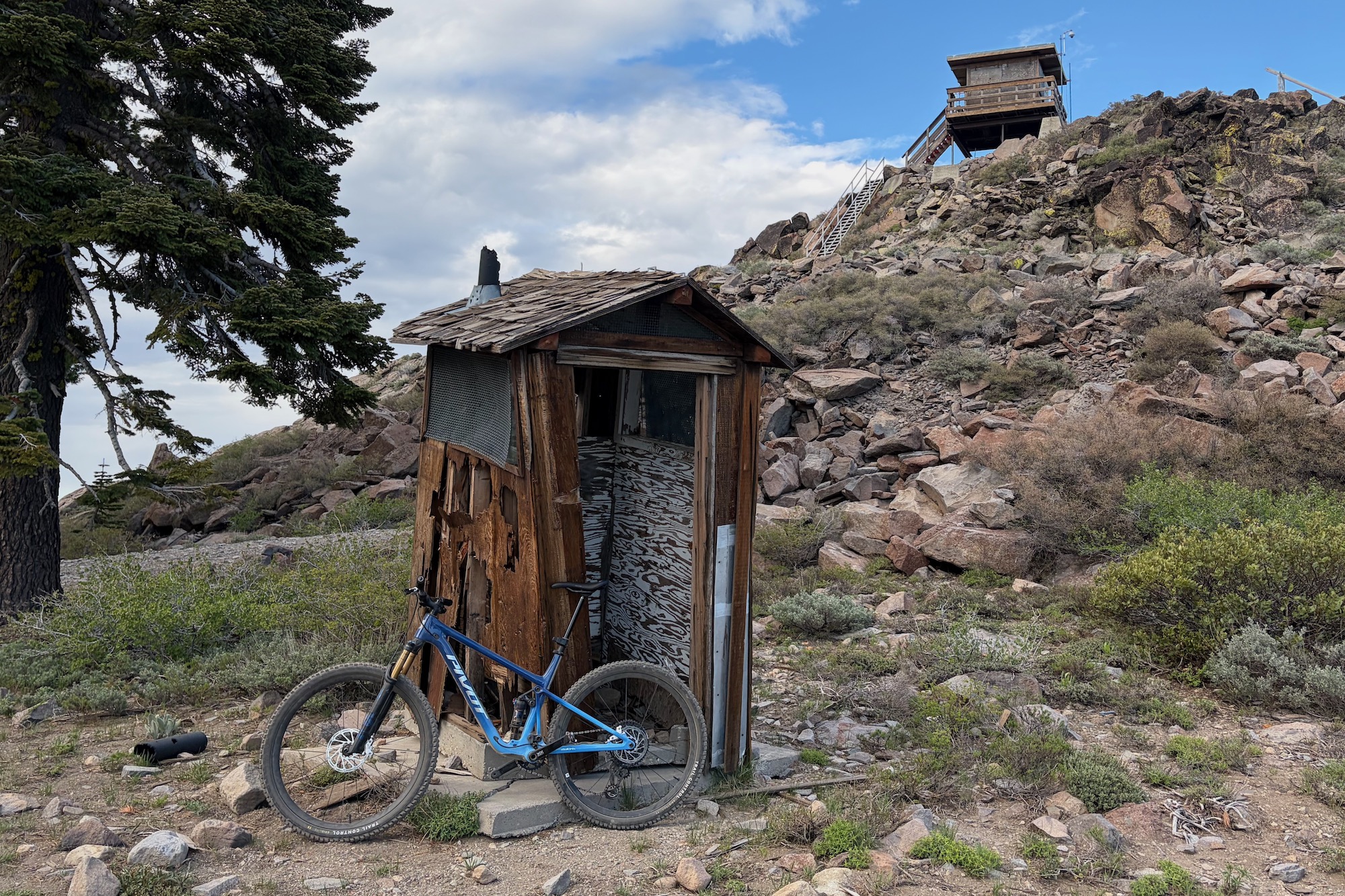
Lastly, I REALLY enjoyed this bike with the 130mm fork and felt it was a better match for my trails and riding style. For me, 10mm more travel enhanced its all-around capability while making it more comfortable and fun to ride outside of typical XC terrain. Again, it won’t be for everyone, but it’s a relatively affordable upgrade riders can make on their own if they choose.
And while I might have several nitpicky complaints, ultimately, Pivot set out to make the cross-country bike they wanted, and they succeeded. It’s not just another in a long line of cookie-cutter XC race bikes, and that’s the point.
