


Earlier this year, Orbea updated its Terra gravel bike, splitting it into two completely new models. The standard Terra was fully redesigned with a focus on all-day comfort and versatility, leaning more toward the adventure side of the riding spectrum with updated geometry and new features. Meanwhile, the brand launched the all-new Terra Race, a gravel racing-focused bike designed specifically for chasing PRs and podiums.
Orbea’s new two-model gravel lineup gives riders more options and the ability to choose the bike that best suits their needs, wants, and riding style. It’s fair to assume that most riders will gravitate toward the do-it-all Terra for its versatility, comfort, and all-around capability. But those seeking a competitive advantage on the race course can now find it in the lightweight, race-specific Terra Race.
Orbea was kind enough to send me a Terra Race to test for several weeks in August and September. Unfortunately, this timing didn’t line up with any gravel races, but I took it for numerous training rides on my typical routes to see how it performs. Spoiler alert: It’s fast.

- MSRP: $10,499
- Frame material: OMX Carbon fiber
- Drivetrain: SRAM Red XPLR AXS 1 x 13
- Wheels: OQUO Road Performance RP50LTD Carbon
- Measured weight: 17.3 lbs. (size Large)
- Tire clearance: 45 mm
Pros
- Very lightweight
- Stiff, efficient, aero-optimized frame
- Super fast
- Stellar build kit
Cons
- Expensive
- Aggressive geometry limits versatility – purposefully
- 45 mm tire clearance is already outdated
Orbea Terra Race Details
When the new Terra models came out back in June, my colleague Jordan reported on the launch of the new Terra Race. He covered the bike’s design, features, and specs in detail, so I won’t rehash all of that again here — hit the link above to check it out.
The gist is that Orbea made the Terra Race to compete at the highest level of gravel racing. The OMX carbon frame weighs a claimed 910 grams (size medium, unpainted) and has a layup optimized for stiffness and ruthless efficiency. Everything is geared towards aerodynamics, including the frame, fork, integrated cockpit, hidden cable routing, and a hidden seat clamp to keep drag to a minimum. At the same time, the thin, dropped seatstays aim to provide a little forgiveness and vibration damping.

The frame is UDH compatible and has a claimed maximum tire clearance of 45 mm. It is stripped down and streamlined to the max with completely hidden, through headset cable routing, mounts for two bottle cages, and an accessory or feed bag mount on the top tube. It does not have fork mounts or an in-frame storage compartment like the regular Terra, presumably to save even more weight.
The geometry is also quite aggressive and decidedly race-oriented with a lower stack and longer reach to get you and keep you in a low, aero, and fast position. The integrated aero cockpit setups help maintain this, limiting adjustability that could potentially compromise its race-oriented focus.
Terra Race M11ELTD 1X Build

Orbea sent me the M11ELTD 1X build to test. This is the top-of-the-line component spec in the brand’s range of five complete builds, and it commands an impressive $10,499 at retail. As such, it comes draped with the absolute best of the best components to back up its lofty price tag.
One of the highlights of this build is the SRAM Red XPLR AXS groupset. This 1 x 13-speed setup is SRAM’s latest top-tier wireless drivetrain with a 10-46T 13-speed cassette paired with a 42T chainring and integrated power-meter on the cranks. This groupset also includes the fancy silver SRAM Red hydraulic disc brakes with 160 mm rotors front and rear.
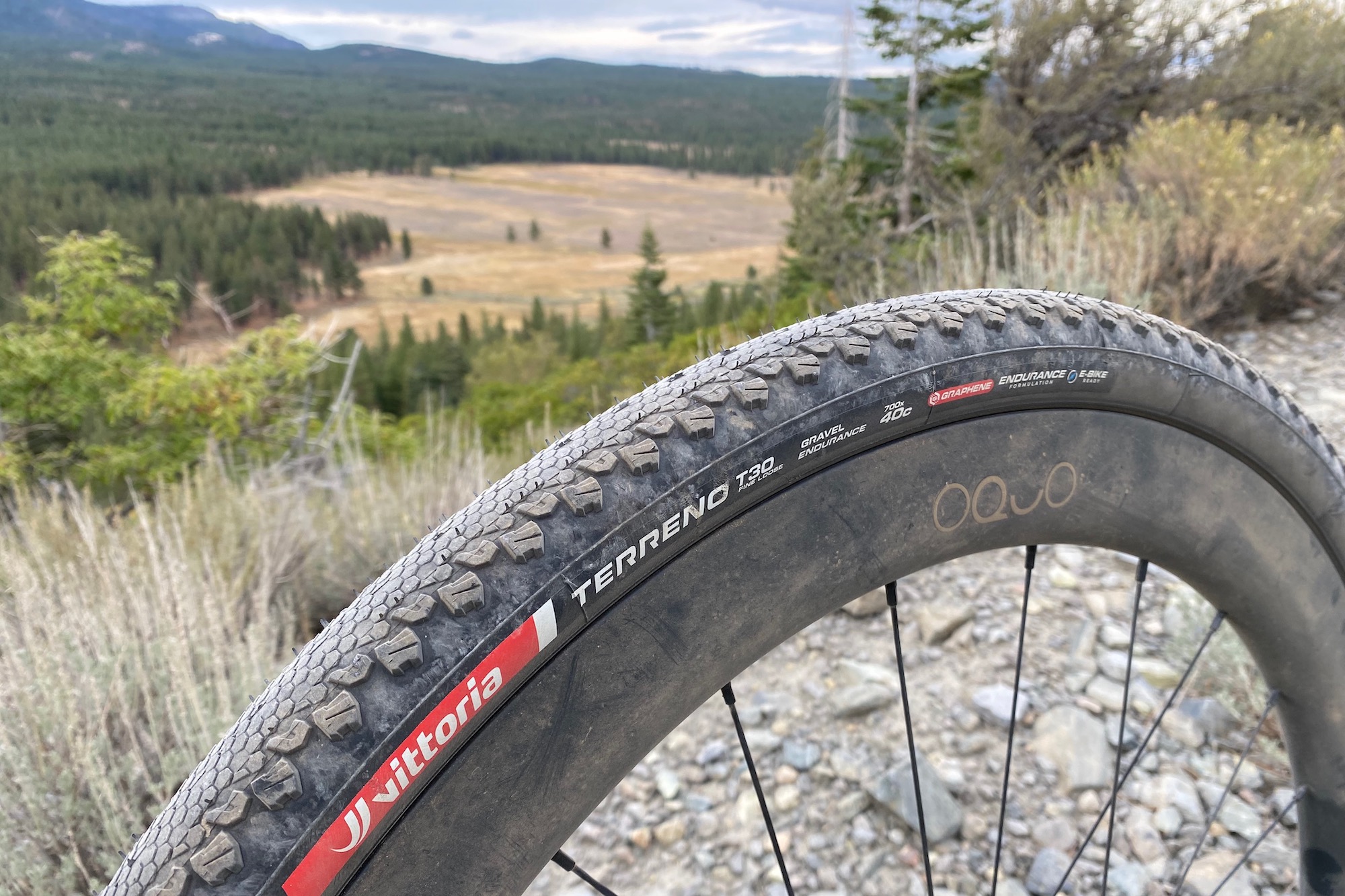
Another highlight of the M11ELTD build is the deep-section OQUO RP50LTD carbon aero wheels laced to OQUO Q10 hubs. With a 50 mm profile height, these wheels look badass and aim to reduce aerodynamic drag. Those wheels are wrapped in Vittoria Terreno T30 fine loose Gravel Endurance G2.0 700x40c tires front and rear. These dry-conditions tires are very fast-rolling, with a relatively smooth file-like center tread and medium-height shoulder knobs. It’s worth noting that riders can opt for the OQUO Road Control RC30 wheels at checkout and save $1,155.
This build also includes an integrated aero carbon bar/stem setup. The OC SH-RA10 has an 80 mm reach and 125 mm drop, and measured 380 mm wide on my test bike. The bar tops are flat and wide with just a little texture to add some grip. The primary drawback of this setup is the lack of adjustability, although you can choose your reach and width if you use Orbea’s MyO custom configurator — which is a sweet option if you have the $$$.

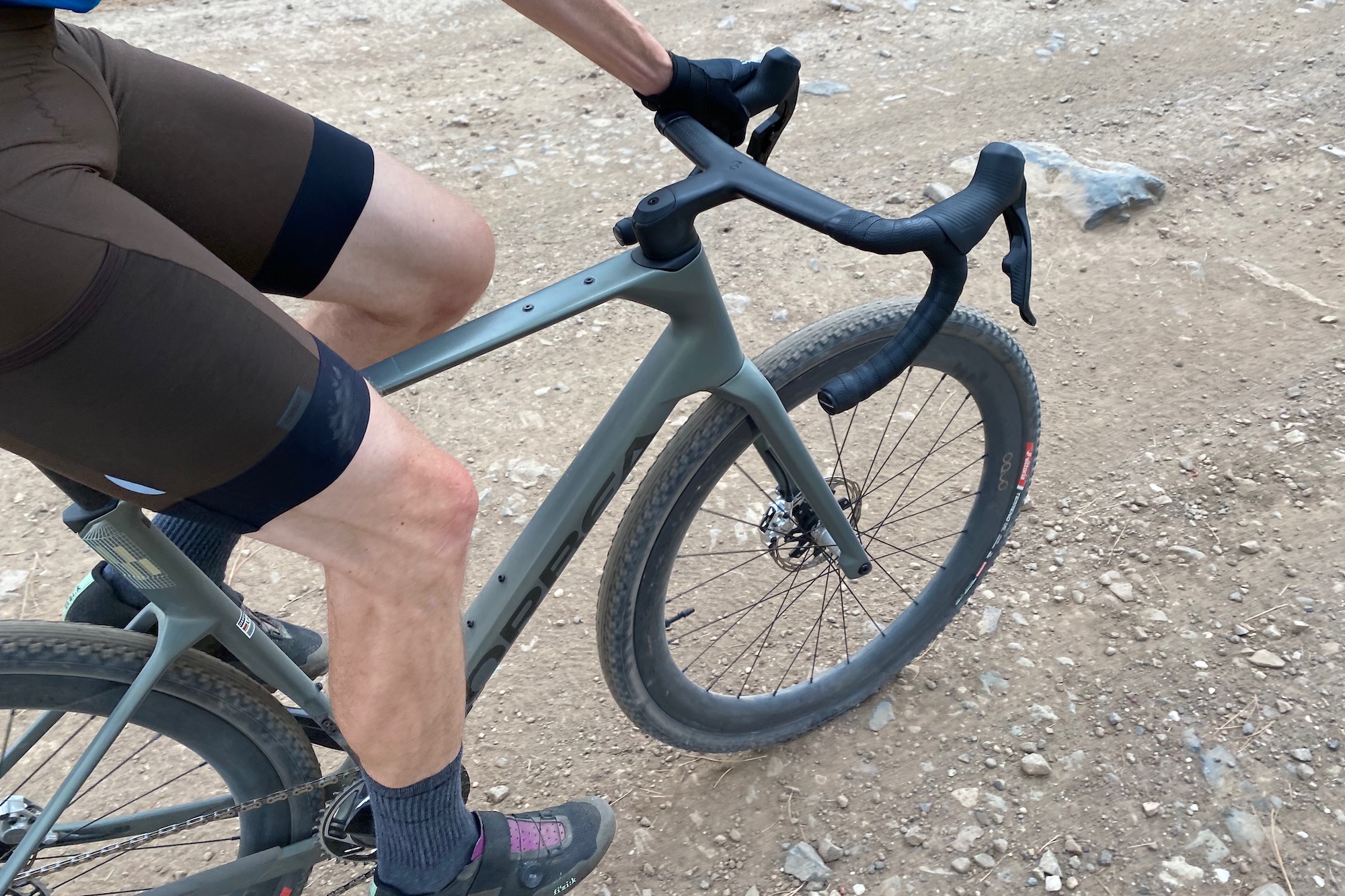
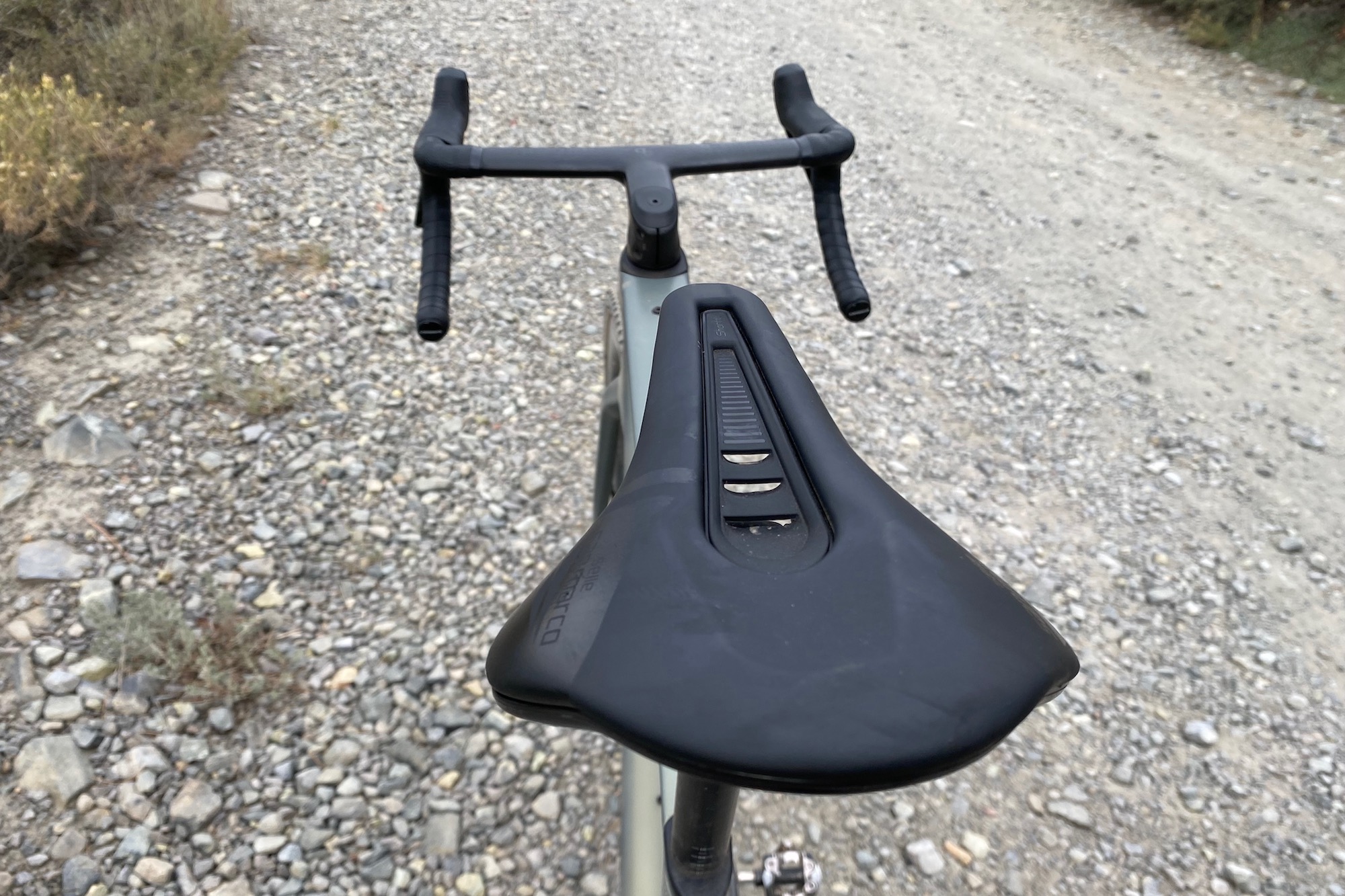
At the back of the bike, a 27.2 round carbon seatpost is topped with a Selle San Marco Shortfit 2.0 Start Up Off Road Xilite saddle, which I found to be relatively comfortable. Altogether, my size large test bike weighed in at 17 pounds and 3 ounces (7.85 kg) without pedals. I could pick this bike up with one finger.
Terra Race Review
Unfortunately, I broke a rib right around the same time I received the Terra Race. This injury kept me off the bike for a few weeks and ultimately limited the number of test rides I took on it before sending it back to the brand. That said, I still managed to get enough time on the bike to get a feel for how it performs across a wide range of gravel conditions.

Ride Impressions
For starters, this bike is very light. I can’t remember the weight of every gravel bike I’ve tried, but I doubt I’ve yet to ride one that weighed less than 19 pounds. It was startling just picking this bike up to put it on my bike rack, especially since I’ve gotten used to loading and unloading 50+ pound eMTBs lately. The weight, or lack thereof, was also immediately noticeable on the road. The bike has a feathery feel to it, which runs counter to its stiffness, precision, and sturdiness when you stomp on the pedals.
Right out of the gate, this bike just rolls fast and holds speed incredibly well. The Terra Race’s low weight, aero-shaping, high-end build, and aggressive geometry combine to make this thing a gravel rocket. The stiff frame was super responsive to pedaling input, surged forward under hard efforts, and climbed like a goat. And while I wouldn’t call the racy geometry the most comfortable, it forced me to stay in a more aero position, and helped keep drag to a minimum. It felt impressively stable at all speeds, and its handling was as responsive as you’d expect.

Even if I’m not the fastest rider in the world, I certainly like to feel fast, and the Terra Race delivered. Feeling fast is fun, and similar to some of the lighter XC mountain bikes I’ve ridden in the past couple of years, the Terra Race felt like it was urging me to push the pace up climbs and through the flats because it just felt so darn good. That feeling was backed up by an 18 mph average speed on my first test ride. That’s not that impressive, I know, but that was with a crunchy broken rib that seriously limited my breathing and body movements. I was just happy to be out, and that speed backed up my impression of the bike’s quickness.
In my experience, lightweight frames and components often feel fragile, or they can sometimes be stiff to a fault. The Terra Race doesn’t fit either of those descriptions. In fact, for such a light package, I was taken aback by how sturdy it felt when riding it down some super chunky roads and one ill-advised detour down a mountain bike trail. At the same time, it wasn’t excessively harsh. I wouldn’t call it the most compliant bike I’ve ridden, but I was genuinely surprised by its ability to absorb some vibration and keep the tooth-chattering to a minimum.

This was my first time riding the 13-speed SRAM Red setup. My experiences with SRAM’s latest AXS drivetrains have been a bit hit or miss, but this one worked flawlessly. With 13 gears spread across the 10-46 cassette, the steps between most gears were a little smaller than I’m used to. I’m not sure yet if I think it’s a total game-changer, but it felt pretty darn good. I also enjoyed the OQUO aero wheels. I didn’t weigh them separately, but they felt light, were reasonably quick to get up to speed, and didn’t feel too harsh or wooden. More importantly, they held speed very well and brushed off some pretty harsh impacts. And those Vittoria Terreno T30 tires were super fast over smooth gravel and pavement, too.
What Didn’t I Like?
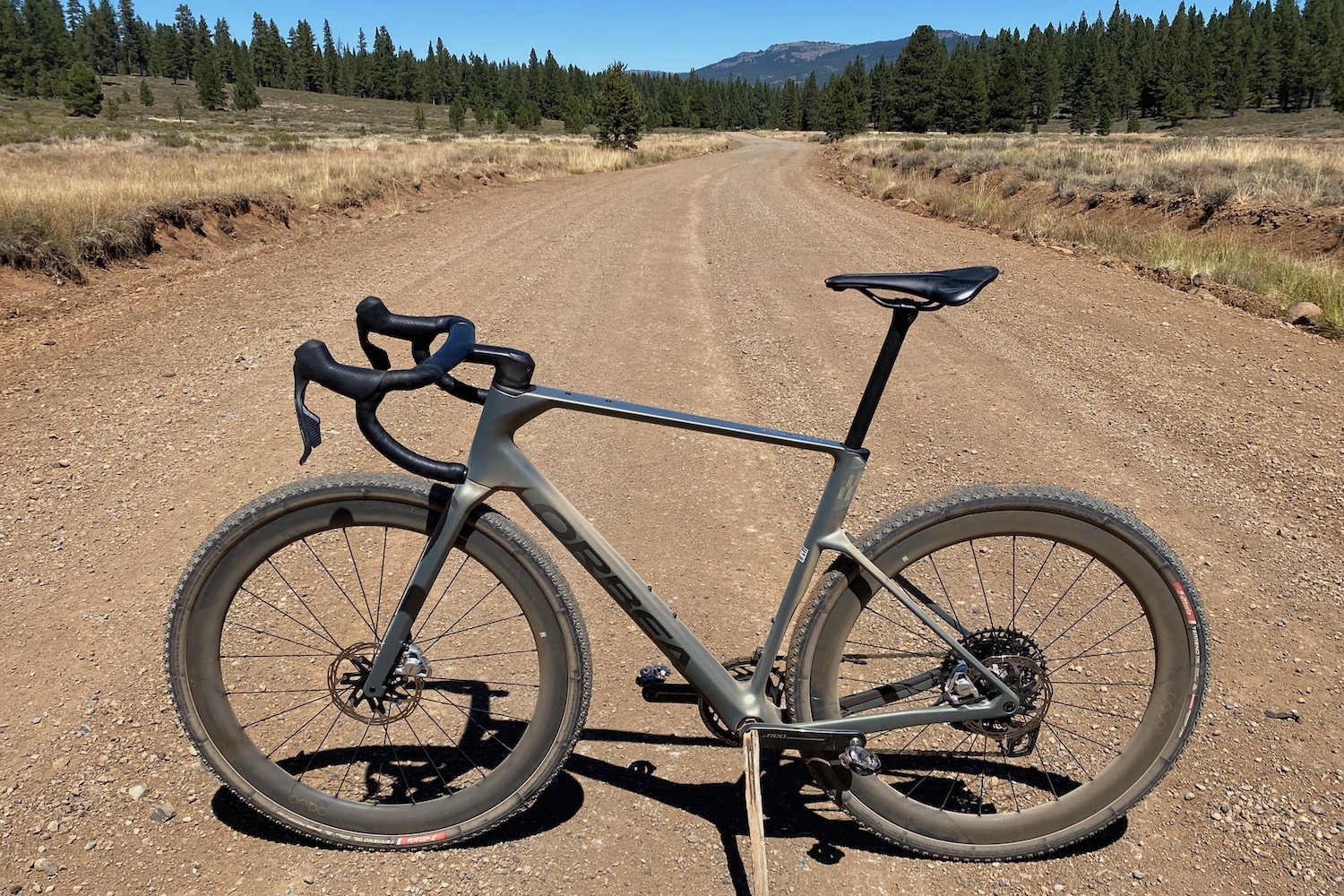
While I recognize the Terra Race’s singular focus on speed and efficiency, I would still prefer it if I could have adjusted the bar height. Yes, the aggressive, race-oriented body position absolutely improved my aerodynamics on the bike, but it was a touch too aggressive for my taste. My legs are disproportionately long, so the low stack and long reach combo had me hinged at the waist a little more than I like. And with the integrated cockpit and no stem spacers, there’s really no way to easily change that up short of getting a completely different integrated bar stem combo.
It’s that same racy geometry that truly pigeon-holes this bike as a training and racing-only machine. Yeah, I know it has the word “Race” in its name, but it’s super clear after riding it that Orbea really means it. That’s not a bad thing, per se, but its versatility is quite limited as a result. It excels on smoother gravel surfaces and tramac, but feels a little out of its element in the properly rough stuff or on skinnier trails. Would I be stoked to have this bike for the 2-3 gravel races I do every year? Absolutely. Would I want another more versatile bike for general gravel riding? Almost definitely. I could see it being an everyday ride for truly dedicated racers, but it would be a quiver bike for me.
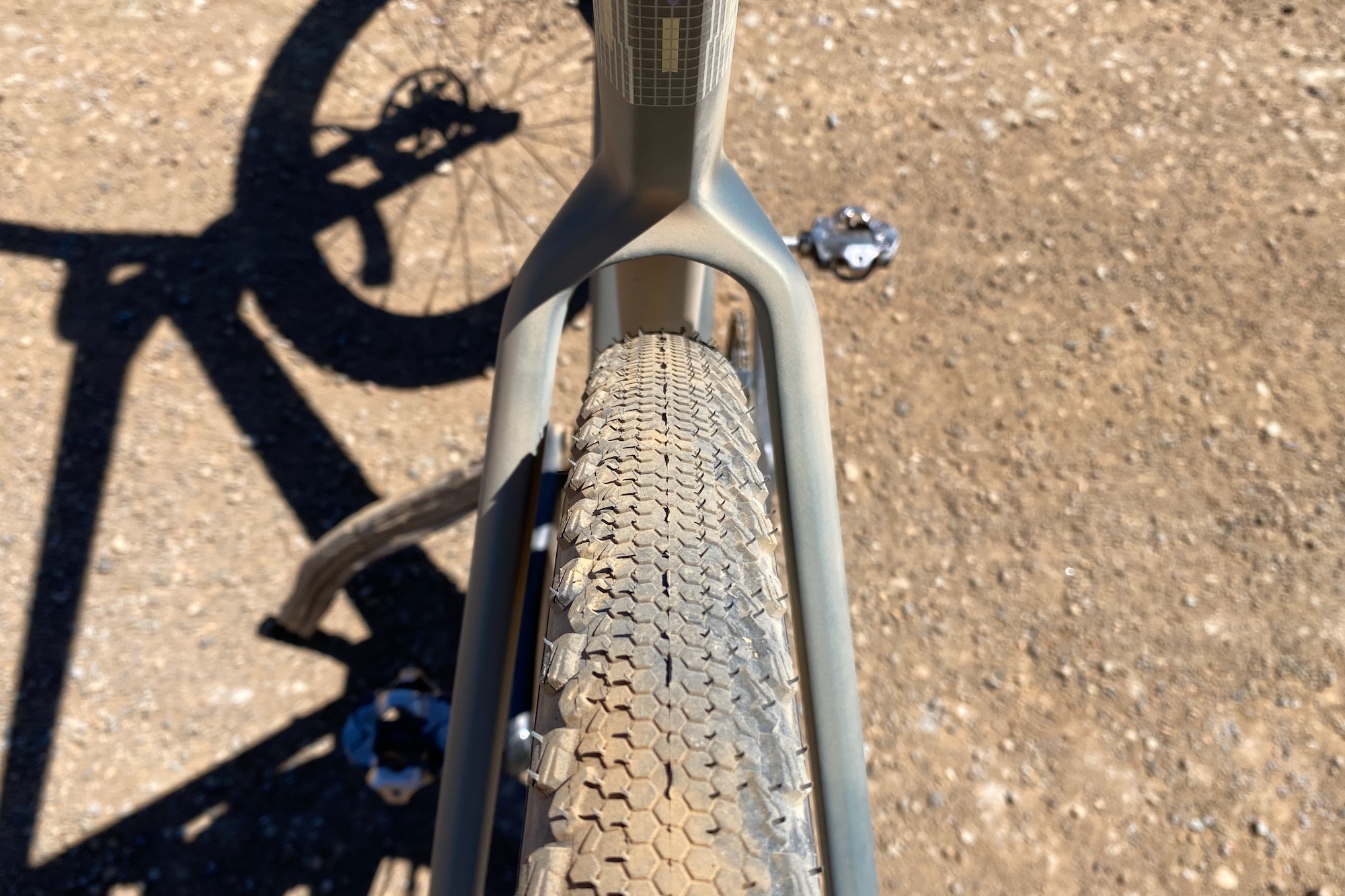
The recent trend toward 50 and 50+ mm wide gravel tires means the Terra Race’s 45 mm clearance was essentially outdated before it was even released. I’m personally pretty okay with 45 mm tires for the vast majority of my gravel rides and especially racing, but that clearance might be a non-starter for many other riders. That said, do we all need to be riding 2.2s on our gravel bikes just because some of the pros are doing it? Maybe, but probably not. I hear they make mountain bikes for that.
Orbea Terra Race: My Takeaway
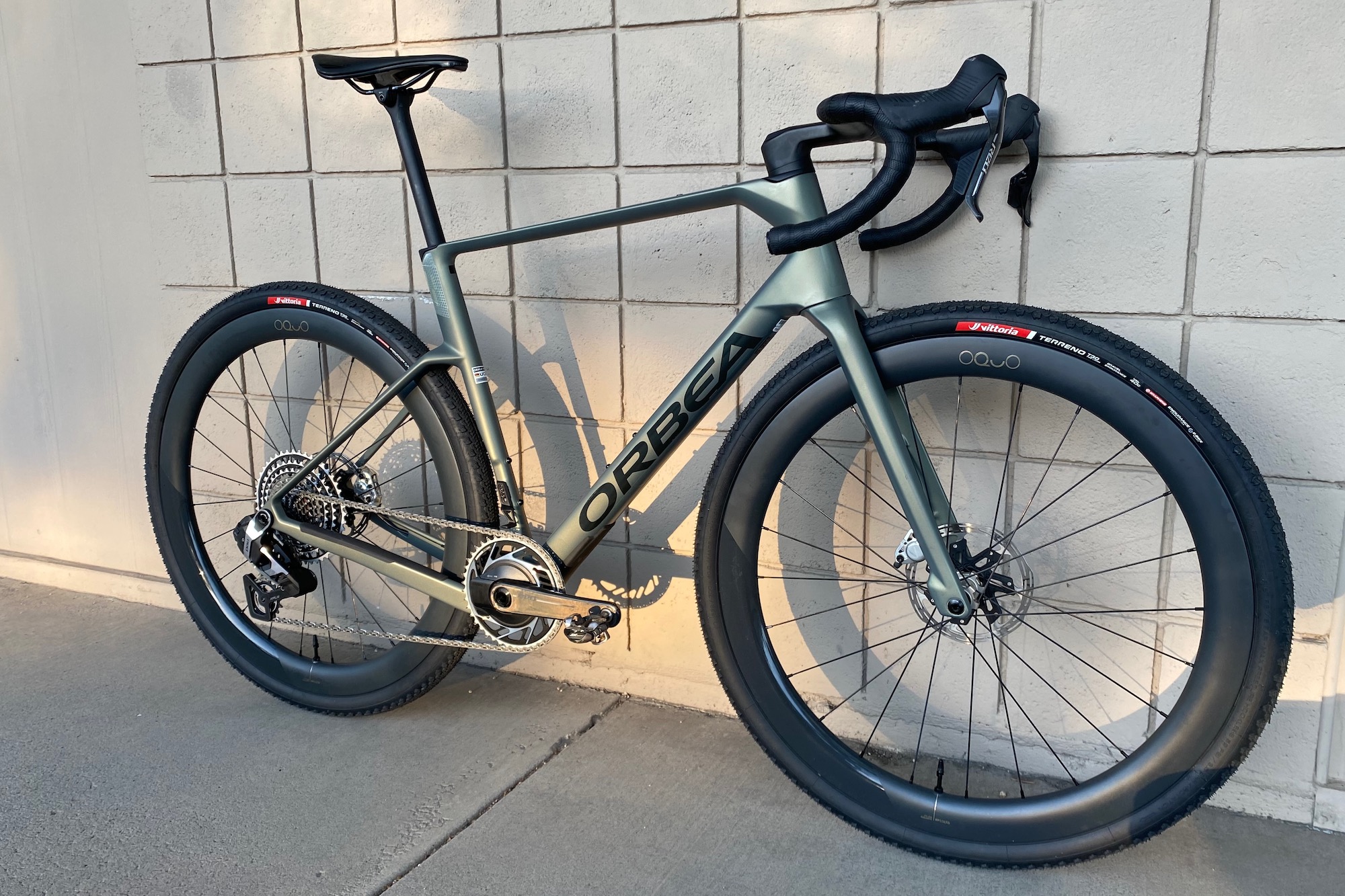
The new Terra Race is an unapologetic speed machine that’s ready to propel you to your best finishes yet. If you’re a dedicated gravel racer, this bike’s light weight, efficiency, and aggressive geometry might help unlock your potential to climb the leaderboard, results sheet, or even the steps on the podium. Assuming you don’t feel the need to run tires wider than 45 mm or expect it to be some sort of versatile, adventure bike, this bike is fast — and fast is fun.
And if you’re not a dedicated gravel racer, then you’ll probably want to look elsewhere — like the regular Orbea Terra. You can check out both the Terra and Terra Race on the brand’s website.


