


It’s been a while, but we’re back with another installment of Shifting Gear. The past few months have been a very busy time for the industry, and all of us on the BikeRumor team have all sorts of new goodies to try out.
I’ve already been testing most of the items listed below; others I’ve just received and am excited to spend some time using. From a 50+ pound full-power eMTB to a 25-pound XC race whippet, bio-based lubes and cleaners, casual sunglasses, knee pads, and more, here’s a selection of the freshest gear to cross my desk or land in my homework workshop.
Pivot Mach 4 SL XX Transmission

I tested Pivot’s latest Mach 4 SL XC race bike for a couple of days back in January. That experience included competing in an actual cross-country race, plus another short ride on South Mountain near the brand’s headquarters. But that test period was literally just two rides, and left me wanting to spend a lot more time aboard this little blue rocketship.
So, when Pivot offered to send me a Mach 4 SL Team XX ($11,999) for long-term testing, I jumped right on it. I’ve had it since early April and have been switching between it and a few other bikes in my current rotation. Over the next couple of months, I plan to really get to know the bike, dial in the cockpit, touchpoints, tires, and suspension to suit my preferences.

So far, I’ve been having a lot of fun riding it. It’s essentially the polar opposite of the 50+ pound, long-travel Levo 4 Evo that I’ve also been riding recently. At 25 pounds, it’s very light, super fast, and has razor-sharp handling. I’ll be tinkering with my setup, and I’m looking forward to putting it to the ultimate test by racing it in the Downieville Classic in early August.
Specialized Turbo Levo 4 EVO Pro
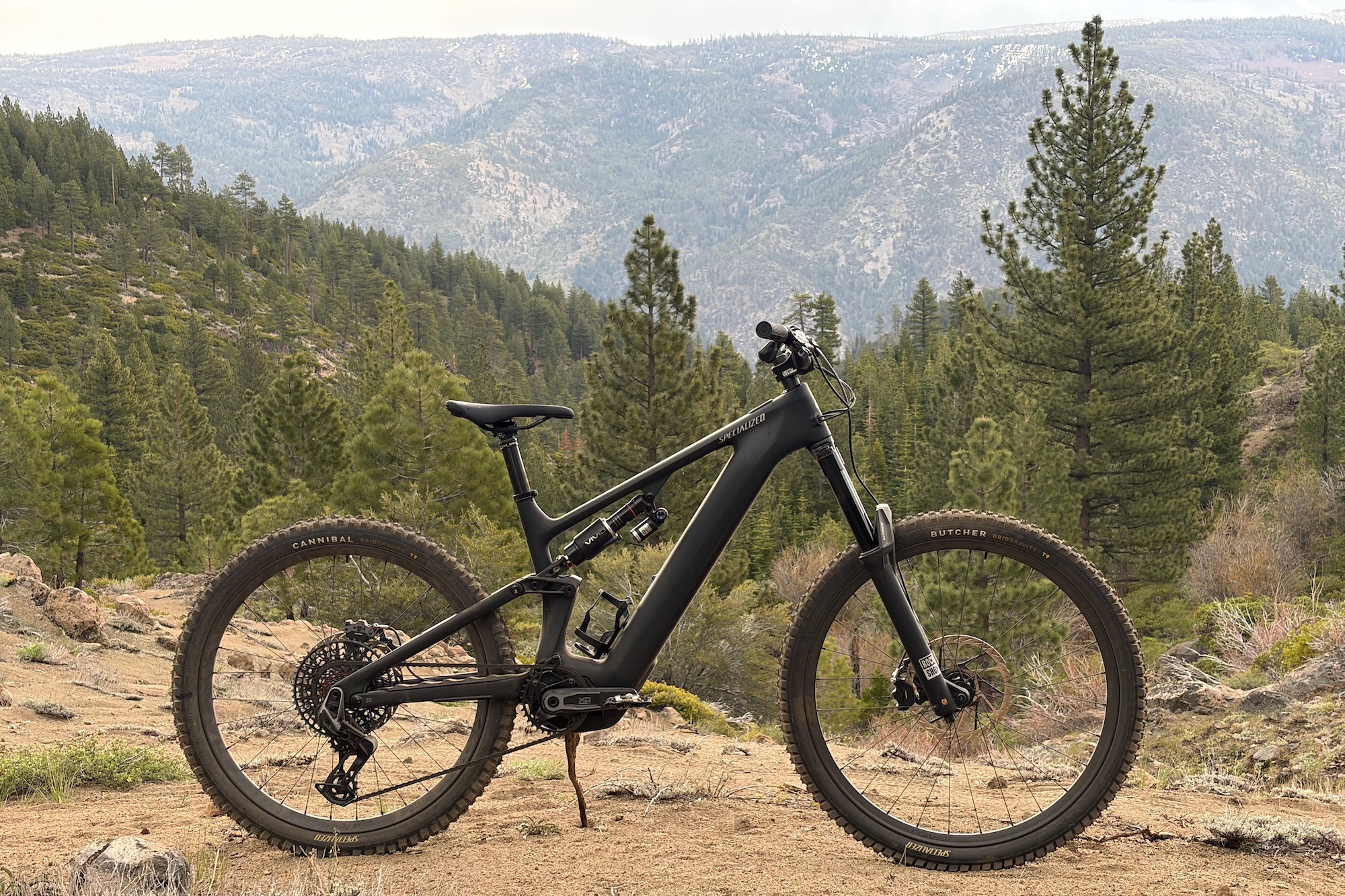
Specialized only announced the long-travel Levo 4 EVO a little over a month ago. It’s built around the same frame, motor, and battery as the standard version, but it’s essentially a completely different bike in terms of travel, geometry, and trail manners. By using a different shock yoke/link, Specialized was able to adjust its kinematics and increase rear wheel travel to 170mm. They also bumped the fork travel to 180mm, turning it into an all-out e-enduro shred machine.
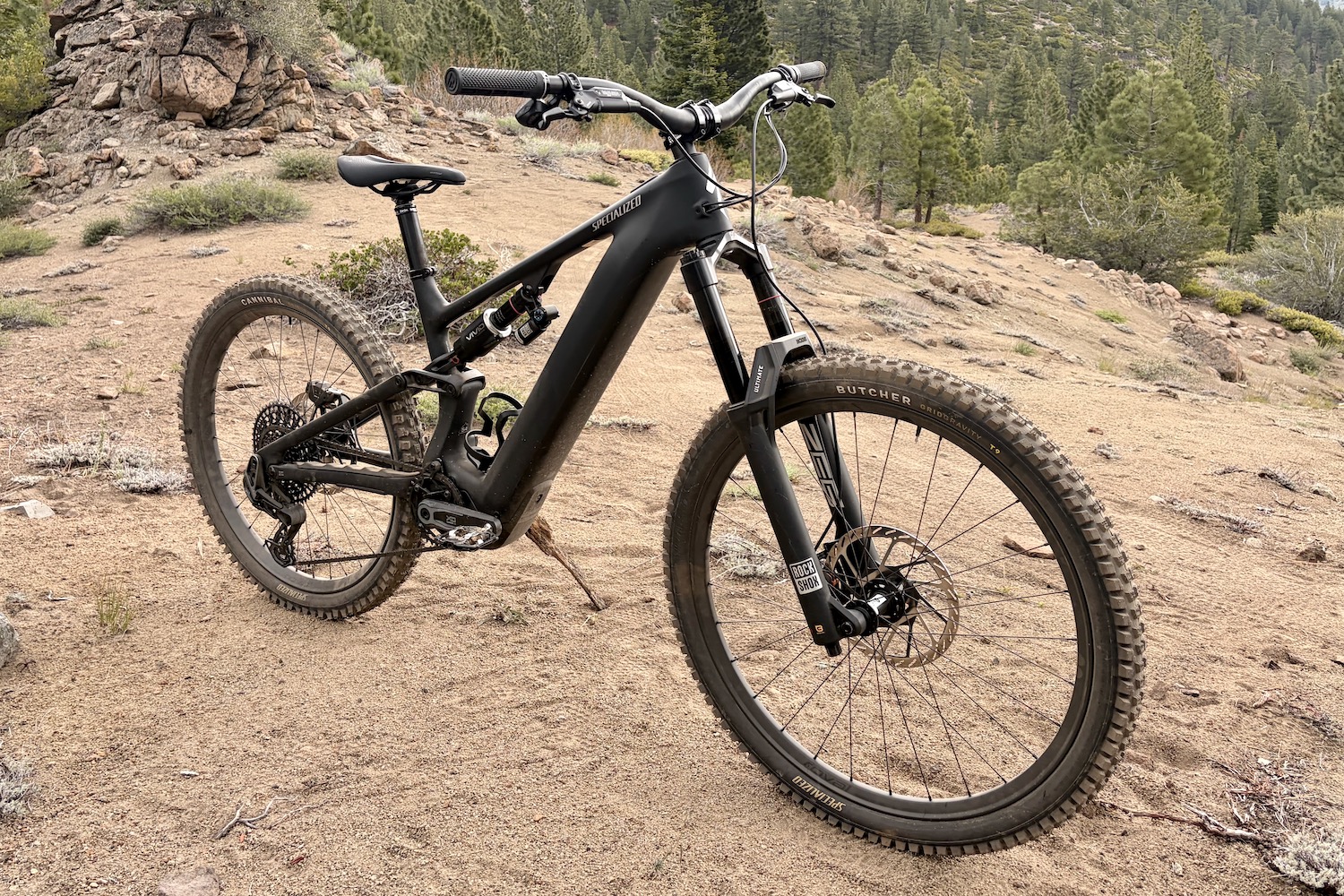
I’ve been riding the Levo 4 EVO Pro ($10,500) for about 3 weeks now, and it’s absolutely outrageous. This bike is heavy, long, and slack, but it’s surprisingly maneuverable, yet so planted and composed that I’ve been having a hard time wrapping my head around it. It’s a tough feeling to describe, but it’s like I can do no wrong on this bike. I’ve been sending it fast and loose on the descents, and the level of confidence this bike gives me definitely borders on unsafe.

And don’t get me started on the Pro build or the Satin Carbon frame color. It’s completely blacked out like Darth Vader, and I think it’s one of the most badass-looking bikes I’ve thrown a leg over in some time. This is also my first time riding the latest RockShox Zeb and Vivid, and wow… The ride is so plush, forgiving, and impressively balanced. It’s particularly impressive how the Zeb is able to maintain ride height while still giving up full travel on big hits.
Gregory Alpaca Utility Tote 50

If you looked in my garage right now, you probably wouldn’t assume that I’m mildly obsessed with finding the best cycling gear organization/transport solution. I’ve already professed my appreciation for my Kitworks MTB Tote and its modular, compartmentalized storage system. It’s seemingly bulletproof, but it’s also very expensive at $289. So, when Gregory asked if I wanted to check out their $120 (currently on sale for $90) Alpaca Utility Tote 50, I was all for it.

The Alpaca Utility Tote 50 has a 50-liter storage capacity in its large open compartment (there’s a 35-liter version as well). There’s a large zippered pocket on one of the inside walls, two internal bottle sleeves to keep them upright, and a large zippered pocket on the outside of the bag, too. I also appreciate that it has a semi-rigid bottom and enough structure that it stays open when loading/unloading, and stands upright in my backseat or truck bed.


It’s a simple but effective storage system, and it easily swallows up all of my riding gear — or a mid-sized housecat. It lacks the modularity of the Kitworks, but its beauty is in its simplicity. It has longer fabric handles as well as rigid ones for carrying different loads. It strikes me as a versatile piece of gear that’s just as effective for transporting my riding gear as it will be for camping or heading to the beach.
Specialized Trail Control Tires

The Trail Control Tires are a new addition to the Specialized MTB tire lineup. The tread that looks like a cross between the lower-profile Ground Control and the chunkier Butcher. With a moderately aggressive tread and medium-height knobs, they are recommended for aggressive XC, trail, and eMTB use. The Trail Control tires come in three versions with Grid Trail ($80) or Grid Lite ($75) casings with the slightly firmer T7 or grippier T9 rubber compounds.

Specialized Trail Control: Sizes and Claimed weights
- Trail Control Grid Trail T7: 27.5” x 2.4” (880g) or 29” x 2.4” (930g)
- Trail Control Grid Lite T7: 27.5” x 2.4” (840g) or 29” x 2.4” (860g)
- Trail Control Grid Lite T9: 29” x 2.4” (860g)
I went for the slightly tougher casing and longer-lasting rubber of the Trail Control Grid Trail T7 for the rear. I’m pairing that with the slightly grippier rubber and lighter casing of the Grid Lite T9 in front. I mounted these up on the Mach 4 SL to add a little grip and durability compared to the stock XC tires.
At a measured weight of 975 grams, the Grid Trail T7 is 45 grams higher than claimed. The Grid Lite T9 tire I received was well over 100 grams heavier than Specialized’s claimed weight. After discussing it with folks at Specialized, it seems something is amiss, and it is currently being swapped out for another test tire.

I’ve got a couple of rides on them already, and my first impression is that they provide a ton more cornering and braking traction than the Maxxis Rekon/Rekon Race combo they replaced. They’re a little heavier and feel slightly slower rolling on pavement/hardpack, which seems like a fair trade-off for the increased control and confidence they provide, comparatively. Once I get the new T9 test tire, I’m going to run these into the ground, and I’ll report back with a full review in due time.
POC VPD Max Knee Pads


POC launched its latest knee pads, the VPD Max ($170), earlier this year. These add to a growing selection of knee protection offered by the Swedish brand. They provide EN-certified Level 2 knee protection, with a dual-layer VPD (Visco-Elastic Polymer Dough) protector providing a generous amount of knee coverage. These layers are separate, which reportedly allows a little slippage between layers, intended to help maintain the proper position on the knee.
The protector is in a soft Lycra sleeve, with a tougher, more abrasion-resistant face fabric over the front. It is not removable, however, but the pads are easily washed with it in there as long as you don’t put them through the dryer. The VPD Max has a long upper sleeve, especially compared to some of POC’s other pads, which are notoriously short. The broad elastic upper cuff and the rear of the lower cuff have plenty of silicone dot print to keep them in place on the leg.


I’ve got a handful of rides in the VPD Max knee pads so far. The medium fits me well, and they haven’t budged on me once while riding. The dual-layer VPD protector is a bit bulkier than most of the other pads I’ve worn recently, but they still fit fine under all of my riding pants and feel VERY substantial and protective. I also appreciate the longer upper cuff, which prevents pad gap with all of my shorts. Like all pads, they are a bit warm on the knees, but I’ve pedaled in them for hours without irritation. My test pair weighs 504 grams, slightly higher than claimed, but still pretty light for how protective they feel.
Patagonia Trail Craft Vest


Mountain biking and vests aren’t the most popular combination, but Patagonia is trying to change that. I’ve had the Patagonia Trail Craft Vest ($119) since the early winter, but it didn’t really get much use until this spring. This lightweight wind vest is super packable and weighs just 112 grams (size L). It’s made from a wind-blocking 100% recycled ripstop with a DWR to fend off light moisture. It has a full front zip and a drop-tail hem, along with 2 zippered hand pockets and a zippered pocket on the lower back. It also stuffs into its own pocket for storage.
Not only is this vest super-light, but it packs down to nearly nothing. I fold mine flat and stash it in my hydration vest, and it’s like it isn’t even there until I, or one of my friends (ahem), need it. It has been an excellent backup layer for me all spring, mostly just staying in my pack, and occasionally coming out on some cooler evenings. It takes the edge off of chilly breezes post-sunset when I pedal back from the local trails to my house.


Fit-wise, I’ve got a large, and it fits me pretty well at 6’0” and 170 lbs. I’m willing to bet a medium would fit as well, just a little slimmer and shorter in length. It comes in black, blue sage, and marlow brown (the rust color I’ve got is from last year) in sizes XS to 3XL.
Stan’s Bio-Based Lubes and Cleaners

Did you know Stan’s makes a full line of Biobased bicycle care products? I didn’t realize it until I saw the whole lineup on display at Sea Otter this year. I must’ve missed the announcement because Stan’s Biobased products have been on the market since September 2024. It’s a well-developed range of products, all of which were developed “in leading-edge materials-science laboratories and on the legendary trails of British Columbia by Whistler Performance Labs (WPL).”
The Stan’s Biobased lineup includes wet and dry chain lubes, bike wash, grease, drivetrain degreaser, suspension oil, and ForkBoost — a suspension-enhancing lubricant. All of the products have earned USDA Biobased certifications for eco-friendliness, are biodegradable, and most specify they are non-toxic and PTFE-free (if applicable). Additionally, all of the products are made in Canada, and the chain lubes and ForkBoost are packaged in bottles made from 100% recycled sea plastic.
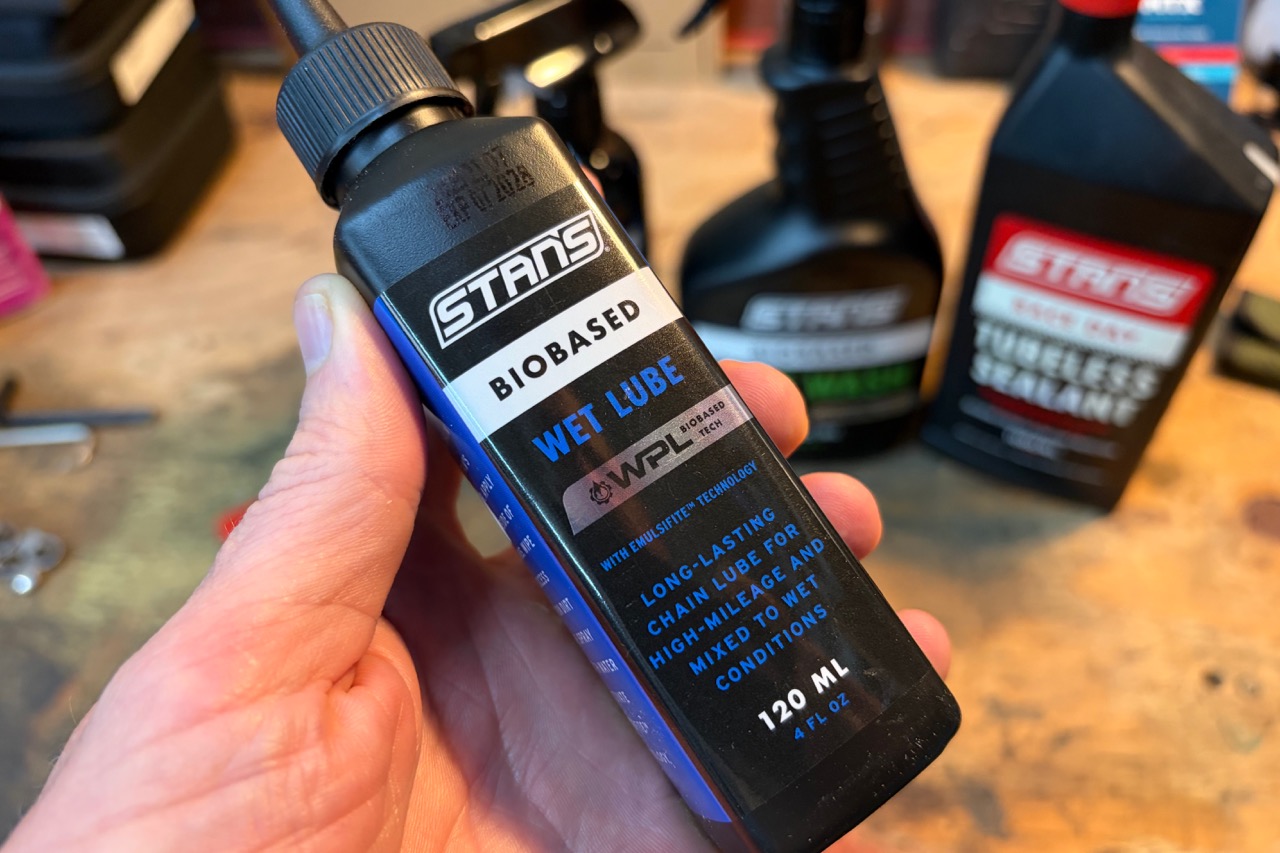
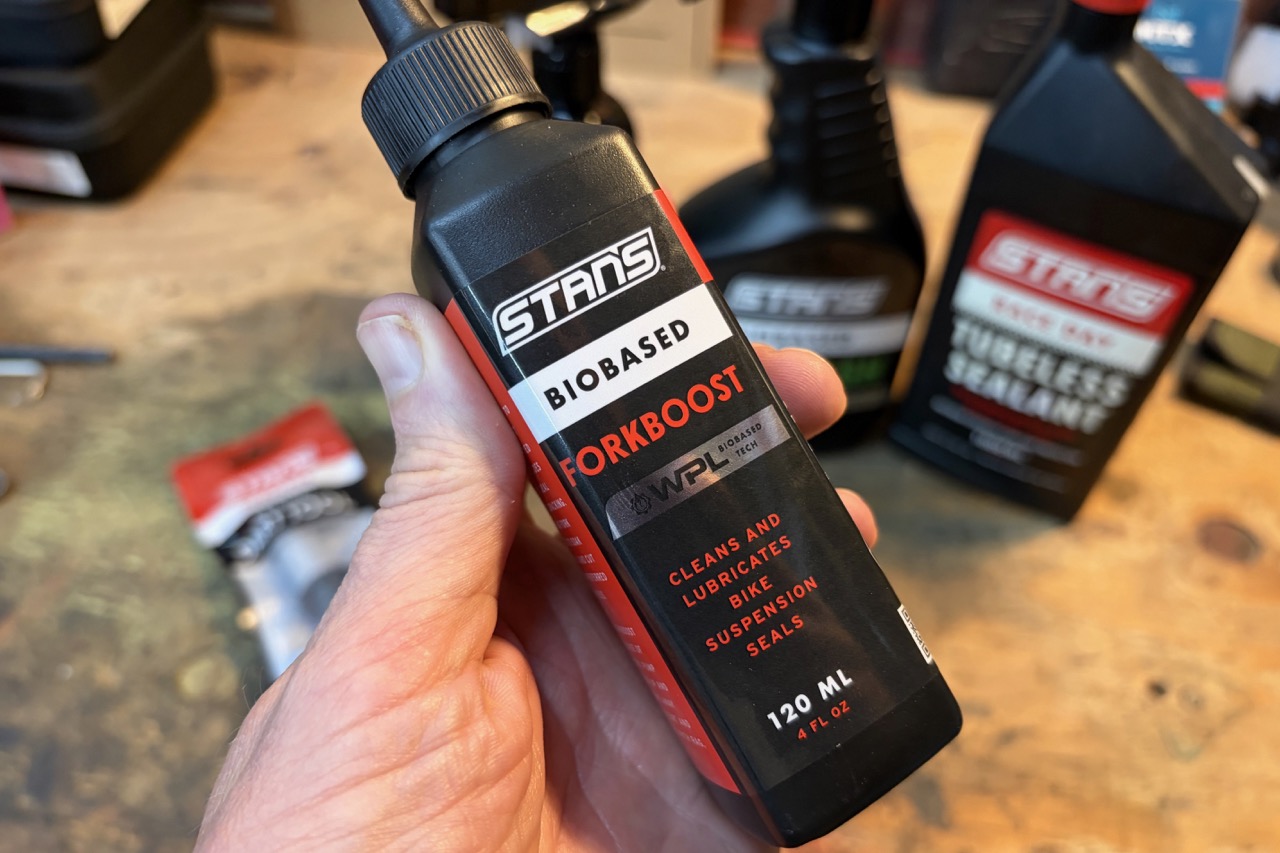
I recently got my hands on several of the products in the Stan’s Biobased lineup. The only one that I’ve used so far is the ForkBoost, which I applied to the fork and seatpost on my wife’s trail bike. Both are overdue for service and not as smooth or plush as they could be, and I was shocked by how well it worked. Stan’s claims ForkBoost ($13) lengthens the lifetime of dust seals, eliminates stiction, and removes dirt. It’s a band-aid solution, of course, but I was thoroughly impressed by the difference it made.
I’ll be putting the rest of the Biobased products to good use, and I’ll follow up with a more thorough review in a few months. Check it out at stans.com.
Smith Truss Sunglasses
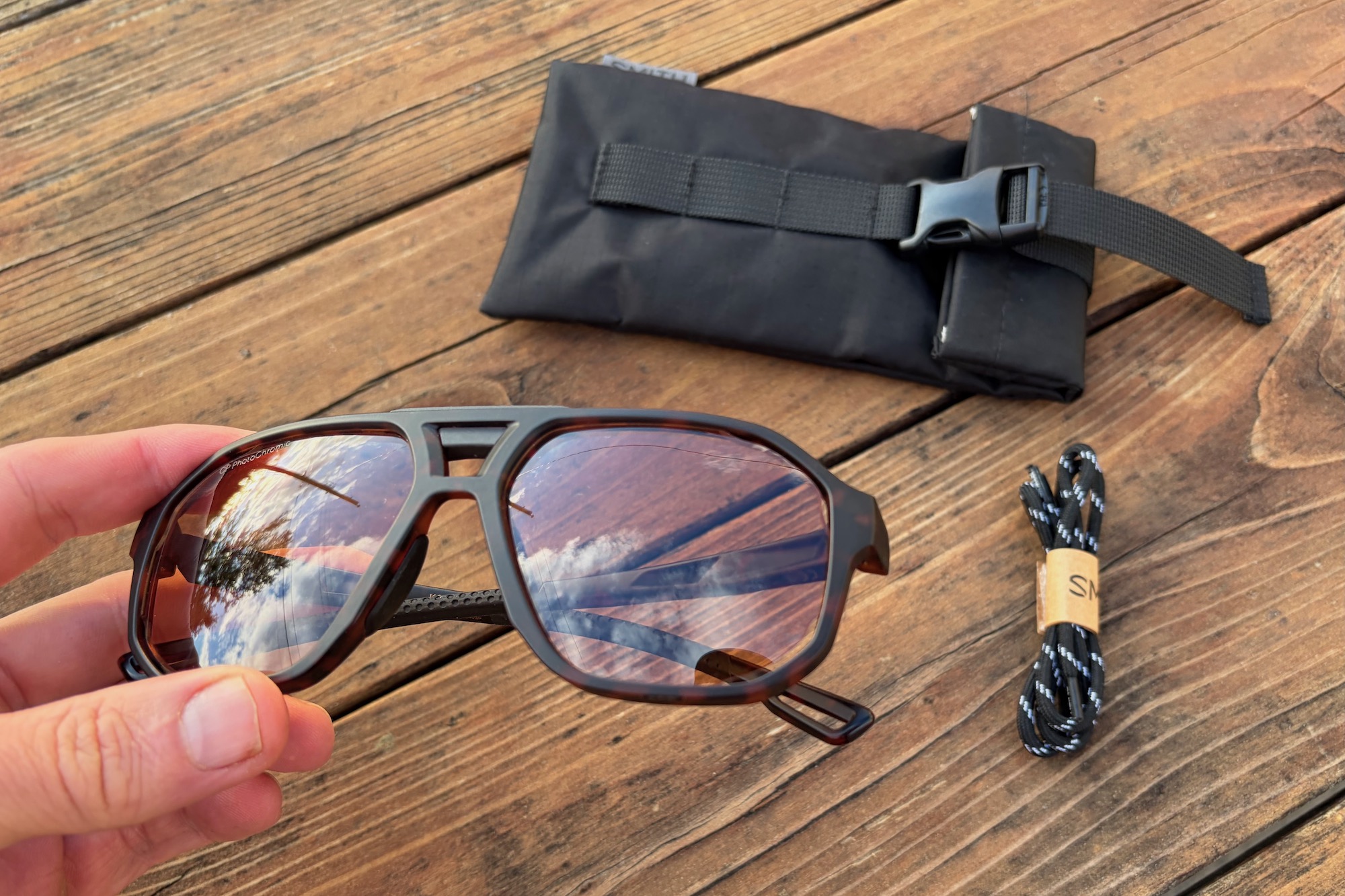
Okay, so Smith’s new Truss sunglasses are technically listed in the brand’s “lifestyle” collection, but I think they’re awesome enough to include here. They’ve got a classic shape and a retro-modern aesthetic. This style of sunglasses is definitely trendy these days, but I’m finding they deliver more than just style points. I’m especially digging the Chromapop Photochromic Brown lens that adapts to changing light conditions but always tints the world in a warm hue.


I’ve run some errands on the bike while wearing them, but I’ll likely stick to my larger coverage cycling sunglasses for most proper bike rides. Still, I went for a 10-mile trail run wearing these a couple weekends ago, and they were great. The large lenses blocked the wind effectively at slower running speeds, they didn’t budge at all on my face, and the photochromic lenses were always the right tint.
The Smith Truss sunglasses come with a soft, roll-top clip-on storage bag with a soft lens wipe inside and an optional retention cord. They come in five frame color and lens combinations, ranging in price from $197 to $237.

