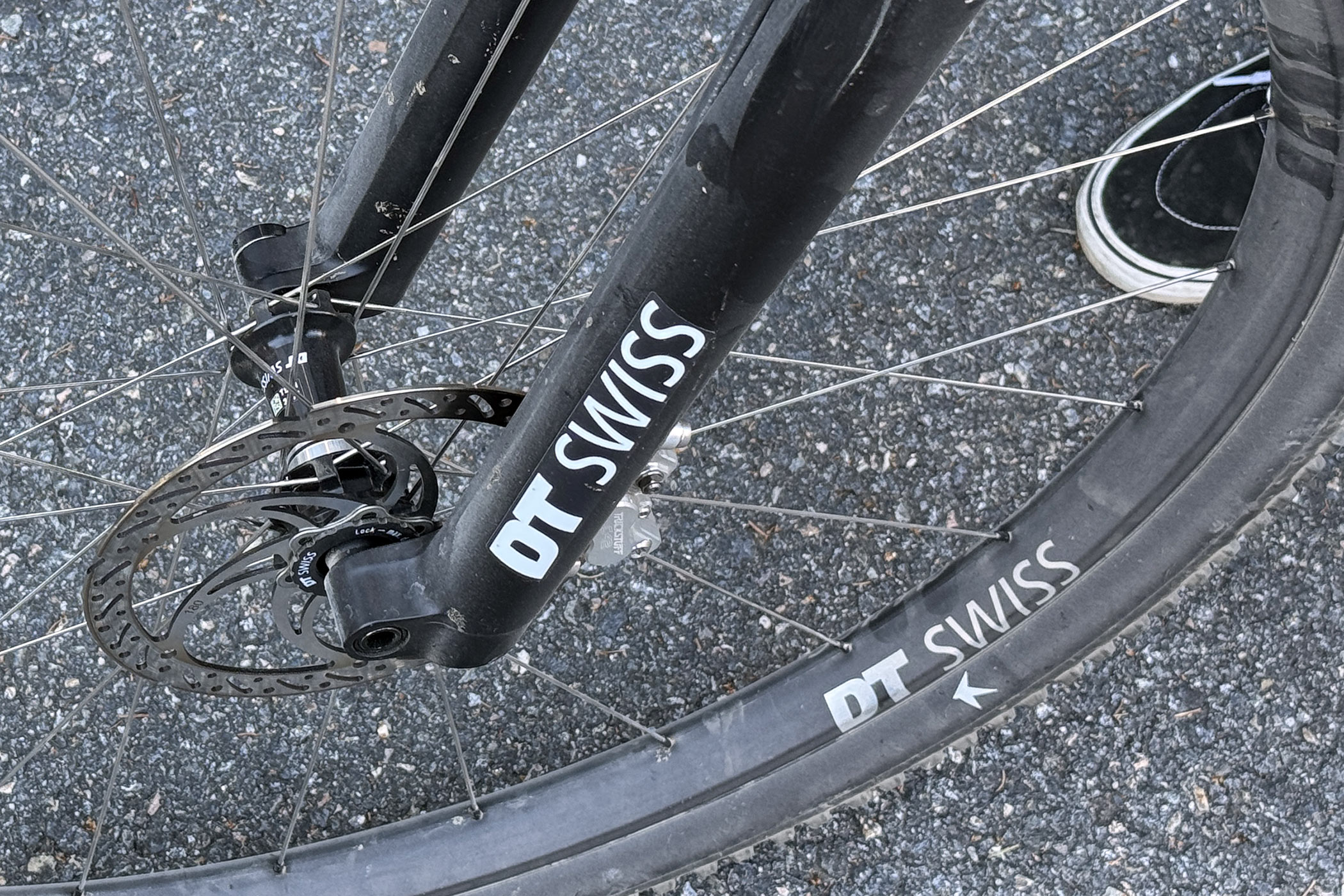


When I rolled into Nové Město na Moravě last week ahead of the XC World Cup, I expected to see several mountain bike pros racing, or at least training on, prototype 32″ cross-country bikes.
What I didn’t expect was that the only 32″ wheels I would spot over the weekend would be on a gravel bike and a trail bike (besides the mullet trail bike I brought to play with… more on that soon.)
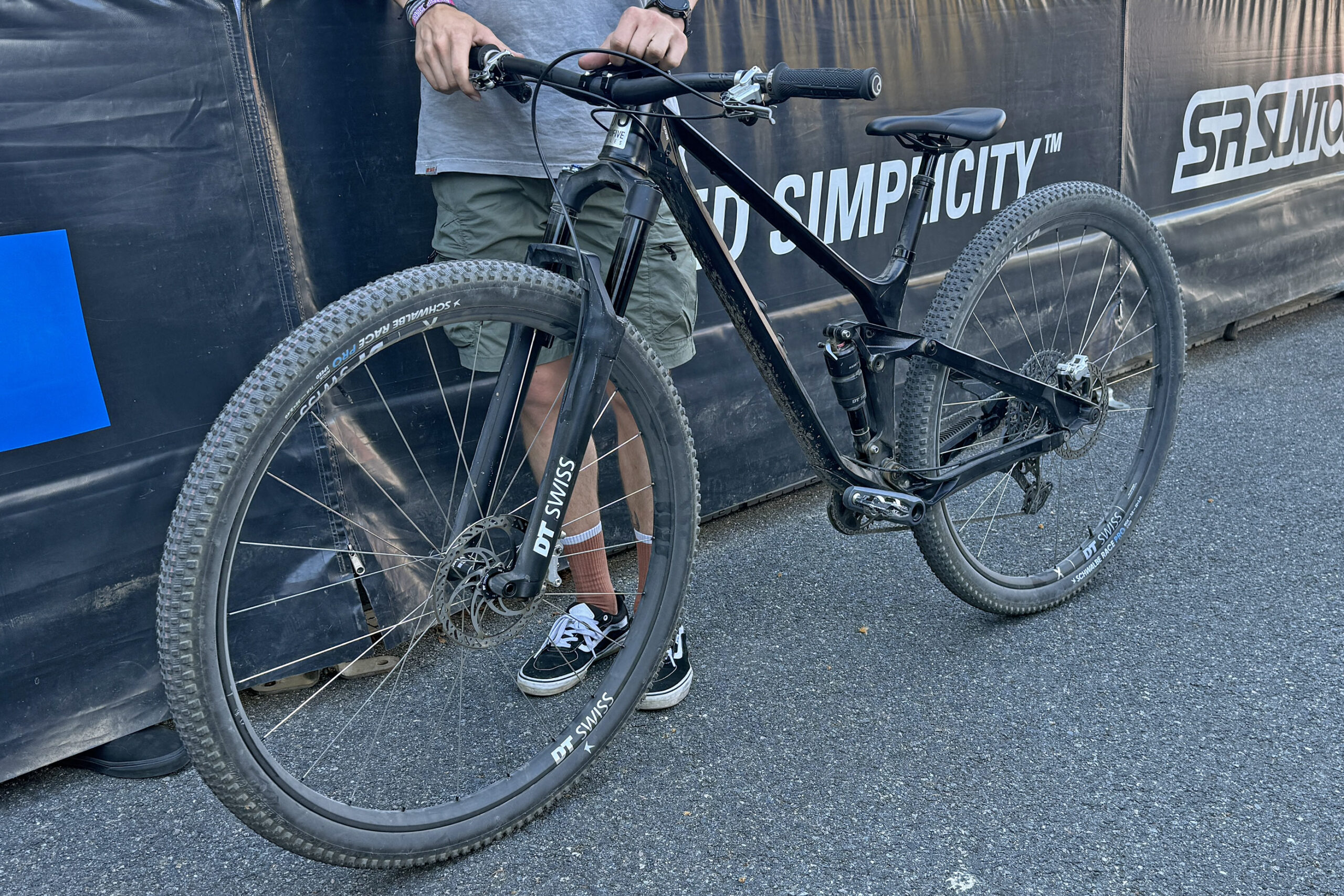
And it was DT Swiss – who just a couple of months ago assured us that they were taking 32″ things slowly – that would be behind both of extra-big-wheeled gravel and trail setups…
32″ DT Swiss XR 1700 Spline aluminum cross-country wheels
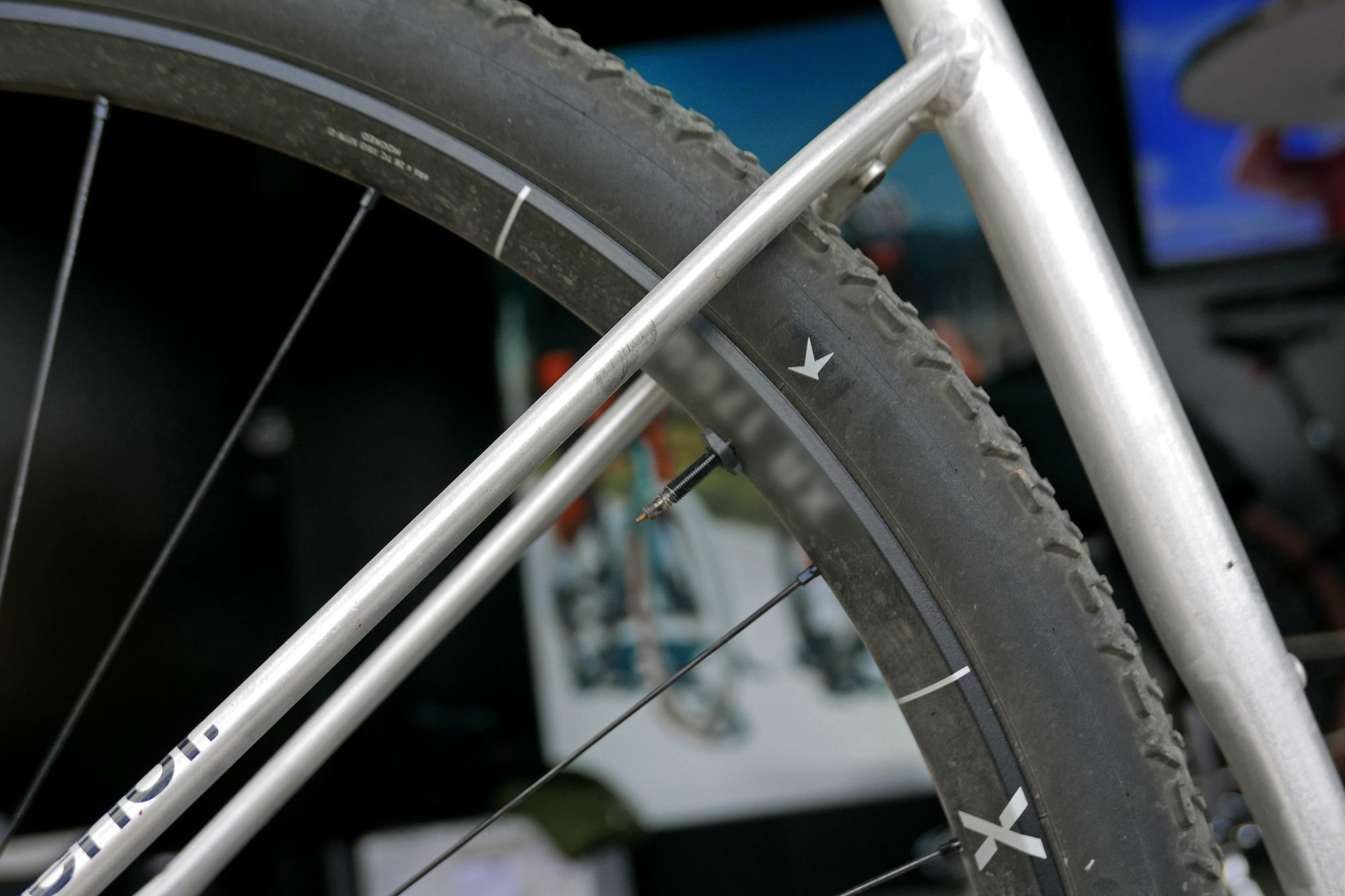
First up, a set of pre-production aluminum cross-country wheels on a gravel bike, but this time with an actual product name. We’ve seen a lot of smaller wheel makers debut 32″ wheels and 32″ prototypes. And even some DT prototypes that were just marked as ‘DT Swiss’ on the rims. But never a model name.
So marking these as XR 1700 Spline wheels is a pretty big milestone for one of the biggest wheel makers out there, and a behemoth in the OEM wheel market.
Interestingly, XR classifies these as a mid-tier wheelset for DT Swiss, and their highest spec level with an aluminum rim. (X 1900 would be their entry-level alloy, and from XRC 1700 and up they’re all on carbon rims.)
Caveat emptor
*Editor’s note: Now, you may be asking yourself if your eyes are going blurry from staring at your screen too long, because you can’t definitely read the model name on these prototype wheels anymore? Don’t worry, you are not going blind from too much Bikerumor browsing, today. Yes, the logos did get blurrier.
Because unofficially, DT has since confirmed that the naming of these wheels may not be accurate. Even though these labels align with DT’s product naming strategy, these are prototype wheels, very much still in development. It seems they were probably sent with labels to Superior, both to test their bike and to mock-up what Superior’s gravel prototype would look like when it goes into production in 2027. We’ve been assured that the wheel naming and precise specification are still subject to change before 32″ DT wheels eventually make it to market. Maybe there will be an XR 1700 Spline wheelset like this in the future, maybe not.
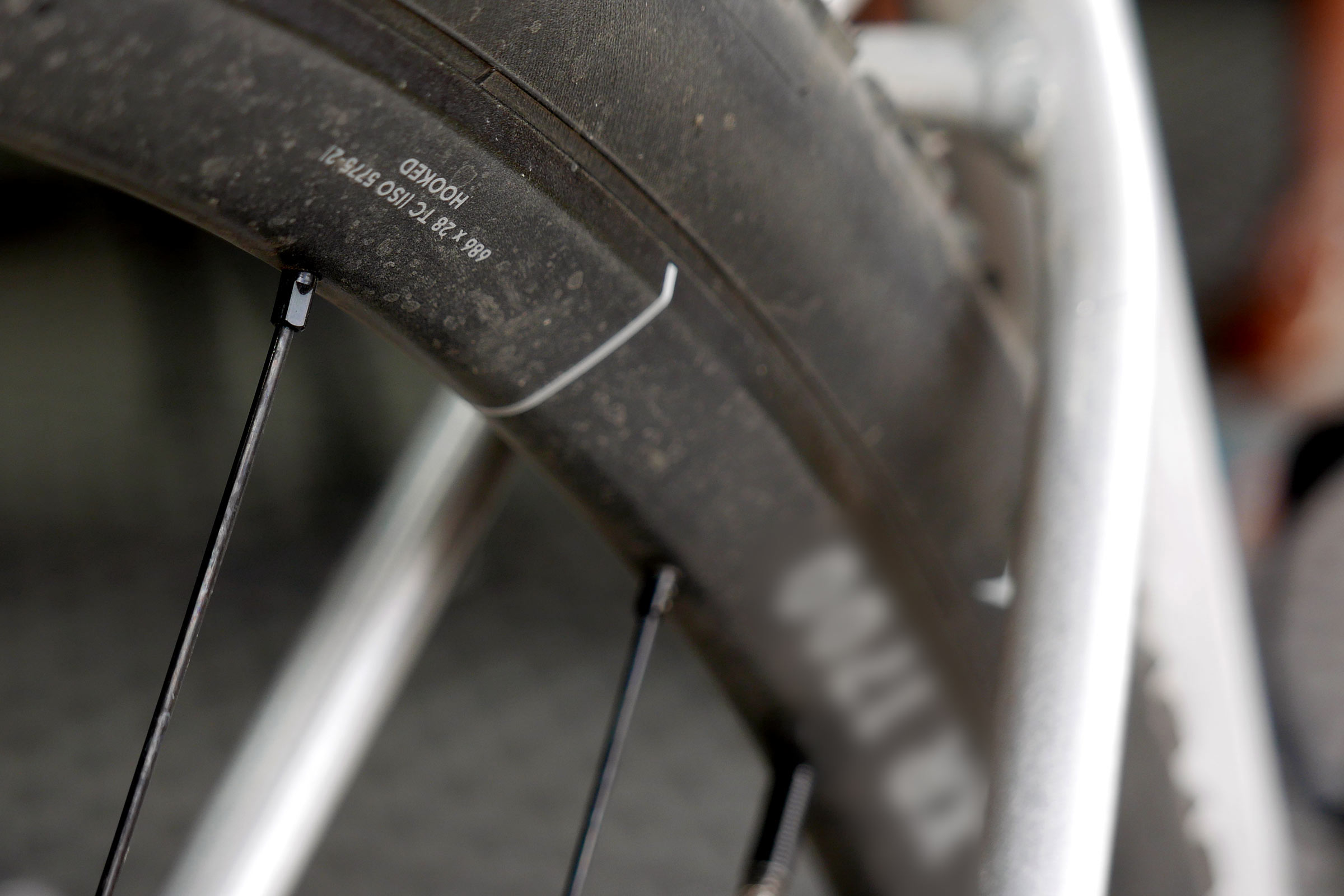
A closer look at the production-labeled aluminum rim, and we get quite a bit more useful information.
The 686 bead seat diameter confirms that these XR 1700 wheels are 32″ – as it we couldn’t tell how giant they were. They are 28mm internal. And the feature Tubeless Crotchet rim bead, aka, hooked and tubeless-ready – like all DT alloy rims.
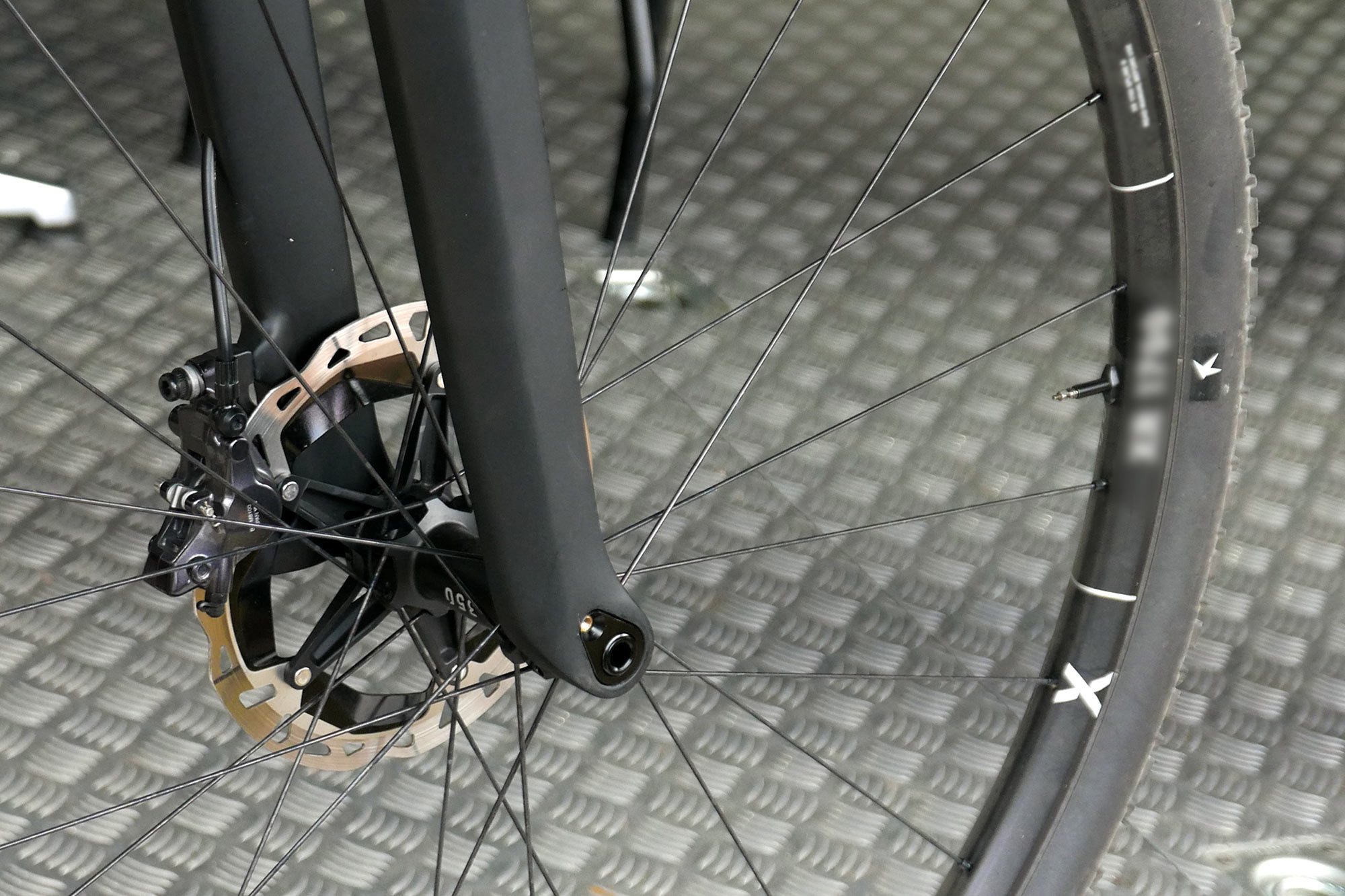
Take a look at the hubs and we see that they are built up with 350-series straight-pull centerlock disc brake hubs. Plus, there’s a small text note next to the XR 1700 marking on the rim, confirming the obvious that these 32″ wheels are named ‘XR 1700 Spline’.
32″ XC wheels, but on a gravel bike
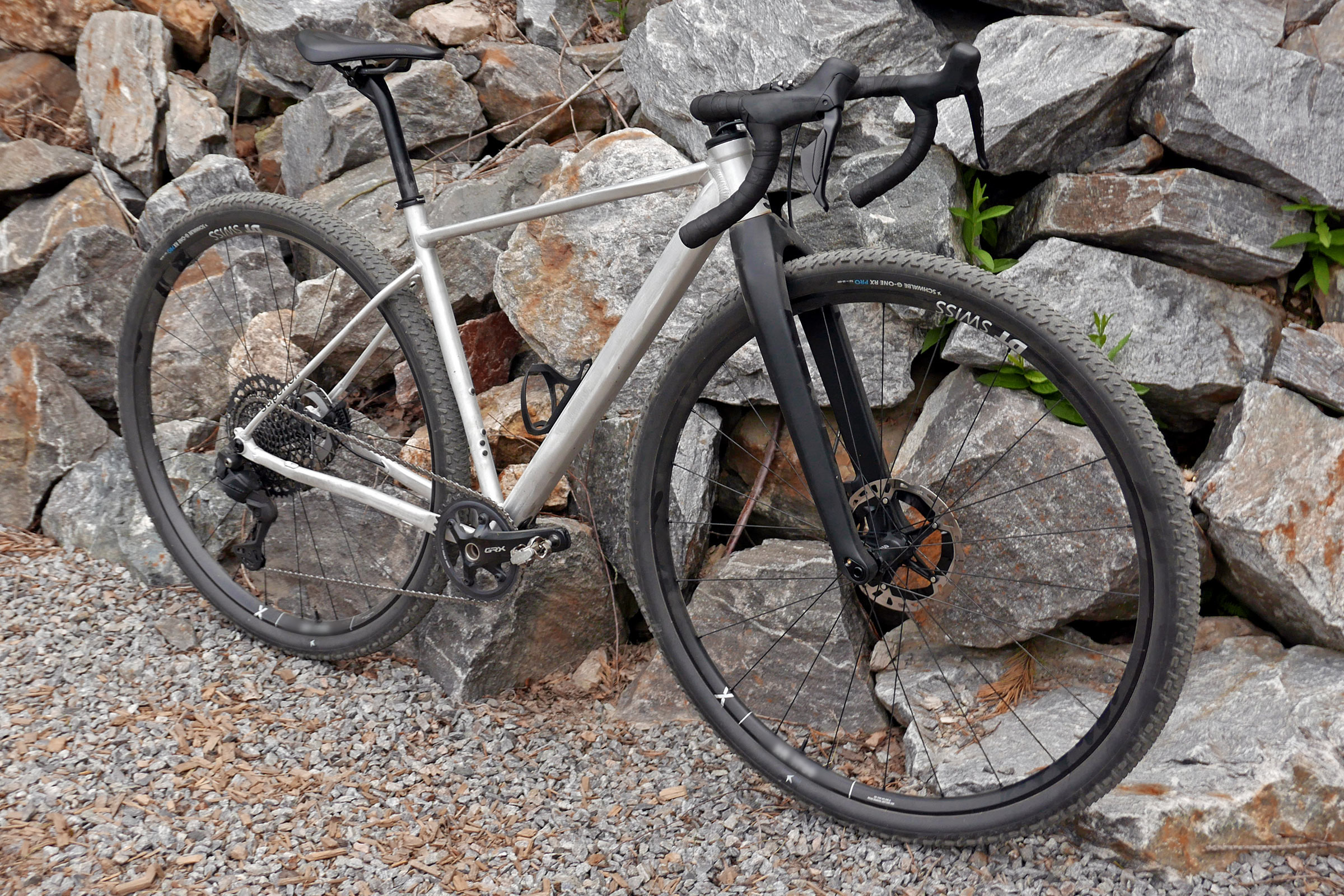
So, production-level 32″ DT Swiss XR 1700 Spline cross-country mountain bike wheels on a… gravel bike.
I guess that supports the Boost MTB standard idea for all 32″ bikes at the moment – excluding Dirty Sixer’s adamant insistence that bigger, heavier riders will need something significantly stronger than current Boost hubs.
The gravel bike fitted with these new wheels is a prototype 32″ Superior XR GR, a model the Czech bike maker say they expect to make available to consumers from the start of 2027. We’ve only really covered their latest carbon XR GR. But the entry-level of that gravel bike already includes an aluminum-framed version that looks pretty much just like this bike with conventional 700c wheels.
All-new prototype DT Swiss 32″ XC/Trail suspension fork
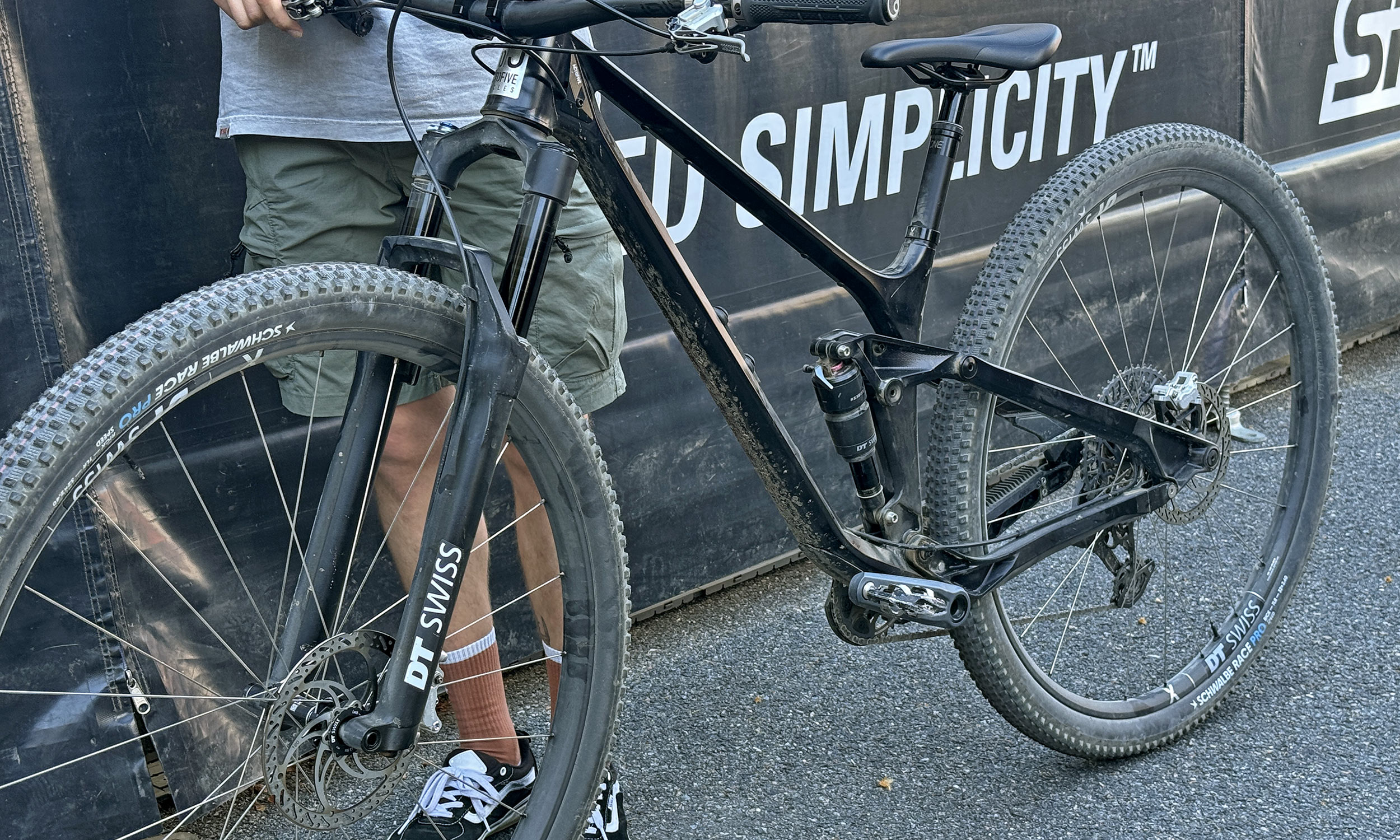
Then, across the race venue, we spied what looks like a mid-travel prototype DT Swiss fork on one of the CNC’d I-Train 32 trail bikes that Actofive built for DT as test mules at the end of last year. The prototype fork looks to include features adapted from both of DT’s current top-tier ONE-level forks – in an all-new fork design with slimmer dropouts than we’ve seen on a production DT fork in years.
What’s new in the fork department?

There’s the more angular but smooth fork brace and some reinforcing edges extending down the front of the legs of the casting, akin to the F535 One.
But the reinforcing ridges in the crown shaping are thinner. And there appears to already be some weight-saving, machined-out sections on the lowers, like seen on the F232 One fork.
Clearly, though, it’s all-new. DT likely could have developed a prototype for testing that shared the same crown of those existing forks. But this appears to be a ground-up redesign. Although it does appear that this might have borrowed the same ‘In Control’ 3-position lockout and external compression damping knob from the F535, hinting that it could share the same or similar PlusPort damper inside the right leg.
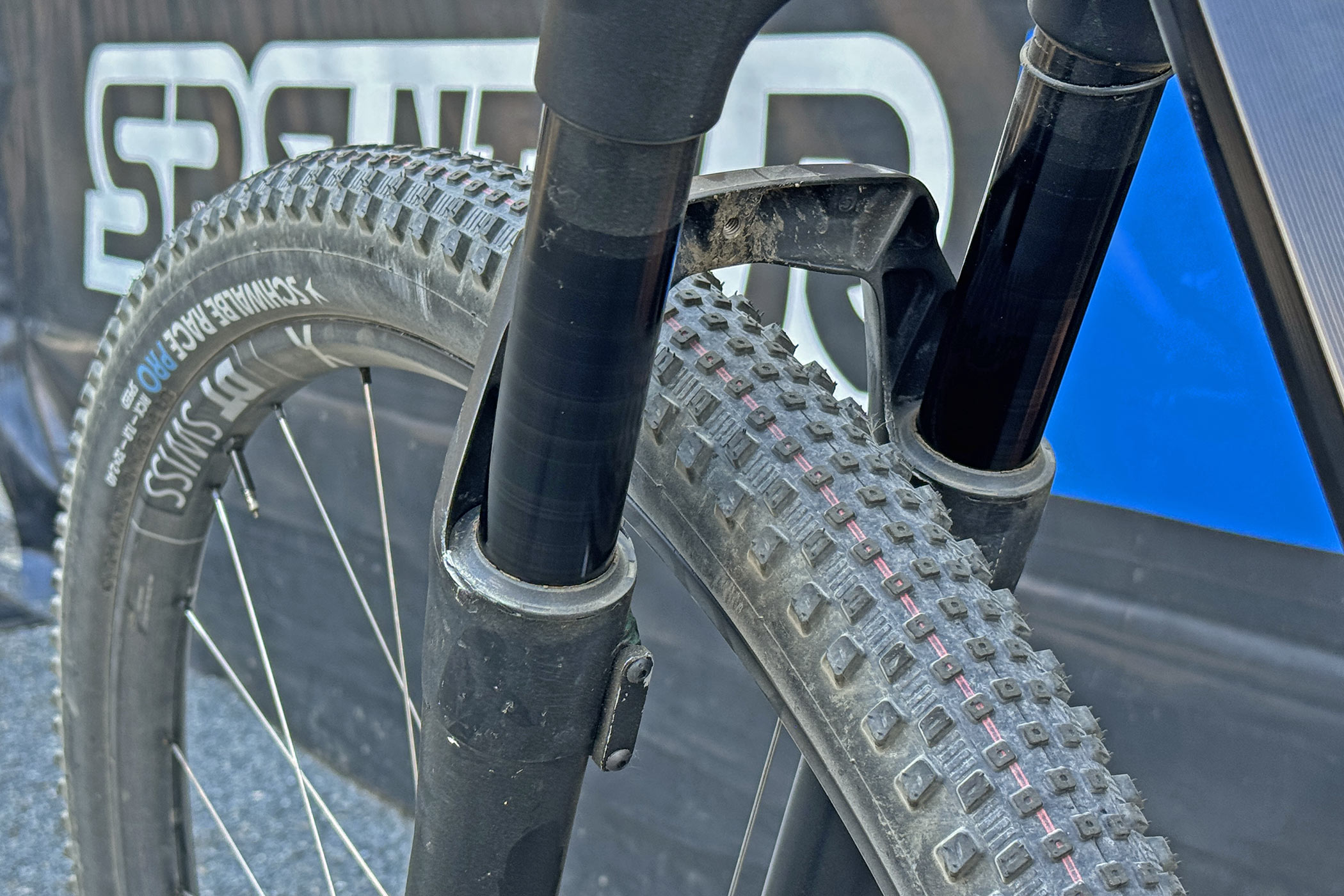
Behind the back of the arch, it’s more of a mystery.
There are the traditional carved out stiffening webs in the cast arch, with a single set of threads, presumably for a bolt-on fender that wasn’t installed. There are also 2-bolt brackets on the upper inside of the legs. These could easily be used to mount the fender as well. But the design looks more complex, perhaps hiding some other functionality like bleed ports for the lowers?
DT’s main fork seals also always look strangely low profile, pressed deep into the lowers, with no visible retention spring. These look even lower profile than most of their wipers, but that’s nothing entirely new for them.
So, what do we know?

As for any real concrete details, DT Swiss wasn’t sharing anything at the moment, other than the fact that this is very much “still a prototype fork in development”.
What we can probably sus out from seeing it in person, though – it looks like it probably features 34mm or 35mm stanchions. And based on how high it sits, this looks like120-130mm of fork travel. That fits with the frame itself, which features 120mm of adjustable rear wheel travel. Actofive did design the I-Train 32 for 120-140mm travel forks, and describes it not as an XC bike, but as a Trail bike due to the enhanced rollover capabilities that come with the larger diameter wheels and their larger tire air volume.
Now we just have to be patient as 32″ development soldiers on, and most likely these core components will be available later in the year.

