

The holidays are behind us, the year is coming to a close, and it’s almost time to get started on those resolutions. But before we resign ourselves to training plans and turbo trainers, let’s take a moment to look back on the highlights of the year. The following (in no particular order) are our choices for the 2025 BikeRumor Gear of the Year awards – products, trends, and bike tech that we feel had an outsized impact on the world of bikes, as voted by all of our staff here at BikeRumor.
Shimano Wireless Di2 for MTB with XTR, XT, Deore (and even GRX)
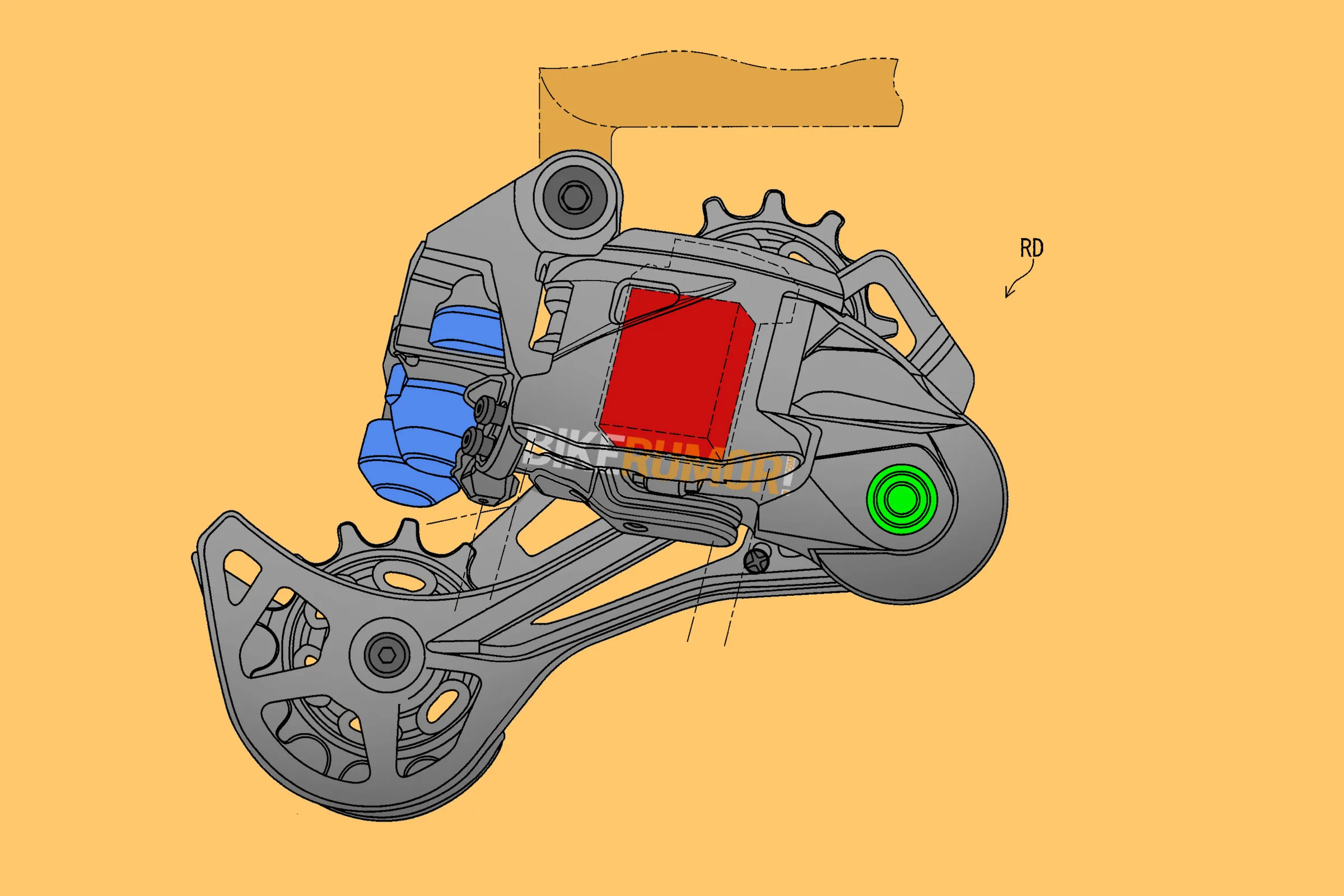
SRAM’s journey to the top of the mountain bike drivetrain market has been marked by very little resistance or competition from their main competitor. For the most part, Shimano sat quietly as SRAM showed us that cables aren’t needed, and, eventually, that derailleur hangers also aren’t required (that last part is still debatable). And, all the while, Shimano just kept clicking along, with clean, crisp cable-actuated shifts.
Now, fancy batteries and tech talk were not going to keep Shimano die-hards away from their beloved groupsets. It would be wrong not to point out that Shimano’s cable-actuated shifting was stellar. Regardless, it was hard not to notice the upward trajectory of one brand while the other seemed to struggle to keep up.
Or, perhaps they were buying time.
At the beginning of the summer, Shimano would finally drop the bomb that we’ve all been waiting for — new brakes and a new wireless electronic drivetrain. This would be Shimano’s reintroduction of Di2 in the mountain bike world, and they would start with XTR.
Just weeks after the release of XTR, Shimano followed its wireless announcement with the release of new XT-level brakes and drivetrain. But, they weren’t done there. Di2 tech and prices trickled down even further, with a Deore Di2 M6200. While Shimano created the new XTR and XT lineups with a complete ecosystem—brakes, electronic drivetrain, and wheels—the new, more affordable Di2 M6200 is a drivetrain-only option.
(And while it’s a bit off the MTB topic, let’s not forget that gravel also got its own GRX Di2 version of that XT Di2 derailleur just a couple of days later, then a cheaper rebadged Deore Di2 version just a few weeks ago. Both further the versatility and intercompatibility of Shimano’s new wireless electronic Di2 families, much like we saw with AXS from SRAM.)
So, why do we love the new Shimano offerings? There are lots of reasons. For starters, we have to acknowledge the lower prices when compared to SRAM. The new XTR Di2 drivetrain will set you back $2,030 — certainly not chump change. However, this is noticeably less than SRAM’s top-level XX SL T-Type drivetrain.
But the real bargain is the upgrade kit option, since you can still use the bulk of your current 12-speed Shimano setup! An XTR Di2 drivetrain upgrade will set you back $985. The XT Di2 is $860, while the Deore Di2 is $675. Different materials/features are used/seen across the lineup, and we like having the different options. But, most importantly, Shimano’s new Di2 lineup is backward compatible. Do you already have a perfectly good XT cassette? Are you okay with not having the latest cranks and chainring? Don’t buy them, just get the upgrade offering.
On the performance side, we like what Shimano has done with the new drivetrains. As far as shifting speed is concerned, Shimano Di2 is noticeably faster than SRAM’s T-Type offerings. The key here being that Shimano has eMTB-specific versions or settings, so we don’t have to sacrifice shift speed, just so an ebike won’t mangle its chain and cassette when shifting under full load. We also prefer the more mechanical and adjustable experience of Shimano’s new Di2 shifters over the dull, less tactile push of SRAM’s shift pod.
As for the brakes, Shimano also fixed a couple of issues that had plagued them — a wandering bite point and pad rattle. I mean, the brakes see basically a new redesign, and using a new low-viscosity mineral oil eliminates the bit point issues. Wider pads, narrower pad slots, and ovalized pin holes prevent pad rattle.
But, most of all, it is just awesome to see Shimano has “caught up.” Sure, many still prefer mechanical shifting, which, if that’s the case – you can still find it offered with the previous generation of parts.
Campy Super Record 13
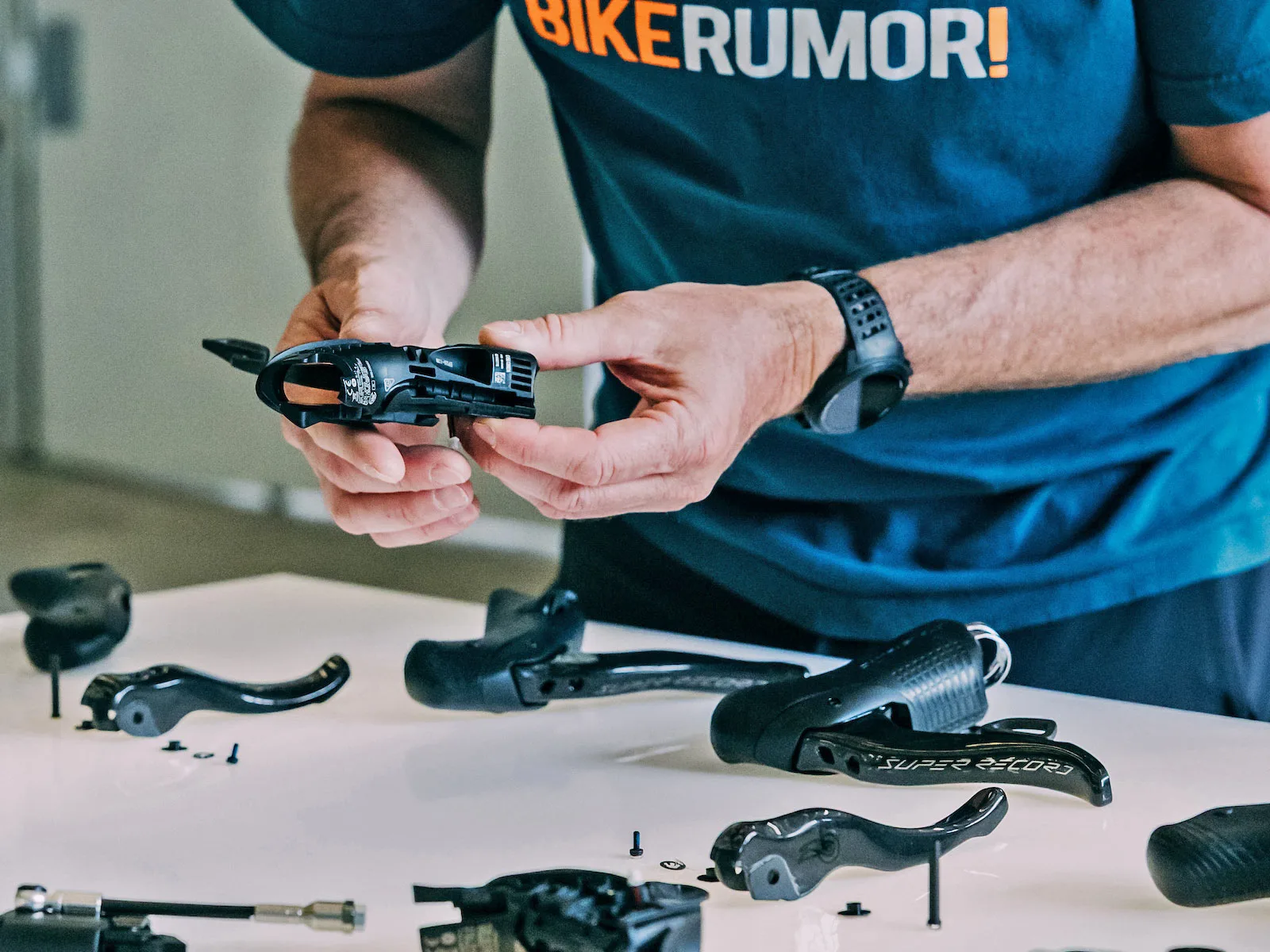
On the dropbar side of things, we see another drivetrain juggernaut staging a comeback. Just like Shimano has staunch MTB fans, roadies with Campagnolo tattoos had been holding their breath waiting for an Italian drivetrain renaissance. It has come in the form of the Campagnolo Super Record 13 family.
After a somewhat disappointing 2×12-speed Campy Super Record Wireless launch just a couple of years ago that was wildly expensive and dropped a few key Campy fan favorite features, this year Campagnolo hit back.
Debuting last spring on the road, the new Campagnolo Super Record 13 added a thirteenth cog while also lowering its top-tier pricing by 17%, speeding up shifting by 36-47%, and shedding 3% weight. Plus, the classic Campy thumb-shift button is back, better than ever, and with additional programmable shift buttons, too. And there are more conventional gearing options again, as well. Campagnolo says it is once again the lightest and fastest shifting 2x road groupset on the market. And it’s more than 80% made in Europe – with just the silicon chips, servo motors, and batteries made overseas.
That’s all really nice, but it’s not what earned this new gruppo a Gear of the Year nod. Much like the latest AXS & Di2, it all comes down to the flexible ecosystem.
Campagnolo called Super Record 13 an all-new wireless ‘platform’.
And they followed up the road 2×13 setup with four or five more core dropbar options with two more clutched SR derailleurs at the end of October. Now there’s the traditional road 2x 13. There’s a clutch version for 2×13 all-road/fast gravel or aero 1x road or 1x time trial racing. And most importantly, there’s an all-new long cage wide range 1×13-speed option for gravel or hilly aero road riding. There are 6 different cassette options ranging from traditional 10/29T on the road up to a hill-climbing 10/48T for gravel. Of course, there are several different 1x, 2x & powermeter cranksets and multiple shifter options, and it’s all cross-compatible.
You really can build any type of drop bar bike you want with the new wireless SR13 kit. So Campagnolo is back in the running again.
But it isn’t stopping there. Campagnolo promised that their new platform is not going to stop at the top Super Record level. Remember, this stuff is still quite expensive. Off-the-record statements suggest more affordable variants with similar tech could be coming as early as next summer.
We can’t wait to see Campy back in the game, really for the first time since they launched 13-speed Ekar more than five years ago!
SRAM Force & Rival 2×12 & 1×13 Groups

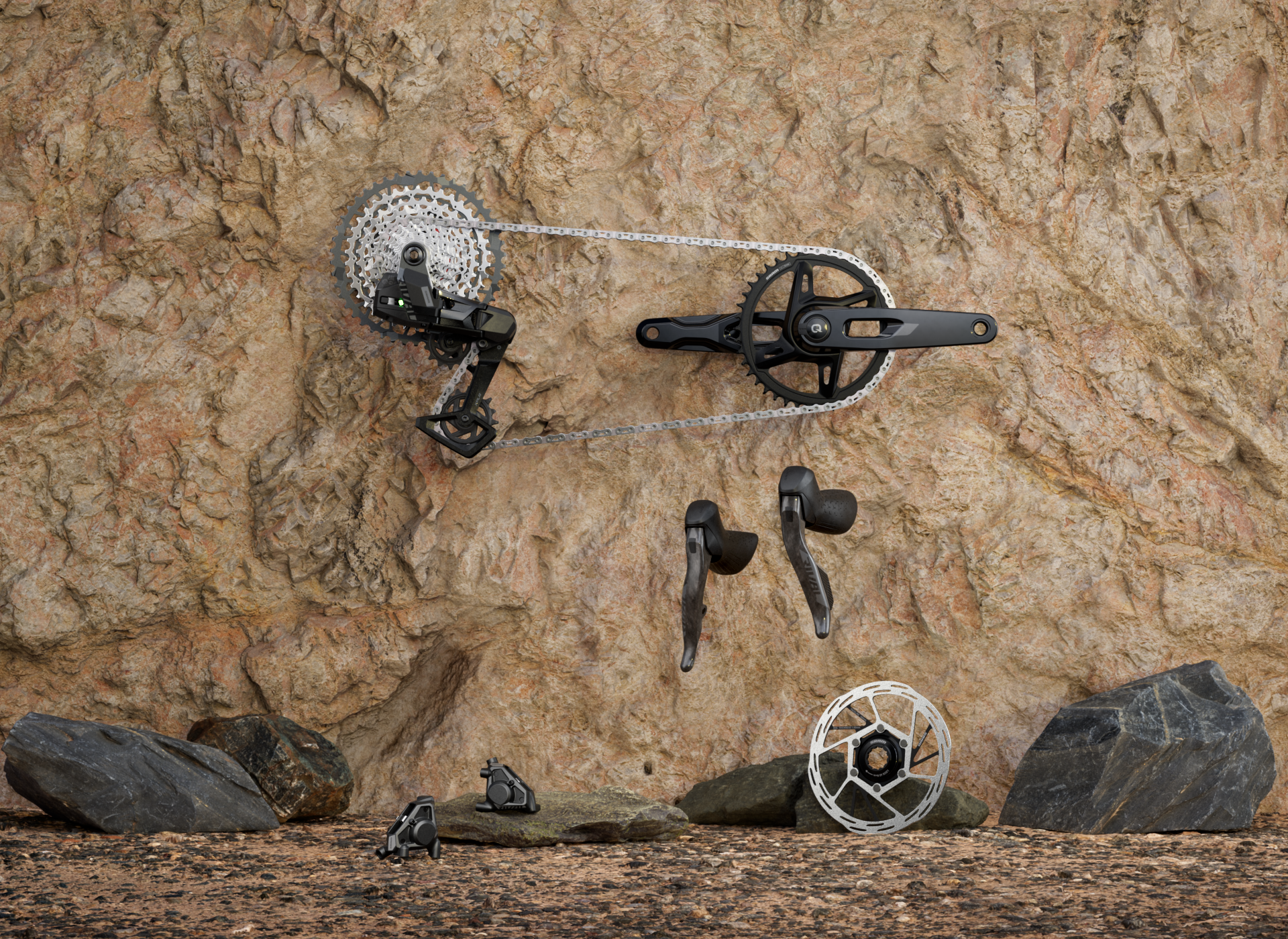
Shifting component performance has been on the upswing now that the big three have settled into an electric-shifting doctrine. SRAM took a giant leap (old heads will get that joke) with the newest version of its flagship RED groupset and shook the cycling world. Most die-hard Shimano fans found themselves sneaking a squeeze of the new levers, checking out the ergonomics, and liking what they felt. That’s because the new RED group is by far the best groupset SRAM has released. But that price… it’s a lot.
Fast-forward a year, and boom, SRAM comes out with a new Force and Rival AXS groupset. These new groupsets mimic the SRAM RED previously launched, yet don’t carry the elitist pricing. SRAM even carried over the XPLR technology.
For all intents and purposes, the SRAM AXS line (RED, Force, and Rival) feels very similar, with nearly identical shifting and brake performance. The separating differential is the price, weights, and, for those egomaniacs, the prestige. But no matter how you look at it, the updated SRAM Force and Rival groupsets played a part in making better-performing bikes in 2025, and will continue to do so in 2026.
Our editors all agree that this newest iteration of the SRAM Force and Rival groupsets is a game-changer. It somewhat levels the playing field; riders will still be staunchly “SRAM or Shimano,” but maybe less than before.
32″ Wheels Gain Serious Momentum
Larger wheels have been teased for some years now, begging the question: where do we stop? Many thought (and still think) that 29” is the practical stopping point, and anything bigger is just another bike debate topic — fun to discuss, but, ultimately, it won’t go anywhere.
Then 2025 began. We can undoubtedly say that 2025 was the year when 32″ wheels gained real momentum. To this point, 32″ wheels were mostly confined to cruisers, unicycles, and eventually, bikes from DirtySixer with their own 32″ tire (the first prototype 32″ bike appeared all the way back in 2016). However, the larger wheel size seemed to officially become part of the bike industry consciousness at the Taipei Bike Show. No more rumors and whispers. There before our very eyes were 32” Maxxis Aspens.
As 2025 continued, and we went to more bike shows, more 32” wheels popped up. But, these weren’t just wheel and tire offerings, but entire bikes built around what could be a new standard.
Bike Ahead displayed its Projekt 32 at Bespoke. The composite company displayed a carbon hardtail frame with six-spoke carbon wheels (32” of course), along with an inverted fork. Neuhaus Metalworks displayed its fully rigid, 32”-wheeled Nova at this year’s MADE. Also at MADE was a 32” drop bar bike, courtesy of Btchn Bikes, and another 32” hardtail with an inverted fork from Falconer.
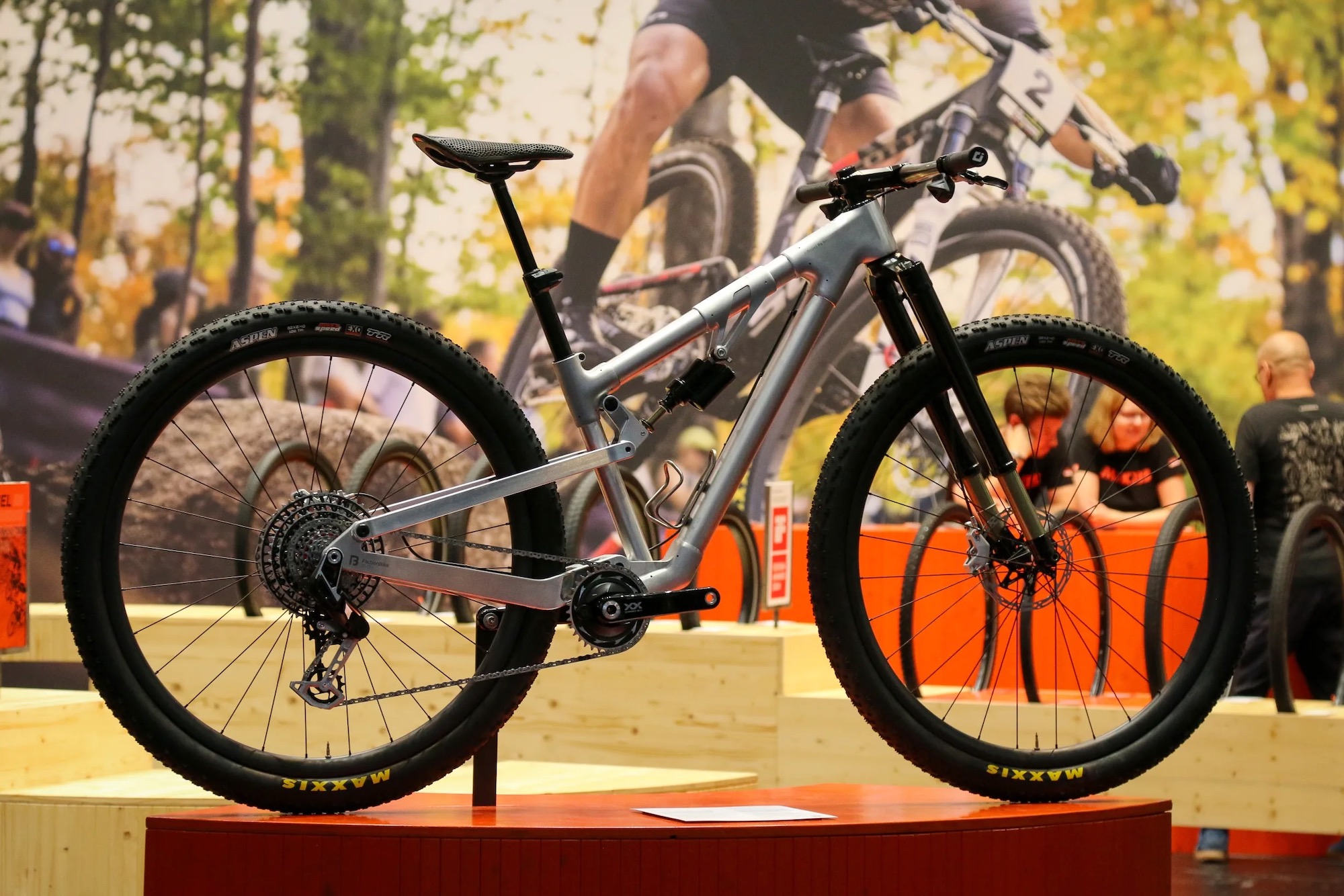
But it wasn’t just rigid bikes and hardtails that were sporting the larger, 32” wheels. At Eurobike, Faction Bike Studio teased a 32” full suspension bike dubbed Project Big Ben. The aluminum bonded frame features 120mm of Intend Suspension travel front (inverted fork) and rear, and the bike seems to be targeted for XC riding.
It seems the XC category will most likely be the new home to 32” wheels. And yes, I am saying you can expect to see 32” in 2026. Like it or not, 32” doesn’t seem to be going anywhere soon. Some brands are starting to make components specifically designed for bikes with 32” wheels. We even have the first 32” trail full suspension bike available to the public with the beautifully-machined ActoFive I-Train 32. And, going into the 2026 XC World Cup race season, the UCI has stated that there will be no restrictions around the use of 32” wheels.
But if 32” makes you mad, remember, there’s always something bigger.
Getting Pumped on Electric Tire Inflators
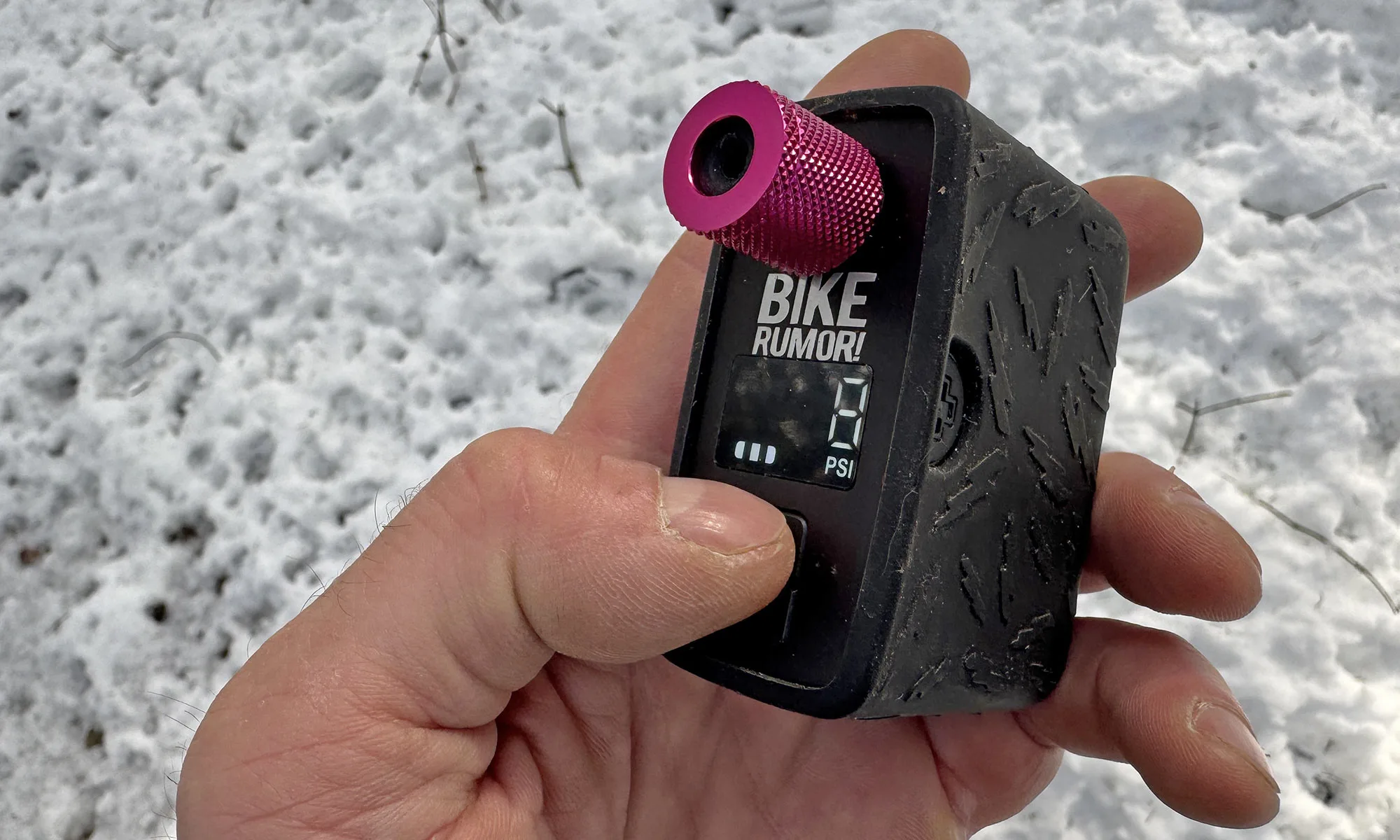
In 2025, electric tire inflators, also known as mini-pumps, took the cycling industry by storm. Proliferation of these pocket-sized powerhouses (say that five times fast) was undoubtedly driven by advancements in battery and compressor technology. It’s frankly pretty remarkable just how small these units are, given their battery life and pumping abilities. And it’s their diminutive sizes that make them useful for cyclists — these things are often smaller and lighter than the hand-pumps and CO2 setups they are replacing.
To be fair, electric mini compressors have been around for several years, but until recently, they’ve been prohibitively large to carry with you while you ride. In our eyes, the electric tire inflator revolution began in 2024 with the Muc-Off AirMach, but really came into its own in 2025 with a veritable avalanche of new models hitting the market, seemingly every month or so.
Along with the Muc-Off AirMach Pro, we tested numerous models, including the ToPeak E-Booster Digital, the super-light Cycplus AS2 Ultra, and Trek’s AirRush. Every single one of these pumps performed shockingly well and impressed us with their portability, ease of use, and pumping capabilities. Not only do they fit in the palm of your hand, but most can easily fit in a jersey pocket, hydration vest, or saddle bag. Plus, they pump your tires for you, and can inflate numerous tires on a single charge.
Sure, they’re a little loud — they are air compressors, after all — but they eliminate the need to struggle with a hand-pump, and they don’t generate waste with used CO2 canisters. Obviously, those methods of emergency tire inflation still work just fine, but the convenience and user-friendliness of electric tire inflators have been enough for us to make the switch.
EMTB Motor Wars – New Specialized 3.1, Bosch CX upgrade, DJI Avinox
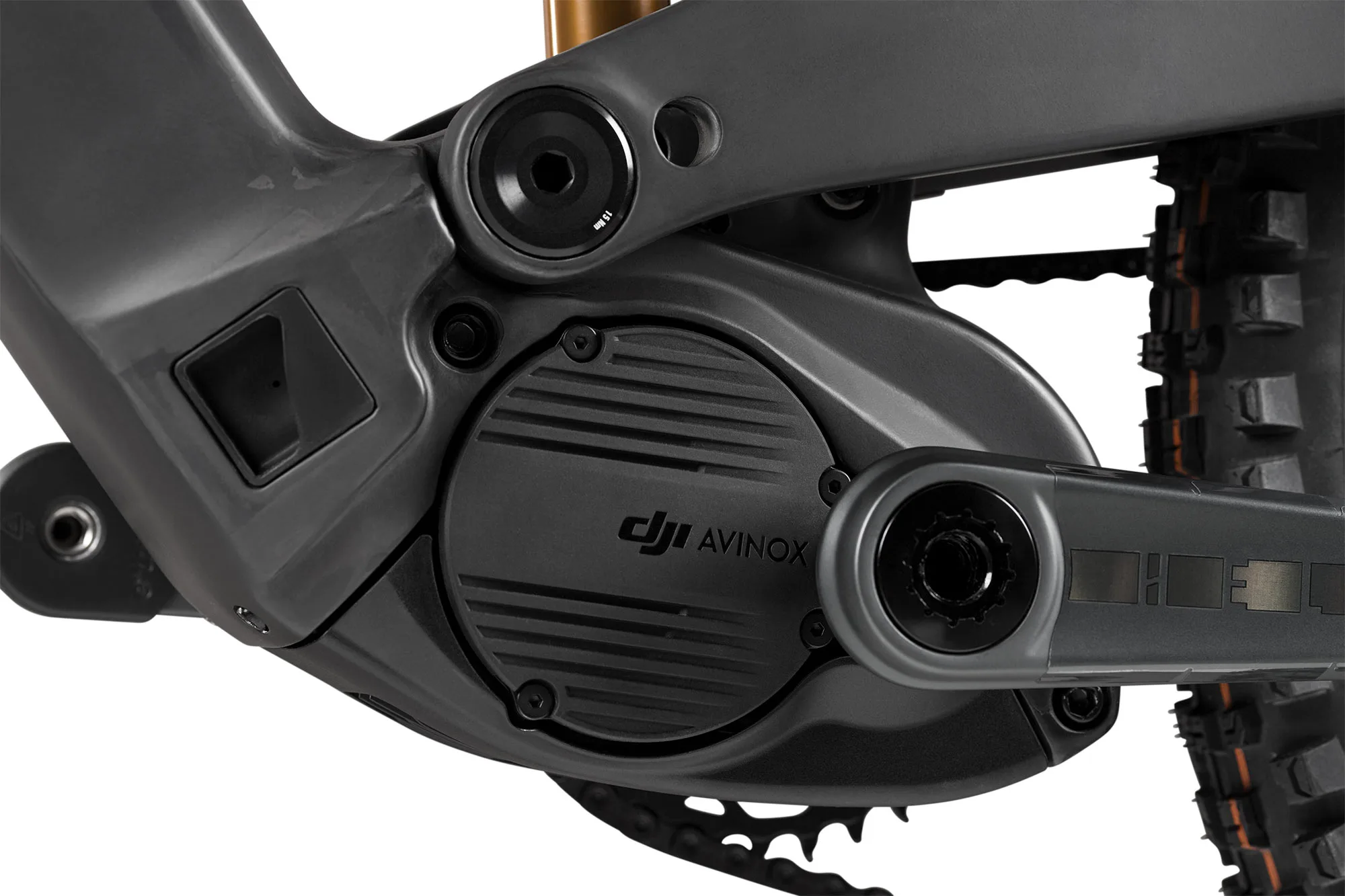
2025 was also the year of the eMTB — well, eMTB motors, that is. And, likely, we have DJI’s Avinox drive unit to thank for that.
But wait, the Avinox motor was released in 2024, right? Yes, that is correct. While rumors popped up earlier, it wasn’t until the summer of 2024 that we really got a good look at the Avinox drive unit. And, it was just as impressive to ride.
With 600Wh or 800Wh battery options, the Avinox drive unit outputs 850W of peak power and delivers 105Nm of torque. Hitting the boost button cranks output up to 1,000W for 30 seconds.
All of this power from a motor that weighs just 2.5kg made for an incredibly impressive entry into a new space. But the initial Avinox offerings were available only on the Amflow, which received mixed reviews and wasn’t available in the US (that would happen later in 2025).
Despite its limited availability, excitement began to build around which brands would strike deals with DJI to license the Avinox drive system for their latest e-bikes. And it was this trend that we saw in 2025. Brands like UNNO, Forbidden, Crestline, and Rotwild (and others) all released e-bikes with the Avinox drive unit.
With the Avinox setting a high standard for what a drive unit can accomplish, other motor manufacturers have stepped up to meet the challenge. Bosch had two significant releases in 2025 — an update to their CX motor and a new CX-R drive unit.
First, Bosch increased the power with the release of the new Performance Line CX-R (Race) motor. Equipped with 750W of peak power and 100Nm of torque, the new motor claims assistance of up to 400% of pedaling input. Bosch claims that the new “Race” mode, which isn’t available on the CX motor, “enables lag-free accelerations and assists with full power up to maximum speed.”
The CX-R motor is also built with fancy parts such as a titanium crank spindle, magnesium housing, and ceramic bearings.
But if you already have a bike equipped with the Performance Line CX motor, you don’t have to run out and trade it in for a bike with the CX-R motor. Bosch was kind and provided a power update to their CX-using customers. Pre-update, a Bosch Performance Line CX motor delivered 600W of power and 85 Nm of torque. Post-update, the CX motor now outputs 750W of power and 100 Nm of torque — a noticeable increase in power.
Bosch also had similar updates to their mid-power Performance Line SX motor.
Specialized also entered the drive unit battle, releasing its 3.1 motor on the 4th-generation Turbo Levo, which has two options. In its standard form, the 3.1 outputs 666W of power and 101Nm of torque. Those wanting a top-shelf offering (and willing to pay top-shelf prices) might consider the S-Works Levo. This S-Works 3.1 motor delivers 720W of peak power and 111Nm of torque. Both offerings, S-Works and “regular,” will have 600Wh or 840Wh battery options.
So, has 2025 set a new standard for full-power drivetrains?
DT Swiss DEG DF Anti-Kickback freehub

Is pedal kickback an actual thing? Well, yes, it does exist. Does it greatly affect the way you ride your bike? That is a conversation for another time. It depends a lot on your specific bike and how you ride it. Regardless, pedal kickback and new technologies to address it were hot topics in 2025.
Now, products and components that address pedal kickback are not new. We are likely most familiar with brands like Ochain or e*thirteen. However, 2025 brought us a new anti-kickback offering.
In 2025, DT Swiss released perhaps the simplest and most affordable way to reduce pedal kickback with DEG DF. DT Swiss is offering DEG DF as an upgrade kit for your current DT Swiss hubs. This allows you to control how much “play” you’d like to experience, with increased slack in the hub’s engagement resulting in less pedal kickback.
DEG DF is a new star ratchet and ratchet ring combo that threads into an existing hub. With some of the ratchet teeth machined away, DEG DF allows the user to choose how much movement the freehub has before it engages — 0°, 10°, or 20°. There’s even a separate, more robust solution for high-powered eMTBs with just the 0° & 10° options.
However, it is essential to note that the DEG DF anti-kickback solution only works with DT Swiss’s DEG hubs. These are DT Swiss’s latest hub offerings with higher points of engagement — offered from the affordable 350 series, more premium 240, and up to their top-shelf 180 hubs. But, if you do have a wheelset with a DT Swiss DEG hub (which is a possibility, since DT wheelsets are a common OE component), this upgrade kit is $176, or $203 with DT’s threaded ring removal tool.
Does pedal kickback significantly affect the average rider? It tends to be more of an issue for those who ride longer travel bikes, ride the steepest and most technical terrain, and for those gravity racers where podium spots are decided by fractions of a second.
Regardless, the DT Swiss DEG DF made it easier to address the issue — for those who need it and for those who just want to tinker.
Gravel Matures
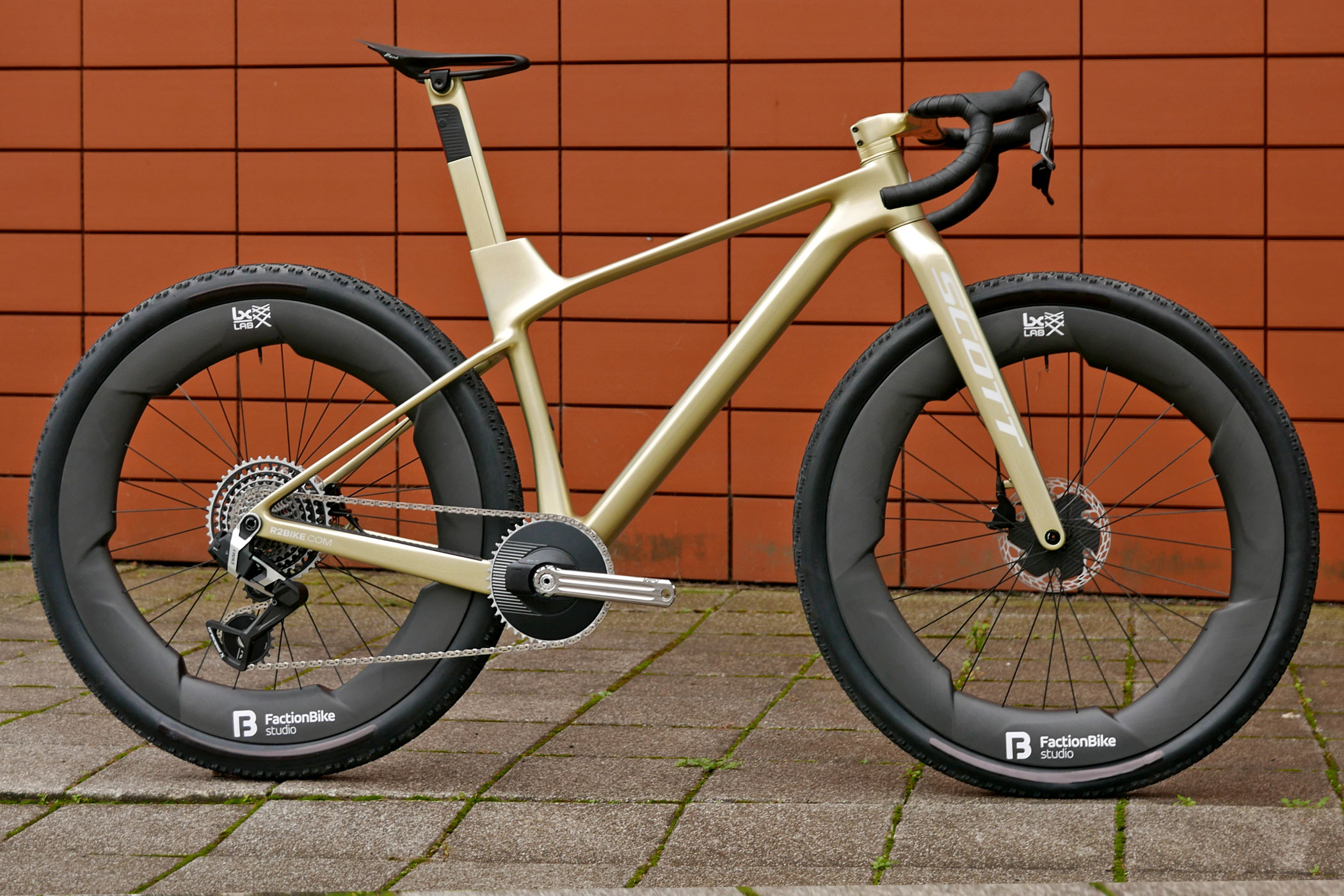
Gravel is still an untamable beast that no one really owns or can predict its future. One thing is clear: it has matured. Now, we’re not saying gravel is in its classic rock years, but it has become more refined, less “monster cross,” and more complete.
Frames, for instance, are looking more like complete ideas rather than the “cram a 50mm tire in that endurance frame” mindset that was the 2020s.
Now we’re seeing complete bike ideas: some taking the “fast gravel” route, like the Pinarello Dogma GR, and others moving into a more adventurous “long gravel” route, like the Cannondale Topstone. We’re not going to lump the new full-suspension gravel bikes into this entirely, but they are becoming increasingly cohesive. Like it or not, Niner was right with the RDO MCR.
But that’s not all. It’s the refinement of products, no longer making super-wide bars and slapping “adventure or grinder” on them. It’s the development of new, better products that’s pushing the sport to go faster, and be more comfortable at the same time.
Wide gravel tires & Wide rims

Just as gravel bikes are maturing, so are the corresponding wheels and tires. It appears we’re starting to see rims working cooperatively with wider tires, but without the “mountain rim to road hub” treatment. Yes, there are outliers, such as the Zipp 303 SW XPLR, but overall, we’re starting to see some stability in the “widest tire wars”.
We’re starting to see less of a gulf between rim sizes (with one notable exception) and some “standards” at play, much like the mountain bike world. There, a 29-30mm width was the informal “agreed upon” norm for cross-country rims. Now 27mm internal seems to be for gravel, like the Hunt Limitless Aero.
With this slowdown in the wide rim arms race, tires are starting to bridge the gap. We’re seeing more precision treads and layups for specific needs, rather than just volume. For example, the Maxxis Rambler tire offers greater refinement, with less emphasis on pure puncture resistance and more on economy and performance.
More than anything, wider tires just feel better on modern gravel rims now. If you tried out 50mm gravel tires when they were first introduced and thought they were too heavy and slow, your opinion will likely be changed if you try out the latest generation. Heck, you might even settle on 55mm tires…
Clip Pedals: OneUp, Wolf Tooth
There’s no shortage of clipless pedals (ahem) out there, but the market is largely dominated by a few major players. While Time, Crankbrothers, and a few others offer off-road riders some variety and attributes that are preferred by many, it’s SPD pedals, and Shimano, in particular, that dominate the clip pedal market.
Shimano’s SPD design has barely changed at all in the past 35 years because it works, and it works well. In fact, the most significant update to the SPD system came this year in the form of a new multi-entry cleat. Turns out, consistency is king, and there are few, if any, products in cycling that have proven to be as consistent, durable, and reliable as Shimano’s SPD pedals.
But that doesn’t mean there isn’t room for improvement. Sure, Shimano introduced updated versions of its XTR XC and Trail pedals this year, but what really caught our attention was a brand new model from OneUp and three new pedals from Wolf Tooth Components. All of these pedals are SPD-compatible, but each features design, manufacturing, and performance attributes distinctive to its respective brand.
In January, OneUp Components introduced the new Clip Pedals. While they got off to a rocky start with a “notice of a running change,” OneUp sorted out its initial hiccup and delivered one of the best new pedals of the year. With a thin pedal body surrounding the binding mechanism, OneUp made some of the lightest trail-style pedals on the market.
At the same time, they managed to increase the effective platform and pedal-to-sole contact for an impressive amount of support. The OneUp Clips address many of the complaints and shortcomings of similar trail and gravity pedals, and they look good doing it.
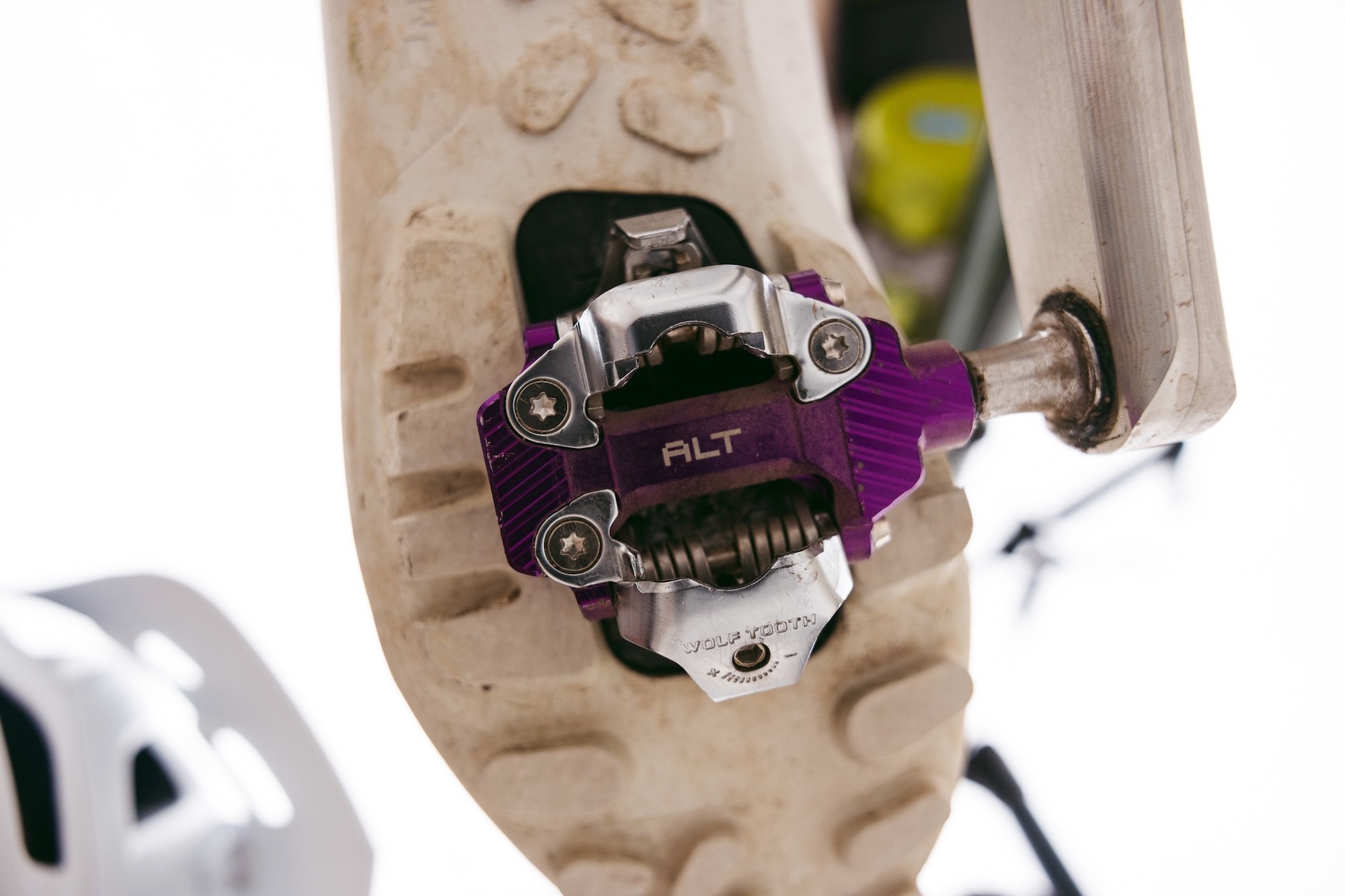
Just a few months ago, Wolf Tooth entered the clip pedal market with a three-model lineup known as CTRL (trail), ALT (XC, gravel), and DEL (gravel, race). Of course, these new pedals feature the exquisite machining and meticulous attention to detail that Wolf Tooth is known for, but some unique features and excellent performance make them stand out. In fact, these pedals perform so well that Jeremy and Zach included them in their 2025 Editor’s Choice lists.
For all three models, Wolf Tooth focused on weight, thickness, and platform area. And, on those points, they are all top of the heap in their respective categories, with Wolf Tooth making some bold design choices to set them apart. The CTRL trail pedal is a great example. Eliminating the mostly useless pedal body fore and aft keeps weight low while the effective platform still rivals or exceeds that of larger/heavier pedals. Similarly, the DEL pedal breaks the mold with a single-sided design, making it ultra-low-profile and one of the lightest SPD-compatible pedals on the market.
Arguably, the most impressive thing about Wolf Tooth’s new pedals, however, is that they are actually smoother and more consistent than Shimano when clipping in and out. Rarely is that the case, but we’re not too surprised Wolf Tooth was able to pull it off. All of the new pedals also feature an adjustable Q-factor that can be changed in just a few minutes. And like everything Wolf Tooth makes, they are user-serviceable and part of the brand’s Right to Repair Program, so they can actually last a lifetime.
Electric droppers: Fox Neo, RockShox AXS

Electronic/wireless dropper posts aren’t a new thing. RockShox released the Reverb AXS in 2019, but they weren’t even the first. About four years before the Reverb AXS, Magura released the Vyron Electric Dropper.
That said, 2025 was a big year for electronic dropper posts. First, with an honorable mention, is the new Fox Transfer Neo dropper — an honorable mention because it was actually released near the end of 2024.
Regardless, the Transfer Neo made a big splash in 2025. The battery was located at the base of the post collar rather than under the saddle, addressing tire clearance issues. It is also a speedy dropper post, with Fox claiming speeds 100x faster than Bluetooth, and 26x faster than the Reverb. We also preferred the lever on the Transfer Neo to AXS push buttons.
But, hands down, what made the Fox Transfer Neo dropper post superior was its length — up to 200mm of drop. This was significantly longer than RockShox’s surprisingly short 170mm dropper.
But, in 2025, RockShox made some impressive upgrades to the AXS Reverb dropper, releasing their latest iteration of the post. Similar to the Transfer Neo, this latest-gen AXS Reverb relocated the battery to the seatpost collar. However, theirs is on the front. This not only eliminates tire clearance issues but also keeps the battery out of the mud and debris thrown by the rear tire.
While the new design was an improvement, the most significant update to the AXS Reverb is its travel. The AXS Reverb’s travel options start at 100mm and end at a massive 250mm, with 25mm increments between.
This makes the RockShox AXS Reverb the longest dropper available without being frame-specific.
“Hey Meta, Do These Sunglasses Make Me Look Fast?”

Whether you welcome our AI overlords or plan to hold out as long as possible before giving in to the new tech, the future is now. Meta AI glasses have been around in more casual, everyday styles for a bit now, but 2025 brought us the first AI sunglasses designed with cyclists in mind. Not surprisingly, it was Oakley who first teamed up with Meta to create the new Oakley Meta Vanguard AI performance sunglasses.
As expected from Oakley, these sunglasses have a bold, futuristic look, with large wrap-around lenses and flashy reflective lenses. They also boast excellent coverage and protection for the eyes, with a comfortable and stable fit that stays put no matter how rough the road or trail gets. And, they wouldn’t be Oakleys without the quality Prizm lenses and class-leading optics the brand has long been known for.
Hidden behind that facade is plenty of well-integrated tech. That includes integration with Meta AI, of course, and everything that goes along with it. You can interact with your own AI assistant, ask questions, and get responses. “Hey Meta, what time does the sunset today?” You can take phone calls, respond to texts, or ask Meta to play Spotify, or raise and lower the volume — all hands-free.
Meanwhile, the open-ear speakers built into the sunglass arms allow you to hear what’s going on around you, yet the sound quality really impressed us. Likewise, the built-in 12-MP camera centered on the nose bridge is barely visible, yet it can shoot still photos or video clips in 3K UHD. Like the speakers, it operates on voice commands or the push of semi-hidden buttons. While the resolution can’t compete with proper action cameras, it’s more than adequate for social media and, frankly, pretty incredible for a pair of sunglasses.
Adding to the sportiness of the Vanguards is integration with Garmin and Strava. For both, this involves data and images for media and shared activities, as well as AI insights and performance tracking. The Garmin integration goes a step further with auto-capture images and video during rides, as well as real-time performance metrics — “Hey Meta, how’s my pace?” We expect additional integrated features — such as navigation prompts, cough, cough — over time.
Ultimately, the Oakley Meta Vanguard AI sunglasses made it on this list because they represent a significant evolution in wearable technology. Not only are they excellent cycling sunglasses, but the integrated speakers, camera, Meta AI, and hands-free operation make them incredibly user-friendly and useful — if you’re into that kinda thing.
Best Kids’ Bikes Yet
For the young shredders, kids’ bikes are becoming more rad and more capable. With these bikes, the secret is in the sauce — the geometry sauce, that is. Often, department store bikes for kids are scaled-down versions of adult bikes. This presents two problems for the kids climbing on those bikes.
First, if the adult bike has poor geometry, the kid’s bike will inherit a “scaled-down” version of that geometry. This is why kids can look awkward and uncomfortable on many department store bikes. Secondly, even if the adult bike had good geometry, kids’ bodies are different.
Many bike companies consider kids’ geometry when designing new kids’ bikes. Batch Bikes is among them. Released this year, the Batch 20” is a capable trail bike meant to get kids on the trail and provide a confident experience.
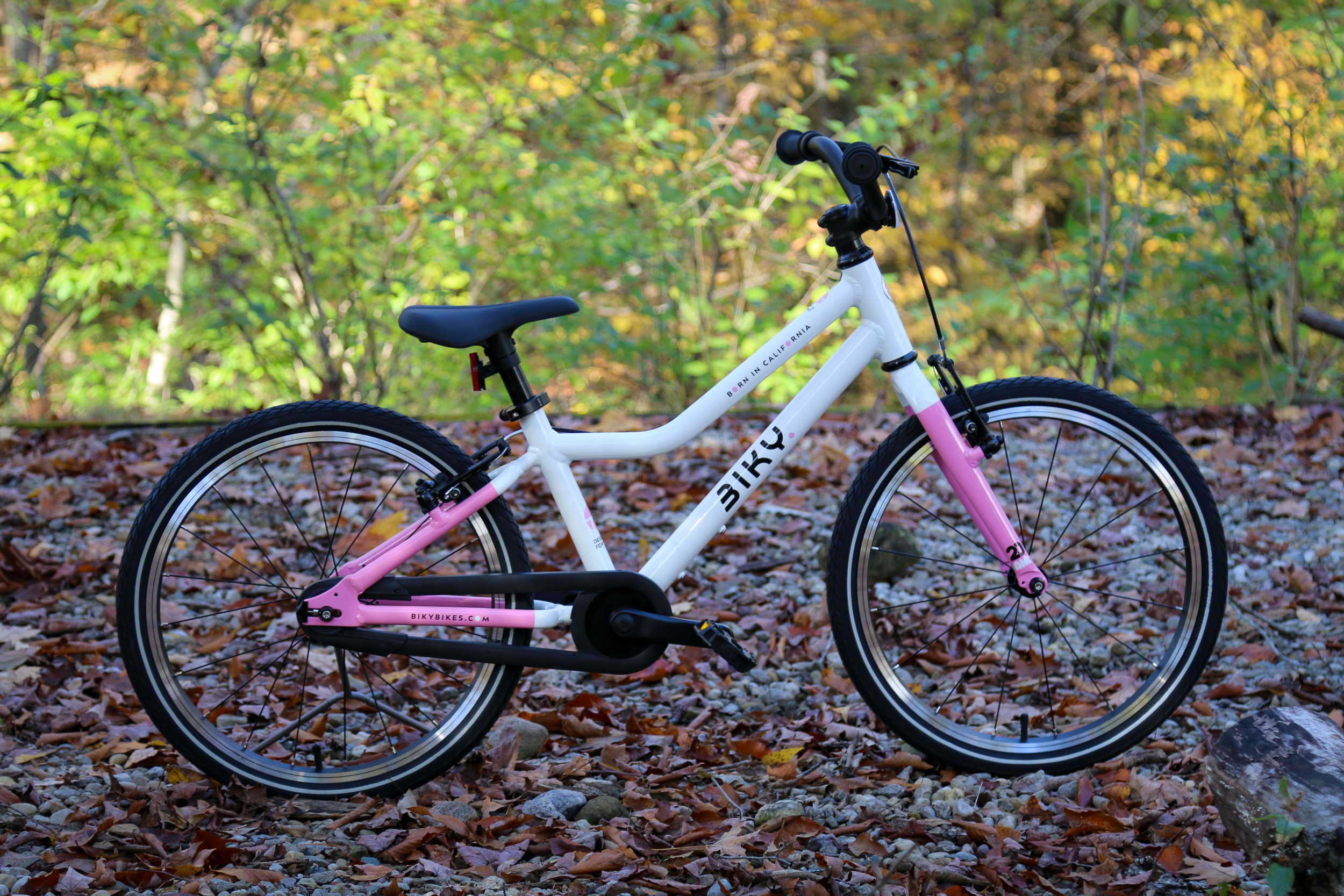
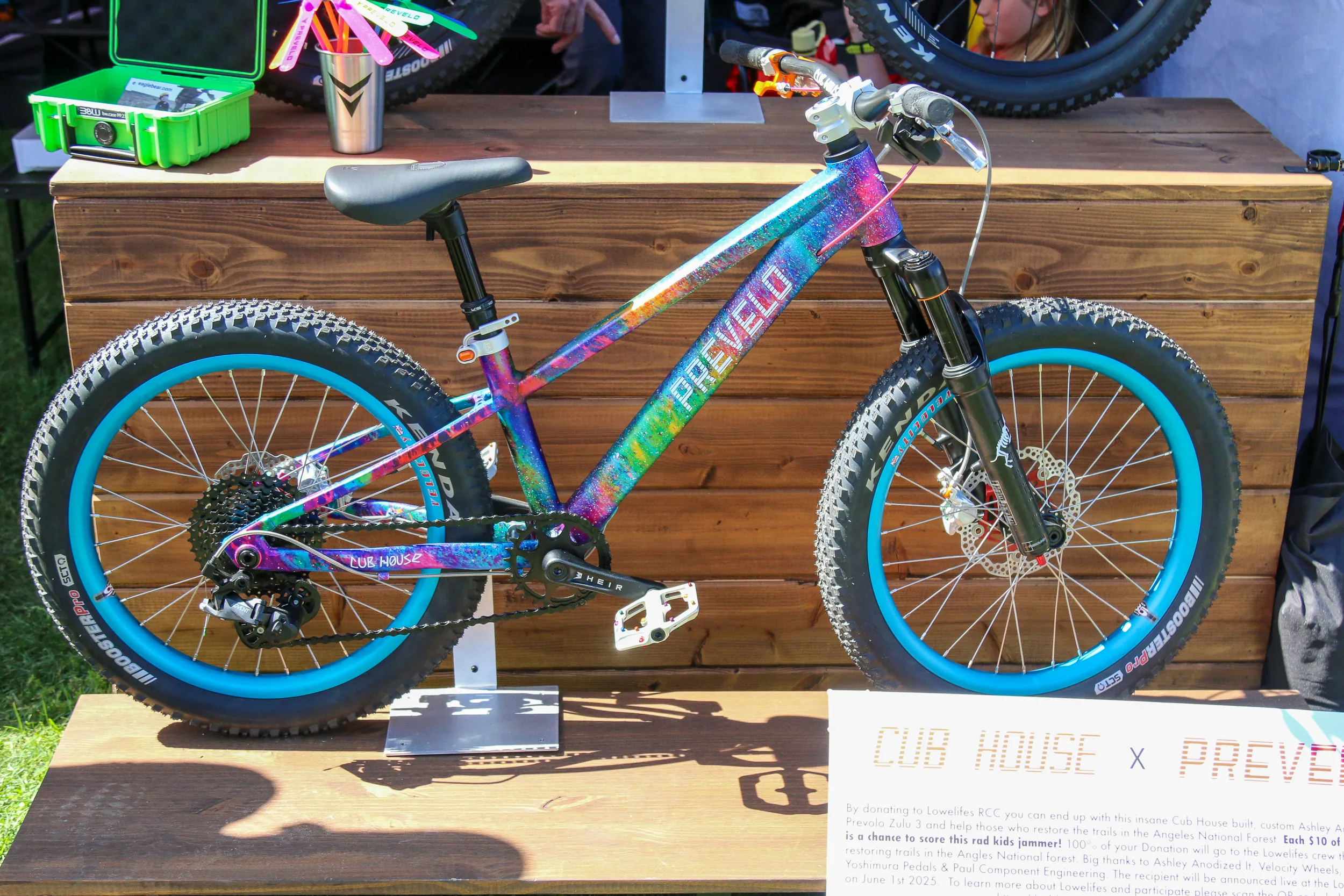
Kids’ bikes are also lighter than ever. That’s important when you stop to consider the percentage of a kid’s body weight in terms of bike weight. Many department store bikes (and even some bike shop bikes) can be 50% or more of a child’s weight. Extrapolate that to adult bikes and weights, and we’d be pedaling around 75+lb bikes! Fortunately, brands like Prevelo and Biky are putting out extremely light kids’ bikes with high-quality components that will last as hand-me-downs for generations to come.


