Home > Bike Components > Wheels

Boyd Cycling Says Its New Sixtus Gravity MTB Hubs are Durable, Fast-Engaging, and Low-Drag

studio image of the new Boyd Cycling Sixtus MTB hubs(All photos/Boyd Cycling)
10 Comments
Support us! Bikerumor may earn a small commission from affiliate links in this article. Learn More

Today, Boyd Cycling introduces a new gravity hub platform, the Sixtus MTB hub. The Sixtus replaces the brand’s Tripel hub and is claimed to be better in every way, including faster engagement, lower drag, and enhanced durability. Designed to provide near-instant 0.5-degree engagement without the drag often associated with fast engagement hubs, Boyd says “the Sixtus was engineered to stay fast when you’re off the gas.” It’s also been designed to handle the abuse of gravity-oriented riding and is e-bike rated, too.

The Sixtus Hub is built for Chaos. We made it for riders who smash into rock gardens, land sideways, pedal through compressions, and expect their equipment to respond instantly every single time. We wanted the fastest engagement possible, and simply refused to accept the drag and harshness that usually comes with it.

-Boyd Johnson, Chief Innovation Officer and Founder at Boyd Cycling.
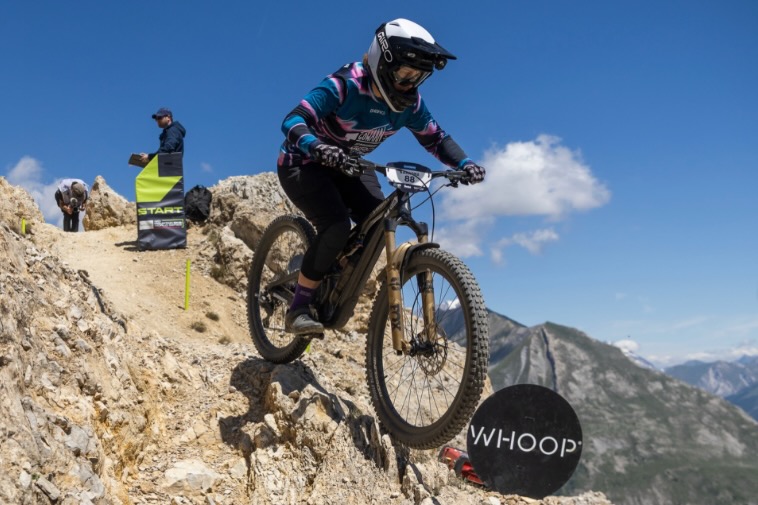
Boyd Cycling says its Sixtus hubs have been tested and proven on the World Cup EDR circuit, including by Bex Barona in La Thuile.

Sixtus MTB Hub Details

Like the Tripel hub that came before it, the Sixtus uses a 102-tooth driver ring paired with six pawls. Unlike the Tripel hub, where all of the pawls engage simultaneously, the Sixtus has a new steel phasing ring, which staggers the pawl engagement. This phased design creates a whopping 612 points of engagement and just 0.5 degrees between those points. Boyd says, “The result is engagement ‘now’ without the excessive drag common among high-engagement hubs.

Additionally, this steel phasing ring is claimed to result in improved load distribution and increased durability to earn its e-bike rating. Adding to that, Boyd says the Sixtus also features wider pawls, which increase surface contact between the pawls and driver ring to boost strength and durability under heavy torque.

comparison shot of Sixtus freehub bodies showing the differences
Sixtus freehub comparison: Aluminum/simultaneous (left), steel/staggered (right)

Knowing that not all riders want 0.5-degree engagement, Boyd says it also developed a lightweight aluminum freehub body without the steel phasing ring. This optional freehub allows all of the pawls to engage simultaneously for still-pretty-quick 3-degree engagement, while also reducing weight by ~35 grams. 

And because 20mm thru axles are still a thing in gravity riding, Boyd Cycling designed the front hub with versatility in mind. The Sixtus front hub can convert from 15x110mm Boost to 20x110mm DH with a simple end cap swap. On that note, the Sixtus hubs are available in Boost spacing, a 6-bolt brake rotor interface, and for use with J-bend spokes only. 

studio image of the Boyd Sixtus hubs standing on their end caps.

Sixtus MTB Hub Specs

  • 102-tooth driver ring
  • 6-pawl design
  • 612 points of engagement
  • 0.5-degree engagement
  • Steel phased pawl ring
  • eBike rated
  • Wider pawls for increased contact surface
  • Boost spacing only
  • 6-bolt rotor interface
  • Front hub weight: 178g
  • Rear hub weight: 380g
  • Optional lightweight freehub body saving 35g, changes from 0.5 to 3-degree engagement.
  • 20mm thru axle compatibility
  • Shimano HG, Shimano Microspline, and SRAM XD drivers

Availability

Boyd Cycling says its new Sixtus hubs will make their debut in the refreshed Kanuga FF Alloy ($800/set) and Ridgeline Carbon Enduro ($2,000/set) wheels, which are available starting today. They also plan to incorporate them across other wheel platforms, including the Bracken Trail Alloy, through the remainder of 2026. Check them out on the Boyd Cycling website.

boydcycling.com

Subscribe
Notify of
guest

This site uses Akismet to reduce spam. Learn how your comment data is processed.

10 Comments
Oldest
Newest Most Voted
Inline Feedbacks
View all comments
Sam
Sam
20 days ago

I bought into Boyd’s hype of some special road hubs many years ago. The rear hub axle failed, I was told that the design was a failure and all they could do is give me a generic rear hub as a replacement. I didn’t have any options as I spent my funds on what I thought was a perfect wheelset. Don’t be a Guinea Pig people!!!

Mas
Mas
20 days ago
Reply to  Sam

Many years ago, Boyd was a different company. They are making great stuff now, Don’t Inform People Without Knowing What You’re Talking About!!!

Cam
Cam
20 days ago
Reply to  Sam

I will say it’s always fair to be skeptical of hype around a new product. This one however deserves it, as it has already been put to use in the freeride world by Olly Wilkins, as well as World Cup Enduro races by Bex Baraona and Chloe Taylor including a top five finish in La Thuile. This hub is the real deal.

Scott
Scott
19 days ago
Reply to  Sam

I got my hands on the new Pinnacle Race gravel wheels the week before Unbound… I gambled running a brand new product and something new to me, but I had confidence in the product because all I have ever seen over the last few years is the best quality components, regardless of the money spent! I am not discounting your experience, but that is not something that I see with recent iterations of Boyd products.

Nathan
Nathan
19 days ago
Reply to  Sam

As a Boyd Cycling dealer for the last decade, I have been blown away at the customer service they have given my customers and myself. Nobody is perfect and stuff happens but I will continue to recommend Boyd wheels to my customers and race team.

TheKaiser
TheKaiser
19 days ago
Reply to  Sam

This type of phased pawl engagement is what has contributed to the frequent axle and bearing failures on I9 Hydra hubs. The fact that companies pitch it as ebike ready is mind blowing to me.

Last edited 19 days ago by TheKaiser
FritzP
FritzP
18 days ago
Reply to  TheKaiser

I was going to ask something similar. Won’t this phased engagement mean only one pawl engaged at any one time, concentrating the load on one pawl and bad loading of the axle & bearing?

boydcycling
18 days ago
Reply to  FritzP

Where pawls and freehub bodies tend to fail is when the steel pawl starts to deform the aluminum freehub body. This is why on the full aluminum freehub body we engage all 6 pawls at the same time (with 3 points on each pawl for 18 points of contact).

On the Sixtus when using the steel phasing ring that allows for staggered engagement the steel pawl is pressing against a steel ring. This will not deform so it allows for less pawls to contact. There is also the benefit of that instant engagement while does not allow the pawls to ramp up speed against the teeth.

We did SGS fatigue and destruction testing on the hubs as well. 190Nm was placed on the freehub body over 100,000 cycles with no damage. This amount of torque would be equivalent to a cyclist putting out 1,140 watts at 5mph 100,000 times in a row, assuming a 29er with a 2.4 inch tire.

David
16 days ago
Reply to  boydcycling

Sounds like your average AMFlow customer who then wonders why their drivetrain is gone in 3 weeks

FritzP
FritzP
15 days ago
Reply to  boydcycling

When do axles and bearings fail?

Subscribe Now

Sign up to receive BikeRumor content direct to your inbox.