

Teaching your kids to ride a bike takes a lot: energy, time, patience, equipment. And sure, it gives a lot in return. Eventually. But reaching that all-joy payoff peak requires crossing a whole lot of valleys of no-fun moments marked by discomfort and pain along the way. That goes for parents — bending over to run alongside kids still learning the pedal strokes — and kids who must learn through a few tough crashes and setbacks along the way.
As a father of three young girls, I know both the pain and the payoff. My now 10-year-old took too long for my liking on the training wheels (skipping the crucial balance-bike first step). After months of circling the same neighborhood park route, she eventually graduated to the pedal power of two-wheeled kid-dom. So, when we had surprise (identical) twins in 2021, I vowed to take my girls straight from balance bikes to pedaling — no training wheels! — before they turned 5. When I heard about Huffy’s GRM bike series, I had the perfect opportunity to get the twins pedaling, and to get my older daughter off of her well-worn, one-speed kiddo cruiser and on to a “real bike” with hand brakes and gears.
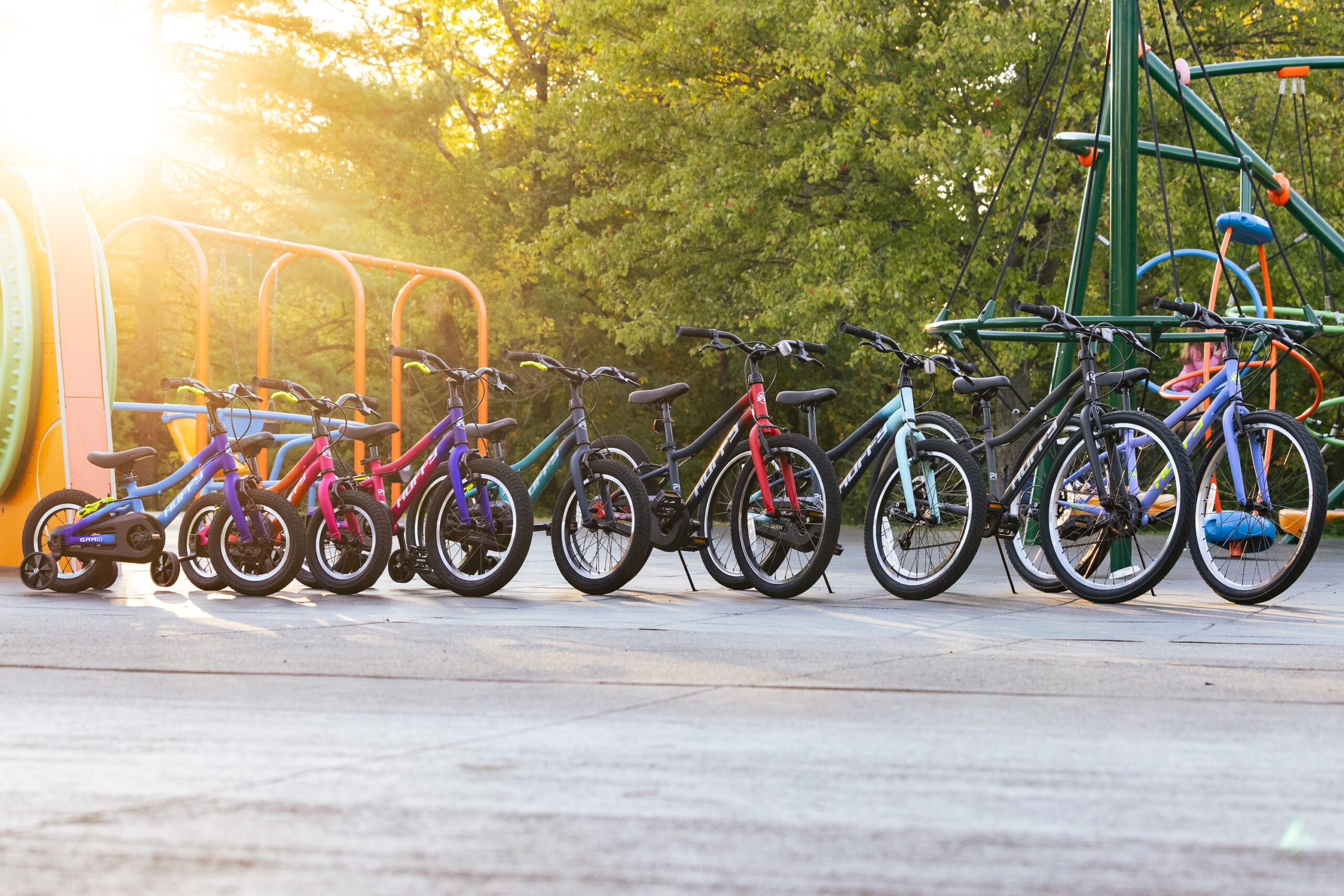
GRM stands for “Grow. Ride. Move.” And it fits the four-bike series that offers bigger kids progressively more feature-laden rides (outlined below) to match their skill set. And as they grow out of one model and into the next, Huffy offers the Move-Up Program™ for parents who purchase a GRM model, automatically qualifying them for 25% off the next size up (if they purchase it through Huffy within 12 months).
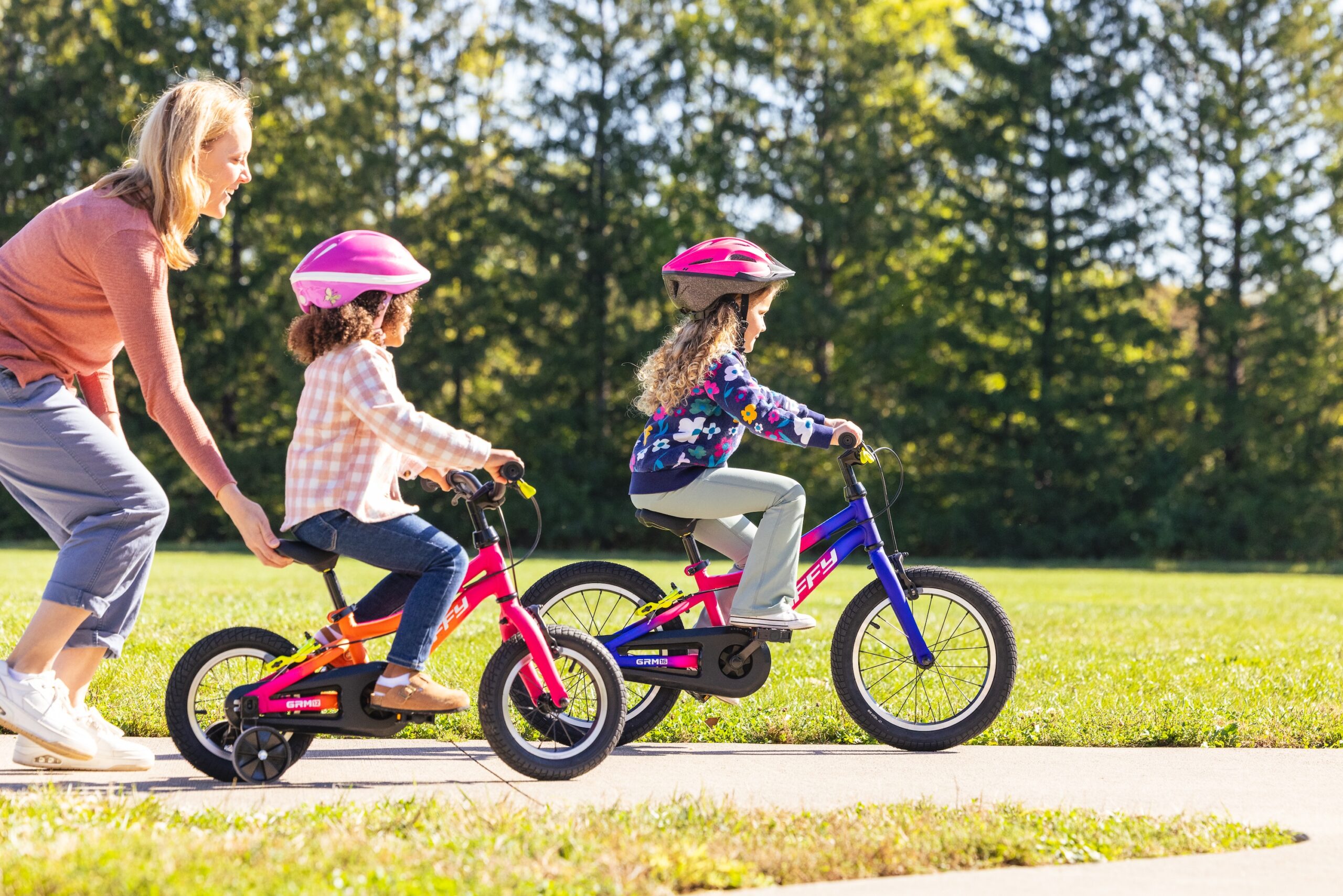
- Huffy GRM 12”: Ages 3–5; features Triple Braking (color-coded hand levers + coaster), tool-free training wheels, and a parent-assist saddle handle; $149; LEARN MORE
- Huffy GRM 16”: Ages 4–6; Triple Braking, tool-free training wheels, parent-assist saddle handle, full chain enclosure; $179; LEARN MORE
- Huffy GRM 20”: Ages 6–9; Dual alloy hand brakes, 3-piece steel crank, high-traction urban tires, quick-release saddle; $199; LEARN MORE
- Huffy GRM 24”: Ages 8–12+; Dual alloy V-brakes, 7-speed Shimano twist shifter, wide-platform pedals; $229; LEARN MORE
Setup
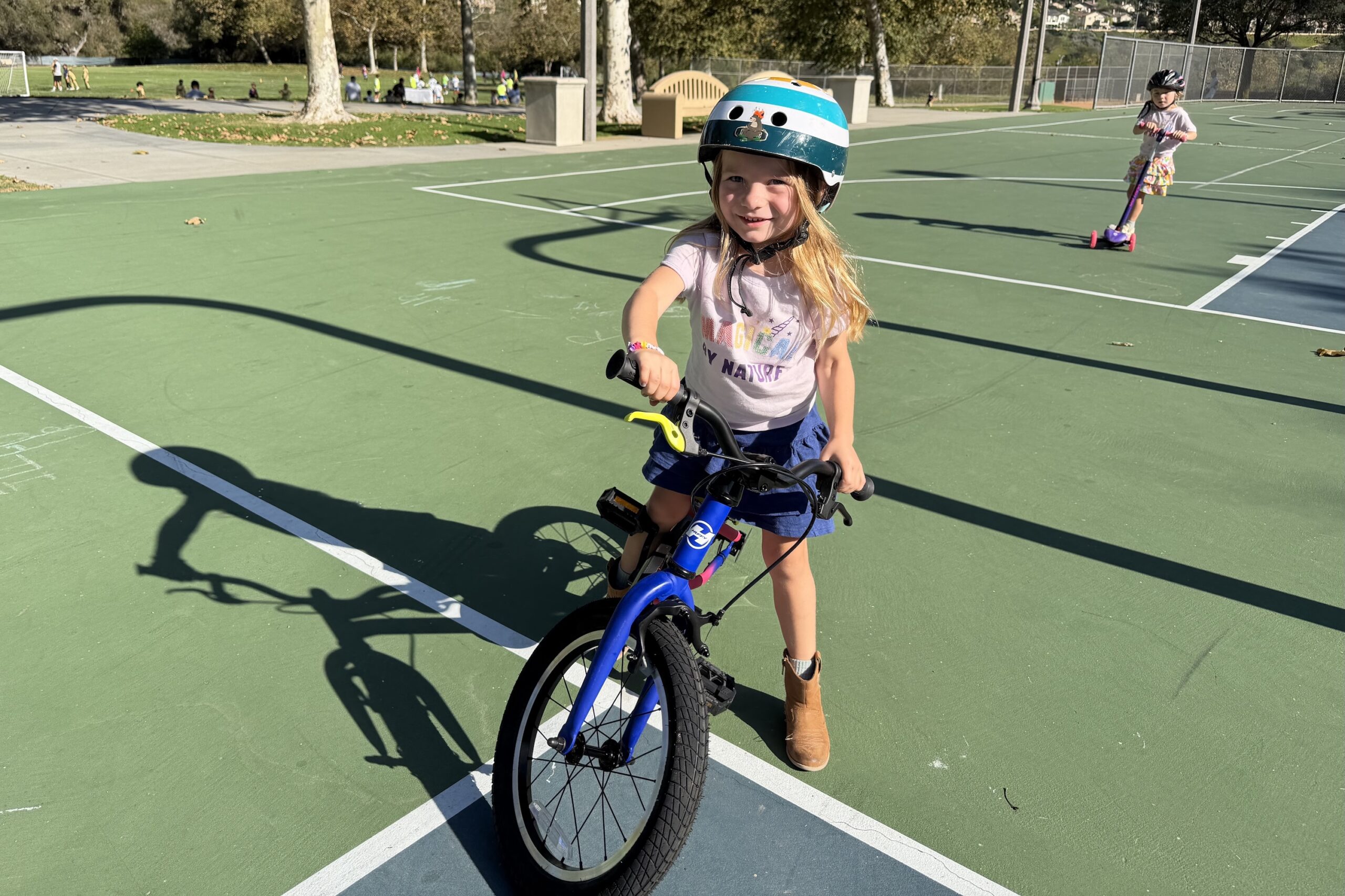
I opted for the 16” option for the younger 4.5-year-old twins and the 24” for my 10-year-old. Assembly from the delivery boxes was simple enough, though you do need to attach and adjust brake cables. Fortunately, on the 12- and 16-inch models, the back brake is color-coded. And having only ridden balance bikes and their cousin’s training-wheeled bike with coaster brakes, the twins were fascinated to get on the new bright-colored rides (pink accents!) and try out the hand braking.
All Systems Go
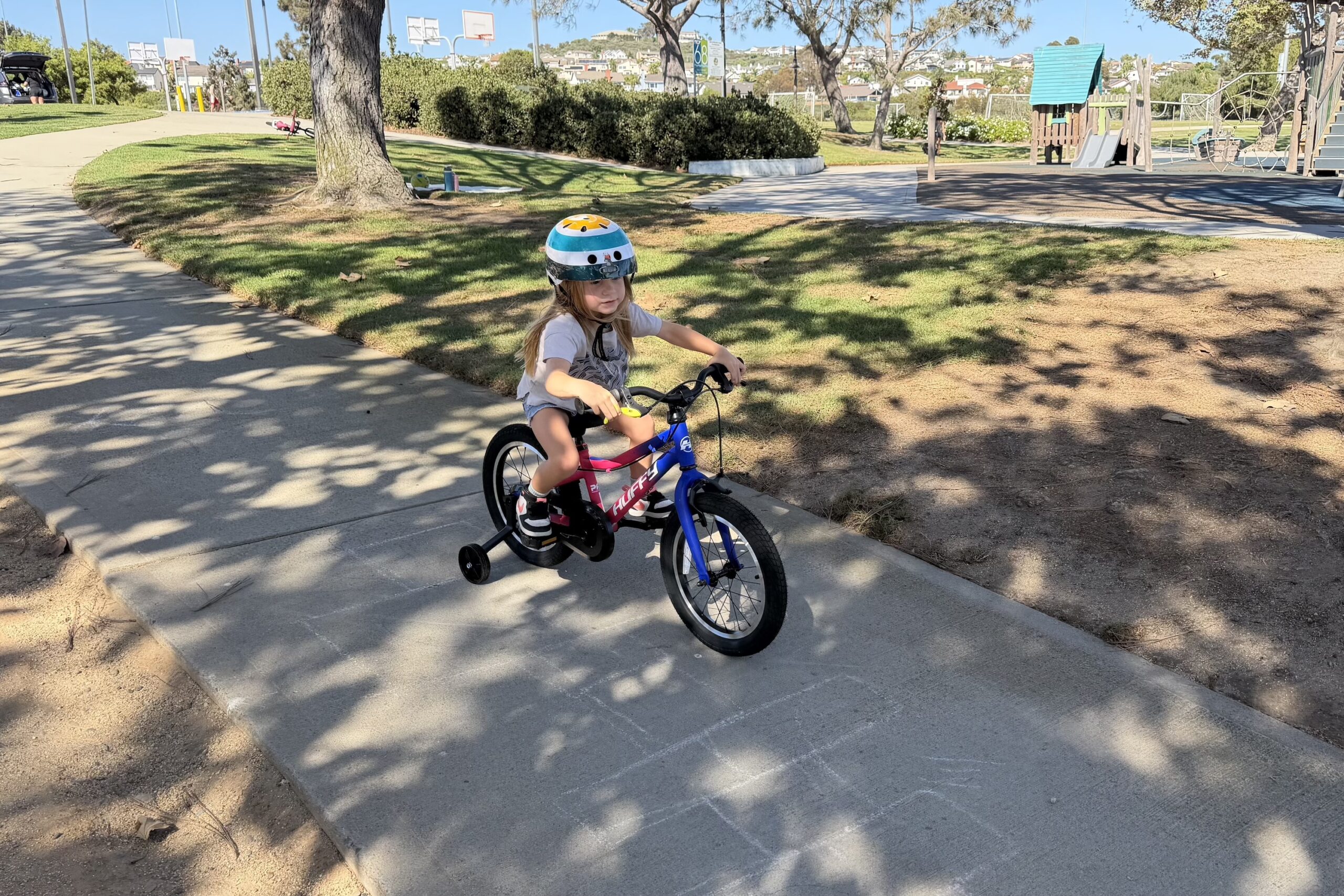
The new-bike excitement carried through to the first test ride for Pepper (the more daring of the twins). She wasn’t bothered by the adjusted seat height as she could straddle the top tube while standing flat-footed on the ground. Credit the Perfect Fit™ frame’s stepthrough ease and seat-tube angles that lower the bike’s overall center of gravity. When she started pedaling (with me holding onto the parent-assist saddle handle), Pepper was able to sit more upright and still extend through the pedal strokes. Then, stopping (when I would let go), she could still put a foot down to catch herself — versus tipping over or bailing off the bike.
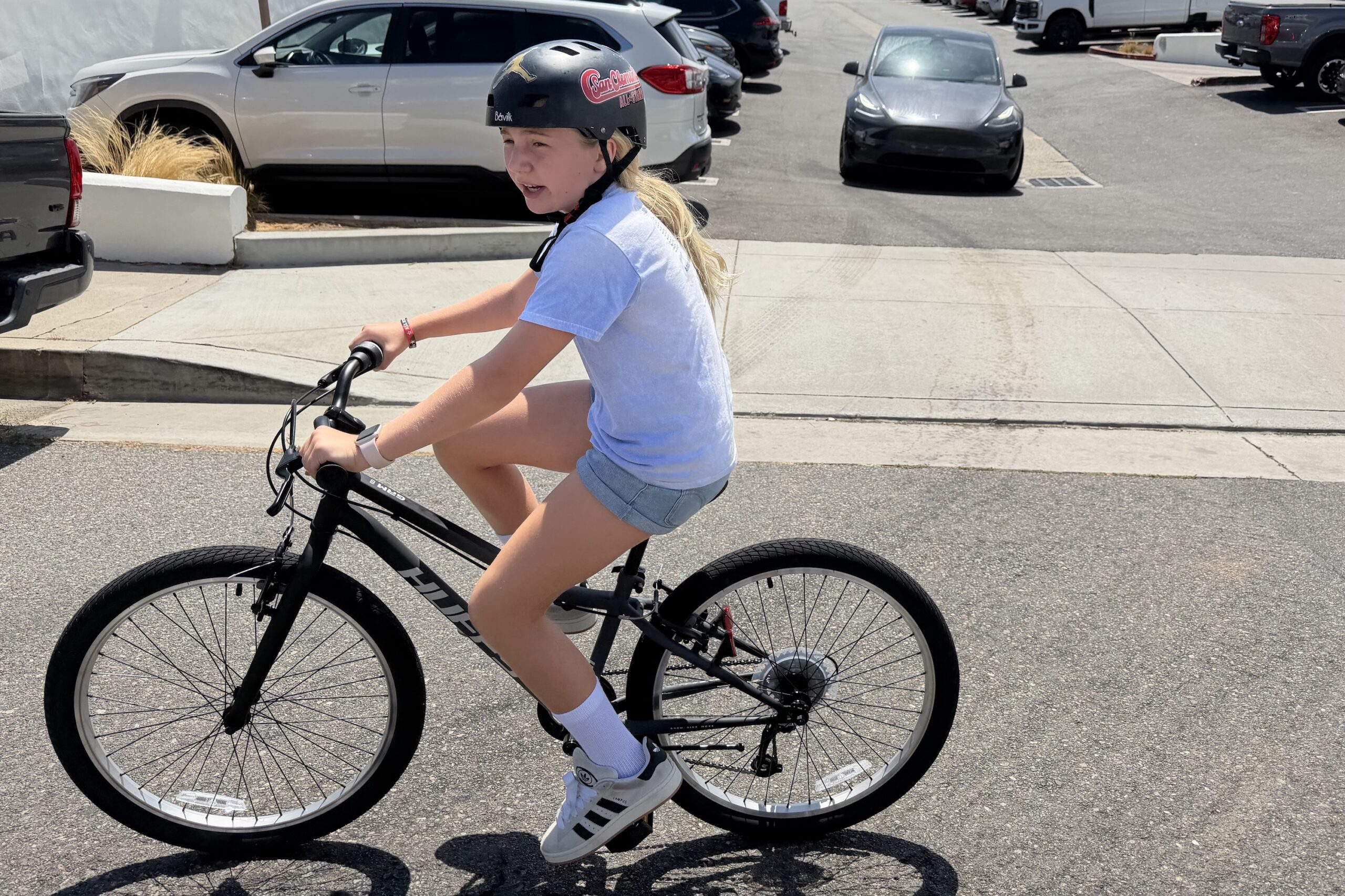
Seeing Pepper still need seat-handling help to nail the forward-momentum balance didn’t convince the other twin, Leila, to swap in. Though, I chalk that up to the afternoon snack lull — blood sugar levels just as important a factor as any direction I could provide. Fortunately, their older sister, River, was making laps around them, enthralled with the 7-Speed Shimano twist shifter that had been missing from heavy hand-me-down bikes not optimized for learning kids. As she learned the basics of going from the lowest gear and working up (as downhill coasting permitted), she was getting ready for the huge hill outside our home.
Stopping Power
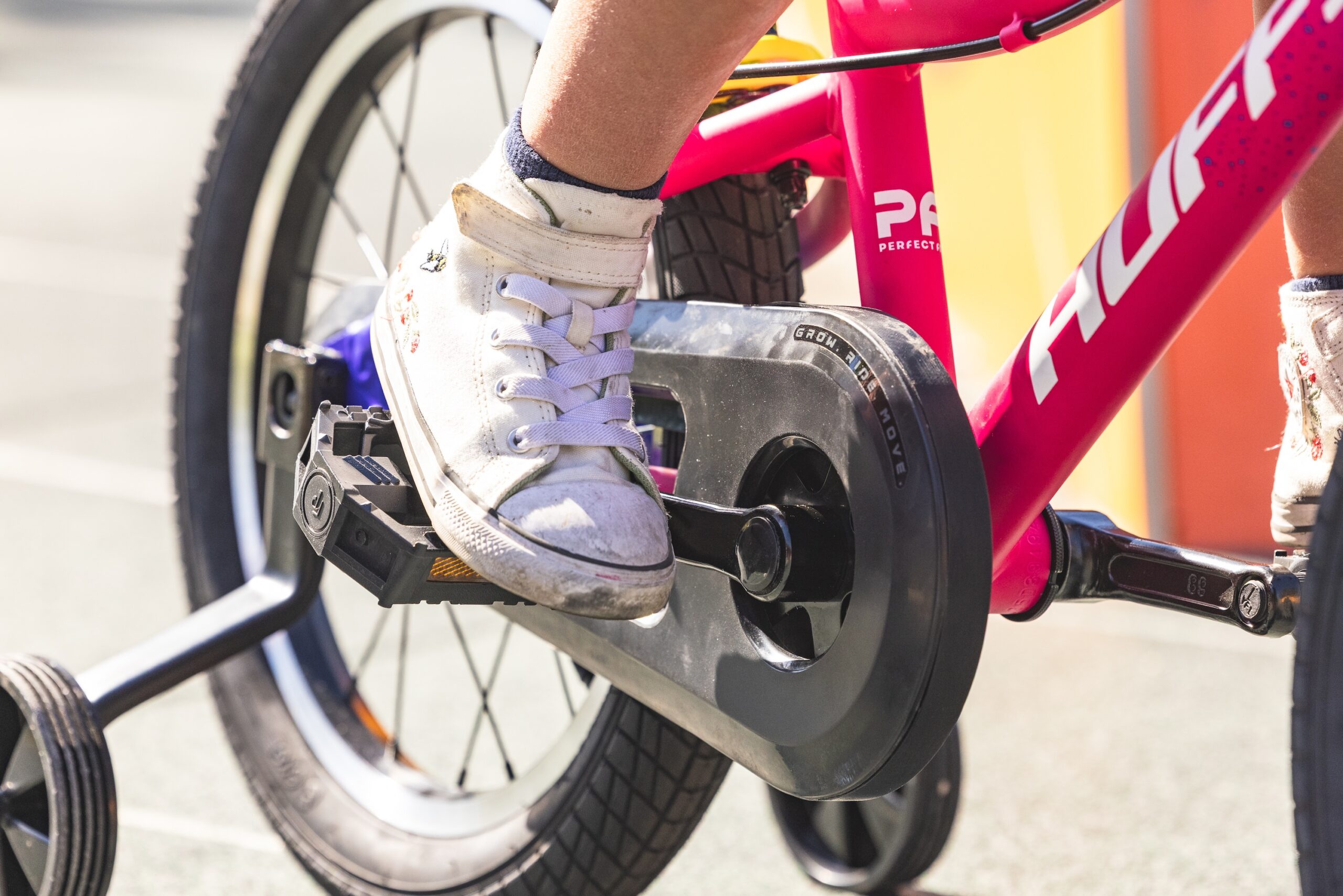
Speaking of hills, for our second ease-in session, the twins (Pepper at least) were ready for some short declines to test out the brakes. The flipside of the standover ease of the top tube, though, was a few growing pains. Before she could learn to trust the hand brakes, she’d still automatically put her feet down to catch herself, inevitably rotating the pedals into her calves — a habit she quickly learned to avoid after a few extra tries. The enclosed chain also kept me from worrying about any further tangled legs. The Triple Braking System options came a little more naturally to Leila, who simply opted for using the built-in coaster brakes instead of the hand brakes. Meanwhile, on the 24-incher, River was learning adult-bike life without coasters, stopping herself more confidently on hills with the dual V-brakes.
Intangibles
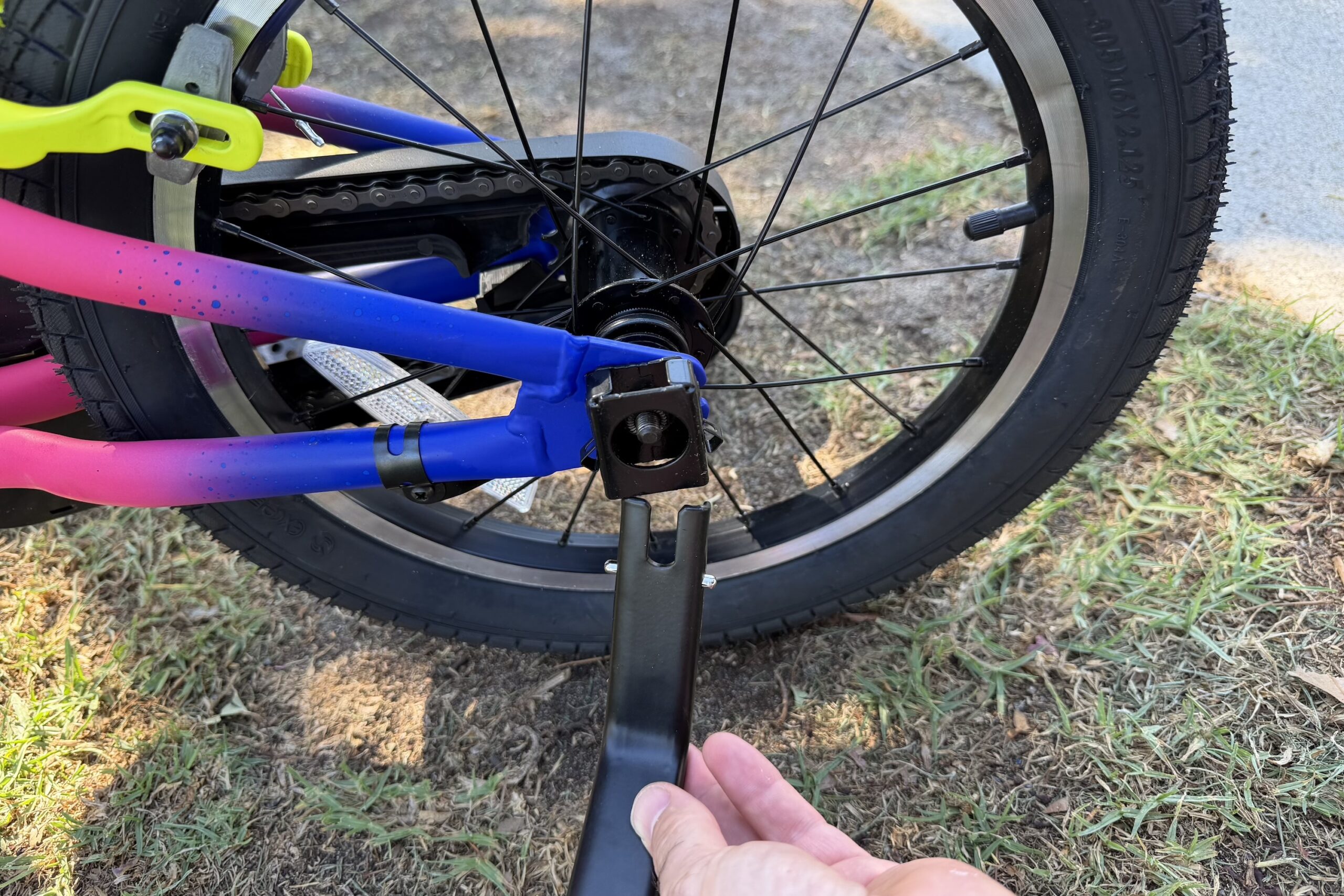
Teaching two kids at the same time requires some contingencies. With only one kiddo ready and wanting to go without the training wheels, I had to make some concessions to my original plan. Alas, the no-tool attachments make it a simple thumb-squeeze to pop the training wheels in (or out) per risk-averse rider. (I also like to store the bikes vertically, so I remove the training wheels for transit and storage.)
So, I gave in, but ultimately teaching kids to ride is more about overall enthusiasm than short-term wins. Though a thrilling “I did it!” turn, stop, and smile is all it takes to refuel the parent-points to load up the bikes and try it again another day. Seeing their older sister now jump on her bike to ride down (up back up) hills outside doesn’t hurt either — to put the see-do pressure on them to keep at it.
At the end of the day, kids’ bikes are expensive and quickly outgrown. The training wheel flexibility and the Move-Up Program™ make the Huffy GRM line a very attractive option, especially if you have multiple kids.
This article is sponsored by Huffy.