

In the small town of Pajaro, California, just next to Watsonville, agriculture is very clearly the primary economic driver. Strawberries are the main crop grown in the area, and fields of them stretch in every direction for about as far as the eye can see. And just off the main road through these countless fields of strawberries is a relatively nondescript, industrial-looking building that frankly looks slightly out of place.
Turns out, that building has a curious history, and is now home to what is likely the most advanced carbon fiber bike frame production in the U.S. — Ibis’ solar-powered factory. In an industry where the vast majority of carbon frame production is outsourced to factories in Asia, Ibis has taken on the challenge of not only making some of its own, but attempting to do it better by improving the process — while using renewable energy!
During my visit to the Ibis HQ in Santa Cruz to test ride the new Ripley SL a couple weeks ago, I got a tour of the Pajaro factory where the frames are being made. Ibis founder Scot Nicol and Engineering Manager Colin Hughes explained how the facility came to be and what sets their process apart from typical carbon frame production. I also got to observe as Ripley SL frames went from raw sheets of carbon fiber to a finished product, and every step in between, all of which happens under one roof.
A Little Background

Back in 2018, we reported on Ibis Cycles’ in-house carbon frame manufacturing project, known at the time as Carbon 831. Initially, this in-house carbon lab allowed Ibis to experiment with carbon manufacturing techniques, and ultimately, resulted in the in-house production of the size small Ripley LS frames. Initially, it seemed that Carbon 831 was a proof of concept, as Ibis’ design, engineering, and production team developed its own process in an effort to make carbon frame production more time, material, and energy efficient.
Ultimately, through experimentation and the findings with Carbon 831, the team at Ibis learned that it was feasible to produce carbon frames in the U.S. By refining their layups, Hughes says they determined it was possible to use far fewer, but more intricate pieces, reducing the number from 300-400 to around 100-120. In turn, the time required to lay up a frame was greatly reduced. At the same time, they developed their own internally heated molds, which also helped to reduce both the time and the energy required for each frame in the molding process.

All told, Hughes says that their in-house process takes approximately ~30% of the time compared to the Asian factories Ibis uses for the majority of its carbon frame production. Along with fewer materials, this time efficiency helps offset the significantly higher labor costs in the U.S.
Fast forward to 2021, when Ibis launched the Exie cross-country bike, they also announced that the frames were being handmade in the USA. The frames would be produced at the new Pajaro carbon factory, demonstrating that U.S. carbon production was still possible and could be as good, if not better, than those made overseas. Now, with the Exie model riding off into the sunset, Ibis has shifted its U.S. frame production to the recently released Ripley SL.
From Fiber Optics to Bike Frames

Ibis’ Pajaro facility has a pretty interesting story and an unlikely trajectory to becoming a carbon bike frame factory. As the story goes, in the ‘90s, a major communications corporation had the building constructed for the outrageous sum of 33 million dollars. It was intended to be the end of a trans-Pacific fiber optic line and was built to withstand natural disasters, floods, and power outages.
Turns out, this telecom giant apparently didn’t do enough research, and the location couldn’t be used as the terminus of an underwater fiber-optic line because the nearby Monterey Bay, through which the line would have to pass, is a protected marine sanctuary. Oops. That was a 33-million-dollar mistake. The building sat empty and unused for a couple of decades.

Eventually, when Ibis was looking for a facility to do their in-house carbon production, this building was one of the best options. The town of Pajaro is only about 30 minutes south of the brand’s Santa Cruz HQ, making it easy to access. It sounds like the owners were also quite eager to sell, with Ibis acquiring the building for ~10% of the original building cost.
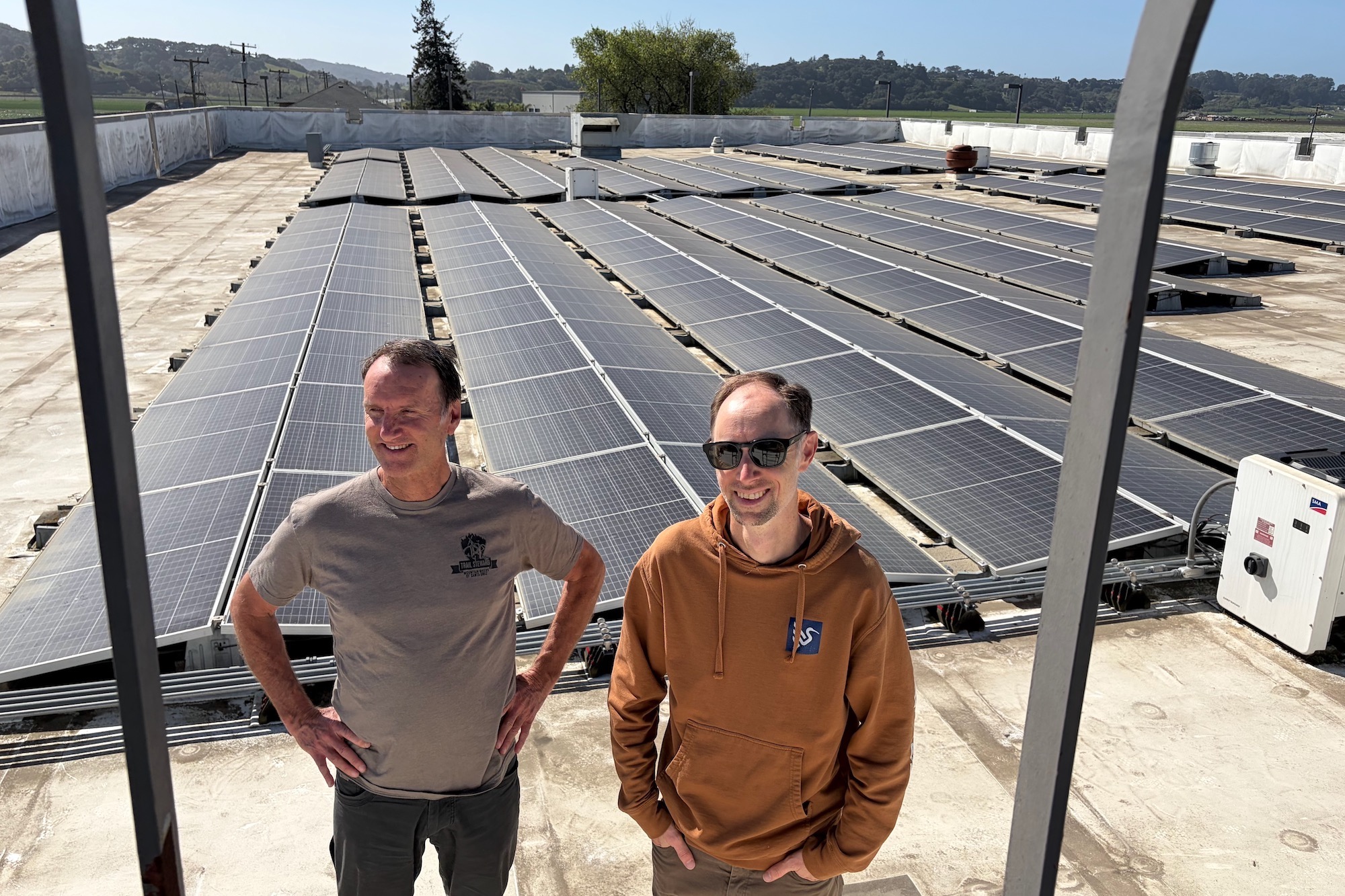
According to Ibis partner and CEO Hans Heim, they removed and sold 32,000 pounds of copper wire from the building after they bought it. The locomotive-sized backup generator was deemed unnecessary as well, and it was sold and shipped to a town in Colorado. As part of Ibis’ ongoing sustainability efforts, they converted the building to solar power by installing a large solar array on the roof.
A History of Carbon Manufacturing

While visiting the Ibis factory, I learned that although Watsonville’s economy is driven primarily by agriculture, the area has a long history of carbon fiber production. In fact, Kestrel Bikes was based in Santa Cruz with production in Watsonville when it began producing and selling the world’s first all-carbon-fiber bike frames in the late 1980s. Additionally, Calfee Design was located in nearby La Selva Beach and began producing carbon fiber bike frames in the late ‘80s and early ‘90s, too.
Ibis’ Engineering Manager, Colin Hughes, got his start at Kestrel before joining the Ibis team and becoming a partner in the business. Ruben and Oscar, two of Ibis’ production leads at the carbon factory, worked at Kestrel in the late 90s. When Kestrel’s production was moved overseas, some of the employees went to work for other carbon manufacturers, including a nearby aerospace company and another that produced helmet parts for F-35 fighter jets.
So, when Ibis started its in-house carbon manufacturing project several years ago, they were able to pull from a surprisingly deep pool of local workers with extensive carbon experience. Some of Ibis’ carbon factory employees, like Ruben and Oscar, have been working with the material for over 30 years.
Breaking the Mold

Carbon fiber production is a highly specialized process, and aside from some boutique builders stateside, the overwhelming majority of carbon bike frame production is done in Asia. Over the years, several Asian countries have become hubs for carbon frame production, with the infrastructure, equipment, knowledge, experience, and workforce essentially centralizing the industry. And, for the most part, these established factories do their job well and with significantly lower labor costs than in the U.S.
So, one of the main goals with Ibis’ in-house carbon frame production was to improve the process to make it more efficient, reducing the materials, time, and energy required to make a frame. As mentioned previously, by carefully refining carbon layups, Hughes and the team at Ibis reduced the number of pieces to less than half, significantly reducing layup time. Additionally, they developed molds with both external and internal heating, which both sped up the molding process and made it more energy efficient.

In fact, the energy efficiency of Ibis’ process enables the entire factory to run on solar power generated by the roof array. They told me that even on their busiest production days, they only use about half of the power generated by the solar panels. We climbed up a ladder and onto the roof to check out the solar setup. Solar panels aren’t much to look at, but I was impressed by the fact that they are able to generate enough power to run the entire factory and then some. In terms of sustainable power generation, they aren’t just talking the talk; they’re walking it, too.
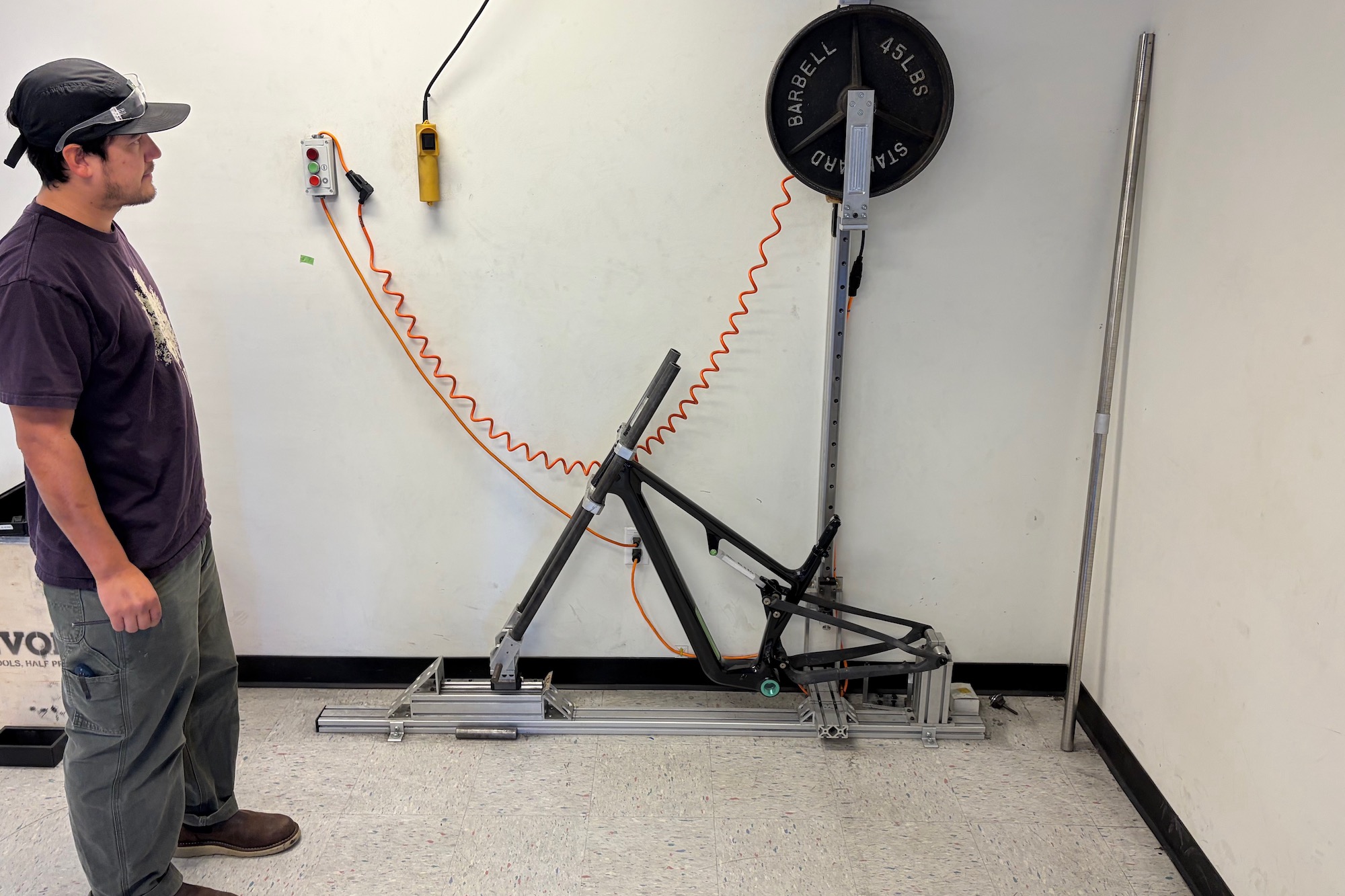

But it’s not just energy efficiency. They’ve brought the entire frame production process in-house and under one roof. From layup to paint, it all happens here, including testing. With in-house frame testing at the solar factory, they can very quickly and easily identify issues and validate design changes in real time, boosting efficiency in other ways.
Layup by Number

Now, I don’t have a background in composites, and I’ve never seen carbon fiber bike frame production in person before, so I don’t really have anything to compare the Ibis factory and process to. But I will say that it was a lot cleaner and far more organized than I previously imagined. Colin and Scot led me through every step, from sheets of carbon to painted Ripley SL frames going into boxes.
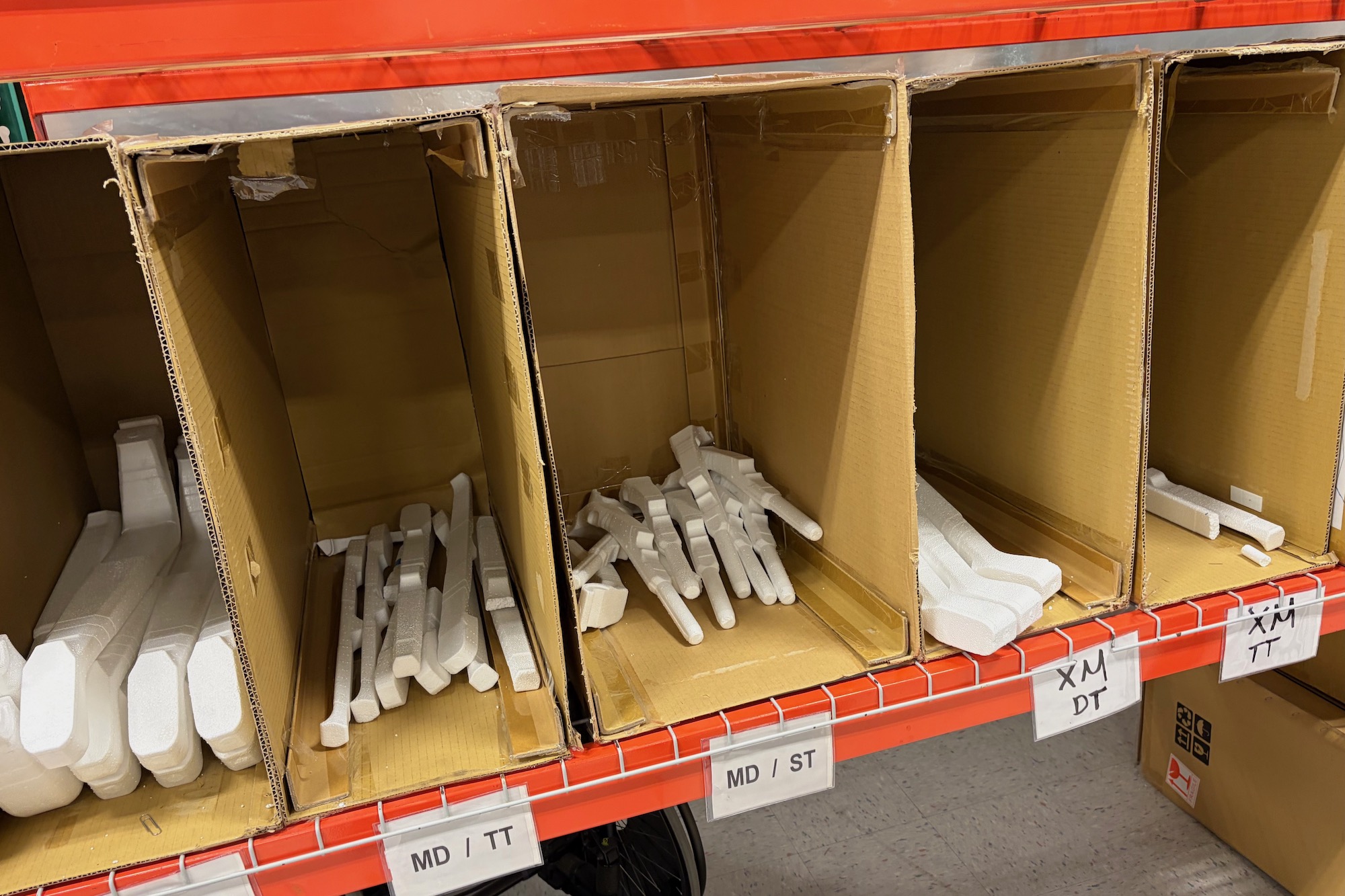

We started with the styrofoam blanks, precisely shaped pieces that get encased in a bladder and serve as the structure around which the carbon pieces are laid up. Next, we moved to the cutting table, where rolls of pre-preg carbon fiber are cut into large sheets and then intricately cut by a fancy computerized machine.
Every piece is numbered, representing the very specific and deliberate order in which it gets laid up. This process ensures that every piece and layer of the carbon fiber layup is the exact same for every frame, and that even the bias of the carbon plies matches the design specifications exactly, every single time.
Into and Out of the Mold
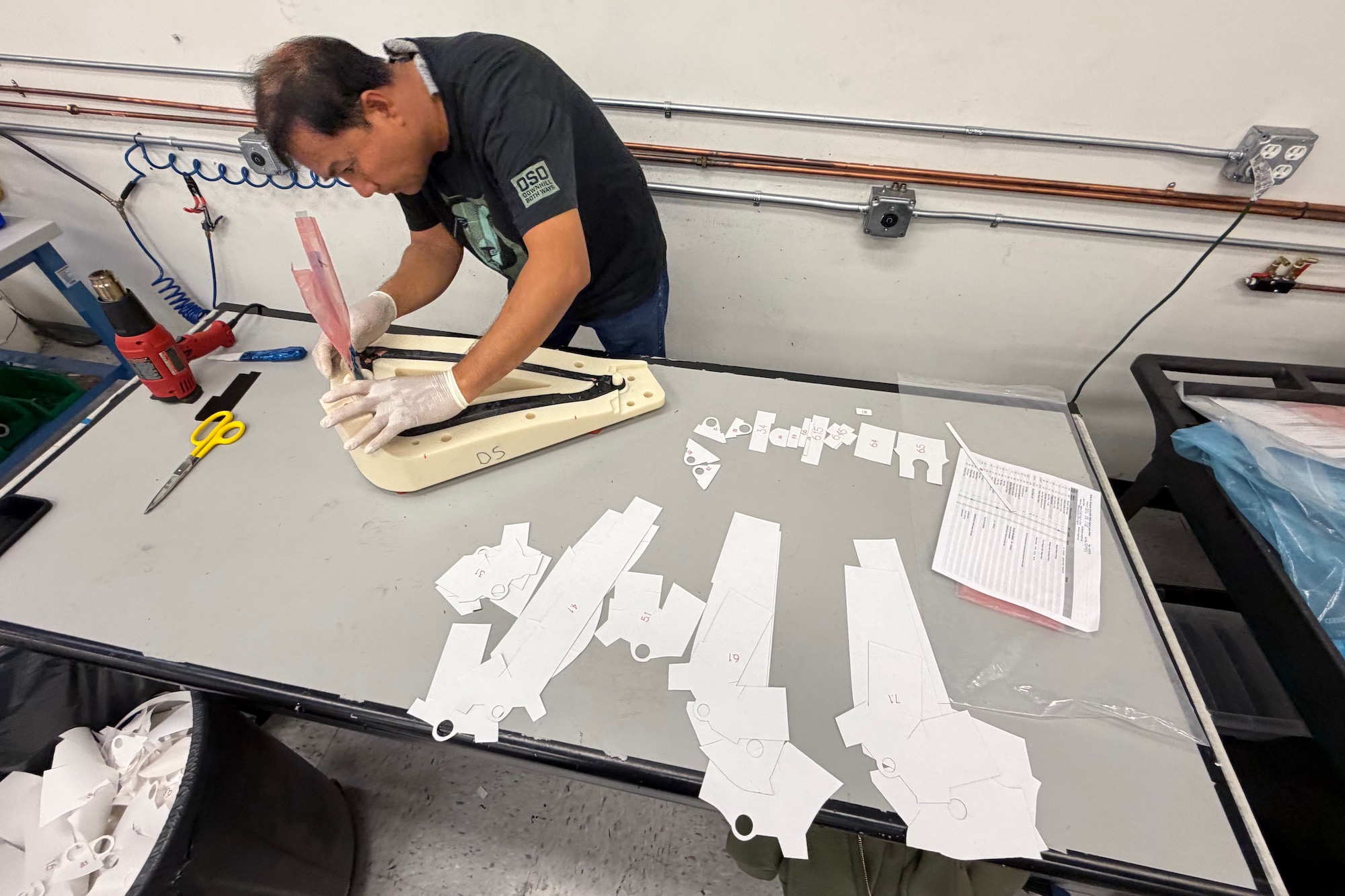

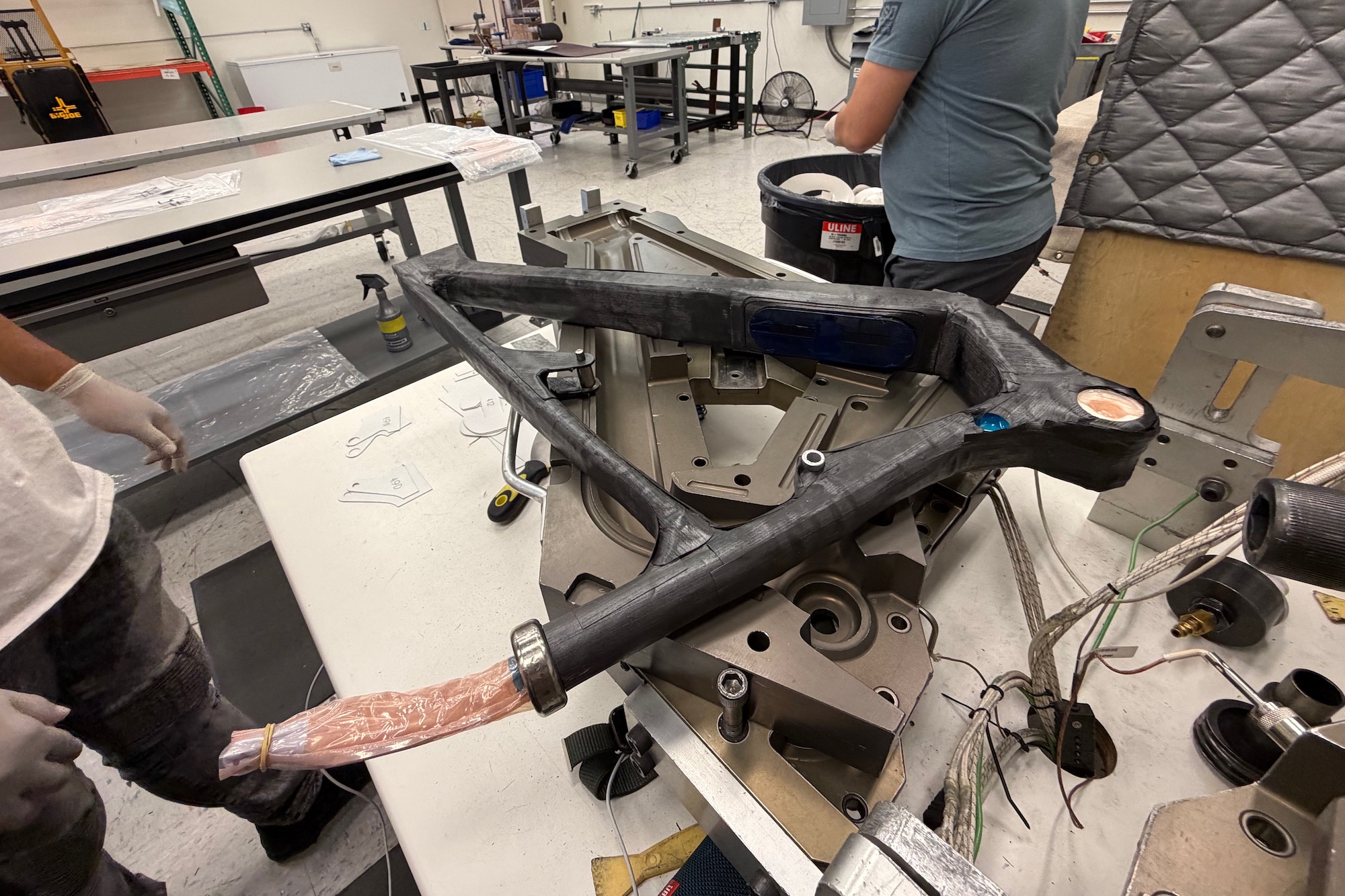
In the next room, two employees slide the styrofoam blanks into bladders, working meticulously and somehow not breaking the super-thin seat stay and chainstay pieces in the process. I definitely would have, but these guys have their systems dialed. Those blanks in bladders move to layup, where workers then place all of the numbered carbon pieces around them before placing them into the molds. There’s no guesswork, no haphazardness, no superfluous pieces of carbon; everything serves a purpose and goes in the exact place that it should.
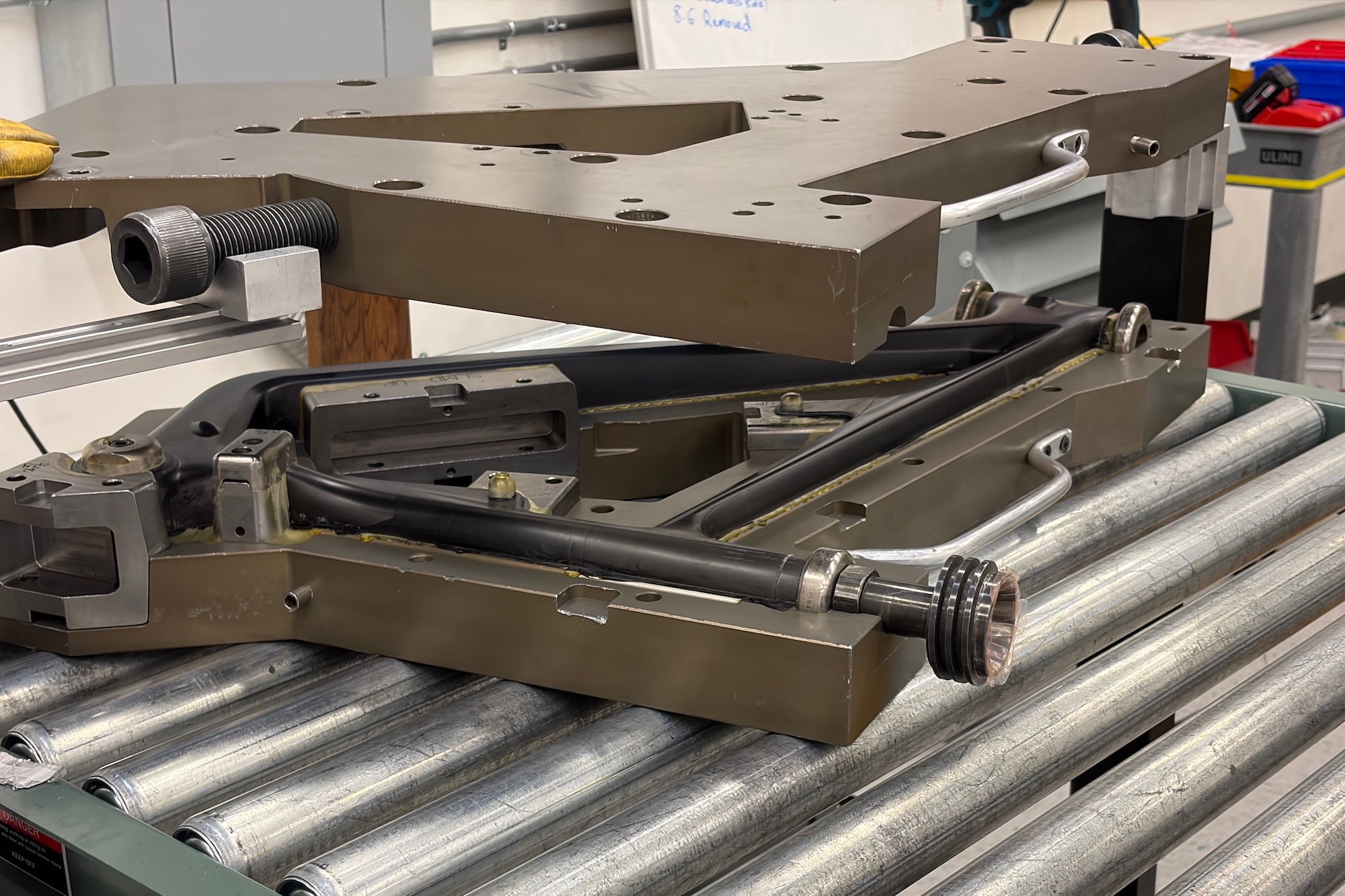
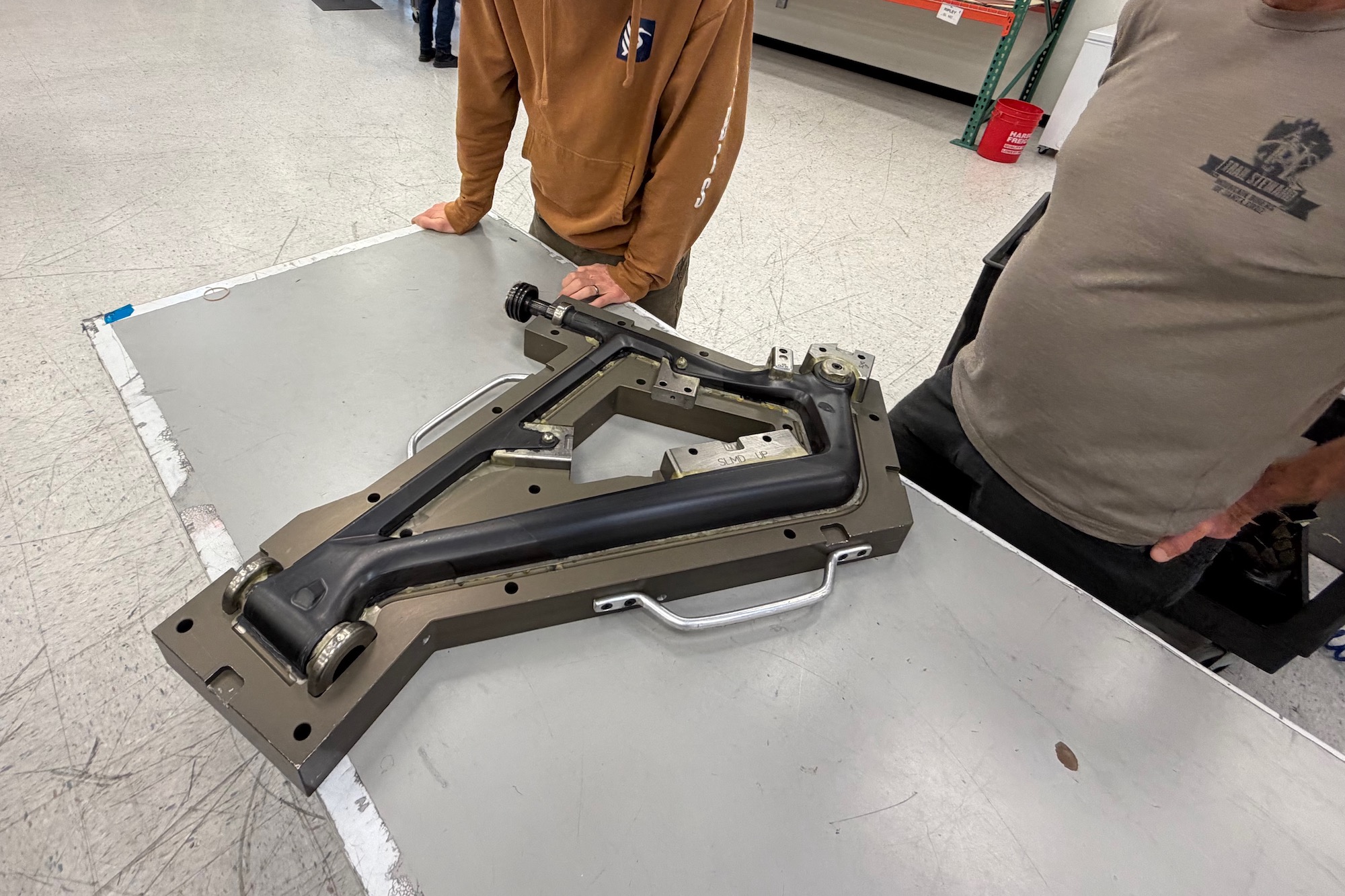
Once laid up, they go into the molds, which are clamped shut and placed in the press. In the press, the bladders are filled, and they cook for a couple of hours. Luckily, while I was there, a front triangle had just finished its time in the mold, and after it cooled, Oscar removed it for us to check out. It was honestly kinda wild to see a pretty finished-looking frame pop out of a mold when it was just a stack of pre-cut carbon pieces just a few hours earlier. There was just a little mohawk of extra epoxy/resin along the seams, which is completely normal and gets removed in the next stage of the process.

The frames move into the next room, where they’re inspected, sanded, and have all of the necessary fittings installed. Then, they move on to paint, getting their final color. In the case of the Ripley SL, that’s between Raw Carbon (my favorite), Tahoe Blue, and Gold Rush. After painting, they head to assembly, where linkages and shocks are installed, then they’re boxed up for shipment to shops/customers or Ibis HQ, where they’re assembled into complete bikes.


Full Circle
After the tour, I truly got the full-circle experience with a test ride on the new Ripley SL. Having the opportunity to see the place, process, and meet the people behind it gave me a newfound appreciation for how bikes are made. It was an eye-opening experience to see literally every step in the Ripley SL frame production process. While it’s obviously not easy to design and manufacture carbon fiber frames, the team at Ibis’ solar factory operated like a well-oiled machine and made it look like just another Tuesday, churning out some high-end carbon bike frames in the heart of strawberry country.

And perhaps more importantly, Ibis is showing the industry that domestic carbon production is still possible. It’s not easy, it’s not cheap, but by streamlining the process and improving efficiency, they’ve managed to keep prices competitive with other brands. And if you’re thinking, $4,499 for a frame is outrageous, it is actually in line with several other brands’ top-tier frames made in Asia. I’m not trying to say that’s not expensive, but the U.S.-made Ripley SL frame is priced the same as the latest Pivot Mach 4 SL, and hundreds of dollars less than the $5,200 Specialized S-Works Epic 8 — just as a couple of examples.
The folks at Ibis are proud of what they’ve accomplished, and rightly so. In such a highly competitive market, bringing any frame production back to the U.S. is no easy feat. Even though its just a fraction of their frame production, I’d argue that it’s still a big step in the right direction. And in an industry of secrets, they’re not keeping any of this from their competitors, either. They told me they’re an open book, willing to share their process and techniques with those interested. Whether or not any other brands follow suit remains to be seen, but I applaud Ibis for putting in the work and showing that it can be done differently.
And in another full-circle kinda way, it seems fitting that the California-based brand, founded by a young Scot Nicol in Mendocino 45 years ago, is back building some of its frames in its home state. On that note, congrats on 45 years, Ibis!


