


Updated: SRM and Q36.5 have opened the door a bit more on their new collaboration, now with production pieces, including weights, measurements, and ergo testing.
When two of cycling’s most obsessive minds start sketching on napkins at midnight, you can expect something wild to emerge. That’s precisely how the latest project from Q36.5 and SRM began. Six months later, it’s turned into what both brands are calling a game-changing advance in power transfer and pedal feel —a fully integrated pedal-and-shoe system with the lowest stack height in cycling. Now we’re finally getting production samples with actual measurements, but… still no pricing.

SRM x Q36.5
Let’s start from the top: When Q36.5 rolled out its new Unique Pro Shoe in May 2025, it showed off a very competitive performance road shoe with a super-low (but not the lowest) stack height. To be clear, the Q36.5 Unique shoe has a stack height of 4.4mm, and the Bont Vaypor has a stack height of 3.6mm. The Q36.5 design hinges on a new, patent-pending carbon fiber sole 2.2mm thick, designed to lower pedaling height across the brand’s road offerings.


For example, when paired with Shimano SPD-SL pedals and cleats, the Unique Pro puts riders at an average total stack height of 17.8mm, already lower than most traditional setups.
Swap in the new SRM X-Power Direct pedals, that number drops to an impressive 11.9mm.
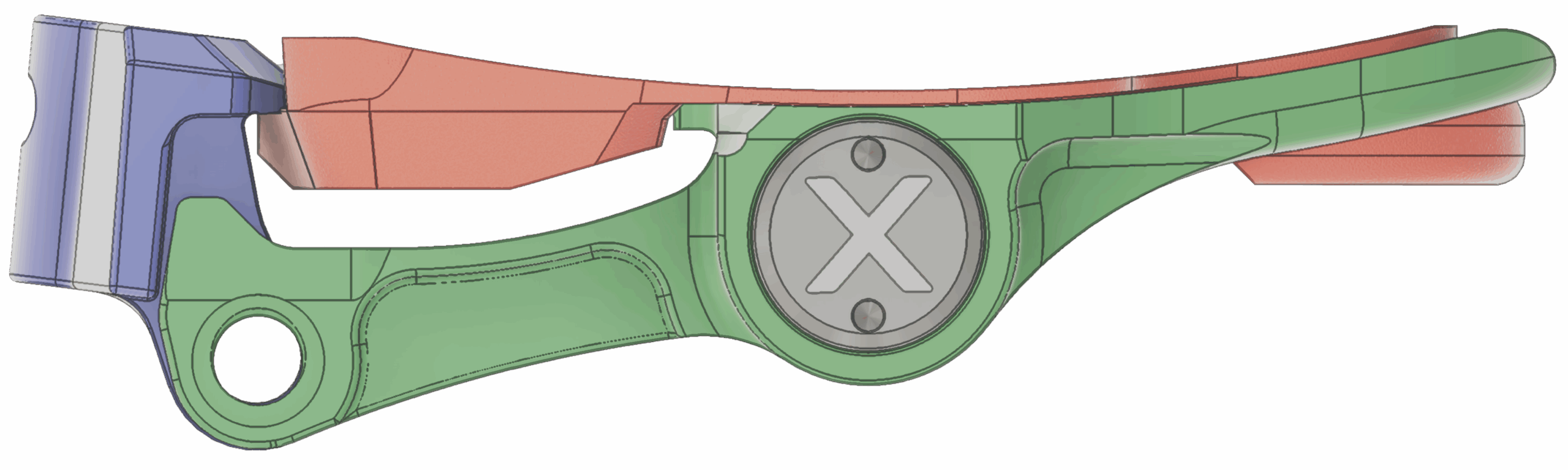

What will this do for the rider? A standard Shimano SPD-SL setup places the foot roughly 15.6mm above the pedal axle, while the SRM system brings that down to 9.7mm at the pedal-to-cleat interface. The result is a noticeably lower, more direct connection to the bike. Less material between foot and axle, less wasted movement, for both more planted and more efficient pedaling.

How Does the SRM Q36.5 Pedal System Work?
The system pairs Q36.5’s Unique Pro shoes with an all-new SRM-engineered pedal to deliver an 8 mm reduction in stack height compared to current industry benchmarks — and a radically more direct connection between rider and bike.

Born from a Late-Night Challenge
According to Q36.5 founder Luigi Bergamo, the project began as an offhand idea during a conversation with Ulrich Schoberer, founder of SRM and inventor of the cycling power meter. Bergamo had been experimenting with thinner sole constructions during prototype testing and noticed tangible improvements in pedaling efficiency.
“Wouldn’t it be possible,” he asked, “to design a pedal that reduced stack height even further?”
Schoberer, who has spent decades dissecting how power moves through crankarms and sensors, immediately saw the potential. Within a few months, a working prototype emerged — a pedal so minimal that it effectively eliminates the “gap” between foot and spindle.
Where most brands chase carbon stiffness and weight savings, Bergamo and Schoberer went straight to the interface itself. By co-engineering the shoe and pedal as a closed system, they’ve shaved more than 8 mm of stack while maintaining the structural integrity needed for pro-level power output.

Built for the Purest Power Transfer
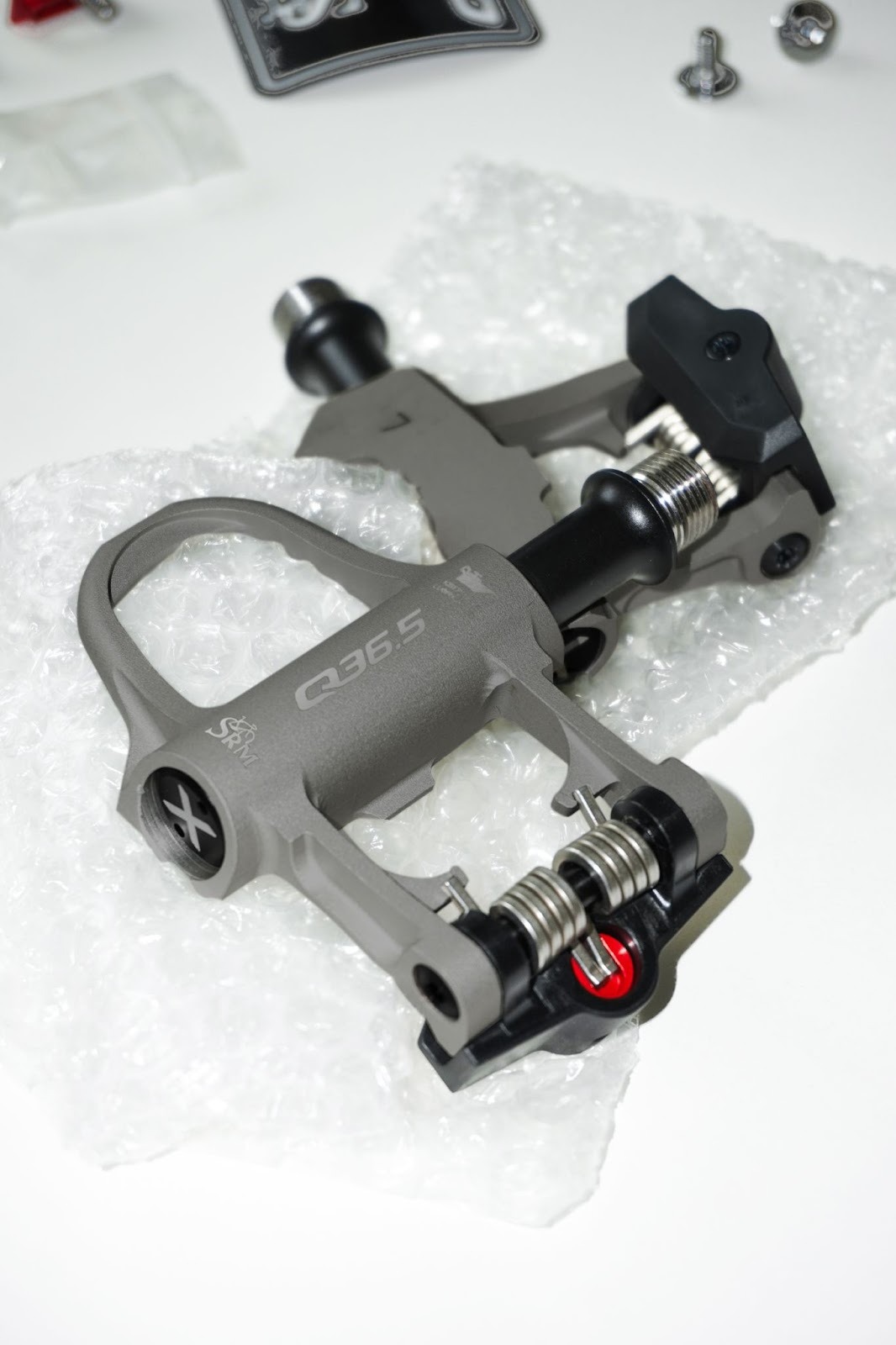
In testing footage shared by Q36.5, the difference is striking. The rider’s shoe sits visibly lower on the pedal platform, with the entire foot closer to the rotational axis. The Q36.5 Unique Pro shoe uses an ultrathin carbon sole with a recessed cleat channel that locks directly into the new SRM pedal body — no spacers, no redundant hardware.

That lower foot-to-axle position reduces leverage loss through the pedal stroke, creating what Q36.5 describes as a “mechanically direct” feel. The pedal body, milled from alloy, houses a simplified retention interface designed exclusively for this shoe platform.
Q36.5 and SRM claim it’s the shortest, stiffest, and most efficient route your watts have ever taken from foot to flywheel.
(Photo/©AlexFaedda)
A Closed, Precision System
The SRM pedal will initially launch in one version — without a power meter — to keep weight and complexity down. It will be sold exclusively with Q36.5’s Unique Pro Shoes. Forming a unified ecosystem designed around a single purpose: maximum efficiency through minimal distance.
Every element, from cleat plate to sole curvature, was engineered to match the pedal’s dimensions. The result is an integrated rider interface, not just another mix-and-match component set.

(Photo/©AlexFaedda)
Availability and Pricing
- Availability: Limited release through select Q36.5 retailers (to be announced)
- Versions: Single SRM pedal model, sold exclusively with Q36.5 Unique Pro Shoes

What Does This Mean?
Stack height doesn’t make for flashy marketing. However, it’s one of those hidden numbers that quietly governs how a bike feels under power. Reducing it changes everything: your leverage point, foot stability, muscle engagement, even how the bike responds when you sprint or climb out of the saddle.
By jointly attacking the interface rather than the components, Q36.5 and SRM may have opened a new front in performance tech — one that moves beyond electronics and aero to redefine the mechanics of pedaling itself.
We’ll have this system in for a full review as soon as production units drop. If Q36.5’s bold claims hold up, this could be the most significant leap in pedal design since the original power meter itself.


