

It was one of the biggest launches of the year: Shimano finally introduced its wireless electronic mountain bike drivetrain. Naturally, they led with their flagship XTR line. But they surprised a lot of people by introducing both XT and Deore Di2 just a few weeks later.
You can always bet on XTR being the lightest, most drool-worthy group in the Shimano lineup, but XT has always been the affordable workhorse. So what’s the new XT M8200 Di2 group like? That’s exactly what we wanted to find out – specifically with the compact GS group, which is an all-new option for XT.
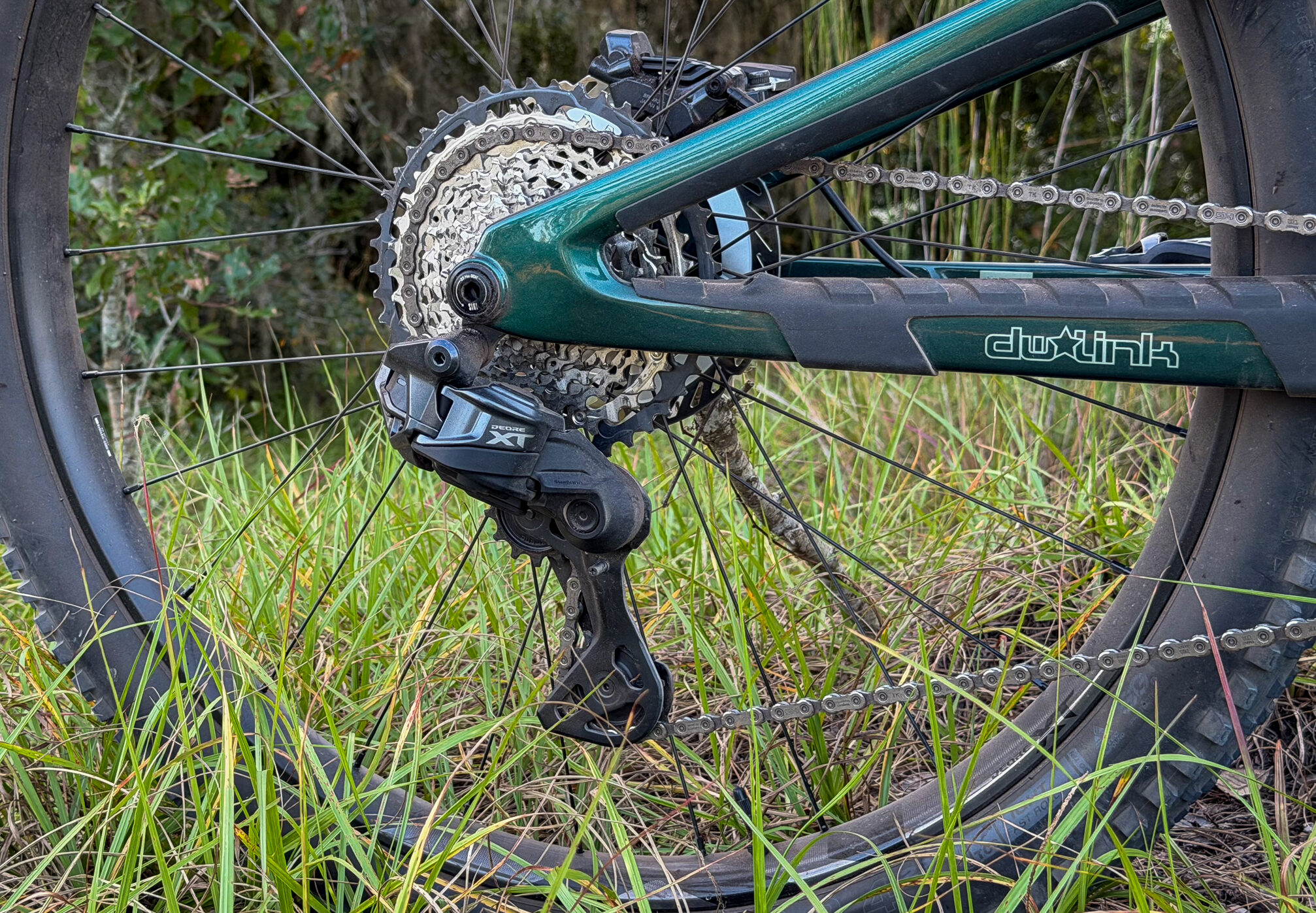
As a refresher, the new Di2 system features a new Shadow ES derailleur design with a wedge-shaped profile that deflects impacts away from the mechanism.
If you hit the derailleur hard enough, the Automatic Impact Recovery Function absorbs larger hits and then automatically returns to the previously selected gear. Shimano replaced the traditional clutch mechanism with a Slim Stabilizer system, which claims to provide improved chain tension and wrap while reducing the derailleur’s vulnerable front profile.
The wireless system houses its battery within the derailleur’s parallelogram, protected by a door with an integrated skid plate and breakaway feature. The XT version uses an aluminum cage construction and like XTR, maintains compatibility with standard derailleur hangers, including UDH-equipped frames, allowing for easier field repairs when hangers are damaged.
XT Di2 Performance
Historically, XT has performed very similarly to XTR. That’s now the case more than ever as the electronic components seem to share the same internal motors, batteries, switches, etc. That’s a good thing, as the new XTR group offers lightning-fast shifting and industry-leading electronic shifter adjustment. The shift paddles themselves are a bit nicer on the XTR shifter, but other than that (and the absence of the double/single click mode converter), the shifting experience is nearly identical on XT.
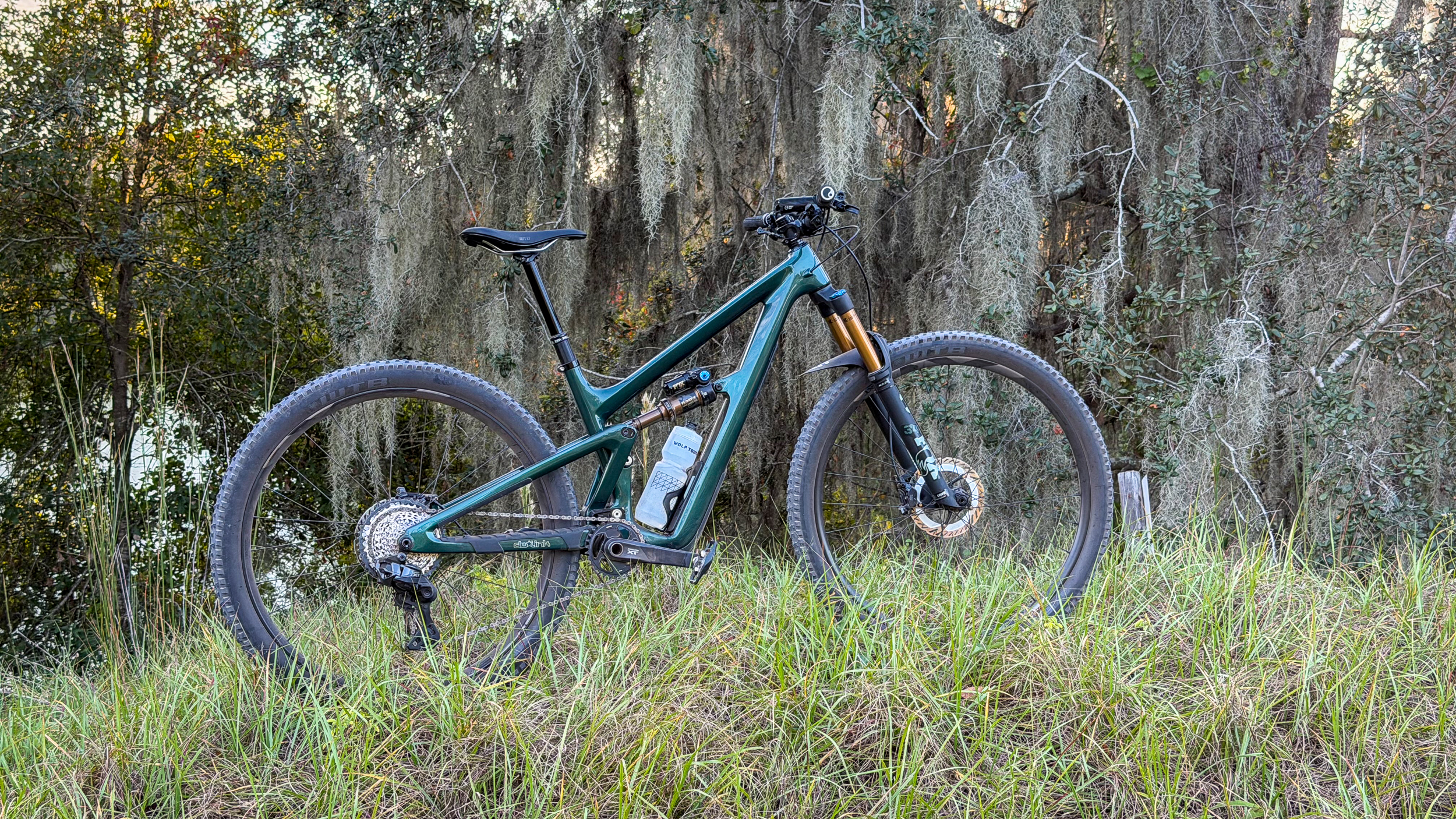
To test out the XT group, I built up the latest generation of the Ibis Ripley. Installation was a breeze – provided you know your way around traditional limit screws. Personally, I like the idea of moving past limit and B-tension screws, but in my experience, we’re just not there yet. Derailleurs, frames, cassettes, and hubs can be very precise, but inevitably, there always seems to be something that needs to be adjusted. Things get hit. They bend. Having the ability to adjust both the derailleur and the hanger itself seems like a better method than throwing it away and starting all over again.
Setup (Download the App First)
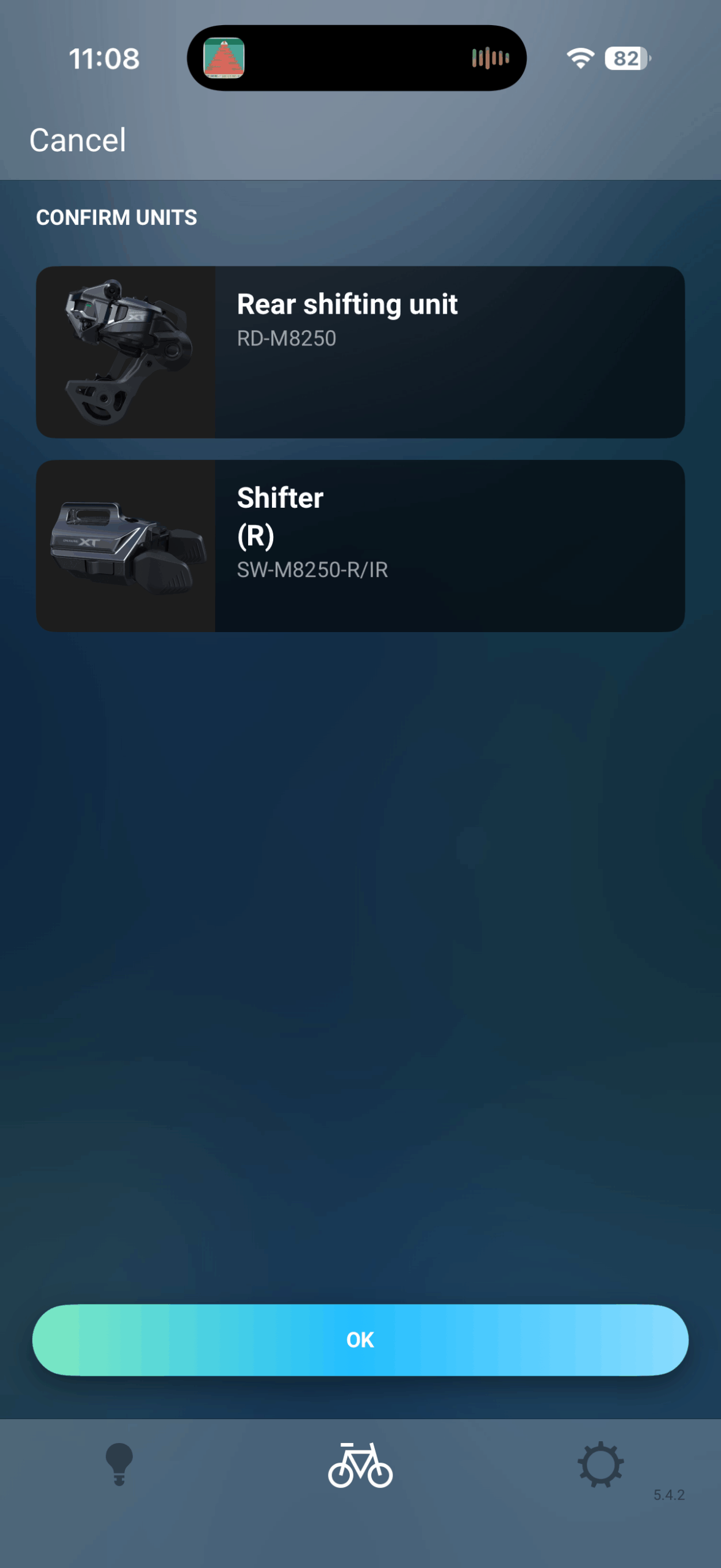

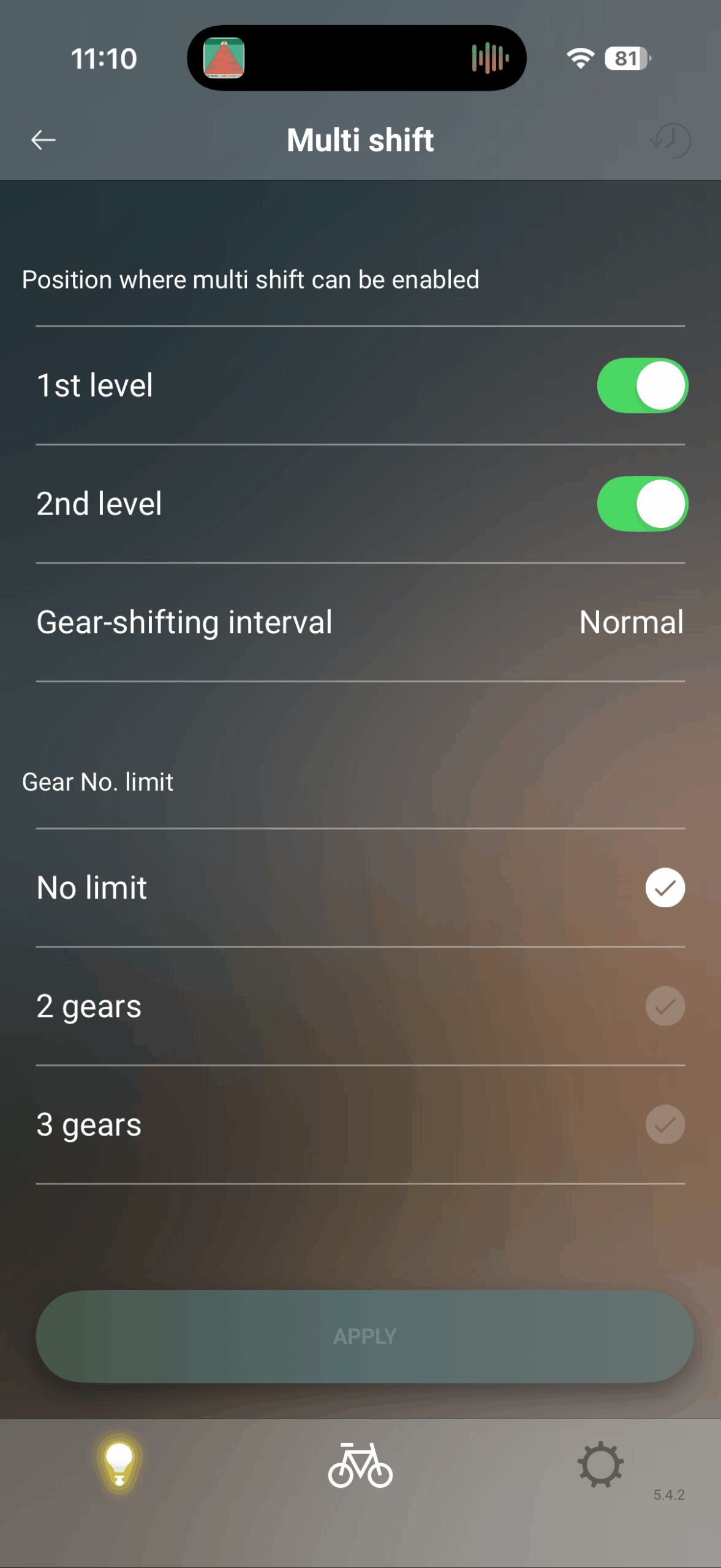
Other than the traditional derailleur setup, the Di2 group requires you to connect the derailleur and then the shifter to the Shimano E-Tube app. Once you’re connected, you should also verify that the firmware is up to date. This is an unfortunate reality of electronic groupsets – constantly updating firmware. But on the bright side, your drivetrain is also constantly improving! The compact group is not e-bike compatible, so there is no way to turn on e-bike mode, which delays the shifting, but you can control other functions like shift speed, multi-shift settings, and assign shifter switch settings.
Faster Shifting Makes a Difference

On one of my latest rides on the Ripley, I found myself jumping into a very fast group ride with no idea what I was getting into. Had I known that this would have been a spandex-clad, XC-race-pace ride, I probably would have opted for a different ride. But there’s no better test of a drivetrain’s shifting speed than when you’re firmly in the red, riding extremely tight, completely new-to-you trails while trying to keep up with new riders. Did I mention we started at 5 PM, and it quickly became a night ride?
Surprise blind corners and unseen dropoffs required the ability to immediately drop to an easier gear to get back up to speed. Long straight aways with surprise pulls from the front necessitated quick shifts to harder gears to keep from getting dropped. The ability to shift one gear or two gears (with a push-through double click) at a time allows you to be precise or catch up in a hurry, and quickly dump the entire cassette if needed. You can also hold down a shifter button to automatically shift through the full cassette, but I have yet to find a situation where I needed or wanted to do this on trail, especially since a few double-shifts get you through the cassette so quickly.

I probably shifted more on that ride than I did the entire previous month of riding the Ripley. But with every click of the shifter, the derailleur zipped into gear. Most importantly, I was never left frustrated, waiting for the derailleur to catch up to the shifter’s commands.
Battery life has also been excellent. After installing the group in June, I didn’t need to charge the derailleur battery all summer. I probably could have gotten away without charging it for this last trip, but I removed the battery to fly with my bike (yet TSA still seemed to take a real interest in the battery-free derailleur), and charged it then. It’s nice that the battery charger is very compact and easy to travel with – I just put the battery inside it, which served as a protective case for the battery while in my backpack. Over six months in, the coin cell battery for the shifter is still showing as green on the E-tube app, which is the only way to check it.
Compact GS Group or the Standard SGS?
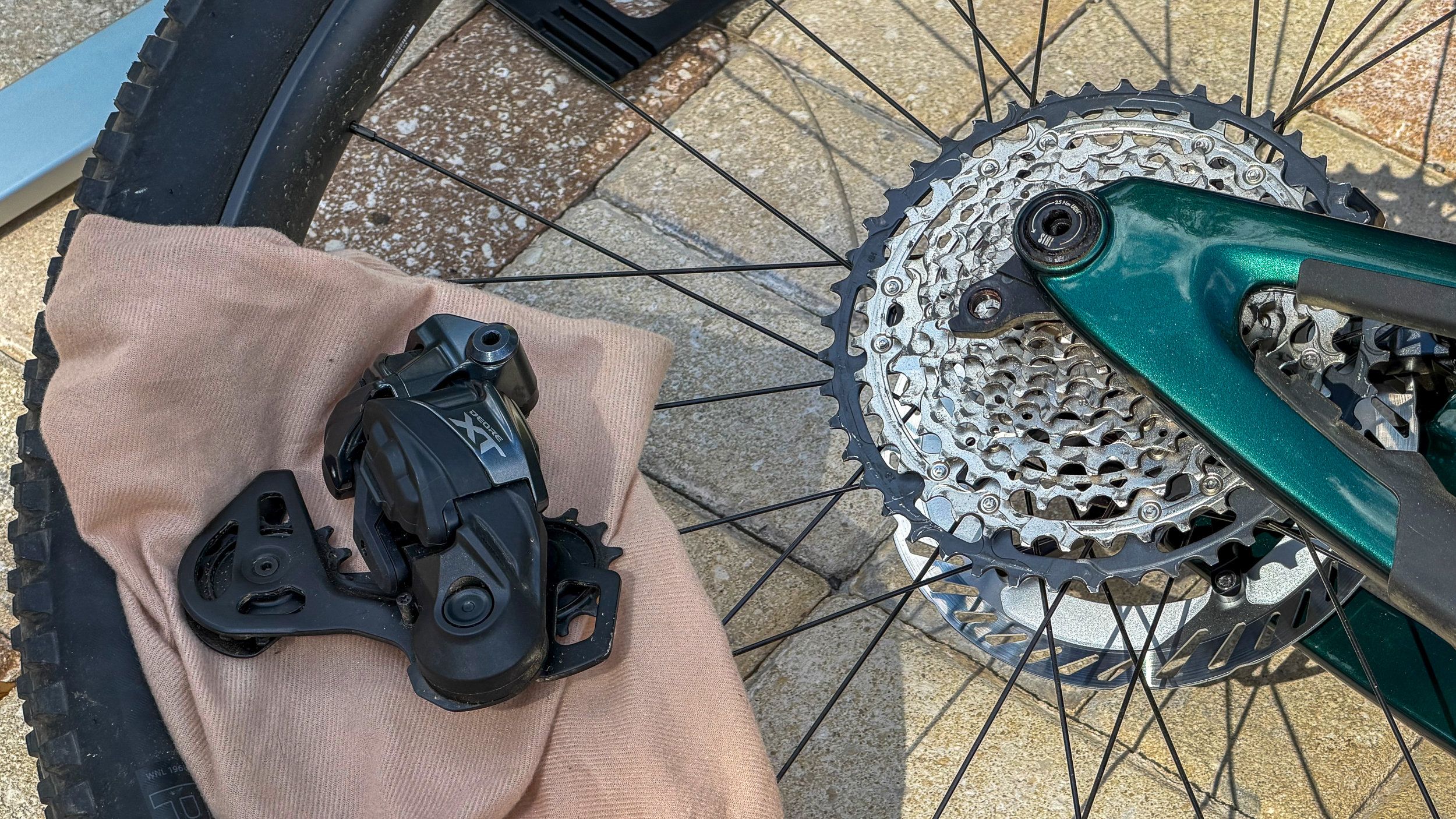
A big part of this review is the choice between the standard group with a 10-51T cassette and the compact GS group with a 9-45T cassette. I had never tried the compact XTR group previously, so I was excited to try it out now that it’s available at the XT level as well. It’s lighter, it offers better ground clearance and possibly less chain slap, and it offers nearly the same gear range (500% vs 510%), but there are a few things to consider before making the leap.
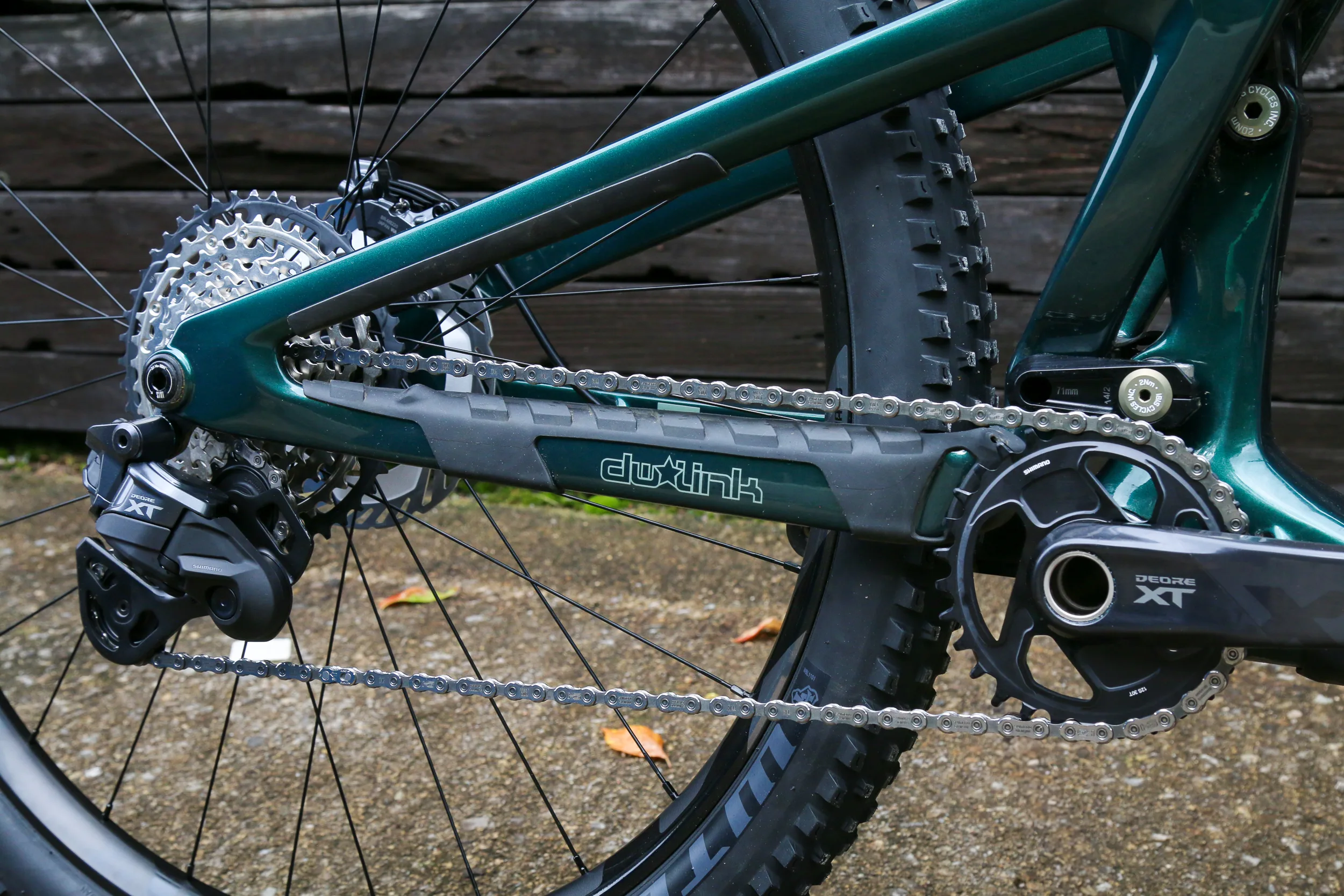
For starters, the 9-45t cassette is not compatible with full-power ebikes. Chain clearance can also be an issue when it’s in the 9t cog, depending on the frame. That becomes a bigger issue if you need to size down on the chainring to compensate for the smaller 45T bail-out cog. Shimano does offer a 28T for the XT direct-mount chainring, but you’ll have to make sure there is chainstay clearance when in 28 x 9.
Less of an issue and more of just something to be aware of, the compact cassette requires a proprietary tool to work the 9T cog lockring. I usually travel with a toolbox in the car that includes cassette tools – you never know when you might have to remove a cassette to free a dropped chain or remove a ball of fishing line (yes, that happened). So it’s a bit odd now, realizing that the same cassette tool that I’ve used for nearly every cassette to this point (excluding Campy) suddenly won’t work on this bike.
With all that said, the compact drive has been great but largely unnoticeable in the best way possible. There’s no question that it’s lighter and offers better ground clearance. Whether you’ll feel that on your ride is questionable. The most obvious difference that you’ll feel from the 9-45T cassette is the tighter gear steps for the sweet spot of the shifting range.
As shown in the chart below, both cassettes have similar beginning and ending gear steps. But the 9-45T cassette has six 2-gear jumps, while the 10-51T cassette only has four. Instead, the 10-51T has two 3-gear steps in the middle of the cassette (where the compact has 2-gear steps), and the 10-51T has an additional 6-gear jump at the top end as well.
| 9-45T Cogs | 9-11-13-15-17-19-21-24-28-33-39-45T |
| 9-45T Gear Steps | 2-2-2-2-2-2-3-4-5-6-6 |
| 10-51t Cogs | 10-12-14-16-18-21-24-28-33-39-45-51T |
| 10-51T Gear Steps | 2-2-2-2-3-3-4-5-6-6-6 |
That means in spite of the cassettes having a very similar gearing range, you’re more likely to find a gear in the sweet spot that suits your cadence with the compact cassette. After experiencing this myself, it’s no wonder that almost all of the Shimano-sponsored EWS racers choose to run the compact cassettes with shorter derailleur cages.
Does that mean I think everyone should be riding the compact setup? No. If you’re a racer or someone who prioritizes having the perfect gear to match your cadence, then it makes a lot of sense. If you prioritize having the absolute easiest bailout gear with the ability to go as small as possible on the front chainring, the standard drivetrain makes more sense.
Also, since the 12-speed cassettes are backwards compatible, if you already have mechanical bikes that are set up with 10-51t 12-speed cassettes (including 1×12 gravel bikes), the difference might not be enough to lose the ability to swap wheels and cassettes between bikes. Just to be clear, according to Shimano, you cannot run a 9-45t cassette on the long cage SGS derailleur or a 10-51t cassette on the medium cage GS derailleur. However, you can buy a replacement derailleur cage for your current rear derailleur to change it to the GS or SGS model if you want.
About that Clunk
Many reviews of the new Di2 drivetrains have mentioned an odd clunk emanating from the rear derailleur. Shimano ditched the traditional derailleur clutch design for the new models in favor of a dual spring “slim stabilizer.” This was done to make the frontal profile of the derailleur more streamlined to allow rock strikes to better glance off the front. It was also implemented to eliminate the regular maintenance that derailleur clutches required, which very few people actually performed.
The trade-off is a derailleur stabilizing spring that is always on, but the design is susceptible to an occasional clunking sound on the hardest hits. You have to be going full tilt to cause any noise, and it’s usually on the roughest square-edged hits. It’s one of those things that is noticeable at first because it’s a new sensation, but it doesn’t take long before you just ignore it. In my experience, the medium cage GS derailleur is less prone to making the noise than the long cage SGS, but it’s still there occasionally. On the group ride mentioned above, I noticed it precisely one time on a small, abrupt step-down going full speed.
I will also say that the Slim Stabilizer does make it a bit harder to remove/install the rear wheel or thread a new chain through the pulleys since you can’t turn it off. Shimano has always had a bit of a handicap here since their derailleurs lack the convenient cage lock feature found on SRAM’s. It’s not a deal breaker by any means, but something that we would be happy to see improvement on.
The real test here will be how this derailleur stabilizer spring performs after a few seasons. In our experience, it has kept the chain stable and perfectly quiet (outside of the occasional clunk). If that continues without maintenance season after season, it will be seen as a success.
New Brakes Address Old Issues

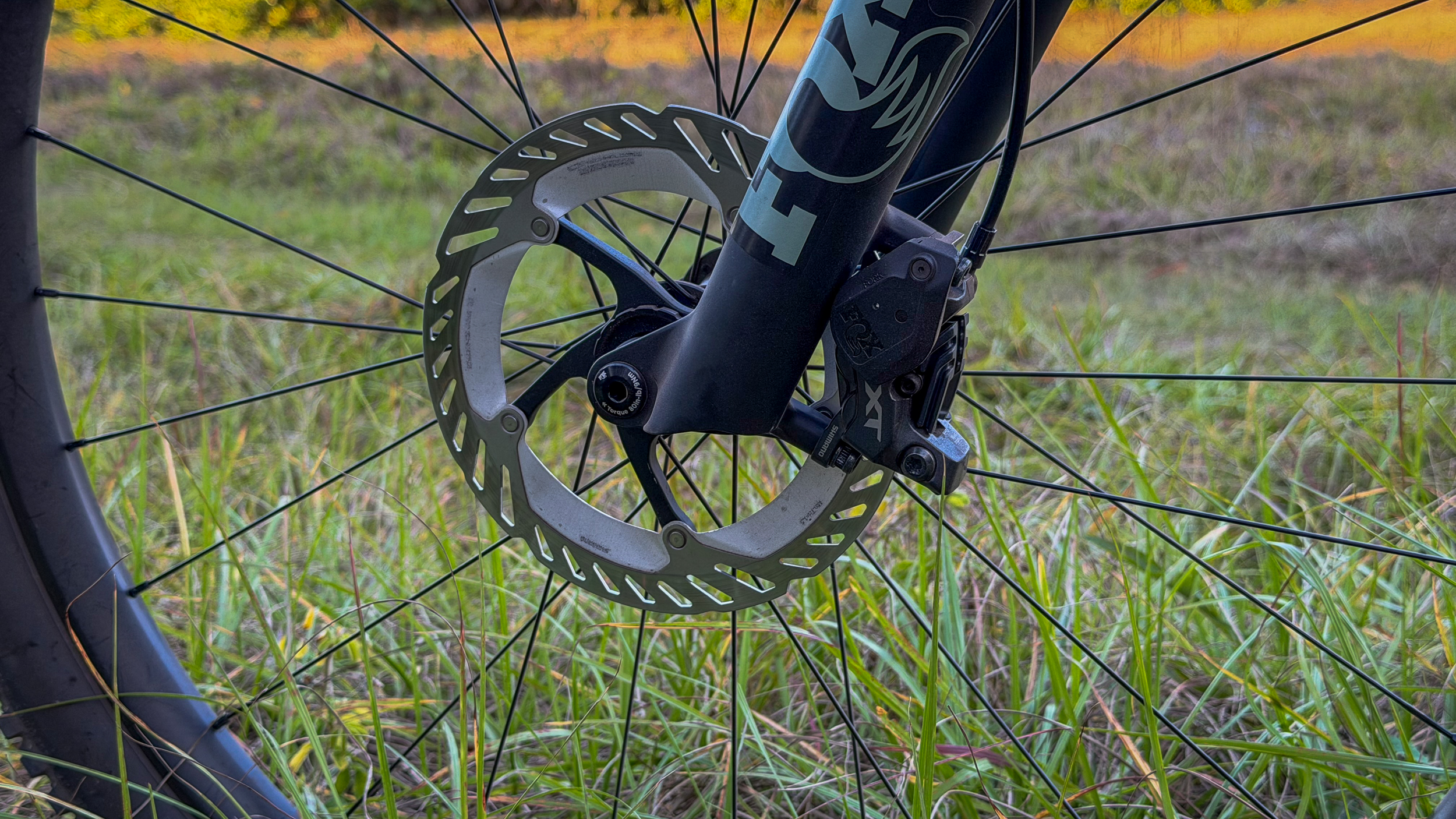
Like the XTR group, the XT group gets new hydraulic disc brakes that use the new Low Viscosity brake fluid. More than just a fluid change, the new brakes are a completely new design that seems to solve a lot of the complaints with earlier Shimano brakes. One of the most common complaints is a wandering bite point. Shimano claims they solved the issue with new seals and the new low-viscosity oil that offers more consistency with the flattest temperature-induced change curve on the market. So far in testing, the bite point has been unwavering.
The brakes themselves are also quieter thanks to a brake pad redesign that prevents them from rattling in the caliper. It all seems to work, resulting in the best-performing XT brakes we’ve tried. My build features the BR-M8220 four-piston enduro brake, which gets the new pull-master cylinder design of XTR but doesn’t get the upswept brake levers. Going back and forth from the XTR to the XT enduro brakes, I do really like the shape of the lever on the XTR brakes. But the shape of the XT lever will be familiar and quite comfortable for anyone used to Shimano brakes.
Stopping power with the XT BR-M8220 brakes is plentiful, and noise is almost non-existent. In my experience, the most likely source of noise now is the new hose routing that may put the brake hose a little too close to traditional handlebars, which could lead to some rattling if the hoses are a bit long. That’s not exclusive to Shimano, though; SRAM’s Stealth brakes are just as likely to rattle, to the point that SRAM offers stem clips to hold the brake lines in place and prevent rattling.
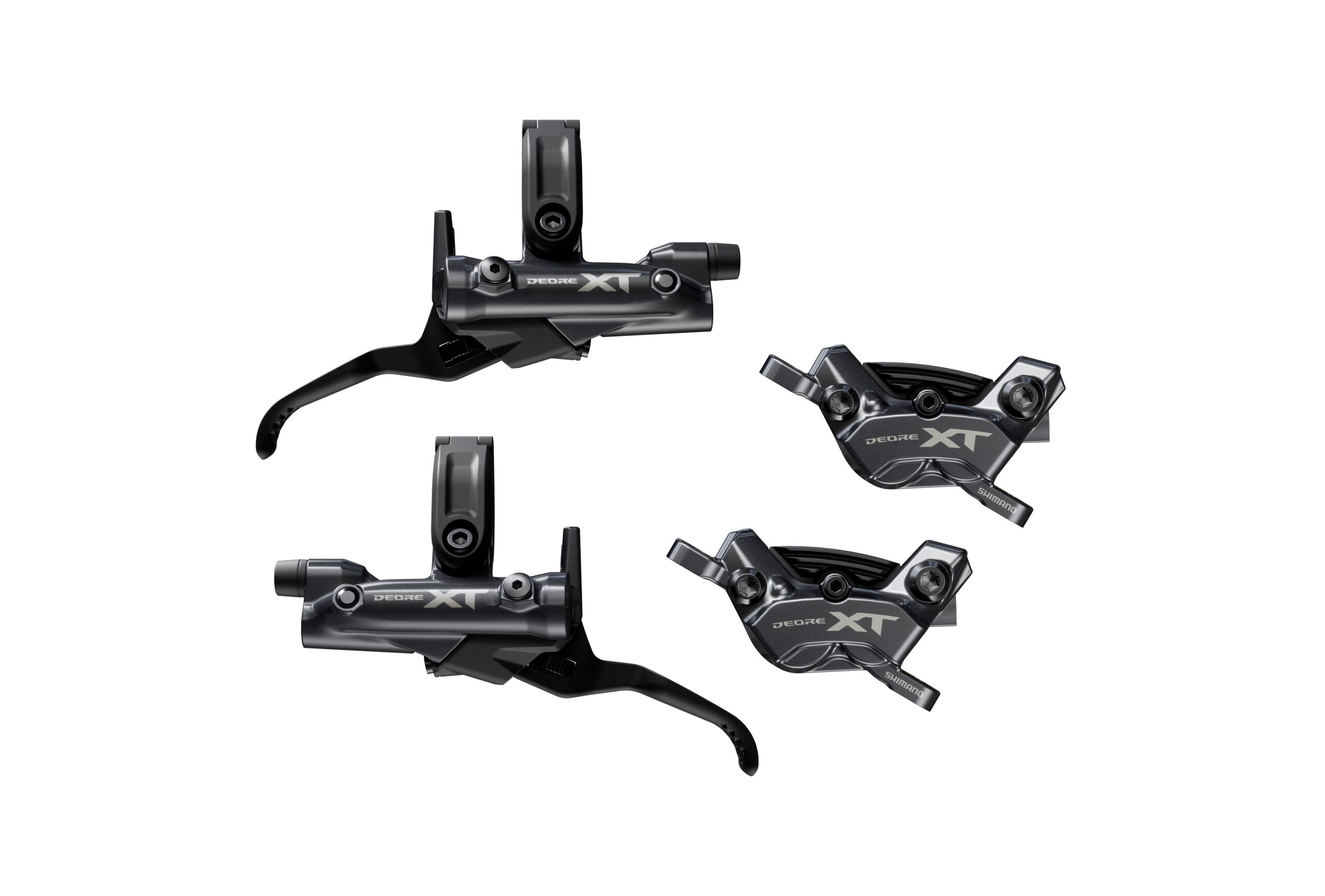
- MSRP: $530
- Includes: Complete front and rear brake set with BL-M8200 levers and BR-M8220 4-piston calipers, pre-bled with hoses
- Pistons: Four-piston caliper
- Brake Fluid: Low-viscosity mineral oil
- Brake Pads: Revised pad and oval mount reduce vibration and eliminate brake rattle
- Lever Design: SERVO WAVE lever action with tool-free Reach-adjust levers
- Rotors: Compatible with Shimano RT-series rotors (sold separately)
Pros
- Impressive braking power
- No more pad rattle
- Wandering bite point issues seem to be solved
- Great range of lever adjustment
Cons
- Requires new LV brake oil
- Revised brake hose routing could cause rattling against handlebar
Wheels are Low Key, but Nearly Perfect

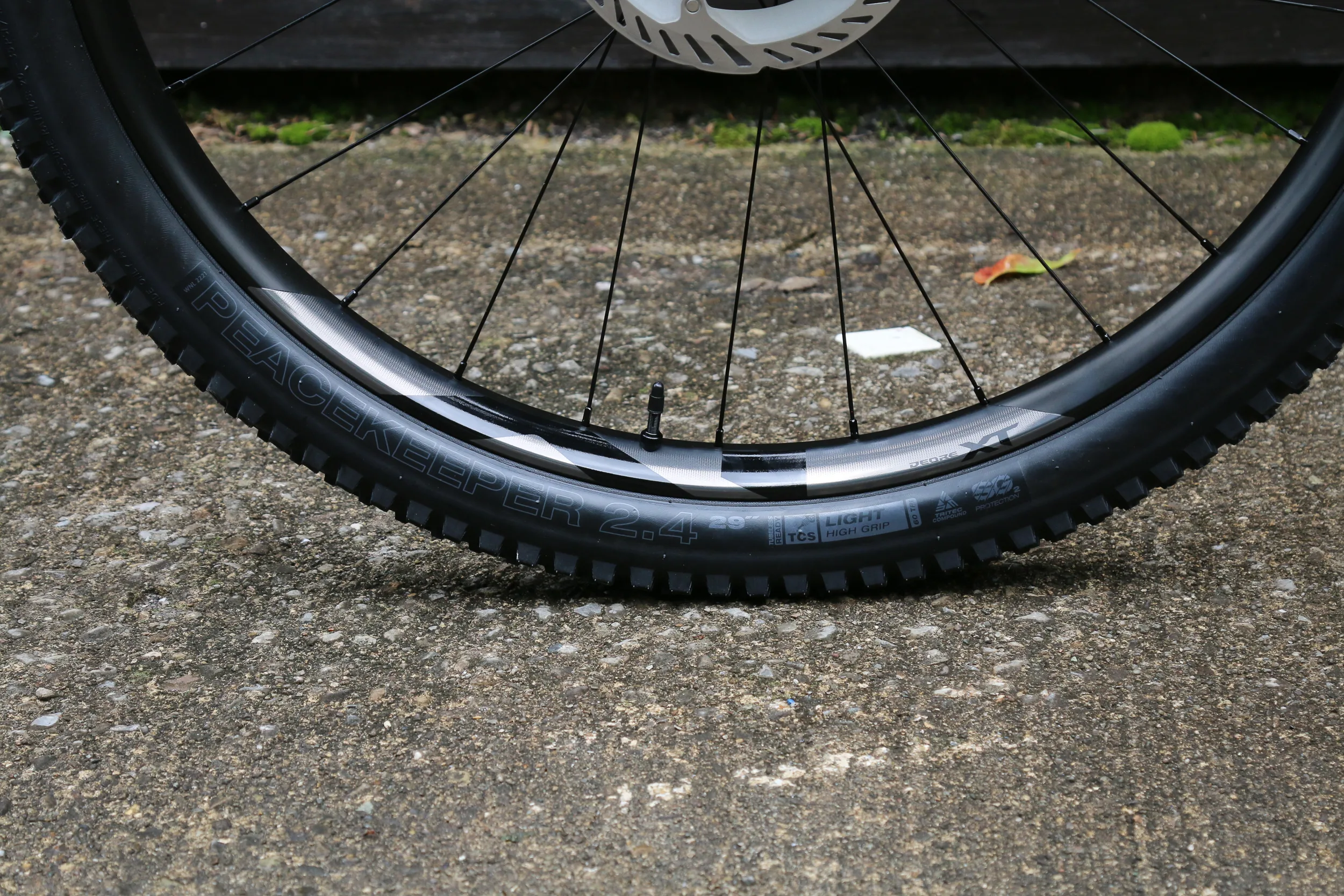
In a world where wheels are often seen as a status symbol, the Shimano XT wheels don’t really stand out. But what they lack in flash, they make up for in excellent specs and quiet performance. The hooked aluminum rims feature a 30mm internal width and use 28 standard J-bend spokes laced to the new M8210 hubs. These hubs use sealed cartridge bearings with Shimano quality seals, and the freehub offers a solid 3.5º of engagement through their Direct Engagement freehub.
The rims came taped from the factory, and seating tubeless WTB Peacekeeper tires was a very easy task. The ride quality seems excellent for a pair of aluminum wheels, and they’re still perfectly round and true after some hard rides.
You can pick up a set of these wheels currently for $570 or less which seems reasonable. Although there are a LOT of wheels on sale right now, so it’s a buyer’s market. Based on our experience with Shimano wheels, these are likely to be extremely durable and roll smoothly for a long time.

- MSRP: $570 per set ($250 front, $325 rear)
- Wheel Size: 29in or 27.5" wheelset for trail and all-mountain riding
- Rim Width: 30mm alloy
- Axle Spacing: Boost 148×12 rear and 110×15 front
- Freehub: Micro Spline driver compatible with 12-speed Shimano cassettes
- Freehub Engagement: 3.5-degree
- Brake Mount: Center Lock disc brake
- Tubeless-ready: Yes, pre-taped with valves
- Bearings: Serviceable cartridge bearings and smart seal design
Pros
- Wide, hooked, low profile aluminum rims
- Easily serviceable cartridge bearing hubs
- Direct Engagement freehub is fairly fast and quiet
- Shimano durability
- Easy tubeless performance
Cons
- Not flashy (if you're into that)
Should You Buy It?
Even with the reintroduction of Di2, Shimano’s mechanical shifting is still a great choice – I’m not rushing to replace all my mechanical drivetrains just yet. But the speed and precision of the Di2 shifting finally completes the argument for upgrading to electronic shifting on your mountain bike. As usual, XTR set the vibe early, but the quick introduction of XT and Deore Di2 opens up the world of electronic shifting to a lot more Shimano users.
The real question is going to be which group you decide to upgrade to, since the pricing and weight differences are pretty small. In our initial weight comparison of XT and XTR Di2, XT was only 166g heavier for the complete group. You can currently find XT upgrade kits for $774 from Competitive Cyclist, while Performance Bike has the XTR upgrade kit for as low as $955. So, for the upgrade kis is a <50g weight difference and slightly better shift paddles worth $181? You’ll know your own personal answer to that one.
Of course, that price and weight difference will grow if you decide to do a complete build rather than just the upgrade kit (shifter, derailleur, battery, charger). If you’re starting from scratch and don’t already have a cassette/chain/crankset and brakes, the complete group is definitely worth the money.
The XT Di2 group is probably the first electronic MTB drivetrain that I would buy with my own money. And with all the options for building your ideal drivetrain, it’s obvious why for Shimano, this was part of the biggest launch of the year.
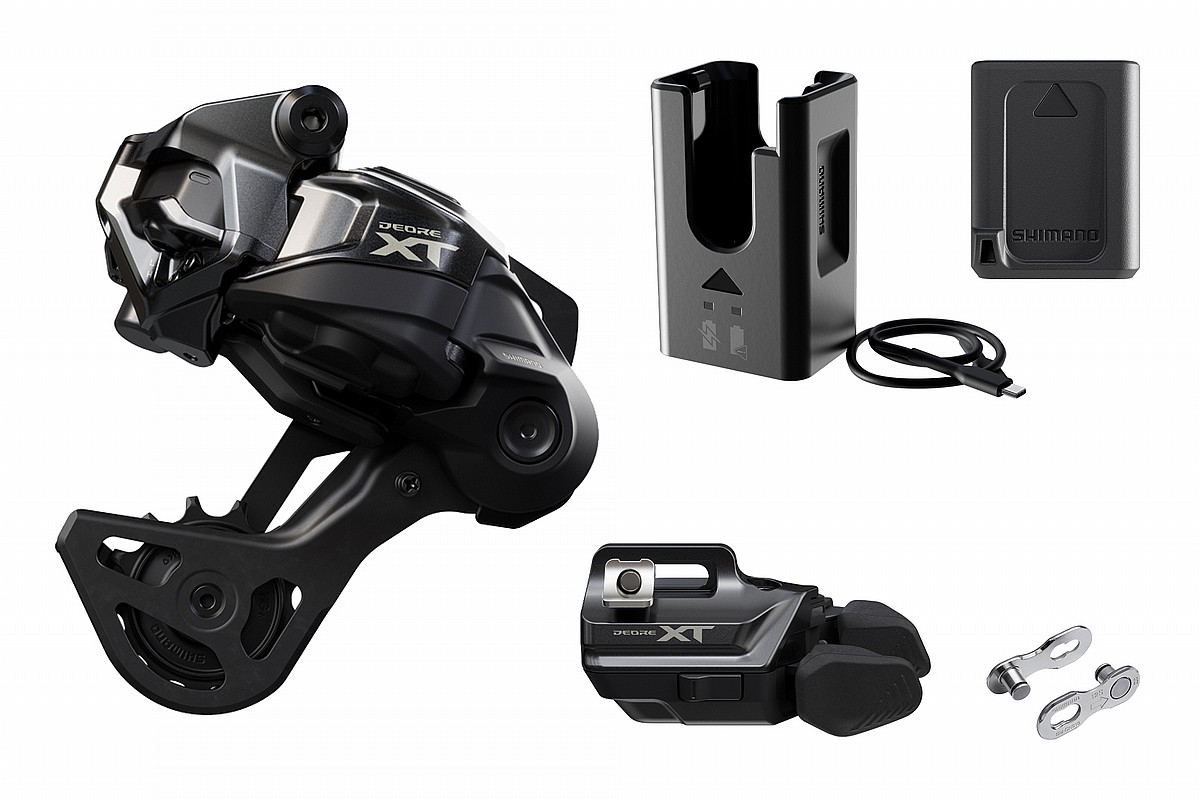
- MSRP: $860
- Use: Complete drivetrain kit to upgrade 12-speed Shimano mechanical group to Di2
- Gear Range: 500% with GS/9-45T or 510% with SGS/10-51T
- Shifter: RAPID ES Di2 switch
- Includes: battery, charger, and 12-speed shifter with I-SPEC or clamp options plus chain Quicklink
- Cassette Compatibility: Shimano 12-speed HYPERGLIDE+ and MICRO SPLINE cassettes
Pros
- Easy way to upgrade current Shimano 12 speed MTB drivetrain
- Lightning fast shifting
- Compatible with existing 12 speed chains, cassettes, chainrings, and cranksets
- Wide range of shift lever paddle adjustment
- Good battery life
- Uses standard derailleur hanger (Could be pro or con)
- Still has limit and b-tension adjustment screws (Could be pro or con)
Cons
- Uses standard derailleur hanger (Could be pro or con)
- Still has limit and b-tension adjustment screws (Could be pro or con)
- Slight clunk possible on hardest hits
- No single/double slick mode adjuster like XTR
- Rubber shift pads aren't quite as nice as XTR
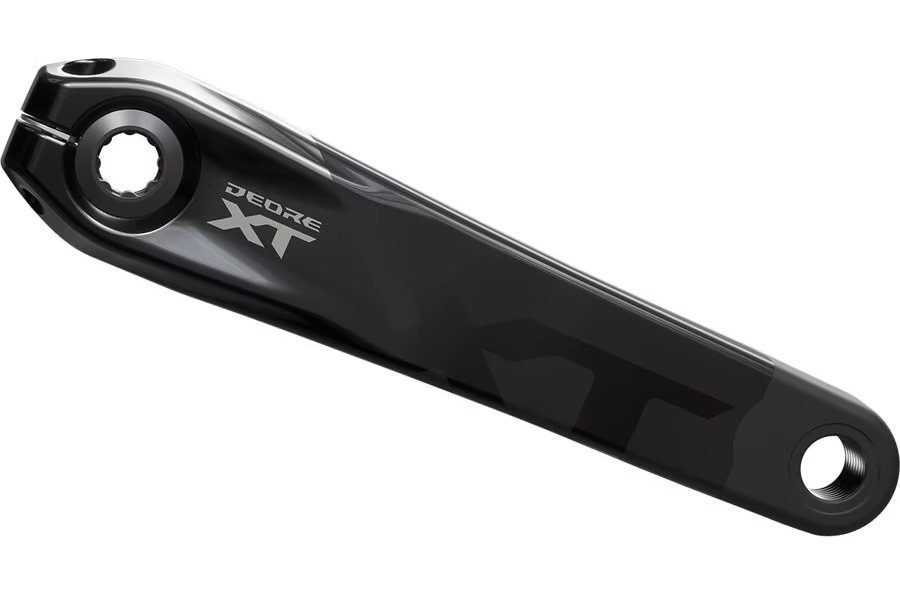
- MSRP: $190
- Arms: HOLLOWTECH II forged
- Spindle: 24mm
- Crank Lengths: 160, 165, 170, and 175mm
- Q Factor: 176mm
- chainline: 55mm
- Compatibility: Optimized for modern 1×12-speed mountain drivetrains
Pros
- Trademark Shimano Hollowtech II performance
- Shorter crank arm length offered
Cons
- Looks with multiple logos + glossy/matte finish may be polarizing

- MSRP: $73
- Tooth Retention: Shimano Dynamic Chain Engagement
- Chainring Size: 28T -36T
- Compatible with: Deore XT M8200 and other newer Shimano Direct Mount cranksets
Pros
- Gets new reinforced design shared with XTR
- Offered in wide range of sizes
Cons
- All sizes aren't readily available yet
Further Reading on Shimano Di2
Complete breakdown of weights and pricing for XT Di2


