Home > Other Fun Stuff > Advocacy & Industry News

Apparently, Gates Belt-Drive May Owe Spot Bikes Millions in Unpaid Royalties 

Spot Bikes dropout
11 Comments
Support us! Bikerumor may earn a small commission from affiliate links in this article. Learn More

It looks like a lawsuit between Gates Corp. and Spot Bikes will be going to trial after a judge’s recent rulings. As reported in The Colorado Sun and The Denver Post, the two Colorado-based bike brands have been at it in the courts for nearly two years. And, thus far, things aren’t going Gates’ way.

If proceedings continue to head in that direction, it might cost Gates tens of millions.

A Bit of Background

Okay, so this story dates back to 2008–not the lawsuit, but the story. Gates Corp. debuted its carbon belt-drive system that year, promising to revolutionize the bike industry. 

However, there was a problem. No, it wasn’t the fact that for a hundred years bikes had been dominated by chain-driven drivetrains. The issue was how frames are designed.

Bike frames have a solid rear triangle, and a belt needs to pass through it. Obviously, with a chain, there is no issue, since a link can simply pop apart and be reassembled. This isn’t the case with Gates’ new carbon belts.

So, Spot came up with a solution, creating the appropriately named “Drop-Out.” Essentially, the dropout area of the rear triangle separates, allowing the belt to slide over the chain–uh, beltstay(?). 
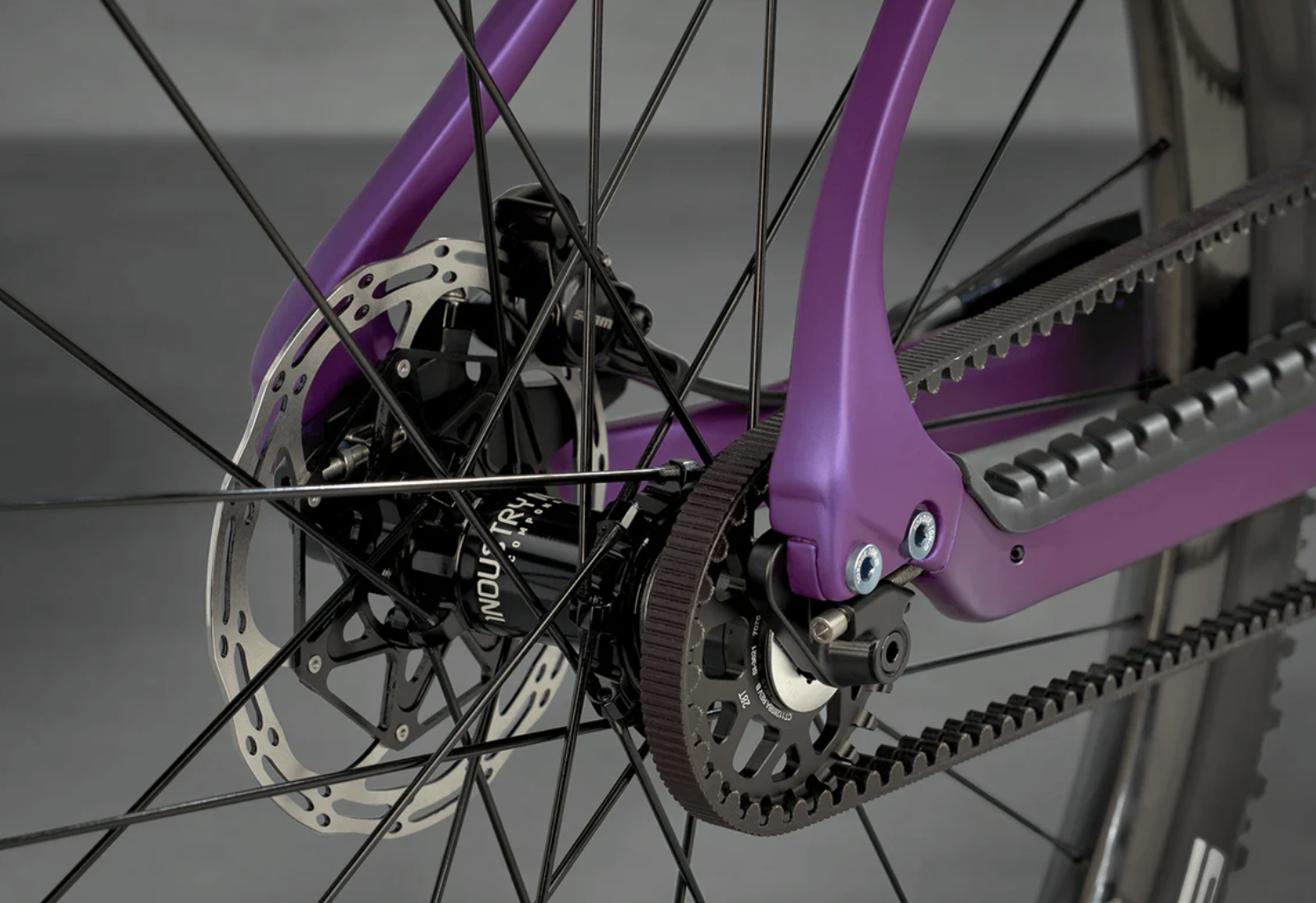
Spot struck up a deal with Gates, allowing the belt-drive giant to license the technology to other frame manufacturers. In return, Gates promised to pay Spot a royalty on profits related to companies licensing the Drop-Out design from Gates.

Well, apparently, Gates never paid up. And, the numbers are pretty big. By 2011, 54 brands used a belt drive on almost 100 different models. By the time Spot filed a lawsuit in 2024, 1,000 bike models from 135 brands were equipped with the belt-drive system.

And, according to their original agreement, Spot says they are owed 8% on all of these. Adding the sales up over nearly 20 years, it is a significant chunk of change.

Recent Court Rulings

A Colorado judge’s decision on February 17th denied Gates Corp.’s attempt to countersue Spot. This ruling follows a September ruling, also against Gates, that claimed Spot’s design and patent on the Drop-Out was “invalid.”

Now, a jury of their peers will hear the dispute between the two bike brands. Both previous rulings, in favor of Spot, mean that lawyers on both sides will now look to schedule a trial. 

Currently, Gates is attempting to appeal to a higher court, seeking to have the case bumped from the state to the federal level. However, the judge doesn’t want to delay the proceedings longer. 

Perhaps these two will be in a courtroom sooner than later.

Subscribe
Notify of
guest

This site uses Akismet to reduce spam. Learn how your comment data is processed.

11 Comments
Oldest
Newest Most Voted
Inline Feedbacks
View all comments
carbonnation
carbonnation
21 days ago

…so did Gates ever ‘splain why they haven’t paid the money due Spot?

Jason
Jason
21 days ago
Reply to  carbonnation

The Sun article states:
“Simply put, Gates did not sublicense the Drop-Out Patent and therefore does not owe Spot Brand any royalty payments,” reads a letter from Gates Corp. attorneys sent to Spot in November last year. The Gates attorneys said the separable frame designs on other bikes “employ a different approach than that covered by the … patent and simply do not infringe the same.”

Jaap
Jaap
20 days ago
Reply to  Jason

I had a look at the patent (https://patents.google.com/patent/US8740239B2/en) and it’s pretty generic if you ask me. Most manufacturers of belt-drive bikes use a similar system. I can imagine that Gates helped them and should have sublicensed the drop-out system.

Billy
Billy
20 days ago
Reply to  Jaap

That’s a lot of interpretation. Spot filed the patent, they get the royalties.

Guess what. Gates didn’t single handheld design belt drives either. They just have their version of it that they patented. Same story. It looks like they hoped spot to go down under before they could sue, which is a typical tactic in corporate ‘merica. And spot could still go down honestly.

Q_q
Q_q
21 days ago

It does seem odd that Gates agreed to pay a royality on the frames when they are a belt manufacture. Granted the belts need a way to get onto a frame but wouldn’t it be the frame manufactures that would need to license the design from Spot? Unless it was billed as a package deal, “buy our belts and use this drop out design for free”. Kind of depends on where the specifics lie. Regardless, if they agreed to pay, they should absolutely have paid.

King County
King County
20 days ago
Reply to  Q_q

I agree with you. Iam not a lawyer, but it would seem to be an issue betwen Spot and any frame manufacturer that uses their patented design.

NREsq
NREsq
21 days ago

What took Spot so long to wake up and file a lawsuit? This story says the deal was struck in 2008, and Gates “never paid up.” Virtually all states, including Colorado, have statute of limitations (SOL) laws, i.e. the time to file a legal claim before it is time-barred. A little legal research shows Colorado’s SOL for breach of contract is anywhere from 3-6 years. According to this story, Spot filed their lawsuit in 2024, 16 YEARS after Gates allegedly first breached the agreement. That might suggest Spot knew its contract didn’t cover the technology that is the basis of the lawsuit. It should mean that Spot is limited to whatever damages it can prove arose within the last 3-6 years.

Sam
Sam
20 days ago
Reply to  NREsq

Way more bikes with belt drives produced in the last 6 years! Very smart to wait if you ask me!

Billy
Billy
20 days ago
Reply to  Sam

Usually you don’t have standing until after you have attempt every other way to collect the money. They also probably have a bunch of clauses that allow for delayed payment. By the time you can sue it tends to be years, though this one seems very long – I’d guess they had a 10y clause.

Alternatively spot was afraid that if they did, Gates would no longer provide the drivetrain, killing spots business instantly – rock and hard place problem. Nowadays, spot has a lot more bikes and perhaps their single speed is no longer their main source of revenue

nooner
nooner
20 days ago

Okay, so this story dates back to 2008 I wonder if Frank Scurlock will get a cut of the loot? He deserves it. Frank was a major driver behind the Gates deal before he sold Spot in 2009.

Billyshoo
Billyshoo
20 days ago
Reply to  nooner

Ahem. Lawyers are involved in this. That means some parties will owe more than they expect, some will get less than they expect or would be otherwise entitled, and the lawyers are the only ones who emerge smiling.

Subscribe Now

Sign up to receive BikeRumor content direct to your inbox.