As soon as I moved to the Whistler area, I quickly became aware of Chromag bikes. However, they only offered hardtails until recent years. Today Chromag has several full suspension MTBs, and the Throwdown is their first enduro/freeride model. With 170mm front and rear travel, it’s the biggest bike Chromag has made yet. I was curious to see how well it would ride, and came away very impressed with how they’ve tuned its linkage.
With enduro or park build options, the Throwdown is made for tacking rowdy, rough terrain. It features an aluminum frame, and rolls on MX wheels only. While weight is definitely a factor, the Throwdown’s linkage keeps the bike climbing surprisingly well. The real fun begins when you point it downhill though, as the rear end did a great job dealing with all types of impacts big or small.
Chromag Throwdown – Key Specs and Frame Features
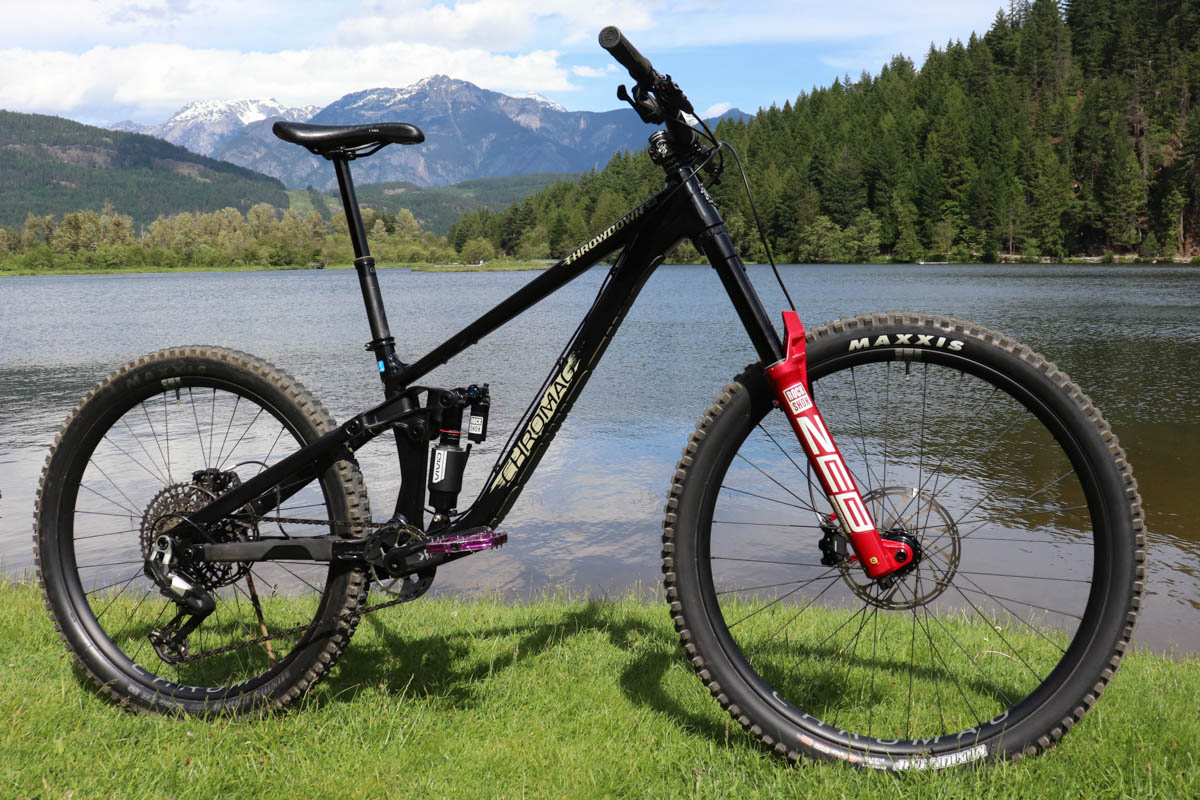
For complete details on the new Throwdown lineup, check out my recent launch article. Here’s a quick look at the bike’s key specs:
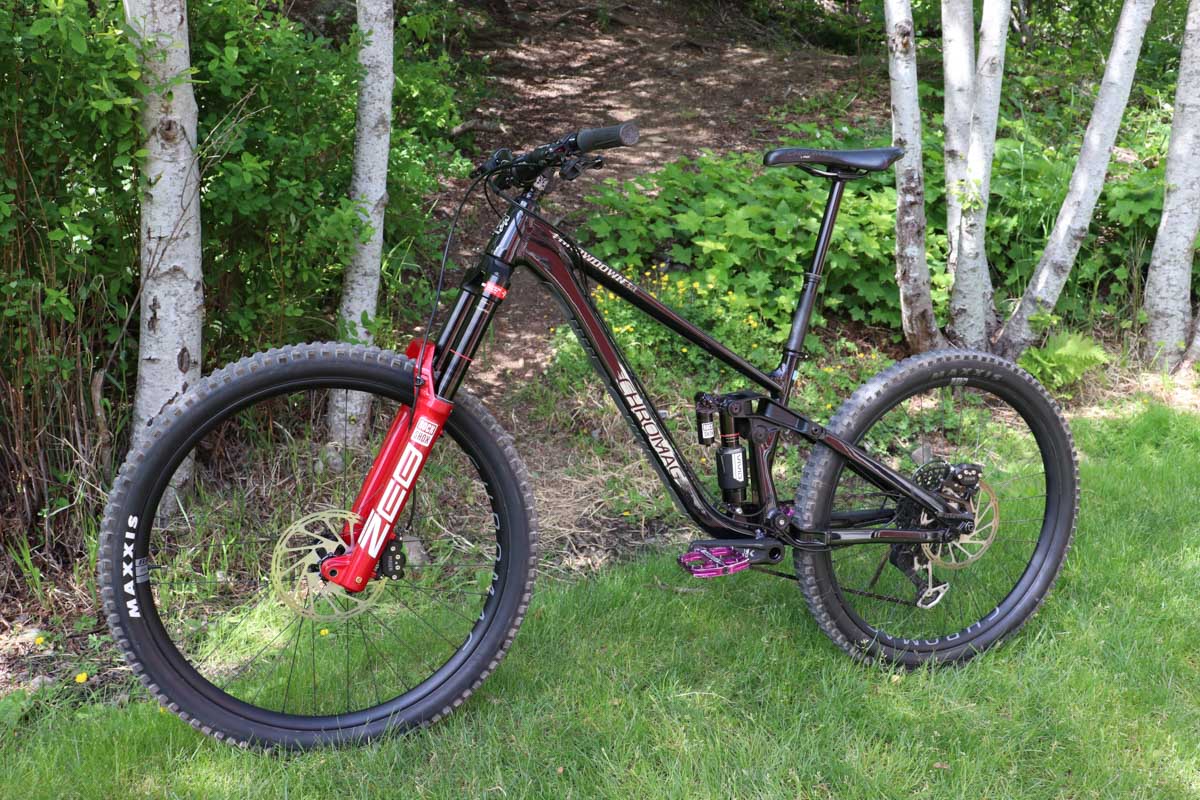
Throwdown frames are constructed from 6066 aluminum, and they run MX wheels only. The bike provides 170mm’s of rear travel, via a rocker-driven Horst Link linkage. Up front you’ll find 170mm forks on the enduro (Eagle 90) build, while the park build comes with a 190mm dual-crown fork. The Throwdown keeps things simple with fixed geometry and suspension kinematics.
One thing I noticed right away is how short the Throwdown’s seat tube is. Even with 180mm travel, the dropper post on my demo bike sticks out of frame more than any bike I’ve tested. The mast was kept very short to ensure riders (especially park riders) can slam their seats nice and low. Chromag says even with the Throwdown park build’s static seat post, there should be no issues with seat/wheel contact.

For easy maintenance the Throwdown features external cable routing. This bike does not offer in-frame storage, but it does include a SRAM UDH derailleur hanger. Chromag gave the Throwdown one water bottle mount and an accessory mount.
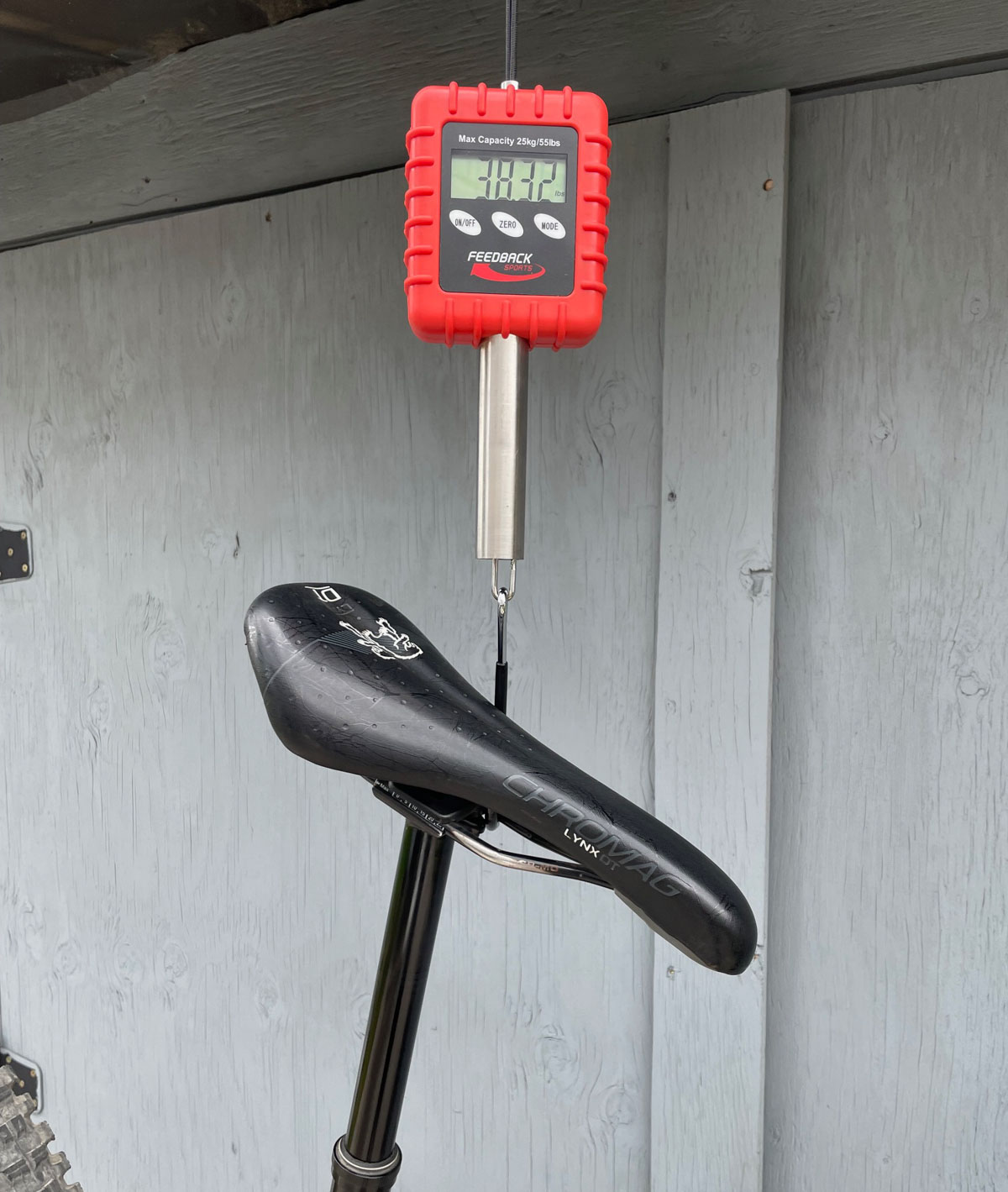
The complete Throwdown (with pedals) is the heaviest enduro bike I have yet tested on trails, hitting the scale at 38.32 lbs. Considering this bike is intended for bike park riding or enduro I’m not surprised by the weight. It’s only a smidge heavier than the current Devinci Spartan I tested earlier this year, which also topped 38 lbs.
Ride Impressions: Suspension Setup
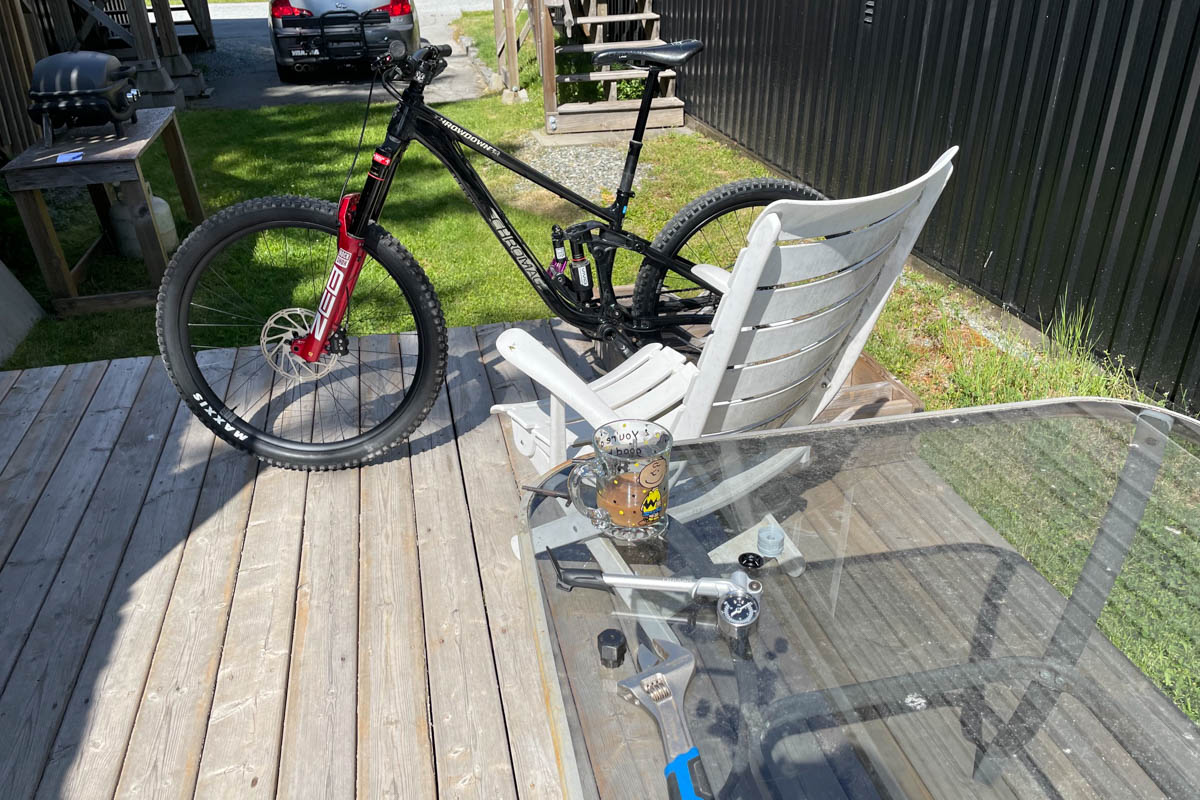
Typically with test bikes I start by checking the suspension manufacturer’s recommended settings online. Most often this info leaves me at a good starting point, but I’ll also make a few adjustments that I’ve found work for me. When I went to set up the Throwdown’s suspension, I wasn’t able to get much info from SRAM’s website. At first, I couldn’t find any info on the fork at all, but I later found it higher up the fork leg than at the bottom where I’ve found them previously. I set up the bike and hit the trails, but it was obvious some tweaks were needed as the suspension wasn’t performing well.
Thankfully, a friend who happens to service MTB suspension came to town! He confirmed my hunches that I needed the rear end rebounding a fair bit faster than recommended, and that I had too much air in the fork. With a few adjustments, the Throwdown was immediately offering not only proper, but impressive suspension performance. Given my short time with the Throwdown I’m stoked my friend helped speed up the process of getting the bike dialed in. Thanks Brad!
Climbing
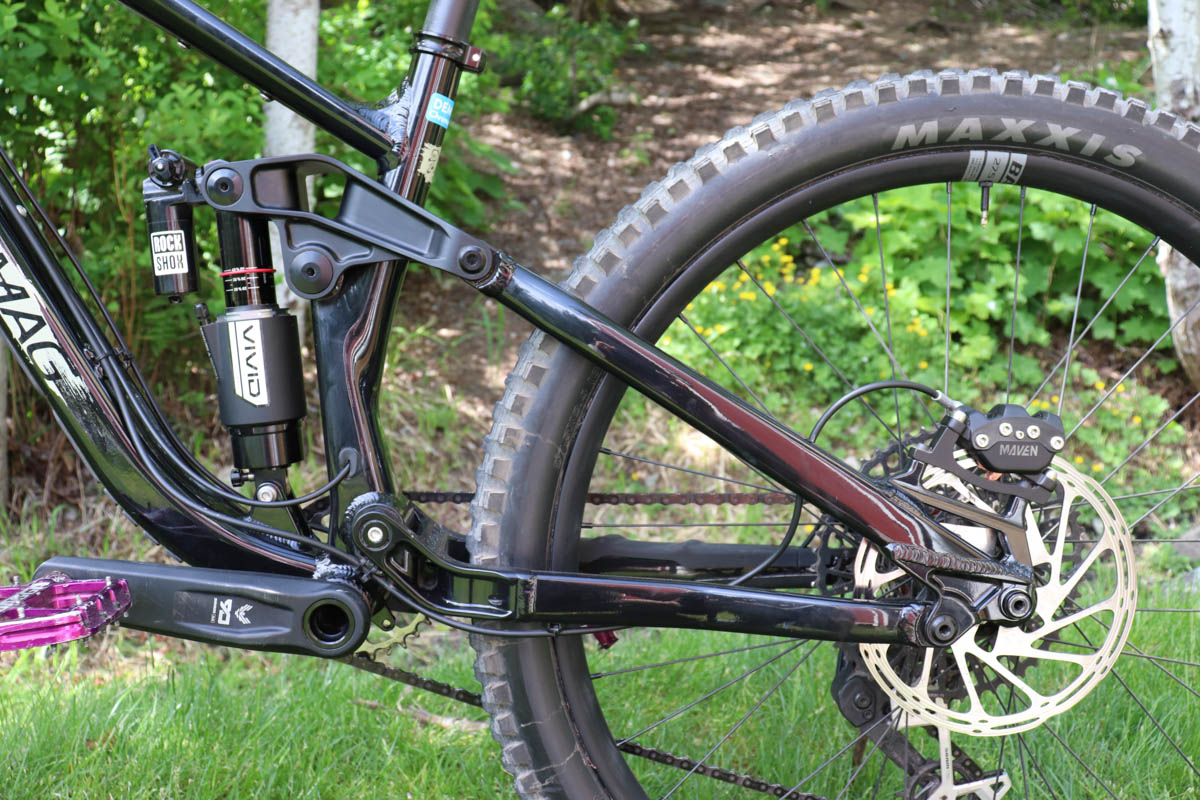
Given that this big bike is intended for enduro or bike park riding, I suspected the linkage may have been tuned on the softer side, favoring sheer bump-eating capabilities over efficient pedalling. I’m happy to say Chromag proved me wrong, and this bike’s linkage actually climbs quite well!
On any non-assisted bike, I generally use the rear shock’s Firm mode for climbing. The Throwdown’s RockShox Vivid Ultimate shock has a very supportive Firm mode, and when in use the bike pedalled along eagerly and resisted wallowing into it’s travel really well. After many singletrack climbs, I never forced more than about 45-50% travel out of the rear end. Between pedalling efforts and bumps on the trail, the Throwdown with the shock firmed up offers a surprisingly supportive ride.
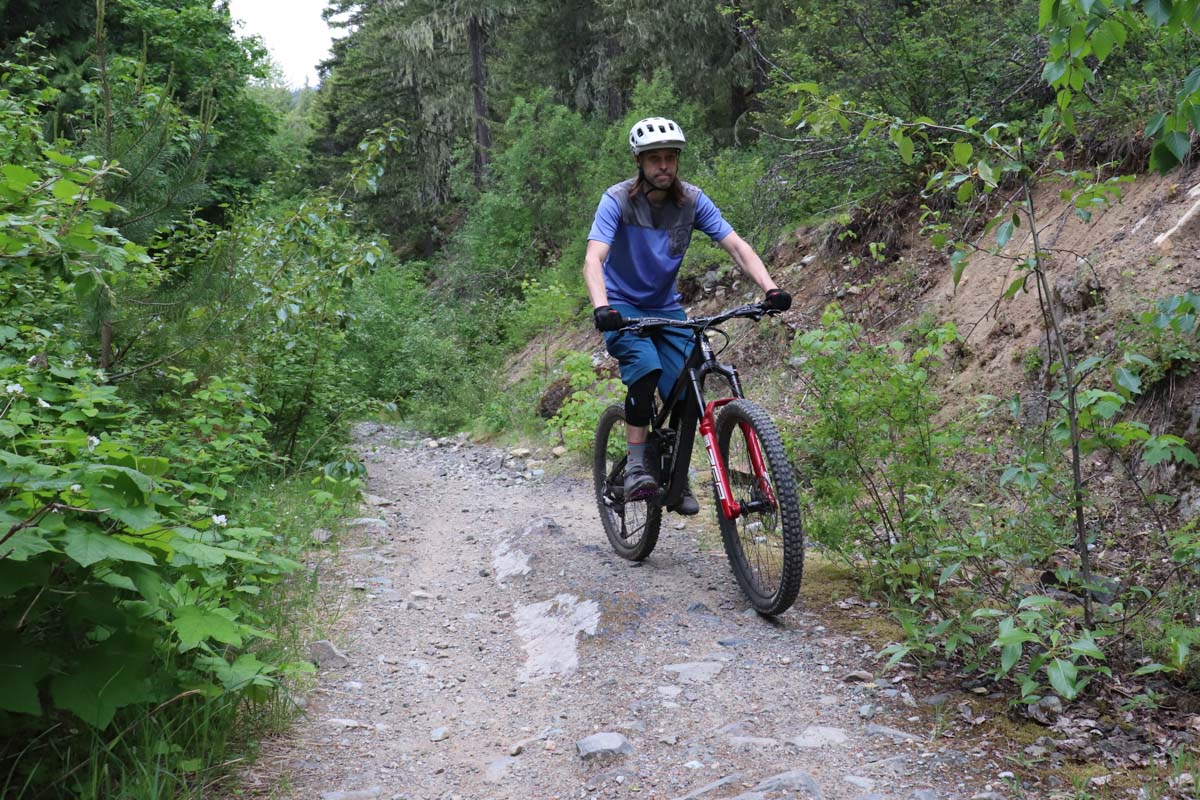
As for ride qualities, the Throwdown behaved like most of today’s trail/enduro bikes do. With the shock in Firm mode, you won’t get a buttery smooth climb; you can feel the bumps from the trail, and the rear end lifting over rocks and roots. In Firm mode the Throwdown was very resistant to pedal bob and particularly bob in the saddle as you roll over humps while seated. I made a point of standing up and cranking hard on several climbs, but the rear end refused to wallow.
I found traction in Firm mode was easily sufficient for technical singletrack climbs. Even in Firm this long-travel bike still uses enough squish to offer reliable traction over rocks and roots.

When climbing in Open mode, the Throwdown’s ride gets much more comfortable and the rear end absorbs impacts much better. This bike doesn’t numb out or erase all trail chatter even when wide open, but it softens each impact considerably. Slight pedal bob is detectable in Open mode, and the Throwdown would now dip to around 70% travel after my climbs, but it was still impressively resistant to saddle bobbing. The one detrimental effect of climbing in Open is body position: As soon as you open up the shock, you sink into the bike’s lengthy travel and your body leans back a little.
Although I prefer the added efficiency from Firm mode, I did find the Throwdown still rolls along nicely when you’re pedalling in Open. I tried a few sprints on paved roads, and while sitting the linkage held me high in the travel. Only when I stood up and cranked hard would the rear end dive much deeper.
Knowing this bike was built for smashing rowdy descents, I was impressed by how well it carried itself uphill. However, it can’t be ignored that the Throwdown’s weight puts it in a class some riders would consider out of the question for a bike you’ll be doing a lot of climbing with.
Descending
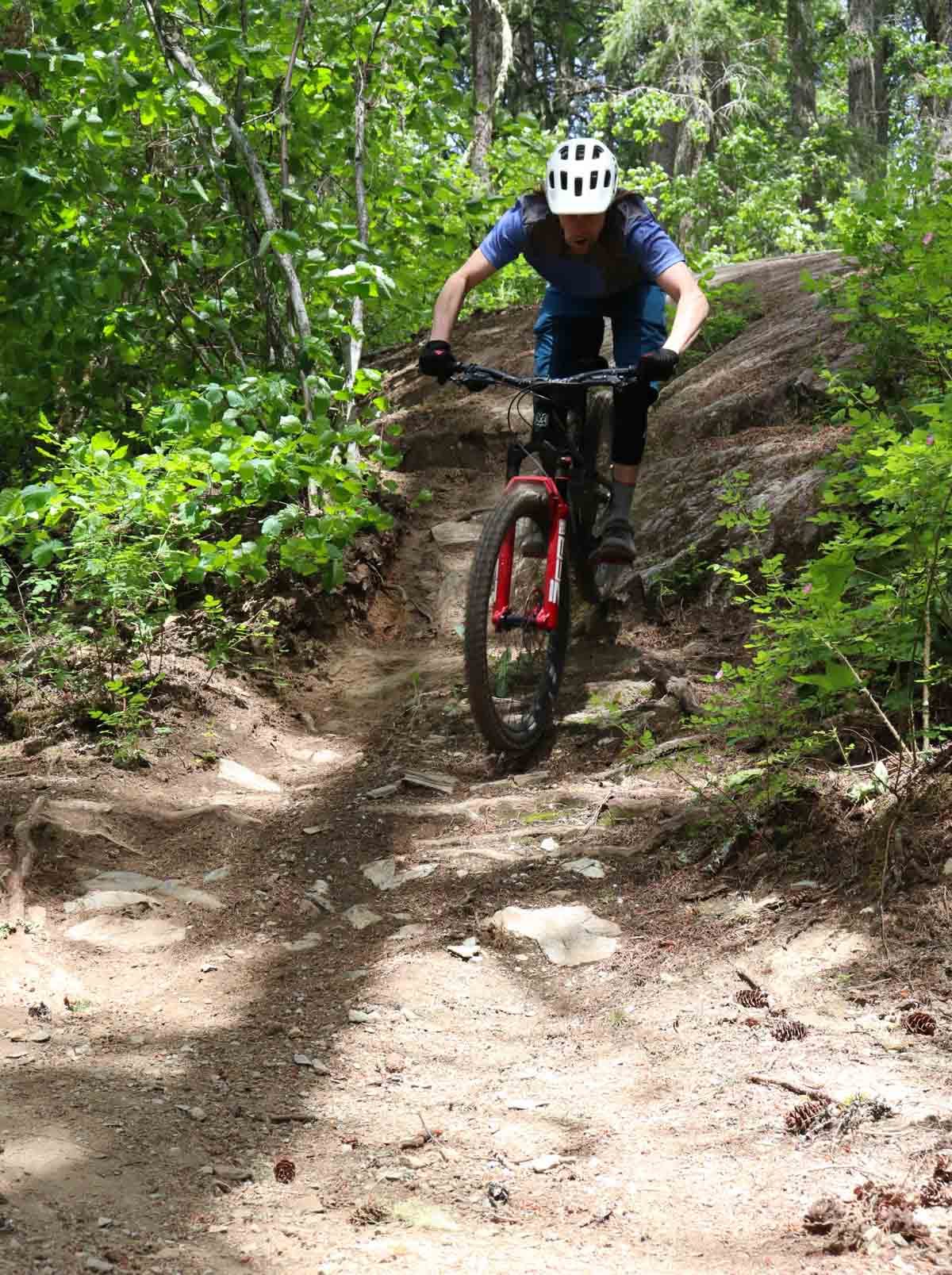
Once I got the Throwdown’s suspension dialed in, it was clear this bike’s linkage was fine-tuned into something I found pretty impressive. Chromag hasn’t been making full suspension bikes for all that long, but it seems their engineers have learned quickly!
The Throwdown’s rear end isn’t too picky about impacts, it deals with just about anything quite well. It never felt quite as plowy as a high-pivot, rearward axle path bike, as it doesn’t totally numb out the trail in any situation, even smaller bumps. However, I’d say this was one of the best Horst Link bikes I’ve ridden in terms of impact absorption.
Where the Throwdown really seems to shine is dealing with repeated, medium-sized bumps. I think that’s great, since large parts of many trails fit this description. Several times during my testing I’d be in attack position speeding down a bumpy trail, and I’d suddenly realize the Throwdown was just smoothing its way through, feeling solidly planted and dulling every impact in superb fashion. It’s like the bike finds its own flow state! My local trails have tons of rooty, rocky sections and the Throwdown proved its composure on such terrain time and time again.
Bigger, sharper hits never challenged the Throwdown much either. Once I had the rear end set up properly, I never provoked any nasty hits on the rear wheel despite my best efforts! While this bike won’t give you the feeling of plowing right through big, sharp hits like a high-pivot bike can, it softened those harsh impacts better than most Horst Link or four-bar bikes I’ve ridden.

While the Throwdown is not a lightweight bike, Chromag was able to give it a pleasantly poppy ride, and maintain a lively feel with good mid-stroke support. Right from my first ride (even with my rebound set too slow) I noticed the bike popped off jumps nicely. This makes for a fun ride on any trail, but especially when riding bike parks.
The Throwdown offers good mid-stroke support as well. While testing I sprang out of one particular corner really nicely, and suddenly remembered I hadn’t made any notes on cornering support! After railing many more turns I can confirm the Throwdown is definitely supportive enough to pump through corners and pop out carrying speed. This bike takes all kinds of impacts really well, yet it maintains solid mid-stroke performance.
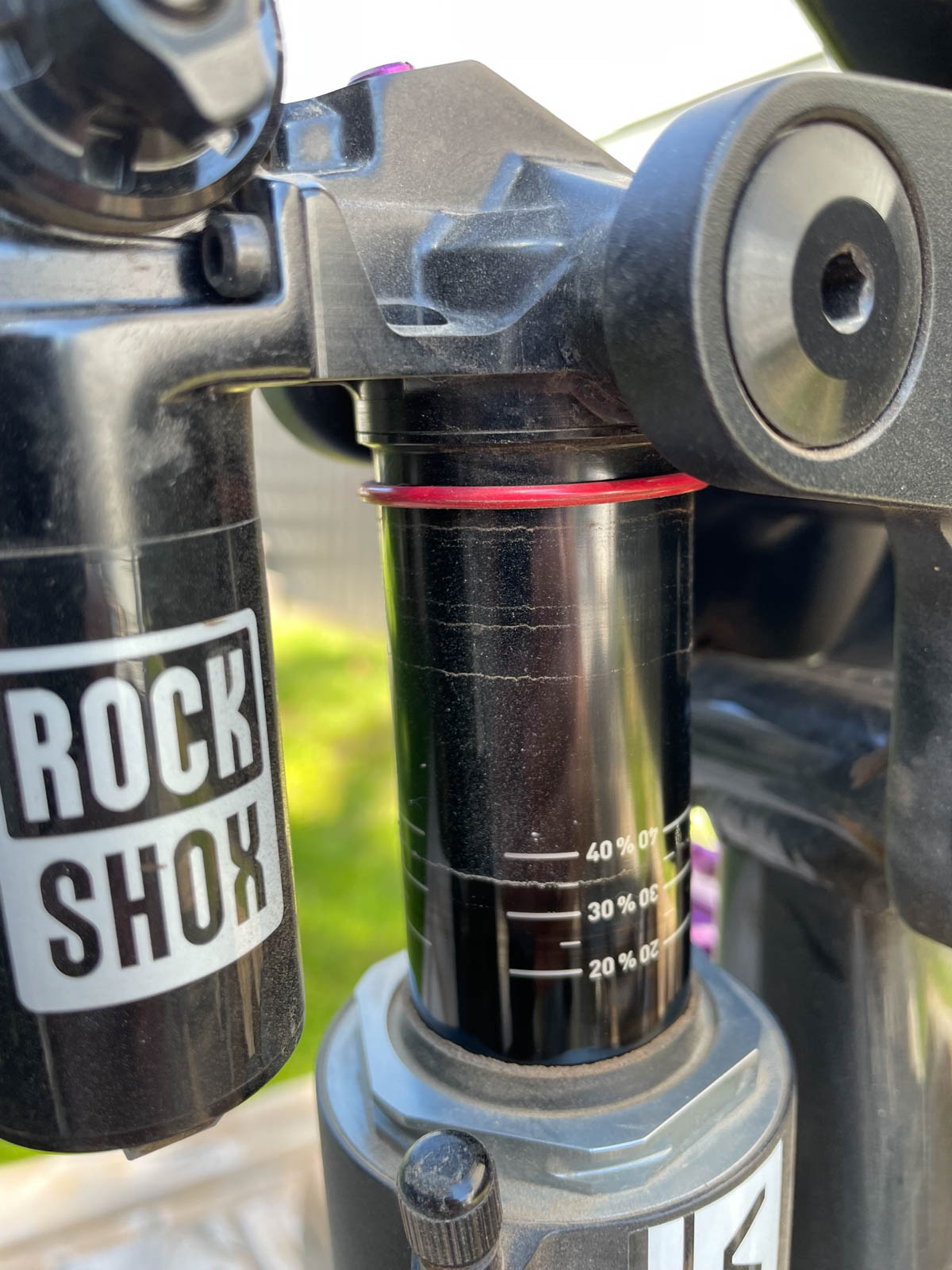
I am a lightweight rider at about 140lbs, but I found the Throwdown’s linkage gets quite progressive just before bottom-out. It’s easy to hit 95% travel but takes a good thump to fully bottom this bike out. I finished a few laps on pretty rough trails and still had a few millimeters of travel to spare.
Geometry

As for geometry, I was immediately comfortable on the Throwdown. The reach and rear end length are both within a few millimeters of my personal MTB (2022 Knolly Chilcotin 151) which I’ve always felt fits me perfectly.
Chromag’s sizing is up to today’s norms, but they didn’t go nuts making the Throwdown super long in the front or rear ends. Of course since they offer a M/L size, they can keep the medium’s sizing more ‘standard’ and offer a bigger fit with the M/L. The 465mm reach on the medium frame is roomy but not excessively long. The 27.5” rear wheel and 435mm chainstays are compact enough to feel nimble in corners, and both make it easy to lift the front wheel. The stubby rear end allows the Throwdown to remain fairly playful for an enduro bike.
The 63.5° steering angle (and long travel fork) was noticeably nice on steep slabs, encouraging you to dive in with confidence. That slack head tube angle is definitely ideal for steep or rough stuff, and it does feel slack while climbing but it’s a small sacrifice I’ll gladly make.
The Throwdown’s 78° effective seat mast angle is easily steep enough to put you in a good position for powerful pedalling. A nice touch for the park model in particular is how the frame’s short mast allows you to slam your seat down low.
Up front a 633mm stack height offers a fairly low front end if desired, but my demo bike felt pretty comfortable with a few spacers under the stem. The bike’s 713mm standover height left me a decent amount of clearance over the frame. The sloping top tube is higher near the head tube, but drops a fair bit towards the seat mast.
Other Ride Notes

In terms of frame stiffness, I noticed the Throwdown’s rear end does offer a bit of squirm. Being a lighter rider I detected this while speeding through chunky rock gardens. When I plowed the wheel into something that deflected it sideways, I could feel just enough flex to prevent me from getting harshly bounced around. The rear wheel could squirm enough to find good traction in such situations.
Regarding weight, I found the Throwdown’s heft easier to forget about than you might think as you’re climbing or traversing. However, I was noticeably more tired after a lengthy climb on the Throwdown, just days after doing the same lap on my 1.7 lbs lighter, 29” wheeled Knolly. On descents, the weight does translate into a very stable ride. The only thing I didn’t find too joyful was whipping the bike around in the air – It takes some muscle to toss this thing around versus a lighter trail/enduro bike. If it’s your park bike though, the Throwdown would feel more playful than any DH bike.
I haven’t ridden a bike with externally routed cables for quite some time, but I didn’t notice any rattling at all from the Throwdown’s cables and hoses.
Water Bottle/Accessory Compatibility

On the medium frame I rode, I was able to fit a standard small water bottle in the frame, but just barely. Without a little flex from the bottle cage the bottle will likely contact the underside of the top tube when coming in and out. I had my Silca bottle cage positioned as far forward as possible, and it cleared the rear shock with only a few millimeters to spare.
As for accessories, I tried installing a Topeak Dock Tool on the Throwdown, and it fit just fine. The only thing I’ll mention is accessing the rear allen bolt with a standard allen key was a bit tricky.
Components:
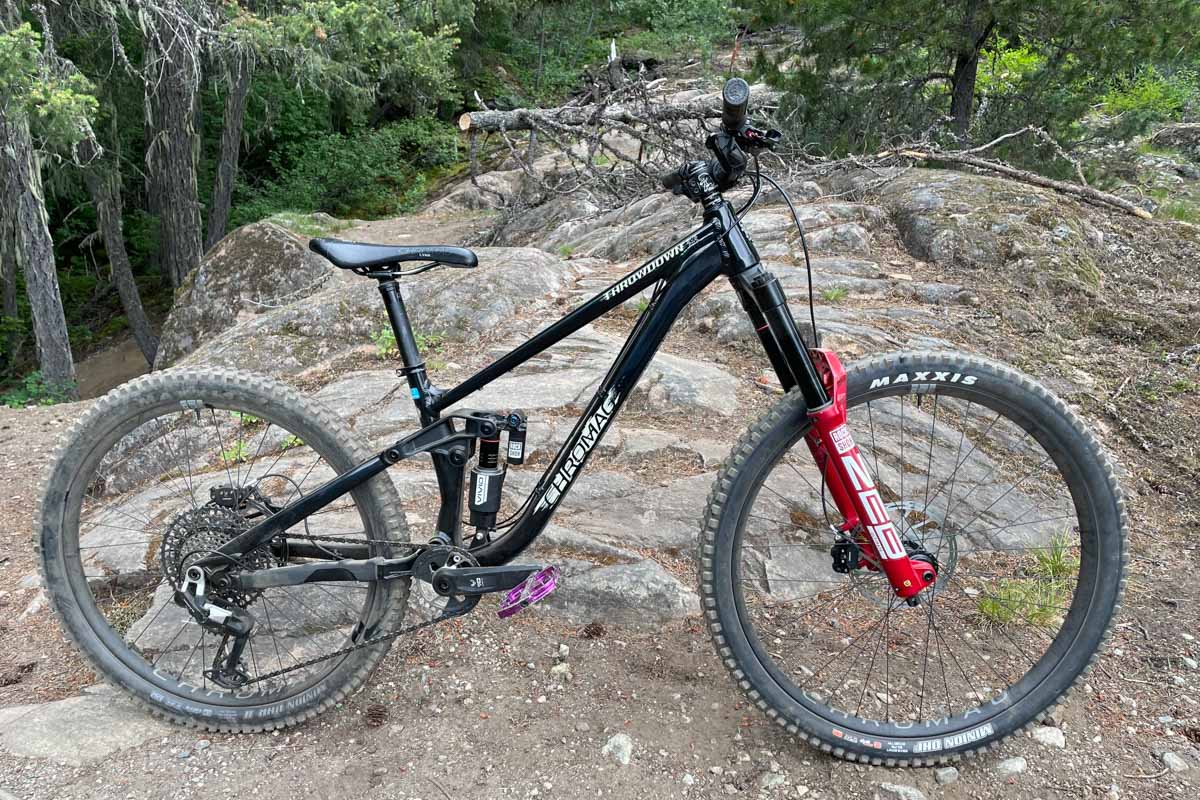
First I must note, there are three components on my demo bike that don’t match the stock builds – The ZEB Ultimate fork, the Maven Silver brakes, and the Chromag Lynx DT saddle. Consumer bikes will come with a 170mm RockShox Zeb Select+ fork, SRAM’s Maven Bronze brakes with updated B1 levers, and Chromag’s Trailmaster seat. Since I rode different models of these parts I won’t comment on them (except to say they performed perfectly well and suited the bike).
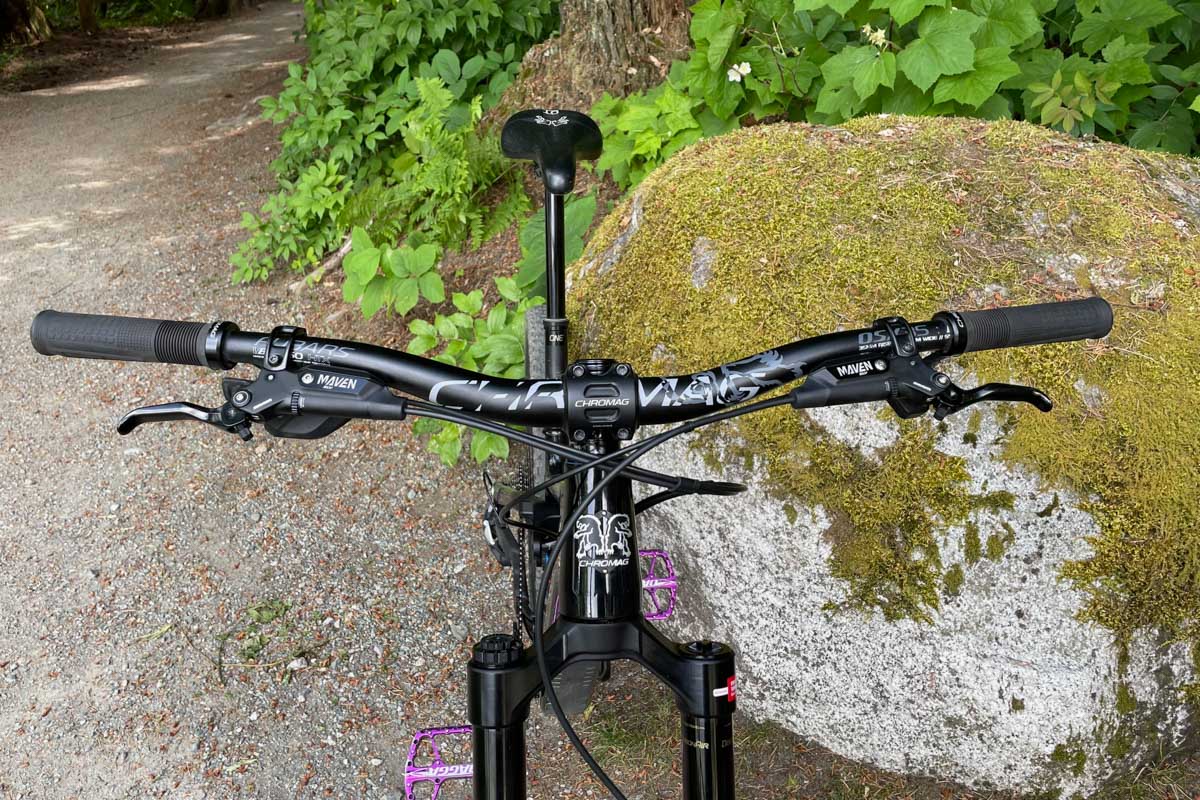
One advantage of buying a bike from a company that’s known for their quality components is you get those goods on stock builds! The Throwdown comes with Chromag’s OSX35 aluminum handlebars, 35mm HiFi BSX stem, Format grips, Trailmaster seat, and BA30 V2 wheels.
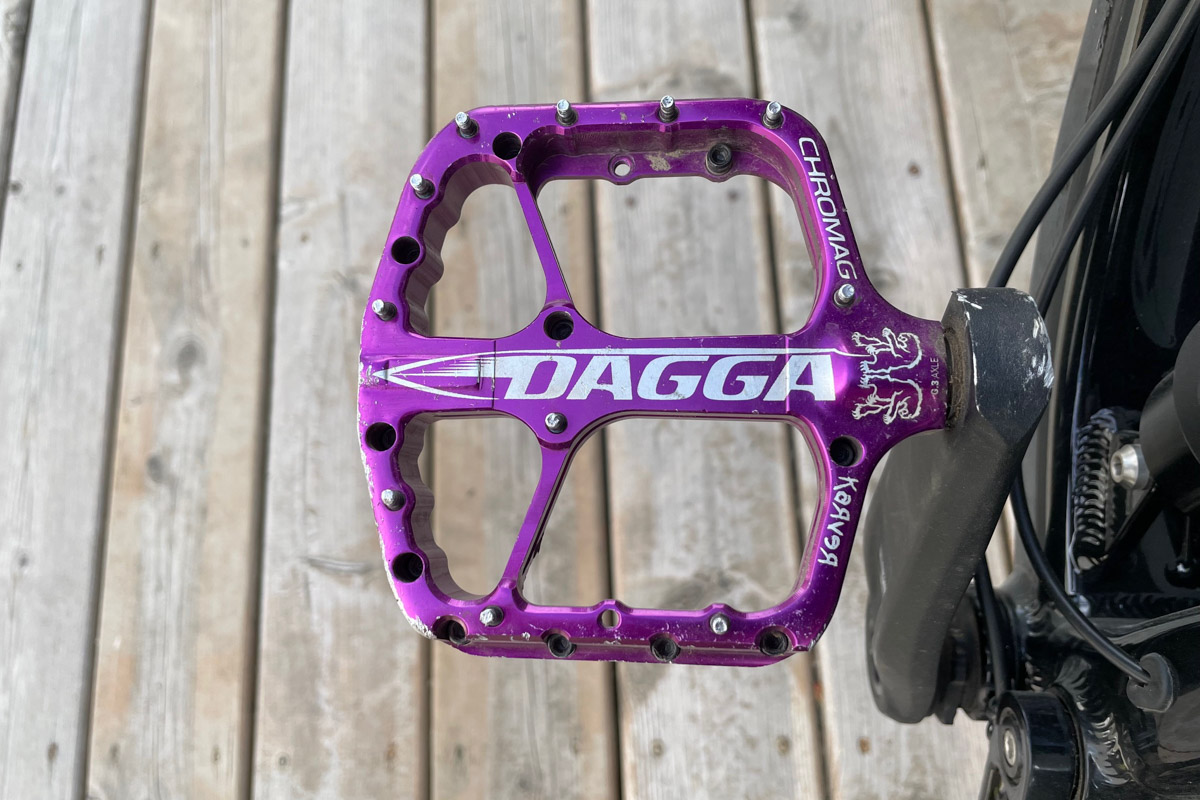
One Chromag component that’s not included on the stock builds, but was on my test bike, is a set of their Dagga pedals. I liked these pedals immediately. The Daggas shape makes it very easy to tell if your foot is positioned correctly. Between their concave bodies and the slight hump over the axle, your foot will naturally be most comfortable when it’s centered on the pedal. The bodies are just big enough to provide support to every bit of my size 9.5 foot, and the pins are on the grippier side.

The Throwdown’sRockShox Vivid Ultimate rear shock offered smooth bump eating performance, and its Firm mode ensures good pedalling efficiency. It’s easy to tell the shock’s adjustments are functioning well – As noted above, I had to play with rebound settings but produced very noticeable results with a few clicks.
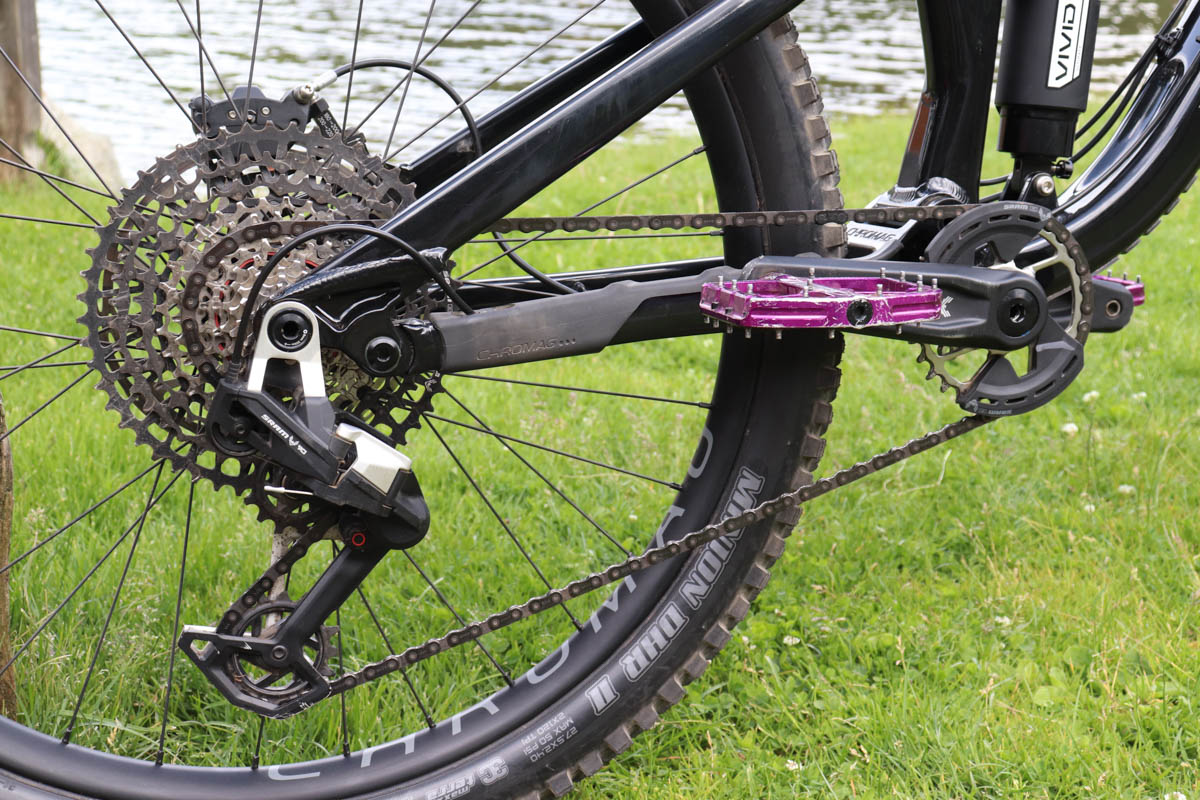
SRAM’s Eagle 90 transmission performed flawlessly throughout all my rides with zero adjustment. There were no hesitant shifts, no skipping gears, and the shifter has a solid, crisp feel. A bashguard on the chainring is a welcome finishing touch for this rowdy bike.
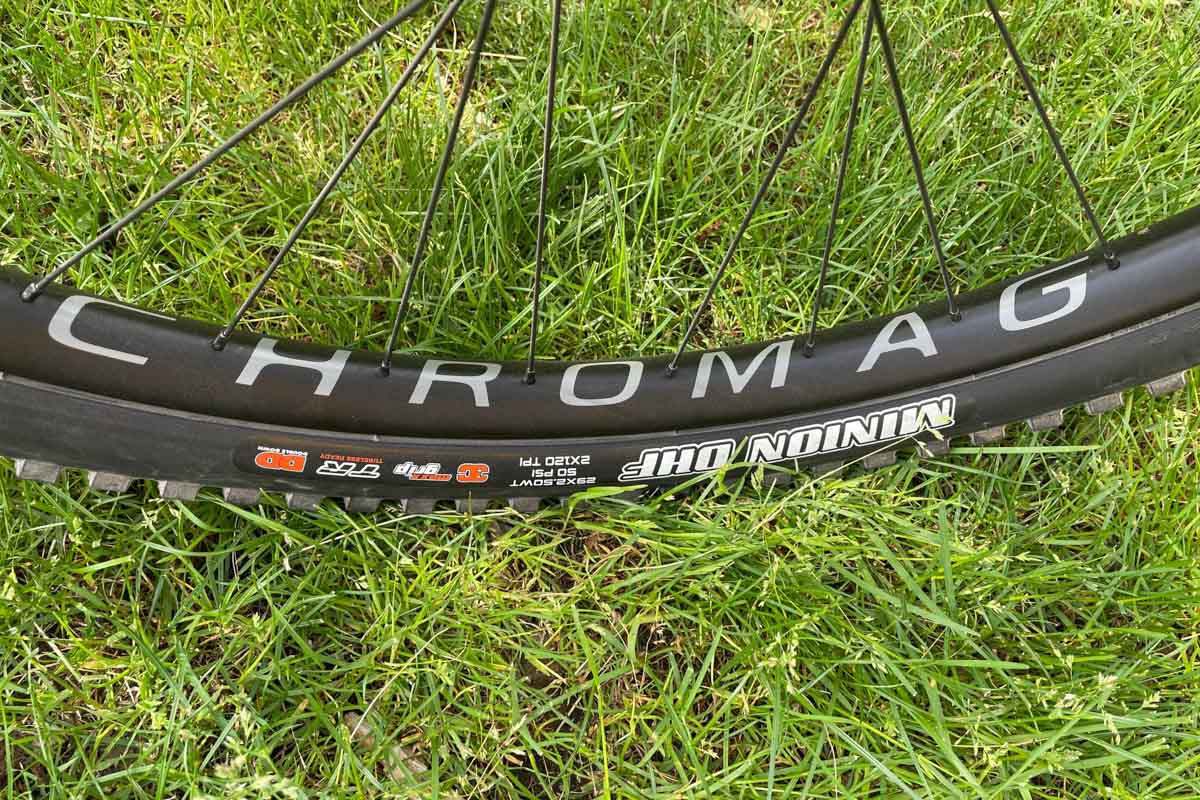
This bike rolls on Chromag’s BA30 V2 wheelset. I can assure you these rims are tough! On my first ride with my rebound set too slow I punished the Throwdown’s rear wheel, repeatedly thumping it hard and burping sealant in several places. Despite that the rear rim has a barely noticeable wobble, no hops and no dents. The front wheel still looks brand new after all my rides.
Chromag stuck with Maxxis’ trusty Minion DHF/DHR tires with a 2.5” front and 2.4” rear, both with DoubleDown casings. A common choice, but for good reason – they’re solid all-around treads.
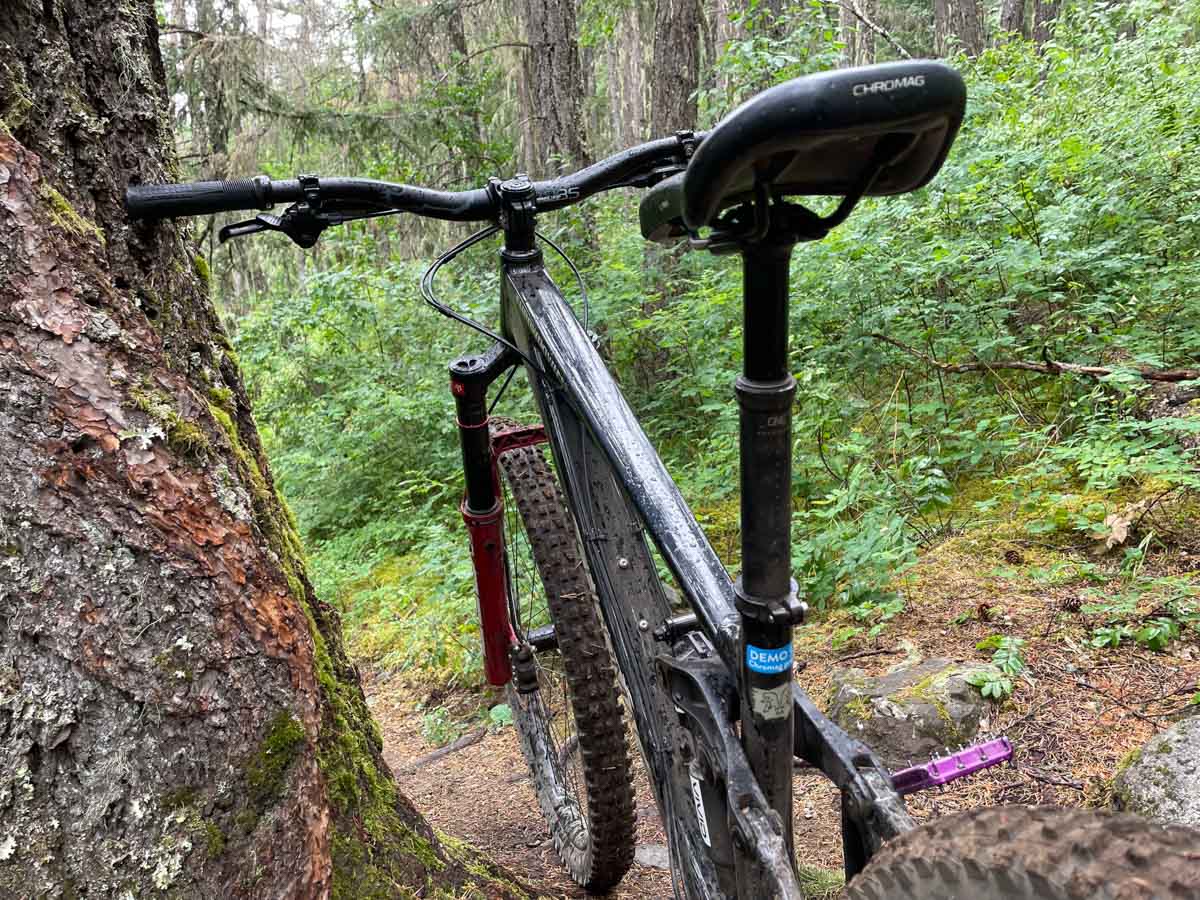
The 180mm travel OneUp Components V3 dropper post was pretty sticky on my bike, but this is a test mule and I wasn’t the first person to ride it! I previously owned a OneUp post for several years and it was flawless, so I’m sure this one just needs a service. I am stoked to see a nice long travel post on a medium frame.
The Chromag Throwdown (Eagle 90 build) retails for $5250. Check out all the details on Chromag’s website.