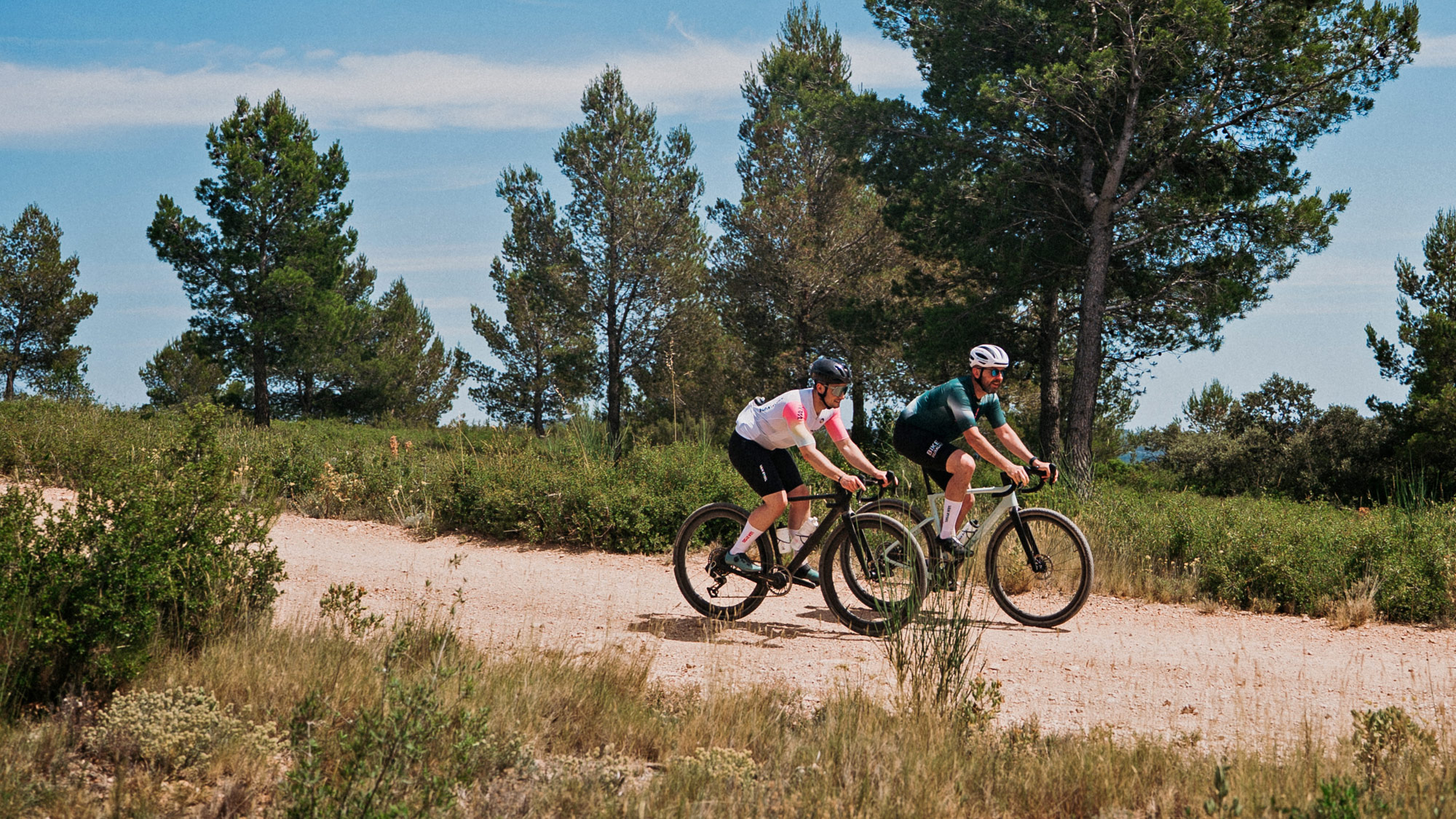


The Belgian bike-making arm of global outdoor retailer Decathlon just dropped 2 high-value, high-performance gravel bikes. One, the RCR-G is a race-ready bike with big inspiration from their aero road bikes, all come spec’d with wireless electronic drivetrains. The other, the endurance-focused EDR-G is built for everything from all-day rides to backcountry adventures, with a complete mechanical drivetrain build option starting from just 2200€.
I rode both of these bikes earlier this summer, and came away impressed with both. But which one would I choose?
Van Rysel RCR-G or EDR-G, a carbon gravel bike for any ride
Van Rysel goes for either race or everyday with their all-new carbon RCR-G & EDR-G gravel bikes. Both are clearly capable of tackling a mix of paved, dirt, and gravel roads – but really for two very different graveler personalities:
They created the RGR-G together with road pro team Decathlon-CMA CGM riders looking to race gravel, too. And the similarities to the RCR-R overall profile are pretty clear, just with slightly thinner aero tube shapes and much bigger tire clearance.
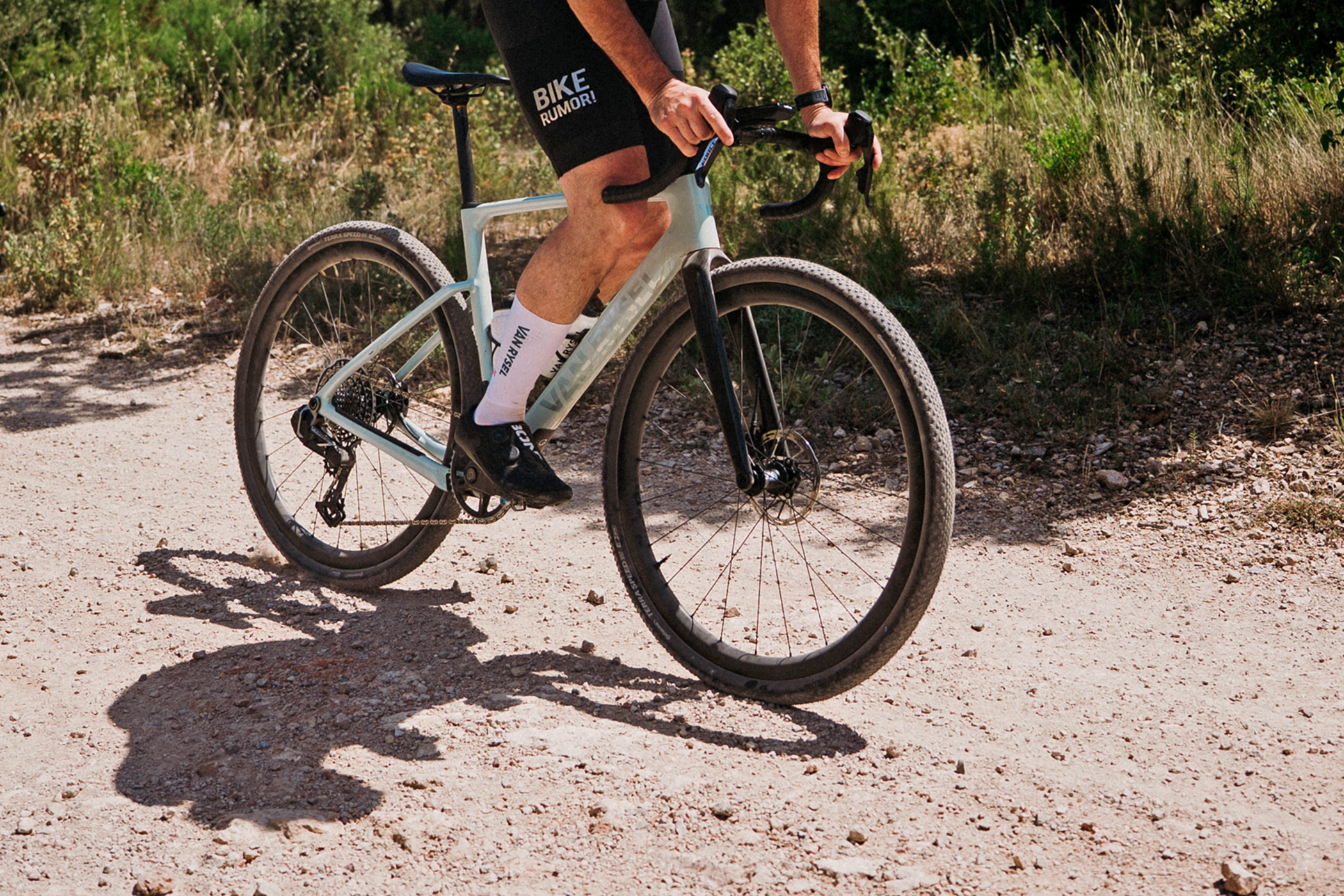
On the other hand, the EDR-G is more of an all-new shape for Van Rysel’s new endurance and adventure gravel bike. It combines a smoothly curved front triangle similar to their EDR road bike with very thin-for-carbon dropped stays, kinked just behind the seattube for added comfort flex.
Tech details: What makes the RCR-G a gravel race bike?
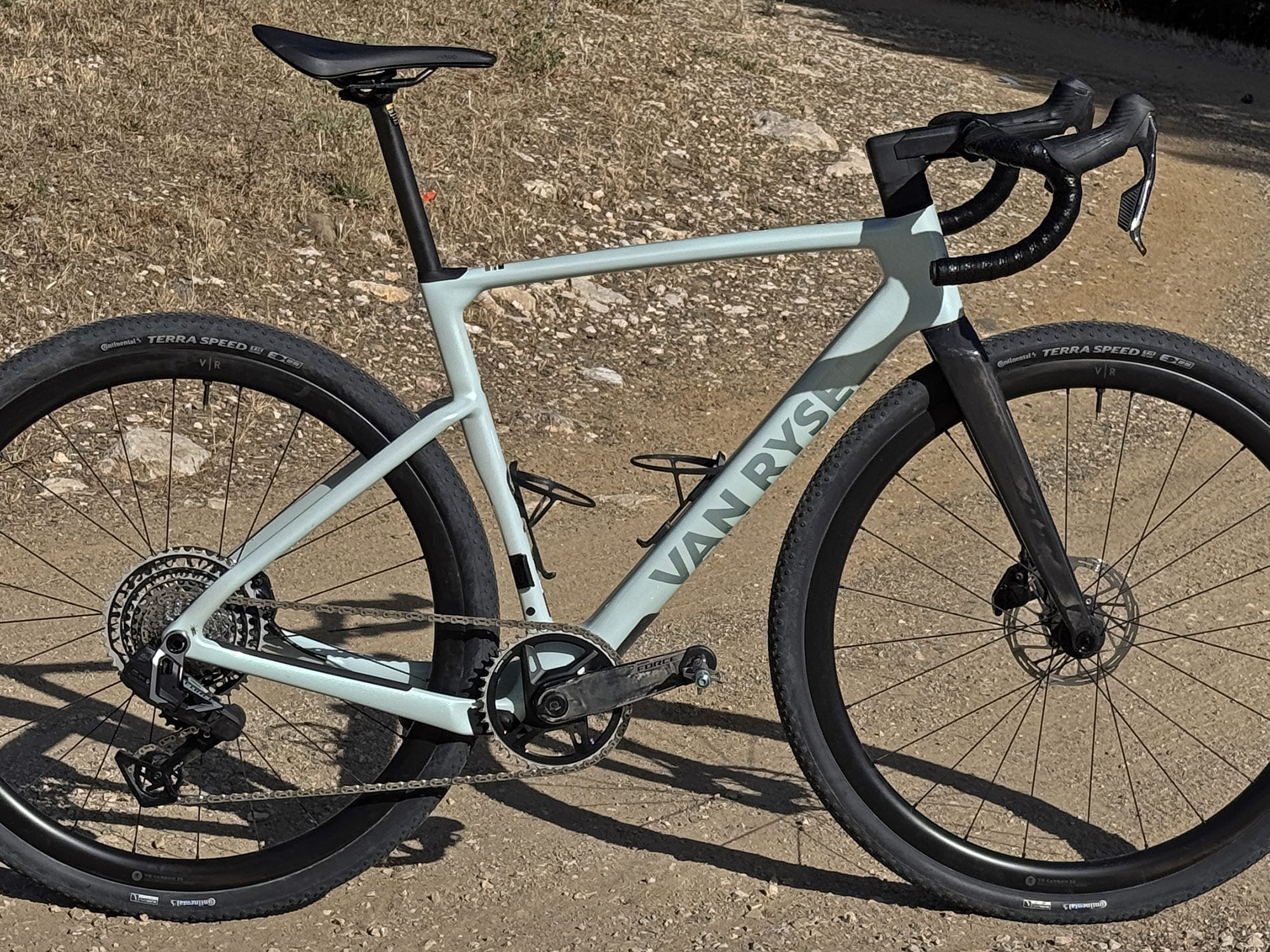
Since a lot of gravel riders are looking for speed on and off road, the Van Rysel RCR-G goes for CFD-optimized mid-depth aero tube shapes, full cable integration, racy gravel geo, 1x or 2x UDH compatibility, but still plenty of tire clearance to handle the roughest courses.
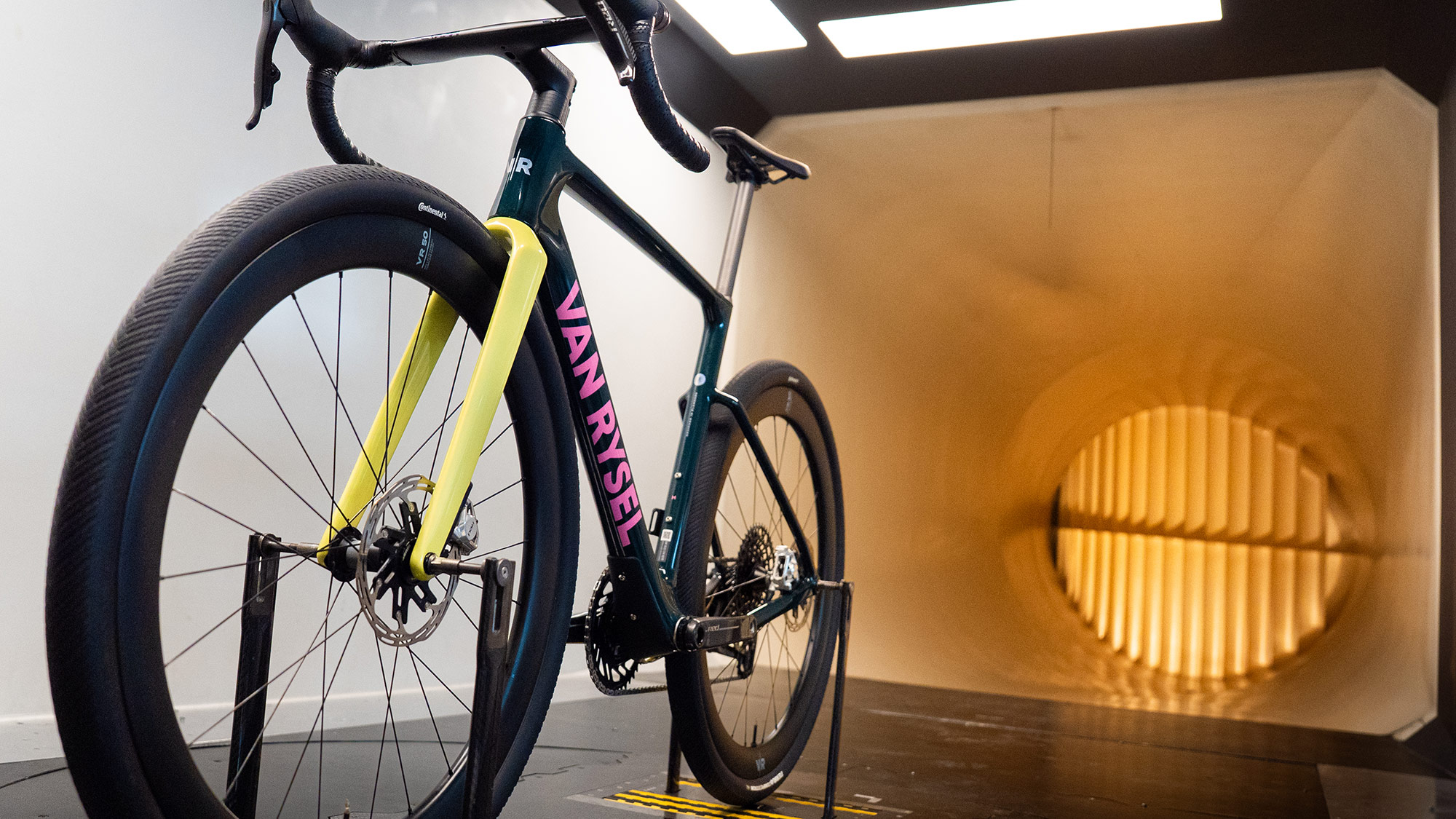
Van Rysel claims the new RCR-G is 8.6W faster in the wind tunnel compared to their old GCR gravel race bike, which already featured aero fork & downtube shaping. And yet, it’s also only 8W slower than their RCR-R aero road race bike. And yet, this new bike is said to be lighter, more comfortable, and has room for up to 50mm tires.
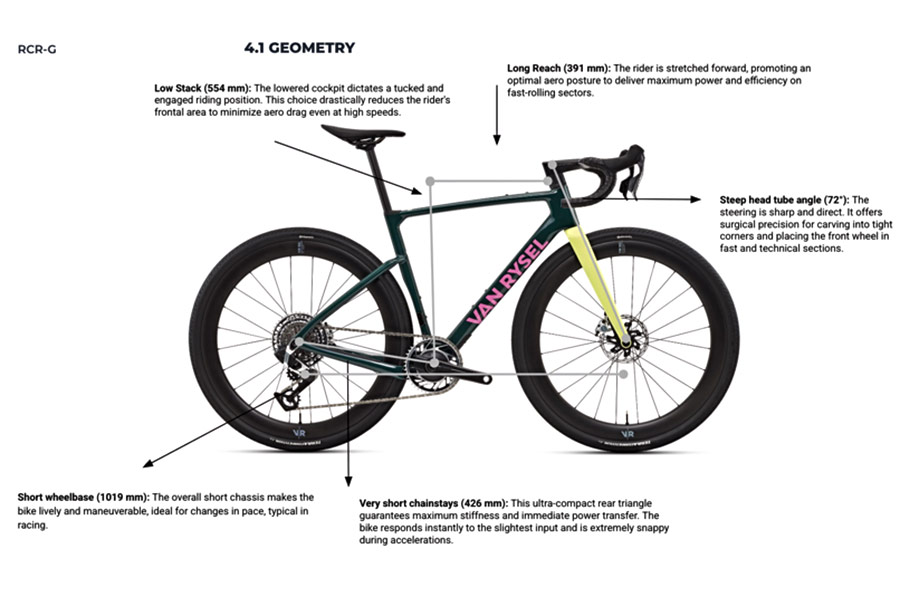
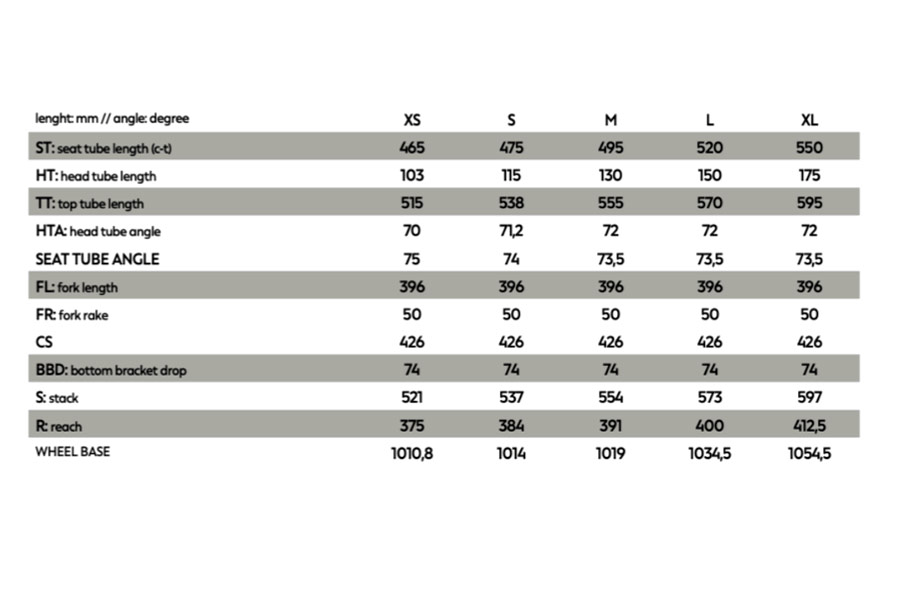
- reinforced hi-mod aerodynamically-optimized carbon frame & fork, with size-specific layups
- 885g frame & 415g fork weight claims (size M, unpainted; uncut fork)
- 50mm max tire clearance
- fully integrated internal cable routing
- 1x & 2x compatible, for both electronic & mechanical drivetrains
- 50T max 1x & 52/36T max 2x chainring clearance
- UDH rear hanger and removable braze-on style front derailleur hanger
- 3 bottle cages mounts (2-position on downtube) including one under the downtube, plus toptube bag mount
- integrated downtube gravel-strike protector
- 27.2mm road seatpost with internal wedge clamp binder
- 12mm thru-axles & flat mount disc brakes
Tech details: What makes the EDR-G an endurance gravel bike?
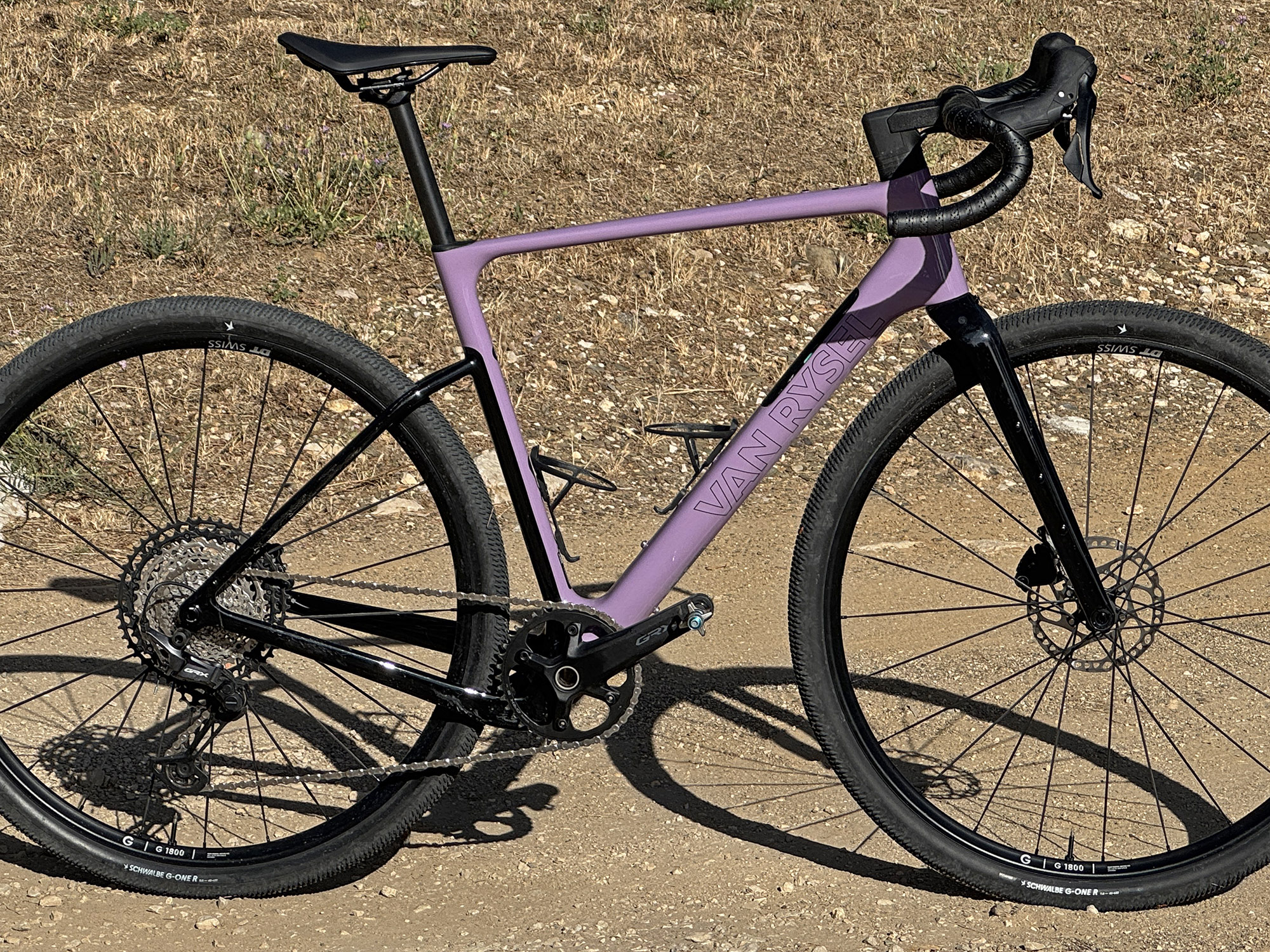
Instead of focusing just on speed, the EDR-G is more of an all-rounder. But it’s still not only an adventure gravel bike, though.
All-day comfort is the number one priority here. So tube shapes are much thinner for better compliance; geometry is longer and more relaxed. and the layup consists of slightly less-stiff fibers for their better vibration damping characteristics. The EDR-G adds a couple hundred grams more than the RCR-G. But with that extra weight comes more durability (no need for a downtube bashguard here, apparently), more comfort obviously, but also more capability.
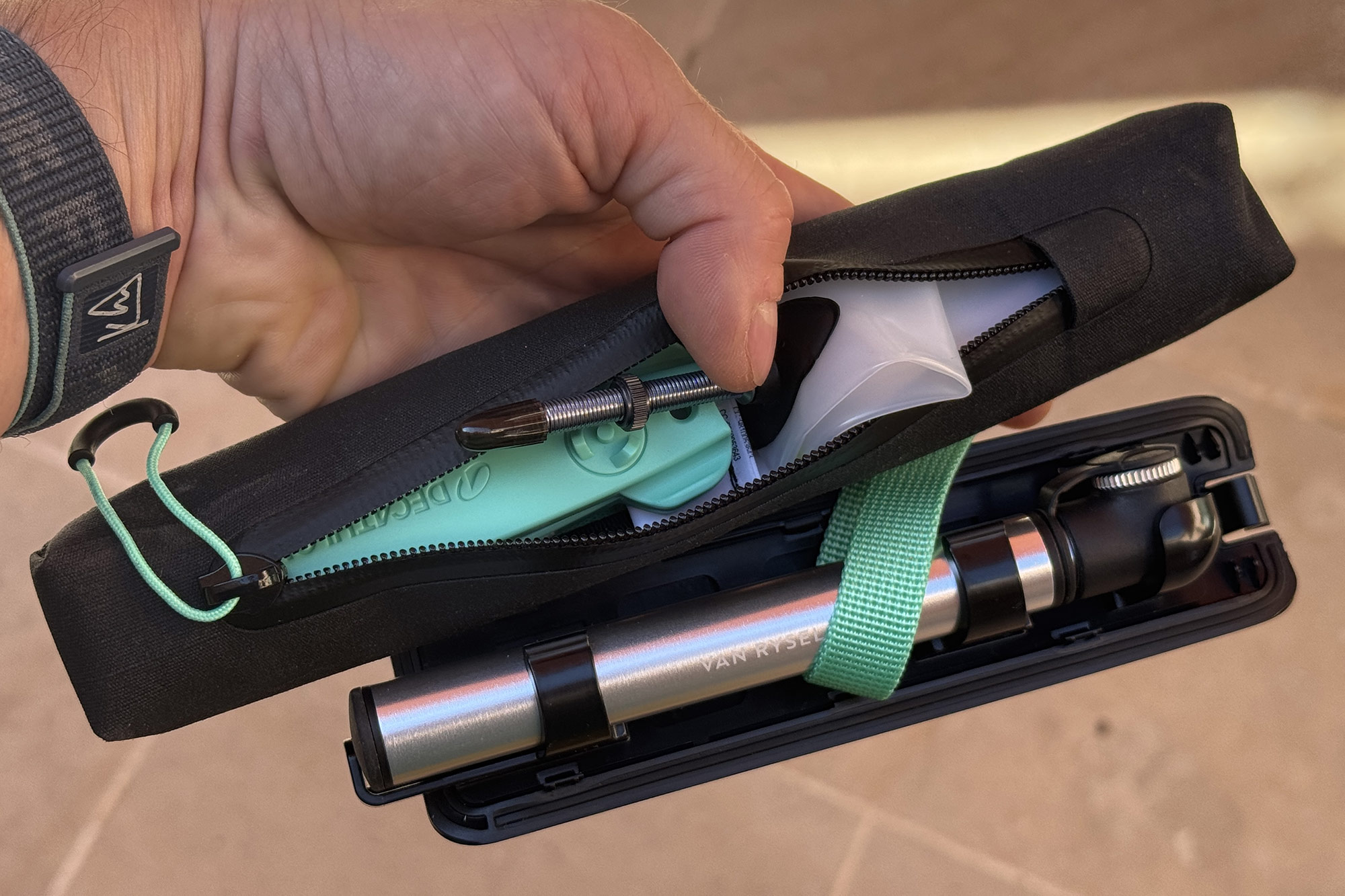
Officially, the EDR-G offers the same 50mm tire clearance. But here you can carry a lot more gear. First off, there’s internal frame storage (independent of your bottle cage) with a built-in pump & mini-tool carrier, plus a slim bag for a spare tube & tire levers. Then, there’s simply a lot of bikepacking-ready mounts, including all from the RCR-G plus full-coverage fender mounts and 3-bolt cage mounts on its fork legs.
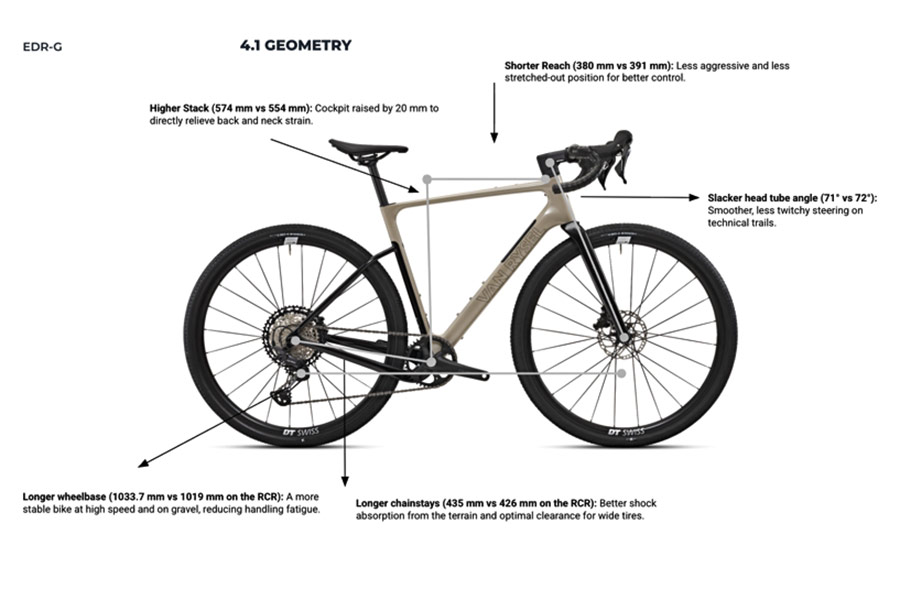
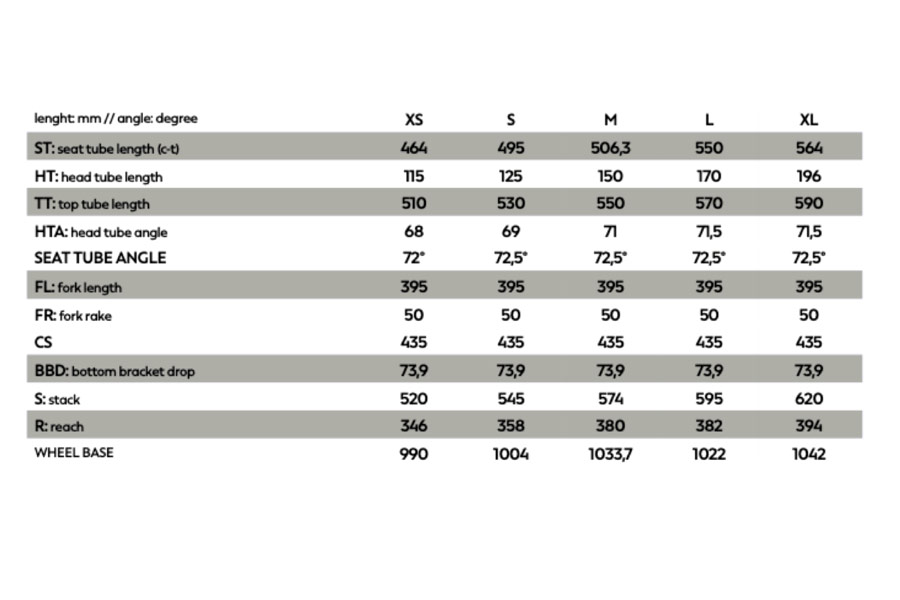
- mixed modulus comfort-focused carbon frame & fork
- ~1100g frame weight (M, unpainted)
- 50mm max tire clearance
- fully integrated internal cable routing
- 1x-only, for both electronic & mechanical drivetrains
- UDH rear hanger
- 3x 2-bolt mounts (seattube, toptube & under downtube) & 3x 3-bolt mounts (downtube & both fork legs)
- mounts for full-coverage fenders
- internal frame storage toolkit, includes: removable internal storage bag, mini-pump, mini-tool, TPU tube, 2x tire levers
- 27.2mm road seatpost with internal wedge clamp binder
- 12mm thru-axles & flat mount disc brakes
First Impressions – RCR-G vs. EDR-G
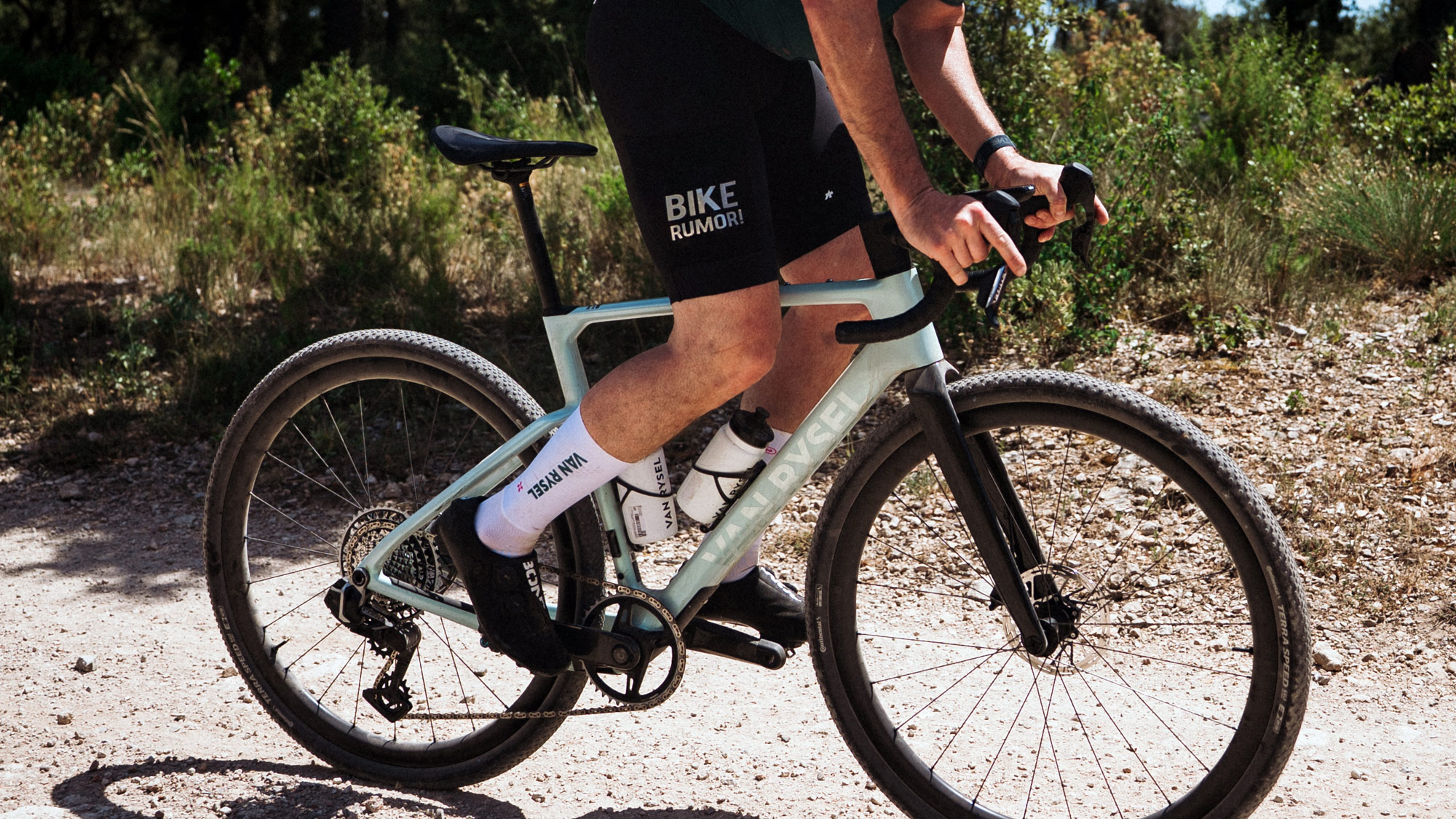
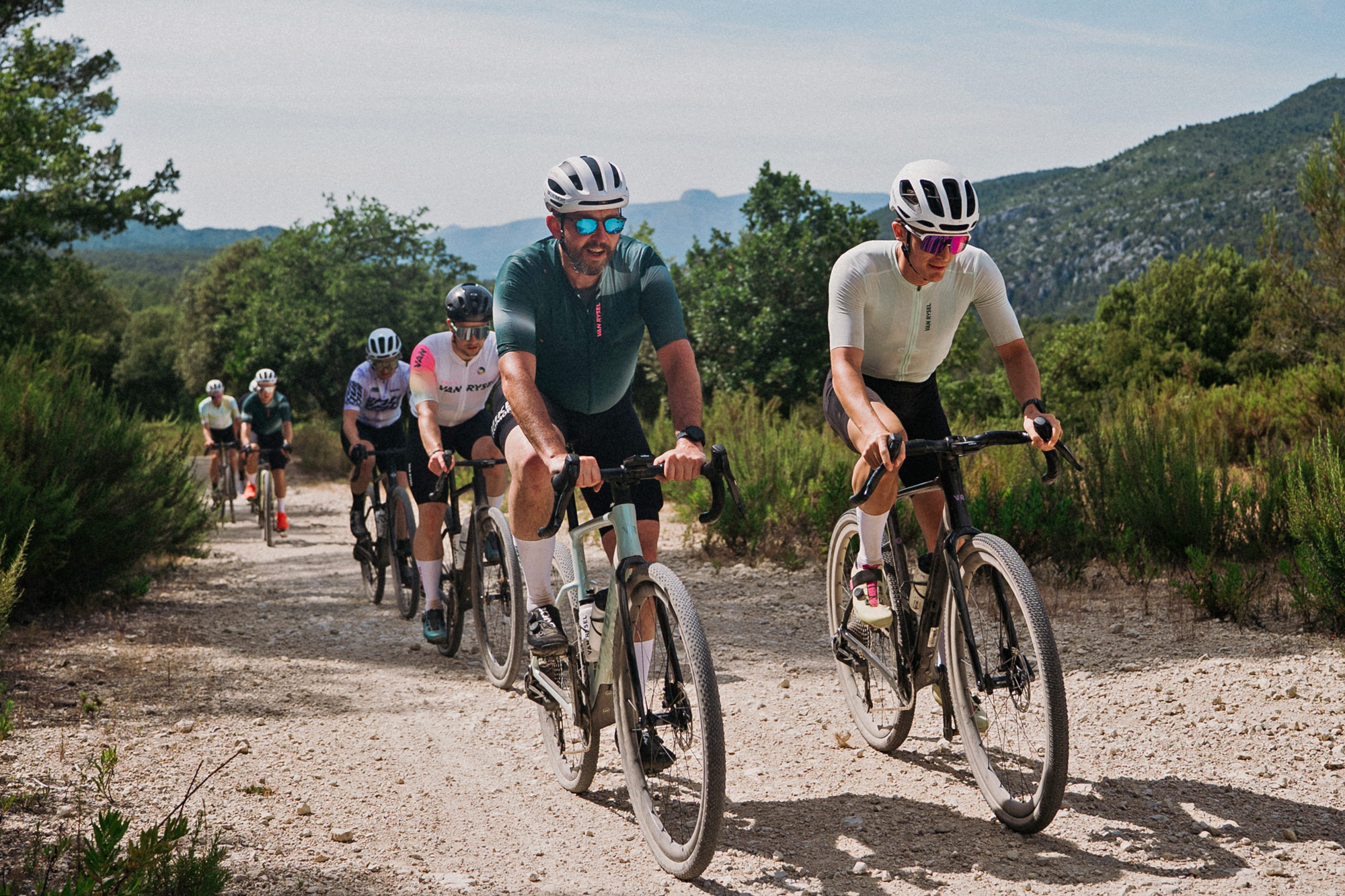
There’s clearly two distinct riding characters here. But frankly, you kinda can’t go wrong with either.
If you are looking to go fast, on and off-road the RCR-G is probably the better choice. It really does feel like an aero road bike, stretched out to fit fat enough tires to take on any terrain. Sure, it’s a bit stiffer than the EGR-G with its deeper aerodynamic tube shaping, but it is still plenty comfortable rolling on 45mm tires out of the box. And I appreciate the separate aluminum bar & stem setups on all but the top-spec bike, which let you really dial-in your perfect cockpit fit for off-road riding. Plus, it’s an easy upgrade down the road to a carbon bar if you feel you want more gravel bump vibration damping.
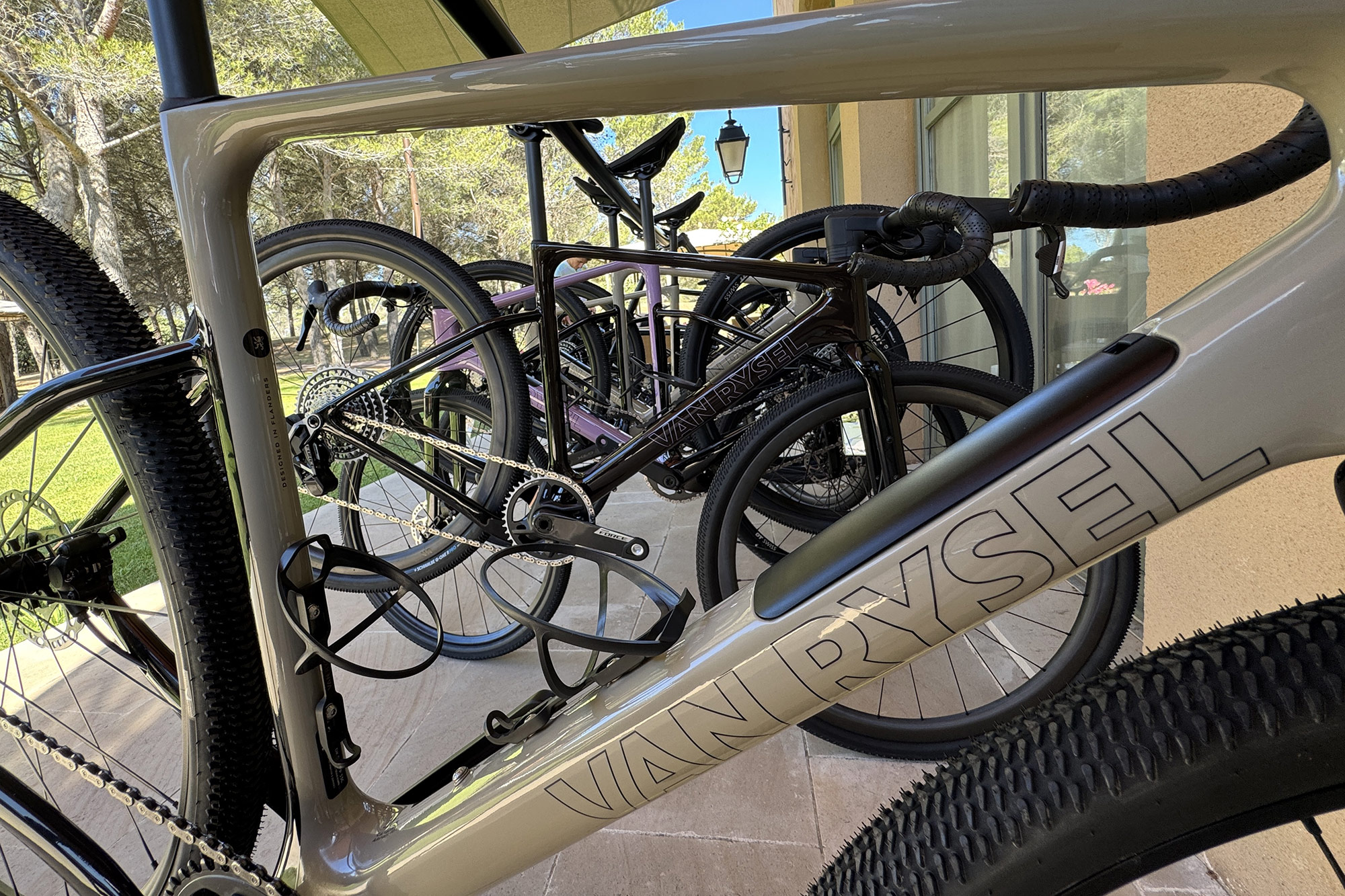
On the other hand, if you ride gravel for the adventure of it, the EDR-G is really your better choice. This bike still feels plenty fast and
It racks up kilometers (or miles, if those are your thing) quickly, while being a bit easier on your body. I test rode the most affordable bike with mechanical GRX 1×12 & alloy DT G1800 wheel spec. And truly, there’s not much I would change on this bike.
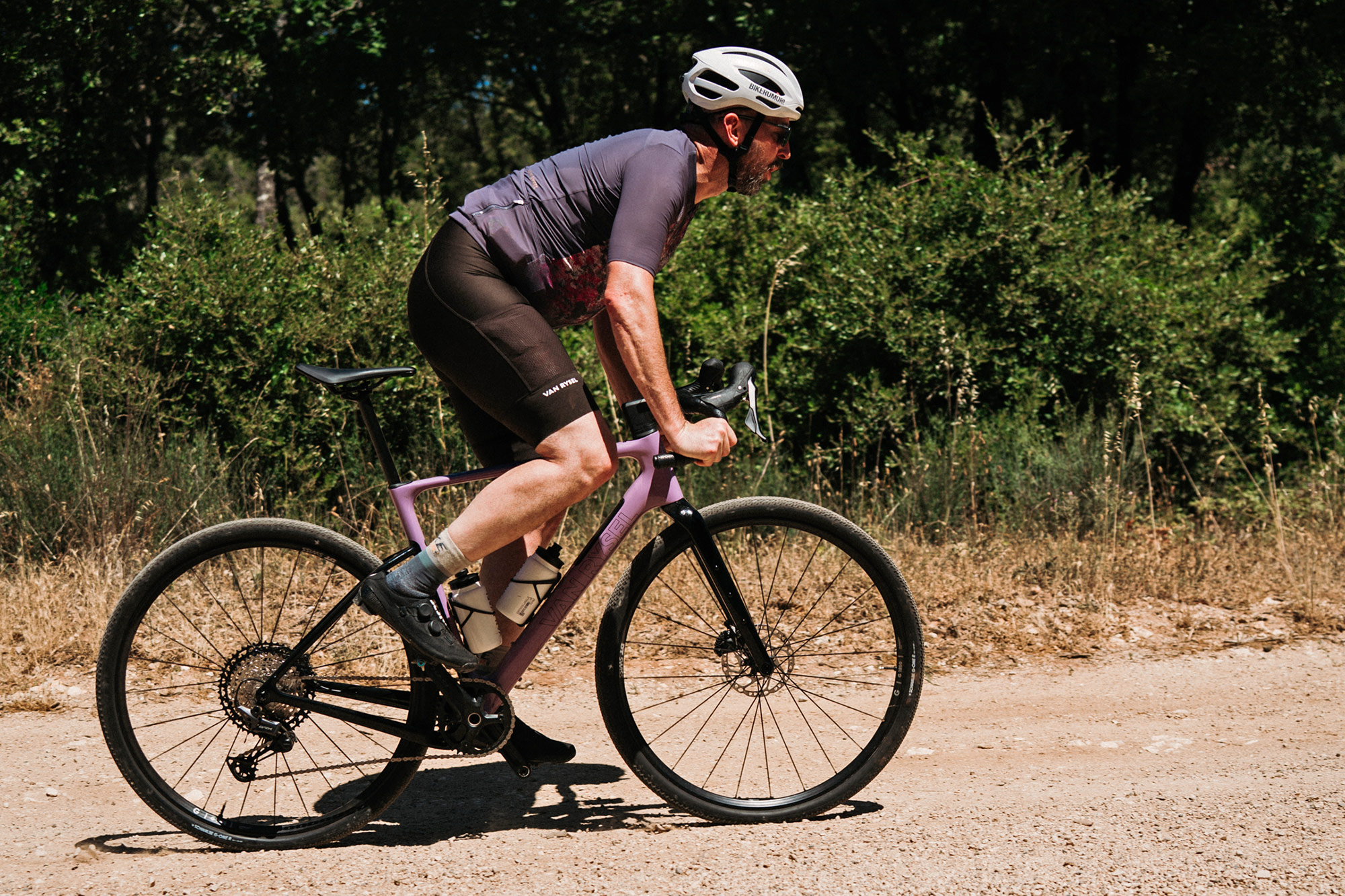
Yes, it is a kilo heavier than the Force AXS spec’d RCR-G I tested, but it’s also half the price. And you can totally spend that extra 2000€ you spend on a more forgiving carbon handlebar and lighter carbon wheels when you feel the need down the (gravel) road. But honestly, I didn’t notice any extra weight out riding in the dirt, or even much slower ride, only the extra comfort and the simplicity of not having to keep batteries charged.
Van Rysel gravel bikes – Pricing, options & availability
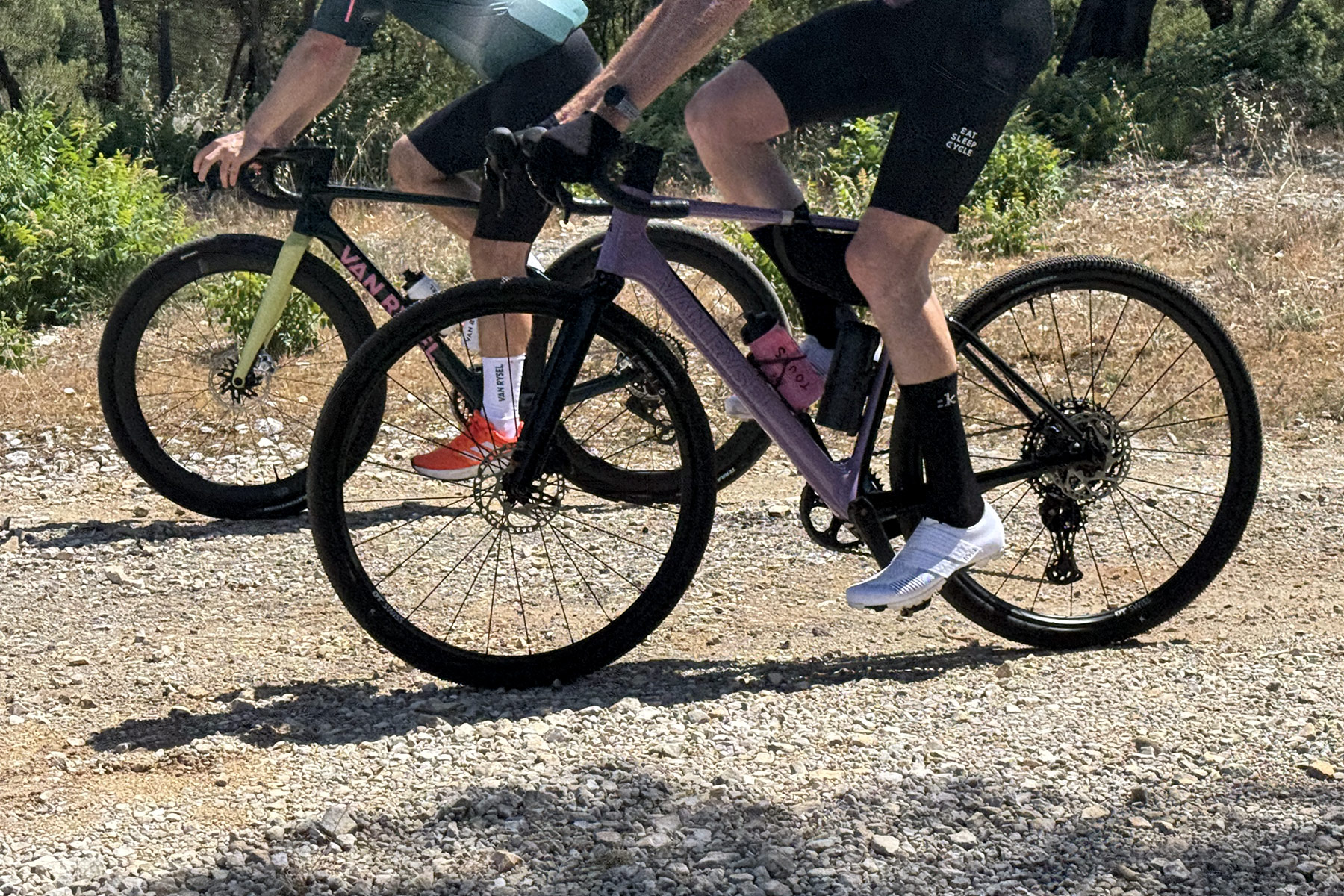
The real trick with the two all-new Van Rysel gravel bikes is their availability. There are a lot of options, and some impressive affordability, at least in Europe. But not everything is available everywhere, or all at once.
RCR-G available first…
The race-focused RCR-G is offered in 3 spec levels.
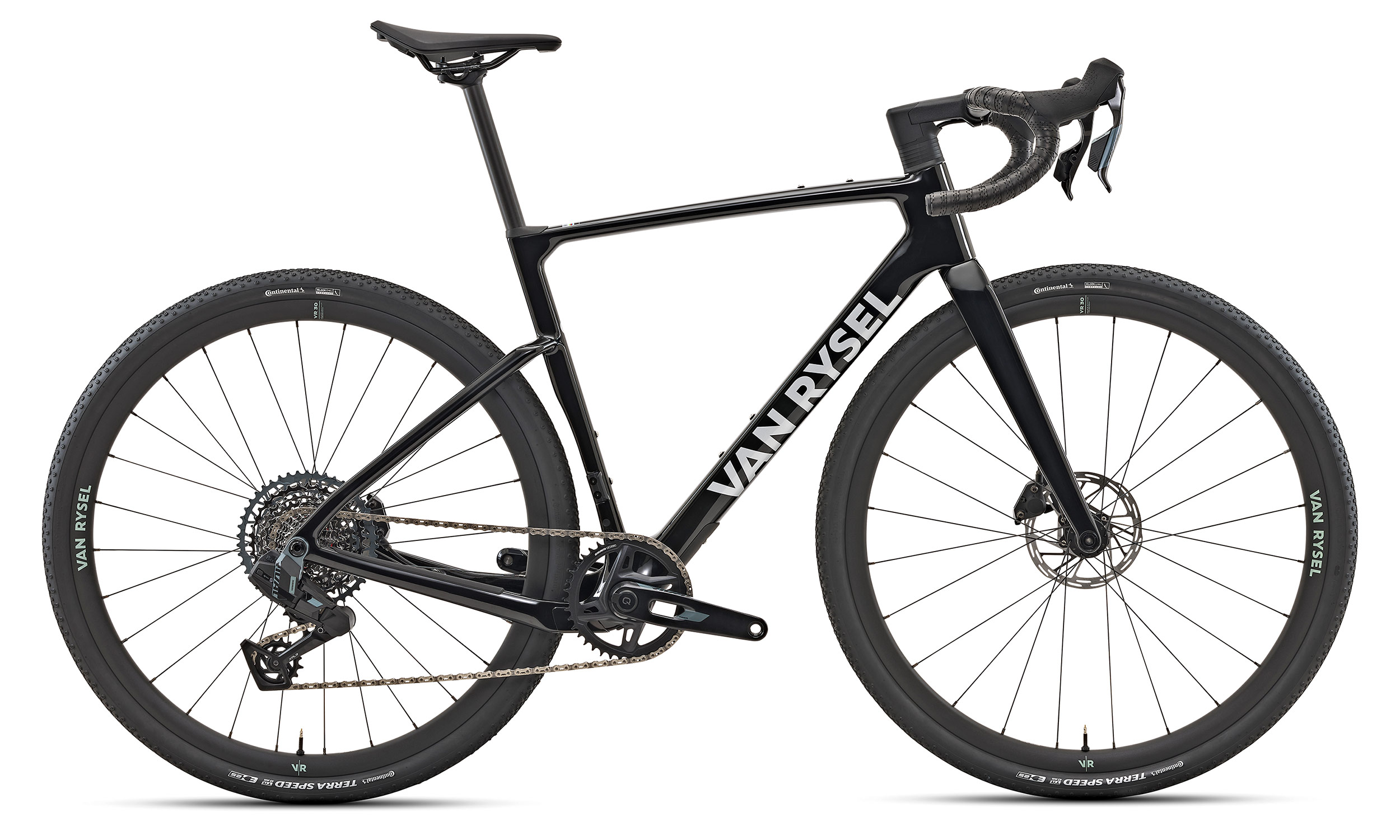
The most affordable 3200€ / £3000 / $5300 RCR-G Rival AXS comes with Rival Xplr 1×13, alloy 2-piece cockpit, and 30mm deep alloy Van Rysel wheels with 45mm Continental Terra Comp tubeless tires, at a claimed 8.6kg.
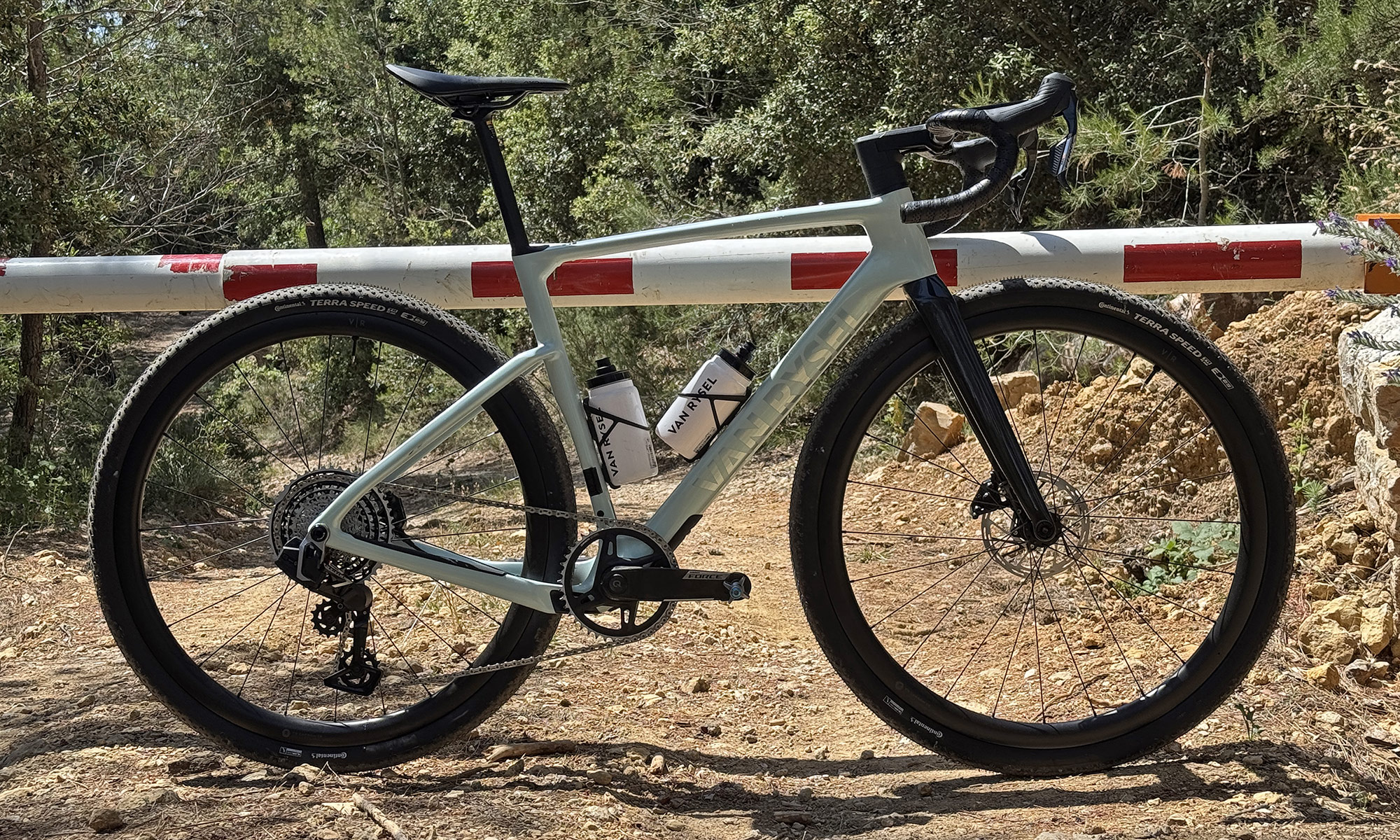
Step up to the 4200€ / £4000 / $7400 RCR-G Force AXS build to get Force Xplr 1×13 with a power meter, a carbon handlebar & 35mm deep carbon Van Rysel wheel upgrades, at a claimed 8.2kg complete.
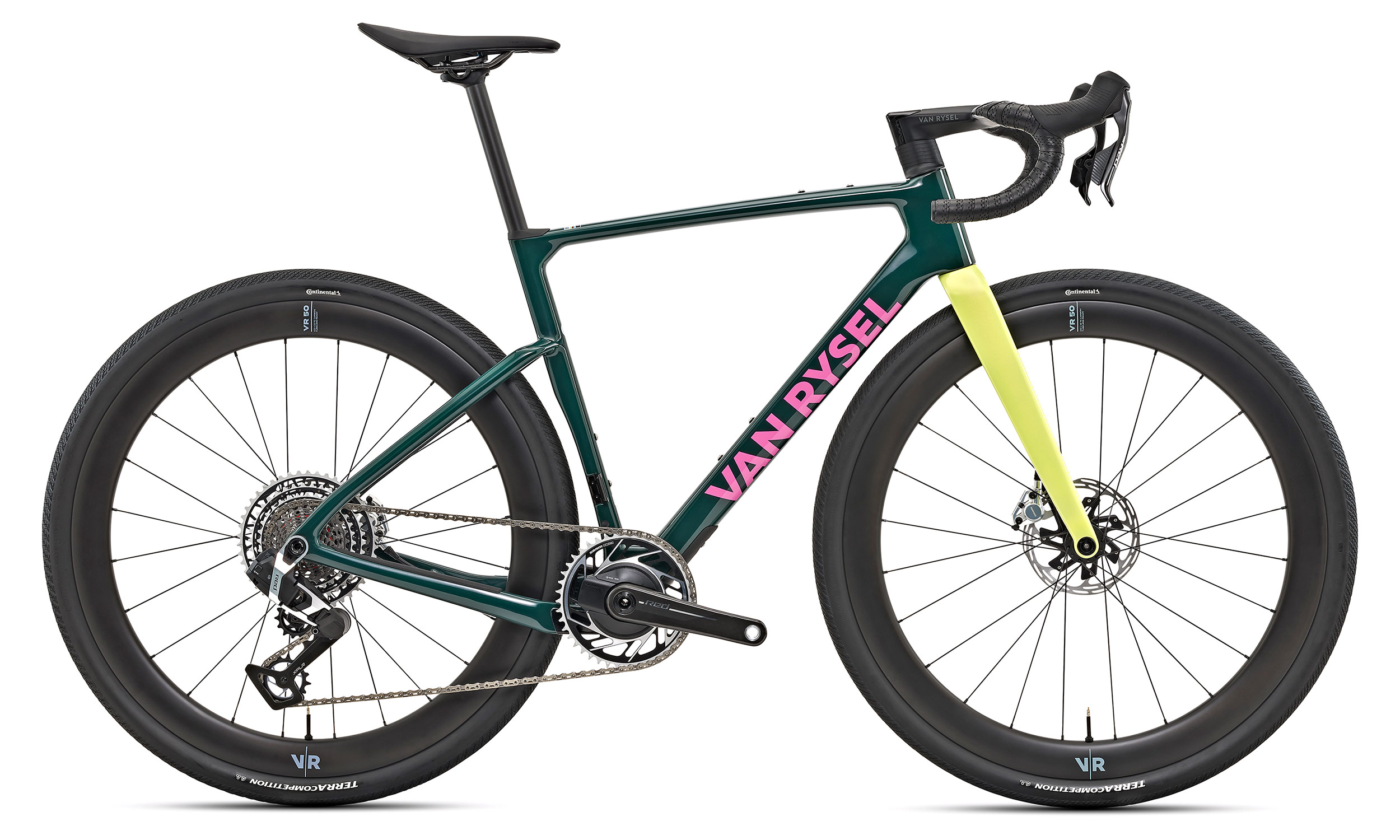
Or go all-in for the 6600€ / £6500 / $11k RCR-G Red AXS build to get SRAM Red Xplr 1×13, the exact same 1-piece carbon cockpit used on Van Rysel’s RCR-R Pro road bike, and more aero 50mm Van Rysel carbon wheels upgrades, at a weight of 7.8kg.
As for real availability, you can get any of the 3 RCR-Gs now from your Decathlon dealer shops in Europe now, in the UK from October, and the USA at an undetermined later date.
EDR-G now for some, later for others…
Options for the four much more affordable EDR-G models are quite a bit more complicated.
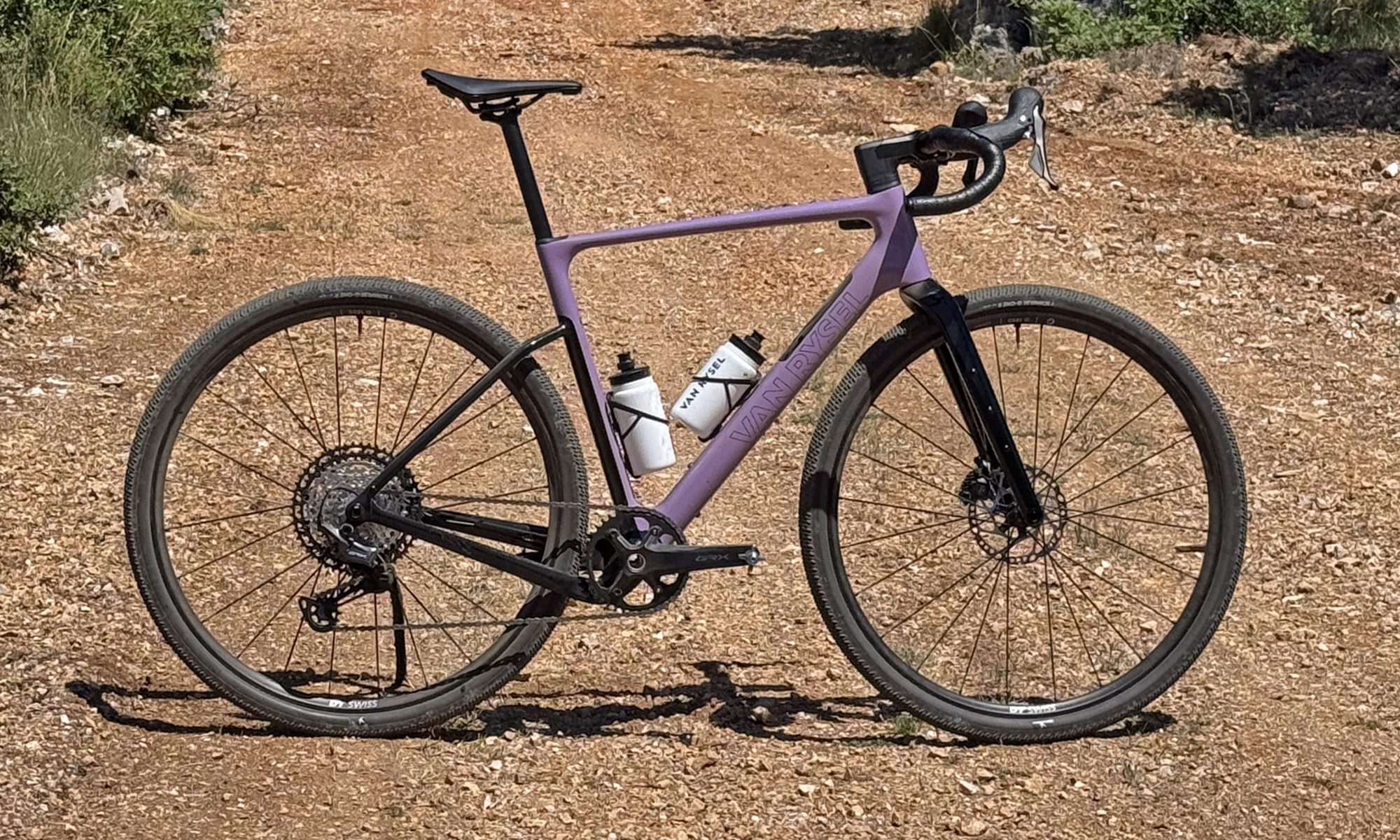
The most affordable of them all is a 2200€ / £2100 EDR-G GRX build with wide-range 1x mechanical GRX 610 groupset, curvy alloy Deda Gera cockpit with 24° flare bar, and new DT Swiss G1800 alloy wheels wrapped in 45mm Schwalbe G-One R Performance tires – a claimed 8.75kg complete.
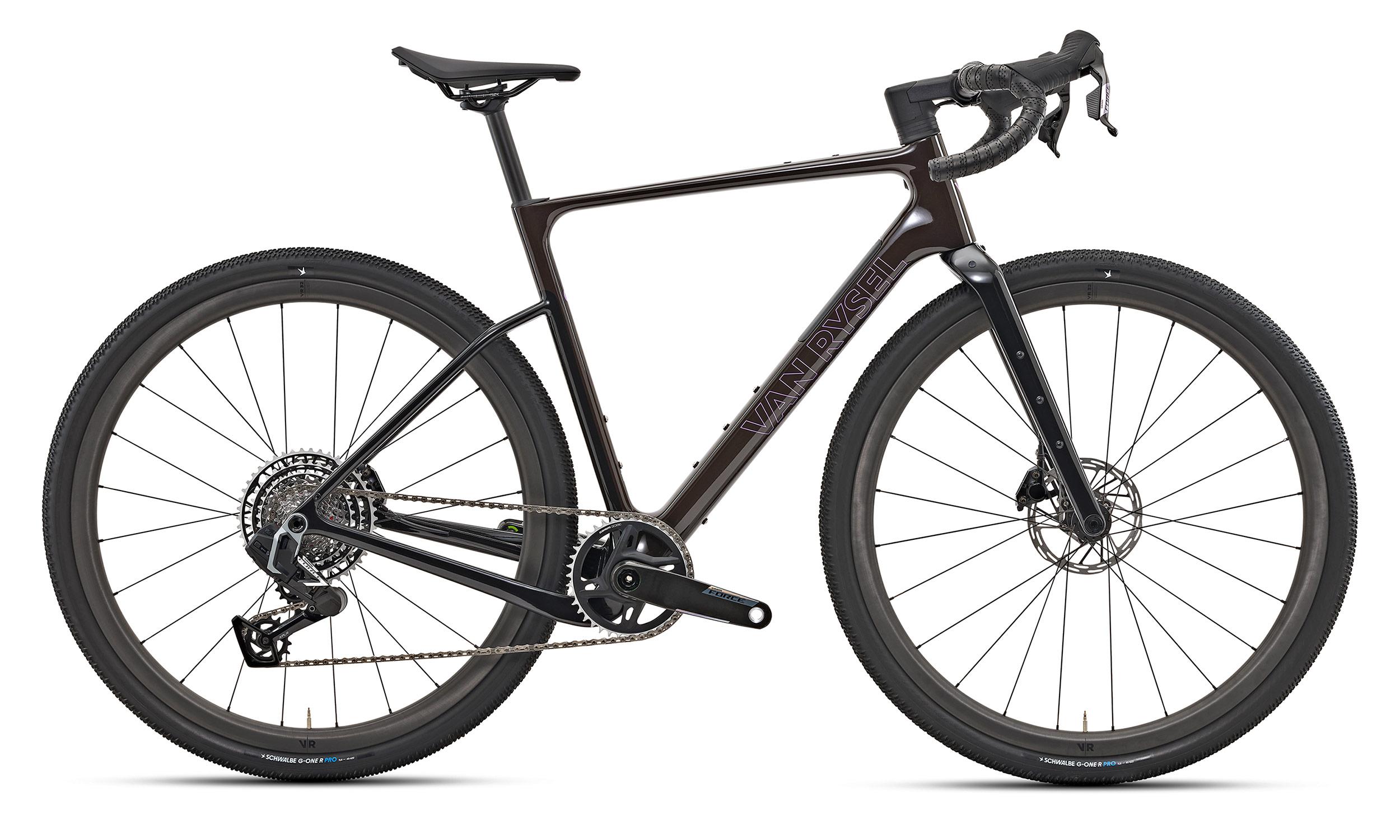
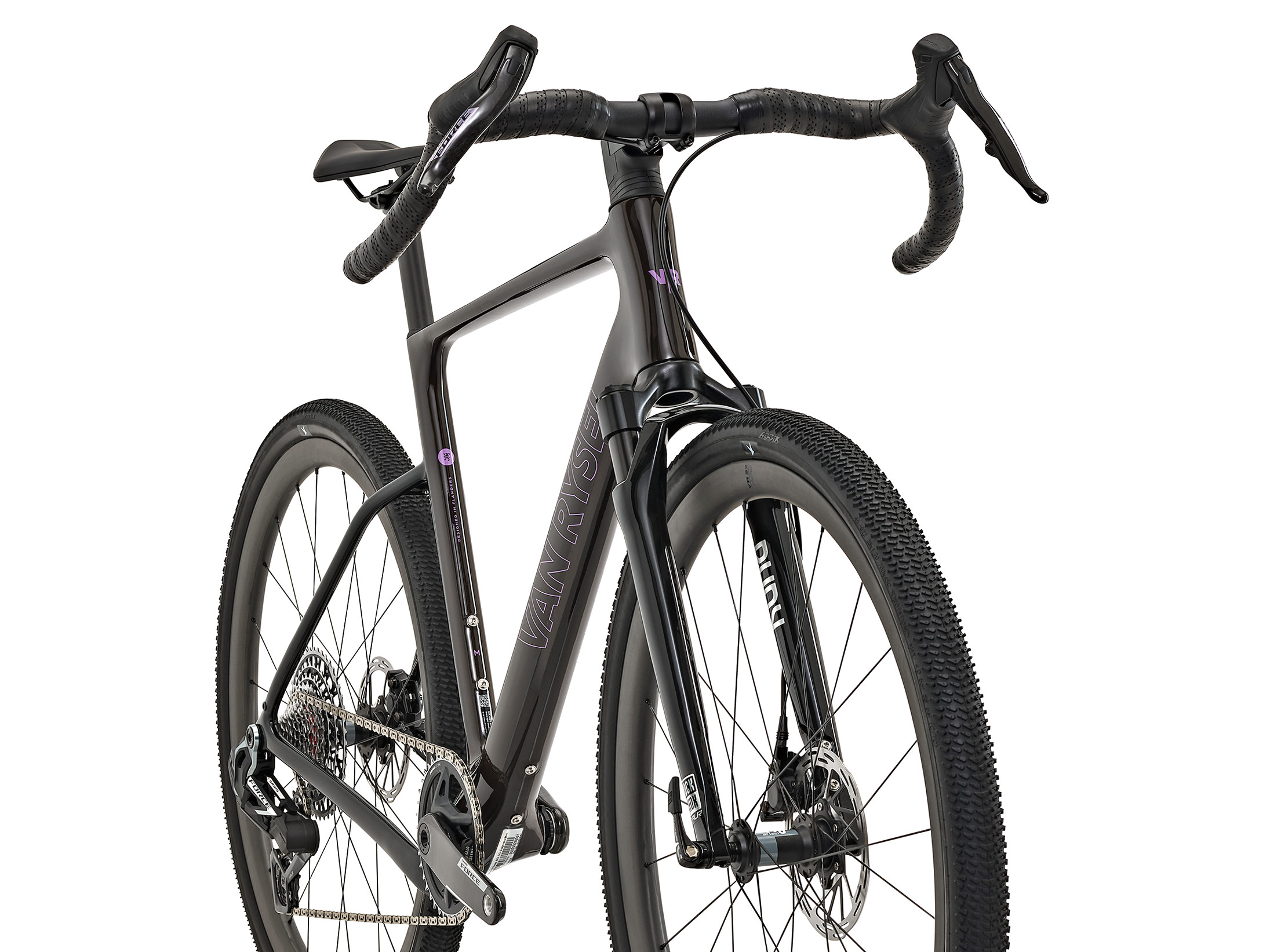
Next up, the EDR-G Rival at 2700€ / £2700 upgrades to wireless electronic SRAM Xplr 13-speed shifting, sticking with DT alloy wheels. Then, the EDR-G Force at 3200€ / $6300 steps up once more to Force Xplr, Van Rysel VR32 Gravel Carbon wheels & Schwalbe Pro-spec tires – at a claimed 8.85kg. Lastly, the EDR-G Force Suspended at 3500€ / £3500 gets the same spec, but swaps in a 40mm travel RockShox Rudy XPLR suspension fork for even more off-road comfort – at 9.7kg complete.
The first availability will be for three of the specs in Europe from next month (September), including the GRX bike in two color options, Force & Force Suspended. The Force bike will also likely show up in the Chinese market at the same time. Next, the beige GRX bike & Force Suspended bike should arrive in the UK in October. Then, expect the Rival bikes sometime in 2027.
Of note, only the Rival & Force specs are expected to make it to the US at some undefined point in the future, where, without the weight of Decathlon’s own big-box distribution, their pricing doesn’t look nearly as affordable.