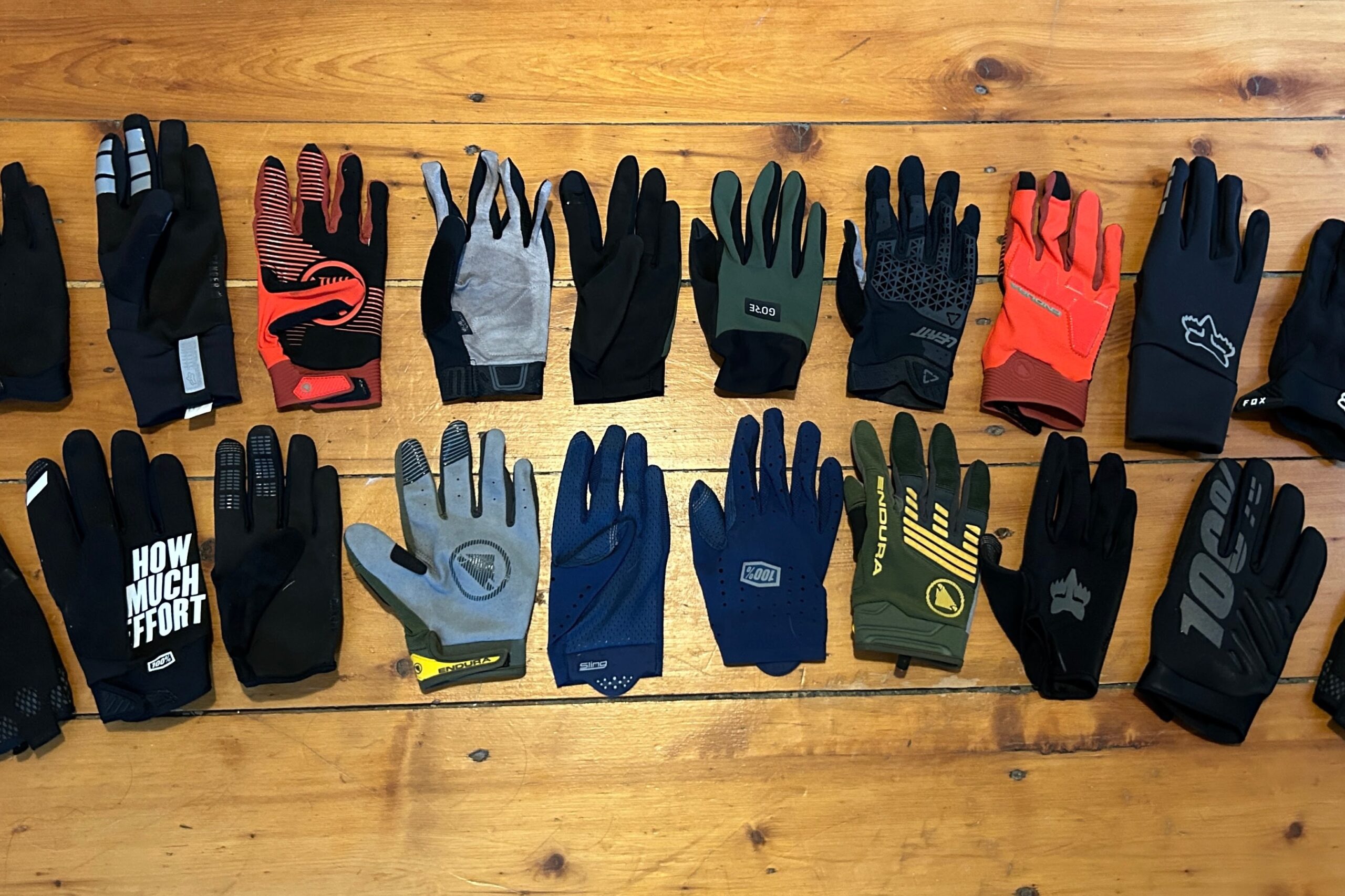


A quality pair of mountain bike gloves is an essential piece of kit for most riders. As the primary point of contact between you and your bike, finding a well-fitting pair of gloves that suits your riding style, environment, and needs is crucial for control, comfort, and protection on the trail.
With gloves made for hot weather, cold weather, and ranging from thin and minimalist to beefy and protective, there are a dizzying number of options on the market to suit varying needs and preferences. However, with numerous brands and styles to choose from, finding the ideal mountain bike gloves can be a daunting task.
To help, we gathered a diverse selection of models and tested them for months, and in some cases years, to find the best gloves for every rider, riding style, and weather condition. So, whether you’re looking for a lightweight and breathable model for mid-summer riding, something with knuckle protection, or gloves to keep your hands warm during cool fall, winter, and spring rides, we’ve got recommendations for you
Editor’s Note: Our mountain bike glove buyer’s guide was relocated from our sister site, GearJunkie.com, on December 10, 2025, and updated with several new models, including the midweight Outdoor Research Freewheel Leather Palm gloves, the weatherproof Pearl Izumi PRO Powershield Gloves, and more.
The Best Mountain Bike Gloves of 2026
Dakine Covert
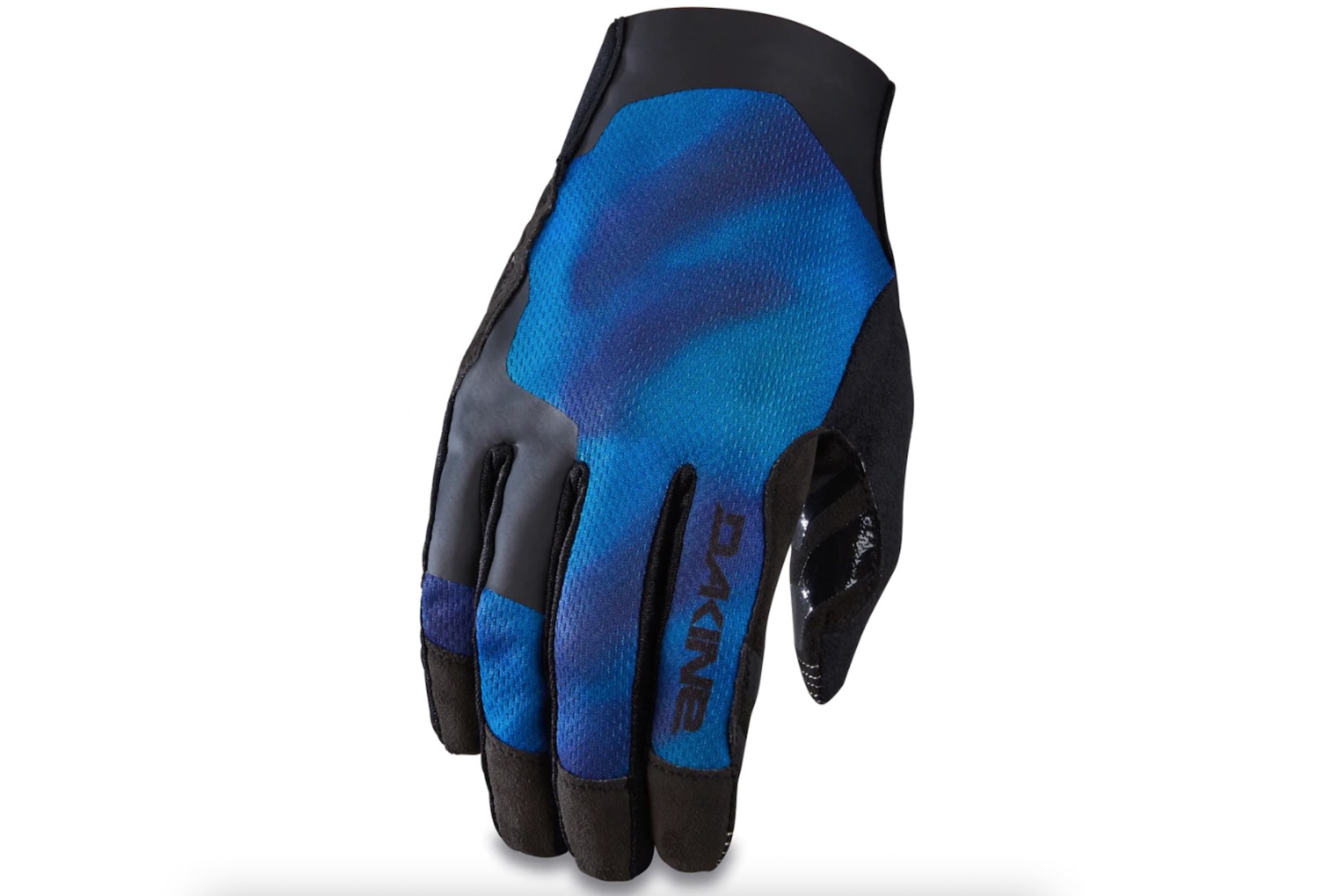
- MSRP: $35
- Weight: 44 grams (size L)
- Type: Lightweight
- Knuckle Protection: No
- Touchscreen Compatibility: Yes
Pros
- Lightweight
- Comfortable
- Breathable
- Great bar feel
- Surprisingly durable
Cons
- Limited hand protection
Giro DND Glove

- MSRP: $30
- Weight: 62 grams (size L)
- Type: Light to midweight
- Knuckle Protection: No
- Touchscreen Compatibility: Yes
Pros
- Affordable
- Comfortable
- Large nose wipe
- Lots of color and pattern options
- Surprisingly durable
Cons
- Limited hand protection
- Can be a little warm on the hottest days
Outdoor Research Freewheel Leather Palm Gloves
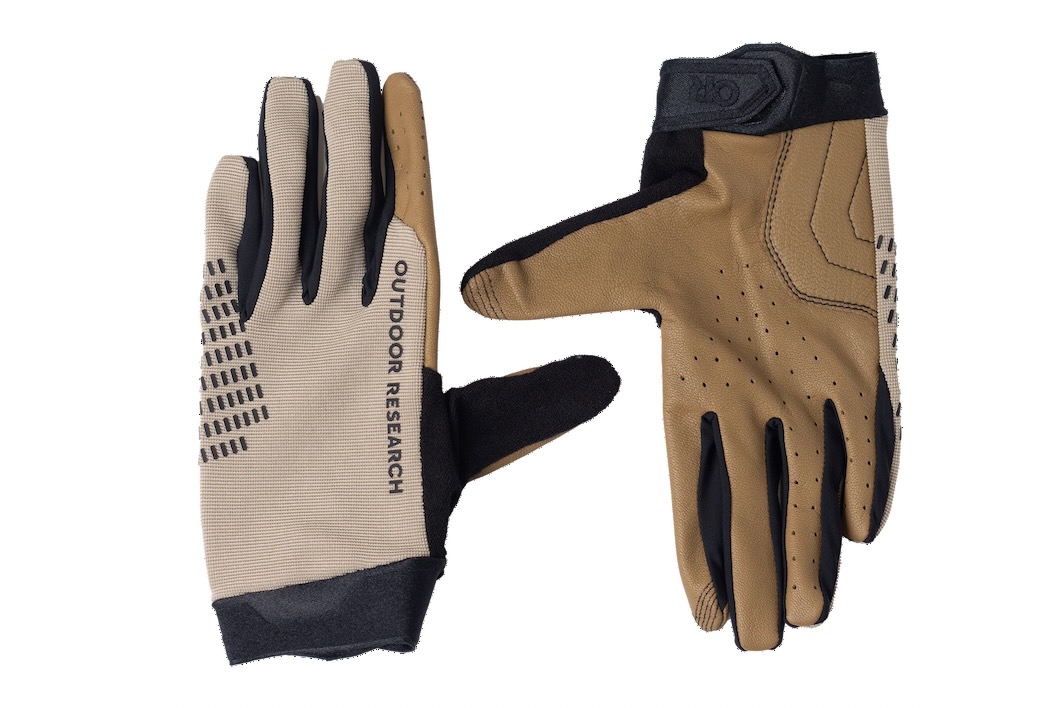
- MSRP: $60
- Weight: 76 g (size L)
- Type: Midweight
- Knuckle protection: No
- Touchscreen compatibility: Yes
Pros
- Comfortable leather palms
- Great grip and bar feel
- Midweight materials are great for cooler rides
- Big and soft nose wipe
Cons
- Fairly expensive
- Too warm for hot days
- Color bleeding from leather palm
Leatt MTB 4.0 Lite
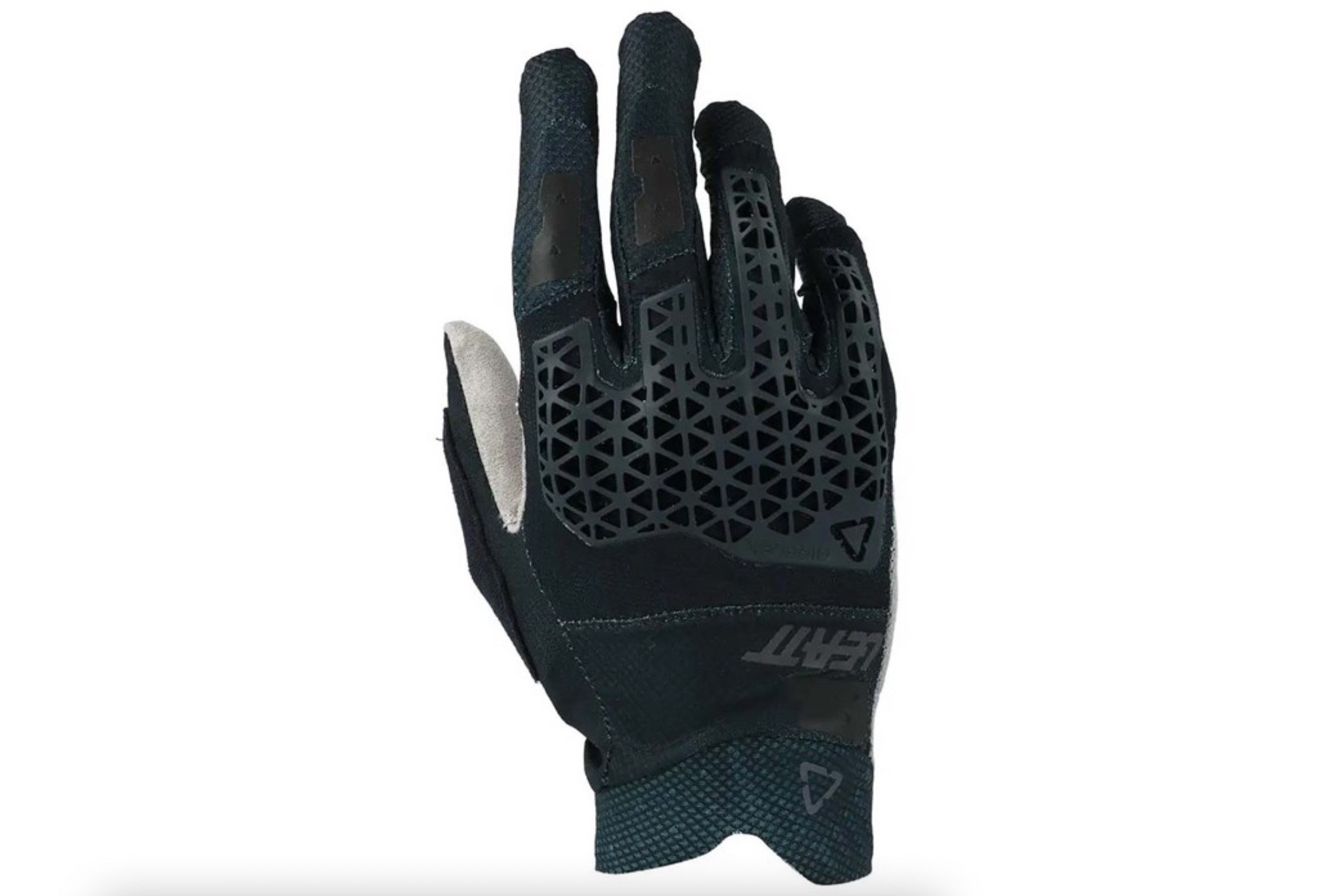
- MSRP: $85
- Weight: 60 grams (size S)
- Type: Protective
- Knuckle Protection: Airflex impact gel over knuckles and two outer fingers
- Touchscreen Compatibility: Yes
Pros
- Great venting and breathability for a glove with so much protection
- Nicely contoured and articulated palm
- Great bar feel thanks to "Nanogrip" palm material
- Airflex padding provides lots of hand protection
- Sizeable wipe on back of thumb
Cons
- More expensive
- Can be difficult to pull on with sweaty hands.
Gorewear C5 Gore-Tex Infinium
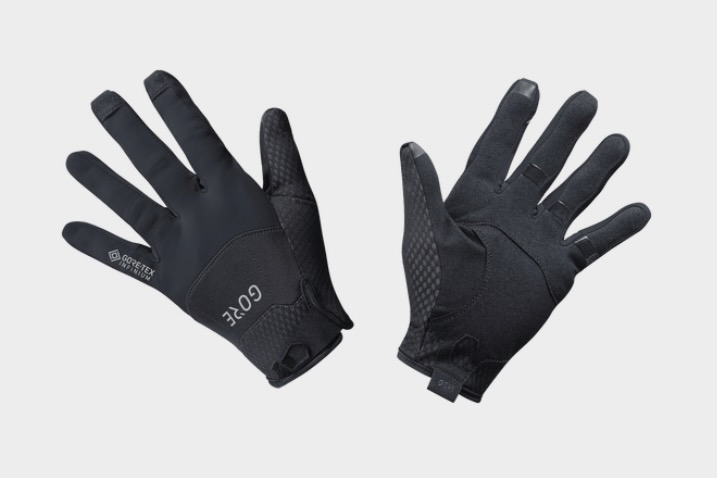
- MSRP: $60
- Weight: 43 grams (size S)
- Type: Cool weather, wind blocking
- Knuckle Protection: No
- Touchscreen Compatibility: Yes
Pros
- Thin, very good dexterity for a cold weather glove
- Gore-tex Infinium blocks wind and provides enough warmth for all but the coldest days
- Gore-tex Infinium breathes extremely well
- Great bar grip from silicone patches at base of fingers
- Water-repellant
Cons
- Not insulated enough for below freezing temperatures
- Velcro wrist closure is thin fabric – can be difficult to open
- Not waterproof, nor do they claim to be
Handup ColdER Weather Gloves
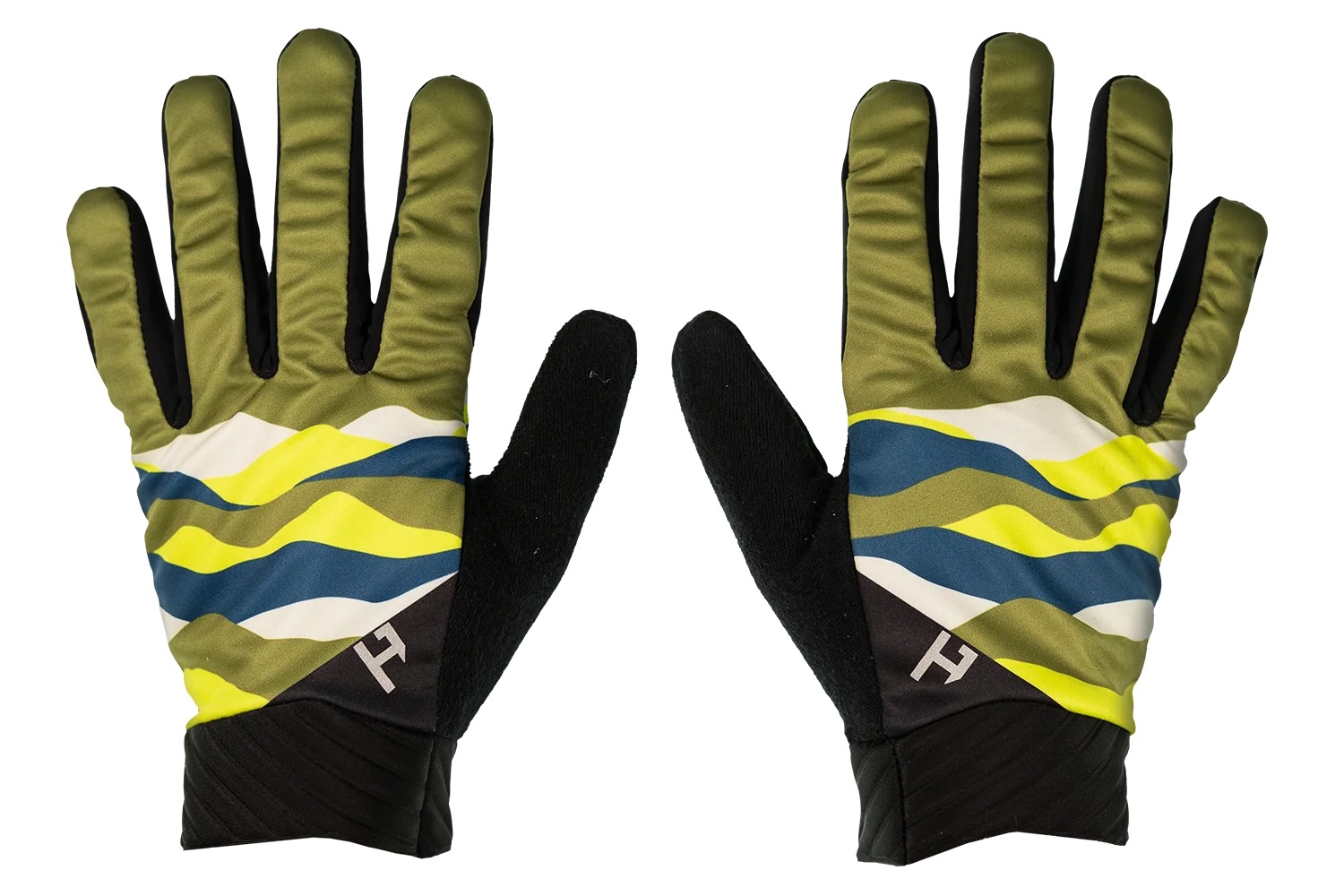
- MSRP: $36
- Weight: 81 grams (size L)
- Type: Cold weather, insulated
- Knuckle Protection: No
- Touchscreen Compatibility: Yes
Pros
- Affordable
- Warm
- Good grip
- Work surprisingly well with touchscreens
- Large nose wipe on thumb
Cons
- Fewer color options
- Fingers feel a tad bulky at first
Pearl Izumi PRO PowerShield Gloves
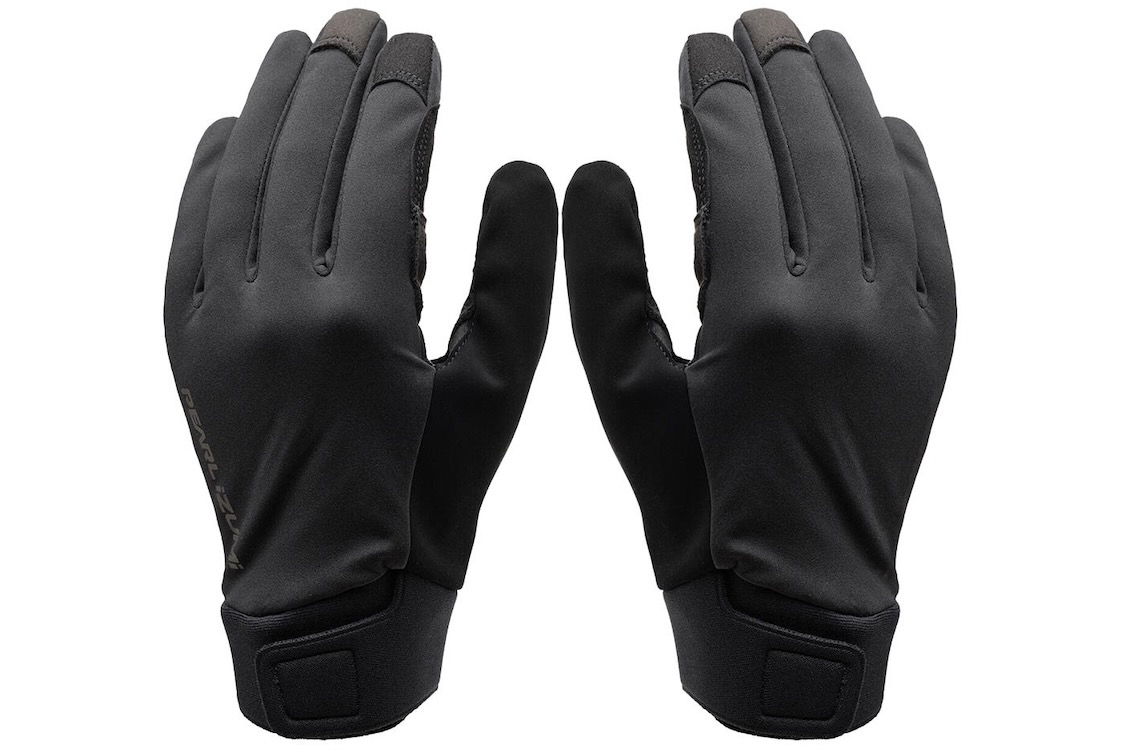
- MSRP: $65
- Type: Full finger, cool weather
- Weight: 54 g (size L)
- Materials: Polartec PowerShield back of hand, AX Suede Slim Fleece palm
- Knuckle protection: No
- Touchscreen compatibility: Yes
- Sizes: XS to XXL
- Colors: Black
Pros
- Blocks wind and moisture
- Ideal for cool rides ~ 45°F and up
- Versatile – works for road, gravel, or MTB
- Direct bar feel
- Works with touchscreens
Cons
- Awkward fit in tips of thumbs
- Block wind and moisture but not particularly warm
Other Mountain Gloves to Slip Your Hands Into
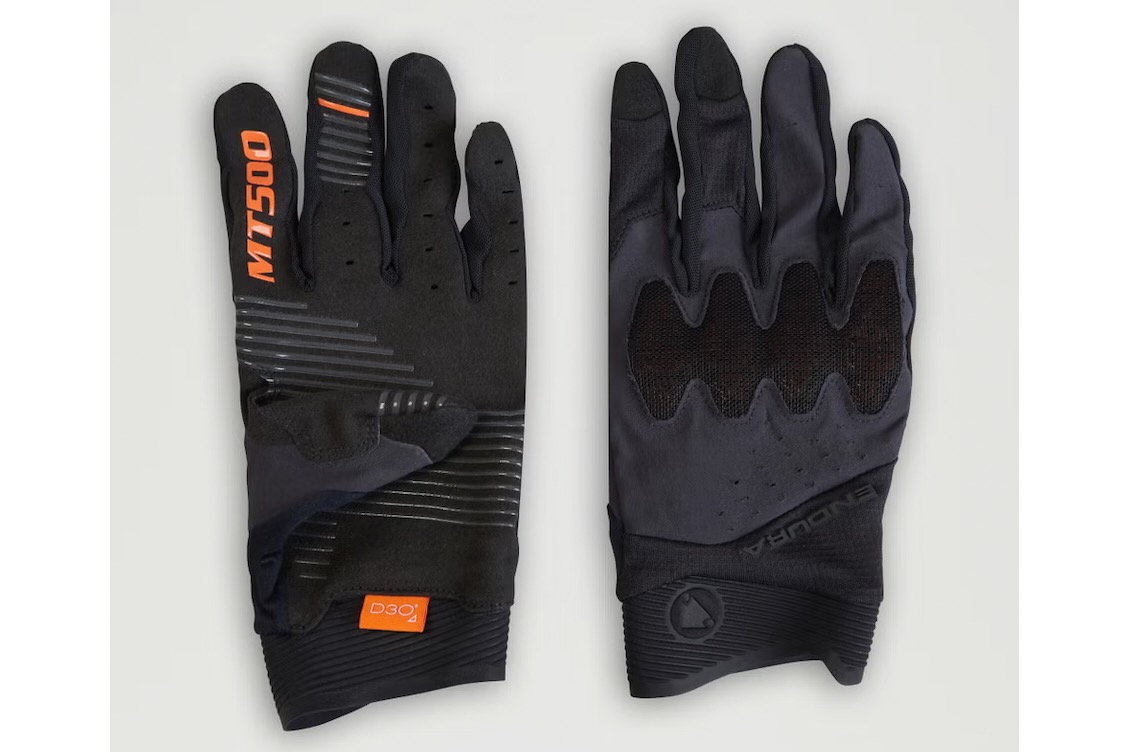
- MSRP: $50
- Weight: 54 grams (size S)
- Type: Protective
- Knuckle Protection: D30 knuckles and outer back of hand
- Touchscreen Compatibility: Kinda
Pros
- Flexible D30 knuckle padding provides a good amount of protection
- Very tacky grip with Silicone texturing on palm, fingers, and thumb
- Relatively breathable for protection level
Cons
- A little baggy in the palm
- Mediocre touchscreen functionality
- Silicone palm texture may feel too grippy for some

- MSRP: $29
- Weight: 46 grams (size L)
- Type: Lightweight
- Knuckle Protection: No
- Touchscreen Compatibility: Yes
Pros
- Reasonable price
- Lots of color/pattern options
- Tacky grip
- Work well with touchscreens
- Large nose/sweat wipe
Cons
- Palm graphics may provide too much grip for some people
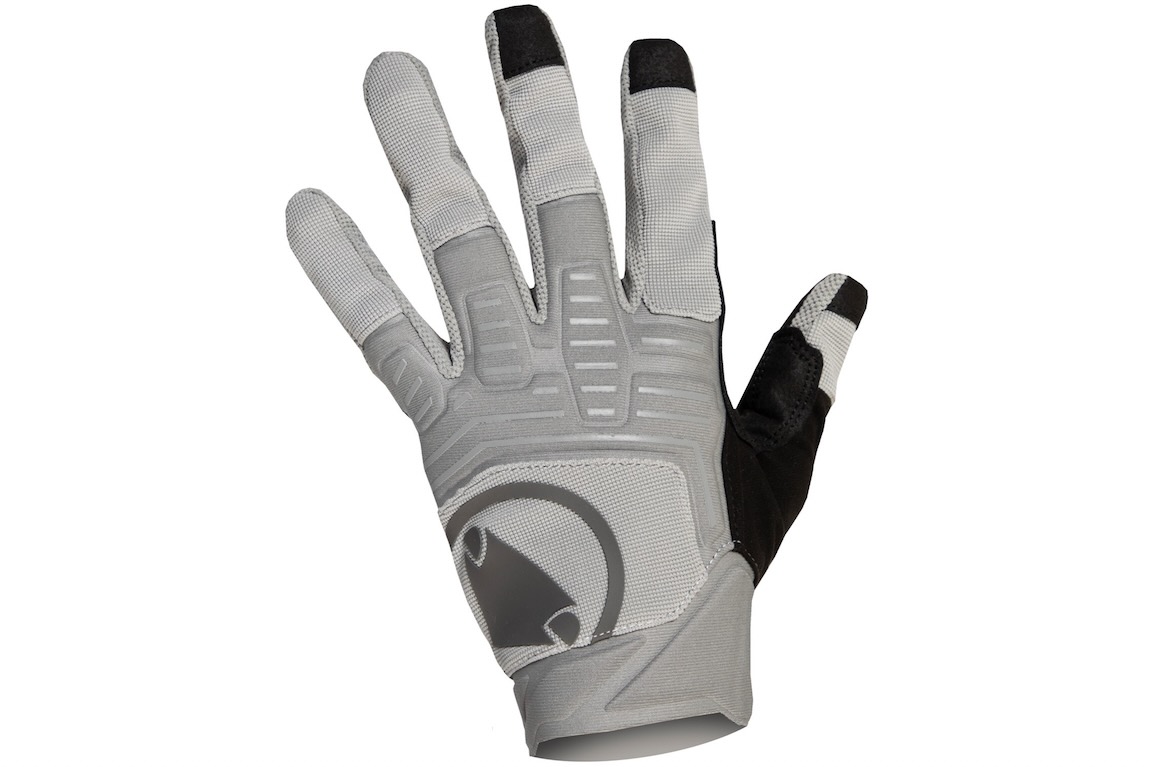
- MSRP: $45
- Weight: 60 grams (size S)
- Type: Midweight glove with light knuckle protection
- Knuckle Protection: Neoprene on knuckles
- Touchscreen Compatibility: No
Pros
- Comfortable
- Easy to put on and take off
- Small amount of protection moves freely and is great for overgrown trails
- Great grip from silicone on palm and brake fingers
Cons
- Run slightly large
- Don’t work well with touchscreens
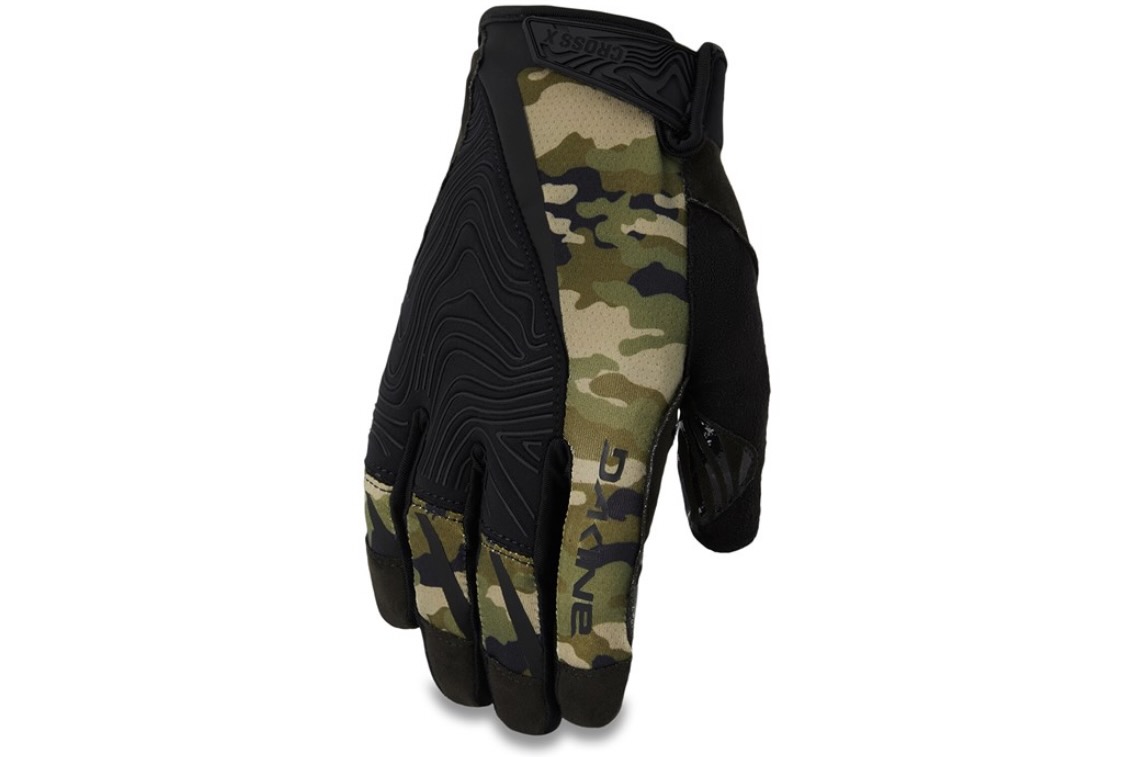
- MSRP: $44
- Weight: 74 g (size L)
- Type: Midweight, light protection
- Knuckle protection: TPR and neoprene on outer 3 knuckles
- Touchscreen compatibility: Yes
Pros
- Comfortable fit
- Light protection on outer 3 knuckles and outer palm
- Reinforced palm and thumb in high-wear areas
- Works relatively well with touchscreens
Cons
- Can feel a bit warm on super-hot days
- Some reported durability issues
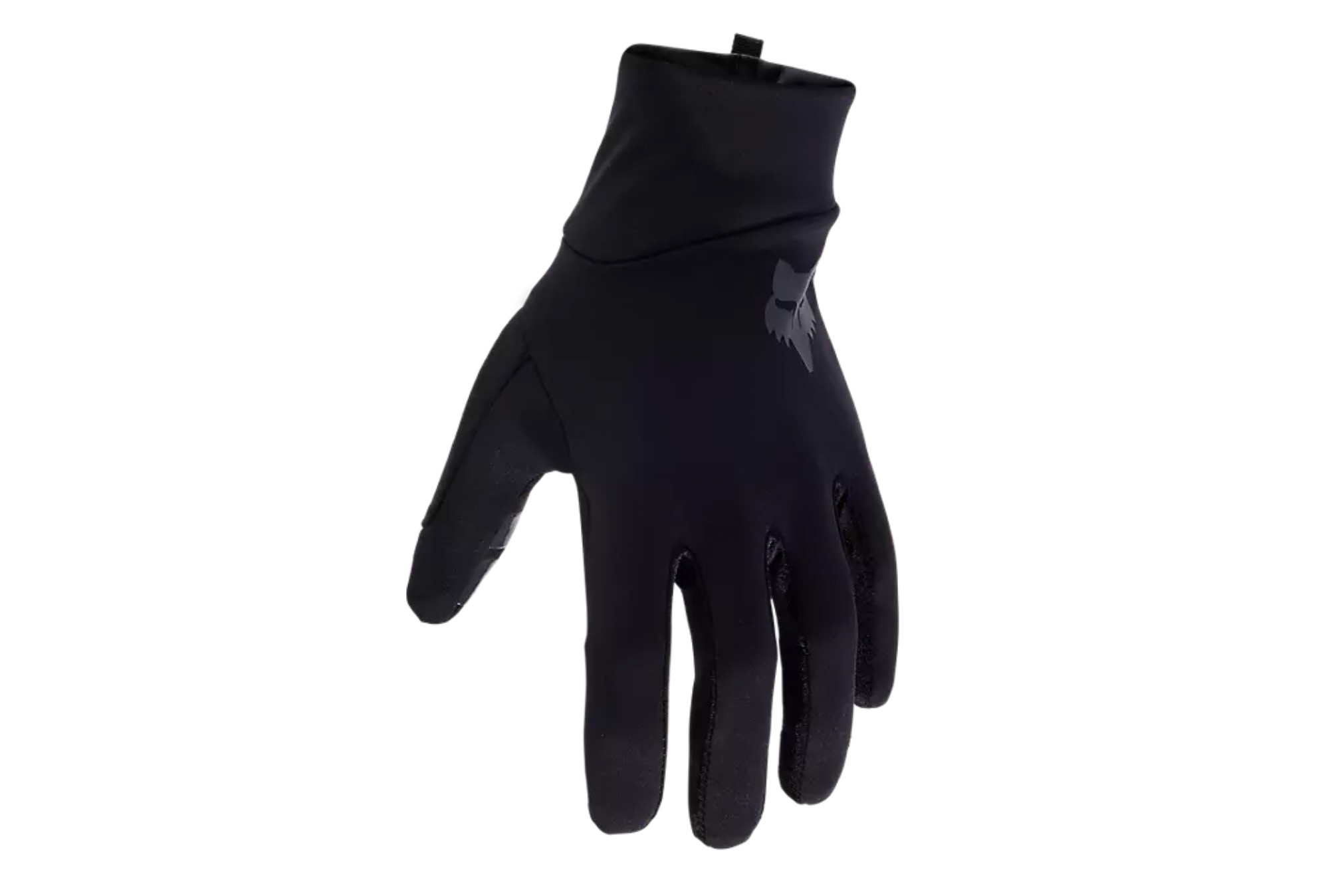
- MSRP: $55
- Weight: 64 grams (size S)
- Type: Cool weather, insulated
- Knuckle Protection: No
- Touchscreen Compatibility: Yes
Pros
- Long, thin cuff works slides under jacket cuffs
- Great balance of insulation, warmth, and breathability
- Great dexterity
- Well designed palm and tacky bar, brake, and shifter grip from silicone patches
- Reasonably breathable for a winter glove
Cons
- Long cuff doesn’t work well with smartwatches
- Not quite as water resistant as some other cool weather models
- Touchscreen compatibility isn't great
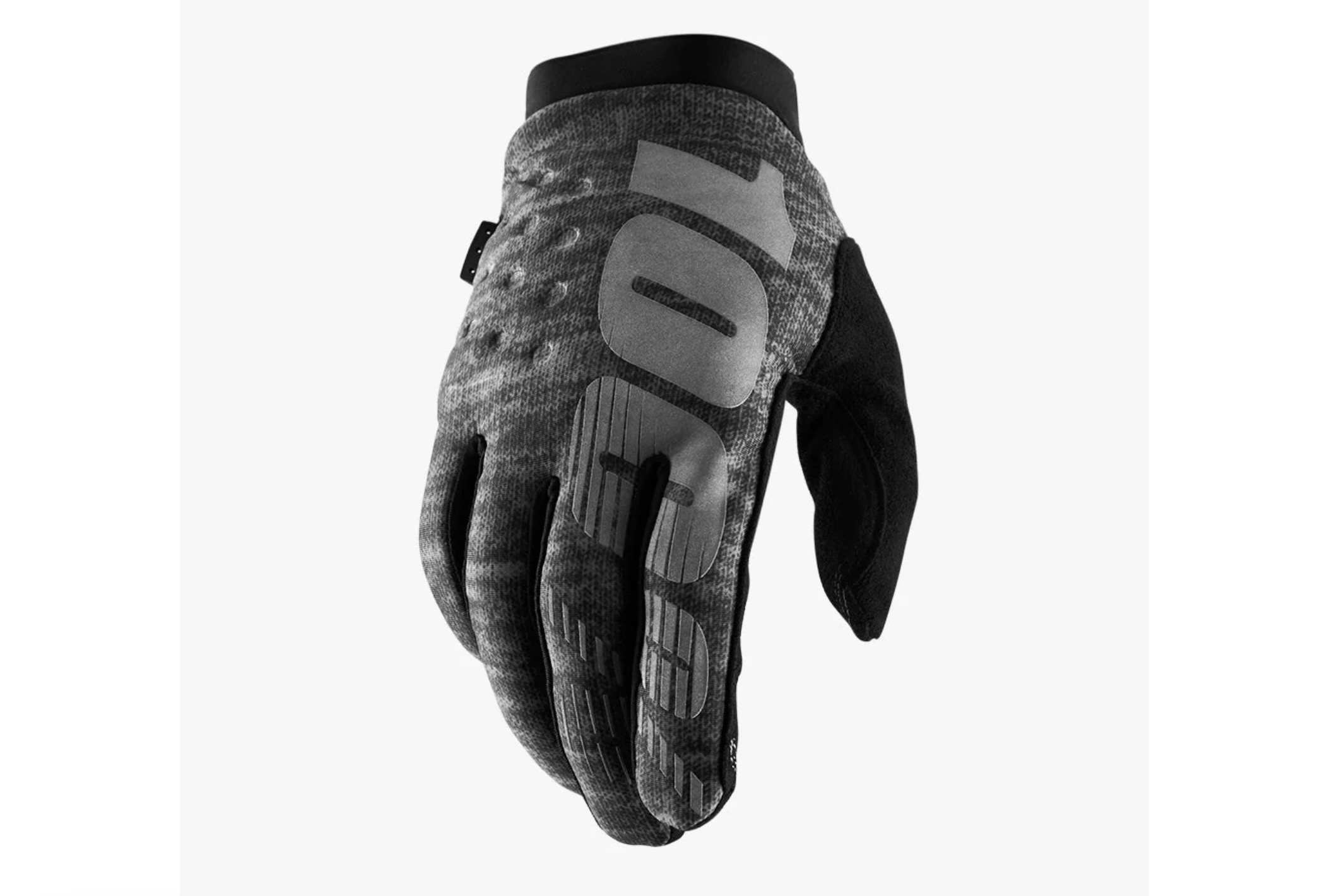
- MSRP: $34.50
- Weight: 62 grams (size S)
- Type: Cold weather, insulated
- Knuckle protection: No
- Touchscreen Comaptibility: Yes
Pros
- Good touchscreen compatibility for a thicker winter glove
- Neoprene cuff with velcro closure is tight and keeps the cold out
- Insulated softshell back is very warm and provides solid water resistance
- Tacky bar grip from silicone letters on palm
- Affordable
Cons
- Baggy palm limits grip on the handlebars
- Heavy branding
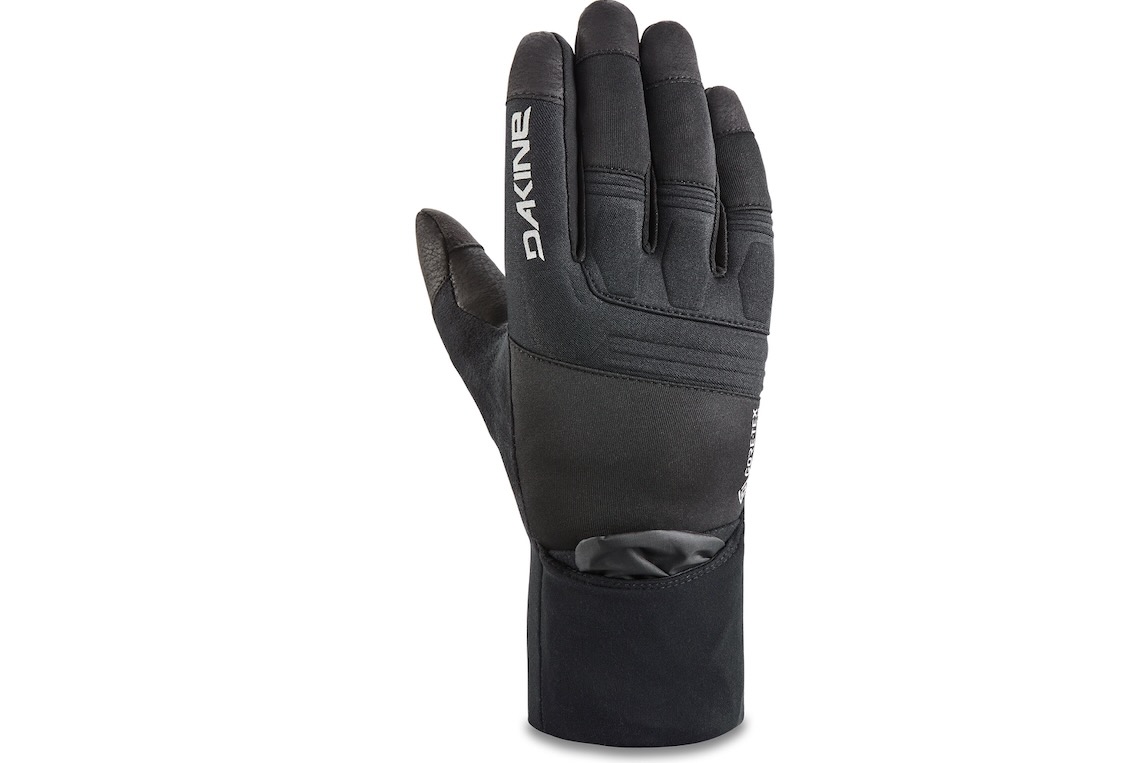
- MSRP: $55
- Weight: 93 grams (size L)
- Type: Cold weather
- Knuckle Protection: Neoprene on knuckles
- Touchscreen Compatibility: Yes
Pros
- Blocks wind and light precip
- Tuck-away shell adds extra wind and weather protection
- Long cuff keeps wrists covered
- Warm, but not full-on winter gloves
- Normal bar feel
Cons
- Not warm enough for below freezing temperatures
- Bulky back of wrist when cover is tucked
- More difficult to get on and off
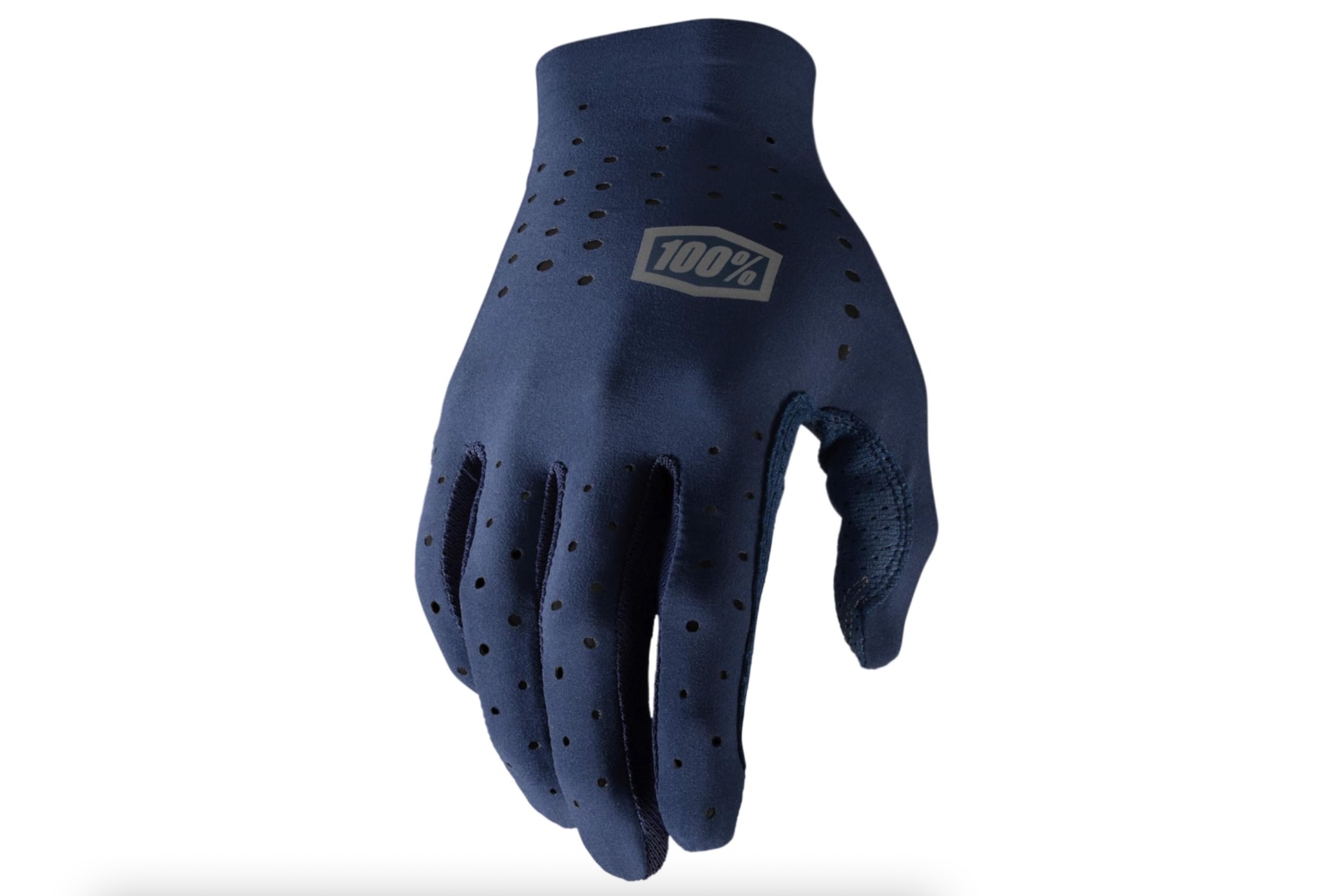
- MSRP: $39.50
- Weight: 27 grams (size S)
- Type: Lightweight minimalist
- Knuckle Protection: No
- Touchscreen compatible: Yes
Pros
- Very lightweight and thin
- Stays cool
- Superb touchscreen functionality
- Great bar grip
- Comfortable cuff
Cons
- No silicone grip patches on the thumb or brake finger
- Slightly more difficult to pull on
- Light, thin materials seem less durable

- MSRP: $35
- Weight: 35 grams (size S)
- Type: Lightweight trail glove
- Knuckle Protection: No
- Touchscreen Compatibility: Yes
Pros
- Unique velcro placement and low profile cuff makes on/offs easy and is very comfortable
- Low profile silicone on fingertips adds lever grip
- Large nose wipe
- Touchscreen finger tips work well
Cons
- Fingertip seams are noticeable
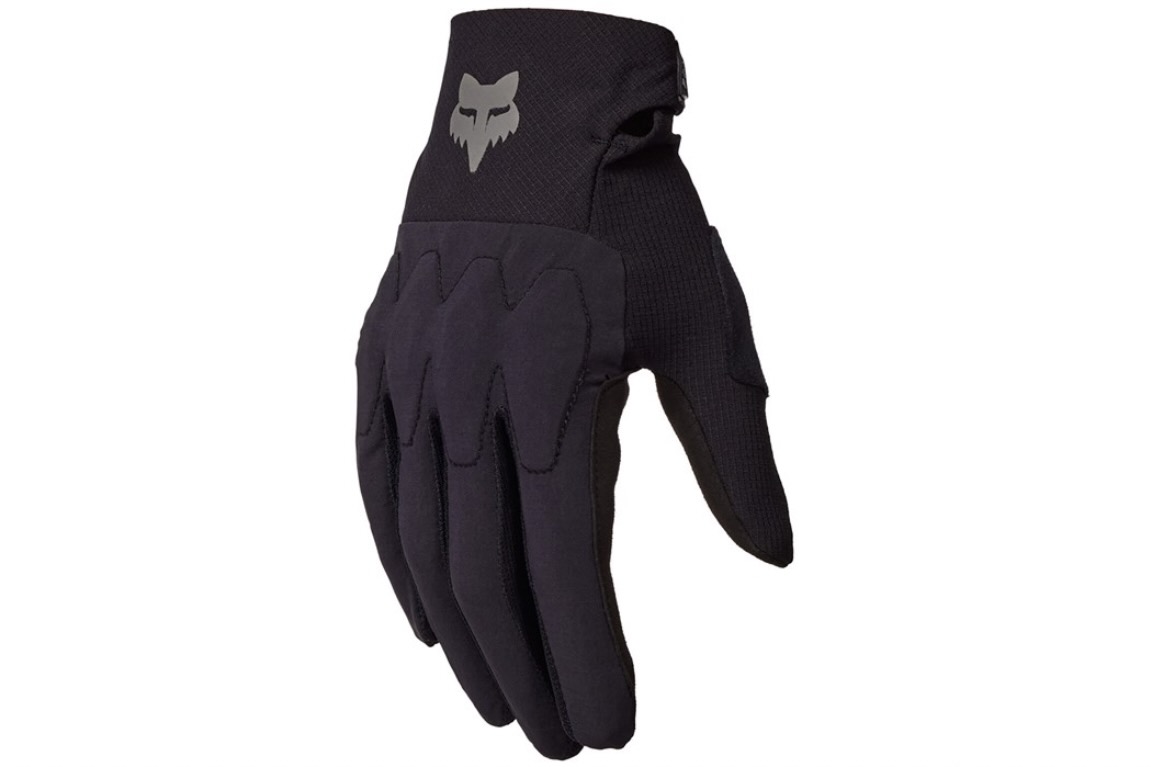
- MSRP: $60
- Weight: 54 grams (size S)
- Type: Protective
- Knuckle Protection: D30 over knuckles
- Touchscreen Compatibility: Yes
Pros
- TruFeel internal silicone texture and Clarino palm give exceptionally natural and reliable grip
- Under-the-thumb velcro wrist closure placement is out of the way, secure, and comfortable
- Cordura backing is comfortable and dries quickly
Cons
- This style of D30 padding isn't the most comfortable
Mountain Bike Gloves Comparison Chart
| Glove Model | MSRP | Weight | Glove Type | Knuckle Protection |
|---|---|---|---|---|
| Dakine Covert | $35 | 44 grams (L) | Lightweight | No |
| Giro DND Glove | $30 | 62 grams (L) | Lightweight | No |
| OR Freewheel Leather Palm | $60 | 73 grams (size L) | Midweight | No |
| Leatt MTB 4.0 Lite | $85 | 60 grams (S) | Protective | Yes, Airflex impact gel |
| Gorewear C5 Gore-Tex Infinium | $60 | 43 grams (S) | Cool-weather, insulated | No |
| Handup ColdER Weather | $36 | 81 grams (L) | Cold-weather, insulated | No |
| Pearl Izumi PRO PowerShield | $65 | 54 grams (L) | Cool and wet weather | No |
| Endura MT500 D30 II | $50 | 54 grams (S) | Protective | Yes, D30 Ghost |
| Handup Most Days | $29 | 46 grams (L) | Lightweight | No |
| Endura Singletrack II | $45 | 60 grams (S) | Midweight w/ light protection | Yes, Neoprene on knuckles |
| Dakine Cross-X 2.0 | $44 | 74 grams (L) | Midweight w/ light protection | Yes, TPU and neoprene on outer knuckles |
| Fox Ranger Fire | $55 | 64 grams (S) | Cool-weather, wind-blocking | No |
| 100% Brisker | $34.50 | 62 grams (S) | Cold-weather, insulated | No |
| Dakine White Knuckle | $55 | 93 grams (size L) | Cool to Cold weather | Neoprene on knuckles |
| 100% Sling | $39.50 | 27 grams (S) | Ultralight | No |
| Fox Ranger | $35 | 35 grams (S) | Lightweight | No |
| Fox Defend D30 | $60 | 54 grams (S) | Protective | Yes, D30 |
Why You Should Trust Us
The team at Bikerumor collectively has well over a century of riding experience, and we’ve spent most of that time riding with mountain bike gloves. Sure, there are some days we’ve forgotten the gloves at home or chosen to ride without them, but we almost always wear gloves when we’re riding. And, we’ve learned that the right pair of gloves can play a major role in our comfort, add protection, and help us maintain a good grip on the bars for maximum control.
For this buyer’s guide, we included a diverse selection of mountain bike gloves with varying styles, materials, protection levels, and insulating properties. Two testers, Jeremy Benson and Paul Clauss, put these gloves through their paces and collaborated to create this review. Jeremy has been mountain biking for over 30 years and has been professionally testing mountain bikes and accessories for over eight years. He lives near Lake Tahoe, CA, where he rides in a wide range of temperature and weather conditions, and understands the importance of having the right gloves to match. He has personally tested more than 30 pairs of gloves and enjoys putting products through the wringer while scrutinizing their design and performance.

Paul lives on the other side of the country in northern Vermont, where the temperature varies as wildly as the weather, and the trail conditions are ever-changing. Paul’s love of riding and mechanical engineering background make him great at analyzing products and finding their strengths and weaknesses. Along with gloves, Paul has contributed to our guides to the best dropper posts, bike locks, and mountain bike jackets.
How We Tested Mountain Bike Gloves
After looking into nearly every model on the market, we gathered a diverse selection of models to test and compare. Each pair was weighed for comparison to manufacturers’ specs before examining the design, materials, construction, and stitching. At home, we put each model on to examine the out-of-the-box fit and comfort, as well as the ease of getting the gloves on and off in a controlled environment. Most importantly, we took each model to the trails and rode in it for months, and some models for multiple seasons, to test their grip, bar feel, dexterity, breathability, and comfort when used in the real world.
For the protective models, we took note of padding placement, the level of protection, and the comfort of the pads in use. For the cool-weather models, we tested them on crisp early morning rides, cool to cold fall, winter, and spring days, as well as in some rain showers, to determine how well they kept our hands warm, their ideal temperature ranges, and how well they performed while riding. We also tested features such as touchscreen compatibility, silicone grippers, Velcro cuffs, and nose wipes to assess their functionality and usability. After extensive testing, we zeroed in our our favorites and those that stand out in specific ways compared to the rest.

Buying Advice: How to Choose Mountain Bike Gloves
While gloves are a seemingly simple piece of your riding kit, there’s a lot to consider when searching for the right pair. What type of riding do you do, what temperatures or weather are you riding in, and do you need or want added hand protection? Answering those questions will help you narrow down the choices, but you’ll also want to ensure that you get a good fit and the features you want.
Intended Use
The right pair of mountain bike gloves for you depends mainly on your intended use, which includes the type of conditions you are riding in and the level of protection you need. Given that gloves come in a wide range of styles, there are models purpose-built to suit every need, including those made for hot weather, cold weather, protection, and everything in between.
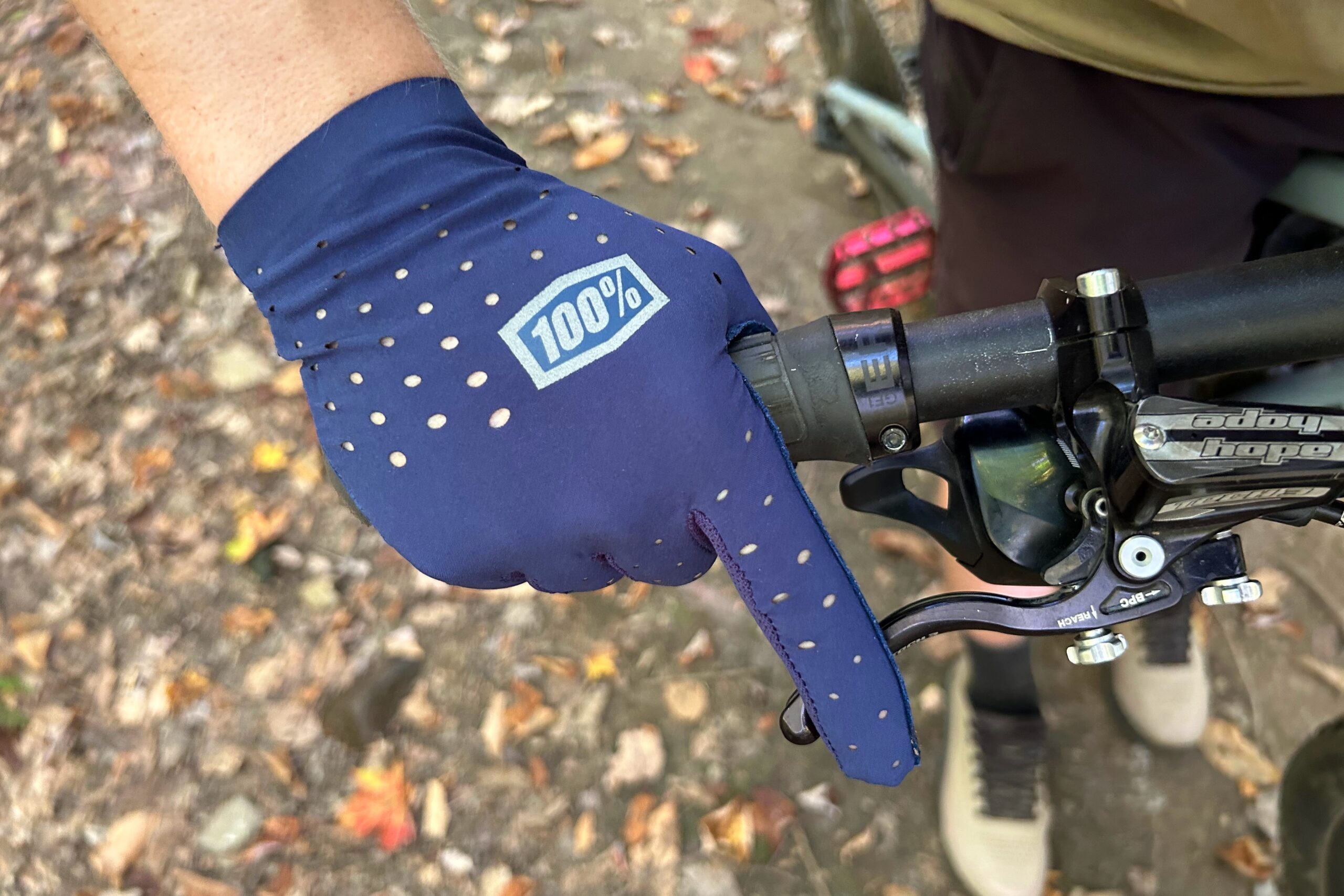
Lightweight
Exceptionally light and breathable gloves are ideal for warm to hot temperatures, providing a thin layer of material between our sweaty hands and grips. This style of glove is often preferred by those who live and ride in hotter climates, ride during the heat of the day, ride at high intensity, don’t need/want additional knuckle protection, or individuals who want gloves that barely feel like they are there.
Made with thin, stretchy materials, this style of glove is typically sleek, low profile, breathable, and dries quickly, while providing maximum dexterity, tactility, and a natural grip and bar feel. Among the models we tested, the 100% Sling was the lightest, followed by gloves like the Dakine Covert, Giro DND, and Handup Most Days, all just a tad heavier, but still falling on the lightweight and minimalist end of the spectrum.

Midweight
Made with slightly thicker materials, midweight gloves are just a little bit heavier than the lightweight options. These thicker materials typically provide marginally more hand protection than the thinner, lighter options, and some feature very light amounts of knuckle protection in the form of TPU or small foam pads. They also tend to be just a little warmer on the hands, although they still usually breathe fairly well, so they are often a good option for those who ride in moderate to cool temperatures. Models like the Outdoor Research Leather Palm, Dakine Cross-X 2.0, and the Endura Singletrack II are prime examples of midweight mountain bike gloves.
Protective
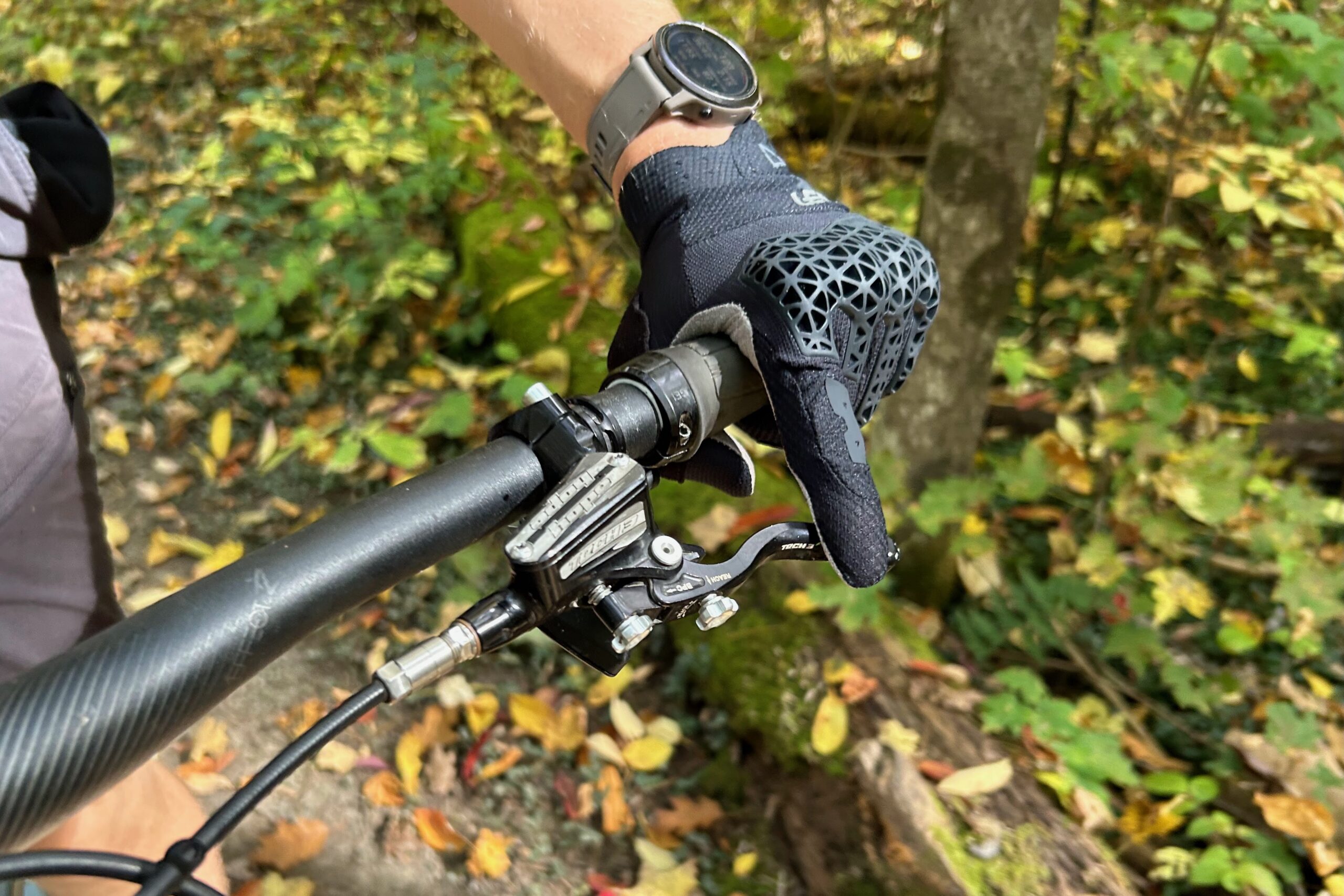
If you are an aggressive rider or often find yourself on very tight trails, gloves with added protection may be a good way to ensure your knuckles stay safe from trees, bushes, or the ground. Protective gloves generally feature some type of padding built into the back of the glove, covering the knuckles and sometimes extending down the outer fingers or up the back of the hand. The padding used for protection varies, but D30, Airflex impact gel, foam pads, and TPU patches are commonly used in this style of gloves.
While there are limits to the protection provided by these gloves, they all work well to deflect foliage on overgrown trails, absorb smaller impacts such as clipping larger branches or trees, and can help prevent minor injuries like cuts and abrasions. The Fox Defend D30, Leatt MTB 4.0 Lite, and Endura MT500 D30 are examples of gloves with knuckle protection, but each approaches it in a different way.
Cool Weather
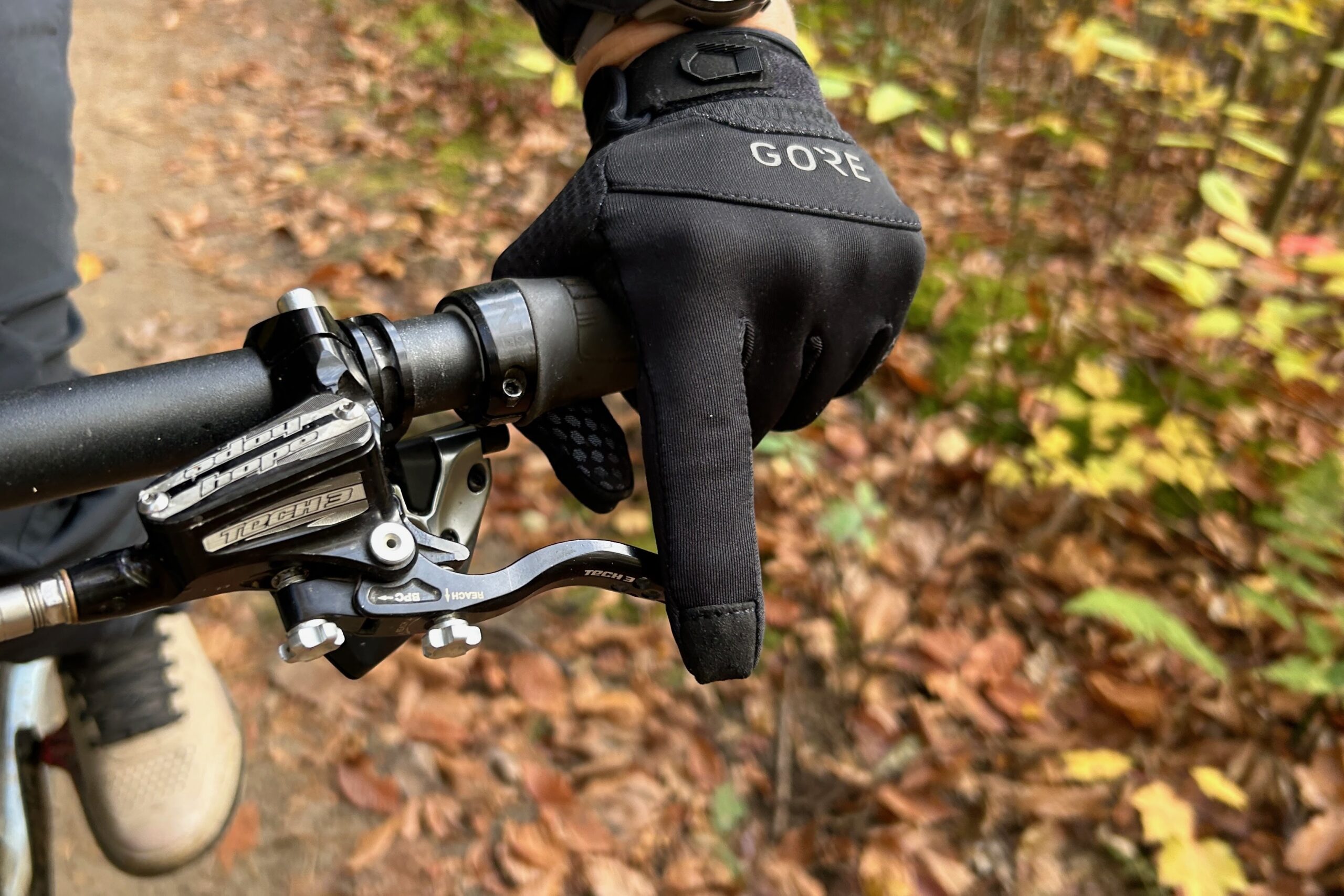
It’s not always warm outside, and, depending on where you live and ride, the best riding of the season often occurs in the cooler months of fall, winter, and spring when temperatures have dipped, but it’s not too cold. Fortunately, there are several excellent mountain bike glove options designed for conditions that are above freezing but too cold for regular warm-weather gloves. Often, these gloves use thicker materials, such as softshell or similar, and may include a fleecy insulation layer, as well as a wind-blocking layer or a water-resistant membrane, like Gore-Tex Infinium, to take the chill out of the wind.
Generally speaking, these gloves tend to be only slightly bulkier than regular gloves, so they don’t limit dexterity or impact bar feel like heavier, more insulated gloves can. Cool-weather gloves are great for those days in the 40° to 50° F range, although some can keep you warm slightly above or below that depending on the conditions and intensity of your riding. Gloves like the Gorewear C5 Gore-Tex Infinium, Dakine White Knuckle, and Fox Ranger Fire are great options for riding in cool weather. Check out our review of the best mountain bike jackets for more ways to help you stay comfortable in cool, cold, or wet conditions.
Cold Weather
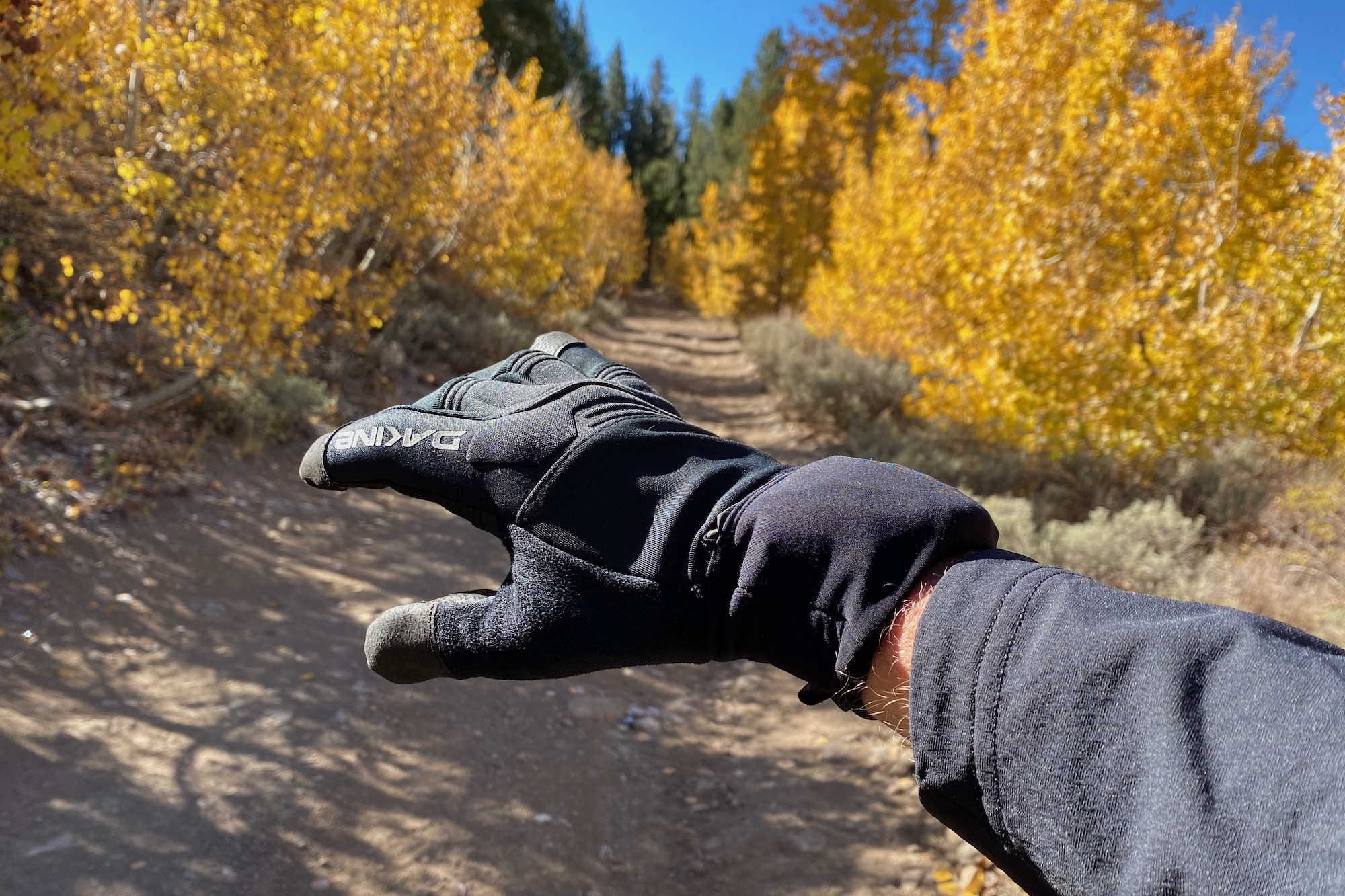
For temperatures close to or below the freezing mark, a more insulated cold-weather glove is the key to keeping your hands happy while you ride. This style of glove typically includes a wind-blocking layer and/or water-resistant membrane to keep the chill off your hands, along with insulation to surround them in pillowy warmth.
The addition of insulation typically results in an increase in overall bulk, and these gloves tend to sacrifice a bit of dexterity and tactility in exchange for warmth, which is a tradeoff most riders are willing to make in the right conditions. The warmest gloves we tested are the 100% Brisker and the HandUp ColdER Weather. For those who ride in truly frigid conditions often, there are lots of other true cold-weather gloves on the market that are worth looking into.

Wet Weather
The one waterproof glove we have in this guide is the Pearl Izumi PRO PowerShield. These low-profile gloves include a PowerShield membrane that’s both wind and waterproof. We rode with them on a few drizzly days and tested them in the sink, and they kept our hands dry inside. The Dakine White Knuckle gloves take a novel approach, with the tuck-away waterproof shield that can be used if/when it starts raining.
There are quite a few other waterproof gloves on the market for those who ride in wet conditions regularly. Brands like Gorewear, Fox, 100%, Endura, and others make gloves that can keep your hands dry in the rain. Of the models we tested, some of the other cool and cold weather models are highly water-resistant, such as the Gore-Wear C5 Gore-Tex Infinium. While not completely waterproof, the Infinium membrane does repel light amounts of water quite effectively.
Fit
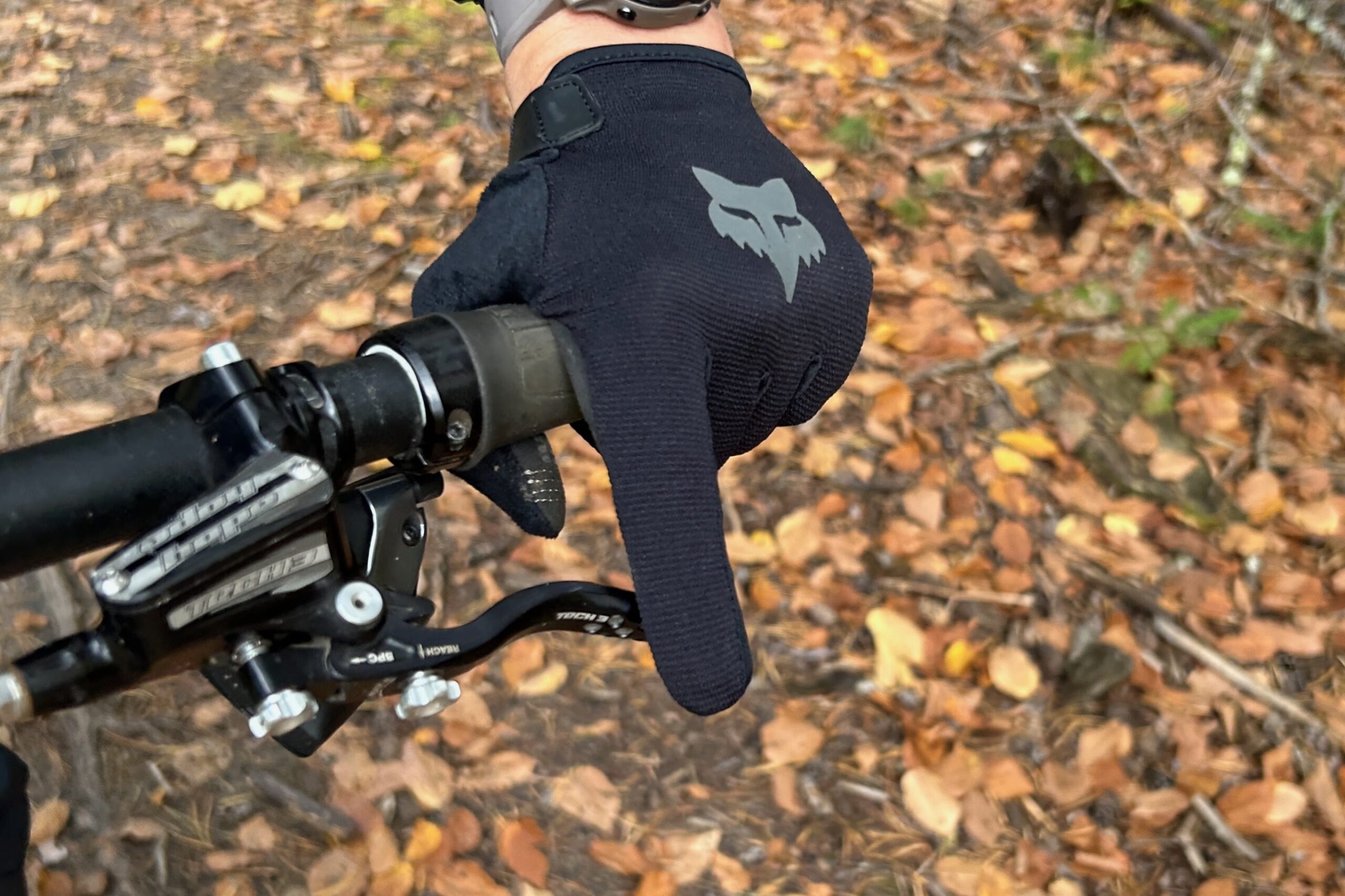
Getting gloves that fit well is a crucial step in the purchasing process. Ideally, a well-fitting pair of mountain bike gloves will feel like a second skin, neither too tight nor excessively loose. Gloves that are too tight may be challenging to put on, or the fingers may be too short, which can cause discomfort or reduce dexterity. Gloves that are too loose will have a sloppy fit, which may result in material bunching or your hands moving around in the gloves, leading to reduced control. Gloves that fit well should have fingers that are the perfect length and a palm that matches the shape of your hand.
If you already know your mountain bike glove (or other glove) size, you can generally go with that, especially if you’re buying the same brand. There is some variance in sizing between brands, but they are typically within the same general size range. If you’re unsure of your size, visit your local bike shop or outdoor store to try on some options and find the perfect fit. If that’s not an option, try on some of your friend’s gloves to see what fits best, or take some measurements and refer to the brand’s size charts. Most gloves are sold in Alpha sizes represented by letters like S, M, L, etc., and often these sizes are accompanied by the equivalent numerical glove size on size charts, such as 7, 8, 9, etc.
Wrist Cuff
In general, wrist cuff designs fall into two categories: those with stretch or Velcro closures. Gloves with stretch wrists just get pulled over the hand, and the materials generally have enough stretch to allow you to put them on and take them off with relative ease. This style does not offer any adjustability, but it avoids adding bulk at the wrist, and there is no Velcro that can be prone to breaking down over time. Velcro closures allow the cuff to be opened for easy entry and exit from the gloves while also providing the opportunity to adjust the tension around the wrist. What style works better for you is generally a personal preference, with most riders typically choosing one or the other or sometimes not caring at all.
Grip
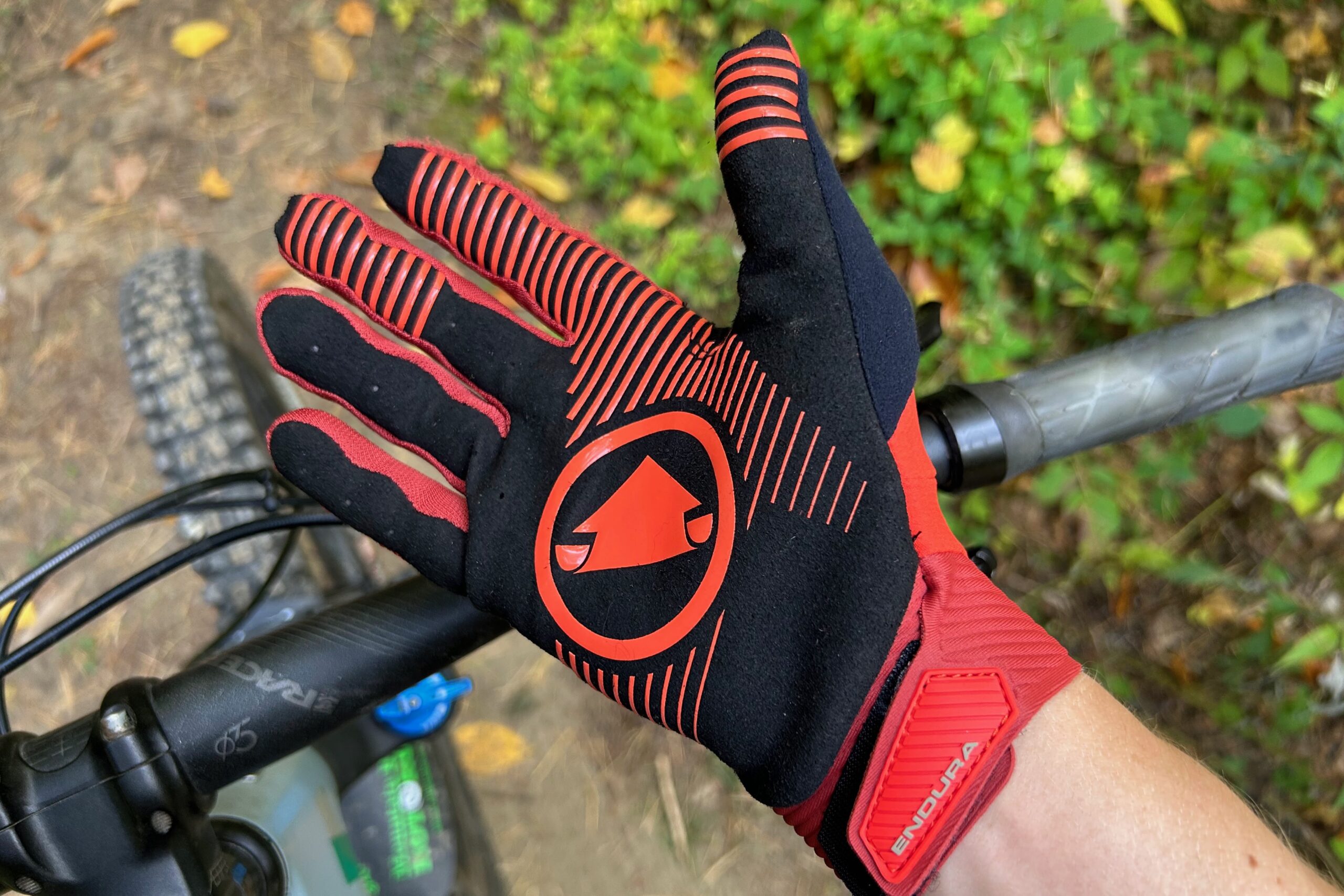
It is worth considering the level of grip you want from your gloves. While many people seek the most natural bar feel, as close as possible to not wearing gloves, others may enjoy a little extra tackiness and traction. Since the majority of gloves have palms made from similar materials like microfiber or synthetic suede, they typically offer very similar levels of grip on the bars. Some brands, such as Endura, for example, add silicone grip patches to the palms of their gloves, like the MT500 D30, which provide an almost sticky feel. While this may not appeal to riders who prefer to reposition their hands, it does provide a very positive connection to the grips and makes it easier to use a bike multi-tool without removing them.
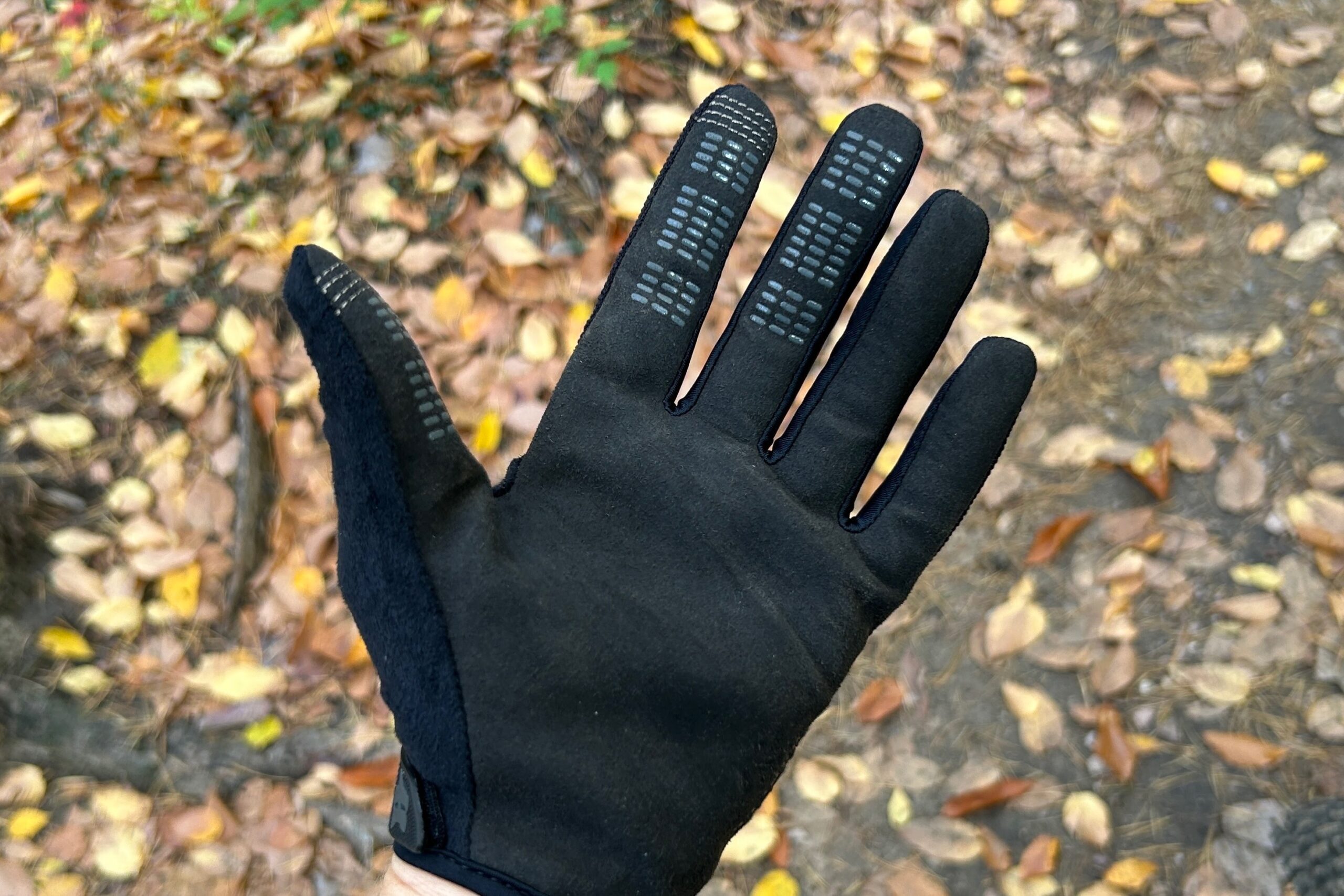
Most, but not all, gloves have some silicone texture added to the tips of the pointer finger and often the thumb and middle fingers as well. This can add to the bar grip slightly, but mostly it serves to provide traction on your brake levers and shifter paddles. While it isn’t completely necessary, we believe it is a nice feature to prevent your fingers and/or thumbs from slipping off when braking, shifting, or lowering your dropper while riding.
Knuckle Protection
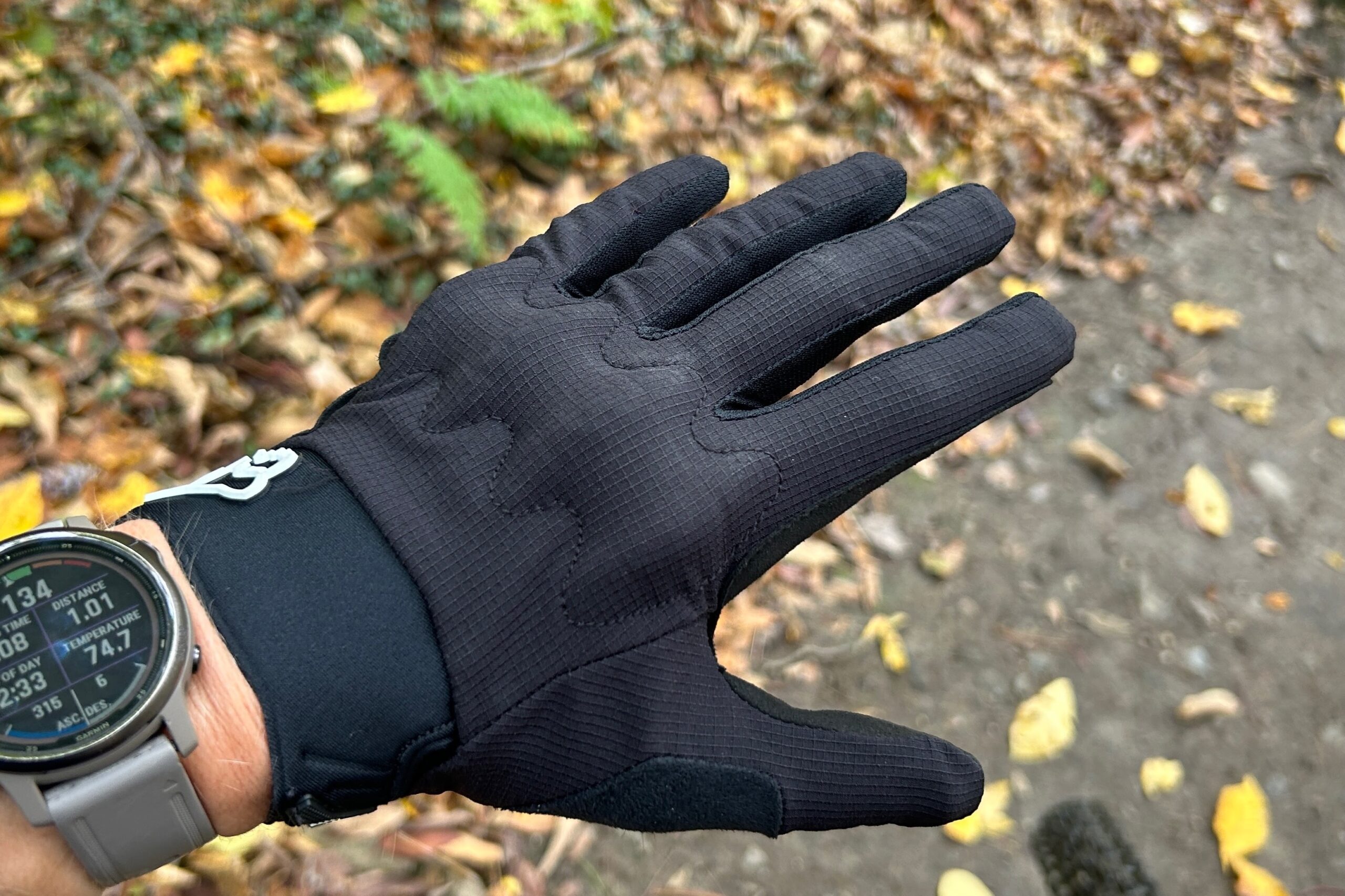
Any mountain bike glove provides more protection for the hands than not wearing any gloves at all, but downhill, enduro, and aggressive trail riders often opt for gloves with knuckle padding. Whether for added protection for crashes or fending off impacts from trailside obstacles, a little padding can help prevent cuts, abrasions, and possibly even broken knuckles.
These protective features typically consist of impact-absorbing pads integrated into the construction of the gloves, providing protection for the knuckles and sometimes the outer fingers and/or the outer metacarpal. The designs, materials, and levels of protection used in protective gloves vary, but many use D30, which is an impact-absorbing material that is flexible and stiffens upon impact. Both the Endura MT500 D30 and the Fox Defend D30 utilize, not surprisingly, D30 padding, although they employ different versions in distinct ways.
Some brands use their own padding, like the Leatt MTB 4.0 Lite, which has a large panel of Leatt’s proprietary Airflex impact gel that works in much the same way. Since protection needs vary, other models have just a moderate level of protection, like the Endura Singletrack gloves that feature thin strips of TPU across the outer three knuckles.
Touchscreen Compatibility
With the proliferation of touchscreens on virtually everyone’s phones these days, glove manufacturers are doing their best to make gloves that work on those screens. Whether for responding to a text, checking Trailforks, or grabbing sick photos of your friends riding, it’s a nice feature to have. Conduction threads are the most common, and these small threads are typically sewn into the tips of the pointer finger and thumb. Some gloves use small touchscreen-friendly panels of material, while others have palm materials so thin that they work fine without any special stitching or materials.
Insulation
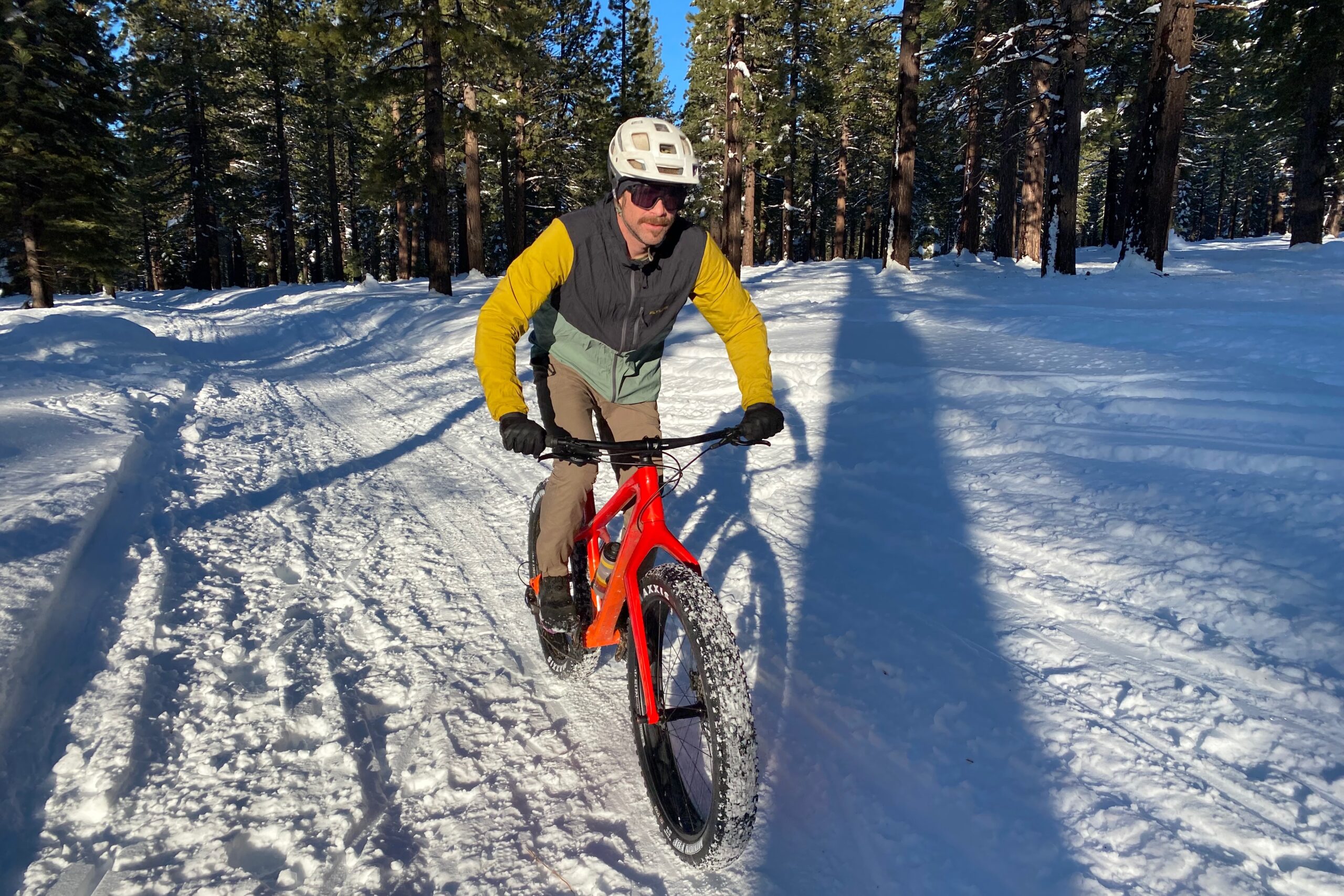
If you ride in the fall, winter, or spring, having a pair of gloves that keeps your hands warm may be the difference between a great ride and a miserable experience. Since temperatures vary, glove manufacturers make a wide range of cool and cold-weather gloves to suit those varying conditions. The vast majority of mountain bikers don’t ride in temperatures below freezing, so thankfully, there are plenty of great, lightly insulated and wind-blocking gloves on the market that are well suited to cool temperatures above the freezing mark.
These gloves typically avoid the bulk of more heavily insulated gloves and allow for good dexterity and a relatively “normal” fit and feel on the bike. The Gorewear C5 Gore-Tex Infinium, Pearl Izumi PRO PowerShield, Dakine White Knuckle, and the Fox Ranger Fire all fall into the cool-weather category. All of these gloves will take the edge off cool temperatures where regular gloves don’t quite cut it.
For truly cold conditions below freezing, wind-blocking materials are typically combined with thicker insulation to keep the hands toasty. In general, the warmer the gloves, the thicker the insulation, which results in more bulk and a reduction in dexterity. That said, when keeping your hands from freezing is the priority, that’s an easy sacrifice to make. The warmest gloves we tested are the 100% Brisker and the HandUp ColdER Weather Gloves.
Price & Value
In the grand scheme of things, mountain gloves are one of the least expensive accessories in the sport. General-purpose riding gloves typically cost around $30 on the lower end, so picking up a new pair every season or two is a fairly easy pill to swallow. Once you start adding features like knuckle protection or weather-resistant materials, the price tends to go up a bit.
Budget
Of the gloves we tested, we feel the Giro DND is the best value at a retail price of $30. These gloves are classic and haven’t changed in years because they simply work well and fit great. Our testers have used many pairs of them over the years, and they typically last through one or two seasons of heavy use. There’s nothing particularly fancy about them, but their simple design and construction keep the price down and the value high.
Other gloves that cost around $30 to $35, like the Dakine Covert, the Fox Ranger, and the Handup Most Days, are similar in terms of materials and construction. All of these gloves are relatively simple, effective, and affordable. If you’re looking for cold-weather gloves, the 100% Brisker ($34.50) and the HandUp ColdER Weather Gloves ($36) are both great, affordable choices.
Mid-Tier
As we climb one step up the price ladder, gloves in the $40 to $55 range typically feature nicer materials, some knuckle protection, or possibly some insulation. For example, the Fox Ranger Fire provides warmth for riding in cool conditions, and they go for $55. On the other end of the spectrum, the 100% Sling is incredibly light and breathable, with ultra-light materials commanding the $40 price tag.
Premium
When we break the $50 mark, mountain bike gloves tend to feature advanced materials or more complex constructions that drive the price up. The Gorewear C5 Gore-Tex Infinium ($60) gloves are one such model that includes its namesake fabric for use in cool weather conditions. Similarly, the Pearl Izumi PRO PowerShield ($65) gloves employ a PowerShield membrane that makes them wind and waterproof. Other premium gloves feature knuckle protection in the form of D30 inserts or patches of molded Airflex padding in the Leatt MTB 4.0 Lite ($85). It isn’t easy to make gloves that are both protective and lightweight, and the addition of padding and increased construction complexity leads to a higher price.
Frequently Asked Questions About Mountain Bike Gloves
While some riders prefer not to wear gloves while mountain biking for the ultimate connection to their handlebars, most riders choose to wear them for a variety of reasons. First, gloves put a thin layer of material between the hands and grips that manages moisture and prevents sweaty palms from slipping while reducing friction and callous buildup. Second, gloves provide a layer of protection for the palms if/when you crash. Third, gloves provide protection for the top of the hands from sun and brushes with trailside obstacles like bushes and tree bark. Thicker materials and padded gloves provide even more protection for the knuckles and may help prevent cuts, abrasions, or worse. Sure, you can ride in any old gloves you want, but we always recommend riding in mountain bike specific gloves for the precise, articulated fit and bike specific features that make them better suited to the task.
By considering the type of riding you do and the temperatures and conditions you ride in regularly, you should be able to zero in on the type of gloves that you need. For most riders, a single pair of versatile gloves will probably do the trick for the vast majority of their riding. For others, it might make the most sense to have multiple pairs of gloves to cover them for different riding scenarios or weather conditions. Fortunately, mountain bike gloves are among the least expensive accessories, so it isn’t cost-prohibitive to have several pairs, depending on your budget, of course.
Most mountain bike gloves these days attempt to work with touchscreens. The methods vary, but conduction threads stitched into the thumb and fingertips are probably the most common, while others use small patches of touchscreen-friendly materials instead. While they asll mostly work with screens, the effectiveness of these features varies and often is a function of the thickness of the gloves. Nearly all gloves with built-in touchscreen features will work to wake up your screen, and some will even work to type texts and take photos. The thicker the material or bulkier the gloves, however, the less precise your fingers become on the screen. While some gloves work just as well as your bare hand, it will be a lot easier to take your hands out of others to properly use your phone.
If you already know what size you wear in other gloves, it’s often as simple as getting the same size for mountain bike gloves. This isn’t always the case, however, as we want our riding gloves to have a snug, slop-free fit for the best bar feel and maximum control. If you don’t know your size already, take some measurements and check the size charts on brand websites. Better yet, head to your local bike shop and try on different sizes to find your perfect fit and buy them there. They’ll be glad you stopped in.
Whether from wiping your nose or sweaty head, crashing in the dirt, riding in a dust cloud, or simply sweating in them, mountain bike gloves get really dirty. Therefore, it’s essential to wash them regularly to maintain their freshness and prevent bacterial growth. Most gloves can be washed in a washing machine, although many people prefer to hand-wash them. If using a machine, it is generally best to wash them in cold water and ensure that any velcro tabs are closed so they don’t snag on any other clothing or pick up lint in the process. Putting them through a dryer can have adverse effects on silicone grippers or knuckle padding, so we always recommend hanging them to dry. Of course, there are other methods, but we’ve never had an issue running our gloves through the washing machine for regular cleaning.
Related Content

The Best Mountain Bike Jackets of 2026
We tested 15 great mountain bike jackets and have recommendations to keep you warm and dry as the temperature drops or rain starts to fall.

The Best Dropper Posts of 2026
We tested the best dropper posts on the market to help you find the right model to suit your needs and budget.