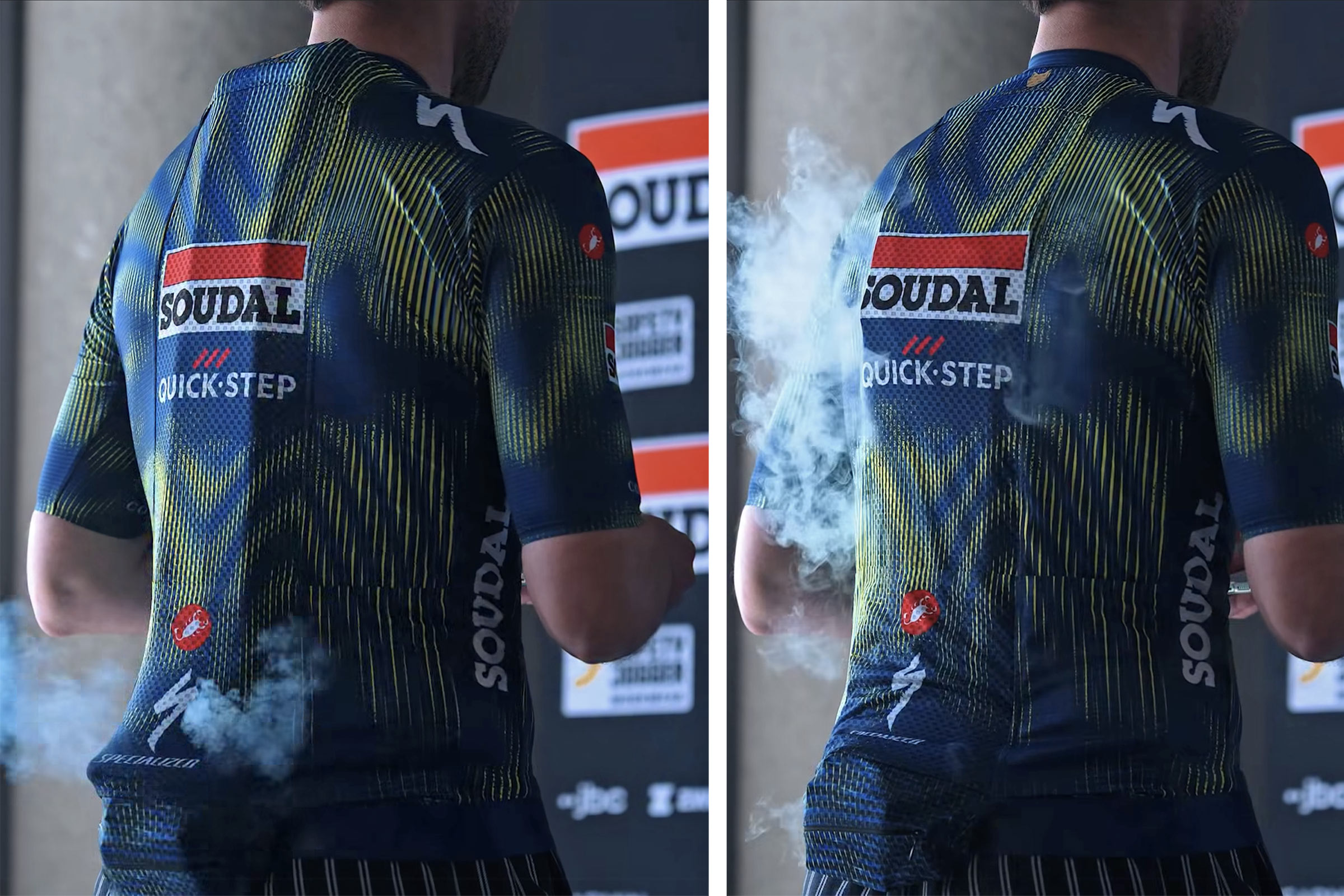


We’ve seen numerous airbags designed for cyclists, but this new Castelli & Ragaz Labs collaboration looks set to be one of the first to make it into pro cycling, on the backs of Soudal Quick-Step and into the peloton. On the eve of the Tour de France’s Barcelona Départ over the weekend, Soudal announced that they’ve been working behind the scenes with their apparel partner Castelli and Italian engineer Francesco Ragazzini to create a lightweight, discreet airbag to protect a rider’s spine in a serious crash.
Castelli + Ragaz airbag for performance cyclists prototype
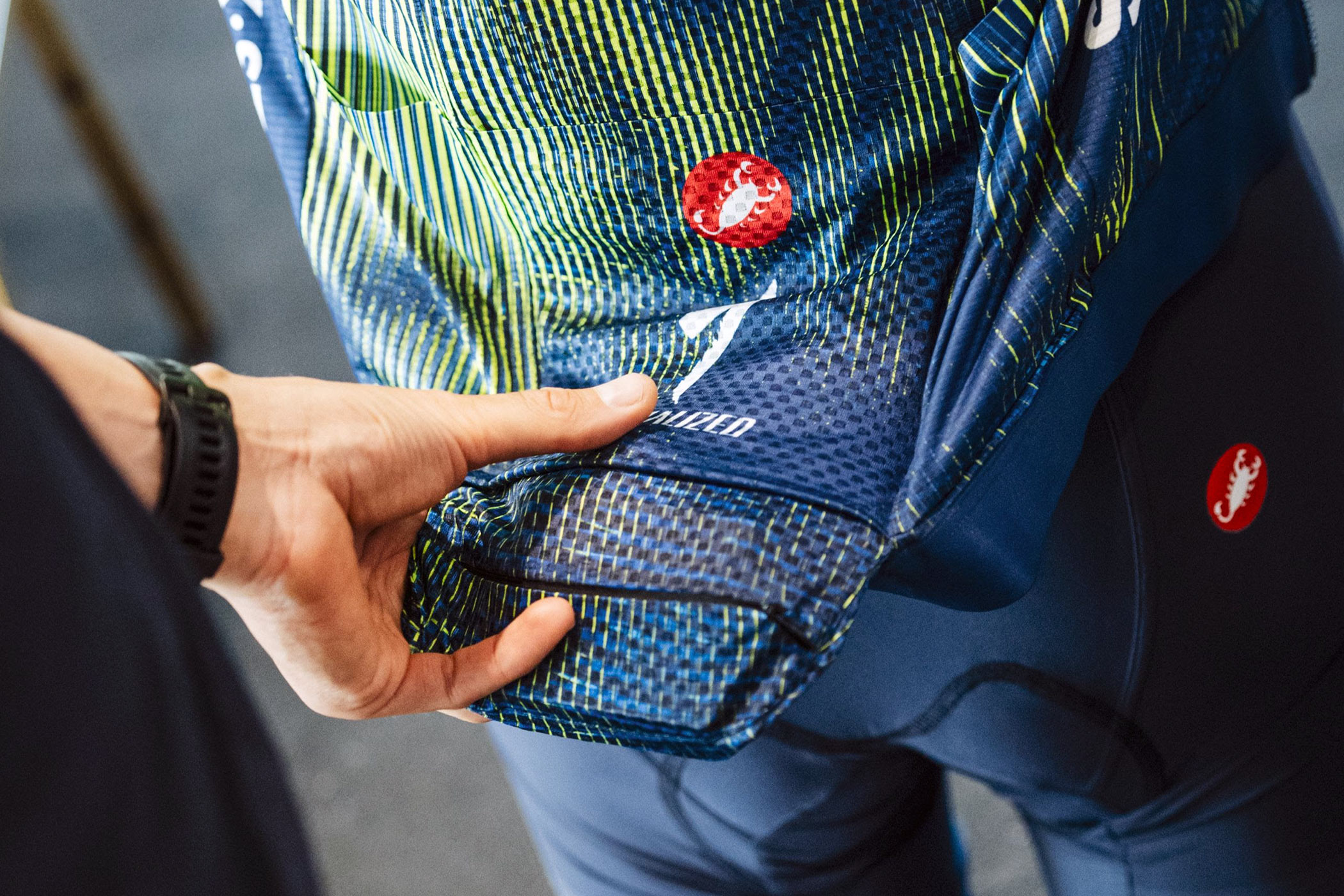
Described as part of Soudal’s “ongoing commitment to improving cycling safety“, the Castelli + Ragaz airbag integrates directly into a special pouch in a cycling jersey to “protect a rider’s spinal column in the event of a crash“. Like we’ve seen with previous cyclist airbag concepts, sensors on the rider’s body are designed to trigger when a significant crash is detected, nearly instantly inflating an airbag to cushion the rider’s impact with the ground.
What’s different here is that the Castelli & Ragaz solution appears to be an exceptionally low-profile design, neatly integrated into a special jersey pocket over the spine, much like recent hydration bladder integrations. Its key features are light weight, unrestricted freedom of movement, overall rider comfort (presumably maximizing breathability as much as possible), and maybe even some aerodynamic gains? required in elite competition.
Tech details
Details on the airbag system remain relatively thin, as Soudal Quick-Step, Castelli & Ragaz showed off a proof-of-concept prototype at a pre-Tour press conference. Clearly, these are still early days for the project, although Ragazzini has been developing the technologies inside for “more than a decade“.
Castelli claims the airbag itself weighs “approximately the same as two energy gels“. We’d conservatively say that could mean as little as 100-150g. Ragaz who makes the tech, says it inflates in just 200 milliseconds. It seems to stay inflated only briefly to protect the spine in an impact. Then, some ‘Smart Deflation’ tech releases the air, which Ragaz says would allow the cyclist to continue riding if it were “accidentally triggered”.
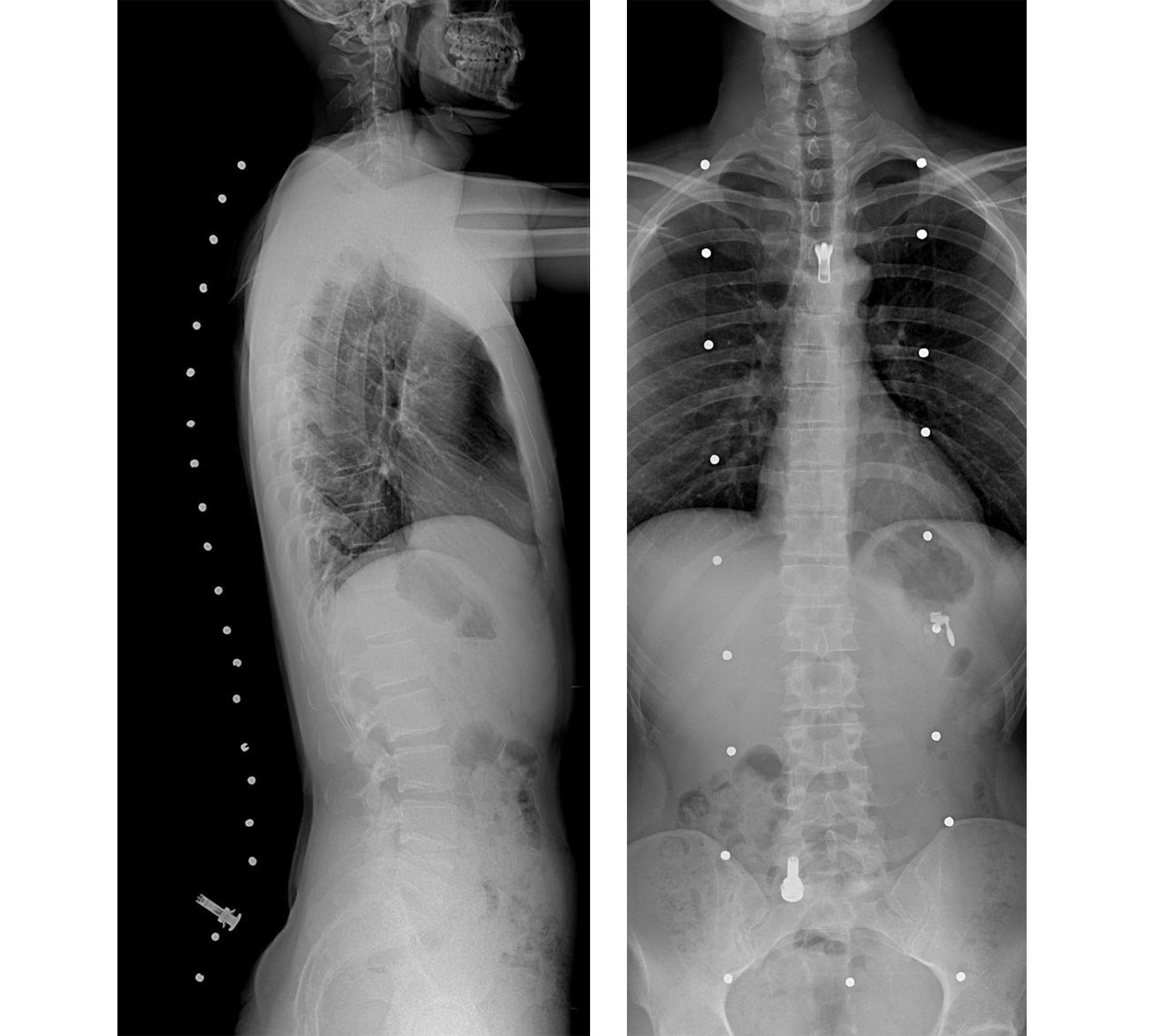
The inflated airbag (outlined in white dots on these X-ray images) protects the entire spinal column with a cushion of air in a crash – “one of the areas of the body that remains particularly vulnerable in high-speed cycling accidents“.
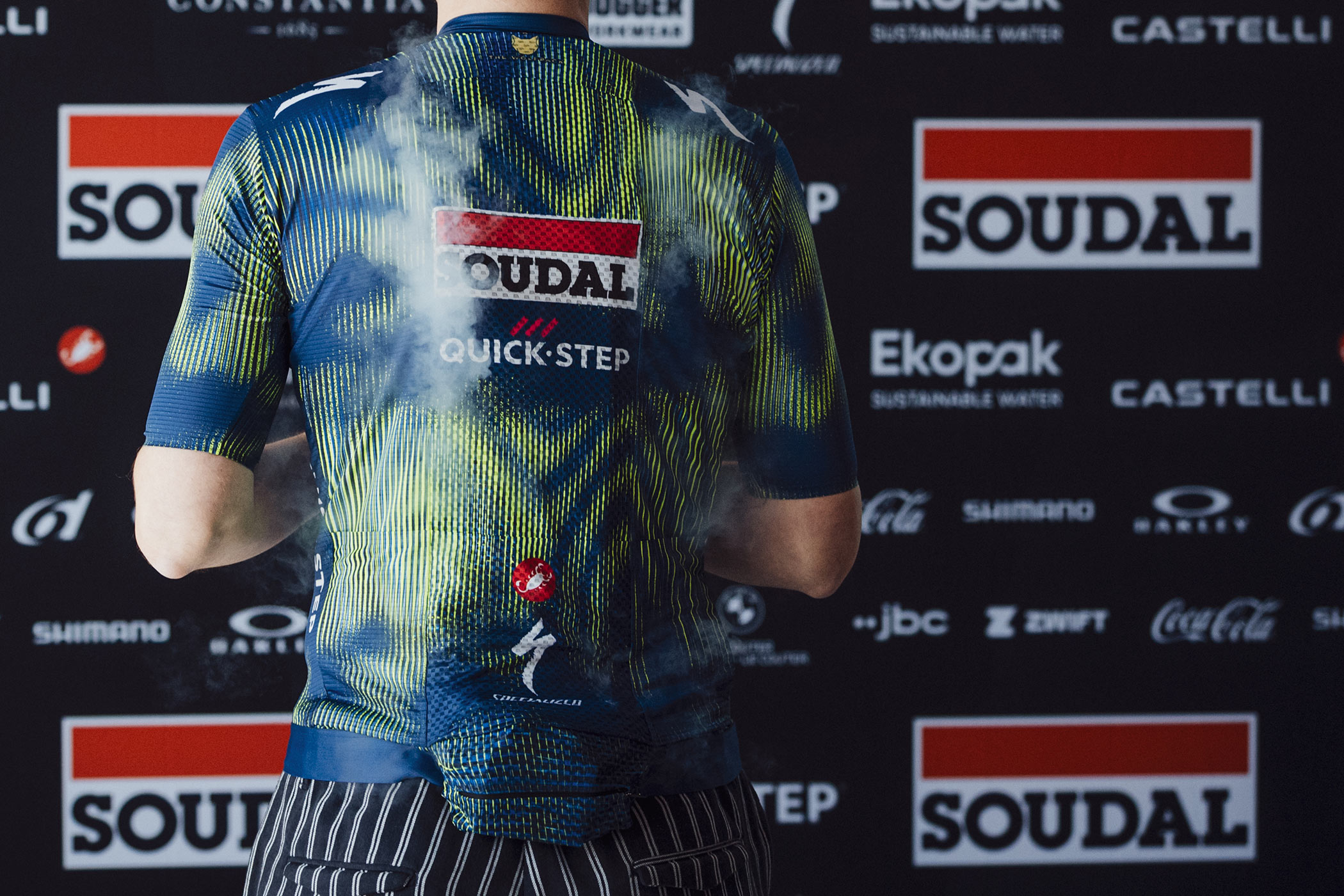
They describe the entire system as ‘easily rechargeable’. The user can also simply remove the airbag from the rear sleeve of the special Castelli jersey for washing. The working prototype packed the inflation and control tech into a zippered pocket that hung down from the back of the jersey, over the rider’s butt. And when inflated, you could see the inflated pillow extending all the way up the rider’s back.
Airbag in Soudal Quick-Step’s training & racing future?
Soudal Quick-Step’s CEO Jurgen Foré described airbags as the next level of protection for competitive cyclists. He explained that the Castelli & Ragaz solution is the first to combine the level of protection needed, low weight, and low bulk to create a viable solution for elite racing. And that the team is “looking forward [to] contributing to further development of it and wearing it during training and competition“.
Castelli’s Global Brand Manager Steve Smith further elaborated on the cooperation with Soudal, saying, “We want to provide a system that protects [against] serious injuries yet is practical for everyday use. This system is already lightweight and easy to use, and this collaboration will further develop the project to bring real protection to cyclists everywhere.“
The next steps for the Castelli & Ragaz airbag project will be collaboration with the Soudal Quick-Step team to refine the technology’s integration into a jersey that is unrestrictive, yet delivers additional protection when it matters most. Castelli describes this step as “technical evaluation and rapid development of the Ragaz prototype“.
Their clear goal is not only to get this into the pro peloton to increase professional racers’ safety. Then, Castelli aim to refine the system with the goal of it being broadly adopted by “everyday recreational cyclists”, as well.
