Home > Bike Components > Wheels

Ursus Arya G All-Road Wheels Are the First to Get New Sapim RC-1 Flexible Spokes

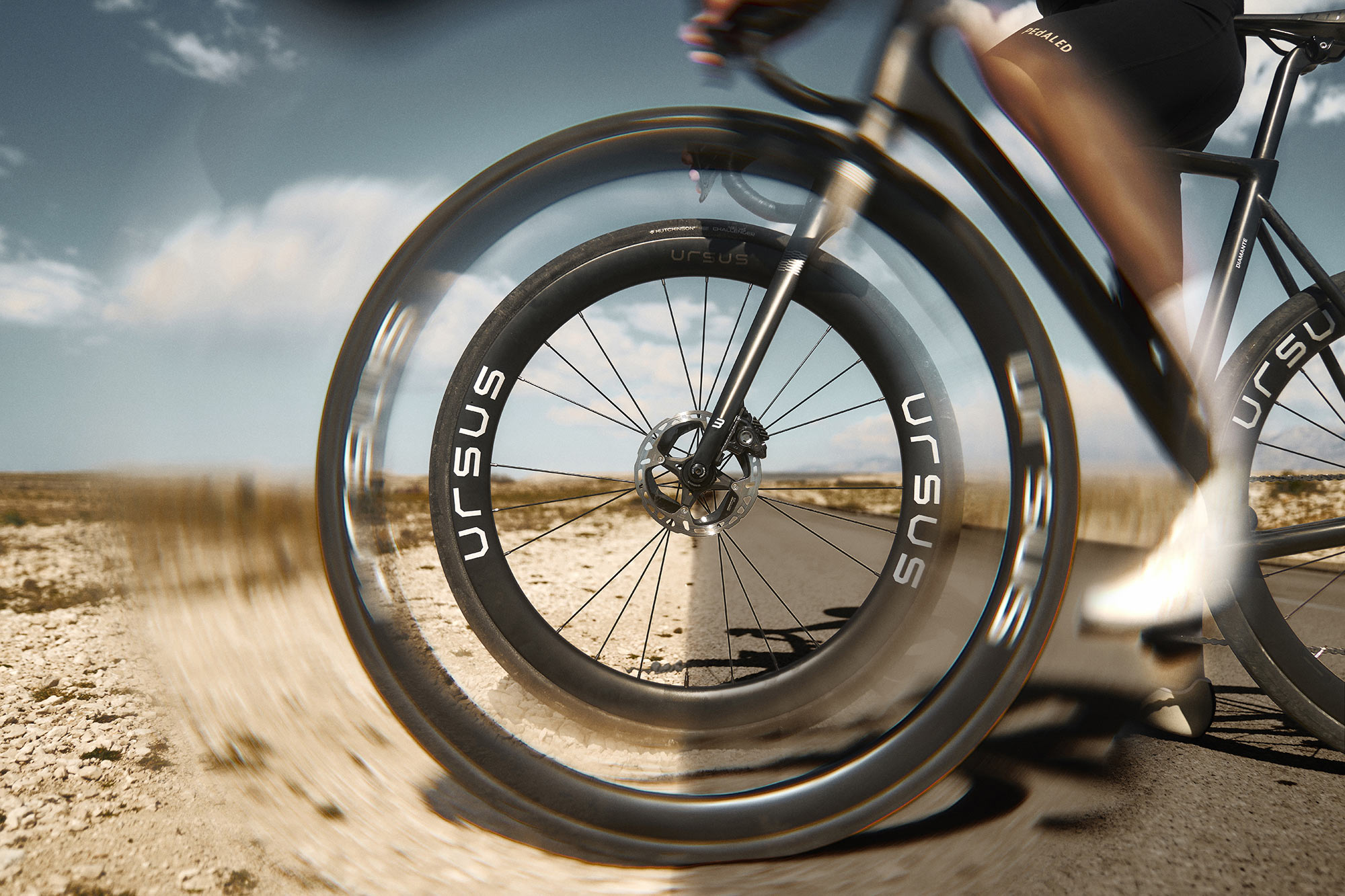
composite image showing ursus arya g all-road gravel bike wheels with PBO spokes.
15 Comments

Just a few weeks after seeing the new Sapim RC-1 spokes at Sea Otter, we’re getting a look at the first wheels to be built with them, along with more information about the spoke itself. The new Ursus Arya G gravel and all-road wheels are built around the new Sapim RC-1 PBO spokes connecting new rims and hubs. The combination debuted at Paris-Roubaix under Team Picnic-PostNL, helping smooth the cobbles thanks to the spokes’ ability to compress and absorb impacts.
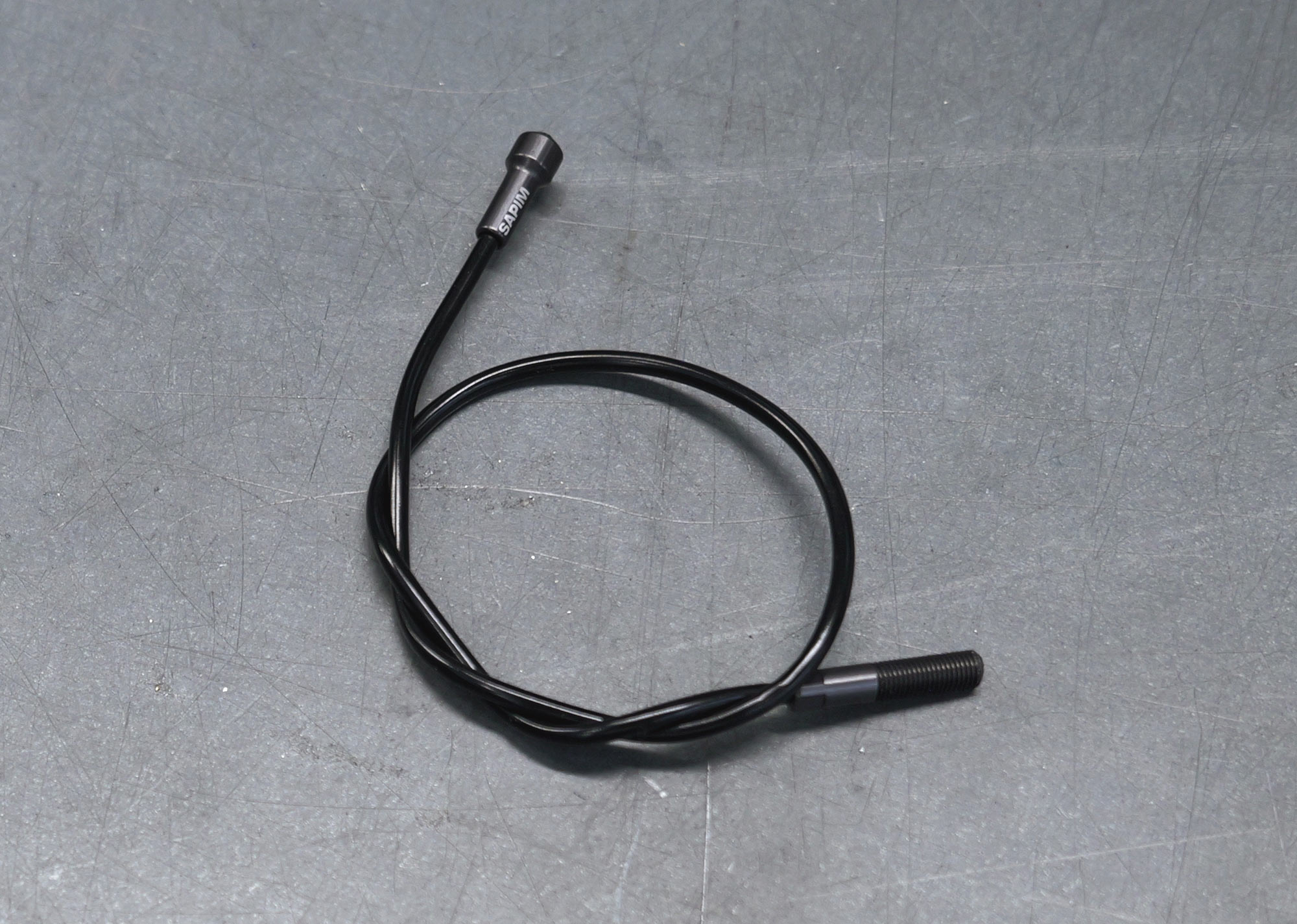
spam rc-1 ebo fiber spoke for bicycle wheels.

What’s PBO? Long before Bikerumor was a twinkle in Tyler’s eye, Spinergy used flexible PBO-fiber spokes to save considerable weight over that era’s “lightweight” wheels. While that brand had its wins and losses in terms of product, the technology behind the spokes was sound and has occasionally been repurposed in the cycling world (and is still used in many lightweight wheelchair wheels).
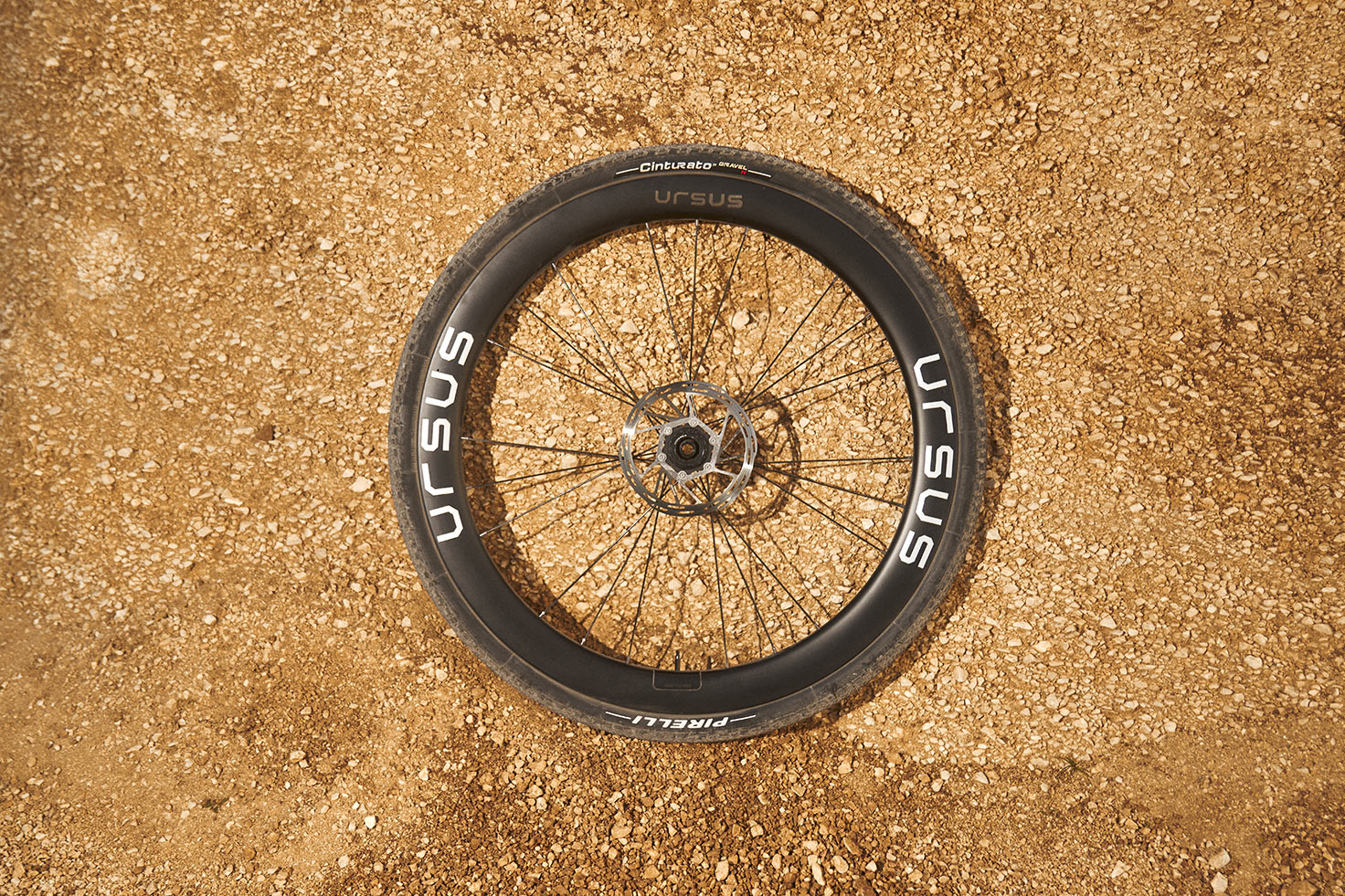
ursus arya g all-road gravel bike wheel with PBO spokes.

In contrast to carbon fiber spokes, PBO (Polyphenylene Bensobisoxazole) is a synthetic fiber from Applied Fiber that’s flexible, but not stretchable. Meaning, PBO spokes allow the wheel to compress radially to soak up impacts and vibration, but not flex laterally.

rider on ursus arya g all-road gravel bike wheels with PBO spokes.

Sapim’s RC-1 spokes are just 1.9g each (260mm length) and are made of 16,000 PBO fiber filaments with a UV-resistant outer sheathing. They use specialized nipples that install and true like normal, but are ~5.5mm thick, requiring the rim to have slightly bigger holes.

The spokes themselves are round, measuring 2.2mm in diameter, making them better suited for rough surface rides where aerodynamics play second fiddle to comfort and traction.

The spokes aren’t just added onto existing parts. Ursus’ OmniTune System (OTS) means a custom build with the straight-pull Ursus U-RG60 hub using their Y-stars (2:1) lacing pattern, going to a 50mm deep, 31mm wide (external) carbon rim. Internal rim width is 25mm.
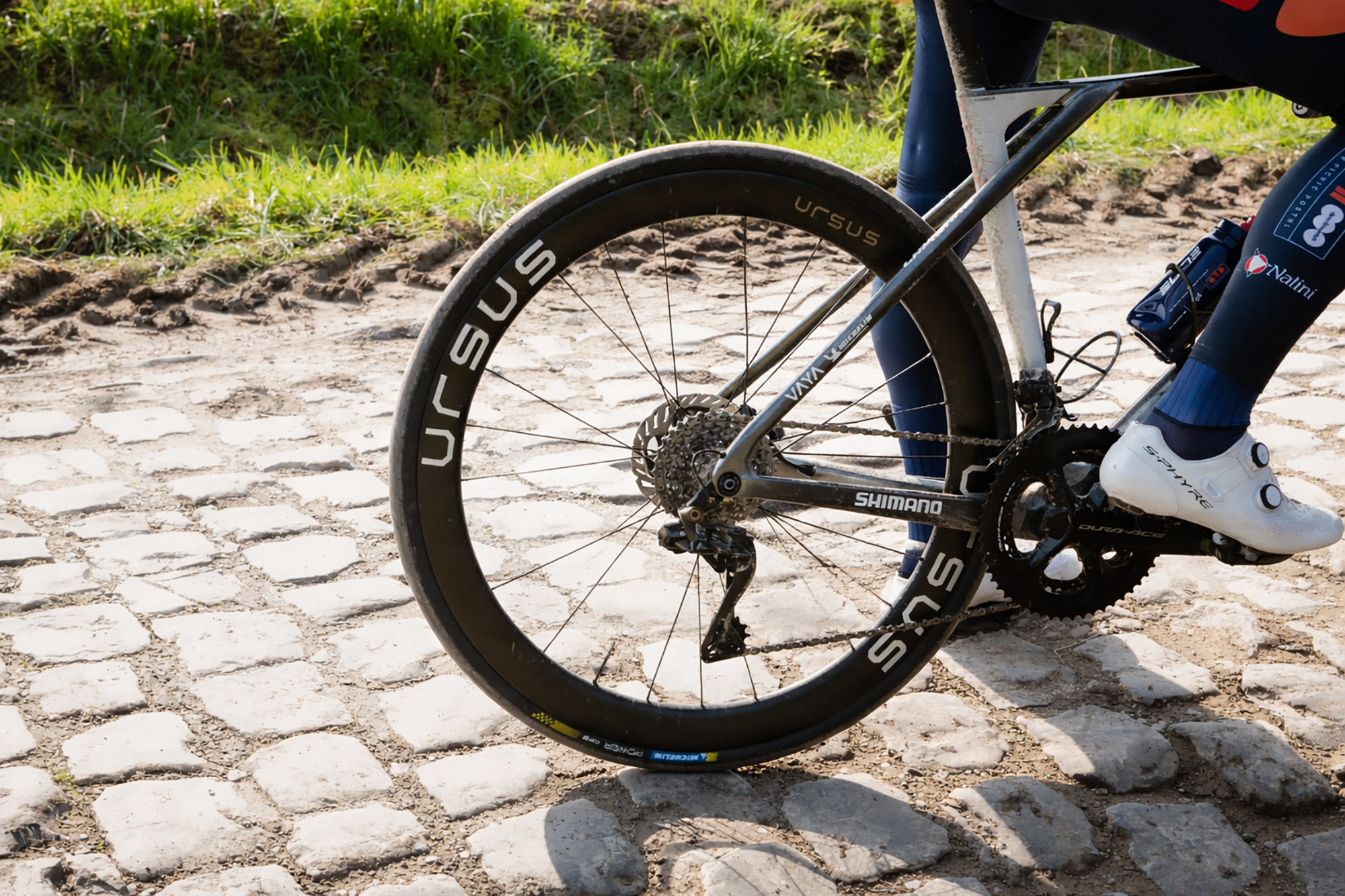
ursus arya g all-road gravel bike wheels with PBO spokes being tested at Paris-Roubaix.

This combination produced a massive 79.67% vibration reduction (in the lab, claimed) compared to their Proxima R50 model, yet remains agile with sharp handling, even on the chunk. Does it work? Here’s what the team riders have to say:

“From the first moment I rode the Arya G on the cobbles during my recon rides for the Spring Classics, I immediately felt that sense of stability and reactivity, combined with the ability to absorb the harshness of the stones on the hardest sectors. Comfort is performance,” says John Degenkolb, rider for Team Picnic-PostNL.
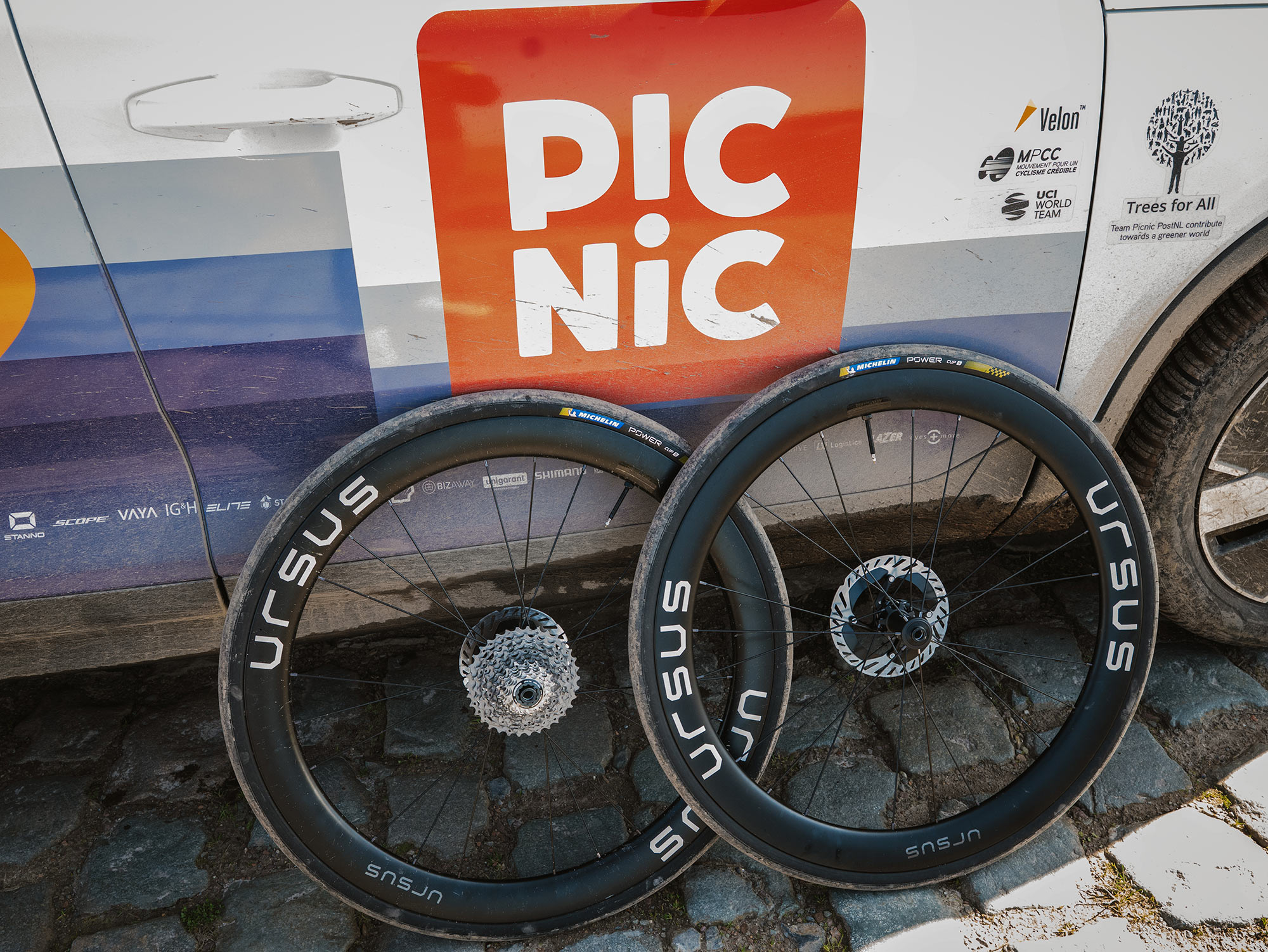
ursus arya g all-road gravel bike wheels with PBO spokes being tested at Paris-Roubaix.

“Arya G is a truly innovative and fundamental tool for the team, because it allows us to tackle mixed surfaces at full intensity while keeping reactivity completely intact and delivering an exponential increase in comfort,” adds Piet Rooijakkers, Team Picnic-PostNL R&D Expert.

Running 21 spokes front and rear, the complete wheelset weighs 1,340g (±40g). Hubs fit Center Lock discs. MSRP is €2,500 per pair, available with HG, XDR, Campagnolo/Ekar, and Microspline freehub bodies.

Ursus.it

Subscribe
Notify of
guest

This site uses Akismet to reduce spam. Learn how your comment data is processed.

15 Comments
Oldest
Newest Most Voted
Inline Feedbacks
View all comments
FritzP
FritzP
30 days ago

I asked Copilot to calculate the drag of 3 different 21 spoke wheels rotating & translating through the air at 30kph (so 0kph at the ground and 60kph at the top) where each wheel uses spokes of different cross sections. 2 wheels use circular spokes, one being 1.5mm in diameter (DT revolution) & the other 2.2mm (these PBO spokes). The third wheel uses elliptical 2.3×0.9mm spokes (CX-ray). The length of the spokes are 270 mm. The wheel with 1.5mm spokes requires ~9.7w, the wheel with 2.2mm spokes requires ~14.2W and the CX-ray wheel requires 1.7W. Yes, this does some hand waving about the round ends of the elliptical spokes and the different nipple diameters, etc.

Last edited 30 days ago by FritzP
FritzP
FritzP
30 days ago
Reply to  FritzP

At 45kph the power increases to 32.6w, 47.9w and 5.6w respectively.
The winners of this years PR averaged over 48kph.

Robin
Robin
29 days ago
Reply to  FritzP

What makes you think Copilot’s calculations are correct?

Do Your Research
Do Your Research
29 days ago
Reply to  Robin

Here’s an interesting thought. What would make anyone think that Copilot’s calculations are any less correct than anything claimed by any marketing department of any bicycle industry brand? Not hating on these spokes, I’d buy them, but just saying.

blahblahblah
blahblahblah
29 days ago
Reply to  Robin

HAL did, besides was the question correct in the first place?

FritzP
FritzP
27 days ago
Reply to  Robin

I’ve got a degree in aerospace engineering and the approach it presented looked correct (they aren’t very complicated to follow). So assuming it did the math properly I think they make sense. Plus anecdotally, remember the Mavic SL-R with their fat, cylindrical spokes? They felt like pushing a wall through the air compared to similar wheels with bladed spokes.

Astro_Kraken
Astro_Kraken
29 days ago
Reply to  FritzP

I asked my lawnmower and it returned way different numbers than what you got. I dont know who to trust.

Melo_Pela
Melo_Pela
29 days ago
Reply to  FritzP

I asked the stars and got something different. We should compare with the lawnmower too.

James
James
28 days ago
Reply to  FritzP

I remember reading about when November Bicycles sent their wheels in to the wind tunnel and came back with a 1 watt difference between cx-ray and laser.

https://novemberbicycles.com/blogs/blog/from-the-vault-spoke-aerodynamics

Eric
Eric
27 days ago
Reply to  FritzP

Can you ask Copilot to calculate the quantifiable difference between those three wheels when riding on different surfaces in terms of vibration-induced fatigue and, therefore, performance loss for the rider?

tertius_decimus
tertius_decimus
23 days ago
Reply to  FritzP

Ask Copilot who an electorate has to vote for come next elections.

Rene
Rene
29 days ago

I always wondered if the extreme stiffness of carbon spokes is a good thing for speed on rougher surfaces. We keep lowering the tire pressure to absorb all cobbles etc, yet use extremely stiff spokes, which according to the same logic, would reduce speed. These being as light as carbon, they seem like a better choice.

Frank
Frank
29 days ago

“Meaning, PBO spokes allow the wheel to compress radially to soak up impacts and vibration, but not flex laterally.”

Come on, you know that’s a self-contradicting statement. If the spokes can compress radially by x, any wheel built with them will deflect laterally by ~x/sin(B), where B is the bracing angle.

In other words, it will deflect laterally a whole lot more than it will compress radially.

The vibration bit is right, and that’s huge for rough surfaces.

Last edited 29 days ago by Frank
Matthew
Matthew
29 days ago

Does it work? Here’s what the team riders have to say:

“From the moment the check cleared my account, I could immediately feel the benefits of this new thing from my sponsor. Money talks, and the other companies’ things don’t put money in my pocket” said Rich Moneybags, Team Gulf Petrostate-$£€ R&D Expert

notstretchingbutradiallycompressing
29 days ago

Make this make sense: “Applied Fiber that’s flexible, but not stretchable. Meaning, PBO spokes allow the wheel to compress radially to soak up impacts and vibration, but not flex laterally.”

Subscribe Now

Sign up to receive BikeRumor content direct to your inbox.