


I believe it was Ferris Bueller who said, “Life moves pretty fast. If you don’t stop and look around once in a while, you could miss it.” Maybe it’s just that I’m getting older, but it sure felt like 2025 went by in a hurry. But when I sat down to reflect on the past year’s experiences and all of the great new gear that I got to try, I’m reminded that it was another one for the books.
With the constant advancement of materials and technology, it can be challenging to keep up with all of the latest and greatest new products. Sometimes I wonder if the industry shouldn’t just slow down for a bit and take a breather to let us all catch up (and maybe let the market stabilize), but then I try something new that totally blows my mind. There’s never been a better time to be any type of cyclist. The gear we use just keeps getting better.

A Little Bit About Me
Hi, I’m Jeremy, and I like to ride bikes. I live in Reno, Nevada, also known as the Biggest Little City in the World. I relocated here a little over a year ago from the Tahoe-Truckee area, where I spent the past 24 years riding bikes, skiing way too much, and generally trying to avoid growing up. I started mountain biking as a teenager in the early 1990s and have only become more obsessed with the sport as the years have gone by. Back in 2016, I also started riding gravel bikes and quickly developed an affinity for endurance racing. I’m terrified of riding around moving vehicles, so I generally try to avoid road riding, but I thoroughly enjoy cycling in all its other forms.
I’ve been writing full-time and testing and reviewing cycling gear for the past eight years, and have been working with BikeRumor on and off for the past two and a half years. Previously, most of my work was a bit more behind the scenes, but lately, I’ve been writing more news, reviews, and even expressing some of my less-than-popular opinions. I feel extremely lucky to be in a position that allows me to combine my passion for riding bikes, nerding out about gear, and writing, and share it with the BikeRumor audience.
My Favorite Gear (and Other Stuff) of 2025
I was fortunate to test A LOT of different gear this year, so without further ado, here’s a list of my favorite things in 2025. You may notice that not everything listed here came out this year. Some of it was new in 2024, and some of it I’ve been using for a while, and I just really like it.

Trails and Trail Organizations
Mountain biking doesn’t exist without trails, and trails don’t exist without people and organizations building, maintaining, and advocating for them. There’s a great deal that goes on behind the scenes to construct new trails. From mapping, planning, and environmental impact reports, to flagging, hiring contractors (in some cases), and coordinating with volunteers for trail work days, the process can take years. It’s a labor of love, but a very important one that benefits the health and well-being of individuals and communities, regional and local economies, and the sport as a whole.
In the Reno, greater Lake Tahoe, and northern California area, where I’ve been living and riding for the past 25 years, we’re lucky to have incredible outdoor access and numerous trail organizations building and maintaining our extensive trail networks. There’s no shortage of world-class riding, and there is considerable momentum and numerous ongoing projects continuing to expand, connect, and improve our trail systems. Shoutout to the Biggest Little Trail Stewardship, which maintains the trails surrounding Reno and is currently putting the finishing touches on a super-fun new 3-mile-long machine-built flow trail on Peavine Mountain.

In the Lake Tahoe Basin, the Tahoe Area Mountain Bike Association, the Tahoe Rim Trail Association, and the U.S. Forest Service all deserve recognition for their ongoing efforts to build, improve, and maintain the amazing trails surrounding one of the most beautiful places in the world. Just a few miles north in Truckee, the Truckee Dirt Union, Truckee Trail Foundation, and the Truckee Donner Land Trust have all been working hard to improve existing trails and build new ones in this recreational paradise.
Further north, in a region known as the Lost Sierra, the Sierra Buttes Trail Stewardship (SBTS) is in the midst of a truly ambitious project. SBTS has already been building and maintaining the legendary trails in Downieville and Mt. Hough for years, and now it is undertaking what it calls the Connected Communities Project. Construction is already underway on many portions of this multi-year effort to connect 15 rural communities with over 300 miles of single-track trails, providing more recreational opportunities and, in turn, benefiting their local economies.

For the most part, these groups don’t operate, and trails don’t get built without our help. If you have the time, volunteering for a trail work day is a great way to get involved, meet new people, and get a great workout. If you have the means, donations help fund behind-the-scenes costs, equipment, and, in some cases, professional trail construction. Enter that fundraising raffle or register for that race; there are lots of different ways to support.
Bikes
Editor’s Choice: Short Travel Mountain Bikes

In the past few years, short travel bikes — both cross-country and trail — have really come into their own. It seems that the industry has finally figured out that lightweight XC bikes could be significantly more capable, versatile, and fun to ride if they modernized their geometry. Last year, I spent a significant amount of time riding the then-new Yeti ASR XC race bike, and I was absolutely blown away. It was super-light, super-fast, and super-fun to ride, even on terrain outside of the traditional XC wheelhouse.
This year, I put quite a few miles on the new Salsa Spearfish, and it exceeded my expectations. No, this bike isn’t quite as light as the class-leading XC race bikes these days. But it was much lighter than my regular trail bike, incredibly fast-rolling and efficient, and just a blast to ride. It helped me feel like I’m still getting faster, even if age is actually starting to slow me down. I enjoyed this bike so much that I was reluctant to send it back, and I was legitimately sad to see it go.

The latest version of the Kona Hei Hei was another short-travel bike that I enjoyed riding this year. It’s strikingly similar in looks, travel, and geometry to the Spearfish. But with 10 mm more fork travel and a slightly beefier (heavier) build, it’s more of a short-travel trail bike than a full-on XC rig. It’s still zippy and efficient, yet it handles the rough stuff with a bit more composure than the lighter (and racier) Spearfish.
Editor’s Choice: Electric Mountain Bikes
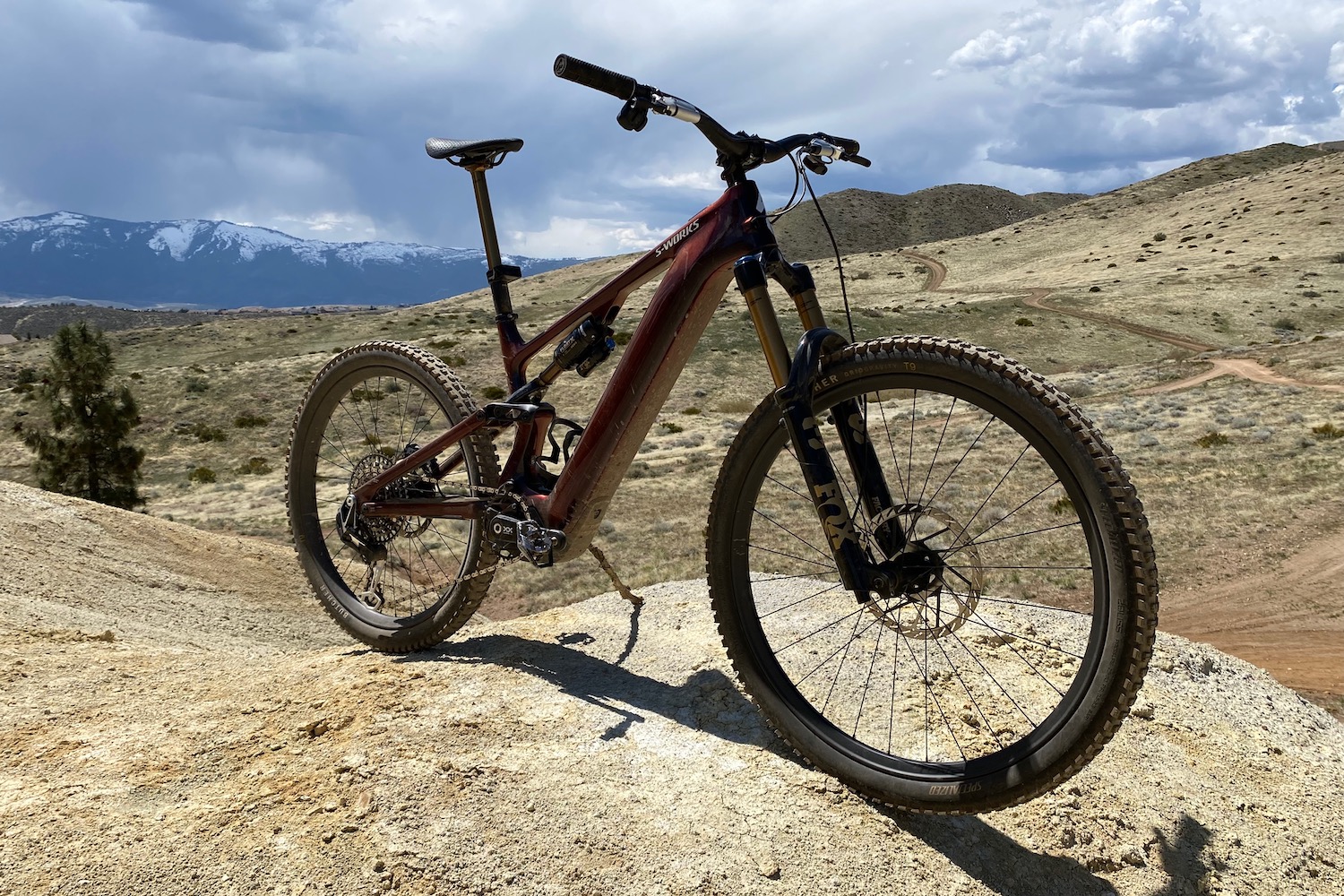
I know there are plenty of eMTB haters out there, and I’ll admit, I used to be one of them. I thoroughly enjoy self-inflicted suffering on the bike, and I’m one of the kooks who’s still competing with other weirdos for uphill KOMs in my area. I definitely don’t need to ride an eMTB, but after many years of testing them, I’ve grown to truly appreciate them. In the same amount of time and with the same amount of effort, I can ride twice as far or twice as much vertical, if not both. That’s pretty awesome if you ask me.
I was lucky to have an S-Works Turbo Levo 4 in my possession for a few months back in the spring. That bike’s new motor system was very impressive in terms of power output and delivery, tuneability, and all-around performance. That, combined with a huge battery, highly adjustable geometry, and incredible build, made it one of the best all-around eMTBs I’ve ever ridden.

That said, the most fun I’ve ever had riding any eMTB would have to be on the new Yeti LTe. The latest Bosch CX motor is fantastic, and the 800 Wh battery has kept range anxiety to a minimum. The Sixfinity suspension design works impressively well, and the geometry is spot-on for the LTe’s hard-hitting and high-speed intentions. I also wouldn’t change a thing about the build, which only enhances the performance and inspires the confidence to charge descents on this bike.
Components
Editor’s Choice: Wheels

A couple of years ago, Roval introduced the Traverse HD carbon wheels. These “heavy-duty” wheels are meant for everything from aggressive trail riding to DH, yet they weigh a pretty reasonable 1,705 grams for the 29-inch pair. I’ve had a set of these wheels on my trail bike for the past two years, and they have been taking an absolute beating. I can’t count the number of hard impacts and rim-outs that they’ve been subjected to, but I can count the number of times they’ve needed any attention — zero. They were also specced on the Levo 4 that I rode extensively earlier in the year.
Sure, they have a few cosmetic scratches, but otherwise, these wheels are as true as the day I started using them. They honestly seem indestructible. And despite many “oh no, I just got a pinch flat” hits, I’ve gotten shockingly few pinch flats. The extra-wide “flat-top” of the bead wall really seems to spread out impact forces and reduce the number of snake bites. I’m not going through nearly as many tire plugs or CO2s, and for that, I am also thankful.
Editor’s Choice: Schwalbe Radial Tires

Schwalbe introduced its Radial tires last year, and frankly, the amount of praise they received right out of the gate seemed a bit excessive. How “game-changing” could they really be? They’re just tires for crying out loud. Could changing the angle of the threads in the casing really make that much of a difference?
Apparently, yes. I started riding the Radial Magic Mary (front) and Albert (rear) combo with a healthy dose of skepticism, and initially was a bit underwhelmed. I learned very quickly that I needed to rethink my tire pressures, as they squirmed pretty heavily in my usual low 20s. After so many years of trying to run the lowest pressures possible to increase traction, it seems counterintuitive to pump tires up to 30+ psi, but that’s when the Schwalbe Radials start to shine.
The difference was subtle at first, but over time, I began to trust the tires more and unlock their potential. Additionally, the higher pressures demanded by the Radials also significantly reduce the chances of pinch flats, in my experience. The difference has been very apparent every time I switch back to other, non-Radial tires. After getting used to the grip of the Radials, I keep expecting more traction, and my favorite, trusted, and time-tested treads are washing out all over the place.
Editor’s Choice: OneUp Carbon V2 Handlebar

I was officially diagnosed with light to moderate carpal tunnel earlier this year, yay. I have no doubt that 30+ years of mountain biking has something to do with it, but I’d argue that the hand positions and high-frequency buzz from gravel riding, and many years of doing landscape maintenance, are more to blame. Whatever the cause, it’s something I have to deal with, and I’m actively trying to improve the comfort of my hands and wrists on all my bikes.
The original OneUp Carbon handlebar was already a favorite, and I think the V2 is even better. It looks nearly the same, but the ovalized sections are slightly more pronounced. It’s far from the most compliant (flexible) bar I’ve tried, but I’d argue that its vibration damping is as good as it gets. The V2 noticeably filters out high-frequency feedback, helping me maintain sensation in my hands while also calming down my bike’s handling. The latest version also comes in an additional 50 mm rise, as well as a dedicated 760 mm width.
Editor’s Choice: New Pedals

In the past few years, I’ve tried just about every clip-in pedal on the market. While I appreciate the variety and the different feels and characteristics available, I’m just a fan of SPDs. For me, it’s all about consistency, and Shimano’s SPD binding mechanisms and cleats make them the Budweiser of pedals. They might not be the most exciting, but they work well, and they are exactly the same every. single. time.
Which is why I was very excited to see a couple of my favorite component and accessory brands start producing SPD-compatible pedals this year. After a rocky start that included a “notice of a running change and product improvement,” the new OneUp Components Clip Pedals have become one of my favorites. The pedal body is thin but large, and it provides more sole contact and support than most other clip-in pedals on the market. They’re also surprisingly light for their style and easily user-serviceable with standard tools.

Not to be outdone, the machining experts at Wolf Tooth Components launched a three-model lineup of SPD-compatible clip-in pedals this year. The CTRL (trail), ALT (XC), and DEL (gravel) pedals are all made with the exquisite machining and quality craftsmanship that the brand is known for, along with some unique features that set these pedals apart. For example, the DEL pedals are single-sided, which reduces their profile and makes them some of the lightest SPDs on the market. Like everything else Wolf Tooth makes, they are also user serviceable and are part of the brand’s Right to Repair Program. All of the new pedals also feature an adjustable Q-factor that can be adjusted in just a few minutes.
Unlike most trail-oriented clip-in pedals that have mostly useless cages of metal in front and behind the binding mechanism, the Wolf Tooth CTRL pedals basically look like wider XC pedals. The added width and surface area provide just as much lateral support at a lighter weight than pedals with front and rear platforms that don’t contact the sole. Clipping in and out of the binding mechanism is super smooth, consistent, and as good as, or better than, any other SPD system I’ve tried. I’ve only been riding with them for a few weeks, but stay tuned for a review soon.
Editor’s Choice: Wireless Droppers

Nobody needs a wireless dropper, but they are pretty neat. Until last year, RockShox had the wireless dropper market cornered with the Reverb AXS. Finally, Fox introduced the Transfer Neo, surpassing the V1 Reverb AXS with a 200mm length and unveiling its own Neo wireless system. I’ve been riding with the Transfer Neo since January, and it is outstanding. The Neo wireless signal is remarkably fast, and the actuation speed is miles ahead of AXS. Not only that, but the remote has a more familiar shape and better ergonomics, plus the post is so impressively smooth and has been operating trouble-free for the entire year. The hangup? It’s crazy expensive.

Fox’s reign at the top of the wireless dropper market was short-lived, however, with RockShox launching the 2nd generation of the Reverb AXS earlier this year. The brand completely redesigned the post, making it the longest on the market with the addition of 200mm, 225mm, and 250mm travel options. The repositioned battery and controller improved tire clearance, and RockSox significantly shortened insertion lengths, too. AXS isn’t lightning fast like Fox’s Neo, but the integration with other AXS components is a major bonus, as are the longer drop lengths.
Editor’s Choice: Cable-Actuated Shifting

And now to completely contradict myself, cable-actuated shifting is on my list. I’m all for cool new technologies in cycling, but I also don’t want them to be forced on everyone. Additionally, I don’t think wireless shifting works any better than cable-actuated options. In my experience, the performance of SRAM’s AXS Transmission drivetrains has been hit or miss, and it always bums me out when I show up to the trailhead with a dead derailleur battery or the POD battery dies mid-ride (which happens surprisingly often).
You know what works fine? My four-year-old cable-actuated Shimano XT drivetrain. Sure, the clutch is slowly wearing out, but that derailleur has been through hell and back again, and I NEVER forget to charge it. I was also pleasantly surprised by the performance of the SRAM Eagle 90 Transmission on the Kona Hei Hei I was riding this year. I’d argue that it was as good as, or better than, the brand’s wireless options.
Editor’s Choice: Schwalbe Clik Valves
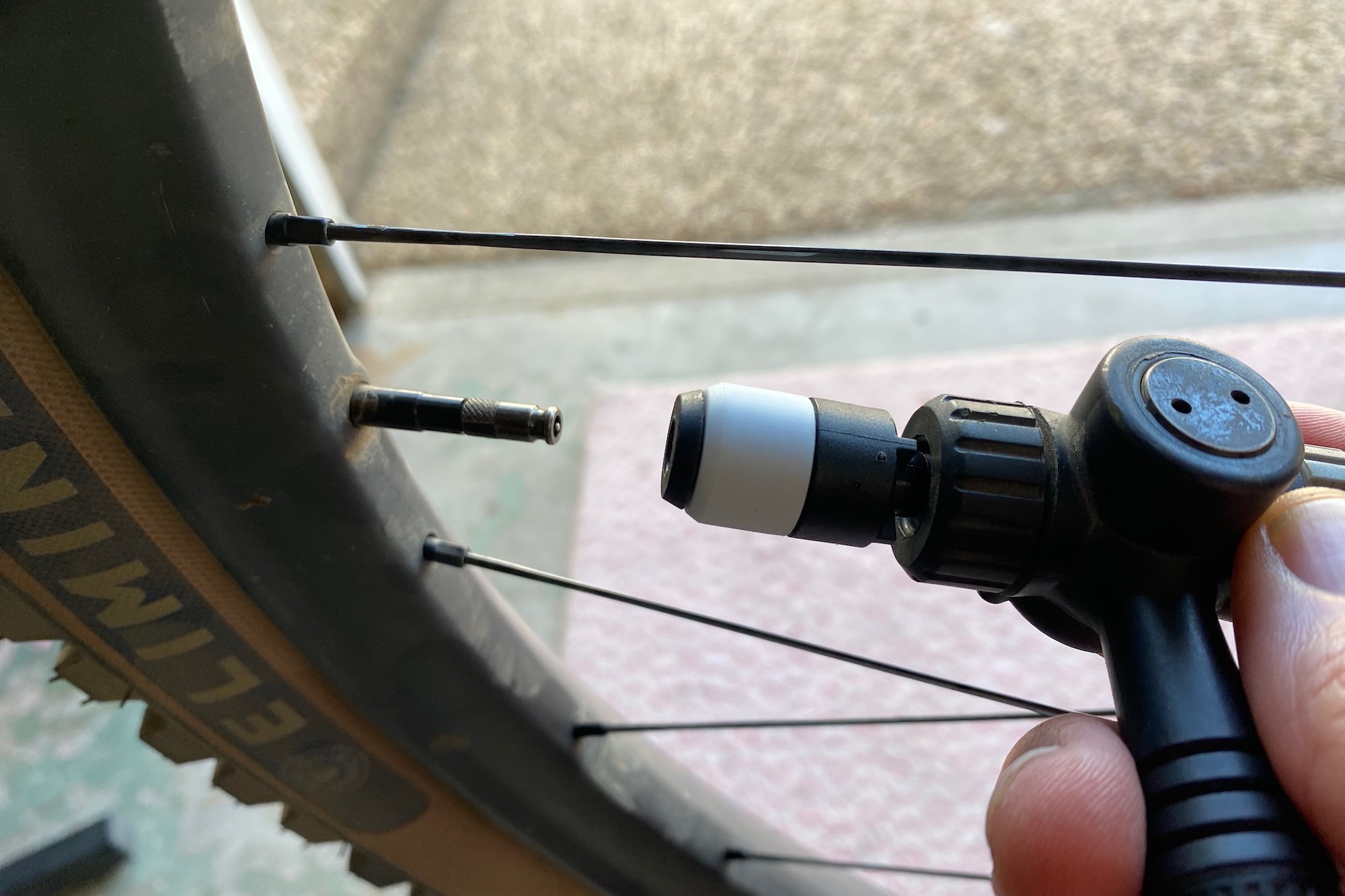
These should be the Presta Valve killer, but they probably won’t be. We’ve accepted the mediocre performance of Presta Valves for far too long, and they are so entrenched that it’ll be hard for any other valve to take over at this point. However, Clik Valves are significantly easier to use, offer a higher flow rate, are less likely to clog with sealant, and have no fragile tip to bend or break. The compatible Clik adaptors and pump heads simply “click” on and off the valve. There’s no threaded tip to unscrew, no pump head to screw on or tighten. It’s a very simple and effective system, and it simply threads on in place of Presta valves. Brands like Lezyne and Wolf Tooth are selling pumps with Clik heads, so perhaps we’ll see them get more traction as they gain industry acceptance. Time will tell.
Accessories
Editor’s Choice: Fox Enduro Pro Knee Guards

A quick glance at my knees reveals that I haven’t worn knee pads while mountain biking nearly as often as I probably should have in the past few decades. The problem is that I really enjoy pedaling, and even the pedal-friendly knee pads have caused discomfort in the past. Well, that all changed when I tested the latest Fox Enduro Pro Knee Guards earlier this year. With a flexible Koroyd insert, a floating pad design, and an exceptionally comfortable and impossibly stable fit, these pads don’t shift or otherwise irritate my legs in any way. I can pedal in these all day, and the Level 1 protection rating has me covered for the majority of rides.
Editor’s Choice: CrankBrothers Mallet Trail Boa

I was a huge fan of the original Specialized 2FO Cliplite shoes. I was hugely disappointed a few years ago when they updated (and ruined) those shoes, and have been searching for something comparable ever since. Last year, I picked up a pair of the then-new Crankbrothers Mallet Trail Boa shoes and have been singing their praises ever since. These shoes not only look good, but they also have a balanced sole stiffness that’s both efficient on the pedals and comfortable to walk or hike in, thanks to full rubber soles that provide plenty of grip off the bike. They’re a bit sleeker than full-on DH shoes, with streamlined uppers and a BOA closure with a velcro strap to lock down the heel. In my opinion, they split the difference between XC shoes and gravity shoes, and are perfect for most of my rides. I’ve had mine for over a year and a half, and they are still going strong.
Editor’s Choice: EVOC Hydro Pro 1.5

My preferences for carrying water and tools have changed over the years, but I’ve grown very fond of hydration vests since purchasing the EVOC Hydro Pro 1.5 two years ago. I’ve tried numerous other options, but I always come back to the EVOC. This pack is fairly simple, carrying 1.5 liters of water and offering 1.5 liters of storage space. I can fit everything I need for most rides — tube, inflator, tire plugs, multi-tool, snacks — and even a light jacket inside. The chest pocket layout is great, providing easy access for my phone, more snacks, and other items. Unless I’m going really big, this pack comfortably and securely holds everything I need for mountain and gravel rides.
Apparel
Editor’s Choice: Velocio Ultralight Trail Pants

In the spring of 2023, I started riding in a pair of the Velocio Ultralight Trail Shorts and the Delta Jersey. Two and a half years later, I’m still riding in both, and they still look good as new. They fit me perfectly, are shockingly lightweight, and I struggle to understand how such light materials can be as durable as they are. This year, I picked up a pair of the Ultralight Trail Pants, which are made from the same material as the shorts. The fit is equally top-notch, and these pants are so light it’s kinda hard to believe. They’ve been serving me well through the shoulder season, and I can see them being an excellent option for adventurous summer rides that demand full leg coverage.
Editor’s Choice: Ornot Cargo Bibs

Almost everything on my list is mountain bike related, but I do spend a fair amount of time riding curly bars and gravel roads. When I’m on the gravel bike, I wear tighter-fitting clothing, and the best bibs I’ve worn in recent memory are the Ornot Cargo Bib Shorts. The material feels great against the skin, the moderate level of compression is just right, and the high-density endurance pad actually does provide all-day comfort. Wide leg grippers and soft bib straps keep everything comfortably in place, and there’s plenty of room for snacks and anything else in the four cargo pockets. At $218, they’re not wildly expensive, either.
Gadgets
Editor’s Choice: Exposure Lights

I’ve been hearing about Exposure Lights for years, as they have a reputation for being some of the best bike lights that money can buy. This year, I finally got the chance to try them, and I was blown away. Yes, they are expensive, but if you’re serious about night riding, I think you’d be hard-pressed to find better lights. With the Six Pack 15 on my handlebar and the Zenith 4 on my helmet, I could seriously ride as if it were daylight. Not only are each of these lights super bright on their own, but their beam patterns cast light nicely across a very long way down the trail. With well-designed controls and features like auto-adjusting Reflex 2.0 (Six Pack) and TAP (Zenith), both lights are super user-friendly. The beautifully machined aluminum bodies also happen to look great and are made to last forever.
Editor’s Choice: Electric Mini-Pumps
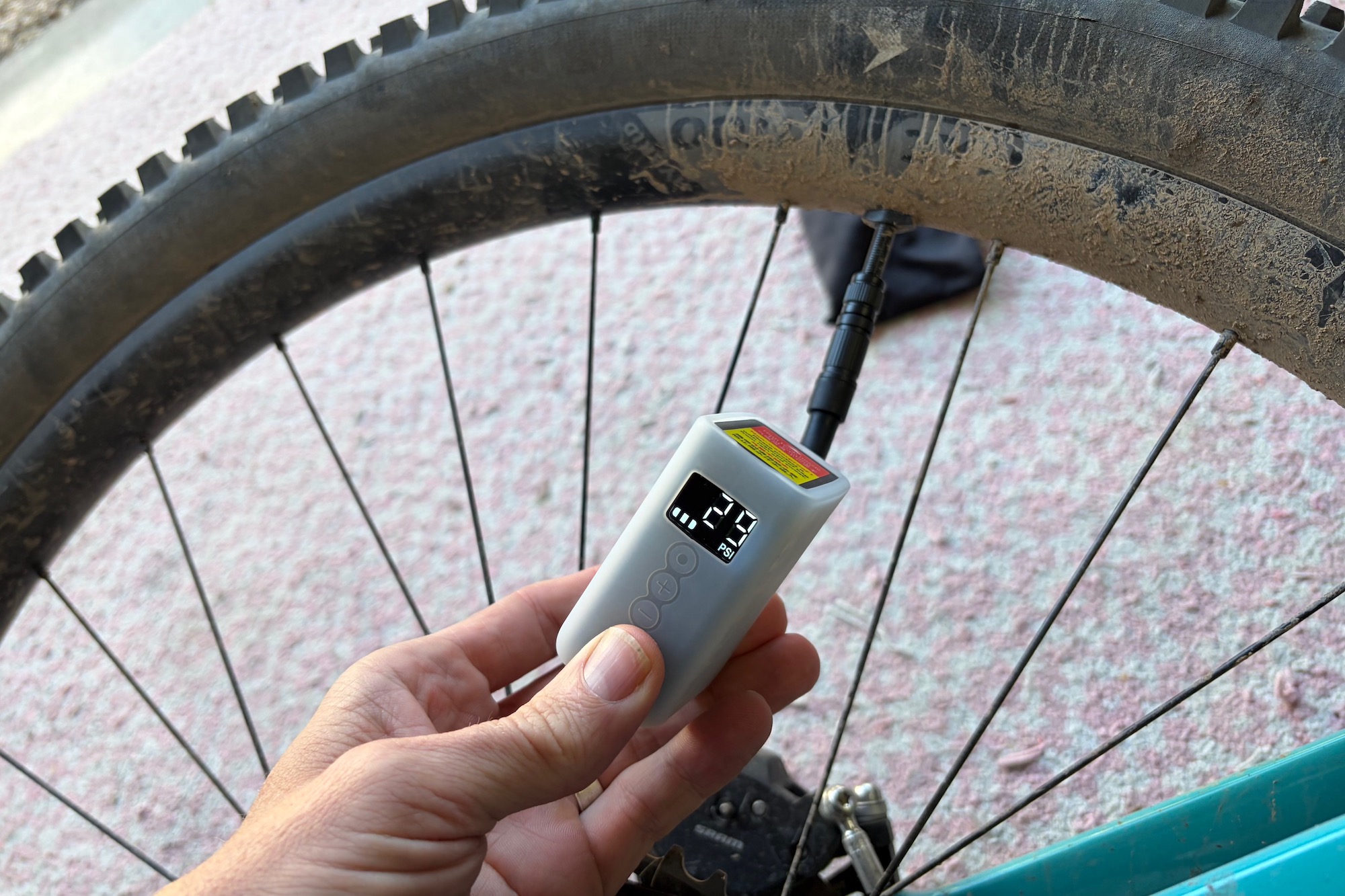
This year, it seemed like we reported on a new electric mini-pump at least once a month. These little gadgets took the cycling world by storm and are replacing manual mini-pumps and CO2 setups for many riders’ emergency inflation. I am among the many folks who have made the switch, and I’m not looking back. These pocket-sized marvels can inflate numerous tires on a single charge while taking up less space and often weighing less than other forms of emergency inflation. Plus, no pumping by hand or cartridge waste! I tested the ToPeak E-Booster Digital and four different models from Cycplus, and all of them impressed me with their pumping power, battery life, and long-term charge retention.
Editor’s Choice Gear Storage: Kitworks Gear Tote


For as long as I’ve been riding bikes, you’d think that I would have a dialed gear storage and transportation solution, but that is something that has always eluded me. I’ve used everything from reusable grocery bags, random duffel bags, storage crates, and even a woven African basket (one of my favorites). While all of these options have worked well enough, they have all had some sort of compromise. I think my phone heard me talking, and Instagram fed me an advertisement for Kitworks Gear Totes. They looked like one of the best solutions I’ve seen in a long time, so I picked up the Mountain Bike Gear Tote Bundle.
This is a modular system that includes a 55L Gear Tote and various removable bags, pockets, and gear cubes, so you can create your own compartmentalized organizational layout. There’s plenty of room for shoes, a helmet, riding clothes, after riding clothes, tools, and more, and the best part is that the open design makes it easy to see and find items inside. It’s not cheap, but everything is made from high-quality and durable materials, and it seems built to last. I’ll keep using it a little longer and hopefully get a review posted soon.
Editor’s Choice: Non-Cycling Activities

Riding bikes is the best, but there are plenty of other great ways to get out and enjoy the outdoors. I don’t always have time to go for a bike ride, but I can almost always squeeze in a run to get the blood moving. I’ve been running for many years, but for some reason, I appreciated it more this year than ever before. I think it’s really the time efficiency that does it for me — in just 30-40 minutes or so, I can get in a great workout. I also believe that it’s important to mix it up and get a little good impact on my joints for longevity. I also like how little gear is needed. Just some good running shoes and a pair of shorts (okay, some socks, a shirt, sunglasses, and a hat maybe, too). On that note, I treated myself to a pair of Path Projects running shorts this year, and now I’m wondering why I’ve never owned running-specific shorts before.

In my former life, I used to ski A LOT. For around 15 years, I managed to ski anywhere between 100 and 150 days a season, splitting time between resorts and the backcountry. As expected, many years of ski bumming and working service industry jobs eventually caught up to me. Suffice it to say, I don’t have the time (or motivation) to ski quite that much anymore, but I still love getting out when I can. One of the highlights of last winter was a group trip to the Blanket Glacier Chalet outside of Revelstoke, BC, for several days of backcountry skiing. I’ve been on several similar backcountry lodge trips in the past, and it felt really good to be back. If you’re into backcountry skiing and you’ve never been to any of the backcountry lodges in BC, I highly recommend looking into it. They are, without fail, the best ski experiences I’ve ever had.
Parting Thoughts
Time flies when you’re having fun, and 2025 went by in a flash. I’ve said it many times before, and I’ll say it again. There’s never been a better time to be a mountain biker, or any type of rider for that matter. The bikes we ride and the gear we use just continue to get better, and I think that’s a wonderful thing. I’m not sure what 2026 has in store, but health, happiness, and time spent riding bikes are all that I’m really hoping for, and I wish the same for you.

Many more great products have passed through our hands this year, but this collection highlights the best I’ve seen or ridden. Full disclosure: Each of these products has been chosen purely on their performance and/or technological merits for the reasons described above. Under no circumstances were any of our selections paid for by their producers. Nor was any preference or favor given to advertisers or brands who invite us on trips. Our selections are limited to products that we’ve actually spent time riding/testing in person. So, a brand’s willingness to invite Bikerumor to join a launch event, or to provide product samples, does make it more likely that we will have considered their products simply because we’ve had a chance to try them firsthand.


