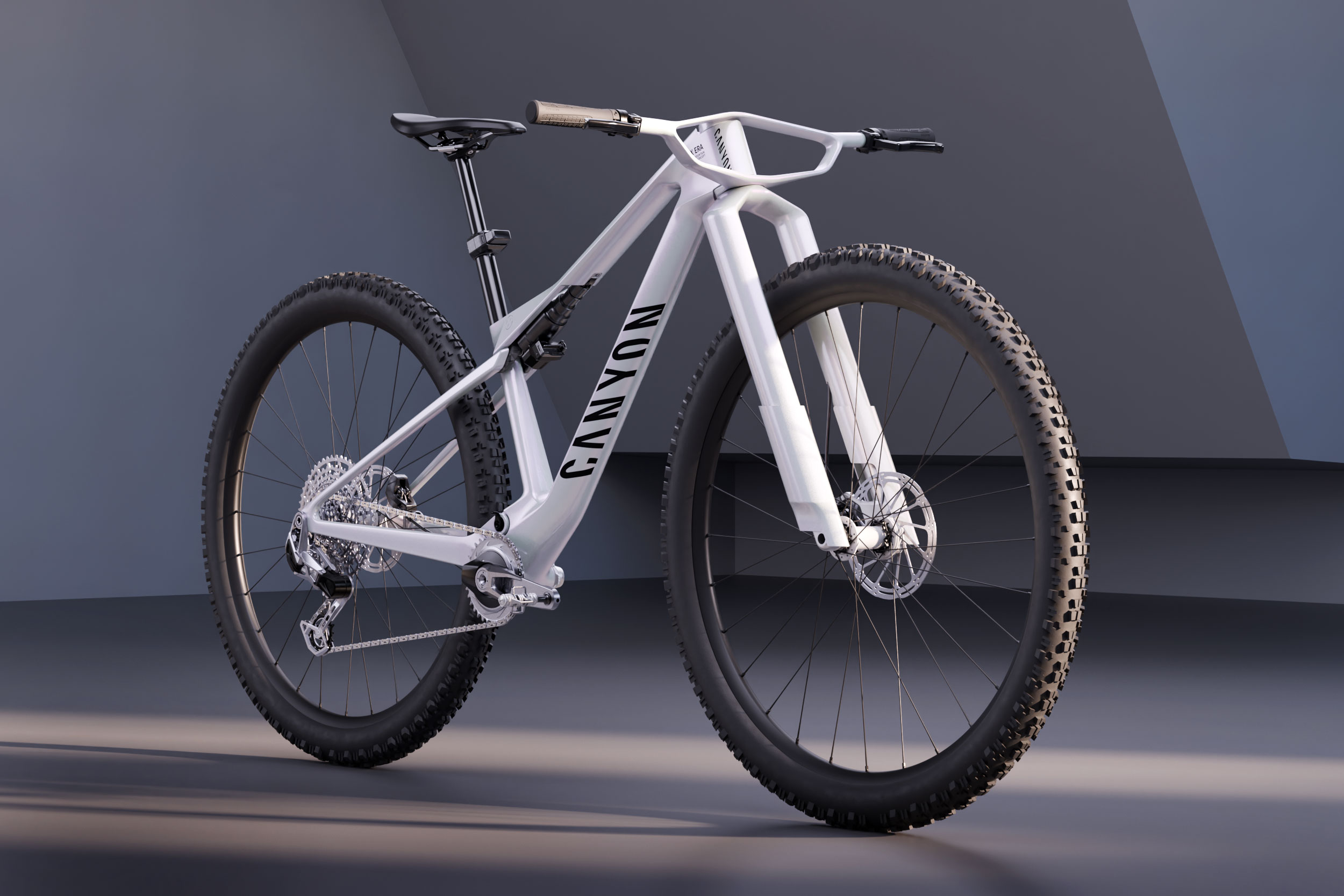


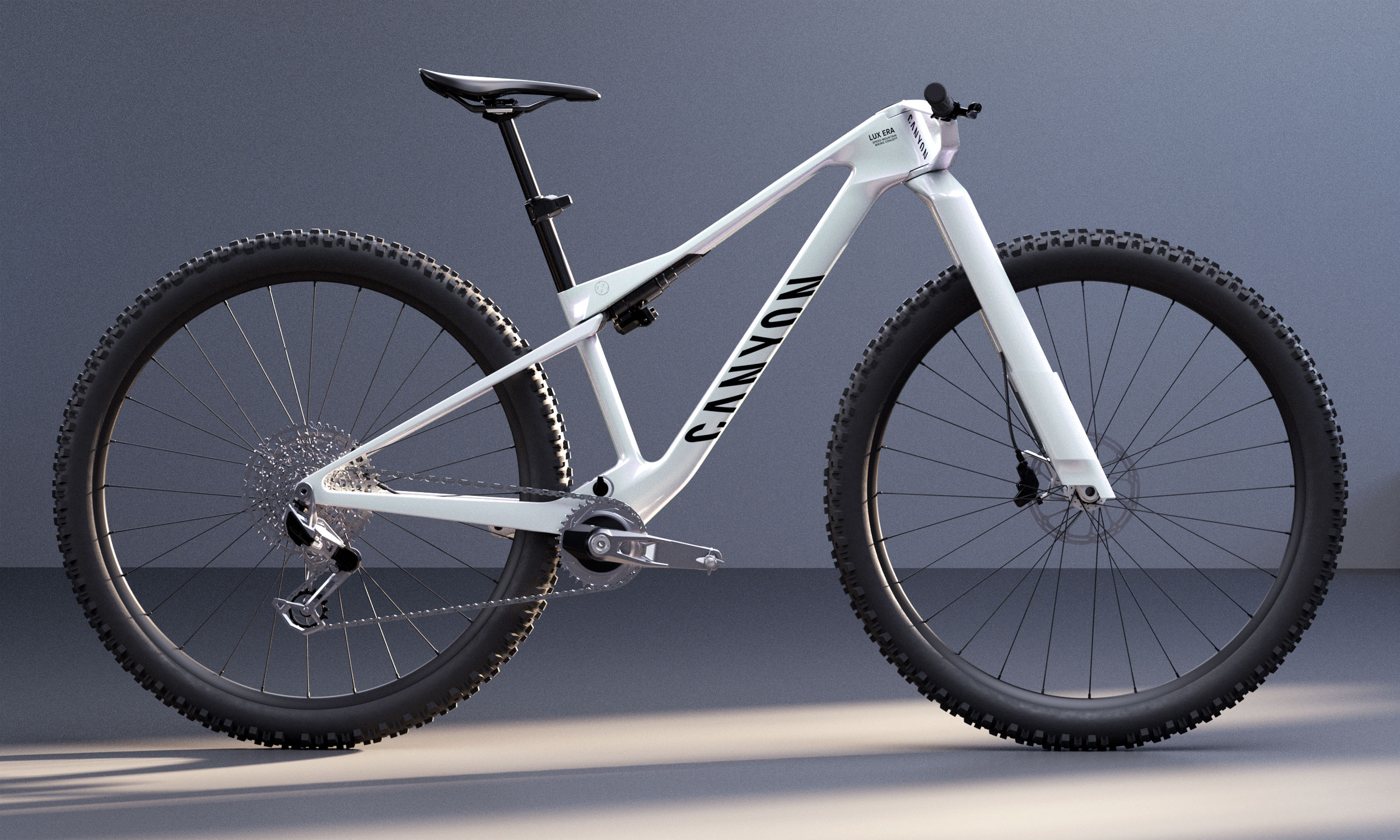
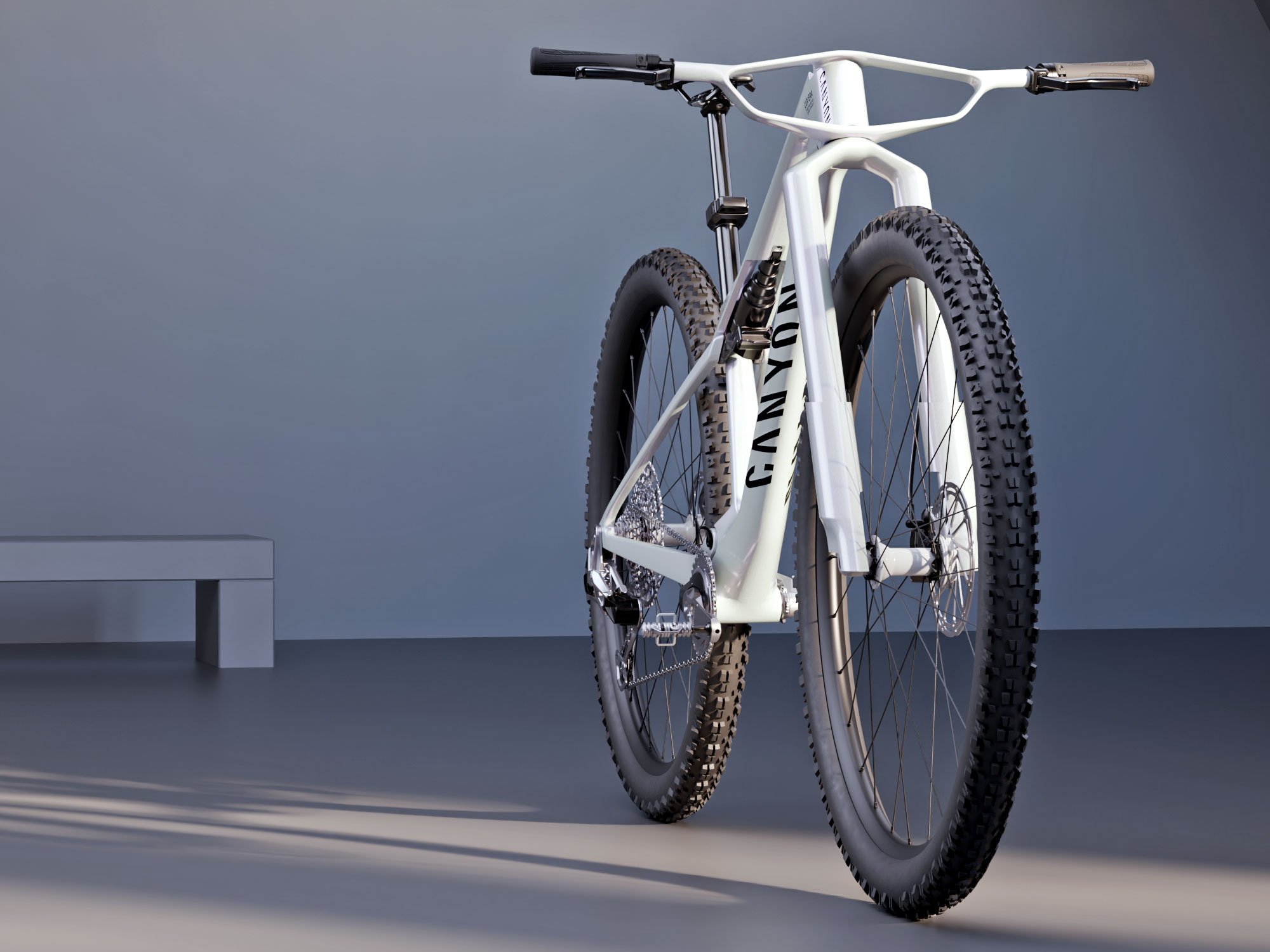
Canyon is teasing us with a new Lux Era cross-country bike this week at Eurobike that combines all manner of new tech. 32″ wheels, an upside down fork, an aero-optimized full-suspension race bike frame, and a next-level integrated aero ‘biplane’ cockpit. That last bit is what really makes this bike interesting, though…
Canyon Lux Era 32″ concept XC bike gets wild aero cockpit
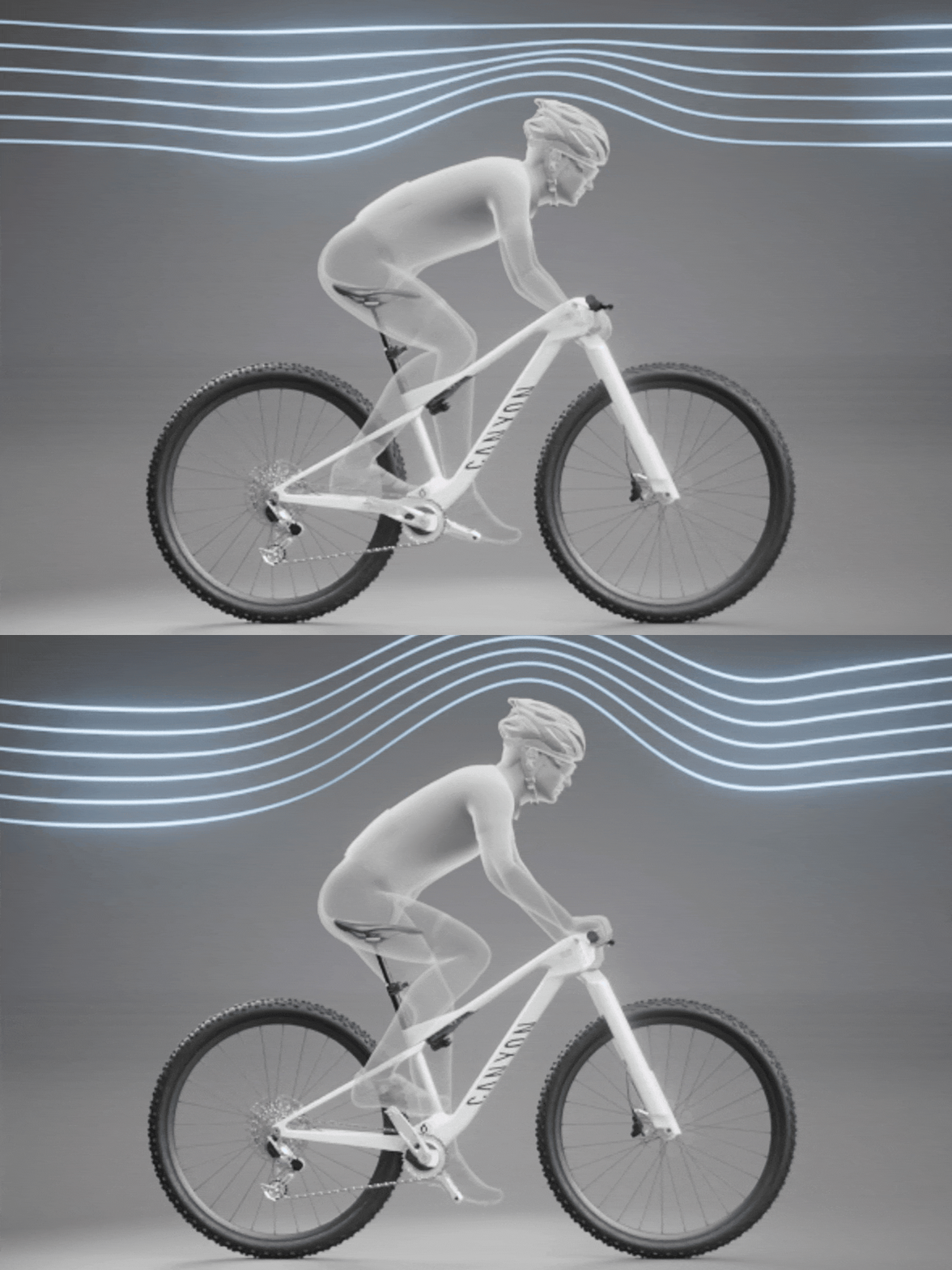
As XC racing speeds have increased – a 33% average speed boost on the World Cup in ten years, according to Canyon’s figure – there is more demand for aero optimization from the racers an their teams.
“In 2016, the average speed of XCO MTB World Cup races was 18 km/h. Today, it’s 24 km/h. Longer races are getting faster, too: the Leadville 100 MTB now sees winning speeds of 28 km/h.”
But outside of the skinsuits, aero helmets, shoe covers, and occasional repurposed aero gravel wheels we see in short track racing, there are relatively few truly aerodynamic optimizations done for Olympic-distance XC racing. Much like banned puppy paws on the road, we’ve seen racers resort to holding their fork crowns to get low & aero. Well, that is before the UCI cracked down on the unsafe practice of not holding onto one’s handlebars.
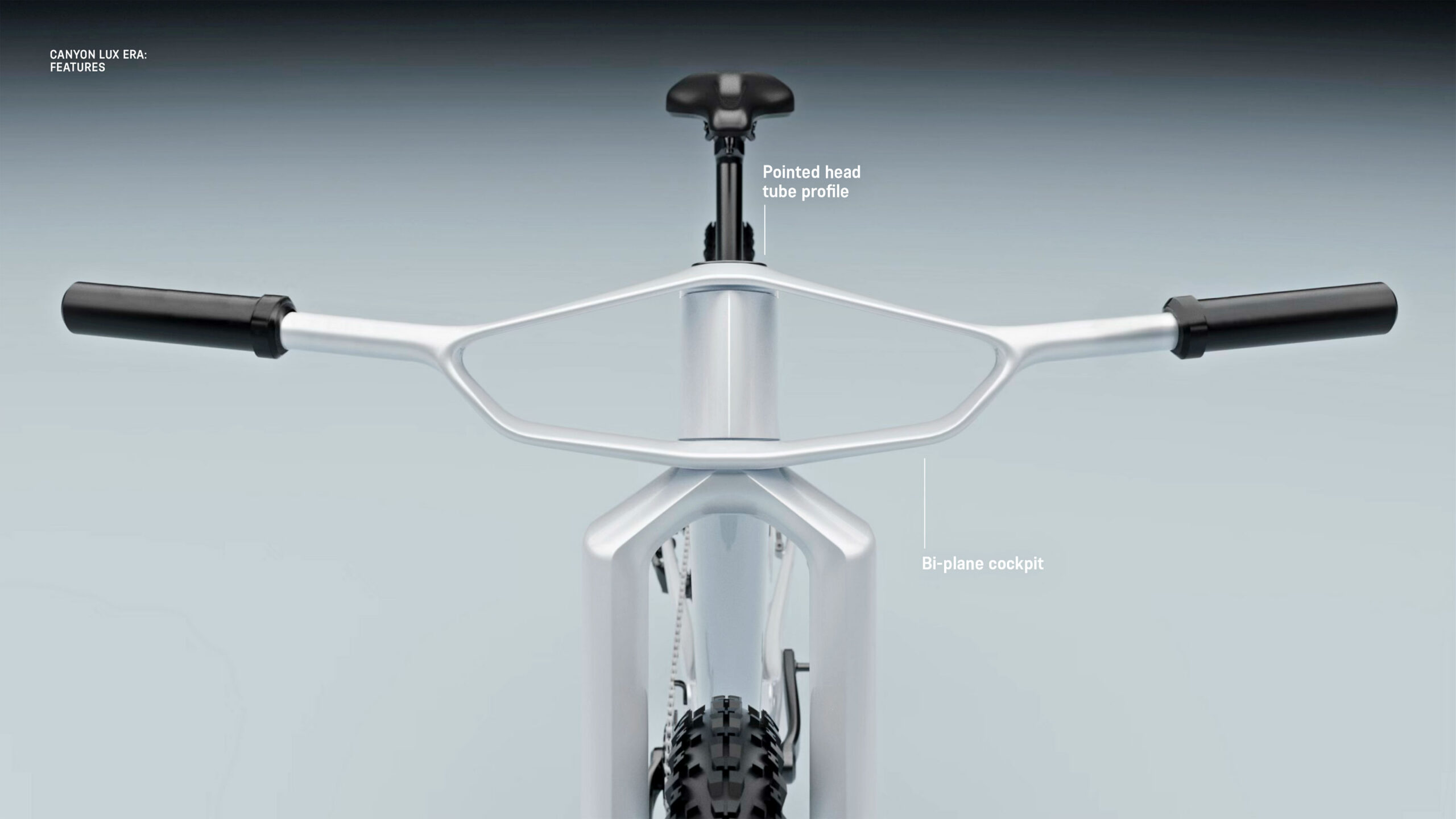
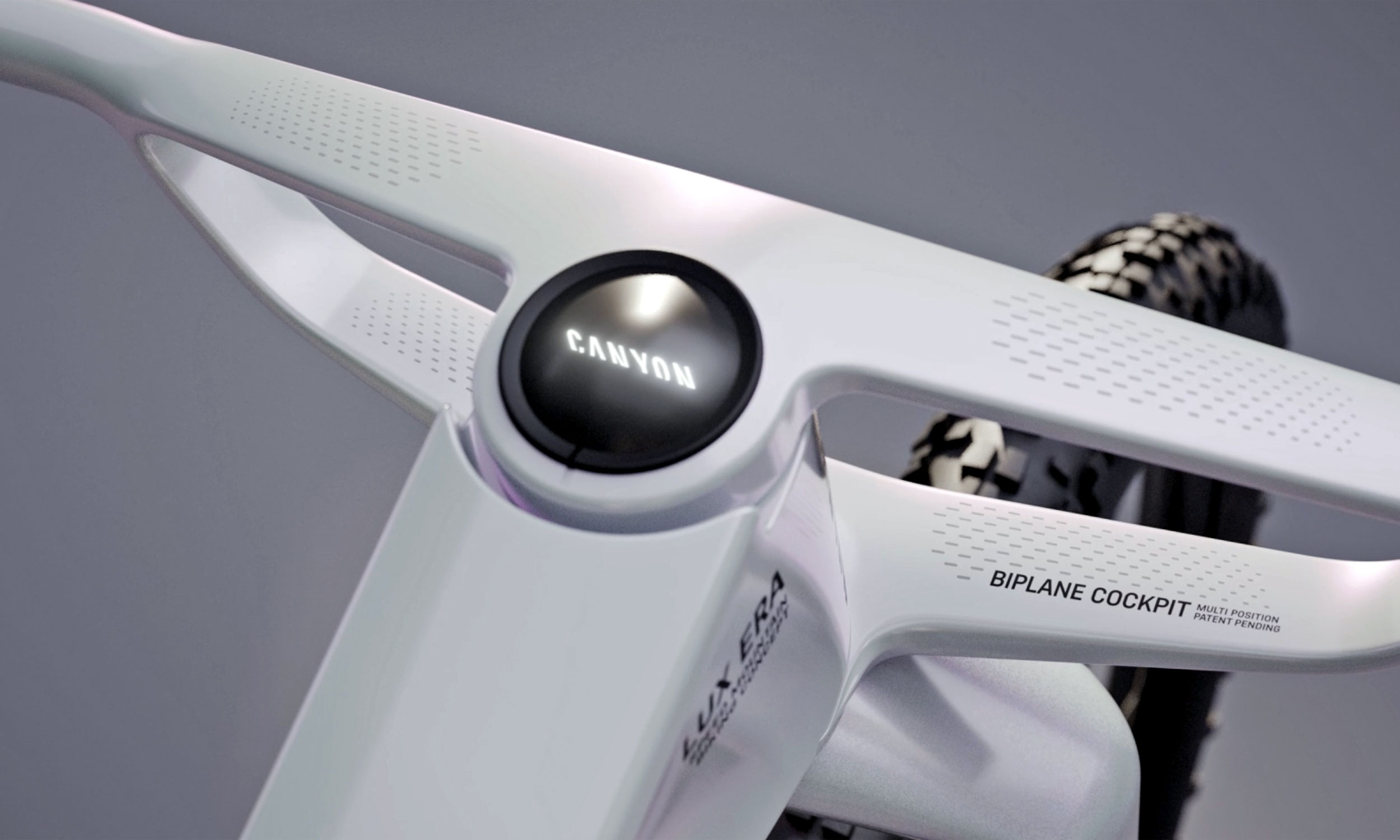
Canyon’s answer… in this new ‘Era of Speed‘… just put the handlebar down at the fork crown!
Much like we saw with their innovative – if widely derided, and ultimately abandoned – double-decker gravel Hover bar, the simple idea here is to give riders & racers alike more hand positions. Stick with the conventional wide grips for technical off-road sections. Then, get your arms in and body low, by bringing your hands down to the lower section of the biplane handlebar, tucked-in next to the aero headtube but still securely on the handlebar to maintain bike control.
But is it UCI-legal?
Simply put, no. Or at least probably not. At least not yet.
Canyon admits that getting approval from the UCI will ultimately decide whether this concept works or not. And they haven’t even started that process yet. Right now, Canyon say that “athlete and wind tunnel testing is now taking place” to quantify how much time such a cockpit could provide.
But ultimately, their idea is to create a comfortable, secure place on the bar where racers can safely get more aero, without sacrificing control. My personal guess is that the UCI might only allow it if the rider could reach their brakes in these XC drops. After all, these are off-road capable bikes, even if the intention would only be to get super aero on the smooth paved or hardpack sections of an XCO course. While requiring brake control would certainly make this harder to implement, that could lead to further interesting innovation.
What other interesting tech is hidden in this Canyon Lux Era concept bike?
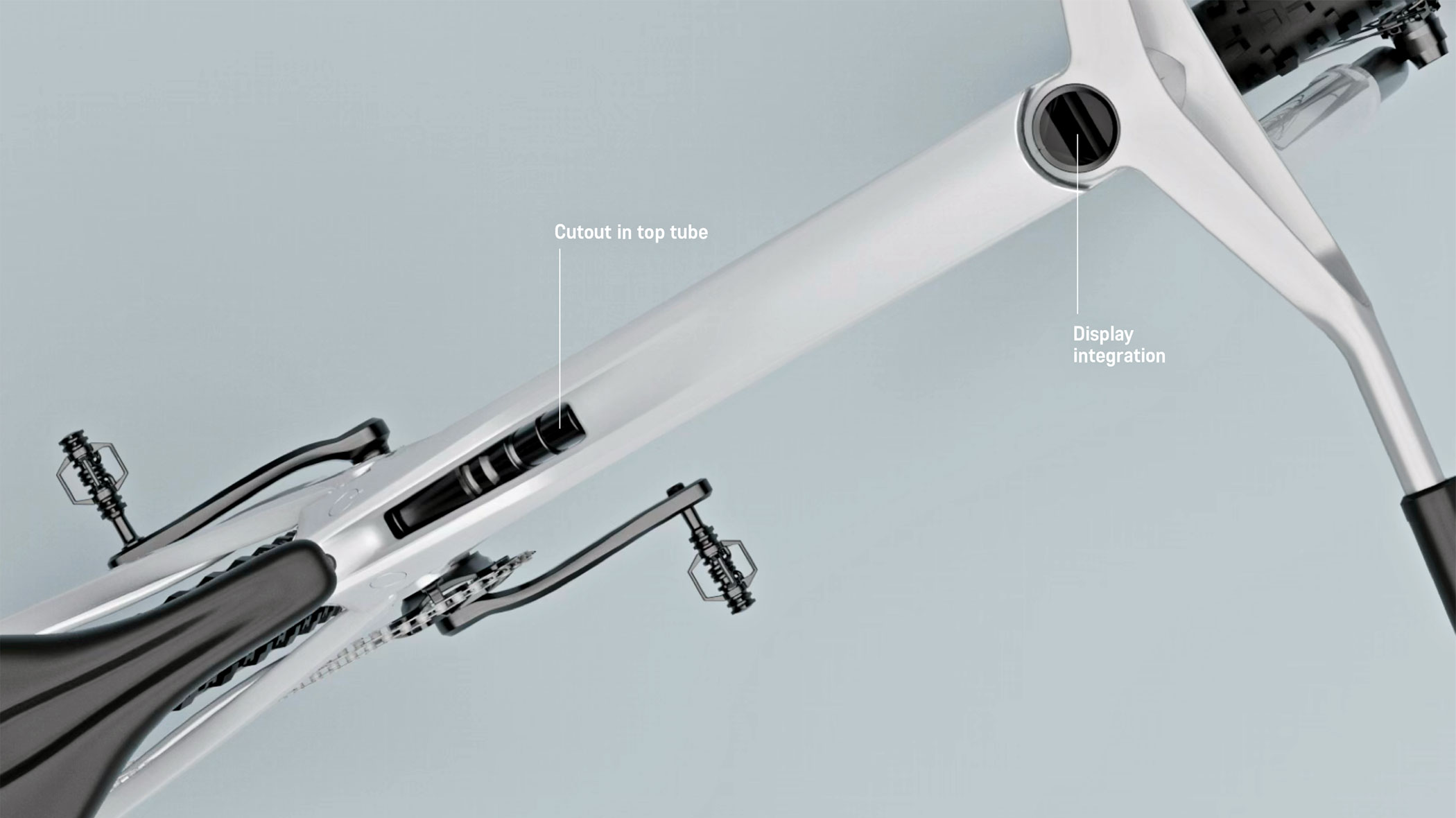
The bar and wheelsize may be what first caught our eyes, but there’s more to this Lux Era concept.
First, the frame itself is said to be more aerodynamic, with a pointed aero headtube profile. Because, while ‘tweaking tube shapes’ isn’t the only answer, clearly there’s some ground to make up since most XC bikes have given little attention to aero optimization. The rear shock even is tucked inside the toptube out of the wind, but with a cutaway on top to make it easy to set up sag.
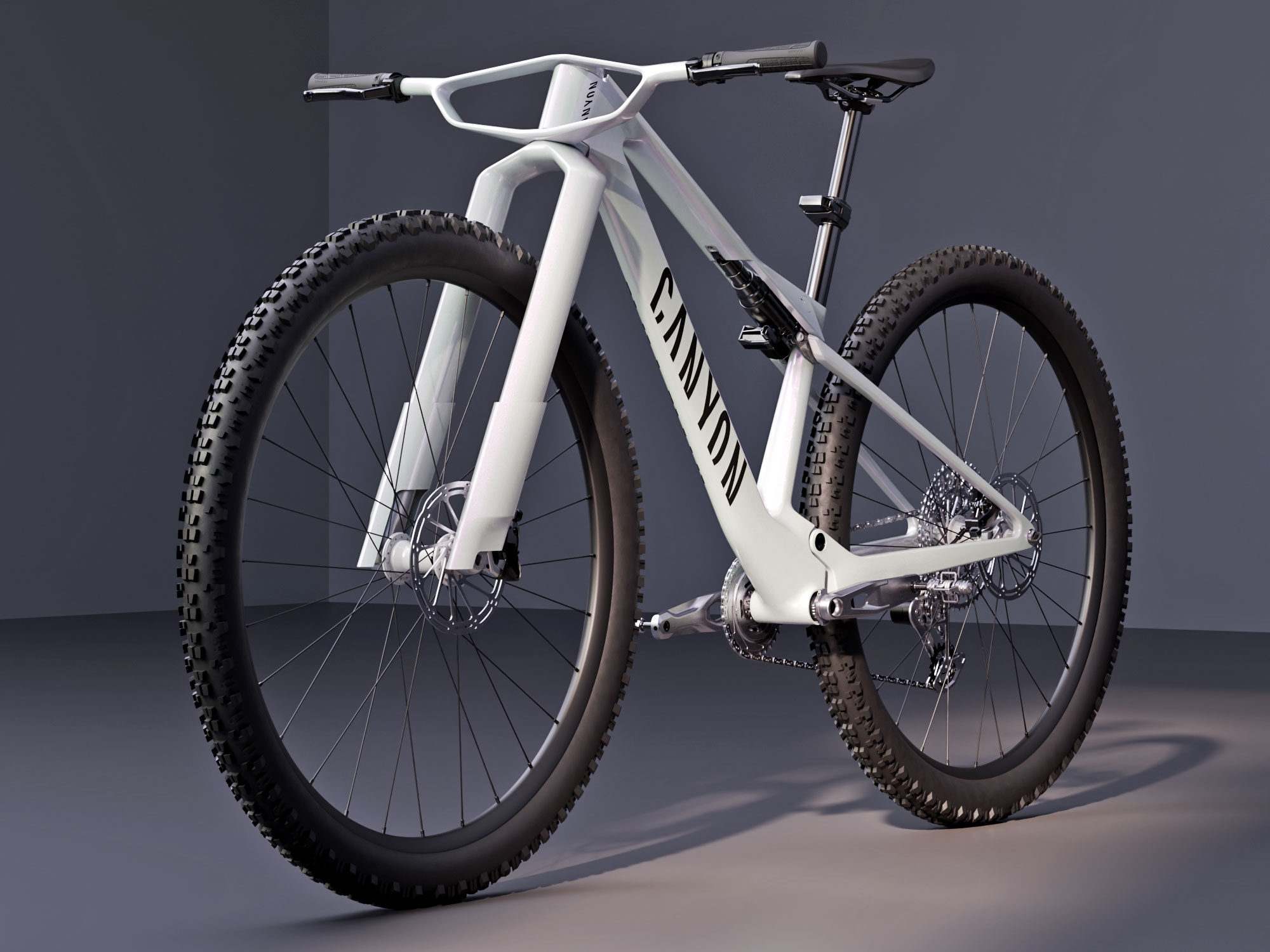
Next, even the fork seems to be more aero, with a thin crown design on this upside-down fork prototype.
Canyon also claims the upside-down promises better performance, pretty much like we’ve seen from every similar fork – “better fore/aft rigidity, better hard braking stability, reduced unsprung mass, better lubrication and sharper handling“. Maybe Canyon can help make the next upside down XC fork stick, whether that’s by lowering its price or just mainstreaming the idea again.
They even seem to have made your cycling GPS more aero, by integrating a round computer display directly into the top cap. Not sure how practical that round screen is, though. And, oh how proprietary it must be!
So when is the Canyon Lux getting the 32″ treatment?
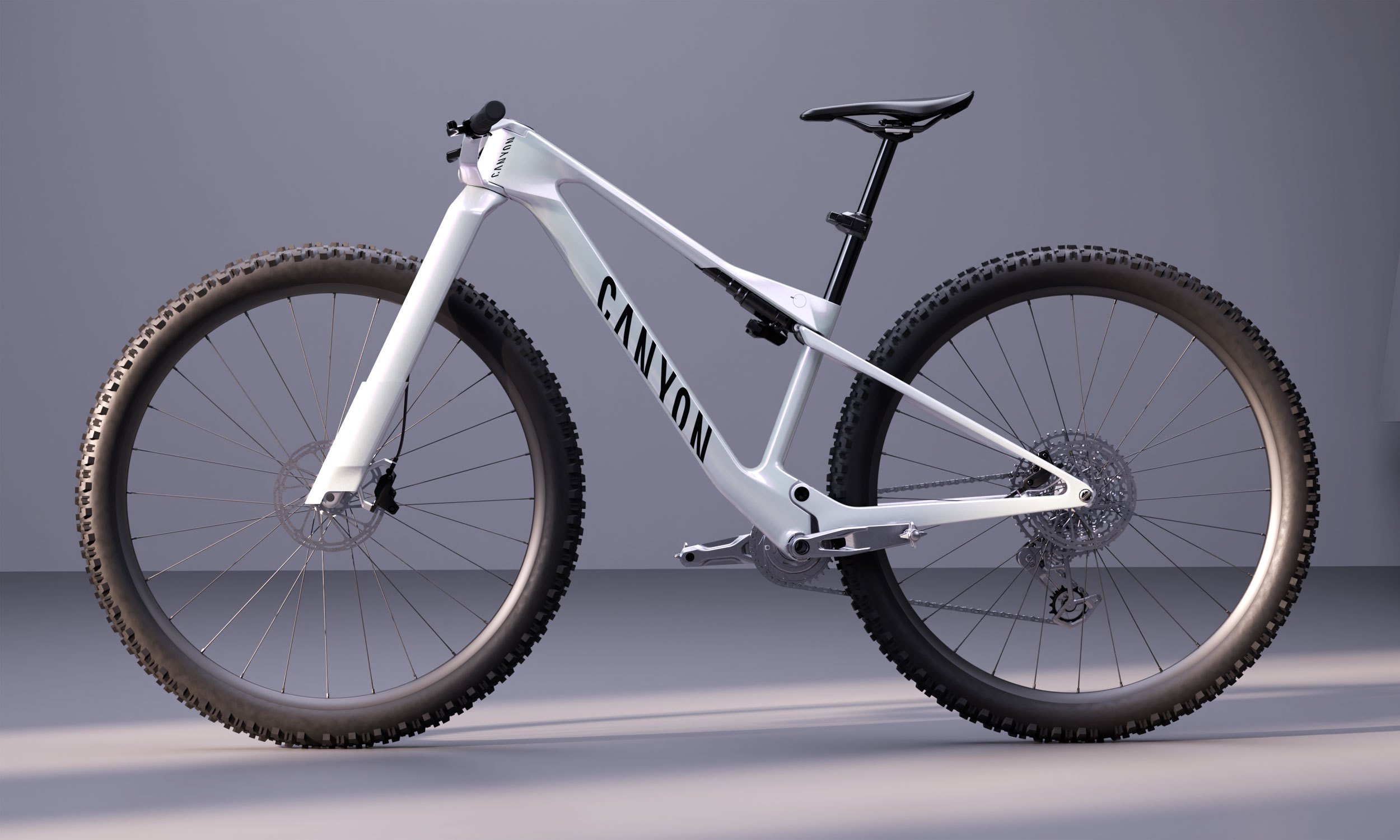
I hate to be the one who keeps telling our readers that 32″ wheels are invading. But it seems that there’s no stopping them at the moment. And these bigger wheels dominate the bulk of new MTB development we’re seeing – certainly in the cross-country sphere.
Sure, Canyon just launched a new lighter, faster, more capable, and importantly 29″ Lux World Cup cross-country race bike less than two months ago. And rumor has it that another short travel 29er is coming soon, as well. But the fact that this concept bike features 32″ wheels is telling.
XC racers were already looking to get lower, and more aero on their current 29″ bikes. So this concept could have first debuted on a 29er. The fact that it is a 32″ bike highlights a few key points:
- First, 32″ wheels in XC racing are unavoidable at this point. A World Cup XCC short track podium over the weekend further cements their viability.
- The brand-new Lux WC may be 29″ today, but Canyon already admits that their athletes are testing new, bigger wheel concepts. And they’ll be testing this concept “over the next 12 months including racing or simulated racing situations“.
- The inevitable higher front end as a result of the top of the front wheel being a full 7cm (2.75″) higher off the ground (my own real measurement) means that a taller rider+bike combo is going to be difficult to avoid, even with dramatic negative stem angles. So, getting the rider more aero is likely going to be more important than ever on a 32″ XC mountain bike.
The XC racer’s perspective?
Wild aero handlebars aren’t quite ready for pro cross-country racing. And a 32″ Canyon Lux is most definitely not going to hit the consumer market this year. But it will not surprise us to catch a glimpse of a 32″ working prototype from any brand before the end of the season. The fact that Canyon is sharing this concept bike project with the world in midsummer, cements the idea that they are taking 32″ serious for XC racing.
“Whether it’s world cups or marathon races, riders constantly are figuring out how to go faster. Every second counts even more. Today’s cockpits only let you go so far. We need a solution that lets you get aero and comfortably stay aero.”
– Luca Schwarzbauer, Canyon XC Racing


