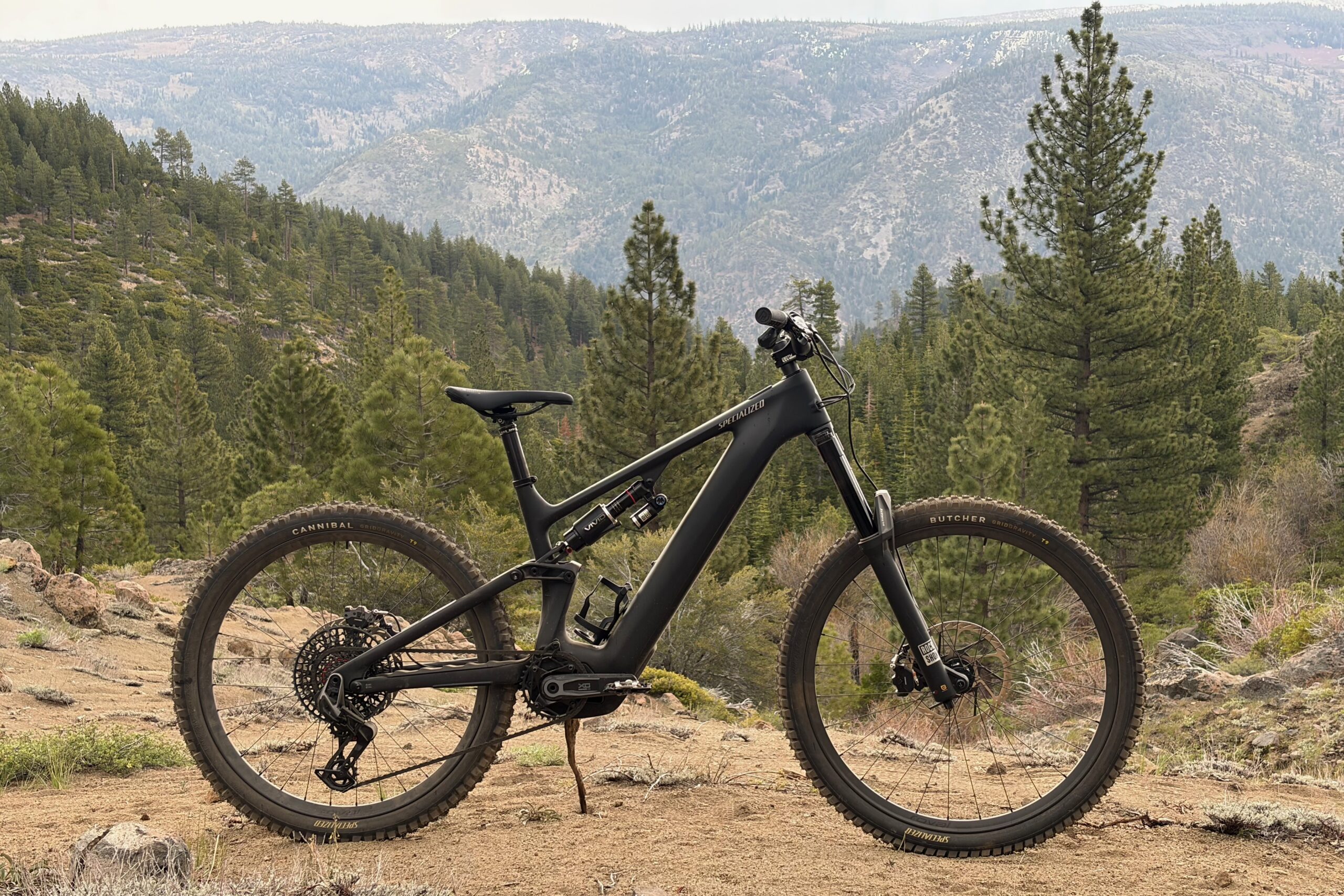


Specialized has slowly but surely been expanding its Levo family of eMTBs, with five options to choose from. Four of these, the Levo R, Levo 4, Levo 4 EVO, and the Levo 4 X, are essentially built around the same frame with some changes to construction, yokes/links, and features to create distinctly different bikes. The EVO is the long-travel “electric all-mountain” model with 170/180mm of travel, a gravity-oriented geometry, and a burly component spec built for fast, aggressive riding.
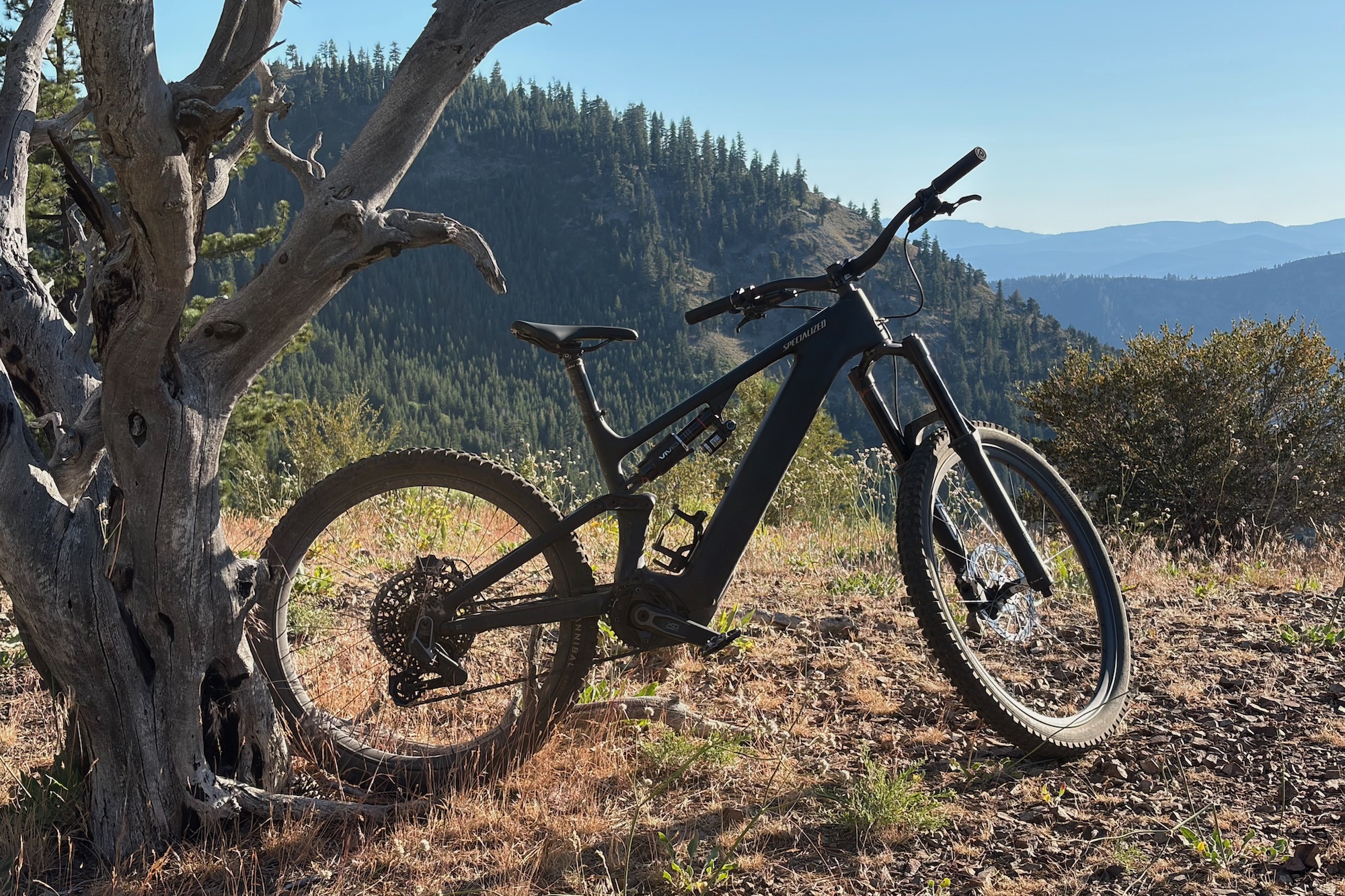
I spent quite a bit of time riding the regular Levo 4 when it launched last year, and I’ve been testing the EVO for the past 3-4 months. While the EVO might look nearly identical to the regular Levo 4, I can assure you it rides like a completely different bike. Not only does the stealthy Pro build make it one of the best-looking bikes I’ve ridden in recent memory, but it is perfection on the trail. And with plenty of travel and aggressive angles, I’ve been riding way too fast, taking lots of chances, and having so much fun.
Specialized Turbo Levo 4 EVO Pro Details
Specialized launched the Levo 4 EVO back in April, and Cory already covered the details, which you can find here. Essentially, the brand took the Levo 4 frame and made a new link and shorter yoke to get a longer shock stroke. This bumped the rear travel up to 170mm, which is paired with a 180mm fork — versus 150/160mm on the regular Levo 4. It rolls on mixed wheel sizes and is not compatible with a 29” rear wheel.
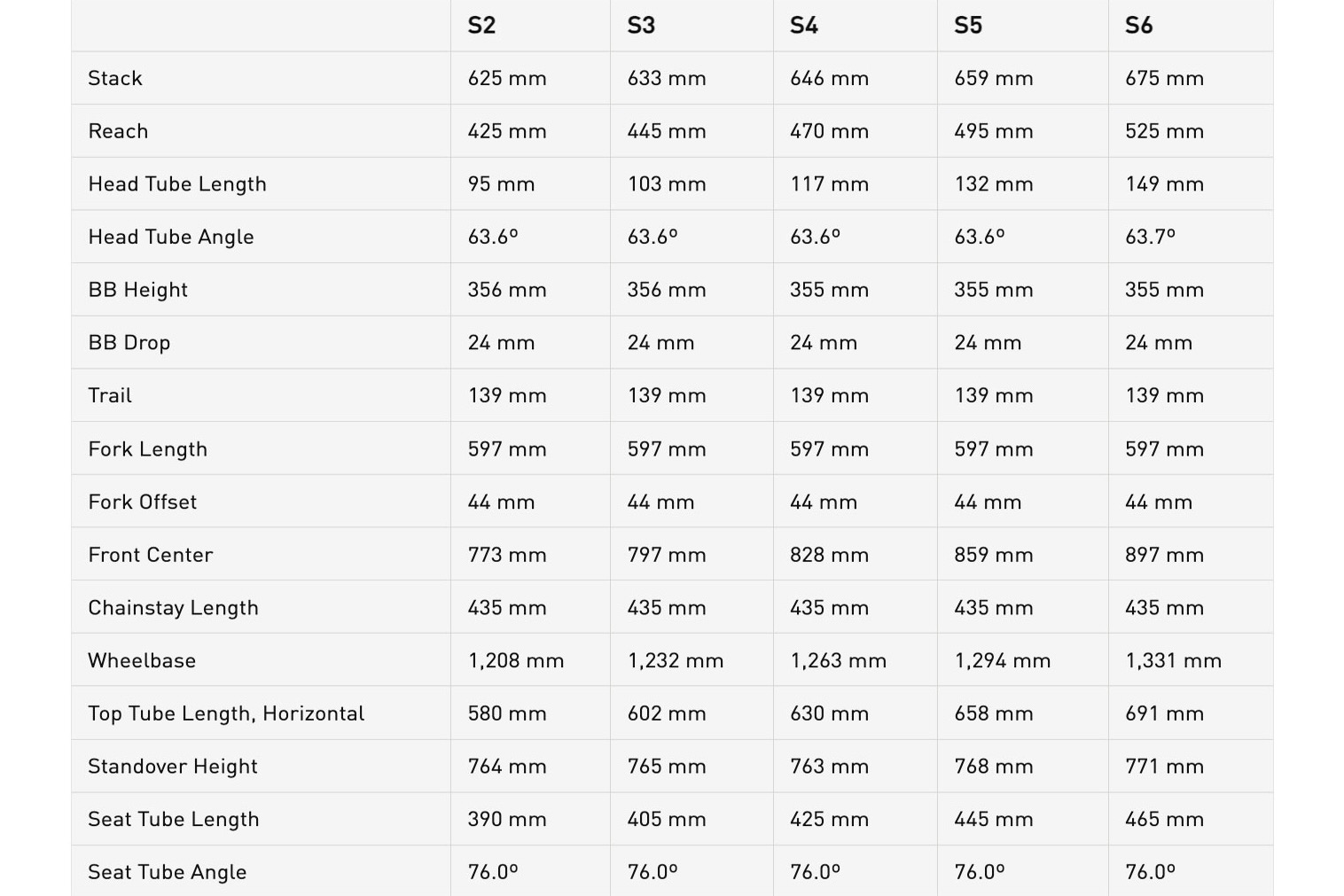
That’s combined with a more aggressive, downhill-oriented geometry with a slack 63.6° head tube angle (neutral position). It has a high stack, 470mm reach (S4), and 435mm chainstays (short). Given the slacker geo, reach numbers are slightly shorter than the regular version, by 10mm on the S4. Riders can still choose between short or long chainstays (+/- 11mm) and neutral or +/- 1° head tube angles. The EVO comes in five sizes, S2 to S6; the smallest S1 size was reportedly not possible in this configuration.
Motor and Battery
The Levo 4 EVO is currently only offered in two complete builds, both of which feature the same FACT 11m carbon frames (an Alloy version is also available outside of the U.S.). Both EVO models come with the Specialized 3.1 drive system — no S-Works 3.1 here — which puts out up to 810 watts of peak power and 105 Nm of torque. It’s quiet and intuitive to use with handlebar-mounted controls and the top-tube-integrated MasterMind TCU display.
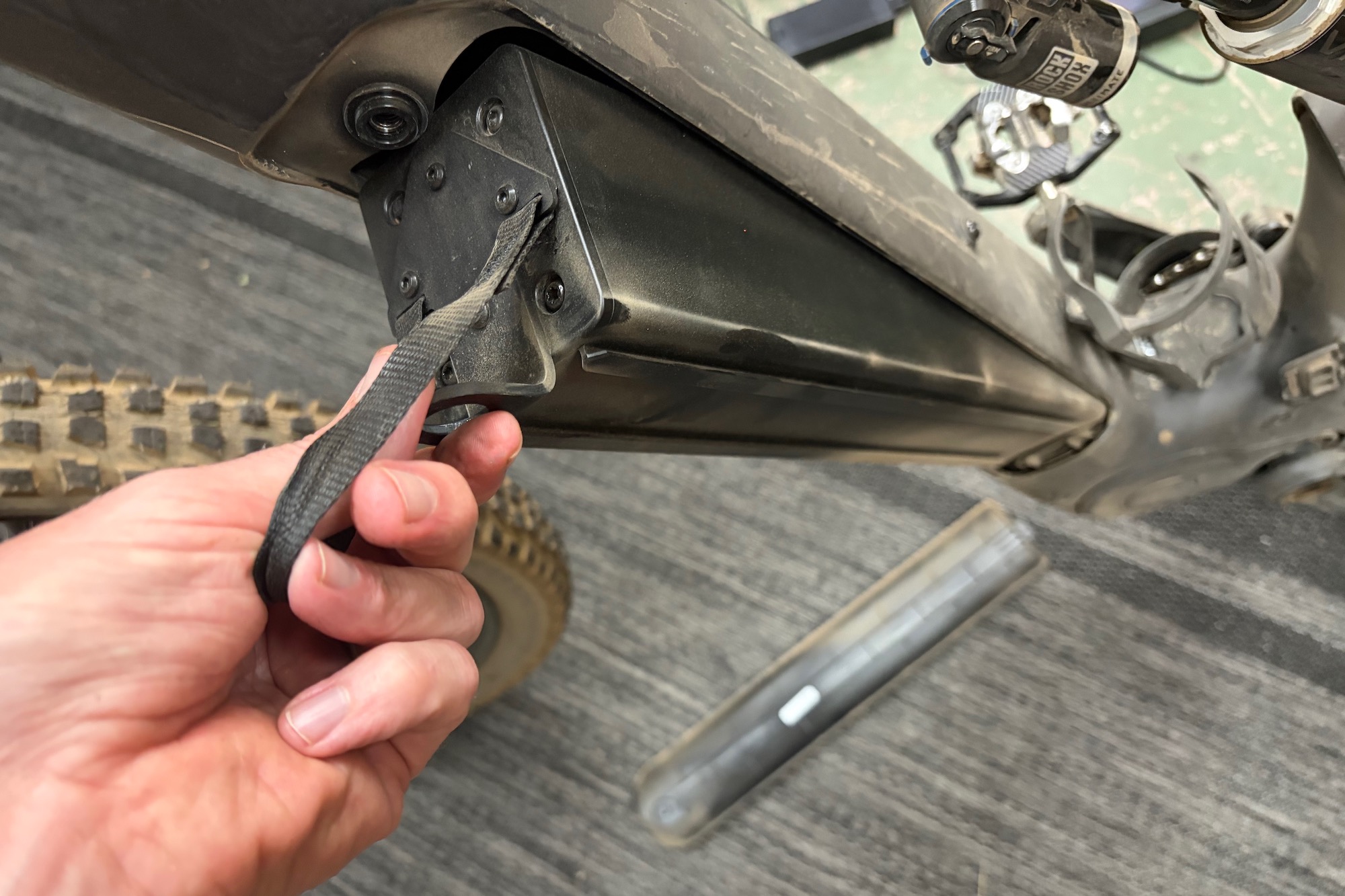
The EVO comes with an easily removable 840 Wh battery and is compatible with the optional 280 Wh range extender. The standard 4A charger isn’t the fastest, but it gets the job done as long as you’re not in a hurry. Inside the frame above the battery is a SWAT storage bag and space for some essentials, a feature unique to Levo eMTBs.
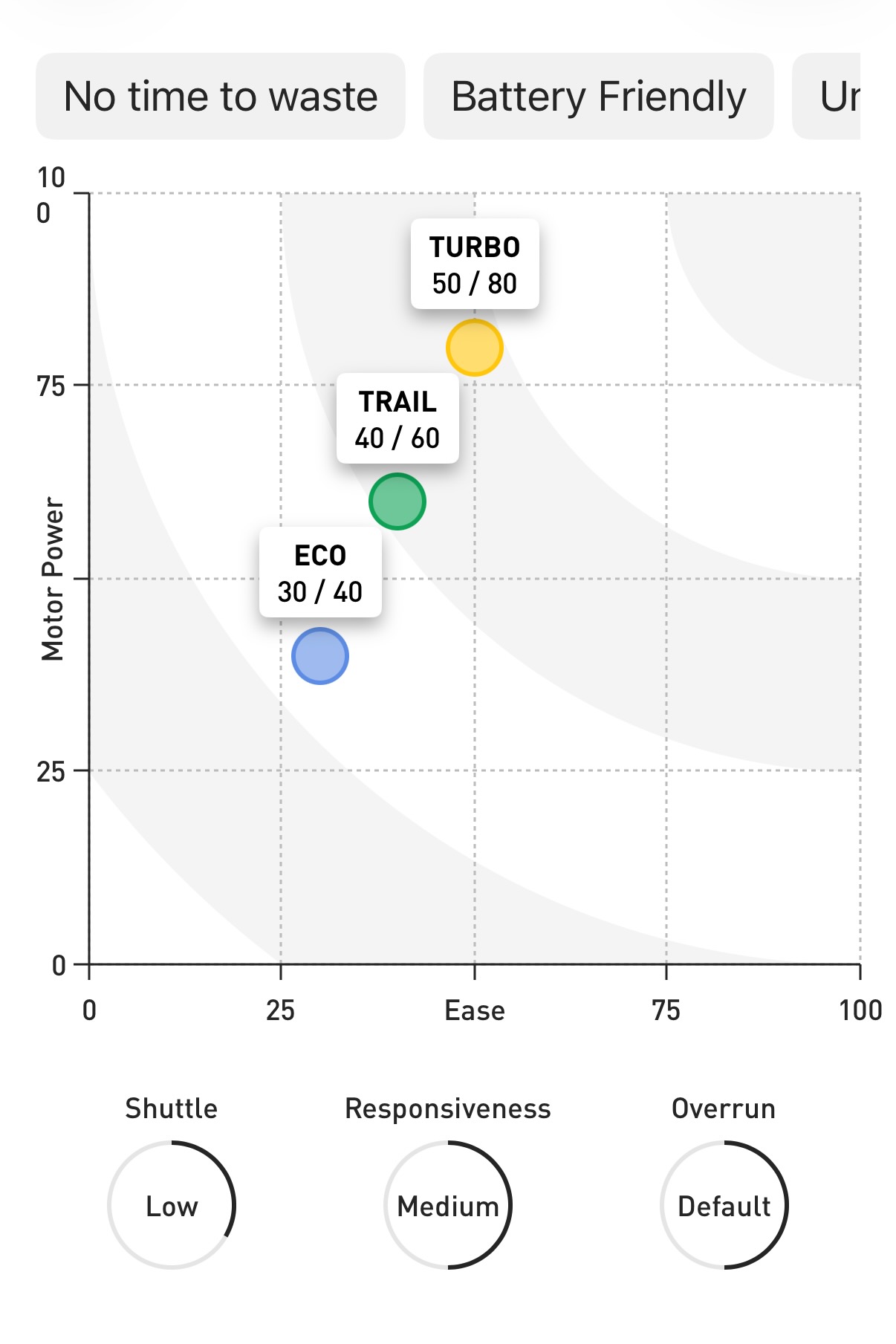
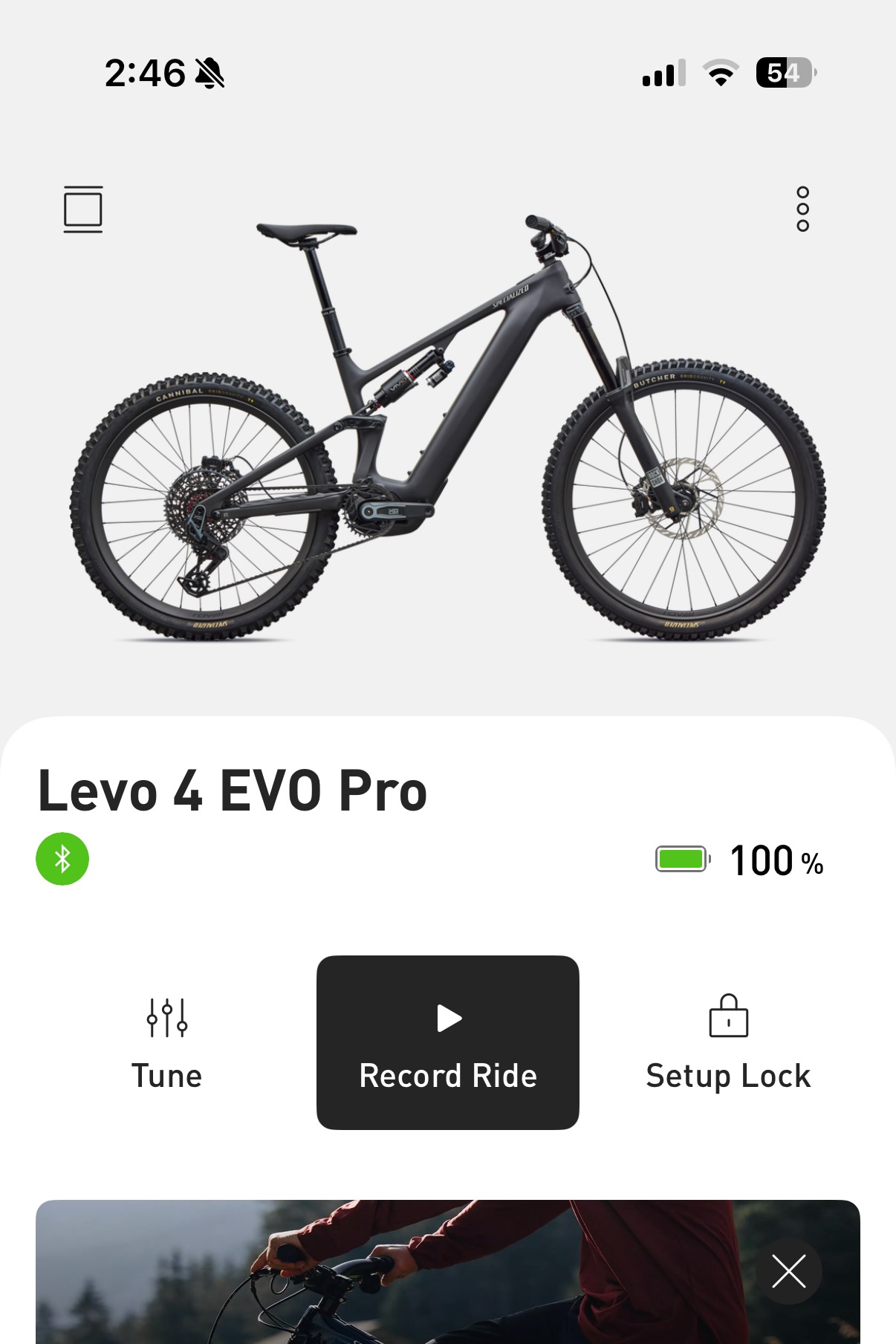
The Specialized app is one of the best in the business and makes it simple to fine-tune your assist levels and motor response to your exact preferences. On the app, you can also track rides, keep track of maintenance intervals, check motor health, and do firmware updates.
Levo 4 EVO Pro: $10,499.99
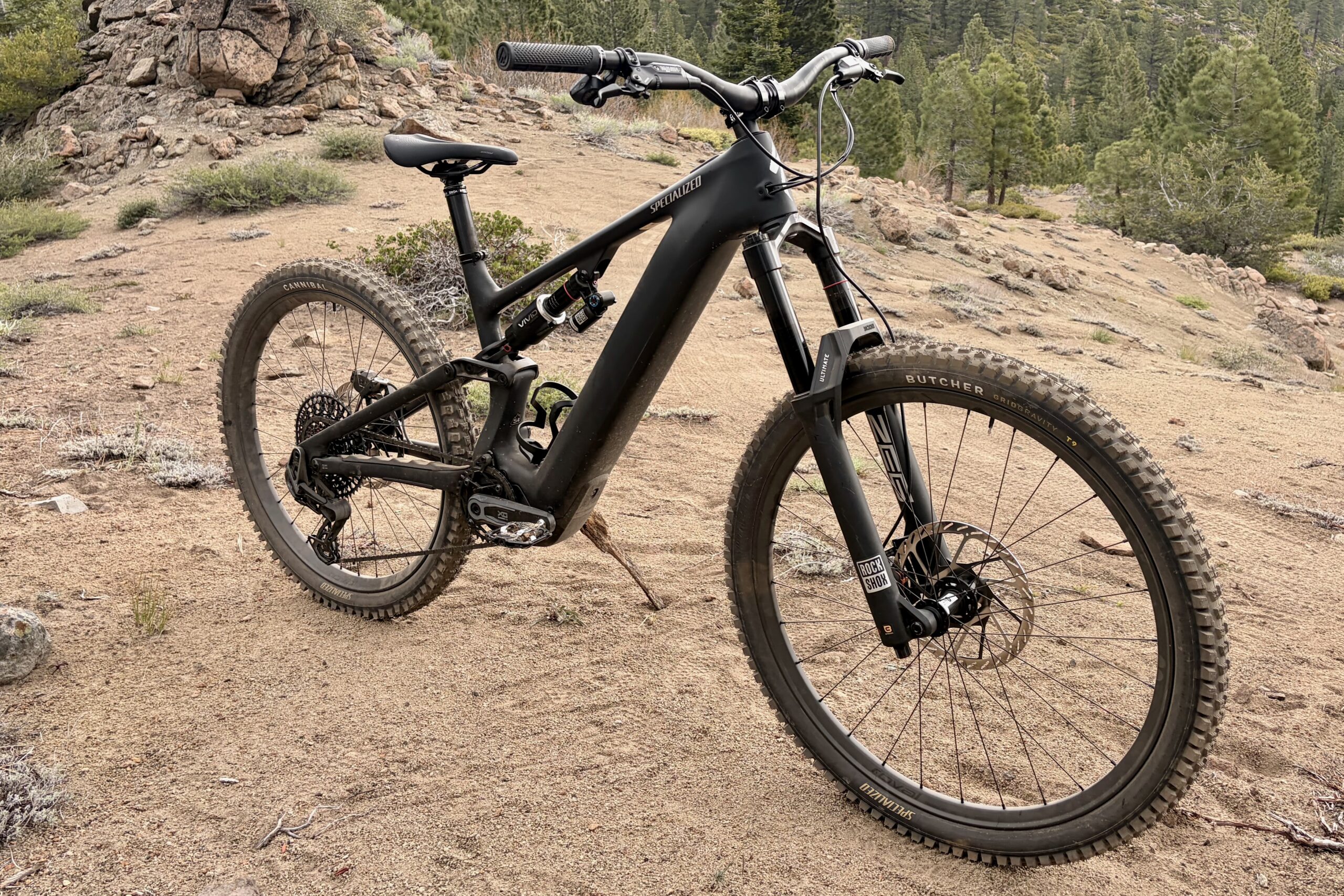
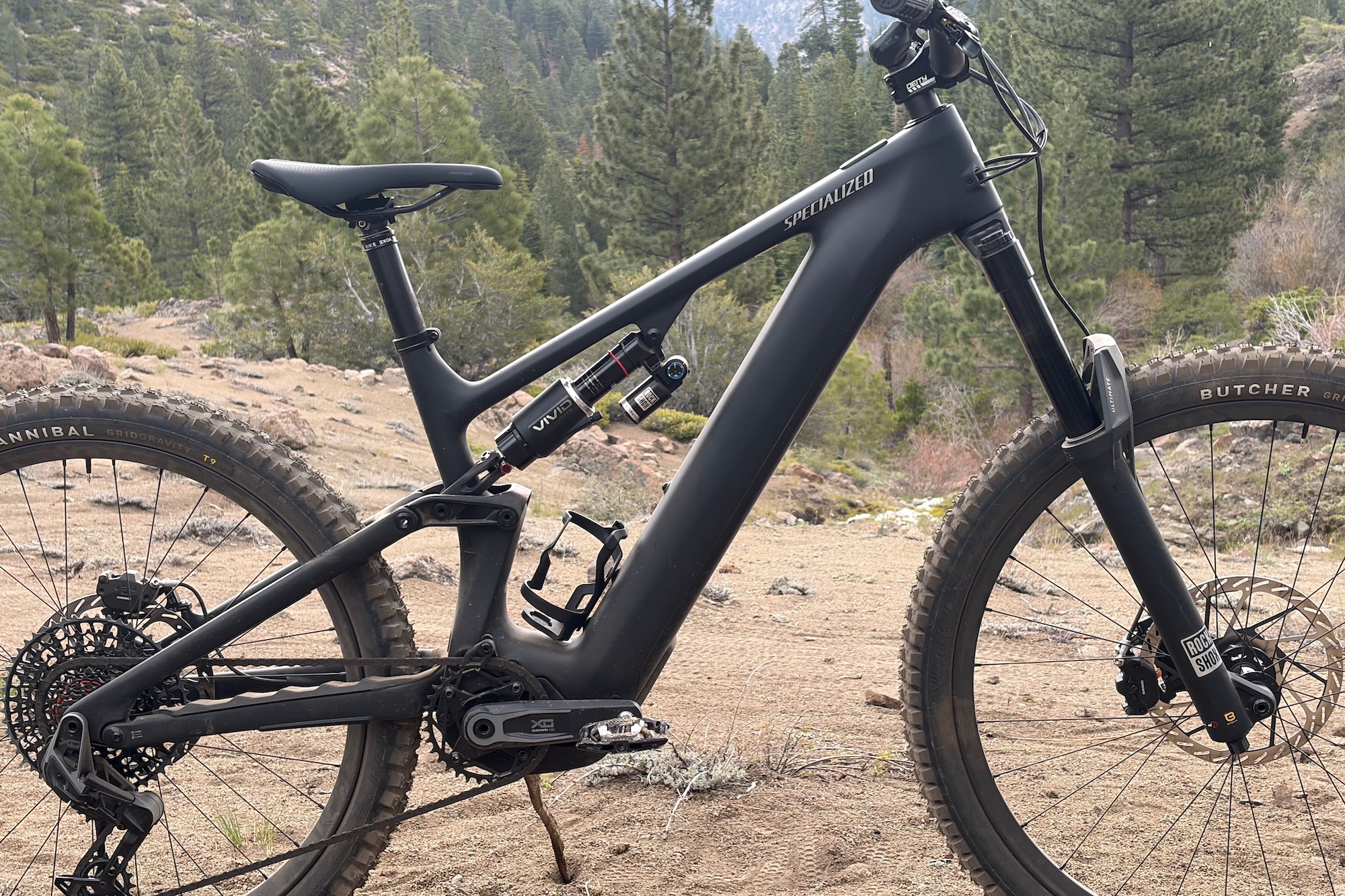
As mentioned above, the Pro build on the Satin Carbon frame is one of the best-looking bikes I’ve ridden in quite a while. I’ve had an affinity for blacked-out bikes ever since I built up an all-black Giant Trance Advanced, way back in 2014-ish (?) when 27.5” wheels were taking over the scene. That bike changed my perception of what mountain bikes were capable of, and wouldn’t you know it, 12-ish years later, the Levo 4 EVO is doing the same thing. Whoever chose the spec and the colors of all the components freaking nailed it, all the way down to the brake calipers — all black everything.
In my opinion, the Pro build is pretty much perfect, and I wouldn’t change a thing (okay, maybe one thing). Specialized wisely chose RockShox’s latest Vivid Ultimate gravity air shock to handle the 170mm of rear wheel travel. Up front, they went with the 180mm RockShox ZEB Ultimate. Combined, these are the best-performing suspension components that I’ve used, possibly ever. Super plush, easy to tune, frankly just perfection.
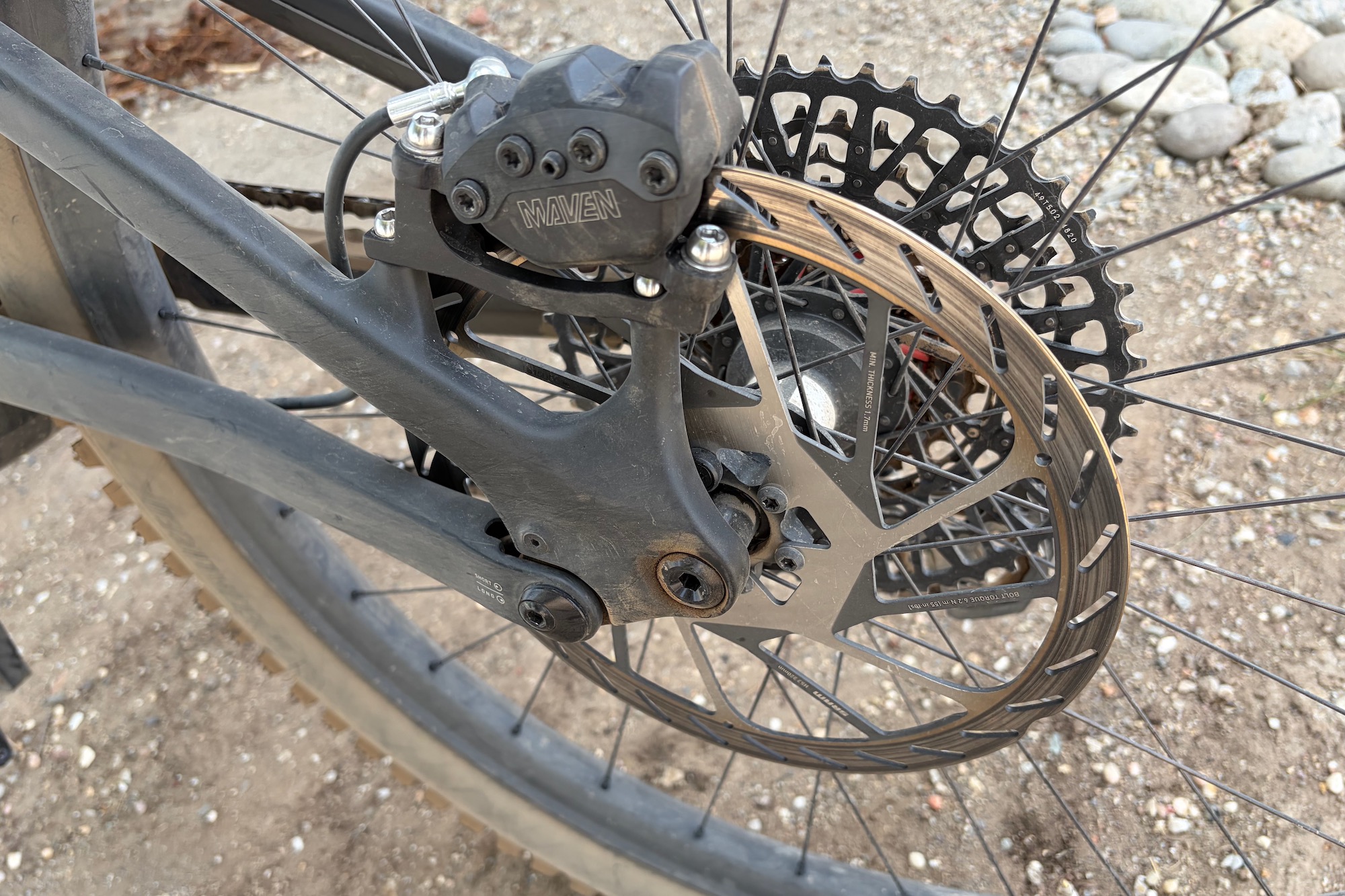
A bike this big and burly needs powerful stoppers, and Specialized went big with SRAM’s Maven Silver B1 4-piston brakes, paired with 220mm HS2 rotors front and rear. Those are attached to a set of Roval Traverse HD carbon wheels with DT 350 hubs, which I’ve found to be nearly indestructible on this bike and my personal trail bike, too. The stock tire setup is a 29” x 2.4” Butcher Grid Gravity T9 in front and a 27.5” x 2.5 Cannibal Grid Gravity T9 in the rear.
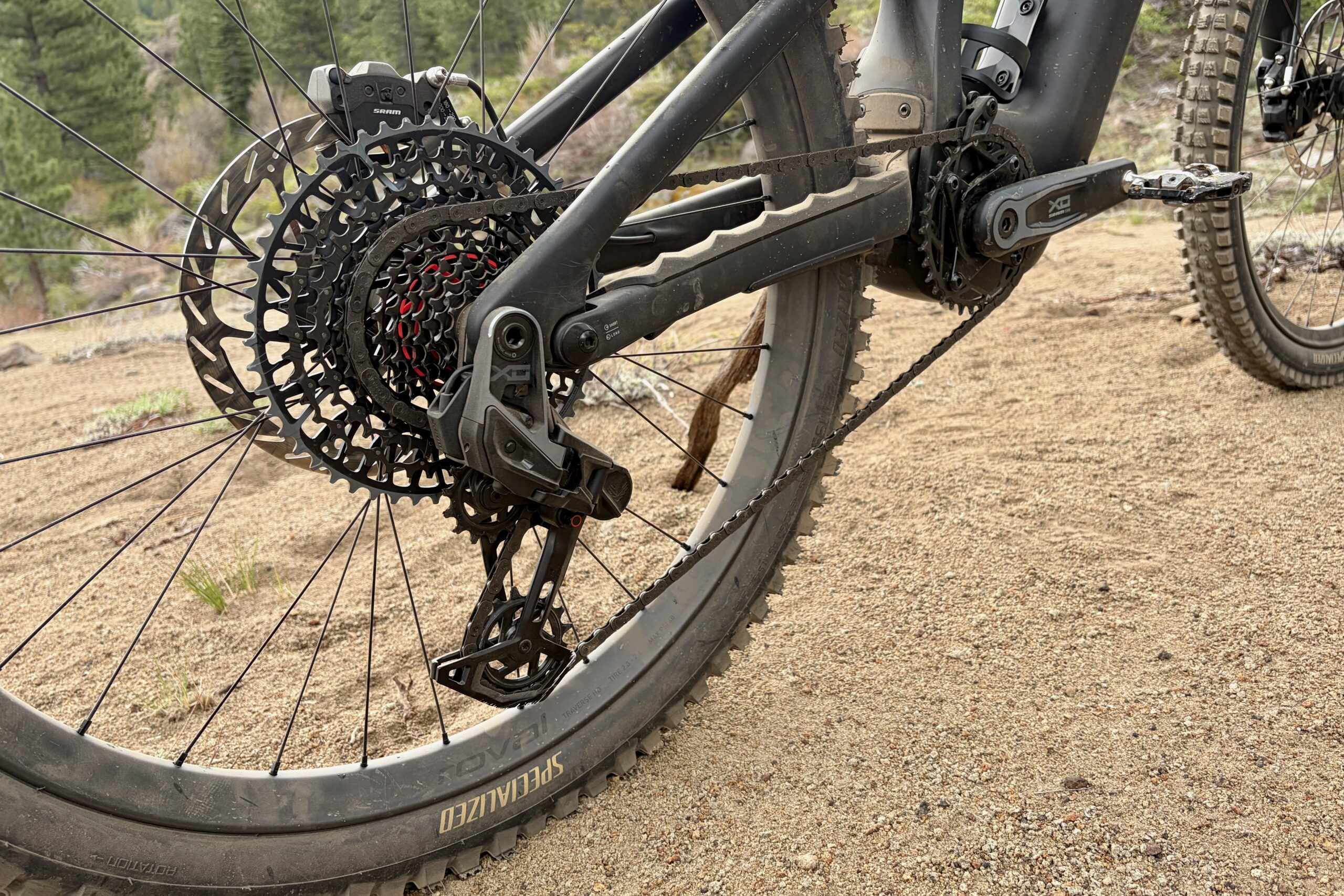
The drivetrain is SRAM’s X0 AXS Transmission with the derailleur hard-wired to the bike’s battery. It has 155mm X0 Alloy cranks with a 34T chainring, paired with the 12-speed 10-52T cassette — the chain and cassette are also both black, of course.
The cockpit setup is mostly dialed, featuring a 42mm Deity stem, 50mm rise Deity Speedway Carbon handlebar, and Deity Lockjaw grips. At the back of the bike, a comfortable Specialized Bridge Expert Mimic saddle with hollow Ti rails sits atop a 34.9mm diameter Bike Yoke Revive Max 3.0 dropper. The Revive 3.0 is one of the smoothest droppers on the market, but it leads me to one of the very few complaints I have about this bike. The 185mm length on my S4 test bike is waaaayyyy too short for me and my long legs, and I would swap it out for a longer one if this bike were mine to keep.
That all adds up to a claimed weight of 24.4 kg (53 lbs, 12.7 oz.). My S4 test bike weighed 54.1 lbs on my scale with a set of Wolf Tooth Shift pedals. By subtracting the 394-gram (0.86 lbs) weight of the pedals, I’ve got a complete bike weight of 53.24 lbs.
Riding the Levo 4 EVO
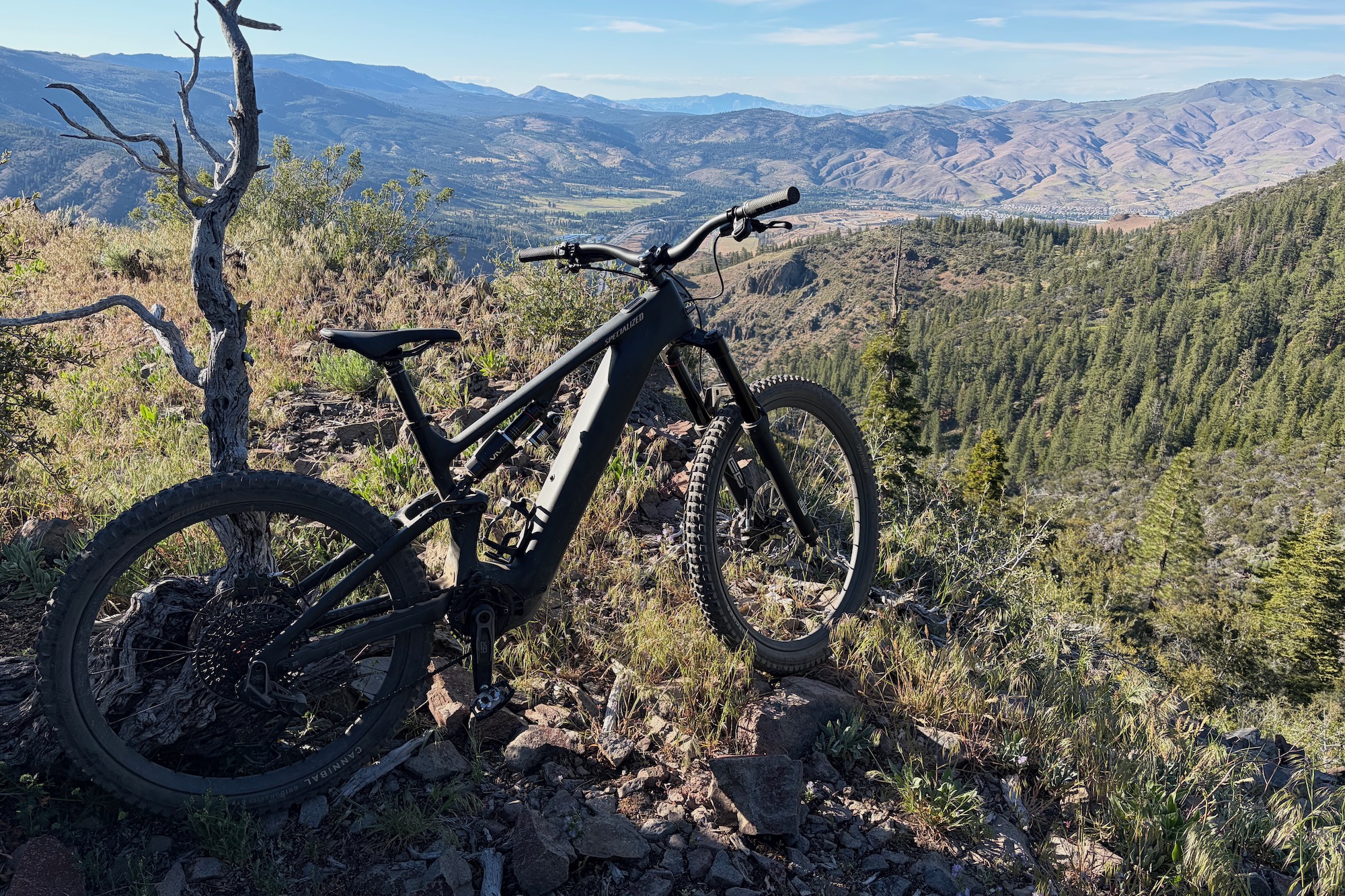
With a bike like the Levo 4 EVO, it’s important to consider its target market and intended use. This is a monster of a bike that’s made for riding down steep terrain, rough trails, and at high speeds. This is not the bike for cruising around on blue trails at your nearby nordic center, although you certainly could; there are better options for that. In that regard, it is somewhat of a one-trick pony, but it does that trick very, very well.
Climbing
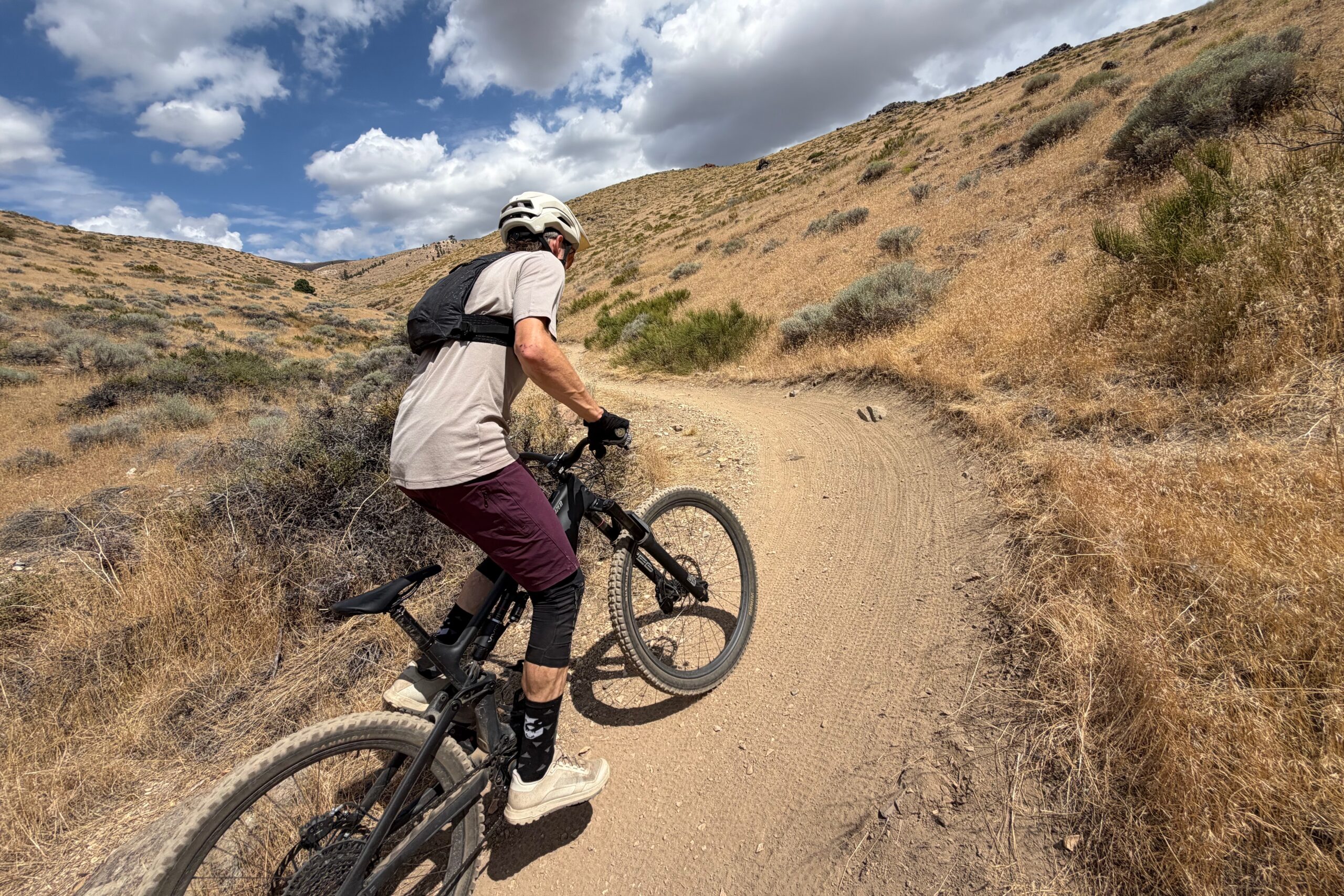
Like other long-travel eMTBs, the gravity-oriented Levo 4 EVO is essentially its own chairlift or shuttle vehicle. It’s long, slack, and squishy, but it makes quick work of the climbs to bust out laps on your favorite steep, rough descents. Its downhill performance was clearly the main priority in its design, but I’ve found it to be comfortable, capable, plenty powerful, and surprisingly maneuverable uphill, too.
The EVO’s geometry is slack, low, and obviously designed for stability, confidence, and composure on the descents. On the S4 frame, the 470mm reach is a touch shorter than I’m used to, but I got along with it just fine. In fact, I’d say that’s one of the things that kept it from feeling like a handful in tighter spaces. The 76° seat tube angle felt appropriate, and when combined with the high stack plus a riser bar, my seated pedaling position was fairly upright.
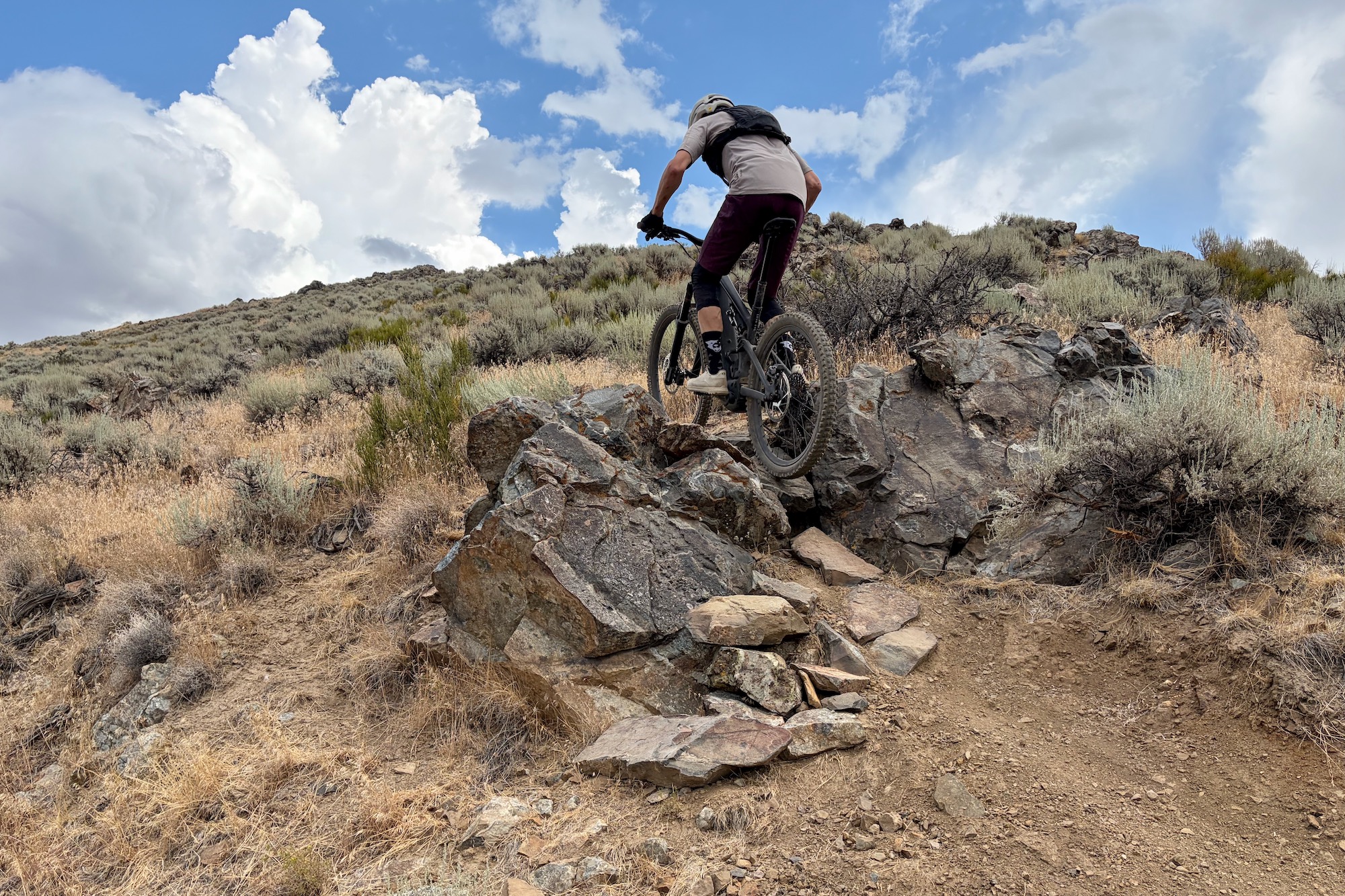
I expected the EVO to be less maneuverable than I found it to be, and I was initially surprised by how easily it negotiated tight uphill switchbacks and technical sections of trail. The short chainstay position (435 mm) and smaller rear wheel certainly help in the agility department, and I found its handling to be fairly responsive, in the context of a 53-pound long-travel eMTB, of course. I had no issues navigating some seriously tight and tricky climbs.
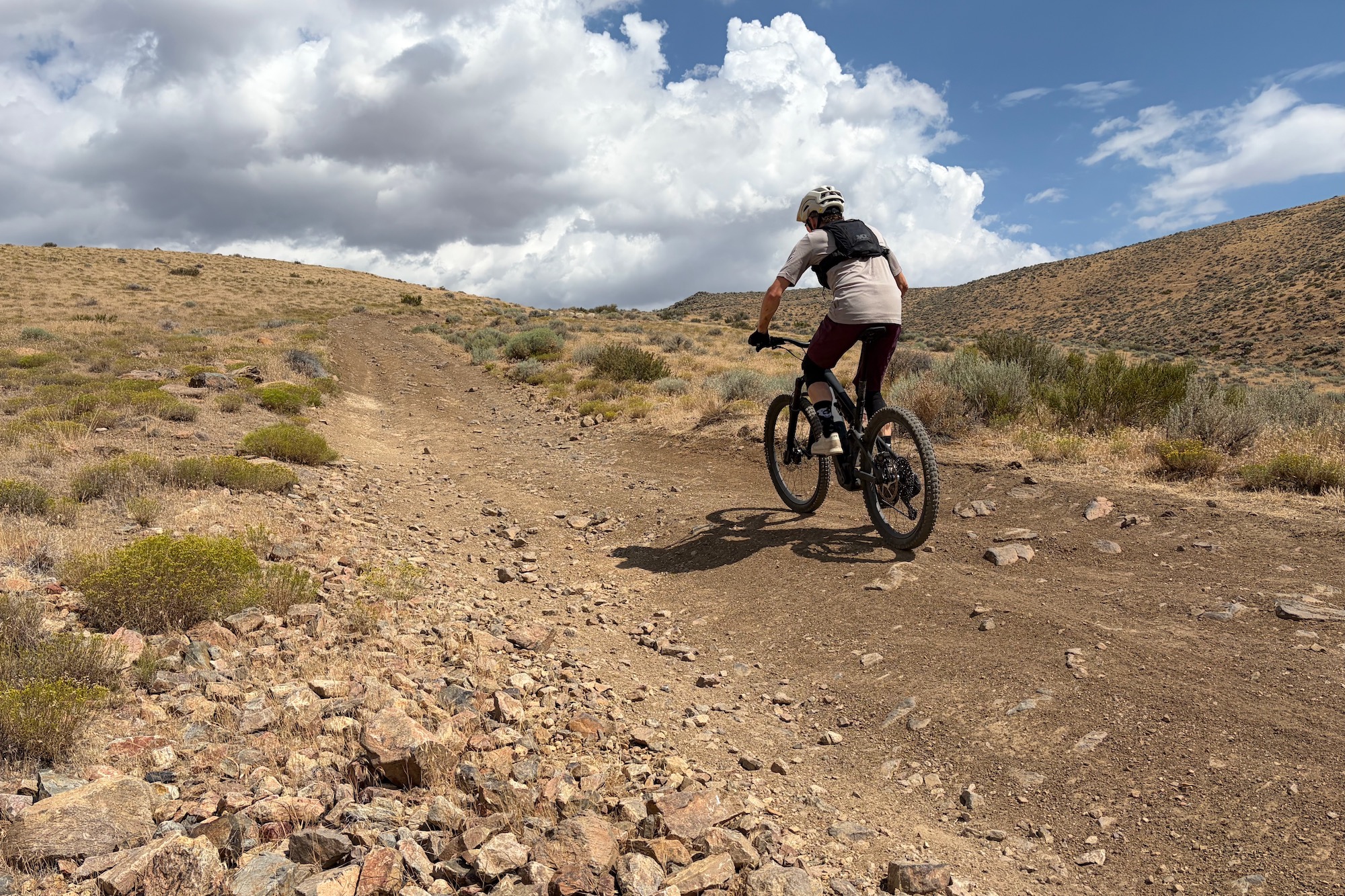
I spent a lot of my rides climbing up steep fire roads and old double tracks, and that’s where the Levo 4 EVO shines. It’s sort of a point-and-shoot type of approach and one that I’ve become quite familiar with riding the local steeps on eMTBs over the past few years. At first, the 155mm cranks felt a tad short, especially when coming off my trail bike with 170s, but I got used to it pretty quickly. I had no issues putting power into the pedals to maximize laps and ride time, and I appreciated that I experienced virtually no pedal strikes, even with the low-slung bottom bracket.
Downhill
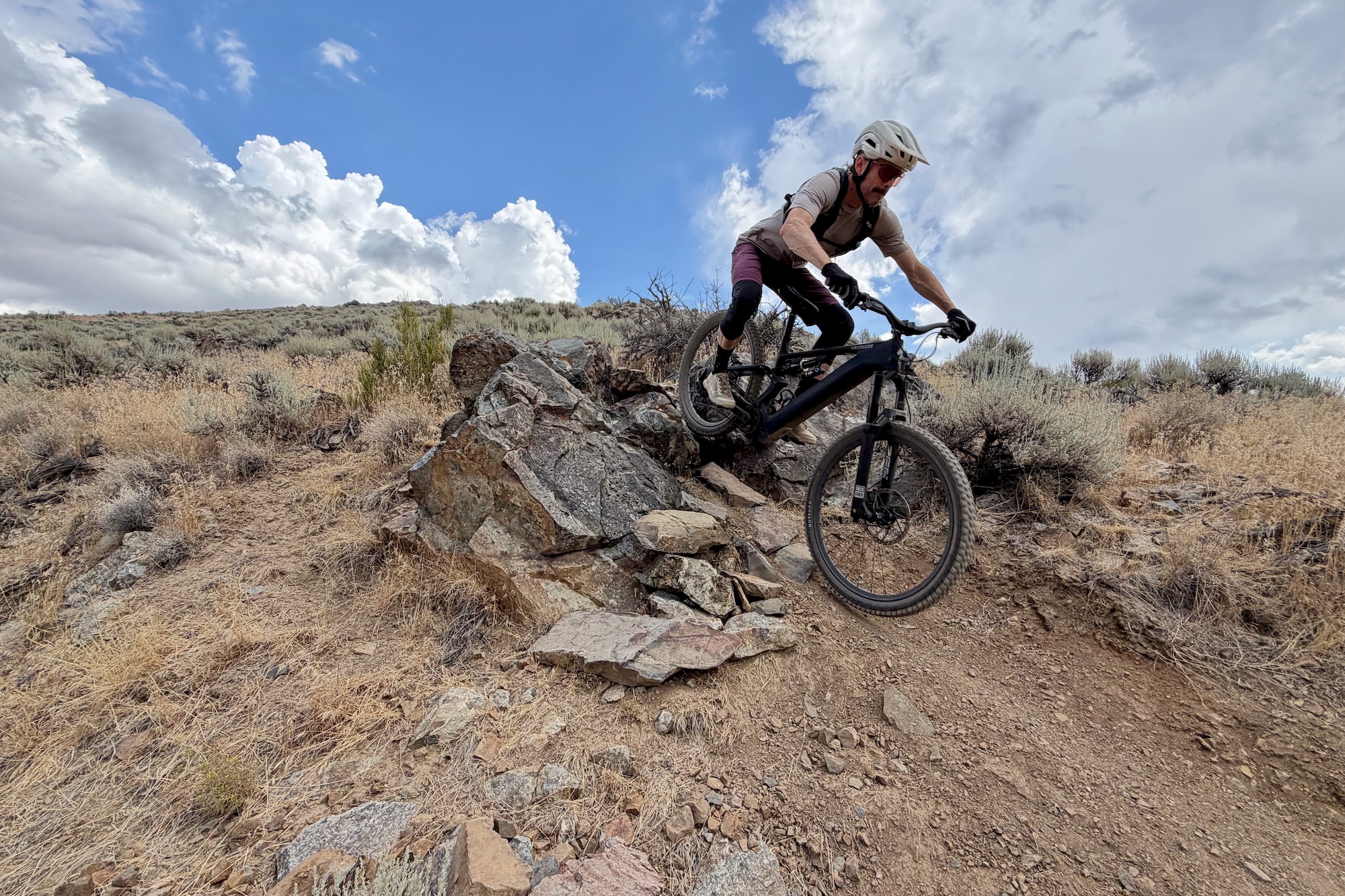
I don’t know if I’ve ever felt as confident riding a bike downhill as I have on the Levo 4 EVO. I felt like I could do no wrong on this bike; it made me feel like a significantly better rider than I am, and it was so much damn fun. There are numerous contributing factors at play, but realistically, it’s the whole package that comes together brilliantly on the descents.
Obviously, the EVO’s geometry is geared toward riding downhill, and this bike is eager to attack the fall-line. It’s long and slack, and I found it to be incredibly stable, calm, and composed — virtually unflappable at any speed or steepness of pitch. Seriously, this bike has no speed limit, and its only terrain limits are what you’re willing and able to ride it down. At the same time, it felt easy to control, and its handling was intuitive and responsive to steering inputs. It’s a big, heavy bike, but it never felt lethargic, either.
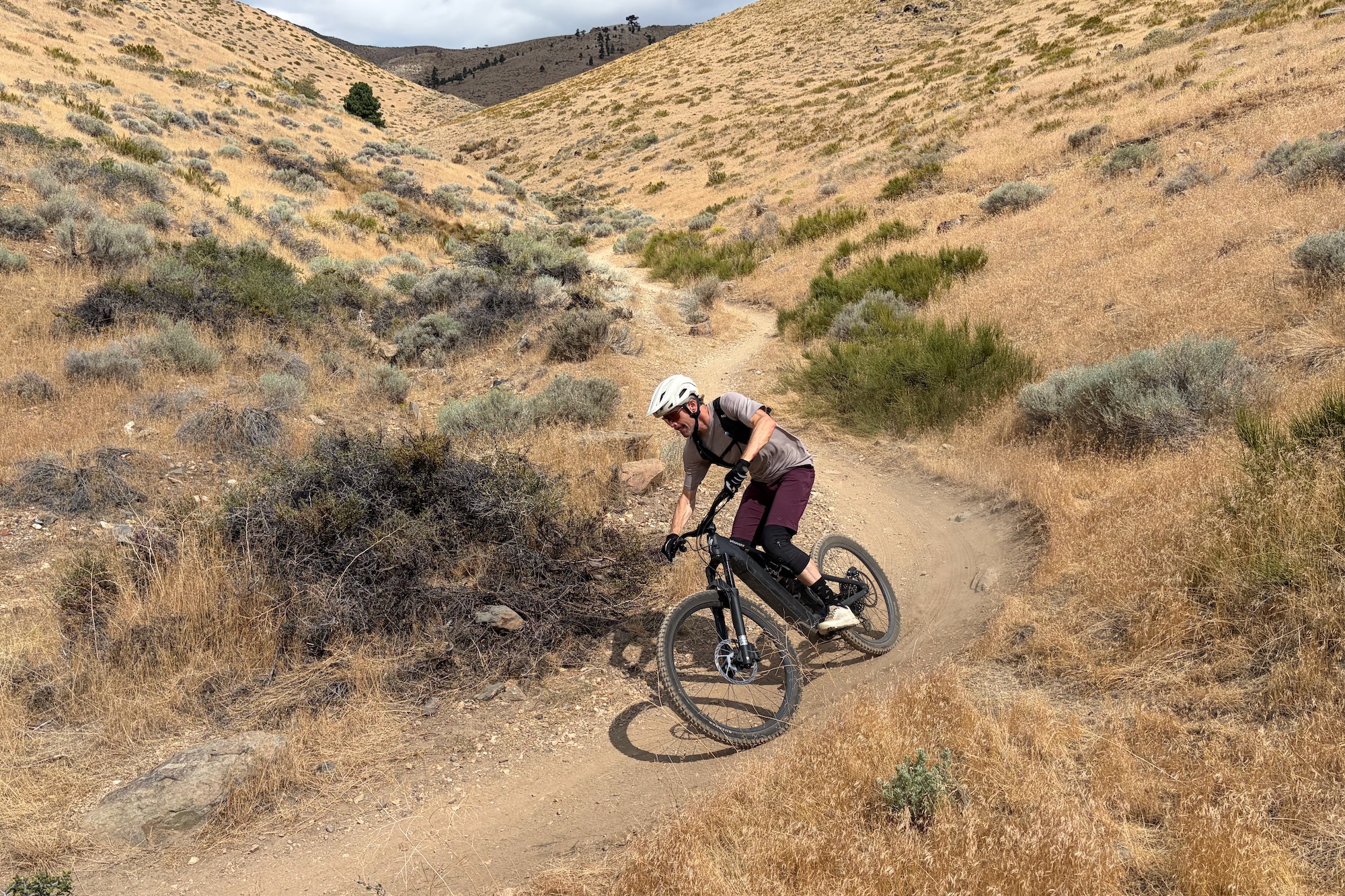
I kept the head tube angle in the neutral, 63.6° setting, which worked perfectly for my needs. I found this middle setting to be great for proper skidders and moderately steep trails alike. I played around with the chainstay length adjustment once, but I preferred it in the short setting. This bike is already plenty long, very plush, planted, and super stable, and the shorter setting helped to keep it more maneuverable in some of the tighter, techier trails I often ride.
While the geometry of the EVO is dialed, control is the other primary factor in this bike’s confident downhill performance. There’s plenty of travel at both ends, of course, and the latest RockShox Ultimate Vivid and Zeb are legitimately the best-performing suspension components that I’ve ridden. This was my first time riding both, and I was absolutely blown away. They were incredibly plush, felt very well balanced front and rear, and were shockingly easy to set up. Not only that, but I was getting full travel from both and never once felt like I bottomed out.
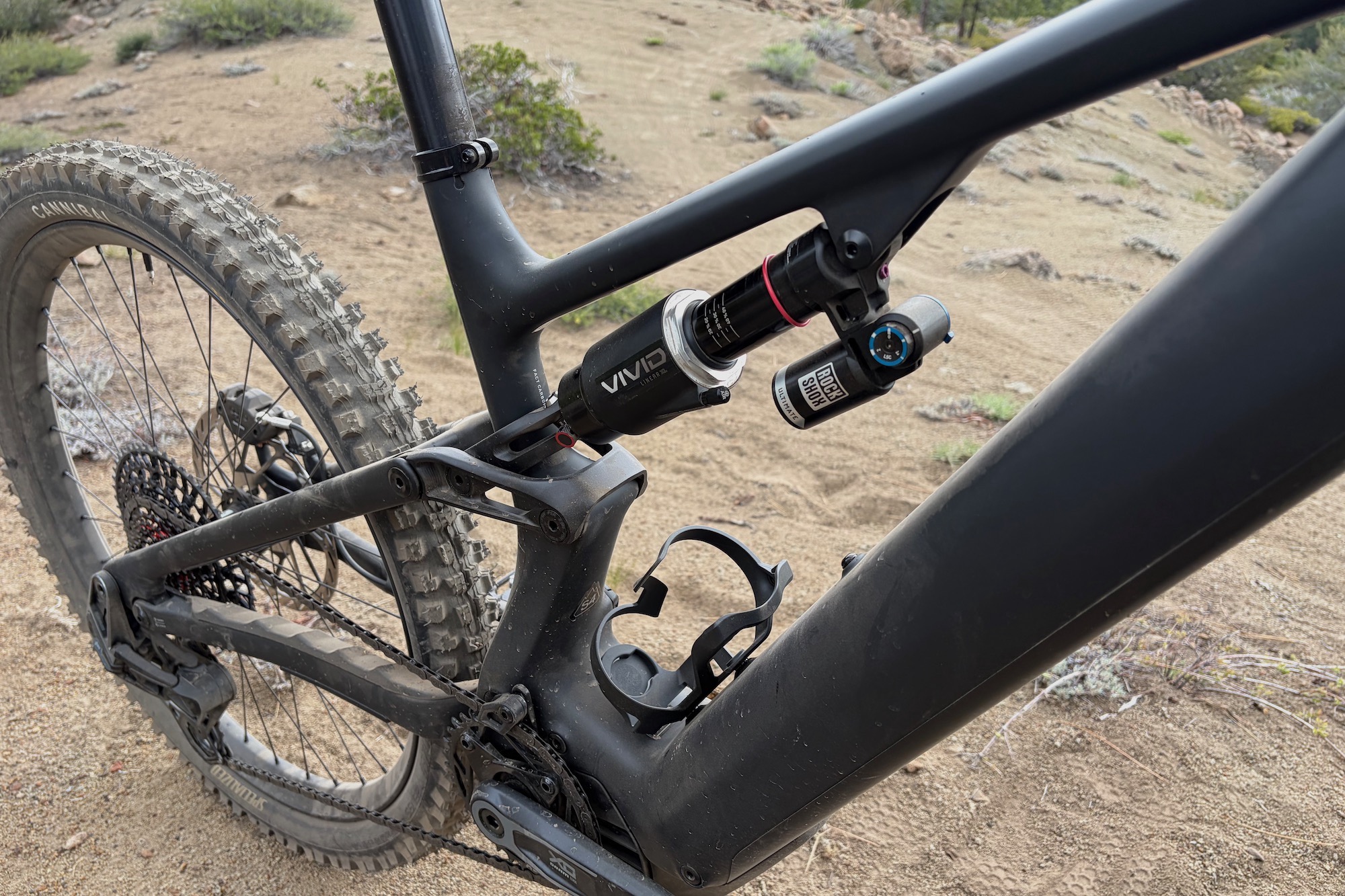
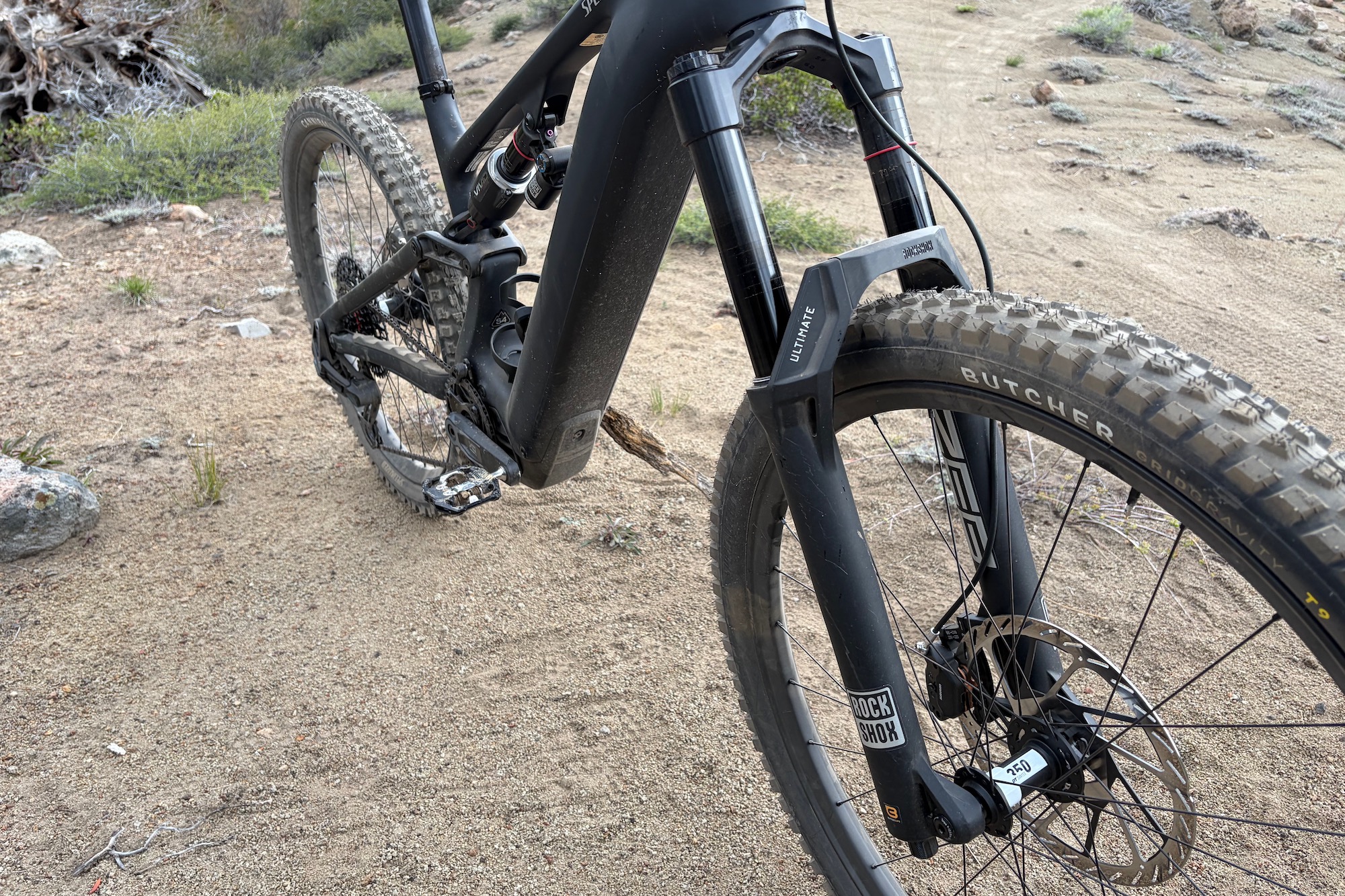
That said, I have one gripe about the EVO’s suspension performance. When riding super steep skidders with the rear wheel completely locked up for extended periods — where you literally can’t stop braking — I experienced some notable brake-jack. In those situations, the rear suspension was essentially locked up until I could let off the rear brake. That’s obviously not the most common riding scenario, and few suspension designs perform well in those situations, but I feel it’s worth mentioning nonetheless.
Regardless, while the geometry and suspension were allowing me to get in over my head and carry absurd amounts of speed, I, of course, relied very heavily on the brakes to maintain control. SRAM’s Maven brakes obviously have heaps of stopping power, and the recent B1 lever upgrade has improved their modulation significantly, doing away with the on/off feel that plagued the original. I could honestly stop on a dime, as long as I had grip.
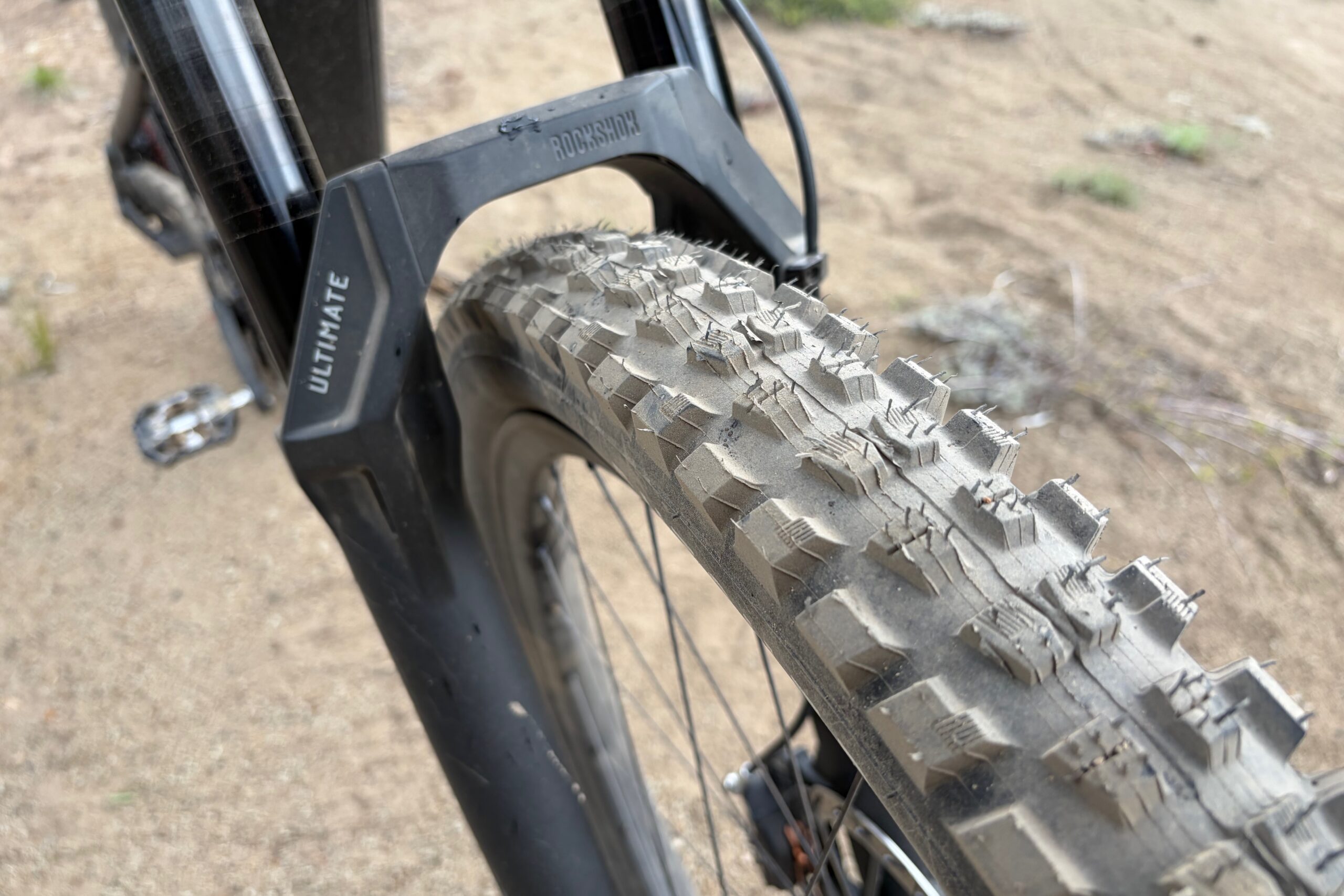
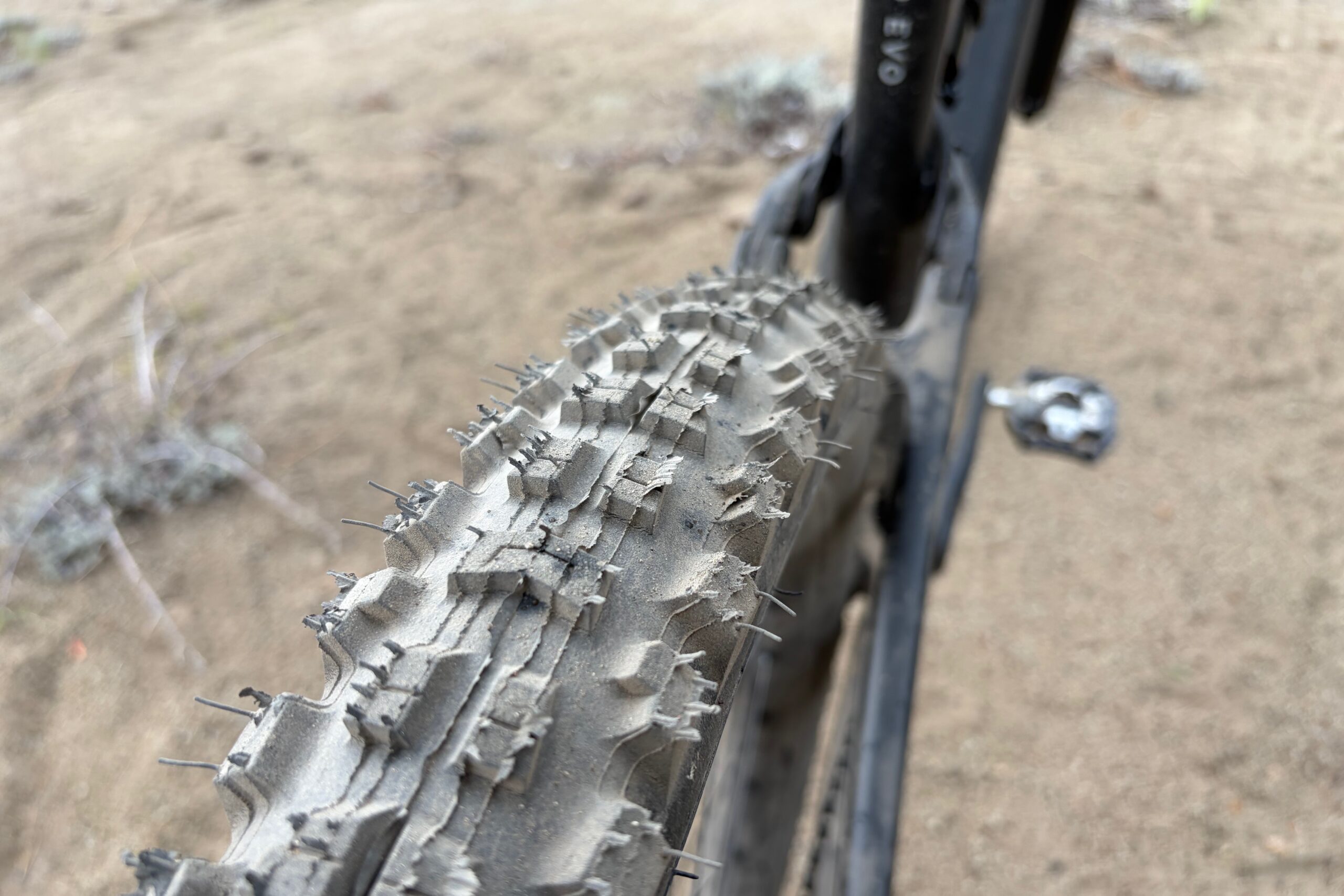
And, of course, all the braking power in the world doesn’t really matter if you don’t have grip, and thankfully, there was plenty of that. The Grid Gravity Butcher and Cannibal combo with Specialized’s softest T9 rubber compound performed brilliantly. I think the super supple suspension performance also played a big role here, keeping the tires tracking on the trail surface. Combined, the tires stuck to the ground like glue and provided excellent braking and cornering traction.
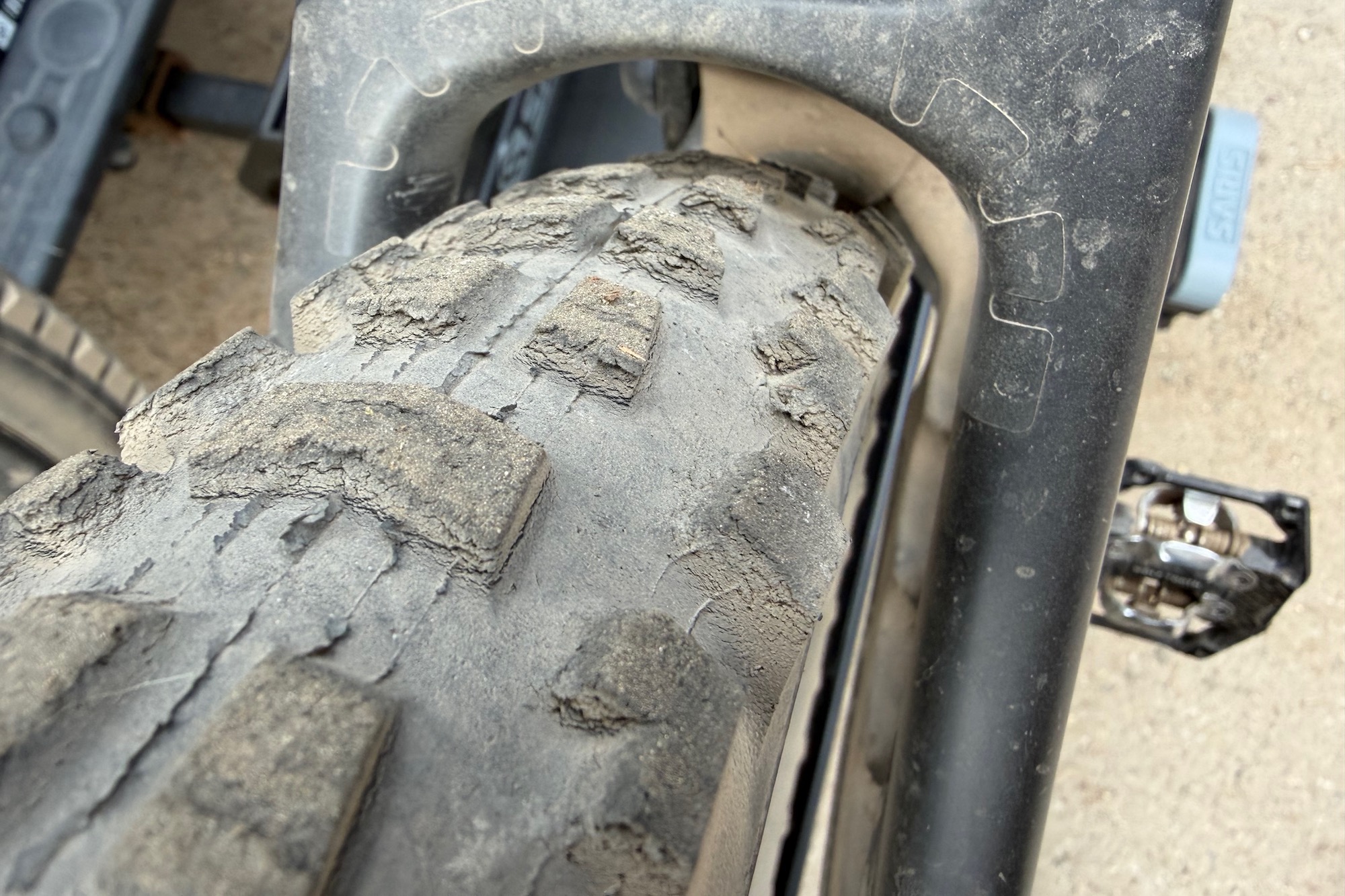
Which leads me to my only other complaint about the Pro build. Obviously, the rear tire on a heavy, aggressive bike like this is going to take a beating, and the Cannibal was pretty much completely smoked after ~125 miles. It sure was good while it lasted, and I limped it along for as long as I could, but braking traction took a serious hit. I’ve since swapped both tires out for some of Specialized’s new Gravity Radials, which I’m hoping to review soon.
Motor Performance and Range
I’ve ridden lots of eMTBs over the years, and I’d argue that Specialized’s 3.1 motor is one of the best on the market. I rank it right up there with the Bosch CX Gen 5. It’s very intuitive to use, and it’s incredibly easy to tune the assist modes in the app to your exact needs and preferences — I like to tinker. It’s nearly on par with the S-Works 3.1 motor in terms of peak power and torque, and in my opinion, still has more than enough power without going completely overboard like Avinox.
It’s shockingly quiet, too. It’s not silent like the TQ HPR60, but I think it’s barely noticeable, especially compared to motors from just a few years ago. My only real complaint about the whole system is the remote’s switch to toggle up and down through the assist modes — I prefer regular old buttons.
The 840 Wh battery offers plenty of range for massive rides. My first test ride was over 7,000 vertical feet, and I finished with 20% left. The majority of my test rides were in the 5,000 to 6,000 foot range, and I’d typically finish with around 30 to 40% left in the tank. Even on an e-bike, I like pushing some watts of my own, and I’d be inclined to buy the lighter 600 Wh battery to drop a few pounds for most rides. Your results and range will vary, of course, but the point is, you can go on some properly huge rides if that’s your thing.
Specialized Turbo Levo 4 EVO: My Takeaway
I titled the first ride I took on the Levo 4 EVO, “Like Playing a Video Game.” I meant that in the best possible way and still stand by that assessment months later. It’s as if I could do no wrong and I was riding at a new level. At the risk of sounding like marketing jargon, I think “supernatural” would be another way to describe that feeling of confidence and control. The travel, geometry, and build all come together so well on the trail, and make this bike an absolute blast to ride.
I don’t own an eMTB, but if I did, the Levo 4 EVO would be very high on the list of possible candidates. And as I’m writing this review, I’m realizing that sadly, I’ll have to send it back to Specialized pretty soon. I know, poor me… But my fingers are crossed that Specialized is working on a new mid-power motor, and perhaps there’s a new Kenevo or EVO SL in the works? Time will tell, and I’ll be happy to test it if/when that ever happens.
How does it compare? The EVO version is truly a completely different bike than the more versatile, trail-oriented Levo 4. That bike is also excellent, and arguably a better fit for most riders. But I would steer those who primarily ride more aggressive terrain toward the gravity-oriented EVO. This bike freaking rips.
I heaped similar praise on the Yeti LTe, another eMTB that was supremely confident, composed, and, therefore, very fun to ride. I’d give the performance of Yeti’s Sixfinity suspension the edge over the EVO, and with 10mm less travel and 29” wheels front and rear, it’s a bit more versatile as well. But when it comes to pure downhill performance, I think the Levo 4 EVO might have the upper hand by a small margin. Honestly, both bikes are so darn good, I’d have a hard time choosing between them.


