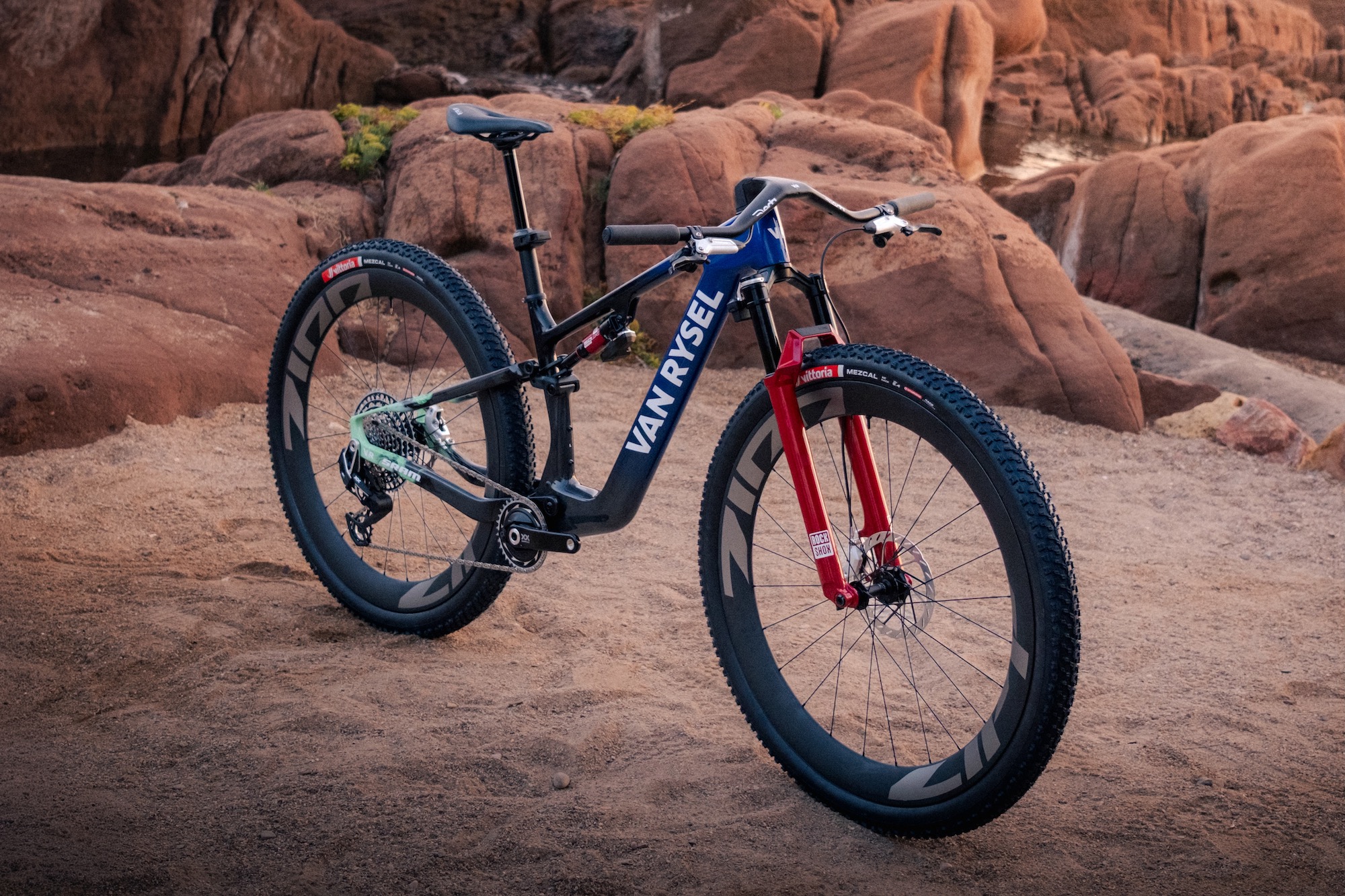


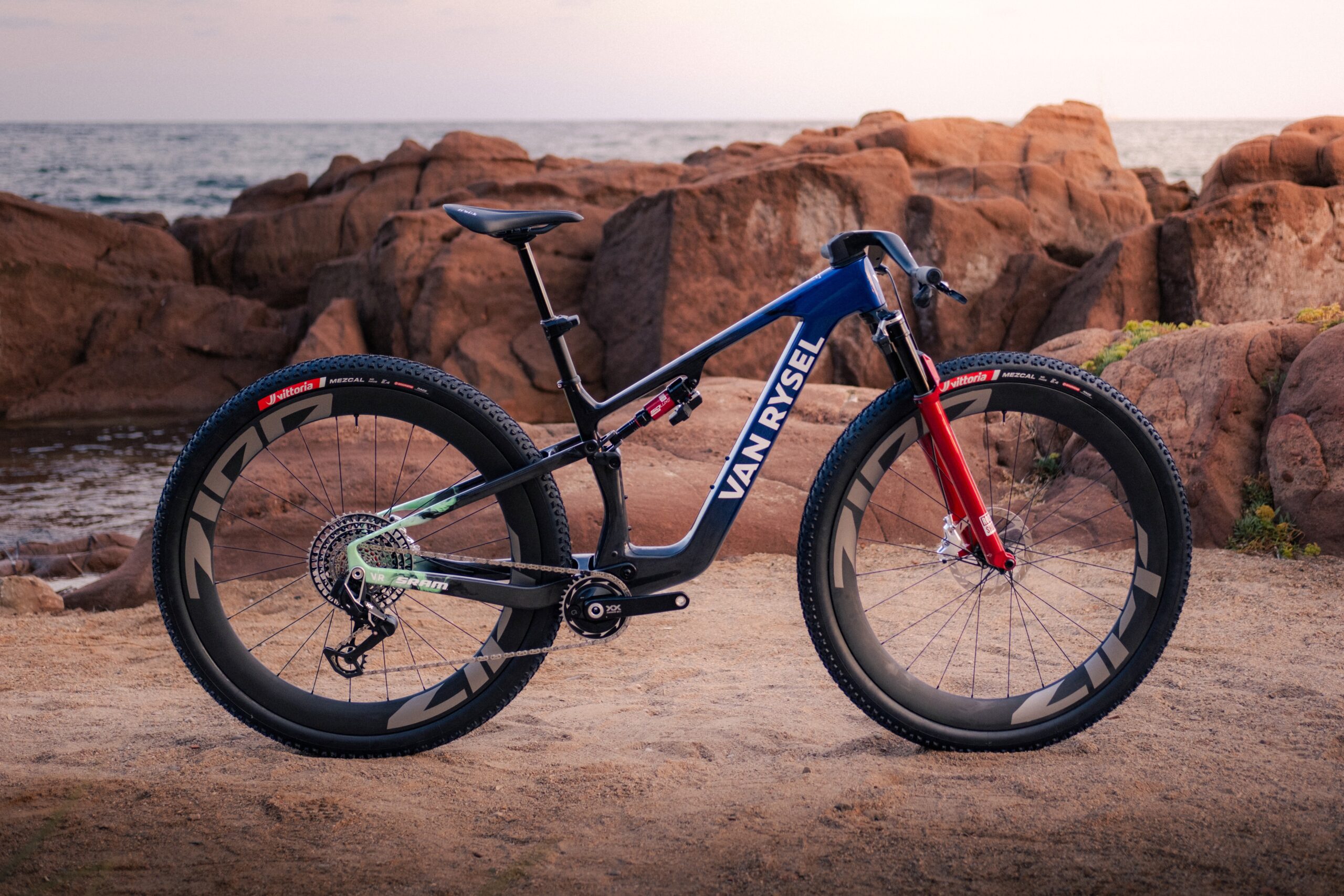
Not only is Van Rysel entering the mountain bike market, but it’s going big with its first-ever MTB, a 32” full-suspension XC model. The brand tells us the new RCR-XC was designed around the up-and-coming 32” wheel size with one goal: to win cross-country races at the highest level of the sport. Along with the new bike, Van Rysel is also announcing that it will be the official bike and apparel sponsor of the Decathlon-Ford World Cup XC team for 2027.
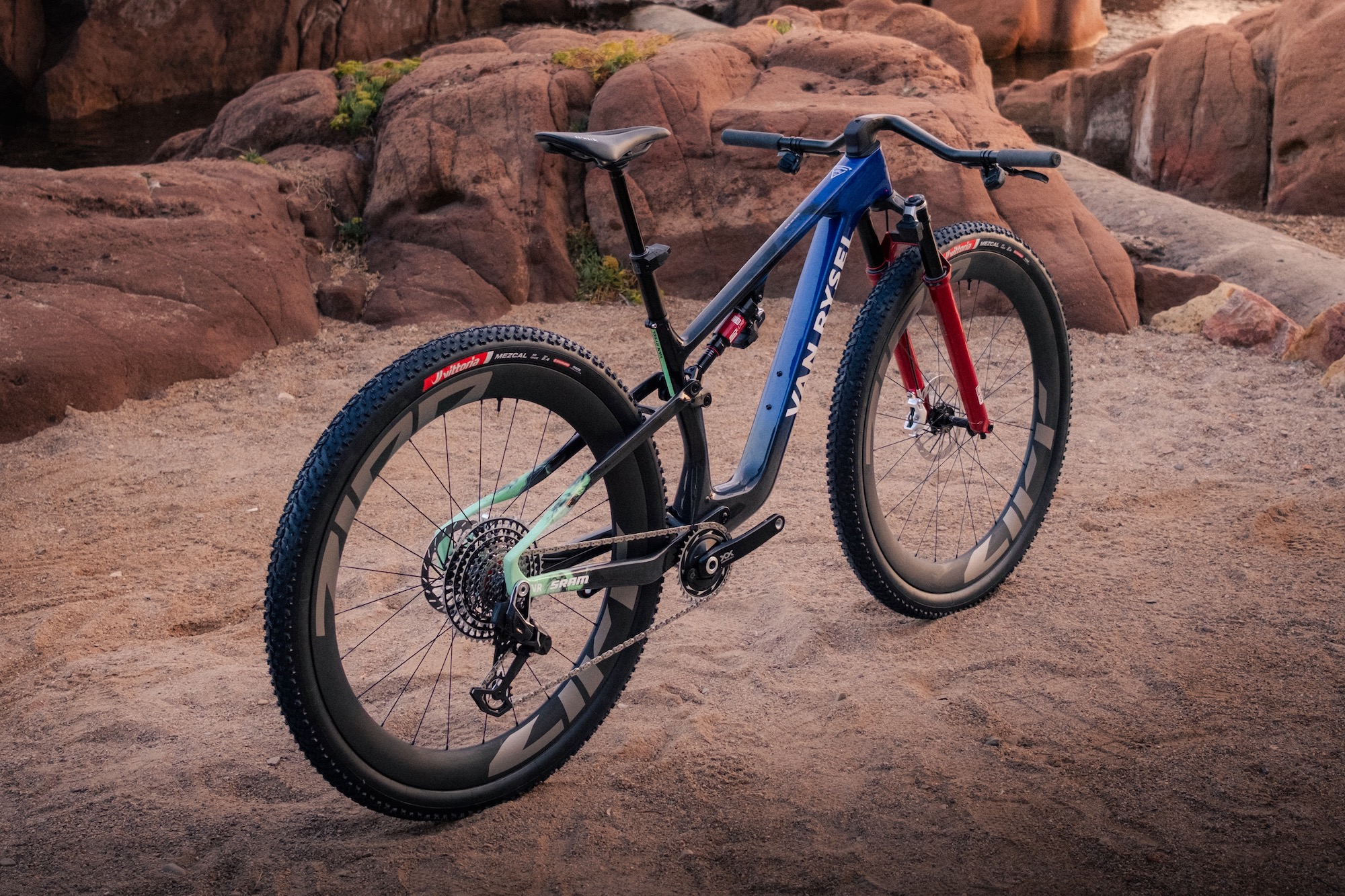
With the RCR-XC, Van Rysel is leveraging its experience making high-performance road, gravel, and triathlon bikes into the design of its first-ever mountain bike. And the brand is wasting no time at all with a 32” wheeled full-suspension XC race bike and its sights set on World Cup success.
“We didn’t set out to build just another mountain bike, but one of the fastest in the world: the RCR-XC is designed to win the biggest races. To fuel that ambition, we applied V|R’s successful scientific method, based on data and wind tunnel testing, to off-road riding, with no compromise. This frame is the result of co-design: the dynamics of a 32-inch at a lower weight than a 29-inch, validated by the best riders in the world.”
-Luis Moro, VAN RYSEL MTB Product Manager.
Van Rysel RCR-XC Details
With its very first mountain bike, Van Rysel said it set out with one goal in mind: “to develop the ultimate machine to win the biggest XC races.” Using World Cup data collected since 2024, they say the design focused on the three most important variables: speed, power, and time. To that end, they cut to the chase and went straight to 32” wheels because they believe it “offers real-world performance advantages.”
Suspension and Travel
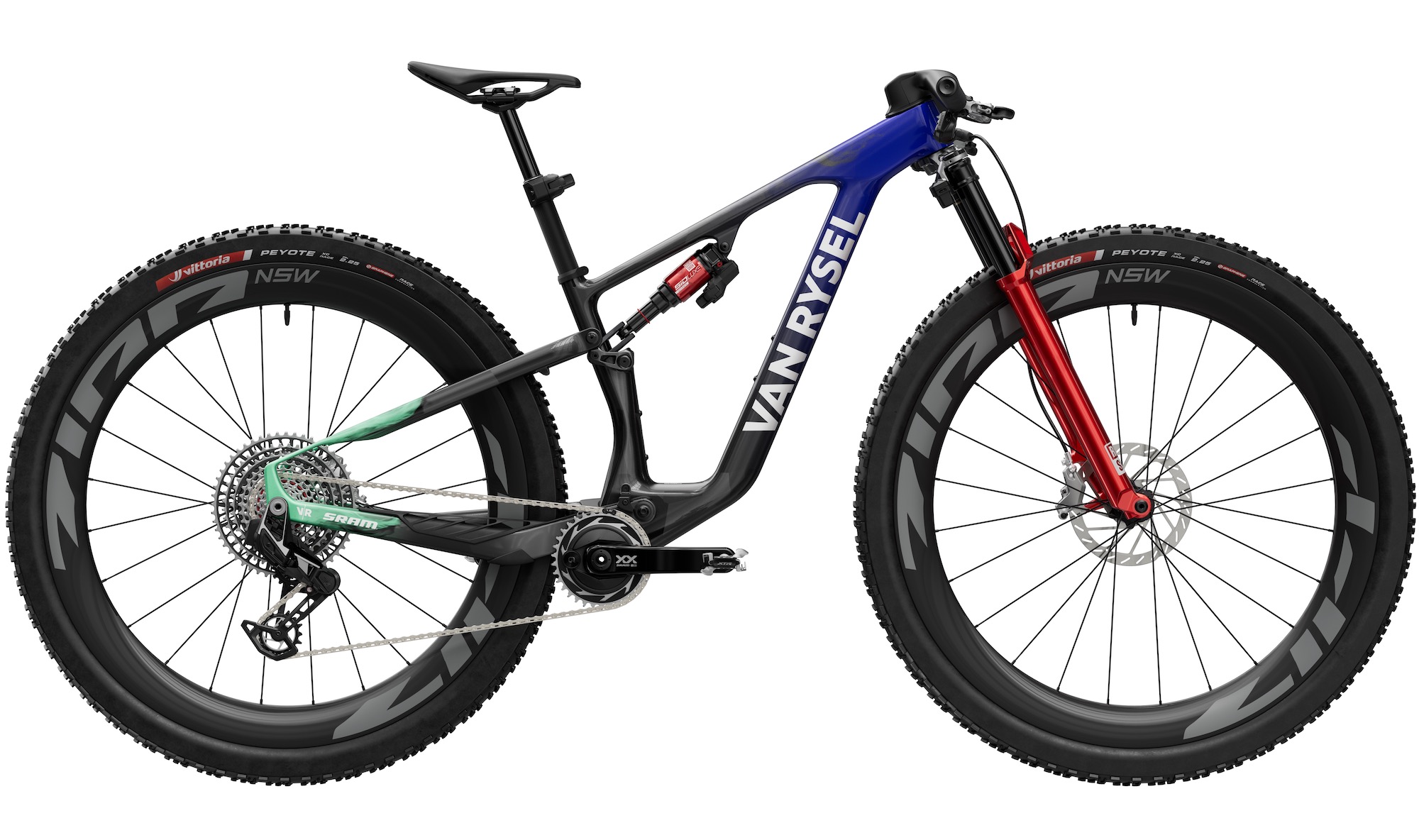
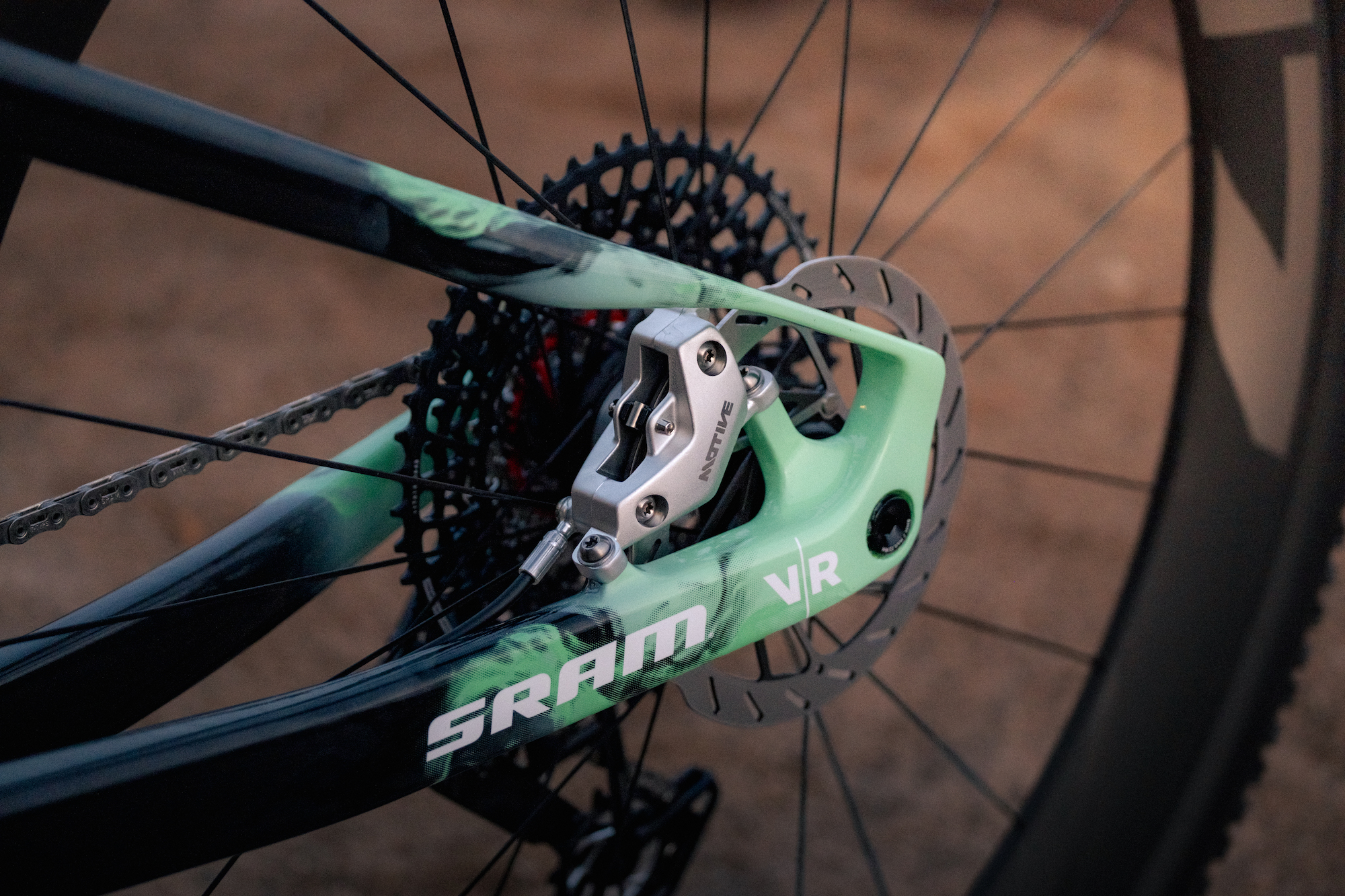
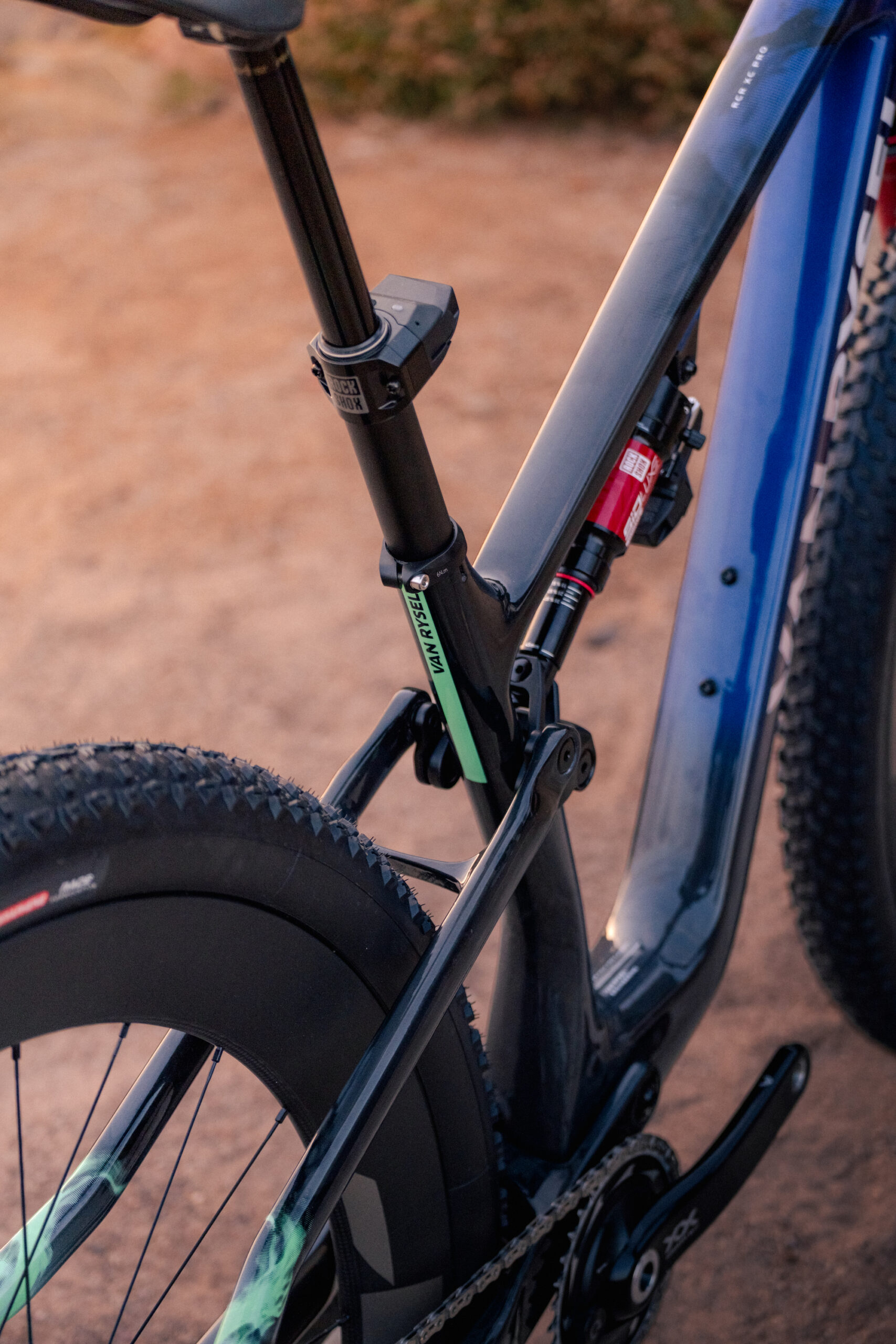
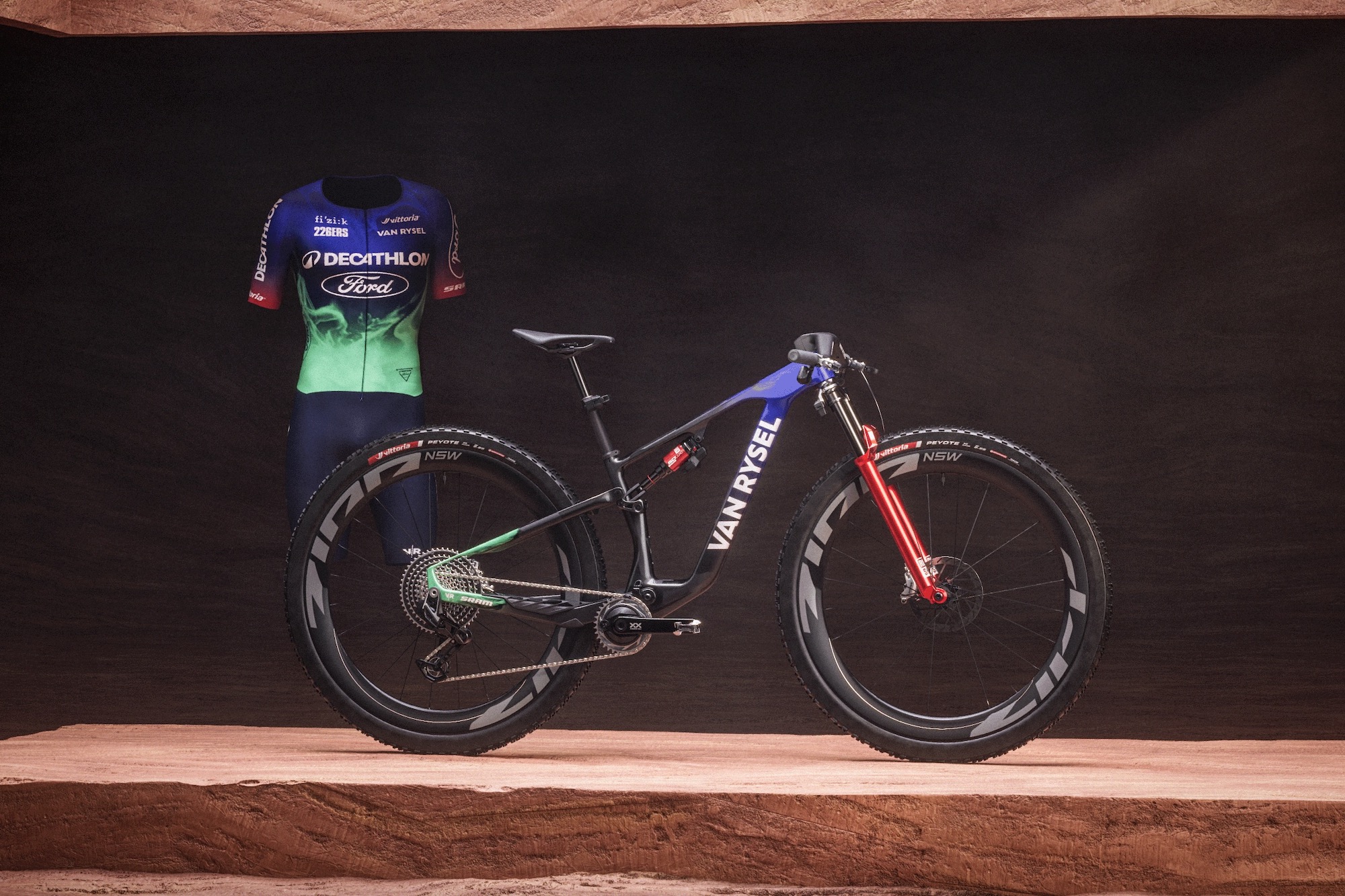
While the details provided by Van Rysel focus more on wind-tunnel testing and World Cup domination, there’s quite a bit we’ve gathered from the photos in our media kit. The frame is made with Super High Mod Carbon and has a single-pivot flex-stay suspension design. Closer to the rear axle, the seat stays are aggressively sculpted/flattened, presumably to facilitate said flex. The rear travel length was not shared with us, but we’re guessing it’s probably 110 or 120 mm, given the specification of the 130mm travel fork.
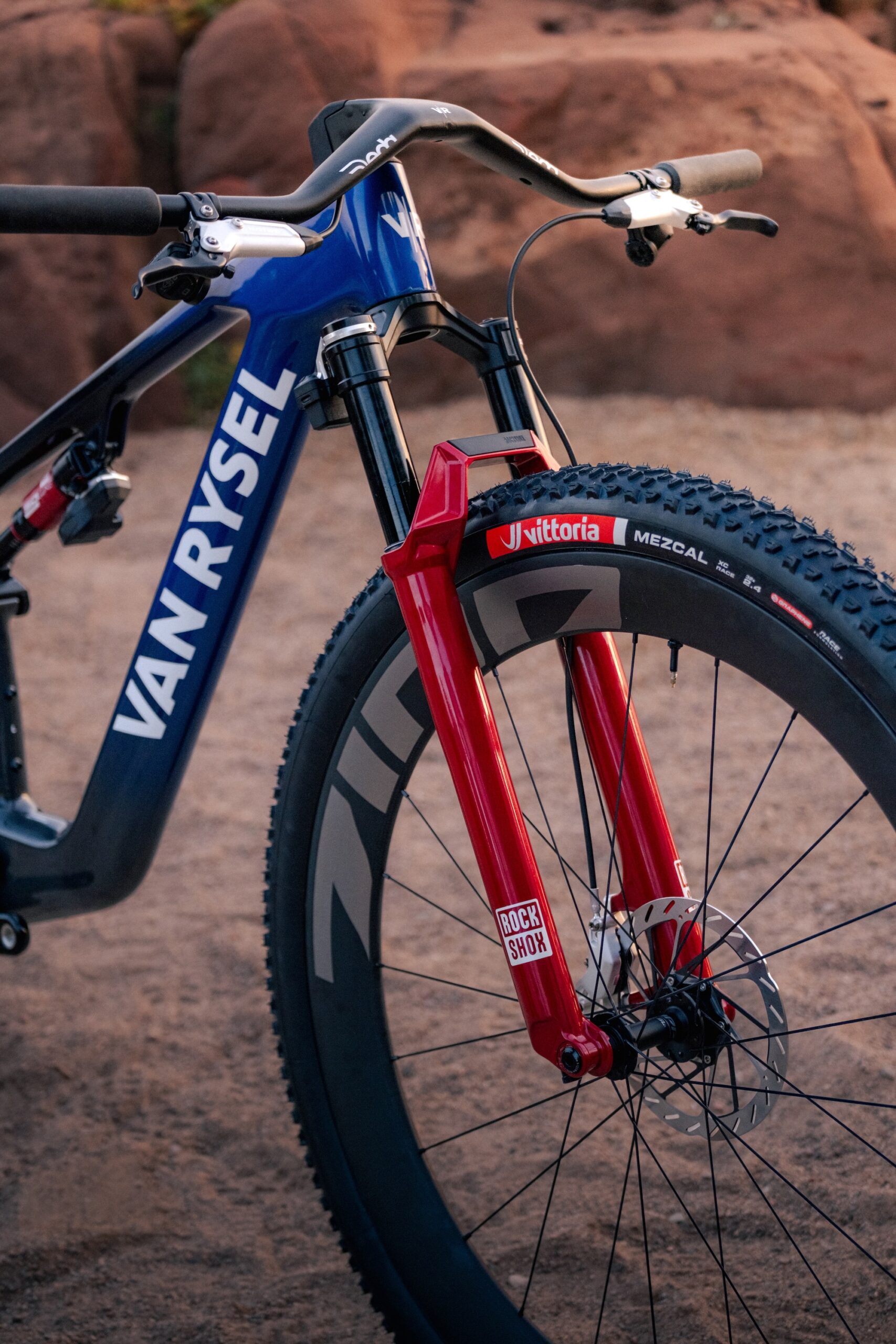
On that note, we’re also catching another glimpse of the still unreleased 32” RockShox SID Ultimate Flight Attendant fork recently revealed on Trek’s new 32” race bike. As mentioned, that fork gets 130mm of travel, which, when paired with the 32″ wheels, Van Rysel says “demonstrated better agility in descents during the testing phases. Riders can thus recover better in technical sections and conserve their energy for flat or uphill sections.”
Bigger Wheels, Lighter Weight
According to Van Rysel, they drew on their carbon frame-building expertise to make the RCR-XC frame as light as possible. Despite the larger wheel size, the brand tells us that this frame is actually 230 grams lighter (size M frame) than the 29” race bike used by the Decathlon-Ford team in 2026.
Aero MTB?
Van Rysel is no stranger to the wind tunnel, and they say aerodynamics was placed at the heart of the RCR-XC’s development. While the claim that this is the first time a mountain bike has been put in a wind tunnel seems somewhat dubious, they say that testing helped shape the bike to save precious watts. Compared with the Decathlon-Ford team’s 2026 race bike, they claim the RCR-XC delivers a savings of 15.5 watts at 35 km/h.
Zipp Aero MTB Wheels?
If you’re going all-in on aerodynamics, then we guess it makes sense to see deep-section Zipp wheels on the RCR-XC. That said, Zipp doesn’t make any aero MTB wheels, so we’re assuming these are probably from the brand’s gravel lineup. (Remember, 32″ gravel racing is a thing now, too!) They look just like scaled-up versions of the 303 XPLR S aero gravel rims (without identifying logos), which have a 32mm internal width, but are presumably laced to Boost-spaced hubs, like pretty much all 32″ gravel & XC wheels we’re seeing at the moment.
How About that Handlebar?
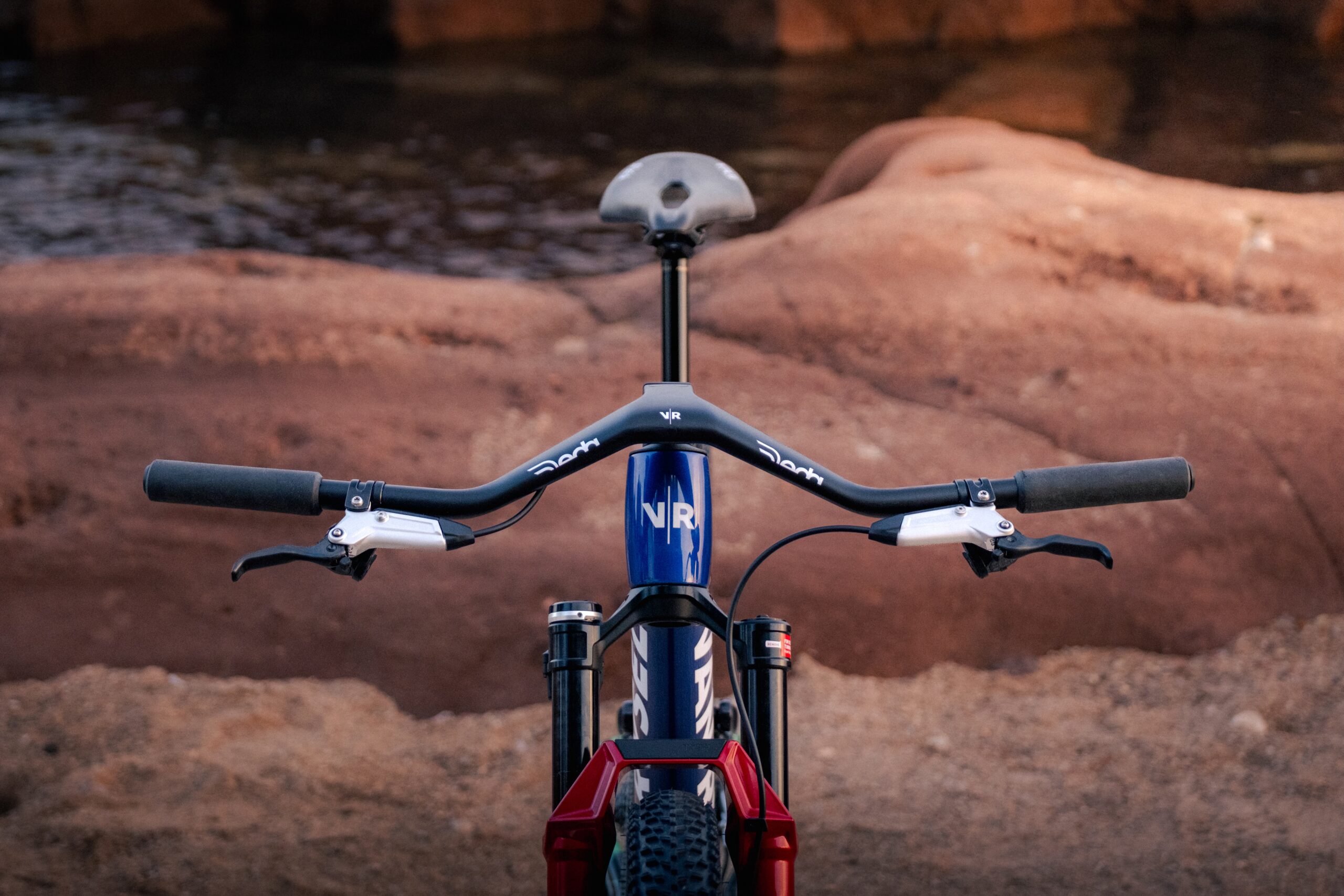
While most of the 32” mountain bikes we’ve seen thus far use negative rise stems to account for the increase in stack height, it looks like Van Rysel is trying something different. In the photos, the RCR-XC is equipped with an integrated handlebar-stem that appears to be made by Deda Elementi or is perhaps a collaboration between the two brands. Rather than negative rise at the stem, the negative rise is in the bar. This setup is certainly unique and eye-catching, and strangely reminds us of a Thai water buffalo’s horns.
Geometry
In addition to rear suspension travel, the other important detail that wasn’t shared with us is the geometry chart. That means we obviously don’t have the specifics to share. But given its intended use, and by the looks of it, the RCR-XC is sporting a cross-country race geometry.
Decathlon-Ford Team Sponsor
“Developing the fastest machine in the world only makes sense if it’s ridden by the best athletes on the planet. Today, it is an honor and an immense source of pride for me to announce: VAN RYSEL becomes the official bike and apparel supplier for the DECATHLON FORD team from the 2027 season!”
-Nicolas Pierron, CEO of VAN RYSEL.
That means we’ll get to watch Decathlon-Ford’s world-class roster, including riders like Luca Martin, Samara Maxwell, and Savilia Blunk, put the RCR-XC to the ultimate test between the tape in next year’s World Cup XC races. Talk about a proving ground for a brand’s first mountain bike…
Availability
Van Rysel says that its arrival in the mountain bike market will begin with an apparel line, which will be available in Europe starting in 2027, with other markets to follow. The new RCR-XC bike will be raced by the Decathlon-Ford World Cup team next year, with their continued feedback being incorporated into a final production model that will “go on sale at a date to be announced later.”
In the meantime, you can learn more about Van Rysel’s first mountain bike at their website.

